 JAZZPROFILES lives in the music 2,059 Jazz Artists fully Profiled!
Tito Puente
Last updated October 29, 2026
Listen on Spotify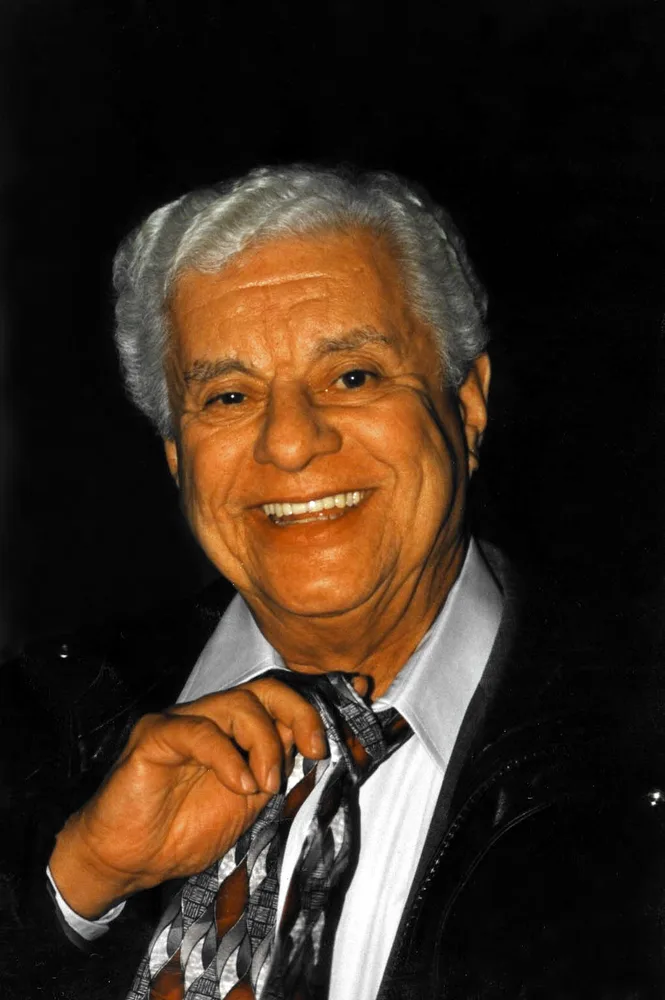
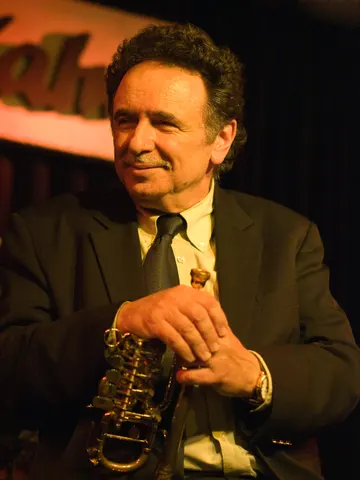
Tito Puente at the Kennedy Center, Washington, D.C., November 23, 1996 CC BY-SA 2.0 — Wikimedia Commons: https://commons.wikimedia.org/wiki/File:Tito_Puentes.jpg (Kingkongphoto & www.celebrity-photos.com, Laurel, Maryland, USA)

Ernest Anthony Puente Jr. was born on April 20, 1923, at Harlem Hospital Center in Manhattan, the son of Ernesto and Felicia Puente, Puerto Ricans living in Spanish Harlem. His father was the foreman at a razor blade factory, and the family's name for the boy, Ernestito, shrank to Tito. He was a restless child who drummed on pots and window frames until his mother sent him to 25-cent piano lessons. By ten he had moved to percussion, drawing on the jazz drummer Gene Krupa, and for a while he planned to be a dancer, with a song-and-dance act alongside his sister Anna, until an ankle tendon injury ended the idea. He was regarded as a prodigy by thirteen, and as a teenager he took the drum chair in Machito's orchestra when its drummer was drafted.
Puente was drafted himself in 1942 and spent three years in the Navy. On the escort carrier USS Santee he played alto saxophone and clarinet in the ship's big band, sat in on drums and piano, served as bugler, and came out with a Presidential Unit Citation for nine battles. The long stretches at sea taught him to arrange for a big band, and his first chart, "El Botellero," went to Machito and Mario Bauzá in New York. The G.I. Bill then paid for three years at the Juilliard School of Music, where he studied conducting, orchestration and theory. A delayed return home let him stop in several Asian ports, which left a lasting mark on his writing, and it shows in titles such as "Hong Kong Mambo" and "Mambo Buddha."
After the war he worked in the Latin dance bands of José Curbelo and Pupi Campo and formed his own group in 1948. The Palladium Ballroom on Broadway, billed as the Home of the Mambo, became the center of that scene, and Puente, Machito and Tito Rodríguez were its three leading bandleaders. His first hit, "Abaniquito," backed with "Mambo Macoco" and sung by Vicentico Valdés, came out on Tico in 1949. He was a dance bandleader first. What he sold in the 1950s was mambo, cha-cha-chá and son for ballroom floors, on Tico and, from 1956, on RCA Victor, where he cut Cuban Carnival (1956), Night Beat (1957), Top Percussion (1958) and Dance Mania (1958). Dance Mania, with Santitos Colón singing and Ray Barretto on congas, was added to the National Recording Registry in 2002.
The jazz side of his work ran alongside from the start. Puente Goes Jazz (RCA Victor, 1956) arranged standards such as "What Is This Thing Called Love" and "Yesterdays" for his mambo orchestra. In September 1958 he recorded Herman's Heat & Puente's Beat! in New York with Woody Herman's band for Everest, playing timbales on the six Latin-flavored tracks of the second side. His vibraphone and marimba playing brought piano technique to mallet percussion, and his jazz training changed how the timbales were used, turning them into a solo instrument.
"Oye Có mo Va" was recorded in 1962 for the Tico album El Rey Bravo. When Carlos Santana recorded it for Abraxas in 1970, the version released as a single in 1971 reached No. 13 on the Billboard Hot 100, and on Mambo Birdland Puente thanked Santana from the stage for carrying the tune around the world. In the 1960s he also recorded a run of Tico albums with the singer La Lupe, beginning with Tito Puente Swings, The Exciting Lupe Sings (1965), and with Celia Cruz. He disliked the word salsa and treated it as a marketing term for the same New York Latin music he had been playing for decades. Homenaje a Beny Moré (Tico, 1978), his tribute to the Cuban singer Beny Moré, won the Grammy for Best Latin Recording at the 1979 ceremony. He also worked with the Latin Percussion Jazz Ensemble, which recorded Just Like Magic (1979) and played the Montreux Jazz Festival on July 18, 1980.
From 1983 he recorded for Concord Picante, the Latin imprint of Concord Jazz, and the repertoire turned openly toward jazz. On Broadway (1983) won a Grammy. El Rey (1984) took on John Coltrane's "Giant Steps" and "Equinox" with a nine-piece Latin Ensemble. Mambo Diablo (1985), recorded at Coast Recorders in San Francisco in May of that year, offered Latin versions of "Take Five" and "Lush Life" and brought in the pianist George Shearing for "Lullaby of Birdland"; it won the Grammy at the 1986 ceremony. Salsa Meets Jazz (1988) was billed with the alto saxophonist Phil Woods, and Goza Mi Timbal (1990) turned to "Airegin," "Pent Up House," "All Blues" and "Straight, No Chaser." He arranged "Mambo Rockland" for Woody Herman's band on the live album Woody's Gold Star (1987), and in June 1989 he sat in at Van Gelder Studio for the CTI all-star session Rhythmstick, playing percussion on two pieces alongside Phil Woods, Dizzy Gillespie, Benny Golson, Art Farmer, Charlie Haden, John Scofield and Randy Brecker.
The 1990s kept both strands going. The Mambo King 100th LP (RMM, 1991) marked his hundredth album, and he took Mambo of the Times (1992), Royal 'T' (1993, recorded January 18 and 19, 1993, with "Donna Lee," "Moanin'" and "Stompin' at the Savoy") and Master Timbalero (1994) to Concord Picante. His Golden Latin Jazz All Stars, with Mongo Santamaría, Giovanni Hidalgo, Dave Valentin, Hilton Ruiz, Paquito D'Rivera and Claudio Roditi, recorded Live at the Village Gate (1992). Jazzin' (1996) paired him with the singer India and the Count Basie Orchestra, with arrangements by Michael Philip Mossman, Hilton Ruiz and Marty Sheller. Special Delivery (Concord Picante, 1996) put him in a big band with the trumpeter Maynard Ferguson for "Be-Bop," "Misterioso," "Stablemates" and "On Green Dolphin Street." In 1998 he played percussion on one piece of Benny Golson's Remembering Clifford, a piece titled "Tito Puente." The live album Mambo Birdland (RMM, 1999), recorded at Birdland, won the Grammy at the 2000 ceremony and the first Latin Grammy for Best Traditional Tropical Album, and Masterpiece / Obra Maestra (2000), co-led with Eddie Palmieri, won a Grammy and a Latin Grammy in 2001.
Puente appeared in films including Armed and Dangerous (1986), Radio Days (1987) and The Mambo Kings (1992), in Fernando Trueba's documentary Calle 54 (2000), on Sesame Street, and in the 1995 Simpsons two-parter "Who Shot Mr. Burns?" He performed at the closing ceremonies of the 1996 Summer Olympics in Atlanta. After a show in Puerto Rico on May 31, 2000, he suffered a massive heart attack and was flown to New York City for heart-valve surgery. Complications developed and he passed away later that night. East 110th Street in Spanish Harlem was renamed Tito Puente Way on August 20, 2000, and the Grammy Lifetime Achievement Award followed in 2003. His other honors include the National Medal of Arts (1997), a star on the Hollywood Walk of Fame (1990), honorary doctorates from Berklee (1995) and Columbia (1999), a U.S. postage stamp (2011), and induction into the DownBeat Hall of Fame by the magazine's Veterans Committee in 2025.
Most of what Tito Puente recorded was dance music, and he said so by the way he worked: the mambo, cha-cha-chá, guaguancó and pachanga records that fill his Tico and RCA Victor catalog were built for the Palladium floor, with hard-charging brass, a rhythm section of timbales, congas and bongos, and a bandleader who stood at the front of the stage and played. Salsa, the later commercial name for that sound, was not a word he accepted for his own music. His arrangements borrow from Cuban models, and the piano figure that drives "Oye Có mo Va" closely resembles one in Israel "Cachao" Ló pez's 1957 mambo "Chanchullo," which Puente had recorded in 1959.
The jazz credentials are real and documented. He trained at Juilliard, he learned big-band arranging in the Navy, and the Concord Picante albums he made from 1983 on are Latin jazz records by any definition, with tunes by Coltrane, Monk, Parker, Sonny Rollins and Miles Davis in the book and soloists such as Phil Woods, Maynard Ferguson, George Shearing and Dizzy Gillespie as guests. DownBeat critics named him the top percussionist in 1987, 1989, 1992, 1996 and 1997, and the magazine's Veterans Committee inducted him into its Hall of Fame in 2025. As a vibraphonist he played with a pianist's block voicings, and as a timbalero he used a jazz drummer's phrasing, taking an instrument from the dance band's rhythm section to the front of the stage. Gene Krupa, the Afro-Cuban bands of Machito and Mario Bauzá, and his Asian travels in the Navy are the influences that show most clearly in his own account and in his titles.
- Dance Mania (1958, RCA Victor) - The dance-band peak, with vocals by Santitos Colón, Ray Barretto on congas and a seven-man trumpet section; it entered the National Recording Registry in 2002. Spotify - Dance Mania Listen
- Puente Goes Jazz (1956, RCA Victor) - Standards such as "What Is This Thing Called Love" and "Yesterdays" played by his mambo orchestra, an early statement of the jazz side. Spotify - Puente Goes Jazz Listen
- Herman's Heat & Puente's Beat! (1958, Everest) - A meeting with Woody Herman's band in which Puente plays timbales on the Latin-flavored second side. Spotify - Herman's Heat & Puente's Beat Listen
- El Rey Bravo (1962, Tico) - The album that first carried "Oye Có mo Va," later a worldwide hit for Santana.
- Homenaje a Beny Moré (1978, Tico) - His tribute to Beny Moré, winner of the 1979 Grammy for Best Latin Recording.
- Mambo Diablo (1985, Concord Picante) - Latin treatments of "Take Five" and "Lush Life," with George Shearing guesting on "Lullaby of Birdland"; a Grammy winner.
- Goza Mi Timbal (1990, Concord Picante) - A Latin jazz set built on "Airegin," "Pent Up House," "All Blues" and "Straight, No Chaser."
- Mambo Birdland (1999, RMM) - A live set at Birdland with "Oye Có mo Va" and "Ran Kan Kan"; it won a Grammy and the first Latin Grammy for Best Traditional Tropical Album.
Tito Puente: Full Discography
Discogs artist: Tito Puente (19594) · Born April 20, 1923, New York City · Puente led more than 100 albums, so this is a selection of the most significant and best-documented releases rather than an exhaustive list.
Leader: Dance Bands and RCA Victor Years
| Album | Year | Label (Catalog) | Personnel & Notes | Awards | Listen | Buy |
|---|---|---|---|---|---|---|
| Mambos by Tito Puente | 1953 | Seeco (SLP-23) | Ten-inch LP with lead vocals by Vicentico Valdés | — | — | — |
| Cuban Carnival | 1956 | RCA Victor (LPM-1251) | "Elegua Chango," "Oye Mi Guaguanco," "Mambo Buda," "Guaguancó Margarito" | — | Spotify | — |
| Puente Goes Jazz | 1956 | RCA Victor (LPM-1312) | His mambo orchestra on jazz standards: "What Is This Thing Called Love," "Lotus Land," "Birdland After Dark," "Yesterdays" | — | Spotify | — |
| Puente in Percussion | 1956 | Tico | An early showcase for the timbales and Afro-Cuban percussion | — | — | — |
| Night Beat | 1957 | RCA Victor (LPM-1447) | Includes "Night Beat," "Mambo Beat," "Malibu Beat" and "Carioca" | — | Spotify | — |
| Top Percussion | 1958 | RCA Victor (LSP-1617) | Stereo edition. Mongo Santamaría, Francisco Aguabella, Julio Collazo, Willie Correa and Enrique Martí on Latin percussion; vocals by Marcelino Guerra, Merceditas Valdés and El Viejo Macucho | — | — | — |
| Dance Mania | 1958 | RCA Victor (LPM-1692) | Vocals by Santitos Colón, Ray Barretto on congas, Raymond Concepción on piano, Bobby Rodríguez on bass, a seven-man trumpet section; Puente on timbales, vibraphone and marimba. Added to the National Recording Registry in 2002 | — | Spotify | — |
| Herman's Heat & Puente's Beat! (with Woody Herman) | 1958 | Everest (LPBR-5010) | Recorded in New York in September 1958. Woody Herman's big band on the first side; Puente's timbales, Ray Barretto and Ray Rodríguez on the Latin second side ("Latin Flight," "Mambo Herd," "Tito Meets Woody," "Carioca") | — | Spotify | — |
| Mucho Cha-Cha | 1959 | RCA Victor | Includes an early recording of "Oye Có mo Va" | — | Spotify | — |
| Tambó | 1960 | RCA Victor | — | — | — | |
| Cha Cha with Tito Puente at Grossinger's | 1960 | RCA Victor | Live from the Catskills resort | — | — | — |
Leader: Tico Years and the Singers
| Album | Year | Label (Catalog) | Personnel & Notes | Awards | Listen | Buy |
|---|---|---|---|---|---|---|
| El Rey Bravo | 1962 | Tico (TRLP-1086) | First recording of "Oye Có mo Va," with Santos Colón and Rudy Calzado on vocals, Johnny Pacheco on flute, Barry Rogers on trombone and Gil Ló pez on piano | — | — | — |
| Tito Puente Swings, The Exciting Lupe Sings (with La Lupe) | 1965 | Tico (TRLP-1121) | Produced by Teddy Reig; the first of several albums with La Lupe | — | Spotify | — |
| Homenaje a Beny Moré | 1978 | Tico (JMTS-1425) | Tribute to the Cuban singer Beny Moré; produced by Louie Ramírez with Rubén Blades, Adalberto Santiago and Tito Allen in the chorus | Grammy, Best Latin Recording (1979) | — | — |
Leader: Latin Percussion Jazz Ensemble
| Album | Year | Label (Catalog) | Personnel & Notes | Awards | Listen | Buy |
|---|---|---|---|---|---|---|
| Just Like Magic | 1979 | Latin Percussion Ventures (LPV 470) | Puente on timbales, vibraphone, marimba and synthesizer; Carlos "Patato" Valdés on congas, Steve Berrios on drums, Edy Martínez on piano, René Ló pez on trumpet | — | — | — |
| Live at the Montreux Jazz Festival 1980 | 1980 | Latin Percussion Ventures (LPV 474) | Recorded July 18, 1980. Jorge Dalto on piano, Alfredo De La Fé on electric violin, Patato Valdés on congas; includes "My Favorite Things" and "Oye Có mo Va" | — | — | — |
Leader: Concord Picante and the Jazz Albums
| Album | Year | Label (Catalog) | Personnel & Notes | Awards | Listen | Buy |
|---|---|---|---|---|---|---|
| On Broadway | 1983 | Concord Jazz Picante (CJP-207) | Latin Ensemble with Jorge Dalto on piano, Mario Rivera on reeds, Jerry Gonzalez on congas and flugelhorn; produced by Carl E. Jefferson; includes "Sophisticated Lady" and "Bluesette" | Grammy (1984) | — | — |
| El Rey | 1984 | Concord Jazz Picante (CJP-250) | Nine-piece Latin Ensemble; includes "Giant Steps," "Equinox," "Autumn Leaves" and "Ran Kan Kan"; Puente on timbales, vibraphone and vocals | — | — | — |
| Mambo Diablo | 1985 | Concord Jazz Picante (CJP-283) | Recorded at Coast Recorders, San Francisco, in May 1985. George Shearing on piano for "Lullaby of Birdland"; also "Take Five" and "Lush Life" | Grammy (1986) | — | — |
| Sensación | 1986 | Concord Jazz Picante (CJP-301) | Terry Gibbs guests on vibraphone ("Guajira for Cal," "Jordu"); includes "'Round Midnight" and "Spain" | — | — | — |
| Salsa Meets Jazz (with Phil Woods) | 1988 | Concord Picante (CJP-310) | Phil Woods on alto saxophone on "Consternation," "Pannonica" and "Repetition"; includes "Corner Pocket" and "Con Alma" | — | — | — |
| Goza Mi Timbal | 1990 | Concord Picante (CJP-399) | "Airegin," "Pent Up House," "All Blues," "Straight, No Chaser," "Picadillo a Lo Puente" and "Lambada Timbales" | Grammy (1991) for "Lambada Timbales" | — | — |
| Out of This World | 1991 | Concord Picante (CCD-4448) | "In Walked Bud," "Sweet Georgia Brown," "'S Wonderful," "Along Came Betty" | — | — | — |
| The Mambo King 100th LP | 1991 | RMM / Sony Discos (RML-80680) | His hundredth album, with "El Número Cien" | Grammy nomination (1992) | — | — |
| Mambo of the Times | 1992 | Concord Picante (CCD 4499) | "Things to Come," "Jitterbug Waltz," "If You Could See Me Now" | — | — | — |
| Live at the Village Gate (Tito Puente's Golden Latin Jazz All Stars) | 1992 | TropiJazz (CDZ 80879) | Paquito D'Rivera on alto saxophone, Claudio Roditi on trumpet, Dave Valentin on flute, Hilton Ruiz on piano, Mongo Santamaría and Giovanni Hidalgo on congas; "Afro Blue," "Milestones," "Oye Có mo Va" | — | — | — |
| Royal 'T' (Tito Puente and His Latin Jazz All Stars) | 1993 | Concord Picante (CCD-4553) | Recorded January 18 and 19, 1993 at Coast Recorders, San Francisco. "Donna Lee," "Moanin'," "Stompin' at the Savoy" | — | — | — |
| Master Timbalero | 1994 | Concord Picante (CCD-4594) | Includes "Sakura Sakura," "Bloomdido" and "Vaya Puente" | — | — | — |
| Tito's Idea | 1995 | TropiJazz (CDZ-81571) | Latin Jazz Ensemble; "Woody'n You," "Nica's Tempo," "Joy Spring" | — | — | — |
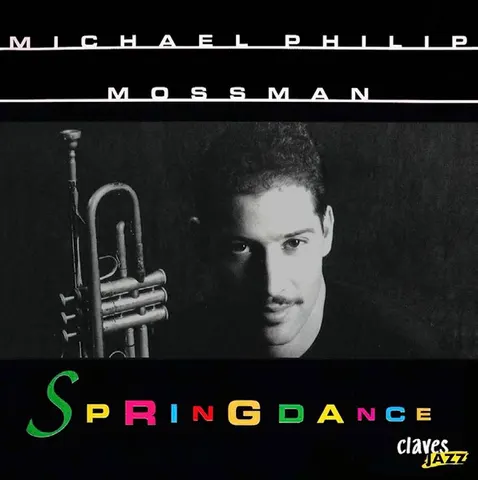
| Jazzin' (with India and the Count Basie Orchestra) | 1996 | TropiJazz (RMD82032) | Arrangements by Puente, Michael Philip Mossman, Hilton Ruiz and Marty Sheller; includes "Fever," "Love for Sale" and "What a Difference a Day Made" | — | — | — |
| Special Delivery (with Maynard Ferguson) | 1996 | Concord Picante (CCD-4732) | "Be-Bop," "Misterioso," "Stablemates," "On Green Dolphin Street," "Flying Home"; trumpets include Maynard Ferguson, Michael Philip Mossman, Bobby Shew and Wayne Bergeron | — | — | — |
| Live at Birdland: Dancemania '99 | 1998 | RMM (RMD 82270) | Recorded live at Birdland; includes "Lullaby of Birdland" and "Mambo Inn" | Grammy nomination (1999) | — | — |
| Mambo Birdland | 1999 | RMM (02828 40472) | Recorded live at Birdland with Ray Vega on trumpet; includes "Oye Có mo Va" and "Ran Kan Kan" | Grammy (2000); Latin Grammy, Best Traditional Tropical Album (2000) | — | — |
| Masterpiece / Obra Maestra (with Eddie Palmieri) | 2000 | RMM | Co-led with Eddie Palmieri; Paquito D'Rivera among the saxophonists | Grammy, Best Salsa Album (2001); Latin Grammy, Best Salsa Album (2001) | — | — |
Guest and Sideman Appearances (selected)
| Year | Project (Leader) | Title | Label | Catalog | Role | Notes |
|---|---|---|---|---|---|---|
| 1961 | Quincy Jones | Quincy Plays for Pussycats | Mercury | — | Percussion (one track) | "Mack the Knife," recorded February 21, 1961, with Mike Olatunji and Carlos "Patato" Valdés; the album collects sessions from 1959 to 1965 |
| 1965 | Sonny Stitt | The Matadors Meet the Bull | Roulette | SR-25339 | Timbales | With Joe Cuba on timbales and Ray Barretto on congas; Clark Terry, Joe Newman, J.J. Johnson and Urbie Green in the horns |
| 1987 | Woody Herman | Woody's Gold Star | Concord Jazz | CCD 4330 | Arranger | Puente arranged "Mambo Rockland"; recorded live at the Willow Theater, Concord, California, March 1987 |
| 1990 | Rhythmstick (Dizzy Gillespie and the CTI All-Stars) | Rhythmstick | CTI | 847 199-2 | Percussion (tracks 1 and 10) | Recorded June 19 to 21, 1989 at Van Gelder Studio, Englewood Cliffs, with Benny Golson, Phil Woods, Art Farmer, Charlie Haden, John Scofield, Randy Brecker, Airto Moreira and Flora Purim |
| 1990 | Poncho Sánchez | Chile Con Soul | Concord Picante | CCD-4406 | Timbales (special guest) | Latin jazz with soul-jazz repertoire |
| 1998 | Benny Golson | Remembering Clifford | Milestone | — | Percussion (track 7) | Track 7 is titled "Tito Puente," with Carlos "Patato" Valdés also on percussion; recorded in New York, March 30 and 31, 1997, with Peter Washington on bass |
Earliest Recordings
| Year | Title | Label | Notes |
|---|---|---|---|
| 1949 | "Mambo Macoco" / "Abaniquito" | Tico (1012) | Ten-inch 78 rpm with Vicentico Valdés on vocals; the first hit |
Compilations and Reissues
The Complete 78s, Volumes 1 to 4 (1949 to 1955 recordings, issued 2008 to 2010) · The Complete RCA Recordings, Volumes 1 and 2 (2000, 2001) · Top Percussion / Dance Mania (Bear Family, 1993) · The Best of the Concord Years (2000) · Quatro: The Definitive Collection (2012).
Awards
Years are the years of the ceremony.
| Year | Award | Work | Result |
|---|---|---|---|
| 1978 | Grammy, Best Latin Recording | La Leyenda | Nominee |
| 1979 | Grammy, Best Latin Recording | Homenaje a Beny Moré | Winner |
| 1981 | Grammy, Best Latin Recording | Dancemania '80 | Nominee |
| 1984 | Grammy, Best Tropical Latin Performance | On Broadway | Winner |
| 1986 | Grammy, Best Tropical Latin Performance | Mambo Diablo | Winner |
| 1987 | Grammy, Best Tropical Latin Performance | Homenaje a Beny Moré, Vol. III (with Celia Cruz) | Nominee |
| 1991 | Grammy, Best Tropical Latin Performance | "Lambada Timbales" | Winner |
| 1992 | Grammy, Best Tropical Latin Performance | The Mambo King 100th LP | Nominee |
| 1999 | Grammy, Best Tropical Latin Performance | Live at Birdland: Dancemania '99 | Nominee |
| 2000 | Grammy, Best Traditional Tropical Latin Performance | Mambo Birdland | Winner |
| 2000 | Latin Grammy, Best Traditional Tropical Album | Mambo Birdland | Winner |
| 2001 | Grammy, Best Salsa Album | Masterpiece / Obra Maestra (with Eddie Palmieri) | Winner |
| 2001 | Latin Grammy, Best Salsa Album | Obra Maestra (with Eddie Palmieri) | Winner |
| 2003 | Grammy Lifetime Achievement Award | Honoree (posthumous) |
- Machito, Mario Bauzá and Tito Rodríguez - Machito's orchestra gave Puente his first big-band drum chair, and Machito and Bauzá received his first arrangement by mail; with Rodríguez, Puente and Machito led the Palladium Ballroom's three leading bands.
- José Curbelo and Pupi Campo - dance-band leaders in whose orchestras he worked in the late 1940s.
- Vicentico Valdés - the singer on "Abaniquito" and "Mambo Macoco" (Tico, 1949) and other early records.
- Santitos Colón - lead vocalist on Dance Mania (1958).
- Ray Barretto and Mongo Santamaría - conga players on Dance Mania and Top Percussion (both 1958), respectively.
- Woody Herman - recorded Herman's Heat & Puente's Beat! (Everest, 1958) and used Puente's arrangement of "Mambo Rockland" on Woody's Gold Star (1987).
- La Lupe and Celia Cruz - the two singers he recorded most often for Tico in the 1960s; with Cruz he also recorded Homenaje a Beny Moré, Vol. 3 (1985).
- Eddie Palmieri - co-led Masterpiece / Obra Maestra (2000), recorded shortly before Puente's death.
- Sonny Stitt - Puente plays timbales, alongside Joe Cuba, on the 1965 Roulette album The Matadors Meet the Bull.
- Quincy Jones - Puente is one of the percussionists on "Mack the Knife" from Quincy Plays for Pussycats (Mercury, recorded 1961 and released in the mid-1960s).
- George Shearing - guest pianist on "Lullaby of Birdland" on Mambo Diablo (1985).
- Phil Woods - alto saxophone on three tracks of Salsa Meets Jazz (Concord Picante, 1988).
- Dizzy Gillespie, Benny Golson, Art Farmer, Charlie Haden, John Scofield, Randy Brecker, Airto Moreira, Flora Purim, Marvin "Smitty" Smith and Romero Lubambo - fellow players on Rhythmstick (CTI, recorded June 1989), where Puente joins Dizzy Gillespie on two pieces.
- Benny Golson - includes a piece called "Tito Puente" on Remembering Clifford (Milestone, 1998) with Puente on percussion.
- Maynard Ferguson, Michael Philip Mossman and Bobby Shew - the trumpet section on Special Delivery (1996).
- India and the Count Basie Orchestra - guests on Jazzin' (1996).
- Paquito D'Rivera, Claudio Roditi, Dave Valentin, Hilton Ruiz, Giovanni Hidalgo and Mongo Santamaría - members of the Golden Latin Jazz All Stars on Live at the Village Gate (1992).
- Poncho Sánchez - features Puente as special guest timbalero on Chile Con Soul (1990).
- Mario Rivera, Sonny Bravo, Jimmy Frisaura, Johnny Rodríguez and José Madera - band regulars across the Concord Picante and RMM years.
- Carl E. Jefferson - the Concord Jazz founder who produced the Concord Picante albums beginning with On Broadway (1983).
- Carlos Santana - recorded "Oye Có mo Va" on Abraxas (1970).
More Latin Jazz Artists
See all 185 Latin Jazz artists →More American Jazz Artists
See all 646 American artists →- Wikipedia: Tito Puente
- Wikipedia: List of awards and nominations received by Tito Puente
- Wikipedia: Dance Mania (album)
- Wikipedia: Mambo Birdland
- Wikipedia: Oye Como Va
- Wikipedia: El Rey (Tito Puente album)
- Wikipedia: Quincy Plays for Pussycats
- Wikipedia: Palladium Ballroom
- Wikipedia: Grammy Award for Best Tropical Latin Album
- Grammy.com: Tito Puente
- Discogs: Tito Puente
- MusicBrainz: Tito Puente
- Encyclopedia.com: Puente, Tito
- DownBeat: Tito Puente enters the Hall of Fame