 JAZZPROFILES lives in the music 1,572 Jazz Artists fully Profiled!
 Stan Kenton
Last updated September 5, 2026
Listen on Spotify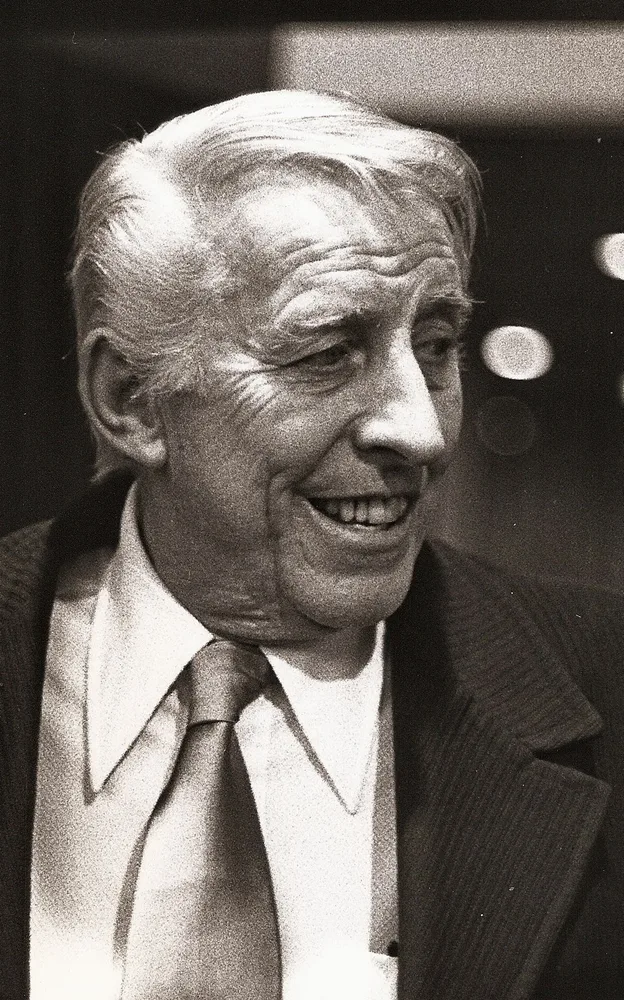
Stan Kenton photographed after a concert in Munich, September 25, 1973 CC BY-SA 3.0 (photographer Hans Bernhard / Wikimedia user Schnobby; dual-licensed GFDL and CC BY-SA) — Wikimedia Commons — https://commons.wikimedia.org/wiki/File:Stan_Kenton.JPG

Stanley Newcomb Kenton was born December 15, 1911, in Wichita, Kansas. Because he was born out of wedlock, his parents Floyd and Stella told him his birthday was February 19, 1912, and he believed the false date his whole life; his grave marker still carries it, and the December 1911 date was established later by the British Kenton biographer Michael Sparke. The family moved to Colorado and then, in 1924, to Bell, California, where Kenton attended Bell High School and was tagged in the yearbook as "Old Man Jazz." Around age fifteen the pianist Ralph Yaw introduced him to the records of Louis Armstrong and Earl Hines. At sixteen he was playing solo piano in a local hamburger restaurant for fifty cents a night plus tips and leading a group called the Bell-Tones. After graduating in 1930 he worked speakeasies around San Diego and Las Vegas, played with the Francis Gilbert territory band in 1932 and the Everett Hoagland Orchestra in 1933 (which brought him to the Rendezvous Ballroom in Balboa, California, for the first time), joined Gus Arnheim's orchestra in April 1936, cut his first recordings as a sideman with Arnheim in the summer of 1937 (fourteen sides for Brunswick), and spent part of 1938 in Vido Musso's band.
Kenton formed his own orchestra in 1940 and put it on the stand at the Rendezvous Ballroom through the summer of 1941, with Howard Rumsey on bass and Chico Alvarez on trumpet. Early Decca sides sold poorly. The band made its first New York appearance at the Roseland Ballroom in February 1942, and a 1943-44 stretch as the house band on Bob Hope's radio show went badly enough that Les Brown replaced him. What turned it around was a Capitol Records contract in late 1943 and the hit "Eager Beaver." Art Pepper and, briefly, Stan Getz passed through the reed section, and Anita O'Day sang with the band before June Christy replaced her in 1945. That same year Pete Rugolo became Kenton's chief arranger and brought Stravinsky and Bartok into the book; "Tampico" and "Across the Alley from the Alamo" became the band's biggest sellers, and the theme "Artistry in Rhythm" gave the whole era its name.
In September 1947, after a five-month layoff, Kenton reassembled a larger and deliberately uncommercial band and called what it played Progressive Jazz. Rugolo wrote most of the book; Bob Graettinger contributed "Thermopylae" and the sprawling four-movement "City of Glass," premiered in Chicago in April 1948. Eddie Safranski played bass and Shelly Manne drums, Laurindo Almeida brought classical guitar and Jack Costanzo bongos into a jazz orchestra for the first time in Kenton's band, and Latin material such as Rugolo's "Introduction to a Latin Rhythm" and the band's "The Peanut Vendor" sat alongside Graettinger's atonal writing. The band took five first-place finishes in the Down Beat polls at the end of 1947 and played Carnegie Hall, Symphony Hall in Boston, the Chicago Civic Opera House, and the Hollywood Bowl, where a June 12, 1948, concert drew more than 15,000 people and paid Kenton $13,000. He shut the orchestra down on December 14, 1948, at the Paramount Theatre in New York.
The 1950-51 Innovations in Modern Music orchestra was the largest thing Kenton ever put on the road: thirty-nine musicians including sixteen strings, a woodwind section, and two French horns, with Maynard Ferguson, Shorty Rogers, Art Pepper, Bud Shank, Bob Cooper, Almeida, Manne, and Christy in it. Two tours lost money and Kenton went back to a nineteen-piece band in 1951, this time with a book by Gerry Mulligan, Johnny Richards, Bill Holman, and Bill Russo that pointed toward bebop rather than the concert hall. That band recorded New Concepts of Artistry in Rhythm over September 8-16, 1952, with Lee Konitz on alto, Ferguson and Conte Candoli on trumpets, Frank Rosolino on trombone, Sal Salvador on guitar, and Stan Levey on drums. Mel Lewis took the drum chair in 1954 and stayed through 1956, the period most often described as Kenton's hardest-swinging; the July 1955 Chicago sessions for Contemporary Concepts put Charlie Mariano and Lennie Niehaus in front of Holman's arrangements. Cuban Fire!, Johnny Richards's Afro-Cuban suite recorded May 22-24, 1956, reached No. 17 on the Billboard chart, and the stereo remakes on Kenton in Hi-Fi reached No. 22 the same year. It was on this band that bassist Oscar Pettiford placed the young baritone saxophonist Pepper Adams, who toured with Kenton for most of 1956 in the gig that first put him in front of a national audience.
The other thing 1956 produced was the worst controversy of Kenton's career. Returning from a European tour and finding the Down Beat critics poll dominated by Black musicians, he wired the magazine complaining of "a new minority, white jazz musicians"; Leonard Feather answered with an open letter in the October 3, 1956, issue questioning his racial views. Fewer than two percent of the 600-plus musicians who passed through Kenton's bands over four decades were Black. Musically the late 1950s stayed strong: Standards in Silhouette, recorded September 21-22, 1959, with Bill Mathieu's arrangements and Mariano's alto, is among the most admired of his ballad records. In 1960 he rebuilt the orchestra around a section of mellophoniums, a forward-belled hybrid pitched between trumpet and trombone, and made eleven LPs with it. Kenton's West Side Story, cut March 15-16 and April 11, 1961, at the Goldwyn Sound Stage in Hollywood with Richards arranging, reached No. 16 on the Billboard chart and won the 1962 Grammy for Best Jazz Performance, Large Group; Adventures in Jazz won the same award the following year. The mellophonium band ended with a U.S. and U.K. tour in November 1963, after a divorce decree from the singer Ann Richards required Kenton to spend a year off the road with their two children or lose custody.
Kenton came back in 1965 conducting the Los Angeles Neophonic Orchestra, a concert ensemble whose Capitol album drew a Grammy nomination, but four Capitol LPs between 1966 and 1969, including a 1968 record of music from Hair that he had almost nothing to do with, marked the low point of his recording career and ended his long association with the label and its producer Lee Gillette. In 1970 he founded Creative World Records, bypassed the record business, and sold his own catalog by direct mail to jazz fans. Hank Levy and Bob Curnow wrote for the 1970s bands, which paired veterans with musicians barely out of school: drummer Peter Erskine joined in 1972 for his first professional job and stayed four years, and Tim Hagans, Douglas Purviance, and Mike Vax came through the same way. 7.5 on the Richter Scale (1973), Kenton '76, and Journey into Capricorn (1976) are the best-regarded records of the Creative World period. Kenton had started the Stan Kenton Band Clinics at Indiana University in 1959, the model for most of the summer jazz camps that followed, and he bequeathed his entire orchestra library, more than 2,000 manuscripts by Rugolo, Graettinger, Holman, and Russo, to what is now the University of North Texas, in part so that no ghost band could tour under his name after his death.
Heavy drinking left Kenton accident-prone in his last decade, and a fall in Reading, Pennsylvania, in May 1977 fractured his skull. He gave his last performance on August 20, 1978, was admitted to Midway Hospital near Los Angeles on August 17, 1979, after a stroke, and passed away there on August 25, 1979, at sixty-seven. In 2010 his daughter Leslie Kenton published a memoir, Love Affair, disclosing that her father had sexually abused her between 1952 and 1954, when she was eleven to thirteen; the disclosure later led the University of North Texas to rename a recital hall that had carried his name.
Kenton built his reputation on scale, brass weight, and harmonic ambition rather than on swing, and he was argued about on exactly those grounds for four decades. He enlarged the jazz orchestra past forty players, extended it downward with bass trombones and tubas and upward with high lead trumpet, pushed its dynamic range to extremes, and moved big-band jazz off the dance floor and into the concert hall, which put him at the center of the Third Stream conversation alongside the classical borrowings of Bob Graettinger and Johnny Richards. The trade-off was real: critics who valued rhythmic feel over orchestral color found the 1947-48 and 1950-51 bands cold and overbuilt, and the bands that swing hardest on record are the ones with Mel Lewis in the drum chair and Bill Holman writing. Where he is least disputed is as a talent pipeline. Art Pepper, Stan Getz, Lee Konitz, Maynard Ferguson, Shorty Rogers, Shelly Manne, Bud Shank, Frank Rosolino, Charlie Mariano, Anita O'Day, June Christy, and Peter Erskine all did significant early work in his orchestras, and much of what became West Coast jazz in the 1950s was staffed by Kenton alumni. He entered the Down Beat Hall of Fame in 1954, was voted Playboy's jazz artist of the year in 1957, 1958, and 1959, and the 1943 single of "Artistry in Rhythm" was added to the Library of Congress National Recording Registry in 2011.
- New Concepts of Artistry in Rhythm (1953, Capitol) - Recorded September 8-16, 1952, with Lee Konitz, Maynard Ferguson, Conte Candoli, and Frank Rosolino, and containing Bill Russo's "Improvisation" and Bill Holman's "Invention for Guitar and Trumpet"; widely treated as the peak of the 1950s bands. Spotify - Concepts of Artistry in Rhythm Listen
- Cuban Fire! (1956, Capitol) - Johnny Richards's Afro-Cuban suite, recorded May 22-24, 1956, with Lucky Thompson and Carl Fontana soloing and Mel Lewis on drums; No. 17 on the Billboard chart. Spotify - Cuban Fire Listen
- Kenton's West Side Story (1961, Capitol) - The mellophonium orchestra on Johnny Richards's Bernstein arrangements, recorded at the Goldwyn Sound Stage in March and April 1961; Kenton's first Grammy and a No. 16 chart placing. Spotify - Kenton's West Side Story Listen
- City of Glass (1951, Capitol) - Bob Graettinger's atonal, through-composed writing for the Progressive Jazz and Innovations orchestras, drawn from sessions between December 1947 and May 1953; the most uncompromising music Kenton ever put his name to. Spotify - City of Glass Listen
- Contemporary Concepts (1955, Capitol) - Recorded July 20 and 22, 1955, at Universal Studios in Chicago, with six Bill Holman charts and one by Gerry Mulligan, Charlie Mariano and Lennie Niehaus on altos and Mel Lewis driving the rhythm section. Spotify - Contemporary Concepts (Expanded Edition) Listen
- Standards in Silhouette (1959, Capitol) - Nine slow ballads arranged by Bill Mathieu and recorded September 21-22, 1959, live in a cavernous ballroom with minimal overdubbing; the most atmospheric record of Kenton's Capitol years. Spotify - Standards in Silhouette Listen
- Kenton in Hi-Fi (1956, Capitol) - Stereo remakes of the 1940s Capitol hits, made a decade on with the working band; No. 22 on the Billboard chart and the record that kept the orchestra solvent as rock and roll took the market. Spotify - Kenton in Hi-Fi Listen
- 7.5 on the Richter Scale (1973, Creative World) - The best-regarded studio album of the self-released Creative World period, built on Hank Levy's odd-meter writing, with Peter Erskine on drums. Spotify - 7.5 on the Richter Scale Listen
Stan Kenton: Curated Discography
Kenton is credited on 1,793 releases on Discogs under artist ID 212786, with a further 1,282 filed under the separate "Stan Kenton And His Orchestra" artist entry (320804), and the two overlap heavily across reissues, compilations, radio transcriptions, and posthumous live releases. This file does not attempt exhaustive coverage. It curates the 30 releases most consistently cited as the significant ones across his four decades as a leader, covering every band era from the 1946 Capitol sides to the last Creative World studio dates, and verifies label, catalog number, and format against Discogs. Where a detail could not be confirmed it is marked "not confirmed" rather than guessed.
Kenton led every one of these dates. His only substantial sideman work predates the orchestra and is listed in the second table.
As Leader / Co-Leader
| Album Title | Recording Date(s) | Release Date | Label | Catalog Number | Format(s) | Personnel | Role | Reissue History | Spotify | Buy | Notes |
|---|---|---|---|---|---|---|---|---|---|---|---|
| Artistry in Rhythm | Capitol sides recorded 1943-1946; exact session dates not confirmed | 1946 | Capitol Records | BD-39 (1946 78 rpm album); CD-167 (1950 78 rpm set); T-167 / SM-167 (LP) | Shellac 78 rpm album set; later Vinyl LP | Stan Kenton (piano, leader); orchestra including Vido Musso, Bob Cooper (tenor sax), Buddy Childers (trumpet), Bob Gioga (baritone sax); arrangements by Kenton and Pete Rugolo | Leader | Repackaged as a Capitol LP (T-167, reissued 1975 as SM-167) and on numerous later compilations | Spotify - Artistry in Rhythm | — | The title track is Kenton's theme; the 1943 single was added to the Library of Congress National Recording Registry in 2011. The Spotify entry is a later 14-track compilation of the Capitol sides, not the original 78 rpm album sequence |
| A Presentation of Progressive Jazz | Recorded 1947-1948 | 1948 (78 rpm set); 1951 (10-inch LP) | Capitol Records | CD-79 (78 rpm album); H172 (10-inch LP) | Shellac 10", 78 RPM; Vinyl 10" LP | Stan Kenton (piano, leader), Eddie Safranski (bass), Shelly Manne (drums), Art Pepper (alto sax), Bob Cooper (tenor sax), Laurindo Almeida (guitar), Jack Costanzo (bongos), Milt Bernhart (trombone), Conte Candoli / Buddy Childers / Ray Wetzel / Chico Alvarez (trumpets); arrangements by Pete Rugolo | Leader | Later Capitol and Creative World reissues | — | — | The only album from the September 1947 to December 1948 Progressive Jazz band; reviews at the time were mixed. No confirmed Spotify album match |
| Innovations in Modern Music, Volume One | Recorded 1950 | 1950 | Capitol Records | P-189 / W-189 | Vinyl, LP | Stan Kenton (piano, leader) with the 39-piece Innovations orchestra: 16 strings, woodwinds, two French horns, plus Maynard Ferguson, Shorty Rogers (trumpets), Art Pepper, Bud Shank, Bob Cooper (reeds), Laurindo Almeida (guitar), Shelly Manne (drums), June Christy (vocal) | Leader | Reissued on Creative World (ST-1009) as Innovations in Modern Music | Spotify - Innovations in Modern Music | — | The record of the two 1950-51 Innovations tours, Kenton's first major commercial failure |
| Stan Kenton Presents | Recorded 1950 | 1950 | Capitol Records | L 248 | Vinyl, 10" LP | Stan Kenton (piano, leader) with the Innovations-era orchestra; featured soloists across the tracks | Leader | Reissued on Creative World (ST 1023) | — | — | A features album spotlighting individual members of the 1950 orchestra. No confirmed Spotify album match |
| City of Glass | Sessions December 1947 through May 1953 | 1951 (Wikipedia); Discogs dates the Capitol H-353 10-inch LP to 1952 | Capitol Records | H-353 (10-inch LP); EBF-353 (45 rpm box) | Vinyl 10" LP; 45 rpm box set | Stan Kenton (conductor, piano), Art Pepper (alto sax), Maynard Ferguson (trumpet), Shelly Manne (drums), June Christy (vocal on one track); all compositions and arrangements by Robert Graettinger | Leader (Graettinger as composer) | Expanded 1995 CD on Capitol Jazz collecting the full Graettinger material | Spotify - City of Glass | — | AllMusic 4.5 stars; a Penguin Guide core-collection entry; charted in the Billboard top ten in November 1952. Release year differs between sources |
| New Concepts of Artistry in Rhythm | Recorded September 8-16, 1952 | 1953 | Capitol Records | H-383 (10-inch LP); T-383 (12-inch LP) | Vinyl 10" LP; Vinyl LP | Stan Kenton (piano, leader), Lee Konitz (alto sax), Maynard Ferguson, Conte Candoli (trumpets), Frank Rosolino (trombone), Sal Salvador (guitar), Stan Levey (drums); arrangements by Bill Russo, Bill Holman, Gerry Mulligan | Leader | Reissued on Creative World (ST-1002); 1989 CD expanded from 8 to 12 tracks with material from the same sessions | Spotify - Concepts of Artistry in Rhythm | — | AllMusic 4.5 stars. Spotify carries the 12-track expanded CD under the shortened title "Concepts of Artistry in Rhythm"; tracklist verified as the expanded edition of this album |
| Sketches on Standards | Recorded 1952-1953; exact session dates not confirmed | 1953 | Capitol Records | H 426 (10-inch LP); T-426 (12-inch LP) | Vinyl 10" LP; Vinyl LP | Stan Kenton (piano, leader) with the 1953 orchestra; arrangements largely by Bill Russo | Leader | Reissued on Creative World (ST 1041); 2002 Capitol Jazz CD remaster (7243 5 34070 2 5) | Spotify - Sketches on Standards | — | Kenton's most straightforwardly appealing early-1950s record, treating standards through Russo's writing |
| Kenton Showcase: The Music of Bill Russo / The Music of Bill Holman | Recorded 1953-1954; exact session dates not confirmed | 1954 (two 10-inch LPs); 1955 (combined 12-inch LP) | Capitol Records | H525 (Russo, 10"); H526 (Holman, 10"); W524 (combined LP); T-598 (later combined issue) | Vinyl 10" LP; Vinyl LP | Stan Kenton (piano, leader) with the 1954 orchestra; two separate books, one by Bill Russo and one by Bill Holman | Leader | Reissued on Creative World (ST-1026); 2000 Capitol Jazz CD pairing both volumes (7243 5 25244 2 6) | Spotify - Kenton Showcase (Expanded Edition) | — | Issued as a matched pair contrasting Kenton's two principal 1950s arrangers |
| Contemporary Concepts | Recorded July 20 and 22, 1955, Universal Studios, Chicago | 1955 | Capitol Records | T 666 | Vinyl, LP, Album | Stan Kenton (piano, conductor), Charlie Mariano and Lennie Niehaus (alto sax), Bill Perkins (tenor sax), Carl Fontana (trombone), Sam Noto and Stu Williamson (trumpets), Mel Lewis (drums); arrangements by Bill Holman (tracks 1-6) and Gerry Mulligan (track 7); produced by Bob Martin and Bill Putnam | Leader | Reissued on Creative World (ST-1003); 2003 Capitol Jazz CD remaster (724354231025) | Spotify - Contemporary Concepts (Expanded Edition) | — | The Mel Lewis band at full stretch; Spotify carries the 11-track expanded edition rather than the 7-track original |
| Duet (with June Christy) | Recorded 1955; exact session dates not confirmed | 1955 | Capitol Records | T 656 | Vinyl, LP, Album | Stan Kenton (piano), June Christy (vocal); duo only | Co-leader (with June Christy) | Reissued on Creative World (ST 1048); Capitol Jazz CD (CDP 0777 7 89285 2 2) | Spotify - Duet (Remastered) | — | Kenton alone at the piano behind his most closely associated singer, with no orchestra |
| Kenton in Hi-Fi | Recorded 1956; exact session dates not confirmed | 1956 | Capitol Records | W-724 | Vinyl, LP, Album | Stan Kenton (piano, leader) with the 1956 orchestra including Mel Lewis (drums) | Leader | Reissued on CD as Capitol Jazz CDP 7 98451 2 (1992/1997) | Spotify - Kenton in Hi-Fi | — | Stereo remakes of the 1940s Capitol hits; No. 22 on the Billboard album chart and a badly needed commercial success |
| Cuban Fire! | Recorded May 22-24, 1956, New York City; additional sessions September 19-21, 1960, Los Angeles | 1956 (original LP) | Capitol Records | T731 | Vinyl, LP, Album | Stan Kenton (piano, conductor), Lucky Thompson (tenor sax), Carl Fontana (trombone), Mel Lewis (drums), expanded Latin percussion; suite composed and arranged by Johnny Richards; the 1960 additions use the mellophonium orchestra, conducted by Richards and Gene Roland | Leader | Reissued on Creative World (ST-1008) and Capitol (SM-11794); 1991 CD (CDP 7 96260 2) adding the 1960 material | Spotify - Cuban Fire | — | No. 17 on Billboard, charting four weeks from September 15, 1956; a watershed Latin jazz orchestral record and the album that made Johnny Richards's name |
| Back to Balboa | Recorded 1958; exact session dates not confirmed | 1958 | Capitol Records | T995 | Vinyl, LP, Album | Stan Kenton (piano, leader) with the 1958 orchestra | Leader | Reissued on Creative World (ST1031); 2004 Capitol CD | Spotify - Back to Balboa | — | Named for the Rendezvous Ballroom in Balboa, California, where Kenton's first orchestra broke in during 1941 |
| The Ballad Style of Stan Kenton | Recorded 1958; exact session dates not confirmed | 1958 | Capitol Records | T 1068 (mono); ST 1068 (stereo) | Vinyl, LP, Album | Stan Kenton (piano, leader) with the 1958 orchestra | Leader | 1997 Capitol Jazz CD (7243 8 56688 2 1) | Spotify - The Ballad Style of Stan Kenton | — | A ballads program that prefigures Standards in Silhouette the following year |
| Standards in Silhouette | Recorded September 21-22, 1959 | 1959 | Capitol Records | T 1394 (mono); ST 1394 (stereo) | Vinyl, LP, Album | Stan Kenton (conductor; piano on "Django" only), Charlie Mariano (alto sax), Bud Brisbois, Clyde Reasinger, Bill Chase, Rolf Ericson (trumpets), Archie LeCoque, Don Sebesky, Kent Larson (trombones); all arrangements by Bill Mathieu; produced by Lee Gillette | Leader | Reissued on Creative World (ST 1049); 1998 CD (CDP 94503 2) | Spotify - Standards in Silhouette | — | Nine slow ballads recorded live in a cavernous ballroom with minimal overdubbing; four stars in Down Beat |
| Viva Kenton! | Recorded 1959; exact session dates not confirmed | 1960 | Capitol Records | W-1305 (mono); SW 1305 (stereo) | Vinyl, LP, Album | Stan Kenton (piano, leader), Charlie Mariano (alto sax), expanded Latin percussion | Leader | Reissued on Creative World (ST 1063) | — | — | The Latin follow-up to Cuban Fire!, and one of Charlie Mariano's last Kenton dates. No confirmed Spotify album match |
| The Romantic Approach | Recorded 1961; exact session dates not confirmed | 1961 | Capitol Records | T 1533 (mono); ST 1533 (stereo) | Vinyl, LP, Album | Stan Kenton (piano, leader) with the mellophonium orchestra; arrangements by Kenton | Leader | Reissued on Creative World (ST 1017); 2005 CD paired with The Sophisticated Approach | Spotify - The Romantic Approach | — | The first of the eleven mellophonium-band LPs; praised in a September 1961 Down Beat review |
| Kenton's West Side Story | Recorded March 15-16 and April 11, 1961, Goldwyn Sound Stage, Hollywood | 1961 | Capitol Records | T 1609 (mono); ST 1609 (stereo) | Vinyl, LP, Album | Stan Kenton (conductor, piano), seven trumpets plus the mellophonium section, Conte Candoli (trumpet solos); all arrangements by Johnny Richards | Leader | Reissued on Creative World (ST 1007); 1994 Capitol Jazz CD (CDP 7243 8 29914 2 7) | Spotify - Kenton's West Side Story | — | Won the 1962 Grammy for Best Jazz Performance, Large Group (Instrumental), Kenton's first; No. 16 on Billboard across 26 weeks; AllMusic 4.5 stars |
| Adventures in Jazz | Recorded 1961; exact session dates not confirmed | 1962 | Capitol Records | T-1796 (mono); ST 1796 (stereo) | Vinyl, LP, Album | Stan Kenton (piano, leader) with the mellophonium orchestra | Leader | Reissued on Creative World (ST-1010); 1999 Capitol Jazz CD (7243 5 21222 2 6) | Spotify - Adventures in Jazz | — | Won the 1963 Grammy for Best Jazz Performance, Large Group (Instrumental) and was nominated for Best Engineered Recording |
| Adventures in Time: A Concerto for Orchestra | Recorded 1962 | 1963 | Capitol Records | ST-1844 | Vinyl, LP, Album | Stan Kenton (piano, leader) with the mellophonium orchestra; suite composed and arranged by Johnny Richards | Leader | Reissued on Creative World (ST-1011); 1997 Capitol Jazz CD (CDP 7243 8 55454 2 9) | Spotify - Adventures in Time (Remastered) | — | Richards's most ambitious Kenton commission and the high point of the mellophonium band's capability |
| Kenton / Wagner | Recorded 1964; exact session dates not confirmed | 1964 | Capitol Records | TAO 2217 (mono); T 2217 | Vinyl, LP, Album | Stan Kenton (conductor) with an expanded orchestra; all arrangements by Kenton | Leader | Reissued on Creative World (ST-1024) | — | — | Wagner excerpts arranged for jazz orchestra; a deliberate return to concert-hall ambition that sold poorly. No confirmed Spotify album match |
| Stan Kenton Conducts the Los Angeles Neophonic Orchestra | Recorded 1965 | 1965 | Capitol Records | T 2424 (mono); SW 2424 (stereo) | Vinyl, LP, Album | Stan Kenton (conductor) with the Los Angeles Neophonic Orchestra | Leader (conductor) | Reissued on Creative World (ST 1013); 1998 Capitol Jazz CD remaster (CDP 7243 4 94502 2 6) | Spotify - Stan Kenton Conducts the Los Angeles Neophonic Orchestra | — | Nominated for a 1967 Grammy for Best Instrumental Jazz Performance; the document of Kenton's concert-orchestra project |
| The World We Know | Recorded 1967 | 1967 | Capitol Records | T 2810 (mono); ST 2810 (stereo) | Vinyl, LP, Album | Stan Kenton (piano, leader) with the 1967 orchestra | Leader | Later reissues on Capitol | — | — | Won an Edison Award in the Netherlands in 1968, the outlier in an otherwise weak stretch of late-Capitol releases. No confirmed Spotify album match |
| The Jazz Compositions of Dee Barton | Recorded 1967 | 1968 | Capitol Records | T 2932 (mono); ST 2932 (stereo) | Vinyl, LP, Album | Stan Kenton (piano, leader) with the 1967 orchestra; all compositions by Dee Barton | Leader | Reissued on Creative World (ST 1022); 2007 Capitol Jazz CD remaster (0946 3 96732 2 3) | Spotify - The Jazz Compositions of Dee Barton (Remastered) | — | The other genuine artistic success of the final Capitol years, and largely overlooked at the time |
| Live at Redlands University | Recorded 1970 | 1971 | Creative World | ST-1015 | Vinyl, LP, Album (2xLP) | Stan Kenton (piano, leader) with the 1970 touring orchestra | Leader | 1986 CD on Creative World / GNP Crescendo (STD 1015) | Spotify - Live at Redlands University | — | The first release on Kenton's own label, sold largely by direct mail; Discogs shows LP pressings dated 1971 and 1972 |
| Live at Brigham Young University | Recorded 1971 | 1971 | Creative World | ST-1039 | Vinyl, LP, Quadraphonic | Stan Kenton (piano, leader) with the 1971 touring orchestra | Leader | CD reissue on Creative World / GNP Crescendo (STD 1039), 1989 | Spotify - Live at Brigham Young University | — | One of the quadraphonic Creative World issues; a college-circuit concert of the kind that sustained the band through the 1970s |
| National Anthems of the World | Recorded 1972, Western Recorders | 1972 | Creative World | ST 1060 | Vinyl, 2xLP, Quadraphonic | Stan Kenton (piano, leader) with the 1972 orchestra; all 40 arrangements by Bob Curnow | Leader | 2009 CD reissue on Creative World | — | — | A double LP of national anthems arranged for jazz orchestra, unique in the big-band literature. No confirmed Spotify album match |
| 7.5 on the Richter Scale | Recorded 1973, Wally Heider Recording Studio, Los Angeles | 1973 | Creative World | ST 1070 | Vinyl, LP, Album | Stan Kenton (piano, leader), Peter Erskine (drums) and the 1973 orchestra; arrangements by Hank Levy and others | Leader | 1991 CD on Creative World / GNP Crescendo (STD 1070); UK LP on Jasmine (JAS 201) | Spotify - 7.5 on the Richter Scale | — | The most admired studio record of the Creative World era, built on Hank Levy's odd-meter writing |
| Kenton '76 | Recorded 1976, Universal Recording Studio | 1976 | Creative World | ST 1076 | Vinyl, LP, Album | Stan Kenton (piano, leader) with the 1976 orchestra | Leader | 1991 CD on Creative World / GNP Crescendo (STD 1076) | Spotify - Kenton '76 | — | A late studio date documenting the last long-running edition of the band |
| Journey into Capricorn | Recorded 1976, United Western Studios | 1976 | Creative World | ST 1077 | Vinyl, LP, Album | Stan Kenton (piano, leader) with the 1976 orchestra | Leader | 1992 CD on Creative World (STD 1077); UK LP on Jasmine (JAS 205) | — | — | Kenton's final significant studio album; he played his last performance two years later, on August 20, 1978. No confirmed Spotify album match |
As Sideman (selected major credits)
Kenton worked as a sideman only before forming his own orchestra in 1940, and the surviving documentation is thin.
| Year | Project (Leader) | Title | Label | Catalog | Role | Notes |
|---|---|---|---|---|---|---|
| 1937 | Gus Arnheim and His Orchestra | Fourteen sides recorded summer 1937 | Brunswick | Individual 78 rpm catalog numbers not confirmed | Piano | Kenton's first appearances on record, made after he joined Arnheim in April 1936 |
| 1938 | Vido Musso and His Orchestra | Session titles not confirmed | Not confirmed | Not confirmed | Piano | A brief stint in Musso's short-lived band; Musso later played tenor saxophone in Kenton's own orchestra |
Kenton's 1933 work with the Everett Hoagland Orchestra and his 1932 stint with the Francis Gilbert territory band are documented in biographies but no commercial recordings from either have been confirmed.
- Pete Rugolo - chief arranger from late 1945 through the Innovations orchestra, and the writer most responsible for the Artistry in Rhythm and Progressive Jazz sounds.
- Bob Graettinger - staff composer from 1947; wrote "Thermopylae" and City of Glass, the furthest Kenton ever went from dance-band writing.
- Bill Holman and Bill Russo - the two arrangers who reshaped the book after 1951, Holman toward hard-swinging bop (Contemporary Concepts, the Holman volume of Kenton Showcase) and Russo toward extended concert forms ("Improvisation," the Russo volume of Kenton Showcase).
- Johnny Richards - arranger of Cuban Fire! (1956), Kenton's West Side Story (1961), and the Adventures in Time suite (1962), the writer behind both of Kenton's Grammy wins.
- June Christy and Anita O'Day - the band's two defining vocalists of the 1940s; O'Day sang the early Capitol sides, Christy replaced her in 1945 and stayed through the Innovations orchestra, and Duet (1955) paired Christy with Kenton alone at the piano.
- Lee Konitz - alto saxophone on the 1952-53 band and on New Concepts of Artistry in Rhythm.
- Charlie Mariano - alto saxophone on Kenton albums from Contemporary Concepts (1955) through Road Show and Standards in Silhouette (1959) and Viva Kenton! (1960).
- Pepper Adams - baritone saxophone for most of 1956, recommended to Kenton by bassist Oscar Pettiford.
- Maynard Ferguson, Shorty Rogers, Conte Candoli, Frank Rosolino, Art Pepper, Bud Shank, Bob Cooper, Lennie Niehaus, Bill Perkins, Shelly Manne, Mel Lewis, Stan Levey, Eddie Safranski, Laurindo Almeida, Sal Salvador - the core of the 1947-1956 orchestras and, afterward, of West Coast jazz.
- Peter Erskine - drummer from 1972 for four years, his first professional job; Tim Hagans, Douglas Purviance, and Mike Vax came out of the same 1970s bands.
- Hank Levy and Bob Curnow - the arrangers of the Creative World era; Curnow also became the label's A&R manager in June 1973 and wrote all forty charts on National Anthems of the World.
More Big Band Artists
See all 202 Big Band artists →More American Jazz Artists
See all 567 American artists →- Wikipedia: Stan Kenton
- Discogs: Stan Kenton (artist 212786)
- AllMusic: Stan Kenton biography
- Wikipedia: New Concepts of Artistry in Rhythm
- Wikipedia: Cuban Fire!
- Wikipedia: Contemporary Concepts
- Wikipedia: City of Glass (Stan Kenton album)
- Wikipedia: Kenton's West Side Story
- Wikipedia: Standards in Silhouette
- Wikipedia: Stan Kenton Band Clinics
- Wikipedia: Peter Erskine
- Wikipedia: Charlie Mariano
- University of North Texas Music Library: Stan Kenton Collection, 1936-2001