 JAZZPROFILES lives in the music 1,572 Jazz Artists fully Profiled!
 Chick Corea
Last updated September 7, 2026
Listen on Spotify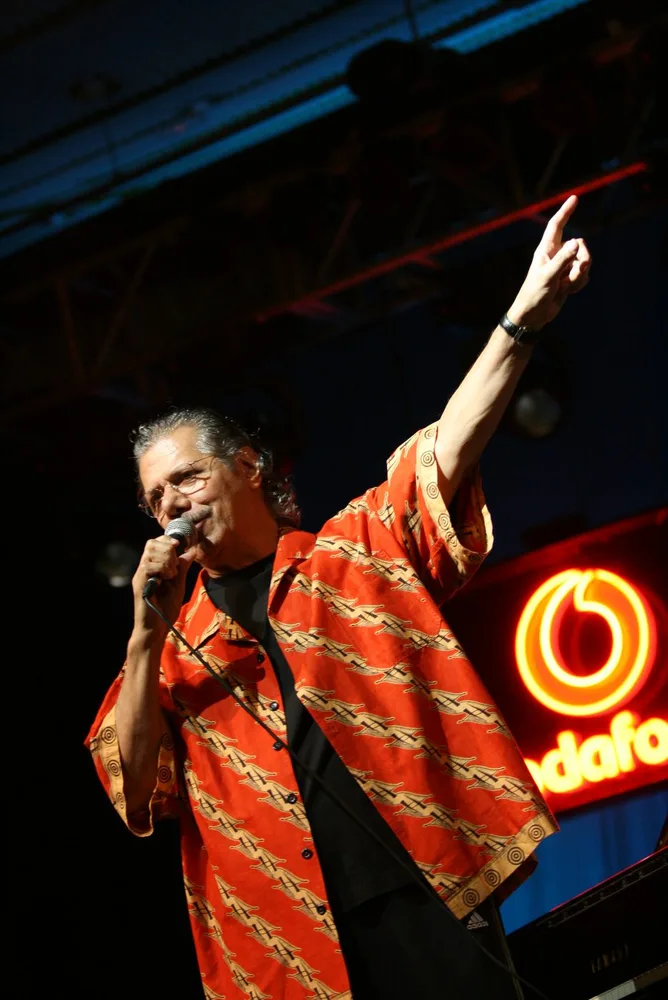
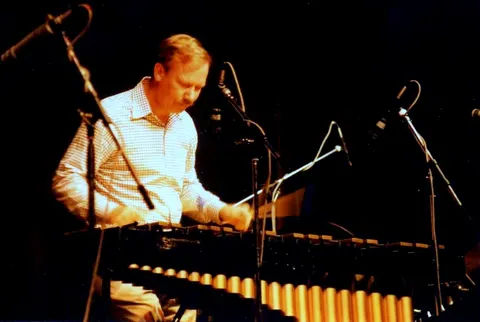
Chick Corea at the Festival de Jazz de Vitoria 2010 CC BY 2.0 — Wikimedia Commons — https://commons.wikimedia.org/wiki/File:Chick_Corea_-_Festival_de_Jazz_de_Vitoria_2010.jpg

Armando Anthony "Chick" Corea was born June 12, 1941, in Chelsea, Massachusetts, to a father, Armando J. Corea, who led a Dixieland band around Boston in the 1930s and 40s, and who put him at the piano at age four. Formal training started at eight, under Italian concert pianist Salvatore Sullo. The bebop records in the house — Dizzy Gillespie, Charlie Parker, Bud Powell, Horace Silver, Lester Young — did as much to shape him as the classical lessons did. He briefly picked up drums at eleven and kept playing them on and off for the rest of his career. After high school he enrolled at Columbia University, then transferred to Juilliard, then dropped out of both to go play.
New York in the early 1960s meant sideman work, and a lot of it: Mongo Santamaria's Go, Mongo! in 1962 was his first recorded credit, followed by featured billing on Sonny Stitt's Stitt Goes Latin (1963) alongside percussionist Willie Bobo and trumpeter Thad Jones, three albums with trumpeter Blue Mitchell between 1965 and 1967, and three more with flutist Herbie Mann in 1965 alone. His own recorded debut as a leader, Tones for Joan's Bones, was cut in 1966 and released in 1968 on Vortex; the far more consequential record came the same year. Now He Sings, Now He Sobs (1968), a trio session with bassist Miroslav Vitouš and drummer Roy Haynes, is now a Grammy Hall of Fame album (inducted 1999) and the first recording of "Matrix," one of his most-covered compositions. It set the terms — technically fluent, harmonically restless, never showy for its own sake — that the rest of his catalog kept returning to.
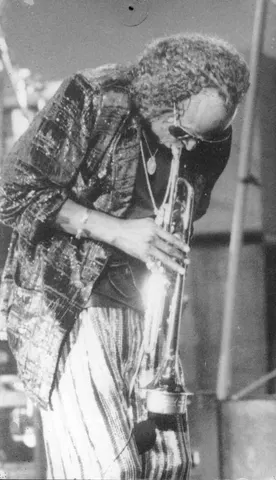
Miles Davis brought him into the band in the fall of 1968. Over the next two years Corea played on Filles de Kilimanjaro (1968), In a Silent Way (1969), and Bitches Brew (1970), and on the sessions later assembled as Live-Evil, On the Corner, Big Fun, Water Babies, and Circle in the Round. It was here, switching to electric piano at Davis's insistence, that Corea became one of the musicians who invented the sound of jazz fusion in real time. He left not long after Davis's set at the 1970 Isle of Wight Festival.
What came next went in the opposite direction. Corea formed Circle with bassist Dave Holland, multi-reedist Anthony Braxton, and drummer Barry Altschul, recording the trio-plus-Braxton run of free-jazz records for Blue Note and ECM, including A.R.C. (1971) — its title an acronym for "affinity, reality, communication," lifted from L. Ron Hubbard's Dianetics, which Corea had read in 1968 and which drew him into Scientology for the rest of his life. In the same stretch, at ECM producer Manfred Eicher's suggestion, he recorded Piano Improvisations Vol. 1 and Vol. 2 (1971), his first solo piano records and the opening statement in what became a decades-long, dozens-of-volumes-deep solo practice.
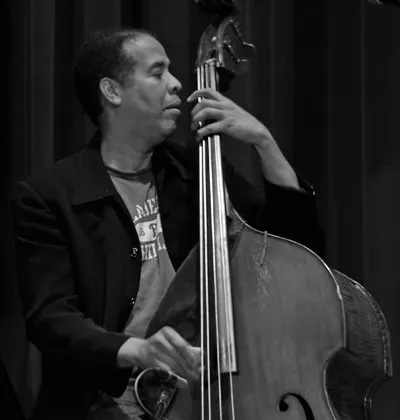
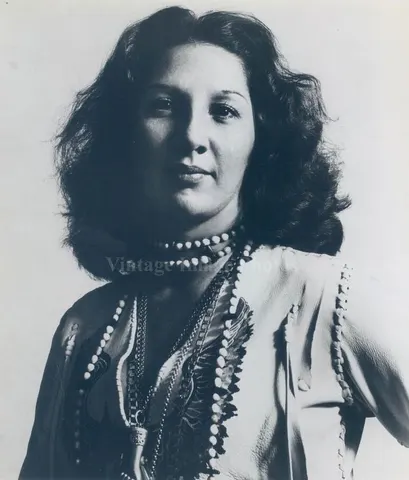
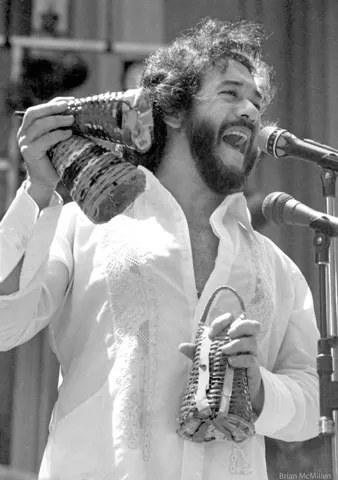
1972 was the pivot. Corea formed Return to Forever, and its self-titled ECM debut that February — with Stanley Clarke on bass, Joe Farrell on reeds, Airto Moreira on drums, and Flora Purim's voice out front — sounded almost nothing like the Miles Davis records he'd just left, all Brazilian and Latin lift instead of dense electric sprawl. Light as a Feather followed in 1973 with the same lineup and gave him two of his most enduring compositions, "Spain" and "500 Miles High." Then the band changed shape entirely: guitarist Bill Connors joined for the harder-edged Hymn of the Seventh Galaxy (1973), Al Di Meola replaced him for Where Have I Known You Before (1974), and the Corea-Clarke-Di Meola-drummer Lenny White quartet cut No Mystery (1975, Grammy winner for Best Jazz Performance by a Group) and Romantic Warrior (1976, RIAA Gold), the album most people mean when they say "Return to Forever." Musicmagic (1977), expanded to an octet with horns and vocalist Gayle Moran — by then Corea's wife, married in 1972 — closed out the band's original run. In between, My Spanish Heart (1976) let him work through the Latin and flamenco material that had always run under the fusion, in a double LP built around Clarke, drummer Steve Gadd, and a small orchestra.
The 1980s pulled him back toward the acoustic trio format and toward Europe's ECM aesthetic. Trio Music (1982) reunited him with Vitouš and Haynes fourteen years after Now He Sings, Now He Sobs, split between free improvisation and a Thelonious Monk tribute recorded within months of Monk's death; it won the Prix Jazz Moderne from France's Académie du Jazz. The Gary Burton duo, begun with Crystal Silence (1973), continued through Duet (1979) and kept going, on and off, for the rest of Corea's life. A different kind of duo record, An Evening with Herbie Hancock & Chick Corea: In Concert (1978), put two electric-keyboard pioneers on facing acoustic grand pianos, a deliberate reversal that both men returned to in later tours.
1986 brought another reversal: the Chick Corea Elektric Band, with bassist John Patitucci and drummer Dave Weckl, signed to GRP and pushed back toward electric fusion across seven albums through 1991, starting with the self-titled debut and Light Years (1987), the record that stabilized the band's classic lineup with guitarist Frank Gambale and saxophonist Eric Marienthal. The same rhythm section, stripped to a trio, became the Chick Corea Akoustic Band for the self-titled 1989 debut (Grammy winner, Best Jazz Instrumental Performance, Group) and the live Alive (1990/91) — electric and acoustic work running in parallel rather than one replacing the other, which stayed the pattern for the rest of his career.
The final three decades kept multiplying, not narrowing. He recorded across genres and formats: the Origin sextet and its later reduction to a "New Trio" with bassist Avishai Cohen and drummer Jeff Ballard; the Five Peace Band with John McLaughlin, Kenny Garrett, Christian McBride, and rotating drummers (Grammy-winning Five Peace Band Live, 2009); The Enchantment (2007) with banjoist Béla Fleck, which won the Latin Grammy for Best Instrumental Album; The New Crystal Silence (2008), a 35th-anniversary return to the Gary Burton duo recorded with the Sydney Symphony; concerto and string-quartet writing for orchestras; and, in his last decade, The Spanish Heart Band, whose Antidote (2019) won the Grammy for Best Latin Jazz Album. In 2016 he marked his 75th birthday with a six-week residency at New York's Blue Note, leading more than twenty different groups across the run. By the time he died, on February 9, 2021, in Tampa, Florida, of a rare cancer diagnosed only shortly before, he had won 23 Grammy Awards (a total that, with posthumous wins for later releases, has continued to grow), been named an NEA Jazz Master, and entered the DownBeat Hall of Fame. He kept performing and recording, across every format he'd ever worked in, up to the year he died.
Corea's own influences ran from Bud Powell, Thelonious Monk, and Horace Silver — the Boston-scene bebop players he absorbed as a teenager — through Bill Evans and McCoy Tyner, whose harmonic language he inherited and then pushed further out, to the Bartók and Stravinsky he studied formally and never stopped hearing in his own writing. Critics and historians place him, alongside Tyner, Herbie Hancock, and Keith Jarrett, among the defining pianists of the post-Coltrane era — the generation of players whose vocabulary shaped how jazz piano got taught for the next fifty years.
What made his own playing distinct was range treated as a single instrument rather than a set of separate styles: Bach and bebop, Bartók and blues, Mozart and montunos, Ravel and rumba, Stravinsky and samba, all passed through a specifically Spanish/Latin harmonic sensibility that surfaced everywhere from "Spain" to My Spanish Heart to the late Spanish Heart Band. His technique was total, but he used it as a storyteller's tool rather than a display piece — equally at home caressing a ballad or driving a fusion vamp at full voltage. That range is exactly why his catalog resists a single description: post-bop trio records, Latin-inflected fusion, free improvisation, solo piano meditation, orchestral concerto writing, and straight-ahead standards all sit in the same discography, often within the same decade.
- Now He Sings, Now He Sobs (1968, Solid State Records) - A trio session with Miroslav Vitouš and Roy Haynes that set his early language and gave the world "Matrix"; inducted into the Grammy Hall of Fame in 1999. Spotify - Now He Sings, Now He Sobs Listen · Buy
- Return To Forever (1972, ECM) - The debut of the band that defined his 1970s, with Stanley Clarke, Joe Farrell, Airto Moreira, and Flora Purim; the start of a completely different sound than the Miles Davis records he'd just left. Spotify - Return To Forever Listen · Buy
- Piano Improvisations Vol. 1 (1971, ECM) - His first solo piano record, cut at Manfred Eicher's suggestion and the opening entry in a solo-piano practice he kept up for the rest of his life. Spotify - Piano Improvisations Vol.1 Listen · Buy
- The Enchantment (2007, Concord Records) - A late-career duo record with banjoist Béla Fleck that won the Latin Grammy for Best Instrumental Album, proof the range never narrowed. Spotify - The Enchantment Listen · Buy
Chick Corea: Full Discography (Discogs-Verified)
Discogs profile summary
- Real name: Armando Anthony Corea
- Born June 12, 1941, Chelsea, Massachusetts; died February 9, 2021, Tampa, Florida
- Discogs bio: "American jazz composer, arranger, keyboardist, percussionist, bandleader and recording artist of southern Italian descent... This very prolific musician played anything from bebop, post bop, free jazz, Latin jazz and crossover... as well as solo piano improvisations, including being one of those defining Jazz Rock and Fusion in the 1970s, both solo and in Return To Forever and Circle."
- Group affiliations on file (selected): Return To Forever, Circle, Chick Corea & Friends, Chick Corea Akoustic Band, The Chick Corea Elektric Band, Chick Corea Elektric Band II, Gary Burton / Chick Corea, Chick Corea Trio, The Chick Corea New Trio, The Chick Corea + Steve Gadd Band, The Spanish Heart Band, Five Peace Band (via group credits), Three Quartets Band
Verified against the Discogs API (artist ID 37731).
LEADER: full detail — early trio, solo piano, and Circle-era records
Personnel pulled from each release's Discogs extraartists credits (one representative original release per title), supplemented where noted.
| Album | Year | Label / Catalog | Personnel | Notes | Listen | Buy |
|---|---|---|---|---|---|---|
| Now He Sings, Now He Sobs | 1968 | Solid State Records, SS 18039 | Chick Corea (piano), Miroslav Vitouš (bass), Roy Haynes (drums); no performer credits are itemized by instrument on Discogs for this release, so personnel here is sourced to Wikipedia/AllMusic | His second album and a landmark post-bop trio date; inducted into the Grammy Hall of Fame in 1999; includes the first recording of "Matrix" | Spotify (Expanded Edition, verified) | Amazon search |
| A.R.C. | 1971 | ECM Records, ECM 1009 ST | Chick Corea (piano), Dave Holland (bass), Barry Altschul (percussion); Manfred Eicher (producer) | Recorded Jan 11-13, 1971, Tonstudio Bauer, Ludwigsburg, Germany. Title stands for "affinity, reality, communication," a Scientology-derived phrase; direct precursor to the trio recording as Circle with Anthony Braxton added | Spotify (verified) | Amazon search |
| Piano Improvisations Vol. 1 | 1971 | ECM Records, ECM 1014 ST | Chick Corea (solo piano); Manfred Eicher (producer) | Recorded April 21-22, 1971, Bendiksen Studio, Oslo; his first solo piano record and the opening entry in ECM's solo-piano documentation project | Spotify (verified) | Amazon search |
| Piano Improvisations Vol. 2 | 1972 | ECM Records, ECM 1020 ST | Chick Corea (solo piano); Manfred Eicher (producer) | Recorded at the same April 1971 Oslo sessions as Vol. 1; includes a Thelonious Monk and a Wayne Shorter composition alongside originals | Spotify (verified) | Amazon search |
RETURN TO FOREVER: full detail (1972-1977 band albums)
Billed variably to "Chick Corea," "Return To Forever," or both on Discogs across this run, reflecting the band's evolving billing rather than a change of leadership — Corea led the group throughout.
| Album | Year | Label / Catalog | Personnel | Notes | Listen | Buy |
|---|---|---|---|---|---|---|
| Return To Forever | 1972 | ECM Records, ECM 1022 ST | Chick Corea (electric piano, composer), Stanley Clarke (electric/double bass), Joe Farrell (flute, soprano sax), Airto Moreira (drums, percussion), Flora Purim (vocals, percussion); Manfred Eicher (producer) | Recorded Feb 2-3, 1972, A&R Studios, NYC. The debut Return To Forever album, the "original" Latin/acoustic-leaning lineup | Spotify (verified) | Amazon search |
| Light As A Feather | 1973 | Polydor, 2310 247 | Chick Corea (piano/keys, producer), Stanley Clarke (bass), Joe Farrell (sax, flute), Airto Moreira (drums, percussion), Flora Purim (vocals) | Recorded at I.B.C. Studios, London. Same core lineup as the debut; includes "Spain" and "500 Miles High," two of Corea's most enduring compositions | Spotify (verified) | Amazon search |
| Hymn Of The Seventh Galaxy | 1973 | Polydor, PD 5536 / 2310 283 | Chick Corea (electric piano, acoustic piano, organ, harpsichord, gong, producer), Stanley Clarke (electric bass, bell tree), Bill Connors (electric/acoustic guitar), Lenny White (drums, percussion, congas, bongos) | Recorded The Record Plant, Aug 1973. First album of the electric, guitar-driven Return To Forever lineup | Spotify (verified) | Amazon search |
| Where Have I Known You Before | 1974 | Polydor, PD 6509 / 2310 354 | Chick Corea (piano, electric piano, clavinet, organ, synthesizer, percussion, producer), Stanley Clarke (electric bass, organ, chimes, bell tree), Al Di Meola (electric guitar, 12-string acoustic guitar), Lenny White (drums, percussion, congas, bongos) | Recorded The Record Plant, NYC, July-Aug 1974. Al Di Meola's debut with the band, replacing Bill Connors | Spotify (verified) | Amazon search |
| No Mystery | 1975 | Polydor, PD 6512 / 2310 378 | Chick Corea (piano, electric piano, clavinet, organ, synthesizer, snare, marimba, vocals, producer), Stanley Clarke (acoustic/electric bass, organ, synthesizer, vocals), Al Di Meola (electric/acoustic guitar), Lenny White (drums, percussion, congas, marimba) | Won the 1975 Grammy for Best Jazz Performance by a Group | Spotify (verified) | Amazon search |
| Romantic Warrior | 1976 | Columbia, PC 34076 | Chick Corea (acoustic piano, Fender Rhodes, clavinet, Mini Moog/Moog 15/Arp Odyssey/Yamaha organ/Polymoog, marimba, percussion, producer), Stanley Clarke (Alembic electric bass, piccolo bass, acoustic bass, bell tree), Al Di Meola (electric/acoustic/soprano guitar), Lenny White (drums, timpani, congas, timbales, cymbals) | Recorded Feb 1976, Caribou Ranch, Nederland, Colorado. RIAA Gold-certified; the band's first album for Columbia | Spotify (verified) | Amazon search |
| Musicmagic | 1977 | Columbia, PC 34682 | Chick Corea (acoustic piano, Fender Rhodes, clavinet, synthesizers, vocals, producer), Stanley Clarke (electric/acoustic/piccolo bass, vocals, co-producer), Gayle Moran (Hammond B3, Polymoog, acoustic piano, vocals), Joe Farrell (tenor/soprano sax, flute, piccolo), Gerry Brown (drums), plus a horn section (Jim Pugh, John Thomas, James Tinsley, Harold Garrett) | Recorded Caribou Ranch, Jan-Feb 1977. Final studio album of this Return To Forever era; expanded to an octet with horns and Gayle Moran's vocals | Spotify (verified) | Amazon search |
LEADER: full detail — Spanish-influenced and trio-reunion records
| Album | Year | Label / Catalog | Personnel | Notes | Listen | Buy |
|---|---|---|---|---|---|---|
| My Spanish Heart | 1976 | Polydor, PD-2-9003 / 2672 031 | Chick Corea (piano, electric piano, synthesizers, organ, vocals, arranger, producer), Stanley Clarke (acoustic bass), Steve Gadd (drums), Gayle Moran (vocals, choir), Don Alias (percussion), David Speltz (cello), the Arriaga Quartet (strings), plus a horn/string section | Double LP, gatefold. Latin American and flamenco-influenced, one of Corea's most personal records | Spotify (verified) | Amazon search |
| Trio Music | 1982 | ECM Records, ECM 1232/33 / 2641 232 | Chick Corea (piano), Miroslav Vitouš (double bass), Roy Haynes (drums); Manfred Eicher (producer) | Recorded Nov 1981, Mad Hatter Studios, LA. Double LP: one disc of free trio improvisation, one disc of Thelonious Monk compositions, recorded as a tribute after Monk's early-1982 death. Reunited the "Now He Sings, Now He Sobs" trio 14 years on; won the Prix Jazz Moderne (Académie du Jazz, France) | Spotify (verified) | Amazon search |
ELEKTRIC BAND / AKOUSTIC BAND: full detail
| Album | Year | Label / Catalog | Personnel | Notes | Listen | Buy |
|---|---|---|---|---|---|---|
| The Chick Corea Elektric Band | 1986 | GRP, GRP-A-1026 | Chick Corea (keyboards, synthesizer, producer), John Patitucci (electric/acoustic bass), Dave Weckl (acoustic/electronic drums, percussion) | Recorded Mad Hatter Recording Studios, LA. Debut album of the Elektric Band; original lineup also included guitarists Scott Henderson and Carlos Rios per the group's billing (not separately itemized in this release's extraartists) | Spotify (verified) | Amazon search |
| Light Years | 1987 | GRP, GRD-9546 | Chick Corea (keyboards), John Patitucci (double/electric bass), Dave Weckl (drums), Frank Gambale (electric guitar), Eric Marienthal (alto sax), Carlos Rios (electric guitar) | Second Elektric Band album; the lineup that would stabilize for the rest of the group's GRP run | Spotify (verified) | Amazon search |
| Chick Corea Akoustic Band | 1989 | GRP, GRD-9582 | Chick Corea (piano, producer), John Patitucci (bass), Dave Weckl (drums) | Recorded Clinton Recording Studios, NYC. The acoustic-trio counterpart to the Elektric Band, same rhythm section; won the 1990 Grammy for Best Jazz Instrumental Performance, Group | Spotify (verified) | Amazon search |
| Alive | 1990 (Laserdisc) / 1991 (CD) | GRP / Pioneer, PILJ-1013 | Chick Corea (piano), John Patitucci (bass), Dave Weckl (drums) | Recorded live in the studio, Sunset Gower Studios, North Hollywood, Dec 16, 1989 | Spotify (verified) | Amazon search |
DUO RECORDS: full detail
| Album | Year | Partner | Label / Catalog | Personnel | Notes | Listen | Buy |
|---|---|---|---|---|---|---|---|
| Crystal Silence | 1973 | Gary Burton | ECM Records, ECM 1024 ST | Chick Corea (piano), Gary Burton (vibraphone); Manfred Eicher (producer) | Recorded Nov 6, 1972, Arne Bendiksen Studio, Oslo. The duo's debut and the start of a partnership that ran, on record, into the 2010s | Spotify (verified) | Amazon search |
| Duet | 1979 | Gary Burton | ECM Records, ECM 1140 / 2301 140 | Chick Corea (piano), Gary Burton (vibraphone); both credited as producers | Recorded Oct 23-25, 1978, Delphian Foundation, Sheridan, Oregon | Not found on Spotify (searched repeatedly; only compilation reissues and later live/studio duo albums by the pair surfaced, not this specific 1979 LP as a standalone Spotify listing) | Amazon search |
| The New Crystal Silence | 2008 | Gary Burton | Concord Records, CCD2-30630 | Chick Corea (concert grand piano, producer), Gary Burton (vibraphone, producer), Sydney Symphony Orchestra, Jonathan Stockhammer (conductor), Tim Garland (arranger/orchestrator) | Two-disc set marking the duo's 35th anniversary; disc one recorded with the Sydney Symphony at the Sydney Opera House, May 2007 | Spotify (verified) | Amazon search |
| An Evening With Herbie Hancock & Chick Corea In Concert 1978 | 1978 | Herbie Hancock | Columbia, PC2 35663 | Chick Corea (grand piano), Herbie Hancock (grand piano); David Rubinson and Herbie Hancock (producers) | Recorded Feb 1978 across four US venues (Masonic Auditorium SF, Dorothy Chandler Pavilion LA, Golden Hall San Diego, Hill Auditorium Ann Arbor). Both pianists on straight acoustic piano, a deliberate departure from the electric keyboards both were known for at the time | Spotify (verified) | Amazon search |
| The Enchantment | 2007 | Béla Fleck | Concord Records, CCD-30253 | Chick Corea (piano, producer), Béla Fleck (banjo, producer) | Won the 2007 Latin Grammy for Best Instrumental Album; peaked at No. 6 on Billboard's Top Jazz Albums chart | Spotify (verified) | Amazon search |
Additional Main-role titles (Discogs-confirmed title/year, not independently re-verified track-by-track)
Beyond the titles detailed above, Discogs' artist-releases endpoint lists 261 further "Main"-role entries under artist 37731. This raw list mixes true studio albums, live albums, solo-piano volumes in the Delphi series, classical-crossover recordings, and a very large number of compilation/box-set repackagings and reissues of the same underlying sessions — the artist-releases endpoint does not distinguish which is which without opening each one individually. Titles and years below are Discogs-verified via the artist-releases endpoint; anyone wanting a specific one confirmed as a standalone studio album vs. a compilation/reissue should ask for a targeted follow-up pull. Titles marked with an asterisk (2021 onward) are posthumous archival releases, live recordings from the vault, or reissues, not new recordings — Corea died in February 2021.
- 1963: Stitt Goes Latin (Sonny Stitt, featured billing)
- 1968: Tones For Joan's Bones (his recorded debut, cut 1966, released 1968)
- 1969: Is
- 1971: The Song Of Singing, The Sun
- 1972: Piano Improvisations Vol. 1 & 2 (combined reissue), Sundance
- 1973: Spain, Outback, Inner Space, Bliss!
- 1974: At The Rainbow (May 9 Concert - A Tribute To L. Ron Hubbard), Perfect, Earth Juice, Piano Giants
- 1975: Nightbird & Company, The Treasury Of Modern Jazz 12, Nefertiti, Super Session, Jungle Waterfall, Circling In, Chick Corea (self-titled), Dear Old Stockholm, Planet End
- 1976: Armando's Rhumba, The Leprechaun, Skins, Chick Corea/Herbie Hancock/Keith Jarrett/McCoy Tyner (various-artists billing)
- 1977: Sound Of Elegance Vol. 3 ~ Love Harmony~
- 1978: Hot News Blues, The Golden Dawn / Central Park, The Mad Hatter Rhapsody, An Evening With Herbie Hancock & Chick Corea (Special Radio Edition), Creaction, Friends, Secret Agent, The Mad Hatter, Central Park, Circulus, Circulus Vol. 1, Circulus Vol. 2, Soft Space
- 1979: Jazzman, Delphi 1 (Solo Piano Improvisations), An Evening With Chick Corea And Herbie Hancock
- 1980: Delphi 2 & 3 (Solo Piano Improvisations), What's It All About?, Los Grandes del Jazz 36, Mirror, Mirror, Europa, Europa Jazz, La Fiesta, Chick Corea (Featuring Lionel Hampton), Tap Step
- 1981: Three Quartets, Gary Burton (compilation)
- 1982: S.A. Tour 1982 (Volumes I-III), Return to Forever (reissue), Echoes Of An Era, Echoes Of An Era 2 (The Concert), The Griffith Park Collection, Touchstone, The Bennie Wallace Trio & Chick Corea
- 1983: Ping Pong, The Meeting (with Friedrich Gulda), Fantasy For Two Pianos, Dream, On Two Pianos, The Griffith Park Collection 2 In Concert, Again And Again (The Joburg Sessions)
- 1984: Dream & Modern, Gomez, Amber Skies, Double Concerto / Compositions, A Very Special Concert, Children's Songs
- 1985: Portions Of "Marimbala" And "Ginkakuji", Guest Soloist Series, Blanchard: New Earth Sonata / Telemann Suite, Septet, Hancock & Corea, Works, Live At The Village Vanguard, Voyage
- 1986: An Interview With Chick Corea, LRC Jazz Classics Volume II, Trio Music Live In Europe, Early Days, Contemporary Currents, Music For Three Guitars
- 1987: An Interview With Chick: Light Years, Works For Piano By Mozart/Corea/Gulda, Live At Midem
- 1988: Crystal Break, GRP Super Live, Symphonien Nr. 25 & 32 - Konzert Für 2 Klaviere Und Orchester
- 1989: A.I. (Artificial Intelligence), Chick Corea / Blood, Sweat & Tears (split release)
- 1990: Cornici & Children's Songs, The Best, Village Vanguard Live Sessions 1 & 2, Gershwin - Corea
- 1991: Variations On A Theme Of Thelonious Monk
- 1992: Jazz-A-Live, Play, Early Circle
- 1993: The Best Of Chick Corea, Verve Jazz Masters 3, Chick Corea - The Seventies, John Coltrane Memorial Concert
- 1994: Live In Montreux, 4tune, Expressions, Live In Cannes, Ludwigsburger Jazztage
- 1995: Jazz Greats In Concert
- 1996: Solo Piano [From Nothing], Song For Amadeus, Return To The 7th Galaxy (The Anthology), Circle 1 (Live In Germany Concert), Circle 2: Gathering, The Mozart Sessions, Music Forever & Beyond: The Selected Works Of Chick Corea 1964-1996, The Trio Live From Country Club, The Beginning
- 1997: Chick Corea & Friends (New York), Woodstock Jazz Festival, The Gold Collection, Creative Music Studio - Woodstock Jazz Festival 1 & 2
- 1998: Radio Edits, Like Minds, A Week At The Blue Note, Live At The Blue Note
- 1999: Tones For Joan's Bones / Mountain In The Clouds, Change, Corea.Concerto: Spain For Sextet & Orchestra / Piano Concerto No. 1, Converge
- 2000: Chick Corea & Friends/Lionel Hampton Featuring Oliver Jackson, Jam Miami A Celebration Of Latin Jazz, Seabreeze, Solo Piano: Originals (Part One), Sweet Rain, Solo Piano: Standards (Part Two)
- 2001: All That Jazz - The Best Of Chick Corea, Sea Breeze (Kool Jazz At Midem), En Colombia
- 2002: Marian McPartland's Piano Jazz, Keyboard Workshop, Electric Workshop, The Complete "Is" Sessions, Loro, Selected Recordings, Jam Miami: A Celebration Of Latin Jazz
- 2003: Rendezvous In New York, Famous Jazz Duets - Live In Concert
- 2004: Chick Corea - MP3 Collection, Jazz Piano Masters, Interaction
- 2005: Three Quartets Band, Piano Fiesta, Solo Improvisations From Japan, Live In Molde, The Song Is You
- 2006: The Adventures Of Hippocrates, Schumann/Mendelssohn/Corea, Chick Corea & Gonzalo Rubalcaba Duet, Chick Corea & Origin, Remembering Bud Powell Band, Now He Sings, Now He Sobs Trio (reissue), Rendezvous In New York The Movie, Tra Free Classica E Latina, The Ultimate Adventure, Super Trio (Live At The One World Theatre), Chick Corea & Gary Burton Duet, Chick Corea & Bobby McFerrin Duet
- 2007: The Mystery (Orchestral Music By Tim Garland), The Ultimate Adventure: Live In Barcelona, Chillin' In Chelan, From Miles, The Boston Three Party, Five Trios, Dr. Joe
- 2008: Electric Chick, Gates To Everywhere, The Definitive Collection, The Very Best Of Jazz, Where Have I Known You Before / No Mystery (2-on-1)
- 2009: 40 Jaar ECM, Returns Live At Montreux 2008, Five Peace Band Live
- 2010: Solo Piano, Giganci Jazzu 9, Forever
- 2011: Ritzville, Anthology, The Definitive Chick Corea On Stretch And Concord, Orvieto, Further Explorations
- 2012: BR Klassik - Chick Corea Meets Bobby McFerrin, The Best Of, The Continents (Concerto For Jazz Quintet & Chamber Orchestra)
- 2013: The Very Best Of Chick Corea, Mari Cântăreți de Jazz și Blues 16, Blue Note Best Jazz Collection 46, The Vigil
- 2014: Live At Newport '67, Standards Best, Visionary, Chick Corea Solo Piano - Portraits
- 2015: Chick Corea - The GRP Albums, The Very Best Of, Two
- 2016: Duets, 5 Original Albums, The Musician
- 2018: What Game Shall We Play Today, Flavio Cucchi Plays Chick Corea, Trilogy 2, Chick Corea Plays (Special Tour Edition)
- 2019: 3 Essential Albums, 5 Original Albums Vol. 2, Flying On The Wings Of Creativity, Antidote (Spanish Heart Band, Grammy winner)
- 2020: Beginnings (20th Century Music For Saxophone And Guitar), The Eclectic Beating
- 2021*: Spontaneity, Mirror Mirror, Resonance
- 2022*: Piano Works, The Montreux Years
- 2023*: Joe's Tango, Sardinia: A Night Of Mozart & Gershwin
- 2024*: Remembrance
- 2025*: Chick Corea's The Visitors, Children's Portraits, Brass Concertos, Forever Yours: The Farewell Performance, Trilogy 3
- 2026*: Welcome To My Living Room: Asahikawa 2005, Sometime Ago - Live In Germany 1972
Chronological list of additional guest/sideman credits
Discogs lists 1,948 Appearance + 524 TrackAppearance + 71 Producer + 1 Co-producer credits for artist 37731 (predominantly various-artists compilations, later reissues of the same original sessions, and single-track samplers). The sideman work that matters most for tracing his early career and best-documented collaborations:
Early sideman work (1962-1967), all Discogs-confirmed Appearance-role credits:
- Mongo Santamaria — Go, Mongo! (1962), his first recorded credit as a sideman
- Sonny Stitt — Stitt Goes Latin (1963), featured billing alongside percussionist Willie Bobo and trumpeter Thad Jones
- Blue Mitchell — Down With It (1965), The Thing To Do (1965), Boss Horn (1967)
- Herbie Mann — Latin Mann (Afro To Bossa To Blues) (1965), The Roar Of The Greasepaint - The Smell Of The Crowd (1965), Monday Night At The Village Gate (1966)
Miles Davis band period (1968-1970), all Discogs-confirmed Appearance-role credits on Davis's own releases:
- Filles De Kilimanjaro (1968)
- In A Silent Way (1969)
- Bitches Brew (1970)
- Live-Evil (1971, recorded 1970)
- On The Corner (1972, sessions from the turn of the decade)
- Big Fun (1974, compiled from 1969-72 sessions)
- Water Babies (1977, compiled from 1968-69 sessions)
- Circle In The Round (1979, compiled from earlier-decade sessions)
This is the period in which Corea, alongside Davis's other keyboardists of the era, helped pioneer the use of electric piano in jazz and the birth of jazz-rock fusion.
Other notable Appearance/Producer credits (curated, not exhaustive):
- Circle (with Dave Holland, Anthony Braxton, Barry Altschul) — Circle 1 (Live In Germany Concert) and Circle 2: Gathering (recorded 1971), Paris Concert (1972)
- Bobby McFerrin — duet recordings and a joint compilation credit (2006)
- Gonzalo Rubalcaba — duet recording (2006)
- Wayne Shorter and Herbie Hancock — cross-credited on multiple various-artists piano-lineage compilations, distinct from the dedicated Hancock duo album detailed above
- Stanley Clarke - bassist and co-founder of Return to Forever, on every lineup of the band from the 1972 debut through Musicmagic (1977), and Corea's producing/co-producing partner on several of those records.
- Al Di Meola - Return to Forever's guitarist from Where Have I Known You Before (1974) through Romantic Warrior (1976) and Musicmagic (1977), the lineup most identified with the band's fusion peak.
- Lenny White - Return to Forever's drummer across the same run, from Hymn of the Seventh Galaxy (1973) onward.
- Flora Purim and Airto Moreira - vocalist and drummer/percussionist on the earliest, Latin-leaning Return to Forever lineup (1972-73 albums).
- Gary Burton - vibraphonist and duo partner from Crystal Silence (1973) through Duet (1979) and The New Crystal Silence (2008), one of the longest-running collaborations of Corea's career.
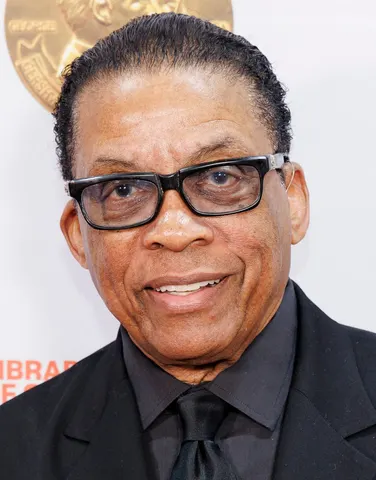
- Herbie Hancock - fellow Miles Davis alumnus and duo partner on An Evening with Herbie Hancock & Chick Corea: In Concert (1978), an acoustic-piano-only record that reversed both men's usual electric-keyboard identity.
- Béla Fleck - banjoist and duo partner on The Enchantment (2007), a late-career genre-crossing collaboration that won a Latin Grammy.
- John Patitucci and Dave Weckl - the rhythm section for both the Chick Corea Elektric Band (1986-91) and the Chick Corea Akoustic Band (1989-91), running in parallel across his electric and acoustic work of that period.
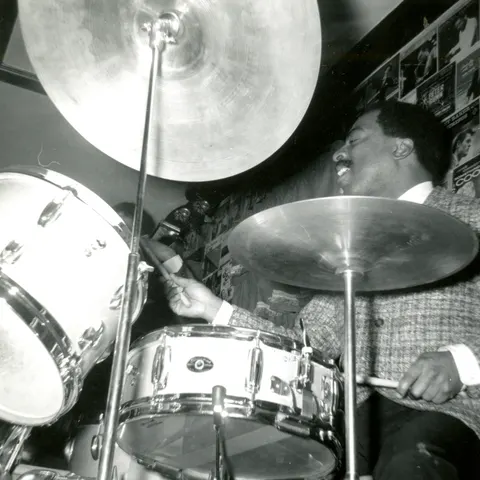
- Miroslav Vitouš and Roy Haynes - the trio on Now He Sings, Now He Sobs (1968) and, fourteen years later, on Trio Music (1982).
- Miles Davis - bandleader from 1968-1970, on Filles de Kilimanjaro, In a Silent Way, Bitches Brew, and the sessions later released as Live-Evil, On the Corner, Big Fun, Water Babies, and Circle in the Round.
- Gayle Moran - vocalist on Musicmagic (1977) and My Spanish Heart (1976), and Corea's wife from 1972.