 JAZZPROFILES lives in the music 1,572 Jazz Artists fully Profiled!
 Charlie Mariano
Last updated September 26, 2026
Listen on Spotify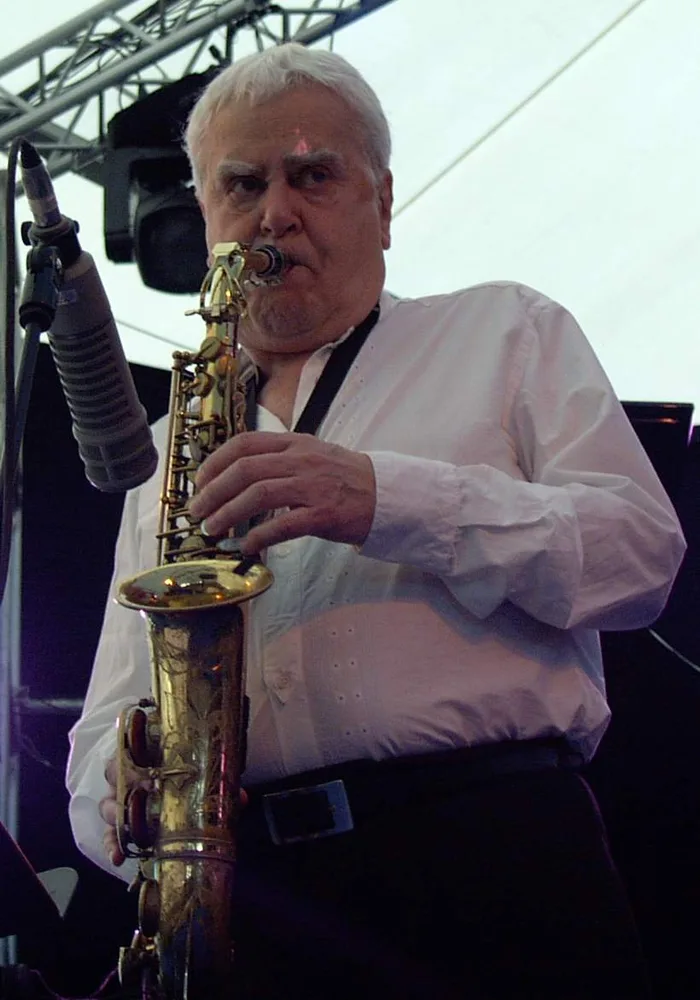
Charlie Mariano performing at "Jazz an der Donau" (Jazz on the Danube), Straubing, Germany, July 2003. CC BY-SA 3.0 — Wikimedia Commons — https://commons.wikimedia.org/wiki/File:Charlie_Mariano.JPG (photo by Klaus Brückner)

Carmine Ugo "Charlie" Mariano was born November 12, 1923, in Boston, Massachusetts, and grew up in the city's Hyde Park neighborhood, the son of Italian immigrants Giovanni ("John") Mariano and Maria ("Mary") Di Gironimo, who had come from the town of Fallo in Italy's Abruzzo region. His father's opera records and the big-band broadcasts of Duke Ellington and Count Basie were his earliest musical education; he started performing professionally around age eighteen, in the clubs of Boston's "Combat Zone." After enlisting in the Army Air Corps during World War II — three years of service that kept him stateside playing in military ensembles rather than in combat — he returned to Boston and enrolled at the Schillinger House of Music, the school that would become Berklee College of Music, studying under saxophonist and educator Joe Viola and graduating in 1951. A performance by Charlie Parker on the West Coast during these years left a lasting mark on his conception of the alto saxophone. Mariano also co-founded Boston's Jazz Workshop, a club and informal school that gave the city's postwar jazz scene a home, and he would return to Berklee as faculty at several points over the following two decades.
Mariano toured with Stan Kenton's Orchestra from 1953 to 1955, the stint that built his early national reputation, and worked in the orbit of Shelly Manne and other West Coast players during the same period. In 1959 he married pianist, composer, and fellow Berklee-connected musician Toshiko Akiyoshi, whom he had met while both were teaching and studying in Boston. The couple co-led a group on and off through the marriage — documented on record as the Toshiko-Mariano Quartet — and had a daughter, Michiru (later known professionally as the singer-songwriter Monday Michiru), before divorcing in 1967.
In between, Mariano spent 1962 and 1963 as a sideman in Charles Mingus's bands, a period documented across several of Mingus's most significant recordings: he is on the recovered tapes of the October 1962 Town Hall Concert (released only later, on 1994's The Complete Town Hall Concert — the original 1962 LP mix does not include him), on the landmark The Black Saint and the Sinner Lady (1963, Impulse!), and on three tracks of Mingus Mingus Mingus Mingus Mingus (recorded January and September 1963, released 1964), sharing alto saxophone duties on that album with Eric Dolphy. Mingus's own career, and this same sideman period from his side of the story, is covered in full in his JazzProfiles.com profile.
Mariano's next reinvention came from further afield. In the early-to-mid 1970s he traveled to a remote village in Tamil Nadu, South India, to study the nadaswaram — a loud, oboe-like double-reed instrument central to Carnatic classical and devotional music — years before "world music" fusion became a recognizable jazz trend. That study grew into a collaboration of more than two decades with Bangalore's Karnataka College of Percussion, founded by mridangam player T. A. S. Mani, and reached its fullest studio statement on Jyothi (1983, ECM), recorded with the KCP ensemble and vocalist R. A. Ramamani. Mariano moved to Europe in 1971, and the same decade saw him co-found Pork Pie (1973-1976) with Dutch keyboardist Jasper van't Hof, alongside guitarist Philip Catherine, bassist Jean-François Jenny-Clark, and drummer Aldo Romano — a short-lived but highly regarded fusion band whose 1974 album Transitory (MPS) is still cited as one of the era's defining fusion records. In 1975 he became a founding member of the German all-star fusion big band the United Jazz + Rock Ensemble, an association that continued for years afterward.
Mariano eventually settled in Cologne, Germany, with his third wife, painter Dorothee Zippel, continuing to record prolifically into the 2000s — leader dates on European labels like Konnex, Intuition, Enja, and Schneeball, duo and small-group records that kept threading Carnatic music, European jazz, and his bebop foundation together, alongside a later fusion project called Osmosis. He never fully left his hometown scene behind either: bandleader and impresario George Wein, on Mariano's death, called him "the dean of Boston jazz musicians" — a fitting title for a career that ran from Boston's Combat Zone clubs through Kenton's and Mingus's bands to a Tamil Nadu village and finally to four decades based in Germany. He had been diagnosed with prostate cancer in 1995 and given roughly a year to live; a combination of conventional and alternative treatment kept him performing and recording for another fourteen years. He died June 16, 2009, at the Mildred Scheel Hospiz in Cologne, at age 85; his ashes were entombed at his family's grave in Boston.
Mariano's defining achievement was building a genuinely two-way fusion between jazz and South Indian classical music: rather than sampling Indian sounds for exotic color, as later "world jazz" often did, he spent years learning the nadaswaram on its own terms in Tamil Nadu and built a real, decades-long working relationship with Carnatic musicians, most fully realized on Jyothi. That achievement sits on top of a bebop foundation shaped by Charlie Parker and sharpened across the Kenton and Mingus years — the alto voice that made him a first-call sideman before he ever picked up the nadaswaram. The European fusion years with Pork Pie and the United Jazz + Rock Ensemble added a rock-inflected, electric-instrument dimension to that same restless, cross-cultural curiosity, making Mariano one of the more genuinely itinerant and hybrid voices to emerge from the postwar American jazz scene.
- The Toshiko-Mariano Quartet (1961, Candid) - With his then-wife, pianist Toshiko Akiyoshi, Gene Cherico on bass, and Eddie Marshall on drums. Spotify - Toshiko-Mariano... Listen
- The Black Saint and the Sinner Lady (1963, Impulse!, as Charles Mingus sideman) - Mariano on alto saxophone throughout one of Mingus's most acclaimed extended compositions, recorded during his 1962-1963 stint in Mingus's bands. Spotify - The Black Saint... Listen
- Mirror (1972, Atlantic) - A fusion-leaning leader date arranged and produced by Arif Mardin, with George Mraz, Tony Levin, and Airto Moreira. Spotify - Mirror Listen
- Transitory (1974, MPS, as Jasper van't Hof's Pork Pie) - The landmark recording of Mariano's mid-1970s fusion band with Jasper van't Hof, Philip Catherine, Jean-François Jenny-Clark, and Aldo Romano. Spotify - Transitory Listen
- Jyothi (1983, ECM) - With the Karnataka College of Percussion and vocalist R. A. Ramamani; the fullest studio realization of his nadaswaram/Carnatic-music collaboration. Spotify - Jyothi Listen
Charlie Mariano: Full Discography
Identity confirmed via Discogs artist ID 252611 ("Charlie Mariano"). His recorded catalog runs from the mid-1950s to a 2026 posthumous archival release and spans well over 100 Discogs-listed releases across his American (1955-1972) and European (1973-2009) periods; the table below covers his major leader/co-leader dates plus his key work as a Charles Mingus sideman. It is not exhaustive of every reissue, compilation, or one-off single.
As Leader / Co-Leader
| Album Title | Recording Date(s) | Release Date | Label | Catalog Number | Format(s) | Personnel | Role | Reissue History | Spotify | Buy | Notes |
|---|---|---|---|---|---|---|---|---|---|---|---|
| Mariano | Not specified in Discogs data | 1955 | Bethlehem Records | BCP 1022 | Vinyl, LP, 10", Album, Mono | Charlie Mariano (alto saxophone), Max Bennett (bass), Stan Levey (drums), Claude Williamson (piano), Stu Williamson (trombone), Frank Rosolino (trumpet) | Leader | Bethlehem-years material later reissued in compilation form (see Charlie Mariano Plays - The Bethlehem Years, 1989, Fresh Sound, and Boppin' In Boston 1947-1953, 2024, Fresh Sound) | — | — | Early Bethlehem-era leader date from his Boston/West Coast years |
| The Toshiko-Mariano Quartet | Not specified in Discogs data | 1961 | Candid | CJM 8012 | Vinyl, LP, Album, Mono | Toshiko Akiyoshi (piano), Charlie Mariano (alto saxophone), Gene Cherico (bass), Eddie Marshall (drums) | Co-leader (quartet) | Reissued in 1991 as Live at Birdland material and in later CD compilation form | Spotify - Toshiko-Mariano... | — | With his then-wife, pianist Toshiko Akiyoshi; the marquee document of their 1959-1967 marriage/musical partnership |
| A Jazz Portrait Of Charlie Mariano | Recorded July 25-26, 1963, New York City | 1963 | Regina Records | LPR-286 | Vinyl, LP, Album, Mono | Charlie Mariano (leader); Don Sebesky (arranger, conductor, producer) | Leader | Labels give alternate title "Portrait In Jazz - Vol. I" | Spotify - A Jazz Portrait Of Charlie Mariano | — | Recorded the same year as his Mingus sideman work on The Black Saint and the Sinner Lady |
| Mariano In West Side | Not specified in Discogs data | 1963-03-30 | Nippon Records (2) | NS-1001 | Vinyl, LP, Album, Stereo | Billed to "Toshiko Mariano Quartet." Charlie Mariano (alto saxophone), Gene Cherico (bass), Albert "Tootie" Heath (drums), Toshiko Mariano [Akiyoshi] (piano) | Co-leader (quartet) | None found | — | — | Japan-only release from the Akiyoshi years |
| Iberian Waltz | Recorded June 28, 1967, Teichiku Kaikan Studio, Tokyo | 1967 | Takt (2) | JAZZ-7 | Vinyl, LP, Album, Stereo | Charlie Mariano (alto saxophone), Sadao Watanabe (alto saxophone, flute), Masabumi Kikuchi (piano), Masanaga Harada (bass), Masahiko Togashi (drums) | Co-leader (with Sadao Watanabe) | Reissued 1969 on Columbia (Japan), catalog XMS-10012-CT, with additional Jan 21, 1968 session material added | Spotify - Iberian Waltz | — | Co-billed with fellow alto saxophonist Sadao Watanabe |
| Mirror | Not specified in Discogs data | 1972 | Atlantic | SD 1608 | Vinyl, LP, Album | Charlie Mariano (soprano/alto saxophone, written-by), George Mraz (double bass), Ray Lucas (drums), Tony Levin (electric bass), Pat Rebillot (electric piano, organ), David Spinozza (guitar), Airto Moreira, Ralph MacDonald (percussion); Arif Mardin (producer, mixed by) | Leader | None found | Spotify - Mirror | — | Recorded at Atlantic Recording Studios, NYC; fusion-leaning session under producer Arif Mardin |
| We Keep On | Recorded Dierks Studio, Ascona, December 1972 | 1973 | BASF | 20 21865-1 | Vinyl, LP, Album, Stereo | Billed to "Embryo, Charlie Mariano." Christian Burchard (drums, percussion, vocals, marimba, vibraphone), Dieter Miekautsch (electric piano, clavinet), Roman Bunka (guitar, saz, vocals); Charlie Mariano (soprano/alto saxophone, flute, nadaswaram) | Co-leader (with Embryo) | None found | Spotify - We Keep On | — | First Discogs-documented recording on which Mariano is credited playing nadaswaram |
| Transitory | Not specified in Discogs data | 1974 | MPS Records | 0068.125 | Vinyl, LP, Album | Billed to "Jasper van't Hof's Pork Pie feat. Charlie Mariano." Jasper van't Hof (keyboards), Philip Catherine (guitar), Jean-François Jenny-Clark (bass), Aldo Romano (drums), Charlie Mariano (saxophones) | Co-leader (band member) | None found | Spotify - Transitory | — | Landmark fusion recording of Pork Pie (1973-1976), the band Mariano co-founded with van't Hof |
| Helen 12 Trees | Recorded and mixed May 6-8, 1976, Union Studio, Munich-Solln, Germany | 1976 | MPS Records / BASF | G-22941 | Vinyl, LP, Album | Charlie Mariano (composed by), Jack Bruce (bass), John Marshall (drums), Jan Hammer (piano, electric piano, Moog synthesizer), Nippy Noya (percussion), Zbigniew Seifert (violin); Joachim Ernst Berendt (producer) | Leader | None found | Spotify - Helen 12 Trees | — | With Cream bassist Jack Bruce and violinist Zbigniew Seifert |
| October | Recorded Oct 5-7, 1977; mixed Oct 19-21, 1977, Cornet Studios, Cologne | 1977 | Contemp Records (2) | Contemp 2 | Vinyl, LP | Charlie Mariano (soprano/alto saxophone, flute, nadaswaram), Barre Phillips (acoustic bass), Rainer Brüninghaus (piano, electric piano, synthesizers), Udo Dahmen (drums, percussion), Hans-Georg Meuser (electric bass), Trilok Gurtu (tabla, percussion) | Leader | None found | Spotify - October | — | Early post-Europe-move nadaswaram-and-tabla fusion date |
| Jyothi | Recorded February 1983, Tonstudio Bauer, Ludwigsburg, Germany | 1983 | ECM Records | ECM 1256 / 811 548-1 | Vinyl, LP, Album | Charlie Mariano (soprano saxophone, flute), Karnataka College of Percussion: R. A. Rajagopal (ghatam, morsing, konakkol), T. N. Shashikumar (kanjira, konakkol), T. A. S. Mani (mridangam); Smt. R. A. Ramamani (vocals, tambura, written-by); Manfred Eicher (producer) | Co-leader (with Karnataka College of Percussion) | None found | Spotify - Jyothi | — | The fullest studio realization of his South Indian/Carnatic collaboration; central Key Recording |
| Innuendo | Recorded July & September 1991, mixed October 1991, Hansahaus Studios, Bonn | 1992 | Lipstick Records (3) | LIP 890082 | CD, Album | Charlie Mariano (alto/soprano saxophone), Jasper van't Hof (grand piano, synthesizers), Marilyn Mazur (drums, percussion); Joachim Becker (producer, executive-producer) | Co-leader (trio) | None found | Not found on Spotify | — | Reunion with Pork Pie bandmate Jasper van't Hof |
| Tigrib | Not specified in Discogs data | 1998 | Konnex Records | KCD 5084 | CD, Album | Charlie Mariano (flute, alto/soprano saxophone); Thorsten Klentze (guitar, producer, composed by); Marika Falk (cajón, goblet drum, talking drum); Jost Hecker (cello) | Leader | None found | Not found on Spotify | — | |
| Sketches Of Bangalore | Not specified in Discogs data | 2001 | PMP (13) | pmp 103 | CD, Album | Charlie Mariano (alto saxophone), WDR Big Band Köln (orchestra), T. A. S. Mani (mridangam), Smt. R. A. Ramamani (vocals), K. Raghavendra (veena); Mike Herting (directed by, arranged by, piano) | Leader (with orchestra) | None found | Not found on Spotify | — | Big-band-scale return to the Karnataka College of Percussion collaborators |
| Brutto Tempo | Not specified in Discogs data | 2001 | Intuition Records | INT 3309 2 | CD, Album | Charlie Mariano (saxophone, arranged by, composed by), Steve Swallow (bass, composed by), Jasper van't Hof (piano, keyboards, composed by, producer) | Co-leader (trio) | None found | Spotify - Brutto Tempo | — | Trio date including a Tchaikovsky arrangement alongside originals |
| Frontier Traffic | Not specified in Discogs data | 2002 | Konnex Records | KCD 5110 | CD, Album | Ali Haurand (acoustic bass), Charlie Mariano (alto saxophone), Daniel Humair (drums, cover painting) | Co-leader (trio) | None found | Not found on Spotify | — | |
| Deep In A Dream | Not specified in Discogs data | 2002 | Enja Records | ENJ-9423 2 | CD, Album | Charlie Mariano (alto saxophone), Isla Eckinger (bass), Jarrod Cagwin (drums), Bob Degen (piano) | Leader | Reissued as part of "The Enja Heritage Collection" | Spotify - Deep In A... | — | |
| Not Quite A Ballad | Not specified in Discogs data | 2003 | Intuition Records | INT 3373 2 | CD, Album | Charlie Mariano (alto saxophone), Rudi Engel (double bass), Bill Elgart (drums), Bernhard Pichl (piano), Jonathan Seers (conductor) | Leader | None found | Spotify - Not Quite A... | — | |
| Om Keshav | Not specified in Discogs data | 2005 | Schneeball / Indigo | 5932-2 | CD, Album | Charlie Mariano (saxophone), S. Karthick (electronic drums, ghatam, konakkol), T. A. S. Mani (mridangam, konakkol), Amit Heri (guitar), Smt. R. A. Ramamani (vocals); Othmar Schreckeneder (producer) | Co-leader (with Karnataka College of Percussion circle) | None found | Spotify - Om Keshav | — | A late-career return to his South Indian collaborators |
| Barcelona Meeting | Recorded live in Barcelona, November 17, 1989 | 2026 | Fresh Sound Records | FSR-CD 5071 | CD, Album | Billed to "Charlie Mariano, Sal Nistico." Isla Eckinger (bass), Peer Wyboris (drums), Frank Strazzeri (piano) | Co-leader (with Sal Nistico) | None found | Spotify - Barcelona Meeting | — | Posthumous archival release of a 1989 live date, issued 17 years after his death |
Compilations, reissues & box sets (not new leader recordings — excluded from the table above)
- Charlie Mariano Plays - The Bethlehem Years (1989, Fresh Sound Records, CD compilation) — reissue of his mid-1950s Bethlehem Records leader sides.
- It's Standard Time, Vol. 1 / Vol. 2 (1989, master listings only in Discogs data, standards-focused compilations from the Bethlehem/Regina era).
- Boppin' In Boston 1947-1953 (2024, Fresh Sound Records, 2×CD, Comp + RM + Box) — remastered compilation of his earliest Boston-era recordings; released on Spotify as two separate volumes.
As Sideman — Charles Mingus (1962-1963)
| Year | Project (Leader) | Title | Label | Role | Notes |
|---|---|---|---|---|---|
| 1962 (rec.); 1994 (rel.) | Charles Mingus | The Complete Town Hall Concert | Charles Mingus / Fantasy-affiliated reissue | Alto Saxophone | Mariano performed at the October 1962 Town Hall Concert, but is NOT credited on the original 1962 LP mix — only on the 1994 "Complete" reissue restoring additional recovered tape. Verified at the release-credit level via Discogs. |
| 1963 | Charles Mingus | The Black Saint And The Sinner Lady | Impulse! (A-35) | Alto Saxophone | Full-session credit; one of Mingus's most celebrated extended compositions. Spotify - The Black Saint... |
| Rec. Jan 20 & Sept 20, 1963; rel. 1964 | Charles Mingus | Mingus Mingus Mingus Mingus Mingus | Impulse! (A-54) | Alto Saxophone (tracks A2, A3, B1: "I X Love," "Celia," "Better Get Hit In Yo' Soul") | Alto saxophone duties split with Eric Dolphy, who plays the other four tracks. Spotify - Mingus Mingus... |
Charles Mingus is profiled separately at jazzprofiles.com/profile/charles-mingus.
As Sideman/Guest — Claudio Angeleri (1998)
| Year | Project (Leader) | Title | Label | Role | Notes |
|---|---|---|---|---|---|
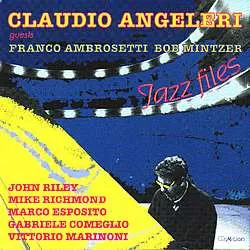
| 1998 | Claudio Angeleri | Tourist Point Of View - Duke Ellington / Billy Strayhorn | CDpM LION | Alto Saxophone (guest) | Live recording; Mariano's guest credit confirmed at the Discogs release-credit level (release 9241839). The quintet also has Gabriele Comeglio on baritone and soprano saxophones. |
Claudio Angeleri is profiled separately at jazzprofiles.com/profile/it-claudio-angeleri.
Verification notes
- All leader/co-leader entries above were cross-checked against live Discogs release records (not master-ID search-result summaries alone) before their personnel/label/catalog data was accepted.
- Spotify links were confirmed by matching album title, year, and credited artist(s) against the Discogs data before acceptance; albums searched on Spotify with no matching result are marked "Not found on Spotify" rather than left blank or guessed.
- His catalog also includes dozens of singles, promotional pressings, and compilation-only track appearances (Discogs lists releases from a 7" EP era in the late 1940s through 2026) that are not itemized individually here.
- Stan Kenton - alto saxophonist in Kenton's Orchestra, 1953-1955, the stint that established Mariano's early national profile.
- Toshiko Akiyoshi - wife (1959-1967) and co-leader of the Toshiko-Mariano Quartet and related groups; mother of their daughter, singer Monday Michiru.
- Charles Mingus - sideman across the 1962 Town Hall Concert, The Black Saint and the Sinner Lady, and Mingus Mingus Mingus Mingus Mingus; profiled separately on JazzProfiles.com.
- Eric Dolphy - shared alto saxophone duties (on different tracks) with Mariano on Mingus Mingus Mingus Mingus Mingus (1963/64).
- Claudio Angeleri - Italian pianist who led Tourist Point Of View - Duke Ellington/Billy Strayhorn (1998, CDpM LION), on which Mariano is a Discogs-confirmed guest soloist.
- Karnataka College of Percussion / T. A. S. Mani / R. A. Ramamani - the Bangalore ensemble and vocalist at the center of Mariano's decades-long South Indian music collaboration, most fully documented on Jyothi (1983) and Om Keshav (2005).
- Jasper van't Hof - co-leader of Pork Pie (1973-1976) and a recurring duo/trio partner in later years (Innuendo, 1992; Brutto Tempo, 2001).
- Philip Catherine, Jean-François Jenny-Clark, Aldo Romano - bandmates in Pork Pie.
- United Jazz + Rock Ensemble - founding member from 1975 of the long-running German fusion big band.
- Gabriele Comeglio (baritone and soprano saxophones) - in Claudio Angeleri's quintet on Tourist Point of View (CDpM LION, 1998), the live Ellington and Strayhorn program on which Mariano is the guest alto saxophonist; Discogs-confirmed. Profiled on JazzProfiles.com.
More Bebop Artists
See all 166 Bebop artists →More American Jazz Artists
See all 567 American artists →- Wikipedia: Charlie Mariano
- AllMusic: Charlie Mariano biography
- Discogs: Charlie Mariano
- The Boston Globe: "Charlie Mariano, saxophonist, musical sojourner" (obituary, June 17, 2009)
- Casa Valdez Studios: Charlie Mariano's obituary, written by his daughters (2009)
- Mail & Guardian: "Saxophonist Charlie Mariano dead at 85" (2009, via The Guardian)
- Wikipedia: Jyothi (1983), Mariano with the Karnataka College of Percussion