 JAZZPROFILES lives in the music 2,555 Jazz Artists fully Profiled!
Tadd Dameron
Last updated November 8, 2026
Listen on Spotify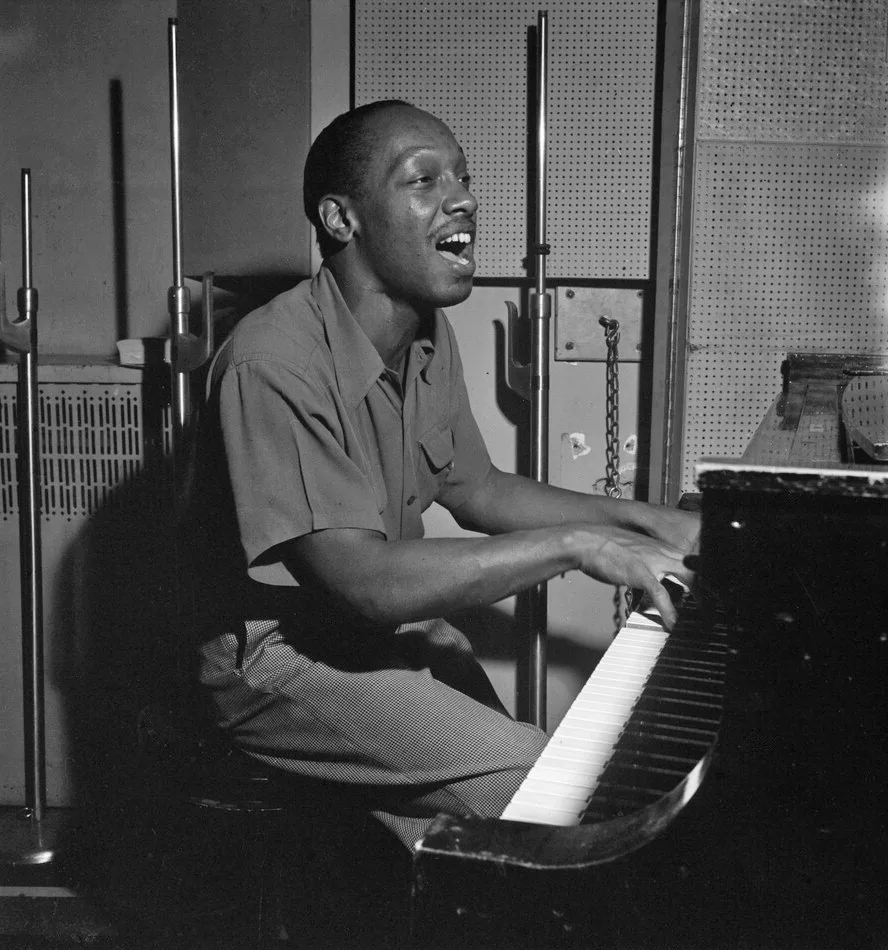
Tadd Dameron, New York, between 1946 and 1948, photographed by William P. Gottlieb Public Domain (William P. Gottlieb collection, released by the photographer; Library of Congress: no known copyright restrictions) — Wikimedia Commons — https://commons.wikimedia.org/wiki/File:Portrait_of_Tadd_Dameron,_New_York,_N.Y.,_between_1946_and_1948_(Gottlieb).jpg

Tadley Ewing Peake Dameron was born on February 21, 1917, in Cleveland, Ohio. His brother Caesar, a saxophonist, drew him toward jazz, and his first important job was with Freddie Webster's band in Cleveland, followed by work with the bands of Zack Whyte and Blanche Calloway. He wrote for Vido Musso in New York and in 1940 and 1941 was pianist and arranger for the Kansas City band Harlan Leonard and His Rockets, whose 1940 Bluebird single "A-La-Bridges" lists him as a co-writer. Charts for Jimmie Lunceford, Count Basie, Billy Eckstine's orchestra and Georgie Auld followed, along with "Good Bait," credited to him and Basie and introduced in 1944, and later work for Artie Shaw.
From 1945 to 1947 he wrote arrangements for Dizzy Gillespie's big band. "Hot House," composed in 1945, became an anthem of bebop after Gillespie and Charlie Parker recorded it for Savoy that year, and Gillespie's orchestra recorded "Our Delight" for Musicraft in 1946. In 1948 the Gillespie orchestra gave the premiere of Dameron's extended work Soulphony in Three Hearts at Carnegie Hall. In 1946 he and the lyricist Carl Sigman wrote "If You Could See Me Now" for Sarah Vaughan, who recorded it that year for Musicraft; it became one of her first signature songs and the song entered the Grammy Hall of Fame in 1998. In 1947 he also played piano with Babs Gonzales's Three Bips and a Bop.
His own small groups were the center of his work from the late 1940s. On September 26, 1947, a Blue Note sextet recorded "Our Delight," "The Squirrel," "The Chase" and "Dameronia" at WOR Studios in New York, with trumpeter Fats Navarro, alto saxophonist Ernie Henry, tenor saxophonist Charlie Rouse, bassist Nelson Boyd and drummer Shadow Wilson, and a septet that added the percussionist Chino Pozo cut "Jahbero" and "Lady Bird" on September 13, 1948. That summer and fall he led a sextet at the Royal Roost with Navarro in the front line, and radio broadcasts from the club in August and September 1948, also with tenor saxophonist Allen Eager, alto saxophonist Rudy Williams, bassist Curly Russell, drummer Kenny Clarke and, on the vibraphone, Milt Jackson, have since been issued on record. Two Capitol orchestra dates followed on January 18 and April 19, 1949. In May 1949 Dameron and Miles Davis co-led a quintet with tenor saxophonist James Moody, bassist Barney Spieler and drummer Kenny Clarke at the Paris Festival International de Jazz at the Salle Pleyel. He stayed in Europe for several months and worked briefly as a staff arranger for the English bandleader Ted Heath.
Back in the United States he played and arranged for the rhythm-and-blues singer Bull Moose Jackson in 1951 and 1952, in a band that also carried Benny Golson, who later called Dameron the most important influence on his writing. In 1953 he led a band with Clifford Brown and Philly Joe Jones, which was recorded at a show in Atlantic City and, on June 11, 1953, in New York for Prestige, with Golson, the alto saxophonist Gigi Gryce, trumpeter Idrees Sulieman, trombonist Herb Mullins, baritone saxophonist Oscar Estell and bassist Percy Heath; the Prestige sides appeared as A Study in Dameronia. Two further Prestige sessions at Rudy Van Gelder's studio in Hackensack, New Jersey, produced the octet album Fontainebleau (March 9, 1956, with trumpeter Kenny Dorham and baritone saxophonist Cecil Payne) and the quartet album Mating Call (November 30, 1956, with John Coltrane, bassist John Simmons and Jones).
Dameron developed an addiction to narcotics toward the end of his career. He was arrested on drug charges in 1957 and 1958 and served time in 1959 and 1960 in the federal prison hospital in Lexington, Kentucky. After his release he made one more notable record as a leader, The Magic Touch, recorded for Riverside in New York in 1962 with a large orchestra that included Clark Terry, trombonist Britt Woodman, Johnny Griffin, pianist Bill Evans, bassist Ron Carter and Jones, and he also scored recordings by Blue Mitchell, Sonny Stitt and Milt Jackson (Big Bags). He was sidelined by poor health, suffered several heart attacks, and passed away from cancer on March 8, 1965, at the age of 48. He was buried at Ferncliff Cemetery in Hartsdale, New York.
Dameron never prospered financially, but his music has been revisited steadily. Barry Harris recorded the album Barry Harris Plays Tadd Dameron in 1975, Jones and the trumpeter Don Sickler founded the repertory nonet Dameronia in the early 1980s, Jimmy Heath and Slide Hampton led a quintet devoted to his writing, and Joe Lovano included five of his tunes on the Grammy-winning 52nd Street Themes (2000).
Dameron is often called the most influential arranger of the bebop era, and Scott Yanow of AllMusic described him as the definitive arranger and composer of that period. He named George Gershwin and Duke Ellington as his greatest influences, and AllMusic describes his work as combining the emerging bebop sound with the melodic, swinging Kansas City sound. Tunes such as "Hot House," "Lady Bird," "Our Delight" and "If You Could See Me Now" are tuneful and harmonically adventurous, and Britannica notes that they were typically based on standard chord sequences ("Hot House" follows the progression of "What Is This Thing Called Love?"); "Lady Bird" gave its name to a turnaround that musicians still call the Tadd Dameron turnaround. The saxophonist Dexter Gordon called him the romanticist of bebop. As a pianist he had a light touch and a percussive attack and seldom took a solo, and "Fontainebleau," the title piece of his 1956 album, is through-composed and has no improvised solos. His arrangements were often written as settings for soloists, which DownBeat's John S. Wilson counted against The Magic Touch in a three-star review, while AllMusic gave the album 4.5 stars as close to a definitive Dameron recording. One writer named tuneful melodies and shifting internal voicings as his main legacy to arrangers such as Benny Golson, Gigi Gryce and Jimmy Heath, and Britannica calls Fats Navarro his most sympathetic interpreter.
- Tadd Dameron Sextet and Septet sessions (1947-1948, Blue Note) - The Blue Note 78s with Fats Navarro: "Our Delight," "The Squirrel," "The Chase," "Dameronia," "Jahbero" and "Lady Bird," gathered on later CD compilations.
- Fats Navarro Featured with the Tadd Dameron Quintet (1961, Jazzland) - Radio broadcasts from the Royal Roost in the summer and fall of 1948, with Navarro, Allen Eager, Rudy Williams, Curly Russell and Kenny Clarke; the same material was split across two Jazzland LPs and later collected on Milestone.
- The Miles Davis/Tadd Dameron Quintet in Paris Festival International de Jazz, May 1949 (1977, Columbia) - Live from the Salle Pleyel, with Miles Davis, James Moody and Kenny Clarke.
- A Study in Dameronia (1953, Prestige) - A ten-inch LP from June 11, 1953, with a nonet that included Clifford Brown and Benny Golson.
- Fontainebleau (1956, Prestige) - An octet date built around the through-composed title piece, with Kenny Dorham and Cecil Payne. Spotify - Fontainebleau Listen
- Mating Call (1957, Prestige) - A quartet record with John Coltrane, recorded November 30, 1956, and the source of "On a Misty Night." Spotify - Mating Call (RVG Remaster) Listen
- The Magic Touch (1962, Riverside) - His last completed album as a leader, for a large orchestra, with new versions of "Our Delight," "If You Could See Me Now" and "On a Misty Night." Spotify - The Magic Touch Listen
Tadd Dameron: Full Discography
Discogs artist ID 251783 ("Tadd Dameron," real name Tadley Ewing Peake Dameron, born February 21, 1917, in Cleveland, Ohio, died March 8, 1965, in New York) was checked in full on Discogs: it lists more than 2,000 entries, almost all of them compilations and appearances on other leaders' records. Discogs also files his band work under separate entities, which were checked and reconciled: Tadd Dameron And His Orchestra (artist ID 344335), The Tadd Dameron Sextet (317882), Tadd Dameron Quintet (694904), Tadd Dameron Septet (1339486), Tadd Dameron And His Band (1339491), Tadd Dameron Quartet (5509309) and the Miles Davis-Tadd Dameron Quintet (840893). Dameron was above all an arranger and composer and led few sessions, so the leader table below covers his studio albums, the key 78 rpm singles and the principal live and festival recordings, and the second table lists a representative set of credits on other leaders' records rather than every one. Catalog numbers and recording dates are those of the first or best-documented pressing on Discogs, checked against Wikipedia, and where a detail could not be confirmed the cell says so.
As Leader / Co-Leader
| Album Title | Recording Date(s) | Release Date | Label | Catalog Number | Format(s) | Personnel | Role | Reissue History | Spotify | Buy | Notes |
|---|---|---|---|---|---|---|---|---|---|---|---|
| Our Delight / The Squirrel | September 26, 1947, WOR Studios, New York | 1948 | Blue Note | 540 | Shellac, 10", 78 RPM | Tadd Dameron (piano), Fats Navarro (trumpet), Ernie Henry (alto saxophone), Charlie Rouse (tenor saxophone), Nelson Boyd (bass), Shadow Wilson (drums) | Leader (billed as The Tadd Dameron Sextet Featuring Fats Navarro) | Included, with alternate takes, on later CD compilations; the pressing history is on Discogs master 1495057 | — | — | Companion to Blue Note 541. |
| The Chase / Dameronia | September 26, 1947, WOR Studios, New York | 1948 | Blue Note | 541 | Shellac, 10", 78 RPM | Tadd Dameron (piano), Fats Navarro (trumpet), Ernie Henry (alto saxophone), Charlie Rouse (tenor saxophone), Nelson Boyd (bass), Shadow Wilson (drums) | Leader (billed as The Tadd Dameron Sextet Featuring Fats Navarro) | Included, with alternate takes, on later CD compilations; see Discogs release 10118028 | — | — | Same session as Blue Note 540. |
| Jahbero / Lady Bird | September 13, 1948, New York | April 1949 | Blue Note | 559 | Shellac, 10", 78 RPM | Tadd Dameron (piano), Chino Pozo (bongos); the remaining personnel are not itemized on this release | Leader (billed as The Tadd Dameron Septet Featuring Chino Pozo) | Included on Blue Note CJ28-5120 (1989) and on the 1995 two-CD compilation; the pressing history is on Discogs master 1186623 | — | — | Includes "Lady Bird." |
| Casbah / Sid's Delight | January 18, 1949, New York | 1949 | Capitol | 57-60006 | Shellac, 10", 78 RPM | Tadd Dameron (piano), Fats Navarro (trumpet), Kai Winding (trombone), Sahib Shihab (alto saxophone), Cecil Payne (baritone saxophone), Curly Russell (bass), Kenny Clarke (drums), Diego Ibarra (bongos), Vidal Bolado (congas), Rae Pearl (vocals) | Leader (billed as Tadd Dameron and His Orchestra) | Included on the 1995 compilation; the pressing history is on Discogs master 2790014 | — | — | Capitol orchestra date. |
| Focus / John's Delight | April 19, 1949, New York | 1949 | Capitol | 57-60015 | Shellac, 10", 78 RPM | Tadd Dameron (piano), Miles Davis (trumpet), J.J. Johnson (trombone), Sahib Shihab (alto saxophone), Benjamin Lundy (tenor saxophone), Cecil Payne (baritone saxophone), John Collins (guitar), Curly Russell (bass), Kenny Clarke (drums) | Leader (billed as Tadd Dameron and His Orchestra) | Included on the 1995 compilation; the pressing history is on Discogs master 2442163 | — | — | Several of these credits are marked uncredited on Discogs. |
| Fats Navarro Featured with the Tadd Dameron Quintet | Summer and fall 1948, Royal Roost, New York (live broadcasts) | 1961 | Jazzland | JLP 50 | Vinyl, LP, Album, Mono | Tadd Dameron (piano), Fats Navarro (trumpet), Rudy Williams (alto saxophone), Allen Eager (tenor saxophone), Curly Russell (bass), Kenny Clarke (drums) | Leader (billed with Fats Navarro) | Reissued with its companion on Milestone 68118 (1977); the pressing history is on Discogs master 607450 | — | — | Broadcast recordings of the 1948 Royal Roost band. |
| The Tadd Dameron Band | 1948, Royal Roost, New York (live broadcasts) | 1962 | Jazzland | JLP 68 | Vinyl, LP, Album, Mono | Tadd Dameron (piano), Fats Navarro (trumpet), Rudy Williams (alto saxophone), Allen Eager (tenor saxophone), Kai Winding (trombone), Milt Jackson (vibraphone), Curly Russell (bass), Kenny Clarke (drums) | Leader | Reissued on Milestone 68118 (1977); the pressing history is on Discogs master 3238402 | — | — | Companion to JLP 50. |
| The Miles Davis/Tadd Dameron Quintet in Paris Festival International de Jazz, May 1949 | May 8 to 15, 1949, Salle Pleyel, Paris | 1977 | Columbia | JC 34804 | Vinyl, LP, Album, Mono | Miles Davis (trumpet), James Moody (tenor saxophone), Tadd Dameron (piano), Barney Spieler (bass), Kenny Clarke (drums) | Co-leader (billed with Miles Davis) | The pressing history is on Discogs master 277215 | — | — | Live festival recording, issued almost three decades later. |
| A Study in Dameronia | June 11, 1953, New York | 1953 | Prestige | PRLP 159 | Vinyl, 10", LP, Album, Mono | Tadd Dameron (piano, leader), Clifford Brown and Idrees Sulieman (trumpets), Herb Mullins (trombone), Gigi Gryce (alto saxophone), Benny Golson (tenor saxophone), Oscar Estell (baritone saxophone), Percy Heath (bass), Philly Joe Jones (drums) | Leader (billed as Tadd Dameron and His Orchestra) | Most tracks were reissued on Clifford Brown's Memorial; see Discogs master 490279 and master 302134 | — | — | Four tracks, including "Philly J.J." and "Choose Now." |
| Fontainebleau | March 9, 1956, Van Gelder Studio, Hackensack, New Jersey | 1956 | Prestige | PRLP 7037 | Vinyl, LP, Album, Mono | Tadd Dameron (piano), Kenny Dorham (trumpet), Henry Coker (trombone), Sahib Shihab (alto saxophone), Joe Alexander (tenor saxophone), Cecil Payne (baritone saxophone), John Simmons (bass), Shadow Wilson (drums) | Leader | Reissued many times on CD; the pressing history is on Discogs master 312974 | Spotify - Fontainebleau | — | The title piece is through-composed, with no solos. |
| Mating Call | November 30, 1956, Van Gelder Studio, Hackensack, New Jersey | March 1957 | Prestige | PRLP 7070 | Vinyl, LP, Album, Mono | Tadd Dameron (piano), John Coltrane (tenor saxophone), John Simmons (bass), Philly Joe Jones (drums) | Leader (billed with John Coltrane) | Reissued many times on CD; the pressing history is on Discogs master 313937 | Spotify - Mating Call (RVG Remaster) | — | Includes "On a Misty Night" and "Soultrane." |
| The Magic Touch | February to April 1962, New York | August 1962 | Riverside | RLP 419 | Vinyl, LP, Album, Mono | Tadd Dameron (arranger, conductor), Clark Terry, Ernie Royal, Charlie Shavers and Joe Wilder (trumpets), Jimmy Cleveland and Britt Woodman (trombones), Julius Watkins (French horn), Jerry Dodgion and Leo Wright (alto saxophone, flute), Jerome Richardson (tenor saxophone, flute), Johnny Griffin (tenor saxophone), Tate Houston (baritone saxophone), Bill Evans (piano), Ron Carter and George Duvivier (bass), Philly Joe Jones (drums), Barbara Winfield (vocals on two tracks) | Leader (billed as Tadd Dameron and His Orchestra) | Reissued on Original Jazz Classics and in later collections; the pressing history is on Discogs master 414491 | Spotify - The Magic Touch | — | His last completed album as a leader; produced by Orrin Keepnews. The Spotify link is the CD edition with alternate takes. |
| The Complete Blue Note and Capitol Recordings of Fats Navarro and Tadd Dameron | September 1947 to September 1949, New York | 1995 | Blue Note | CDP 7243 8 33373 2 3 | CD, Compilation (2 discs) | Tadd Dameron (piano) with Fats Navarro and other trumpeters, saxophonists and rhythm players across the sessions | Leader and featured artist (compilation) | Gathers the Blue Note and Capitol sessions with alternate takes; see Discogs master 1028531 | — | — | Two-CD set of the 1947 to 1949 studio sessions with alternate takes. |
As Arranger, Composer and Sideman (selected credits)
| Year | Project (Leader) | Title | Label | Catalog | Role | Notes |
|---|---|---|---|---|---|---|
| 1940 | Harlan Leonard and His Rockets | "A-La-Bridges" / "Please Don't Squabble" | Bluebird | B-10899 | Co-writer of "A-La-Bridges" | Dameron was the band's pianist and arranger in 1940 and 1941; this single credits him as a writer. |
| 1946 | Dizzy Gillespie and His Orchestra | "Our Delight" / "Good Dues Blues" | Musicraft | 399 | Composer of "Our Delight" | Released August 1946; Gillespie's recording of a Dameron composition. |
| 1946 | Sarah Vaughan | "If You Could See Me Now" | Musicraft | Not confirmed | Composer, arranger | Words by Carl Sigman; reissued with "Don't Blame Me" on MGM K11068 (1951), a release that also credits a Tadd Dameron orchestra. |
| 1956 | Carmen McRae | Blue Moon | Decca | DL 8347 | Conductor of his orchestra on four tracks | Tracks A1, A3, A5 and A6 are credited to the Tadd Dameron orchestra. |
| 1961 | Blue Mitchell | Smooth as the Wind | Riverside | RLP 367 | Arranger | Tracks A1 to A3 and A5 to B3; Benny Golson wrote the other arrangements, according to Mitchell's profile. |
| 1962 | Sonny Stitt | Sonny Stitt & the Top Brass | Atlantic | 1395 | Arranger | Tracks A3 and B3 to B5; the other arrangements are credited to Jimmy Mundy. |
| 1962 | Milt Jackson Orchestra | Big Bags | Riverside | RLP 429 | Arranger | Tracks A2, A3, A5, B1 and B4; the other arrangements are by Ernie Wilkins. |
| 1962 | Benny Goodman | Benny Goodman in Moscow | RCA Victor | LSO 6008 | Composer of "Swift as the Wind" | Live album from the first Soviet tour by an American jazz band. |
- Fats Navarro - trumpeter in Dameron's Blue Note sextet of 1947, his Royal Roost group in 1948 and his Capitol orchestra of January 1949; he died in 1950.
- Dizzy Gillespie - bandleader whose orchestra Dameron arranged for from 1945 to 1947, and who premiered Soulphony in Three Hearts in 1948.
- Sarah Vaughan - singer for whom he wrote and arranged "If You Could See Me Now" (1946).
- Count Basie, Jimmie Lunceford, Billy Eckstine, Artie Shaw, Georgie Auld - bandleaders for whom he wrote charts in the 1940s.
- Miles Davis - co-leader of the quintet at the Paris Festival International de Jazz in May 1949.
- Kenny Clarke - drummer on the Royal Roost broadcasts of 1948, the Capitol date of January 1949 and the Paris festival quintet.
- Kai Winding - trombonist on the Capitol orchestra date of January 18, 1949; his profile says he worked with Dameron in 1948 and 1949.
- Clifford Brown - trumpeter in Dameron's 1953 band, in the Prestige session of June 11, 1953.
- Benny Golson - tenor saxophonist in Bull Moose Jackson's band and in the 1953 Prestige session, who named Dameron as his model.
- Philly Joe Jones - drummer on the 1953 Prestige session, Mating Call (1956) and The Magic Touch (1962), and co-founder of Dameronia.
- John Coltrane - tenor saxophonist on Mating Call (recorded November 30, 1956).
- Kenny Dorham, Cecil Payne - trumpeter and baritone saxophonist on Fontainebleau (March 9, 1956).
- Clark Terry, Johnny Griffin, Bill Evans, Ron Carter, George Duvivier, Julius Watkins - members of the large orchestra on The Magic Touch (1962).
- Blue Mitchell, Sonny Stitt, Milt Jackson, Carmen McRae - soloists for whom he wrote arrangements or conducted, 1956 to 1962, on Smooth as the Wind, Sonny Stitt and the Top Brass, Big Bags and Blue Moon.
- Bull Moose Jackson, Harlan Leonard, Ted Heath, Babs Gonzales - bandleaders he played or wrote for, from Kansas City in 1940 to London in 1949.
- Gigi Gryce, Idrees Sulieman, Sahib Shihab, Allen Eager, Rudy Williams, Curly Russell, Charlie Rouse, Ernie Henry, Shadow Wilson, Nelson Boyd, John Simmons - sidemen on his small-group recordings from 1947 to 1956.
- Don Sickler - trumpeter who co-founded Dameronia with Philly Joe Jones.
More Bebop Artists
See all 246 Bebop artists →More American Jazz Artists
See all 876 American artists →- Wikipedia: Tadd Dameron
- Wikipedia: Fontainebleau (album)
- Wikipedia: Mating Call
- Wikipedia: The Magic Touch (Tadd Dameron album)
- Wikipedia: Hot House (composition)
- Wikipedia: Lady Bird (composition)
- Wikipedia: If You Could See Me Now (1946 song)
- Wikipedia: Good Bait
- Britannica: Tadd Dameron
- AllMusic: Tadd Dameron
- Encyclopedia.com: Dameron, Tadd
- Discogs: Tadd Dameron (artist 251783)
- MusicBrainz: Tadd Dameron
- JazzProfiles.com: Benny Golson
- JazzProfiles.com: Philly Joe Jones
- JazzProfiles.com: Clifford Brown
- JazzProfiles.com: Kai Winding
- JazzProfiles.com: Blue Mitchell
- JazzProfiles.com: Kenny Clarke