 JAZZPROFILES lives in the music 2,059 Jazz Artists fully Profiled!
Billy Eckstine
Last updated October 29, 2026
Listen on Spotify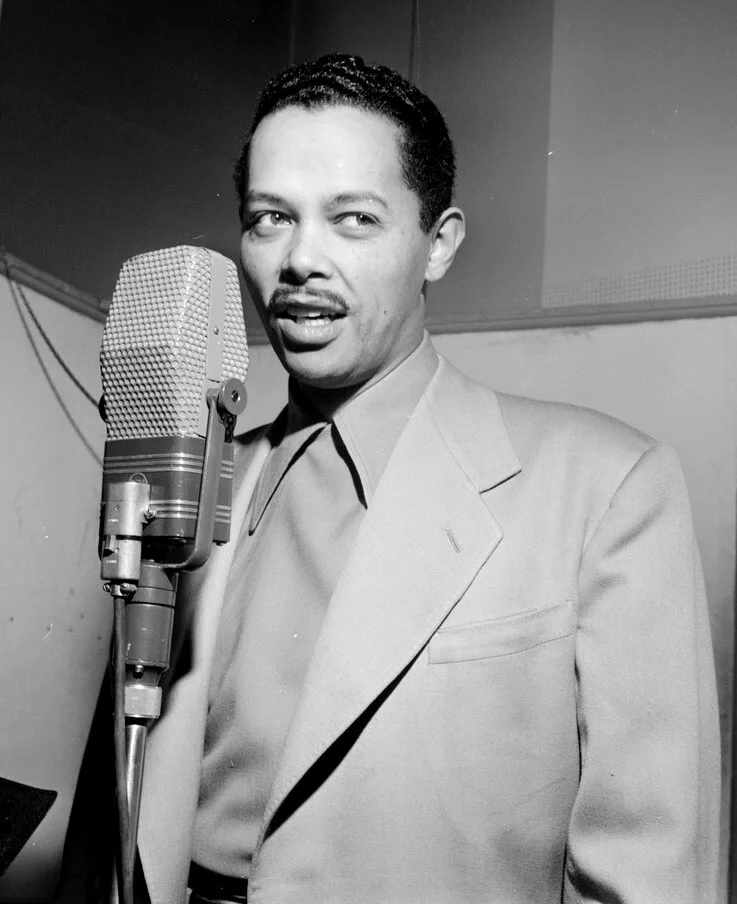
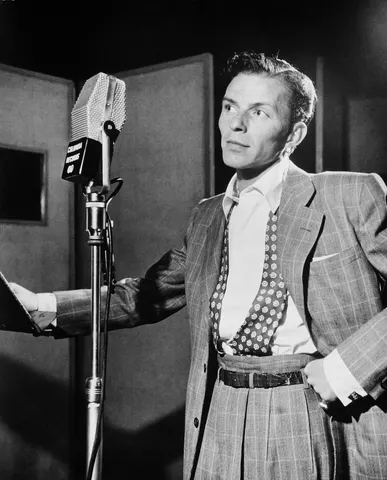
Billy Eckstine, New York, between 1946 and 1948, photographed by William P. Gottlieb Public Domain (William P. Gottlieb collection, dedicated to the public domain by the photographer; Library of Congress: no known copyright restrictions) — Wikimedia Commons — https://commons.wikimedia.org/wiki/File:Portrait_of_Billy_Eckstine,_New_York,_N.Y.,_between_1946_and_1948_(LOC).jpg

William Clarence Eckstine was born on July 8, 1914, in Pittsburgh, Pennsylvania, the son of William Eckstein, a chauffeur, and Charlotte Eckstein, a seamstress. His sister Maxine became a high school teacher. He attended Peabody High School in Pittsburgh, then moved to Washington, D.C., where he went to Armstrong High School, St. Paul Normal and Industrial School and Howard University. In 1933, at nineteen, he left Howard to start a music career after winning first prize, $10, in an amateur contest at Washington's Howard Theatre with an imitation of Cab Calloway singing a nursery rhyme with scat syllables added.
He went to Chicago and in 1939 joined Earl Hines's Grand Terrace Orchestra as vocalist and trumpeter, staying until 1943. With Hines he had juke-box hits in "Jelly, Jelly," which he co-wrote, and "Stormy Monday Blues," recorded in 1942, which topped the Harlem Hit Parade. He and the tenor saxophonist and arranger Budd Johnson are credited with helping steer Hines toward younger players, and the band Eckstine left in late 1943 had carried Dizzy Gillespie, Charlie Parker and the singer Sarah Vaughan, whom he is credited with recommending to Hines after hearing her at the Apollo Theater.
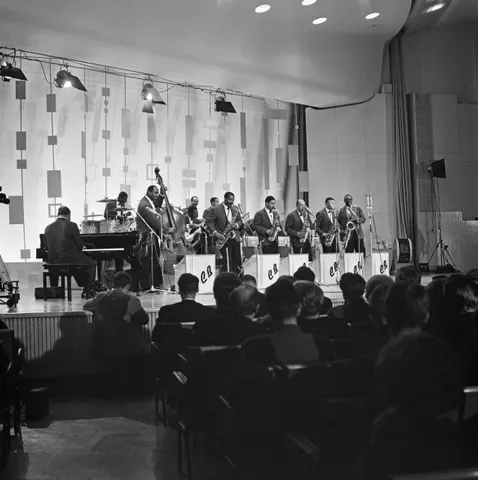
In 1944 he formed his own big band, generally considered the first bebop big band: a working orchestra in which the new harmonic and rhythmic language of Gillespie and Parker was played night after night. Over its life the band carried Parker, Gillespie, Dexter Gordon, Gene Ammons, Art Blakey, Cecil Payne, Fats Navarro, Lucky Thompson and John Malachi, along with Miles Davis for stretches, with Tadd Dameron, Gil Fuller and Jerry Valentine among its arrangers. Ammons joined in 1944, and Eckstine gave him the nickname "Jug" when straw hats ordered for the band did not fit him. Vaughan joined in 1944 and left to go out on her own before the year was out. A DeLuxe session on December 5, 1944 produced "Blowin' the Blues Away," on which Gordon and Ammons trade choruses, Eckstine's own ballad "I Want to Talk About You," and Vaughan's first record, "I'll Wait and Pray." Gillespie left the band in 1944 to lead small groups and recommended Navarro in his place. Davis sat in during the band's July 1944 engagement in St. Louis and was a member in 1946, recording with it in Los Angeles that October alongside Payne, and Lena Horne sang with the orchestra in 1945 and 1946. Blakey held the drum chair from 1944 to 1947.
The orchestra's records for DeLuxe and then National sold well as well as breaking ground. Eckstine's 1945 versions of "A Cottage for Sale," which reached number eight on the pop chart, and "Prisoner of Love" each earned a gold disc from the RIAA. Eckstine starred as the hero of the musical film Rhythm in a Riff, made with his orchestra. He disbanded the orchestra in 1947 and became a solo singer.
The solo career was the larger commercial one. Eckstine signed with the newly founded MGM label and had hits with revivals of "Everything I Have Is Yours" (1947), "Blue Moon" (1948) and Juan Tizol's "Caravan" (1949), then "My Foolish Heart" in 1950 and "I Apologize" in 1951, the last of which was given a Grammy Hall of Fame Award in 1999. A three-page profile in Life on April 24, 1950 included a photograph by Martha Holmes of Eckstine surrounded by white female admirers; the magazine's publisher approved it for print, protest letters followed, and his biographer Cary Ginell and the pianist Billy Taylor are among those who say the episode cost him part of his white pop audience. The press called him "the sepia Sinatra," and the New York Times reported that his 1950 booking at New York's Paramount Theatre drew a larger crowd than Frank Sinatra's had. In the mid-1950s he recorded for MGM, EmArcy and Mercury, among them a set of Duke Ellington songs and the album Blues for Sale, and in 1957 he and Vaughan made the duet single "Passing Strangers," which reached number 22 in the UK, together with the album Sing the Best of Irving Berlin.
His later jazz-leaning dates were often made with colleagues from the orchestra years. Basie/Eckstine Incorporated (Roulette, 1959) paired him with the Count Basie Orchestra and was the only recorded collaboration between the two, with arrangements by Quincy Jones, Thad Jones and Bobby Tucker. His 1960 Las Vegas set No Cover, No Minimum included a few trumpet solos, and in 1962 he recorded At Basin Street East with Quincy Jones. He then recorded for Motown in the mid and late 1960s and, sparingly, for the Stax-owned Enterprise label in the 1970s. He sang on television variety programs, appeared in films and in an episode of the sitcom Sanford and Son, and sang the national anthem before Game 4 of the 1979 World Series in his native Pittsburgh.
In 1984 he made I Am a Singer, arranged and conducted by Angelo DiPippo with Toots Thielemans on harmonica. In November 1986 he recorded his last album, Billy Eckstine Sings with Benny Carter, with the saxophonist Benny Carter and the singer Helen Merrill as a guest; it was nominated for a Grammy Award for best male jazz vocal performance. He married June in 1942 and, after their divorce in 1952, the actress and model Carolle Drake in 1953, and the second marriage lasted until his death. Of their four children, Ed Eckstine became president of Mercury Records and Guy Eckstine a record producer and A&R executive. Eckstine suffered a stroke while performing in Salina, Kansas, in April 1992 and never performed again. He had a heart attack and passed away in Pittsburgh on March 8, 1993, at age 78; his last word is reported to have been "Basie." A state historical marker stands at 5913 Bryant Street in Pittsburgh's Highland Park, where he grew up, and in 2019 he was posthumously given the Grammy Lifetime Achievement Award.
Eckstine sang in a rich, almost operatic bass-baritone, and the New York Times credited his full-throated, sugary approach to popular songs with shaping singers such as Earl Coleman, Johnny Hartman, Joe Williams, Arthur Prysock and Lou Rawls. He was also a working instrumentalist: he played trumpet in the Hines band, took valve trombone solos on his orchestra's April 1947 Los Angeles session and on a Chicago small-group date led by Howard McGhee, and played a few trumpet solos on his 1960 live album. Duke Ellington, Quincy Jones and Lionel Hampton all paid public tribute to him, Jones calling him an idol whose dress, speech and bearing he wanted to copy, and his high-rolled "Mr. B. Collar" was widely imitated by hipsters in the late 1940s and early 1950s. Gillespie recalled in his autobiography that no band sounded like Eckstine's, with its strong attack and modern style. The jazz weight of his catalogue sits in the 1944 to 1947 orchestra and in later dates with Basie, Vaughan and Benny Carter, while many of the MGM, Motown and Stax records are orchestral pop balladry.
- "If That's the Way You Feel" / "Blowin' the Blues Away" (1945, DeLuxe) - Billy Eckstine and His Orchestra with John Malachi on piano, Dizzy Gillespie on trumpet and the tenors Gene Ammons and Dexter Gordon, whose chorus-trading on the flip side became a model for later tenor battles.
- "I Want to Talk About You" / "I'll Wait and Pray" (1945, DeLuxe) - Recorded December 5, 1944 with Art Blakey on drums; it pairs Eckstine's own ballad with Sarah Vaughan's first record.
- "A Cottage for Sale" / "I Love the Rhythm in a Riff" (1945, National) and "Prisoner of Love" / "All I Sing Is Blues" (1945, National) - The two big-band sides that earned gold discs and carried his name beyond the jazz audience.
- "I Apologize" (1951, MGM) - His best-known solo recording, which spent 19 weeks on the Billboard best-seller chart, peaking at number eight, and won a Grammy Hall of Fame Award. Spotify - Everything I Have Is Yours: The Best of the MGM Years Listen
- Sing the Best of Irving Berlin (1957, Mercury) - His one complete album with Sarah Vaughan, arranged and conducted by Hal Mooney. Spotify - Sing The Best Of Irving Berlin Listen
- Basie/Eckstine Incorporated (1959, Roulette) - Eckstine with the Count Basie Orchestra, reprising "Stormy Monday Blues" and "Jelly, Jelly," with arrangements by Quincy Jones, Thad Jones and Bobby Tucker.
- No Cover, No Minimum (1960, Roulette) - A live Las Vegas club set with a small band and a few of his trumpet solos. Spotify - No Cover, No Minimum Listen
- Billy Eckstine Sings with Benny Carter (1987, Verve) - His last album, a November 1986 date of standards with Carter on alto saxophone and Helen Merrill as guest.
Billy Eckstine: Full Discography
Discogs artist ID 311744 ("Billy Eckstine," real name William Clarence Eckstein, born July 8, 1914, in Pittsburgh, Pennsylvania, died March 8, 1993, in Pittsburgh) was read in full on Discogs: it lists more than 2,300 entries across leader, collaborative, track-appearance and compilation releases, most of them singles, reissues and compilations of the same sessions. His orchestra is filed separately as "Billy Eckstine And His Orchestra" (artist ID 320609, 181 entries, with its members listed), and smaller entries exist for "Billy Eckstine And His Band" (ID 6936824), "Billy Eckstine With The Metronome Allstars" (ID 16356991) and "Billy Eckstine & Joe Lipman Orchestra" (ID 17940312); these were reviewed and the relevant releases are summarized below. Because his catalog is large and mostly singles, the leader table is a curated selection of 32 landmark releases rather than an exhaustive list: the DeLuxe and National orchestra sides, the MGM hit singles, and the principal album dates through his final recording. Catalog numbers are those of the first or best-documented pressing; recording dates come from Discogs release notes and Wikipedia, and where the two differ the Notes column says so.
As Leader / Co-Leader
| Album Title | Recording Date(s) | Release Date | Label | Catalog Number | Format(s) | Personnel | Role | Reissue History | Spotify | Buy | Notes |
|---|---|---|---|---|---|---|---|---|---|---|---|
| "Good Jelly Blues" / "I Stay in the Mood for You" | April 13, 1944, New York | 1944 | DeLuxe | 2000 | Shellac, 10", 78 rpm | Billy Eckstine (vocals, billed as Billy Eckstein) with the DeLuxe All Star Band: Dizzy Gillespie, Al Killian, Freddie Webster and Shorty McConnell (trumpets), Trummy Young, Claude Jones and Howard Scott (trombones), Budd Johnson, Jimmy Powell, Rudy Rutherford, Thomas Crump and Wardell Gray (saxophones), Clyde Hart (piano), Connie Wainwright (guitar), Oscar Pettiford (bass), Shadow Wilson (drums) | Leader (billed with the DeLuxe All Star Band) | Reissued on compilations; see Discogs master 1275352 | — | — | An all-star studio group assembled for the date rather than his working orchestra. |
| "The Real Thing Happened to Me" / "Opus X" | December 5, 1944, New York | 1944 | DeLuxe | 2002 | Shellac, 10", 78 rpm | Billy Eckstine and His Orchestra; the same lineup as the other December 5, 1944 sides (see "I Want to Talk About You") | Leader | Reissued on compilations; see Discogs master 3812730 | — | — | The credit block for this single is blank; the lineup is taken from the other sides cut the same day. |
| "If That's the Way You Feel" / "Blowin' the Blues Away" | December 5, 1944, New York | March 1945 | DeLuxe | 2001 | Shellac, 10", 78 rpm | Billy Eckstine and His Orchestra, featuring John Malachi (piano), Dizzy Gillespie (trumpet), Gene Ammons and Dexter Gordon (tenor saxophones) | Leader | Reissued on compilations; see Discogs master 3144798 | — | — | The flip side is the best-known tenor duel of the big-band bebop years, between Ammons and Gordon. |
| "I Want to Talk About You" / "I'll Wait and Pray" | December 5, 1944, New York | 1945 | DeLuxe | 2003 | Shellac, 10", 78 rpm | Billy Eckstine (vocals, leader), Dizzy Gillespie, Gail Brockman, Marion "Boonie" Hazel and Shorty McConnell (trumpets), Alfred "Chippy" Outcalt, Gerald Valentine, Howard Scott and Taswell Baird (trombones), Bill Frazier and John Jackson (alto saxophones), Dexter Gordon and Gene Ammons (tenor saxophones), Leo Parker (baritone saxophone), John Malachi (piano), Connie Wainwright (guitar), Tommy Potter (bass), Art Blakey (drums) | Leader | Reissued on compilations; see Discogs master 1376822 | — | — | Eckstine's own ballad on one side and Sarah Vaughan's first record, "I'll Wait and Pray," on the other. |
| "A Cottage for Sale" / "I Love the Rhythm in a Riff" | May 2, 1945, New York | 1945 | National | 9014 | Shellac, 10", 78 rpm | Billy Eckstine and His Orchestra: Billy Eckstine (vocals), Sonny Stitt (alto saxophone, uncredited), Gene Ammons (tenor saxophone, side B) | Leader | Reissued on compilations; see Discogs release 3713036 | — | — | Number 8 on the pop chart; awarded a gold disc. |
| "Prisoner of Love" / "All I Sing Is Blues" | September 1945 (side A) and October 1945 (side B), New York | 1945 | National | 9017 | Shellac, 10", 78 rpm | Billy Eckstine and His Orchestra: Billy Eckstine (vocal refrain), Fats Navarro, Marion "Boonie" Hazel, Raymond Orr and Shorty McConnell (trumpets), Alfred "Chippy" Outcalt, Gerald Valentine, Howard Scott and Walter Knox (trombones), Budd Johnson and John Cobbs (alto saxophones), Arthur Sammons and Gene Ammons (tenor saxophones), Teddy Cypron (baritone saxophone), Richard Ellington (piano), Connie Wainwright (guitar), Tommy Potter (bass), Art Blakey (drums) | Leader | Reissued on compilations; see Discogs release 3712791 | — | — | Awarded a gold disc. Discogs marks every instrumentalist credit for this release as uncredited on the label. |
| Mr. "B" | December 5, 1944; April 13, 1944; January 7, 1946 (per liner notes) | 1960 | Audio Lab | AL 1549 | Vinyl, LP, compilation | Billy Eckstine and His Orchestra, with the DeLuxe All Star Band sides | Leader | Pressing history on Discogs master 534669 | — | — | Gathers the DeLuxe sides from the King catalogue. One track, "I'm the Caring Kind," is by Benny Carter's orchestra, as the liner notes acknowledge. |
| Billy Eckstine Together | February 5, 12, 19 and 26, 1945 (Armed Forces Radio Service Jubilee broadcasts) | 1972 | Spotlite | 100 | Vinyl, LP, UK | Billy Eckstine (vocals, trumpet), Fats Navarro, Gail Brockman, Marion "Boonie" Hazel and Shorty McConnell (trumpets), Alfred "Chippy" Outcalt, Howard Scott, Taswell Baird and Gerald Valentine (trombones), Bill Frazier and John Jackson (alto saxophones), Budd Johnson and Gene Ammons (tenor saxophones), Leo Parker (baritone saxophone), John Malachi (piano), Connie Wainwright (guitar), Tommy Potter (bass), Art Blakey (drums) | Leader | Pressing history on Discogs master 1546461 | — | — | Live radio broadcasts by the orchestra; Wikipedia dates the LP to 1971, Discogs to 1972. |
| Mister B. and the Band | May 1945 to April 1947, New York and Los Angeles | 1976 | Savoy | SJL 2214 | Vinyl, 2xLP, compilation | Billy Eckstine (vocals; valve trombone solos on the April 21, 1947 Los Angeles tracks) and His Orchestra, with Dexter Gordon, Gene Ammons and Wardell Gray (tenor saxophones), Cecil Payne and Leo Parker (baritone saxophones), Fats Navarro, Miles Davis and Ray Linn (trumpets), Art Blakey (drums) and others by session, per Discogs credits | Leader | Pressing history on Discogs master 535256 | — | — | Wikipedia dates the Savoy compilation to 1986; the LP set is dated 1976 on Discogs. Includes the October 5, 1946 Los Angeles session with Miles Davis and Cecil Payne. |
| The Legendary Big Band (1944-1947) | 1944 to 1947 | 2002 | Savoy Jazz | SVY 17125 | CD, 2xCD, compilation | Billy Eckstine and His Orchestra | Leader | Single pressing: Discogs release 4283402 | — | — | All of the orchestra's recordings for DeLuxe and National. |
| "Blue Moon" / "Fools Rush In" | Not specified in Discogs data | November 1948 | MGM | 10311 | Shellac, 10", 78 rpm | Billy Eckstine (vocals), Hugo Winterhalter (conductor) | Leader | Reissued on compilations; see Discogs master 2461708 | Spotify - Everything I Have Is Yours / The Best Of The MGM Years (compilation) | — | His first MGM hit of the solo years. |
| "Caravan" / "A Senorita's Bouquet" | Not specified in Discogs data | 1949 | MGM | 10368 | Shellac, 10", 78 rpm | Billy Eckstine (vocals) | Leader | Reissued on compilations; see Discogs master 3873322 | Spotify - Everything I Have Is Yours / The Best Of The MGM Years (compilation) | — | A vocal version of the Juan Tizol piece. |
| "My Foolish Heart" / "(We've Got a) Sure Thing" | Not specified in Discogs data | February 1950 | MGM | 10623 | Vinyl, 10", 78 rpm | Billy Eckstine (vocals) | Leader | Reissued on compilations; see Discogs master 712071 | Spotify - Everything I Have Is Yours / The Best Of The MGM Years (compilation) | — | Victor Young's film song. |
| Songs by Billy Eckstine | Not specified in Discogs data | January 1950 | MGM | 48 | 78 rpm album set, 10" | Billy Eckstine (vocals) with orchestral accompaniment | Leader | Pressing history on Discogs master 1808200 | — | — | Reached number 4 on the US album chart, per Wikipedia. |
| "I Apologize" / "Bring Back the Thrill" | Not specified in Discogs data | 1951 | MGM | 10903 (K10903 on the 45 rpm pressing) | Shellac, 10", 78 rpm; Vinyl, 7", 45 rpm | Billy Eckstine (vocals) | Leader | Reissued on compilations; see Discogs master 450934 | Spotify - Everything I Have Is Yours / The Best Of The MGM Years (compilation) | — | Entered the Billboard best-seller chart on February 23, 1951, spent 19 weeks there and peaked at number 8; Grammy Hall of Fame Award, 1999. |
| Sings "Tenderly" | Not specified in Discogs data | 1953 | MGM | E219 | Vinyl, 10" LP | Billy Eckstine (vocals) | Leader | Pressing history on Discogs master 991828 | — | — | Ballad program of eight standards. |
| I Let a Song Go Out of My Heart (Billy Eckstine Sings 8 Great Duke Ellington Songs) | Not specified in Discogs data | 1954 (per Wikipedia) | MGM | E-257 | Vinyl, 10" LP, album | Billy Eckstine (vocals), Lou Bring (conductor) | Leader | Pressing history on Discogs release 1148055 | — | — | Songs by Duke Ellington; the Discogs entry for this pressing carries no year. |
| Blues for Sale | Not specified in Discogs data | 1954 | EmArcy | MG 36029 | Vinyl, LP, album | Billy Eckstine (vocals) with orchestra | Leader | Pressing history on Discogs master 1460461 | — | — | The track list matches orchestra-era titles that Eckstine first recorded for National. |
| Billy Eckstine's Imagination | Not specified in Discogs data | 1958 | EmArcy | MG 36129 | Vinyl, LP | Billy Eckstine (vocals), Pete Rugolo and His All Stars | Leader | Pressing history on Discogs master 801079 | — | — | Ballad album with a cover photograph by Herman Leonard. |
| Sarah Vaughan and Billy Eckstine Sing the Best of Irving Berlin | 1957 | 1957 (Discogs dates the first Mercury pressing 1958) | Mercury | MG 20316 | Vinyl, LP, album, mono | Sarah Vaughan and Billy Eckstine (vocals), Hal Mooney (arranger, conductor) and his orchestra | Co-leader (billed with Sarah Vaughan) | Pressing history on Discogs master 296691 | Spotify - Sing The Best Of Irving Berlin | — | Their only complete album together; Eckstine takes solo features on "All of My Life" and "The Girl That I Marry." |
| The Duke, the Blues and Me! | Not specified in Discogs data | 1958 (Wikipedia gives 1957) | Regent | MG 6053 | Vinyl, LP, album, compilation | Billy Eckstine (vocals) | Leader | Pressing history on Discogs master 2505898 | — | — | Ellington songs and blues titles; Ozzie Cadena produced. |
| Basie/Eckstine Incorporated | 1959 | 1959 | Roulette | SR 52029 | Vinyl, LP, album, stereo | Billy Eckstine (vocals), Count Basie Orchestra: Count Basie (piano), Marshal Royal (lead alto saxophone), Frank Wess (alto saxophone, flute), Frank Foster and Billy Mitchell (tenor saxophones), Charlie Fowlkes (baritone saxophone), Thad Jones, Wendell Culley, Joe Newman and Snooky Young (trumpets), Henry Coker, Al Grey and Benny Powell (trombones), Freddie Green (guitar), Eddie Jones (bass), Sonny Payne (drums), Bobby Tucker (additional piano); arrangements by Quincy Jones, Thad Jones and Bobby Tucker | Co-leader (billed with Count Basie) | Pressing history on Discogs master 314382 | — | — | The only recorded collaboration between Eckstine and Basie; reprises "Stormy Monday Blues" and "Jelly, Jelly." Teddy Reig produced. |
| No Cover, No Minimum | Recorded live in Las Vegas, 1960 | 1960 | Roulette | SR 52052 | Vinyl, LP, album, stereo | Billy Eckstine (vocals, trumpet), Charlie Walp (trumpet), Bucky Manieri (trombone), Buddy Balboa and Charlie McLean (saxophones), Bobby Tucker (piano, arranger), Buddy Grievey (drums) | Leader | Reissued by Blue Note in 1992 with ten additional tracks; see Discogs master 410210 | Spotify - No Cover, No Minimum | — | A nightclub set with a few Eckstine trumpet solos. |
| Once More with Feeling | Not specified in Discogs data | 1960 | Roulette | SR 25104 | Vinyl, LP, album, stereo | Billy Eckstine (vocals), Billy May (arranger, conductor) | Leader | Pressing history on Discogs master 314381 | — | — | Standards program; Teddy Reig produced. |
| Broadway, Bongos and Mr. B | Not specified in Discogs data | 1961 | Mercury | MG 20637 | Vinyl, LP, mono | Billy Eckstine (vocals), Hal Mooney and His Orchestra | Leader | Pressing history on Discogs master 1251755 | — | — | Show tunes with Latin percussion. |
| At Basin Street East | Not specified in Discogs data | 1962 | Mercury | MG 20674 (stereo SR 60674) | Vinyl, LP, album, mono | Billy Eckstine (vocals), Quincy Jones (arranger, conductor) and His Orchestra | Leader (billed with Quincy Jones) | Pressing history on Discogs master 364372 | — | — | Liner notes by Duke Ellington. |
| Don't Worry 'Bout Me | Not specified in Discogs data | 1962 | Mercury | SR 60736 (mono MG 20736) | Vinyl, LP, album, stereo | Billy Eckstine (vocals); arrangements by Billy Byers and Torrie Zito | Leader | Pressing history on Discogs master 579526 | — | — | Liner notes by Quincy Jones. |
| The Modern Sound of Mr. B | Not specified in Discogs data | 1964 | Mercury | SR 60916 (mono MG 20916) | Vinyl, LP, album, stereo | Billy Eckstine (vocals) | Leader | Pressing history on Discogs master 579530 | — | — | Includes "Satin Doll" and "People." |
| The Prime of My Life | Not specified in Discogs data | 1965 | Motown | MS 632 | Vinyl, LP, album, stereo | Billy Eckstine (vocals) | Leader | Pressing history on Discogs master 803444 | — | — | His first Motown album. |
| Senior Soul | Not specified in Discogs data | 1972 | Enterprise | ENS-5004 | Vinyl, LP, album | Billy Eckstine (vocals, producer), Artie Butler (arranger), Sherlie Matthews Singers (backing vocals) | Leader | Pressing history on Discogs master 302848 | — | — | Soul and pop material for Stax's Enterprise label. |
| I Am a Singer | Not specified in Discogs data | 1984 | Kimbo | KIM 2459 | Vinyl, LP, album | Billy Eckstine (vocals), Angelo DiPippo (arranger, conductor, synthesizer), Toots Thielemans (harmonica), Eddie Daniels (tenor saxophone), Phil Bodner (reeds), Jay Berliner (guitar) | Leader | Pressing history on Discogs master 1148054 | — | — | Thielemans's harmonica credit comes from his own biography; the Discogs credit block for this release does not list him. |
| Billy Eckstine Sings with Benny Carter | November 17 and 18, 1986, Media Sound Studio, New York (mixed November 19 and 20, 1986) | 1987 (some sources give 1986) | EmArcy (Verve) | 832 011-2 | CD, album | Billy Eckstine (vocals), Benny Carter (alto saxophone; trumpet on "September Song"), Helen Merrill (vocals on "You'd Be So Nice to Come Home To" and "Didn't We?"), Bobby Tucker (piano, arranger), Paul West (bass), Vernel Fournier (drums) | Leader | Pressing history on Discogs master 1112707 | — | — | His last album; nominated for a Grammy Award for best male jazz vocal performance. |
As Featured Vocalist and Sideman (selected credits)
| Year | Project (Leader) | Title | Label | Catalog | Role | Notes |
|---|---|---|---|---|---|---|
| 1940-1942 | Earl Hines and His Orchestra | "Jelly, Jelly," "Stormy Monday Blues," "Water Boy," "I Got It Bad and That Ain't Good," "Somehow" and other sides, collected on A Treasury of Immortal Performances: Earl Hines - Billy Eckstine | RCA Victor (originals on Bluebird) | LPT 20 | Vocalist (also trumpet in the band) | "Stormy Monday Blues" was recorded March 19, 1942, "Water Boy" on August 20, 1941, and the other two sides on October 28, 1941, per Discogs notes on a related reissue. The 10-inch LP is dated 1952; the original Bluebird catalog numbers are not itemized. |
| 1957 | Sarah Vaughan and Billy Eckstine | "Passing Strangers" / "The Door Is Open" | Mercury | 71122X45 | Duet vocalist | Single dated May 7, 1957 on Discogs; reached number 22 on the UK singles chart. |
| Not confirmed | Howard McGhee | Small-group session recorded in Chicago for Vitacoustic, later collected on Maggie: The Savoy Sessions | Vitacoustic (reissued on Savoy) | Not itemized | Valve trombone | Eckstine plays valve trombone alongside Howard McGhee (trumpet), Kenny Mann (tenor saxophone), Hank Jones (piano), Ray Brown (bass), J.C. Heard (drums) and Marcel Daniels (vocals), per Wikipedia's McGhee discography; the session date is not confirmed. |
- Earl Hines - bandleader whose Grand Terrace Orchestra Eckstine joined in 1939 as vocalist and trumpeter and left in 1943; their records include "Jelly, Jelly" and "Stormy Monday Blues."
- Sarah Vaughan - recommended to Hines by Eckstine, sang in his 1944 orchestra, and made the 1957 duets "Passing Strangers" and Sing the Best of Irving Berlin with him.
- Dizzy Gillespie and Charlie Parker - members of the Hines band and then of Eckstine's orchestra; Gillespie left in 1944.
- Dexter Gordon and Gene Ammons - the orchestra's tenor saxophones, heard together on "Blowin' the Blues Away."
- Art Blakey - drummer in the orchestra from 1944 to 1947.
- Miles Davis - sat in during the July 1944 St. Louis engagement and was a member in 1946.
- Cecil Payne - baritone saxophonist heard with the orchestra on its October 1946 Los Angeles recordings.
- Frank Wess - tenor saxophonist in the orchestra after the Army, and later recommended by Eckstine to Count Basie.
- Tommy Turrentine - trumpeter who, according to his own profile, worked with Eckstine's band among his late-1940s and early-1950s big-band stints.
- Chico Hamilton - drummer who, according to his own profile, worked behind Eckstine on the West Coast in the late 1940s and 1950s.
- Lena Horne - lived in Pittsburgh as a teenager, where she learned music in part from Eckstine, and sang with his orchestra in 1945 and 1946.
- Howard McGhee - trumpeter who led a Chicago small-group session on which Eckstine played valve trombone, with Hank Jones, Ray Brown and J.C. Heard in the rhythm section.
- Count Basie Orchestra - accompanists on Basie/Eckstine Incorporated (1959), with Frank Foster, Thad Jones and Joe Newman in the lineup.
- Quincy Jones - arranger on the 1959 Basie date and collaborator on the 1962 album At Basin Street East.
- Benny Carter, Helen Merrill, Bobby Tucker, Paul West, Vernel Fournier - saxophonist, guest singer, pianist-arranger, bassist and drummer on his final album.
- Tadd Dameron, Gil Fuller, Jerry Valentine - arrangers for the 1940s orchestra.
- Fats Navarro, Lucky Thompson, Leo Parker, Sonny Stitt, Kenny Dorham, John Malachi, Tommy Potter - players who passed through the orchestra.
- Toots Thielemans - harmonica soloist on I Am a Singer (1984).
More Vocal Jazz Artists
See all 220 Vocal Jazz artists →More American Jazz Artists
See all 646 American artists →- Wikipedia: Billy Eckstine
- Wikipedia: Basie/Eckstine Incorporated
- Wikipedia: Billy Eckstine Sings with Benny Carter
- Wikipedia: No Cover, No Minimum
- Wikipedia: Billy Eckstine and Sarah Vaughan, Sing the Best of Irving Berlin
- Wikipedia: I Apologize (1931 song)
- Wikipedia: Stormy Monday Blues
- Wikipedia: Rhythm in a Riff
- Wikipedia: Sarah Vaughan
- Wikipedia: Art Blakey
- Wikipedia: Dexter Gordon
- Wikipedia: Gene Ammons
- Wikipedia: Miles Davis
- Wikipedia: Frank Wess
- Wikipedia: Howard McGhee
- Discogs: Billy Eckstine (artist 311744)
- Discogs: Billy Eckstine And His Orchestra (artist 320609)
- MusicBrainz: Billy Eckstine
- JazzProfiles.com: Tommy Turrentine
- JazzProfiles.com: Chico Hamilton
- JazzProfiles.com: Paul West