 JAZZPROFILES lives in the music 2,059 Jazz Artists fully Profiled!
Artie Shaw
Last updated October 29, 2026
Listen on Spotify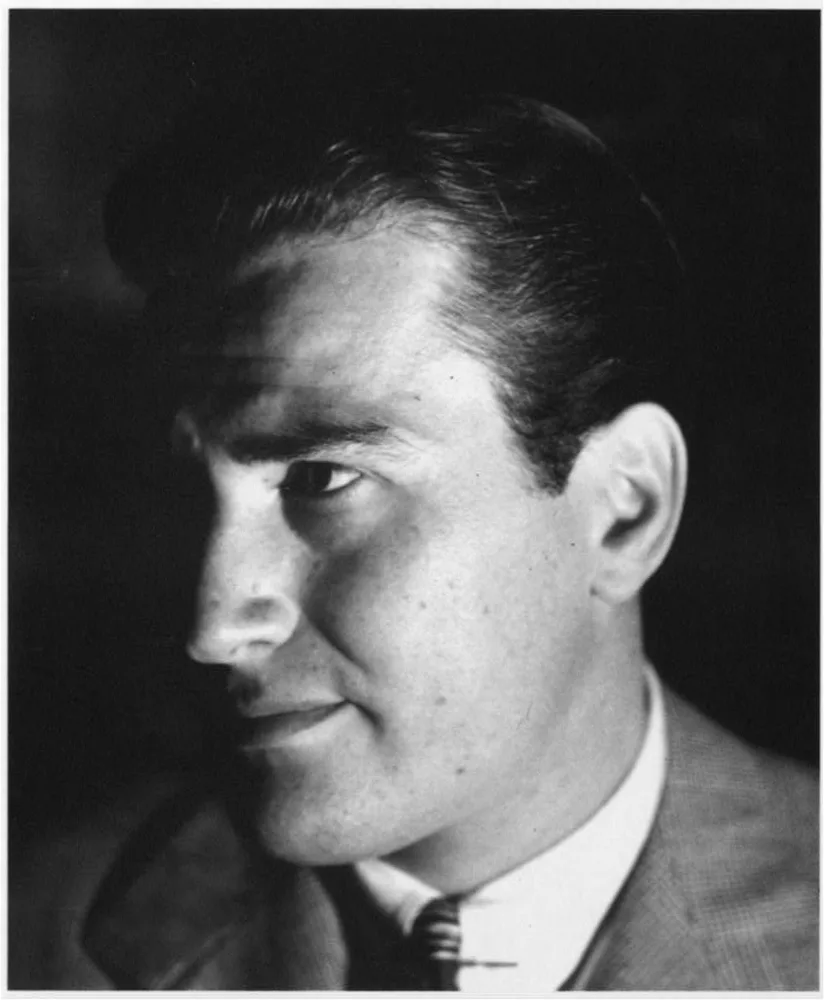
Artie Shaw, New York, between 1946 and 1948, photographed by William P. Gottlieb Public Domain (William P. Gottlieb collection, released by the photographer; Library of Congress: no known copyright restrictions) — Wikimedia Commons — https://commons.wikimedia.org/wiki/File:Artie_Shaw_(Gottlieb_07773).jpg

Artie Shaw was born Arthur Jacob Arshawsky on May 23, 1910, in New York City, the son of Sarah (née Strauss), who came from Austria, and Harold "Harry" Arshawsky, a dressmaker and photographer from Russia. The family was Jewish and settled in New Haven, Connecticut, where Shaw grew up. He bought a saxophone with money earned in a grocery store and began to learn it at 13, switched to clarinet at 16, and left home to tour with a band. In 1925 he was with Johnny Cavallaro's dance band, and from the later 1920s he worked in Cleveland with Austin Wylie's orchestra, becoming its music director and arranger. In 1929 and 1930 he played with Irving Aaronson's Commanders, where he was exposed to symphonic music, then returned to New York, joined jam sessions with the stride pianist Willie "The Lion" Smith, and by 1931 was a busy studio musician. He joined Roger Wolfe Kahn's orchestra in 1932 and stepped away from music in 1934 to write a book before money problems brought him back.
In May 1936 Shaw played at an all-star swing concert at New York's Imperial Theatre and surprised the audience by performing his own "Interlude in B-flat" with a string quartet and a rhythm section, an early example of what was later called Third Stream. He built his first orchestra on that idea, adding strings to a Dixieland-style front line, but it broke up in early 1937. A conventional big band followed, with Georgie Auld and Tony Pastor on tenor saxophone, and after his Brunswick contract lapsed at the end of 1937 he signed with RCA Victor's Bluebird label. In March 1938 he hired Billie Holiday, who had left the Count Basie Orchestra a month earlier, making her one of the first Black women to sing full time with a white orchestra and the first to tour the segregated South in that role. Shaw had already played clarinet on four of her Vocalion sides in July 1936. She recorded one side with his band, "Any Old Time," and left in November 1938 after being told to use the service elevator at New York's Lincoln Hotel. Helen Forrest joined the band the same year, and the drummer Buddy Rich arrived in 1939.
On July 24, 1938, at RCA Victor's Studio 2 in New York, the band recorded Cole Porter's "Begin the Beguine" in an extended arrangement by Jerry Gray. The company was doubtful about so long a record and issued it as the flip side of "Indian Love Call," but it became a best seller and made Shaw a national star. DownBeat readers voted his band the best swing band of 1938, and he headlined a CBS radio series, with Robert Benchley as host, from November 1938 to November 1939. Shaw resented having to play the same hits night after night. In November 1939 he walked off the bandstand of the Cafe Rouge at New York's Hotel Pennsylvania in the middle of a broadcast, quit the band two days later, and went to Mexico; Pastor was soon coaxed into leading a band of his own. Rich had already moved on to Tommy Dorsey's orchestra in 1939.
Back in Hollywood in 1940, Shaw recorded "Frenesi" with strings and woodwinds on March 3 and led the band on the Burns and Allen radio show. He formed a small group from within the band, named the Gramercy Five after his telephone exchange, with Johnny Guarnieri on harpsichord, Billy Butterfield on trumpet and Al Hendrickson on guitar; their session of September 3, 1940 produced "Summit Ridge Drive," one of his million-selling records. He played himself in the Fred Astaire film Second Chorus (1940), for which he recorded "Concerto for Clarinet" on December 17, and his string-orchestra "Star Dust," with a trumpet solo by Butterfield, became one of his best-known records. In June 1941 his orchestra accompanied Lena Horne on two Victor sides. That September he formed a 31-piece orchestra with strings whose members included Hot Lips Page, Max Kaminsky, Georgie Auld, Dave Tough, Jack Jenney, Ray Conniff and Guarnieri. When news of Pearl Harbor reached him during a matinee in Providence, Rhode Island, on December 7, 1941, he gave the band two weeks' notice and joined the Navy.
From 1942 to 1944 Shaw led a Navy band in the Pacific, playing for service personnel, at times four concerts a day in battle zones including Guadalcanal, until a medical discharge in early 1944. The new Hollywood band he formed that year was a modern big band without strings, and its soloists included Roy Eldridge, Dodo Marmarosa and Barney Kessel; the revived Gramercy Five recorded again in January 1945. After his RCA contract ended in August 1945 he moved to Musicraft, and his 1946 sessions there featured the singer Mel Tormé and his Mel-Tones, including "I Got the Sun in the Morning," before the band broke up. He premiered Norman Dello Joio's Concertante for Clarinet and Orchestra, which he had commissioned, with the Chautauqua Symphony on July 23, 1949, and later that year led a short-lived modern band that included Zoot Sims, Al Cohn, Don Fagerquist and Marmarosa. His last recordings as a player came in 1953 and 1954 with a new Gramercy Five that featured Tal Farlow or Joe Puma on guitar, Joe Roland on vibraphone and Hank Jones on piano. In July 1954 he toured Australia on a bill with Buddy Rich and Ella Fitzgerald, then stopped playing the clarinet and spent much of the rest of the 1950s in Europe.
Away from the bandstand, Shaw wrote. His autobiography, The Trouble with Cinderella, appeared in 1952, followed by the three short novels of I Love You, I Hate You, Drop Dead! (1965) and the story collection The Best of Intentions and Other Stories (1989). He was married eight times, among others to the actresses Lana Turner and Ava Gardner, to Betty Kern, daughter of the songwriter Jerome Kern, and to the novelist Kathleen Winsor; his last wife was the actress Evelyn Keyes. In 1953 he was called before the House Un-American Activities Committee, which was investigating the World Peace Council. In 1968 he returned to a studio to conduct, without playing, a Capitol album of his late-1930s hits with veteran swing-era musicians. In 1983 he assembled a new orchestra with the clarinetist Dick Johnson as soloist and leader, which made its debut on New Year's Eve 1984 at the Glen Island Casino in New Rochelle, New York, and he fronted it for a few years. Brigitte Berman's documentary Artie Shaw: Time Is All You've Got (1985) won an Academy Award. He received a Grammy Lifetime Achievement Award in 2004 and passed away in Thousand Oaks, California, on December 30, 2004, at age 94; he had lived in its Newbury Park section. The University of Arizona holds his music library of more than 700 scores and parts.
Shaw treated the big band as a place to experiment as well as to dance. He wrote for strings and woodwinds, used a string quartet and rhythm section on "Interlude in B-flat," a use of strings that has been attributed to the influence of Igor Stravinsky; "Concerto for Clarinet" closes on a celebrated altissimo C. His theme, the minor-key "Nightmare," was an unusual choice for a hit-making leader and may have influenced a vamp in Monty Norman's "James Bond Theme." The Gramercy Five, with harpsichord and trumpet in front, made a lightly swinging small group out of the band. Shaw complained in print that he liked the music but not the business of music, which helps explain why each of his bands was short-lived. AllMusic calls him one of jazz's finest clarinetists, and Duke Ellington's longtime clarinetist Barney Bigard named him his favorite clarinet player.
Shaw is routinely paired with Benny Goodman, and both Wikipedia and Britannica describe his popularity as rivaling Goodman's. Fans answered Goodman's nickname "King of Swing" by calling Shaw the "King of the Clarinet," and Shaw said the two titles ought to be reversed, arguing that Goodman played clarinet while he played music. That is a rivalry for audiences and in musical ambition, and the sources do not describe a personal feud. The two men's circles overlapped: Helen Forrest sang with Shaw in 1938 and 1939 and then with Goodman, and the vibraphonist Teddy Charles, the pianist Hank Jones and the saxophonist Zoot Sims worked in both bands at different times.
- "Begin the Beguine" / "Indian Love Call" (1938, Bluebird B-7746) - Recorded July 24, 1938 in an arrangement by Jerry Gray, it was the breakthrough hit for a band that had gone largely unnoticed for over two years.
- "Any Old Time" / "Back Bay Shuffle" (1938, Bluebird B-7759) - Recorded at the same July 24, 1938 session; "Any Old Time" is the only studio side Billie Holiday made with Shaw's band.
- "Frenesi" / "Adios, Mariquita Linda" (1940, Victor 26542) - Recorded on March 3, 1940 in Hollywood with a studio orchestra of strings, woodwinds and rhythm section, a hit that showed his taste for larger, quieter textures.
- "Summit Ridge Drive" / "Cross Your Heart" (1940, Victor 26763) - The Gramercy Five's first session, September 3, 1940, with Billy Butterfield on trumpet and Johnny Guarnieri on harpsichord, and a million-selling record.
- "Star Dust" / "Temptation" (1940, Victor 27230) - His string-orchestra reading of Hoagy Carmichael's song, with a celebrated trumpet solo by Billy Butterfield.
- "Concerto for Clarinet," Parts 1 and 2 (1941, Victor 36383) - A showpiece from the film Second Chorus, recorded December 17, 1940, with long cadenzas for the leader and a very high closing note.
- I Can't Get Started (1956, Verve) - A Gramercy Five album recorded in New York in December 1953 and February 1954 with Tal Farlow, Joe Roland and Hank Jones, among Shaw's last recordings as a clarinetist.
- The Complete Gramercy Five Sessions (1989, Bluebird) - Collects the small group's sides of 1940 to 1945, from "Special Delivery Stomp" to "Hop, Skip and Jump," including the 1945 dates with Roy Eldridge and Dodo Marmarosa.
Artie Shaw: Full Discography
Discogs artist ID 269597 ("Artie Shaw," real name Arthur Jacob Arshawsky, born May 23, 1910, New York City, died December 30, 2004, Thousand Oaks, California) lists roughly 2,500 entries, nearly all of them compilations and reissues of the same 1936 to 1954 sessions. Discogs files his band and small-group work under separate entities, which were checked: Artie Shaw And His Orchestra (artist ID 335674, roughly 1,700 entries), Artie Shaw And His Gramercy Five (artist ID 335570, 224 entries), and smaller entities for his strings, rhythm makers, New Music String Quartet and Navy band. Because so much of his catalog is 78 rpm singles and later compilations, the leader table is a curated selection of 17 landmark releases rather than an exhaustive list: the 1938 to 1941 hit singles, the Gramercy Five sides, the 1950 and 1954 to 1956 albums, the 1968 re-creation date and the principal reissue sets. Catalog numbers are those of the first or best-documented US pressing, and recording dates come from Discogs release notes and Wikipedia; where a date or lineup is not documented the cell says so. Band lineups on the 78 rpm singles come from Discogs release data, since the labels do not name the players.
As Leader / Co-Leader
| Album Title | Recording Date(s) | Release Date | Label | Catalog Number | Format(s) | Personnel | Role | Reissue History | Spotify | Buy | Notes |
|---|---|---|---|---|---|---|---|---|---|---|---|
| Indian Love Call / Begin the Beguine | July 24, 1938, RCA Victor Studio 2, New York | August 17, 1938 | Bluebird | B-7746 | 10-inch 78 rpm single | Artie Shaw (clarinet) and his orchestra: Chuck Peterson, Claude Bowen, John Best (trumpets); George Arus, Harry Rodgers, Ted Vesely (trombones); Hank Freeman, Les Robinson (alto saxophones); Ronnie Perry, Tony Pastor (tenor saxophones); Les Burness (piano); Al Avola (guitar); Sid Weiss (bass); Cliff Leeman (drums) | Leader | Repressed by Bluebird in 1939 and 1943; collected in The Complete Artie Shaw, Vol. I (1976) | — | — | "Begin the Beguine" (arranged by Jerry Gray) is the B side. The labels do not name the players; the lineup comes from Discogs release data. |
| Any Old Time / Back Bay Shuffle | July 24, 1938, RCA Victor Studios, New York | August 24, 1938 | Bluebird | B-7759 | 10-inch 78 rpm single | Artie Shaw (clarinet) and his orchestra, the same lineup as the preceding single; Billie Holiday (vocal on "Any Old Time") | Leader | Repressed by Bluebird in 1939 and 1941; collected in The Complete Artie Shaw, Vol. I (1976) | — | — | Holiday's only studio record with Shaw's band; the release data does not name her, and her own profile documents the session. |
| Adios, Mariquita Linda / Frenesi | March 3, 1940, Hollywood | 1940 | Victor | 26542 | 10-inch 78 rpm single | Artie Shaw (clarinet) with a studio orchestra of reeds, brass, strings and rhythm: Stan Wrightsman (piano), Bobby Sherwood (guitar), Jud DeNaut (bass), Carl Maus (drums) | Leader | Repressed by RCA Victor in 1943 and 1948 | — | — | Recorded with strings and woodwinds after his return from Mexico; one of his biggest hits. |
| Summit Ridge Drive / Cross Your Heart | September 3, 1940, Hollywood | September 24, 1940 | Victor | 26763 | 10-inch 78 rpm single | Artie Shaw (clarinet), Billy Butterfield (trumpet), Johnny Guarnieri (harpsichord), Al Hendrickson (guitar), Jud DeNaut (bass), Nick Fatool (drums) | Leader (Artie Shaw and His Gramercy Five) | Issued on a V-Disc in 1944; collected in The Complete Gramercy Five Sessions (1989) | — | — | The original Gramercy Five; "Summit Ridge Drive" sold a million copies. |
| Star Dust / Temptation | Hollywood: September 7, 1940 (side A) and October 7, 1940 (side B), per Discogs | December 6, 1940 | Victor | 27230 | 10-inch 78 rpm single | Artie Shaw (clarinet) with orchestra: Billy Butterfield, George Wendt, Jimmy Cathcart (trumpets); Jack Jenney, Vernon Brown (trombones); Johnny Guarnieri (piano); Al Hendrickson (guitar); Jud DeNaut (bass); Nick Fatool (drums); strings | Leader | Part of the 1941 Victor 78 rpm album Four Star Favorites (P 85); repressed 1943 and 1947 | — | — | Butterfield's trumpet solo is the record's signature; some sources date the "Star Dust" session October 7, 1940. |
| Concerto for Clarinet, Parts 1 and 2 | December 17, 1940, RCA Victor Studios, Hollywood | February 1941 | Victor | 36383 | 12-inch 78 rpm single | Artie Shaw (clarinet) with orchestra: Billy Butterfield, George Wendt, Jimmy Cathcart (trumpets); Jack Jenney, Ray Conniff, Vernon Brown (trombones); Johnny Guarnieri (piano); Al Hendrickson (guitar); Jud DeNaut (bass); Nick Fatool (drums); strings | Leader | Repressed 1943 and 1946; reissued on the 1972 RCA Victor compilation Concerto for Clarinet | — | — | Written for the Paramount film Second Chorus. |
| I Got the Sun in the Morning / Along with Me | April 30, 1946, Hollywood | 1946 | Musicraft | 365 | 10-inch 78 rpm single | Artie Shaw and his orchestra with vocals by Mel Tormé and the Mel-Tones | Leader | — | — | — | One of the 1946 Musicraft sessions that featured the Mel-Tones. |
| Modern Music for Clarinet | Not specified in Discogs data | February 1950 | Columbia Masterworks | ML 4260 | Vinyl, LP, mono | Artie Shaw (clarinet); Walter Hendl (conductor) on side one; Artie Shaw and His Orchestra and the Artie Shaw New Music String Quartet on side two | Leader | — | — | — | A concert-style program: short pieces for clarinet and orchestra on side one, and standards including "The Man I Love" and "I Concentrate on You" on side two. |
| Sequence in Music | Not specified in Discogs data | 1956 | Verve | MG V-2014 | Vinyl, LP | Artie Shaw and His Gramercy Five (lineup not itemized on the release) | Leader (Gramercy Five) | — | — | — | Six tracks, among them "Sequence in B Flat," "The Sad Sack," "Sunny Side Up" and "Tenderly." |
| I Can't Get Started | December 1953 and February 1954, New York | 1956 | Verve | MG V 2015 | Vinyl, LP, album, mono | Artie Shaw (clarinet), Joe Roland (vibraphone), Tal Farlow (guitar), Hank Jones (piano), Tommy Potter (bass), Irv Kluger (drums) | Leader (Gramercy Five) | — | — | — | Opens with a ten-minute "The Grabtown Grapple." Discogs spells the drummer Irv Kruger on this release. |
| The Last Recordings: Rare & Unreleased | February and March 1954, New York; June 1954, Hollywood | January 14, 1992 | MusicMasters Jazz | 01612-65071-2 | CD, compilation (two discs) | Artie Shaw (clarinet), Hank Jones (piano), Tommy Potter (bass), Irv Kluger (drums); guitar and vibraphone players as listed on the following entry | Leader | Nimbus Records issued a related 2009 compilation, The Last Recordings Vol 2, Final Sessions 1954 (NI 2721) | — | — | Twenty tracks from the 1954 small-group sessions, including "Besame Mucho," "The Chaser" and "Lugubrious." |
| More Last Recordings: The Final Sessions | February and March 1954, New York; June 1954, Hollywood | August 24, 1993 | MusicMasters Jazz | 01612-65101-2 | CD, compilation | Artie Shaw (clarinet), Hank Jones (piano), Tal Farlow (guitar; Joe Puma on "September Song"), Joe Roland (vibraphone), Tommy Potter (bass), Irv Kluger (drums) | Leader | Reissued in 1993 on Jazz Heritage (523444F) | — | — | Includes two takes of "Autumn Leaves"; track 2-2 was previously unissued. |
| Re-creates His Great '38 Band | Not specified; recorded in Capitol's New York studios | 1968 | Capitol | ST 2992 | Vinyl, LP, album, stereo | Artie Shaw (conductor and producer) with a studio orchestra of veteran swing-era players (not itemized on the release) | Conductor and producer (does not play) | — | — | — | New recordings of "Begin the Beguine," "Nightmare," "Back Bay Shuffle," "Traffic Jam" and others from the late 1930s. |
| The Complete Gramercy Five Sessions | 1940 to 1945 | 1989 | Bluebird (RCA) | 7637-2-RB (CD); NL 87637 (UK LP) | CD; LP | 1940: Artie Shaw (clarinet), Billy Butterfield (trumpet), Johnny Guarnieri (harpsichord), Al Hendrickson (guitar), Jud DeNaut (bass), Nick Fatool (drums). 1945 dates feature Roy Eldridge (trumpet), Dodo Marmarosa (piano) and Barney Kessel (guitar) | Leader (Gramercy Five) | Compiles the Victor sides issued 1940 to 1946 | — | — | Fifteen tracks from "Special Delivery Stomp" to "Hop, Skip and Jump," including both takes of "Mysterioso." |
| The Complete Artie Shaw, Volumes I to VI | July 1938 to 1945 | 1976 to 1981 | Bluebird (RCA) | Varies by volume; Volume I is AXK2-5517 (cassette edition) | Two-LP sets; cassette | Artie Shaw (clarinet) and his orchestras of 1938 to 1945 | Leader | A Volume VII retrospective followed in 1981 | — | — | Volume I covers sessions from July 24, 1938 to January 1939; Volume II is 1939, Volume III 1939 and 1940, Volume IV 1940 and 1941, Volume V 1941 and 1942, Volume VI 1942 to 1945. |
| Self Portrait | 1936 to 1954 | 2001 | BMG / Bluebird | 09026-63808-2 | CD box set, remastered, with 88-page booklet | Artie Shaw (clarinet, leader, arranger) with his orchestras and small groups | Leader | A sampler, Highlights from Artie Shaw: Self Portrait, followed in 2001 | — | — | Repertoire selected by Shaw himself; compilation produced by Orrin Keepnews. |
| Classic Artie Shaw Bluebird and Victor Sessions | 1938 to 1945 | 2009 | Mosaic Records | Not confirmed | CD box set | Artie Shaw and his orchestras and small groups | Leader | — | — | — | Limited-edition box set from Mosaic. |
As Sideman (selected major credits)
Shaw led nearly all of his recording career; these are the best-documented dates on which he played in someone else's group.
| Year | Project (Leader) | Title | Label | Catalog | Role | Notes |
|---|---|---|---|---|---|---|
| 1932 | Roger Wolfe Kahn and His Orchestra | Recordings including "It Don't Mean a Thing (If It Ain't Got That Swing)" and "Fit as a Fiddle" | Not confirmed | Not confirmed | Clarinet | Shaw joined the orchestra in 1932; the label and catalog numbers were not confirmed. |
| 1936 | Billie Holiday and Her Orchestra | "Did I Remember?" / "No Regrets" | Vocalion | 3276 | Clarinet | Recorded July 10, 1936, New York, with Bunny Berigan (trumpet), Joe Bushkin (piano), Dick McDonough (guitar), Pete Peterson (bass) and Cozy Cole (drums). |
| 1936 | Billie Holiday and Her Orchestra | "Summertime" / "Billie's Blues" | Vocalion | 3288 | Clarinet | Same session and personnel. |
Non-Playing Credits
| Year | Project (Leader) | Title | Label | Catalog | Role | Notes |
|---|---|---|---|---|---|---|
| 1960 | Slide Hampton Octet (Slide Hampton) | Sister Salvation | Atlantic | 1339 | Supervisor and liner-note writer | Discogs credits Shaw as "Supervised By" and for the liner notes; he does not play on the record. |
- Billie Holiday - sang with the band for most of 1938 and made one record with it, "Any Old Time"; Shaw had also played clarinet on four of her Vocalion sides in July 1936.
- Helen Forrest - vocalist from December 1938 to November 1939, when she recorded "They Say," "Deep Purple" and "All the Things You Are" with the band, per her own profile.
- Benny Goodman - the other great swing-era clarinetist and bandleader, and Shaw's main rival for the public's attention; see Style & Influences.
- Mel Tormé - sang with his Mel-Tones on Shaw's Musicraft sides of 1946, including "I Got the Sun in the Morning," per his own profile.
- Lena Horne - recorded two Victor sides with his orchestra in June 1941, per her profile.
- Tommy Dorsey - rival bandleader who took Buddy Rich in 1939 and, after Shaw broke up his band in 1942, hired his string section, according to Dorsey's own profile.
- Hank Jones - pianist in Shaw's Gramercy Five recordings of 1953 and 1954, his last music as a clarinetist.
- Zoot Sims - tenor saxophonist in the short-lived modern big band of 1949.
- Eddie Sauter - arranger who wrote charts for Shaw's orchestra in the mid-1940s, per his own profile.
- Teddy Charles - vibraphonist who played in Shaw's late-1940s band, billed then as Teddy Cohen, per his profile.
- Slide Hampton - Shaw supervised, and wrote the liner notes for, the Slide Hampton Octet's Sister Salvation (Atlantic, 1960).
- Jerry Gray, Lennie Hayton, William Grant Still, Ray Conniff, Jimmy Mundy - arrangers named among those whose work filled his music library, along with Eddie Sauter.
- Johnny Guarnieri, Billy Butterfield, Al Hendrickson - core of the original Gramercy Five of 1940, with Guarnieri on harpsichord and Butterfield on trumpet.
- Roy Eldridge, Dodo Marmarosa, Barney Kessel - soloists of the 1944 to 1945 band and, for Eldridge and Marmarosa, the 1945 Gramercy Five; Eldridge left in October 1945 after racial incidents on tour.
- Buddy Rich, Georgie Auld, Tony Pastor, Dave Tough, Hot Lips Page, Max Kaminsky, Jack Jenney - drummers, saxophonists, trumpeters and a trombonist who played in his bands from 1938 to 1941.
- Tal Farlow, Joe Roland, Joe Puma, Tommy Potter - guitarists, vibraphonist and bassist of the final Gramercy Five.
- Dick Johnson - clarinetist who led the 1983 reorganized orchestra and played the clarinet parts while Shaw fronted the band.
More Big Band Artists
See all 244 Big Band artists →More American Jazz Artists
See all 646 American artists →- Wikipedia: Artie Shaw
- Wikipedia: Begin the Beguine
- Wikipedia: Concerto for Clarinet (Shaw)
- Wikipedia: Billie Holiday
- Wikipedia: Dodo Marmarosa
- Wikipedia: Roy Eldridge
- Wikipedia: Tony Pastor (bandleader)
- Britannica: Artie Shaw
- AllMusic: Artie Shaw biography by Scott Yanow
- Discogs: Artie Shaw (artist 269597)
- Discogs: Artie Shaw And His Gramercy Five (artist 335570)
- MusicBrainz: Artie Shaw
- Discography of American Historical Recordings: Artie Shaw
- JazzProfiles.com: Billie Holiday
- JazzProfiles.com: Helen Forrest
- JazzProfiles.com: Mel Tormé
- JazzProfiles.com: Lena Horne
- JazzProfiles.com: Tommy Dorsey
- JazzProfiles.com: Hank Jones
- JazzProfiles.com: Eddie Sauter
- JazzProfiles.com: Teddy Charles