 JAZZPROFILES lives in the music 1,572 Jazz Artists fully Profiled!
 Dave Grusin
Last updated September 7, 2026
Listen on Spotify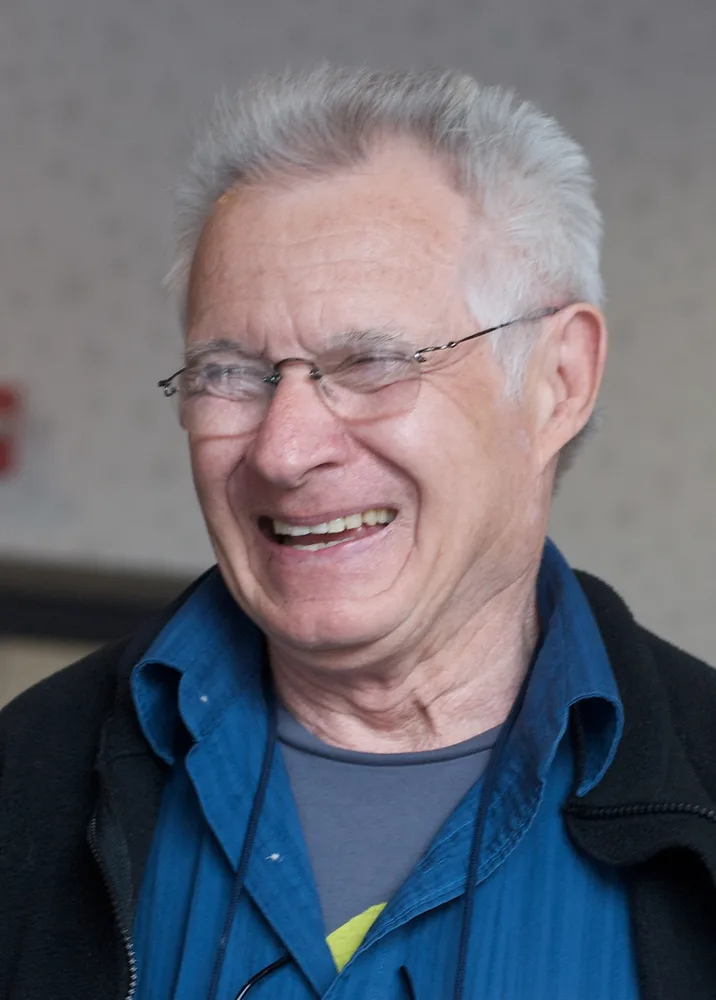
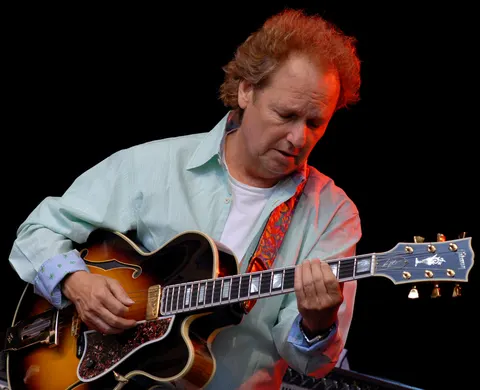
Dave Grusin, 2008. CC BY-SA 2.0 — Wikimedia Commons — photographer Andy Ihnatko — https://commons.wikimedia.org/wiki/File:Dave_Grusin.jpg

Robert David Grusin was born June 26, 1934, in Littleton, Colorado, to a violinist father and a pianist mother. He studied music at the University of Colorado Boulder, graduating in 1956 under composer Cecil Effinger and pianist Wayne Scott, and produced his first single in 1962. His first film score came five years later, for "Divorce American Style" (1967), the same year he wrote instrumental cues for "The Graduate" alongside Simon & Garfunkel's songs. The two composers shared the 1968 Grammy for Best Original Score.
In 1972, Grusin and businessman Larry Rosen formed a freelance production team, Grusin/Rosen Productions, and began discovering and producing musicians who would go on to define crossover jazz commercially: guitarist Lee Ritenour, guitarist Earl Klugh, and vocalist Patti Austin. Six years later, in 1978, that partnership became a record label, GRP Records, launched as an Arista-distributed imprint. By 1982 Grusin and Rosen had mortgaged their own homes to take GRP fully independent. The roster that followed, Spyro Gyra, Lee Ritenour, Earl Klugh, David Benoit, the Rippingtons, became the commercial backbone of the genre this profile covers. GRP pioneered some of the earliest commercial digital recordings in the industry.
Grusin never stopped playing and recording under his own name while running the label. His catalog runs from the hard-bop debut "Kaleidoscope" (1965) through the GRP-era run "One of a Kind" (1977), "Mountain Dance" (1979), "Out of the Shadows" (1982), and "Night-Lines" (1984), to later orchestral and songbook projects like "Cinemagic" (1987, with the London Symphony Orchestra), "The Gershwin Connection" (1991, which reached No. 1 on Billboard's jazz chart), and "Homage to Duke" (1993).
Running in parallel to the jazz catalog is one of film scoring's most decorated careers. Grusin became a frequent collaborator of director Sydney Pollack, scoring "Absence of Malice" (1981), "Tootsie" (1982), "Havana" (1990), "The Firm" (1993), and "Random Hearts" (1999) among roughly 100 film and television credits. In 1988 he won the Academy Award for Best Original Score for "The Milagro Beanfield War," adding to six further nominations across four decades for "Heaven Can Wait," "The Champ," "On Golden Pond," "The Fabulous Baker Boys," and "Havana." He has ten Grammy wins from 38 nominations, including the shared "Graduate" win, a 1986 win for Best Arrangement on an Instrumental for "Early A.M. Attitude" (off his 1985 duo album with Lee Ritenour, "Harlequin," which hit No. 2 on Billboard's Contemporary Jazz chart), and a 1990 win for Best Score Soundtrack for Visual Media for "The Fabulous Baker Boys."
The Ritenour partnership runs through nearly every phase of Grusin's career: he found Ritenour as a session player in 1972 before GRP existed as a label, signed him to GRP once it did, co-recorded "Harlequin" with him in 1985, and made the classical-jazz crossover album "Two Worlds" with him in 2000, which earned a Best Classical Crossover Album Grammy nomination.
Grusin holds honorary doctorates from Berklee College of Music (1988) and the University of Colorado (1989). A 2018 documentary, "Dave Grusin: Not Enough Time," traces his career. He is married to Nan Newton and has three sons. Now 92, he remains one of the few architects of crossover jazz's commercial rise from the pioneer generation who is still living.
Grusin's playing sits at the meeting point of jazz musicianship and mainstream, orchestral-leaning production values, the same instinct that shaped GRP Records' entire commercial identity. His own records move fluidly between small-group jazz-funk (the GRP era proper: "One of a Kind," "Out of the Shadows," "Night-Lines"), full-orchestra film-score writing (the Sydney Pollack scores, "Cinemagic"), and songbook-style reinterpretation ("The Gershwin Connection," "Homage to Duke," "Dave Grusin Presents West Side Story"). That range is also his signature as a producer: the artists he signed to GRP (Spyro Gyra, Earl Klugh, David Benoit, the Rippingtons) shared a polished, melody-forward sensibility that became shorthand for the genre.
As a pianist he favors clean, harmonically sophisticated voicings over dense technical display, an approach that translates naturally between his jazz albums and his film work, where the same melodic instincts carry orchestral themes for "On Golden Pond" and "The Milagro Beanfield War." Lee Ritenour has been his most consistent musical partner across five decades, from session work through co-billed albums to classical-jazz crossover.
- Mountain Dance (1979, Arista/GRP) - The commercial breakthrough that established the GRP sound: melodic, keyboard-forward jazz built for radio without losing improvisational substance. Spotify - Mountain Dance Listen · Buy
- Out of the Shadows (1982, Arista/GRP) - His highest-charting jazz album, peaking at No. 4 on Billboard's Contemporary Jazz chart and No. 88 on the all-genre Billboard 200. Spotify - Out of the Shadows Listen · Buy
- Harlequin (1985, GRP, with Lee Ritenour) - The Grammy-winning centerpiece of the Ritenour partnership; No. 2 on Billboard's Contemporary Jazz chart. Spotify - Harlequin Listen · Buy
- Tootsie (Original Motion Picture Soundtrack) (1982, Warner Bros.) - One of seven Oscar-nominated Grusin scores, and a clear entry point into the film-scoring half of his career. Spotify - Tootsie Listen · Buy
- The Gershwin Connection (1991, GRP) - Reached No. 1 on Billboard's jazz chart; its Gershwin medley won the 1992 Grammy for Best Arrangement on an Instrumental. Spotify - The Gershwin Connection Listen · Buy
Dave Grusin: Full Discography (Discogs-Verified)
Discogs profile summary
- Real name: Robert David Grusin
- Discogs artist ID: 37730
- Discogs bio: "American jazz pianist and composer.. who has written numerous motion picture scores, including his Oscar-winning score for 'The Milagro Beanfield War'.. Older brother of Don Grusin." (Don Grusin, also a keyboardist, appears as a credited synth/clavinet player on several of Dave's own GRP albums, see personnel below)
- Name variations on file: over 30, including phonetic misspellings (Crusin, Grushin, Gruisin) and non-Latin scripts (Cyrillic, Japanese katakana)
- Total releases credited to this artist ID across all roles: 2,333 (24 API pages), spanning 1962 to 2025, reflecting a dual career as both a recording jazz pianist and a working film/TV composer with roughly 100 screen credits
- Role breakdown: Main 129 (123 distinct titles after removing exact duplicate re-listings), Appearance 1,422, TrackAppearance 416, Producer 204, UnofficialRelease 131 (bootlegs, excluded from all tables below), Mixed by 22, Co-producer 9
LEADER (jazz albums): full detail
Personnel pulled directly from each release's Discogs extraartists credits. One representative release per title was used, not every pressing/reissue.
| Album | Year | Label / Catalog | Personnel (selected) | Notes | Listen | Buy |
|---|---|---|---|---|---|---|
| Kaleidoscope | 1965 | Columbia, CL 2344 | Bob Cranshaw (bass); Frank Foster (saxophone); Thad Jones (trumpet); Robert Mersey (producer) | His hard-bop debut as leader, before the film-scoring and GRP chapters of his career began | Spotify | Amazon search |
| Discovered Again! | 1976 | Sheffield Lab, LAB-5 | Ron Carter (bass); Harvey Mason (drums); Lee Ritenour (guitar); Larry Bunker (percussion); Doug Sax, Lincoln Mayorga (producers) | Audiophile direct-to-disc recording, predates GRP Records as a label by two years; first documented Ritenour/Grusin studio pairing on Discogs | Spotify (Plus! reissue) | Amazon search |
| One of a Kind | 1977 | Polydor, PD-1-6118 | Dave Grusin (producer, arranger, conductor); Larry Rosen (producer, recorded by, mixed by); Ed Walsh (Oberheim synthesizer programming); Bob Ludwig (mastering) | Recorded at Electric Lady Studios, NYC; personnel per Discogs credits centers on the Grusin/Rosen production team rather than a large guest roster on this particular pressing | Spotify | Amazon search |
| Mountain Dance | 1979 | Arista, K-8505 | Dave Grusin (written by, producer, arranger); Larry Rosen (producer) | Originally released January 1979 | Spotify | Amazon search |
| Out of the Shadows | 1982 | Arista/GRP, GRP 5510 | Steve Gadd (drums); Lincoln Goines (electric bass); Lee Ritenour (guitar); Rubens Bassini (percussion); Don Grusin (synthesizer, Fender Rhodes); Dave Grusin and Larry Rosen (producers, engineers) | Peaked at No. 4 on Billboard's Contemporary Jazz chart and No. 88 on the all-genre Billboard 200; spawned the single "She Could Be Mine" | Spotify | Amazon search |
| Night-Lines | 1984 | GRP, GRP D-9504 | Buddy Williams (drums); Marcus Miller (guitar); David Sanborn (saxophone); Phoebe Snow, Gary Roda (vocals); Dave Grusin and Larry Rosen (producers) | Reached No. 4 on Billboard's Contemporary Jazz chart; includes "Theme From St. Elsewhere." David Sanborn's presence here is a genuine session credit, not a compilation pairing | Spotify (title track only; full album not found under a standalone Spotify listing) | Amazon search |
| Cinemagic | 1987 | GRP, GR-1037 | Lee Ritenour (guitar); Harvey Mason (drums); Abraham Laboriel (electric bass); Eddie Daniels (clarinet); Tom Scott (soprano saxophone); London Symphony Orchestra; Jorge Calandrelli (additional orchestration); Dave Grusin and Larry Rosen (producers/executive producers) | Orchestral suite of Grusin's own film themes, recorded with the London Symphony Orchestra | Spotify | Amazon search |
| The Gershwin Connection | 1991 | GRP, GRD-2005 | Lee Ritenour (guitar); Eric Marienthal (alto saxophone); John Patitucci (bass); Eddie Daniels (clarinet); Dave Weckl, Sonny Emory (drums); Ettore Stratta (strings conductor); Larry Rosen (executive producer) | Reached No. 1 on Billboard's jazz chart; the "Bess, You Is My Woman Now"/"I Loves You Porgy" medley won the 1992 Grammy for Best Arrangement on an Instrumental | Spotify | Amazon search |
| Homage to Duke | 1993 | GRP, GRD-9715 | Dave Grusin (producer, arranger); Don Murray (recorded by); Larry Rosen (executive producer) | Grusin's interpretation of Duke Ellington's music; Discogs credits are production-focused for this particular pressing, without a large listed guest-musician roster | Spotify | Amazon search |
| Dave Grusin Presents West Side Story | 1997 | N2K Encoded Music / DTS Entertainment, DTS CD 1013 | Lee Ritenour (acoustic guitar, soloist); John Patitucci (acoustic bass, soloist); Dave Weckl (drums, soloist); Dave Valentin (flute, soloist); Bill Evans [saxophonist] (soprano saxophone, soloist); Ronnie Cuber (baritone saxophone, soloist); Don Sebesky, Michael Abene, Tom Scott (co-arrangers); Eddie Gomez (liner notes) | All-star jazz reimagining of the Bernstein score, arranged jointly with three other named arrangers | Spotify | Amazon search |
FILM SCORES: full detail
Grusin's soundtrack albums, listed separately from his jazz catalog above since Discogs credits him as "Main" artist on these too, but they're a genuinely distinct side of his output (roughly 100 screen credits total; only the commercially released soundtrack albums are detailed here).
| Album | Year | Label / Catalog | Personnel (selected) | Notes | Listen | Buy |
|---|---|---|---|---|---|---|
| The Graduate (Original Sound Track Recording) | 1968 | Columbia Masterworks, OS 3180 | Paul Simon, Simon & Garfunkel (songs); Dave Grusin (instrumental score); Teo Macero (producer) | Won the 1968 Grammy for Best Original Score, shared with Paul Simon | Spotify | Amazon search |
| Tootsie (Original Motion Picture Soundtrack) | 1982 | Warner Bros. Records, 1-23781 | Abraham Laboriel (bass); Carlos Vega (drums); Ernie Watts, Tom Scott (saxophone); Jerry Hey, Gary Grant (trumpet); Alan and Marilyn Bergman (lyrics); Dave Grusin (composer, producer, arranger) | Earned Grusin one of his seven Academy Award nominations | Spotify | Amazon search |
| On Golden Pond (Music and Original Dialog from the Motion Picture Soundtrack) | 1982 | MCA Records, MCA-6106 | Dave Grusin (composer, arranger, conductor, piano, mixed by); Larry Rosen (producer, mixed by); dialogue excerpts featuring Henry Fonda, Katharine Hepburn, Jane Fonda | Combines Grusin's score with dialogue from the film; Grusin's second Oscar nomination (for the 1981 film) | Spotify | Amazon search |
| The Milagro Beanfield War | 1988 | 52nd Street (score cues) | Dave Grusin (composer) | Won the 1988 Academy Award for Best Original Score, but was never issued as a standalone soundtrack album; its five score cues ("Lupita," "Coyote Angel," "Pistolero," "Milagro," "Fiesta," ~11 minutes total) appear only on the compilations "Migration" (1989) and "The Orchestral Album" (1994) | YouTube (suite) | Amazon search |
| The Fabulous Baker Boys (Original Motion Picture Soundtrack) | 1989 | GRP, GRD-2002 | Brian Bromberg (bass); Harvey Mason (drums); Lee Ritenour (guitar); Ernie Watts (saxophone); Sal Marquez (trumpet); Dave Grusin and Joel Sill (producers) | Won the 1990 Grammy for Best Score Soundtrack for Visual Media; earned Grusin his sixth Oscar nomination | Spotify | Amazon search |
| Havana (Original Motion Picture Soundtrack) | 1990 | GRP, GRD-2003 | Lee Ritenour, Dave Valentin, Arturo Sandoval, Alex Acuña, Abraham Laboriel, Brian Bromberg, Clare Fischer, Harvey Mason, Sal Marquez (featured performers); Dave Grusin (producer) | Sydney Pollack collaboration; nominated for the 1990 Oscar, Golden Globe, and Grammy in their respective score categories | Spotify | Amazon search |
| The Firm (Original Motion Picture Soundtrack) | 1993 | MCA-GRP, MGD-2007 | Dave Grusin (executive producer, composer); Joel Sill (executive producer); Larry Rosen (executive producer, for GRP Records); Don Murray (instrumental score recording/mixing) | Another Sydney Pollack film; earned Grusin his seventh and final Oscar nomination | YouTube (playlist, full album not found under a standalone Spotify listing) | Amazon search |
| Random Hearts (Original Motion Picture Soundtrack) | 1999 | Sony Classical, ASK 51336 | Terence Blanchard, John Patitucci, Harvey Mason (featured performers) | Third and final Sydney Pollack/Grusin film collaboration in this list | Spotify | Amazon search |
CO-LEADER / Collaborative billing
Albums where Discogs credits Grusin as one of two equally billed named artists.
| Album | Year | Co-billed with | Label | Notes | Listen | Buy |
|---|---|---|---|---|---|---|
| Harlequin | 1985 | Lee Ritenour | GRP, GRP-A-1015 | Abraham Laboriel, Jimmy Johnson (bass); Carlos Vega, Harvey Mason (drums); Alex Acuña, Paulinho Da Costa (percussion); Dave Grusin (producer, arranger). Hit No. 2 on Billboard's Contemporary Jazz chart; won the 1986 Grammy for Best Arrangement on an Instrumental ("Early A.M. Attitude") and drew three further nominations | Spotify | Amazon search |
| Two Worlds | 2000 | Lee Ritenour | Decca, 467 132-2 DH | Classical-jazz crossover album with guests Renée Fleming, Gil Shaham, and Julian Lloyd Webber; earned a Best Classical Crossover Album Grammy nomination | Not found on Spotify | Amazon search |
Additional Main-role titles
After the 20 titles detailed above, Discogs lists 103 further "Main"-role entries for artist ID 37730: earlier singles, additional film scores never issued as standalone albums, later studio dates, live archival releases, compilations, reissues, and international/alternate-title pressings of albums already listed above. Titles marked with an asterisk are, based on their naming pattern (Best Of / Collection / Sampler / Interview / Live series), most likely compilations, samplers, live recordings, or spoken-word releases rather than newly recorded studio albums.
Titles marked with an asterisk are, based on naming pattern or description, most likely compilations, samplers, live recordings, or spoken-word/interview releases rather than newly recorded studio albums.
- 1962: Piano, Strings and Moonlight, A Jazz Version of the Broadway Hit Subways Are for Sleeping (his first two albums, both trio dates, predating Kaleidoscope)
- 1963: What Is This Thing Called Love, A Felicidade / If You Gotta Make a Fool of Somebody
- 1967: Divorce American Style (his first film score)
- 1968: The Heart Is a Lonely Hunter (score), Candy (score), Name of the Game / Hushabye Mountain (single), The Name of the Game / It Takes a Thief (single)
- 1969: 500 Miles (Theme from Winning) (single), Winning (Original Soundtrack Album)
- 1970: Candy (Japanese pressing, alternate title)
- 1971: The Kind of Girl She Is / What Have They Done to the Moon (single)
- 1975: 3 Days of the Condor (Original Soundtrack Recording), Eric (Original Sound Track) (Japanese TV soundtrack), Condor! (Theme from "3 Days of the Condor") (single), W.W. and the Dixie Dancekings (Original Motion Picture Soundtrack)
- 1976: Eric Theme Song / Lucky Day (Japanese single)
- 1977: Catavento, Don't Touch, Main Title (Theme) / Bobby Deerfield (single), Bobby Deerfield (Music from the Original Motion Picture Soundtrack)
- 1979: The Champ (Original Motion Picture Soundtrack), The Electric Horseman (Music from the Original Motion Picture Soundtrack), If You Remember Me / Theme from the Champ (Italian single)
- 1980: A Flip of the Coin, Live in Japan*, No Problem / All About Love (single)
- 1981: Rag Bag
- 1982: Sul Lago Dorato (Italian pressing), She Could Be Mine (single), Dave Grusin and the N.Y./L.A. Dream Band, It Might Be You (Theme from "Tootsie") (single)
- 1983: Count Down, It Might Be You / Metamorphosis Blues (Japanese single), Tootsie / Working Girl March (single)
- 1984: GRP Is Jazz Sampler Vol. 1*, Thankful N' Thoughtful, Theme from St. Elsewhere (single)
- 1985: Theme from the Goonies (Japanese single), Live from the Record Plant*, GRP Live in Session*
- 1988: Don't Worry Baby / Tequila Dreams (single), GRP Super Live*, Sticks and Stones, Surrender to Me / Tequila Dreams (single)
- 1989: Collection in-Store Play Sampler*, Collection*, Migration (contains the only commercially released Milagro Beanfield War score cues alongside new material)
- 1991: The Bonfire of the Vanities (score)
- 1992: An Interview with Dave Grusin*, A Special Interview With*, Musicland & GRP sampler appearances (see Producer section below)
- 1993: Live!*
- 1994: The Orchestral Album* (also carries the Milagro Beanfield War cues)
- 1995: Dragonfly, The Cure (Original Motion Picture Soundtrack)
- 1996: Mulholland Falls (Original MGM Motion Picture Soundtrack)
- 1997: Peter Gunn, Water to Drink (Agua de Beber), Tonight from Dave Grusin Presents West Side Story*, Selections from A Twist of Jobim*, Two for the Road (The Music of Henry Mancini), Selena (Original Motion Picture Score)
- 1998: Priceless Jazz Collection*, Hope Floats (Original Score Soundtrack)
- 1999: Watching & Waiting
- 2001: Dinner with Friends, Sheffield Jazz "Magic Recordings"* (Greek pressing)
- 2002: Portrait of Bill Evans, The Very Best Of*
- 2003: Live from the Record Plant (reissue)*
- 2004: Now Playing (solo piano collection)
- 2005: A Story of Music*, The Yakuza (score)
- 2006: Lucas (Original Motion Picture Soundtrack), The Best of Dave Grusin*
- 2007: Author! Author! (Original Motion Picture Soundtrack), The Last Run / Crosscurrent / The Scorpio Letters (Original Motion Picture Score)
- 2008: Amparo
- 2010: One Night Only*, The Goonies (Original Motion Picture Score)
- 2011: Masterpieces - Best of the GRP Years*, A Dry White Season (score), An Evening with Dave Grusin*
- 2012: The Friends of Eddie Coyle / 3 Days of the Condor (reissue), The Pope of Greenwich Village (Original MGM Motion Picture Soundtrack)
- 2013: Heaven Can Wait / Racing with the Moon (Music from the Motion Picture)
- 2014: Falling in Love (Music from the Motion Picture)
- 2015: Home Suite Home, Jazz Legacy (The Jazz Legends)*
- 2017: The Wild Wild West (score), 5 Original Albums* (box reissue)
- 2018: Absence of Malice (score), And Justice for All (Original Motion Picture Soundtrack), Murder by Death (score), The Friends of Eddie Coyle (standalone reissue)
- 2021: A Jazz Version of the Broadway Hit Subways Are for Sleeping / Piano, Strings and Moonlight (reissue)
- 2022: Kaleidoscope / Straight No Chaser (reissue)
- 2024: Brasil
- 2025: Heaven Can Wait (Music from the Motion Picture) (reissue)
- Undated: Agents Très Spéciaux The Man from U.N.C.L.E / Annie Agent Très Spécial The Girl from U.N.C.L.E (French-titled score compilation)
PRODUCER credits (curated)
Discogs lists 204 raw "Producer" credits (190 distinct titles) for artist ID 37730, 9 further "Co-producer" credits, and 22 "Mixed by" credits. The overwhelming majority are GRP-era 12" singles, radio/retail samplers, and later "best of"/eighties-groove compilation reissues of the same handful of original GRP artist recordings, not new information. The genuine original-session production work, mostly for artists Grusin signed to GRP as a label executive rather than played on himself, includes:
- Earl Klugh — self-titled Earl Klugh (1976) and its later reissues/best-ofs
- Patti Austin — original singles and album-length production through the 1980s, later collected on The Best of Patti Austin (1994), Very Best of Patti Austin: The Singles 1969-1986 (2001), and Intimate Patti Austin (2007); Grusin/Rosen discovered and signed her before GRP existed as a label (per the blog post's own researched facts)
- David Benoit — GRP-era production, later collected on The Best of David Benoit 1987-1995 (1995)
- Diane Schuur — Schuur Thing (1985)
- Tom Browne — "Funkin' for Jamaica (N.Y.)" (1980 single) and its various 12" mixes/reissues, later collected on Funkin' for Jamaica (The Best of Tom Browne) (1992)
- Angela Bofill — production/mix work collected on The Best of Angela Bofill (1986)
- Ivan Lins, Bernard Wright ("Sundance," "Ladies Man" era-adjacent work), and various Arista-era R&B/dance singles from the late 1970s and early 1980s roster (titles like "Funkin' for Jamaica," "Sidra's Dream," "Land of the Third Eye")
APPEARANCE / TrackAppearance credits (curated, chronological)
Discogs lists 1,422 raw "Appearance" credits (1,356 distinct titles) plus 416 raw "TrackAppearance" credits (405 distinct titles) for artist ID 37730, overwhelmingly compilation and various-artists sampler placements spanning 1976-2025. The genuine original-session or otherwise notable connections are:
- Lee Ritenour — beyond the co-billed Harlequin and Two Worlds above and the Discovered Again!/Out of the Shadows/Cinemagic session credits already detailed, Grusin also appears on Ritenour's own leader albums: Sugar Loaf Express (1978), Rio (1979, as "Lee Ritenour in Rio"), and The Best of Lee Ritenour (1980), plus Lee Ritenour & His Gentle Thoughts Take-2 (1983)
- Earl Klugh — beyond the Producer credits above, direct playing/appearance credits on This Is Earl Klugh (1978), Captain Caribe - The Best of Earl Klugh (1979), Earl Klugh II (1982), The Best of Earl Klugh (1991), and The Jazz Channel Presents Earl Klugh (2000)
- Al Jarreau — appears as a guest on Jarreau's 1970s Reprise album We Got By, independent of the 1980-dated "Appearance" credit on file
- Randy Crawford — Everything Must Change + Miss Randy Crawford (2013 reissue/compilation)
- Diane Schuur — Diane Schuur and the Count Basie Orchestra (1987), beyond the Schuur Thing production credit above
- Ramsey Lewis — a 2007 TrackAppearance credit tied to "The Legends of Jazz with Ramsey Lewis," a TV/radio series episode, not a studio recording
The complete raw list (1,761 unique Appearance + TrackAppearance lines) is available via https://api.discogs.com/artists/37730/releases for anyone who wants the exhaustive, unfiltered version; it was not reproduced here in full because the overwhelming majority are repackaged samplers and various-artists compilations of the same handful of original recordings, not new information.
- Larry Rosen - business partner since 1972 (Grusin/Rosen Productions) and GRP Records co-founder; producer or executive producer on nearly every GRP-era Grusin album.
- Lee Ritenour - guitarist Grusin discovered as a session player in 1972, signed to GRP, and later co-billed with on "Harlequin" (1985) and "Two Worlds" (2000); also a session guitarist on "Discovered Again!" (1976), "Out of the Shadows" (1982), and "Cinemagic" (1987).
- Earl Klugh - guitarist discovered and produced by Grusin/Rosen Productions starting in 1972, before GRP existed as a label.
- David Sanborn - saxophonist featured on "Night-Lines" (1984).
- Sydney Pollack - film director and Grusin's most frequent screen collaborator: "Absence of Malice" (1981), "Tootsie" (1982), "Havana" (1990), "The Firm" (1993), "Random Hearts" (1999).
- Quincy Jones - Grusin arranged and recorded with Jones in the early 1970s, and is credited as a co-composer (with Jones and Tom Bahler) on "Everything Must Change" from Jones's album "Body Heat."
- Sadao Watanabe - Grusin played Fender Rhodes and arranged on Watanabe's live album "Nice Shot!," recorded at Budokan, Tokyo, in July 1980.
- Al Jarreau - Grusin appears as a guest musician on Jarreau's early album "We Got By" (1970s, Reprise).
- Don Grusin - younger brother, also a keyboardist, who contributed synthesizer and clavinet parts to several of Dave's own GRP albums ("Out of the Shadows," "The Gershwin Connection," "Cinemagic").