 JAZZPROFILES lives in the music 2,303 Jazz Artists fully Profiled!
Charlie Barnet
Last updated November 8, 2026
Listen on Spotify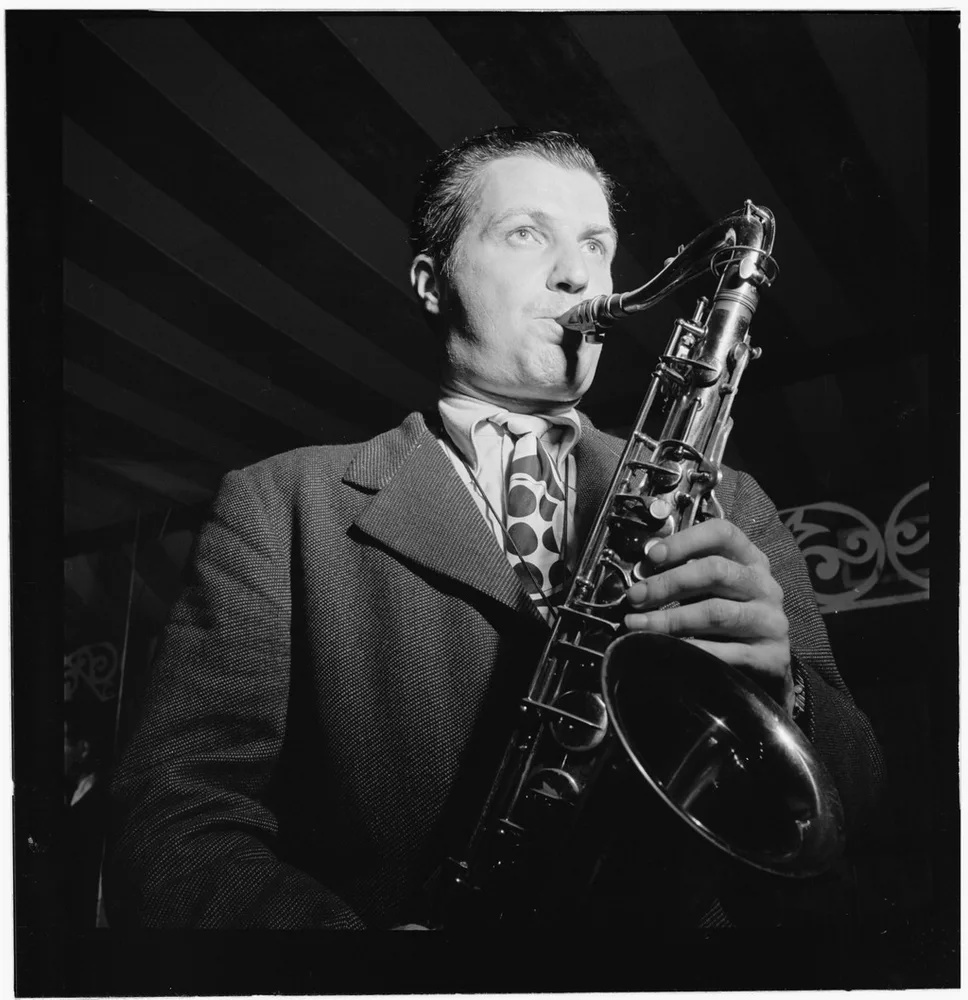
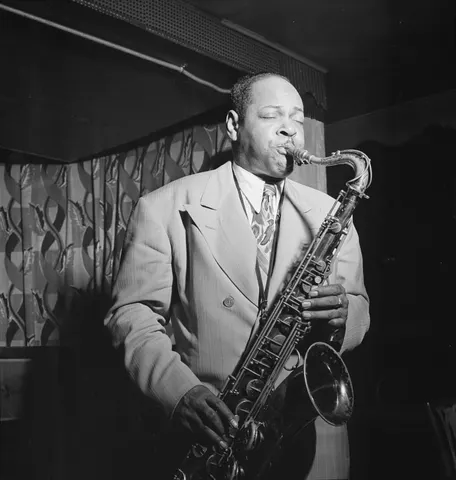
Charlie Barnet playing tenor saxophone during a WOR broadcast from the Aquarium restaurant, New York, circa August 1946, photographed by William P. Gottlieb Public Domain (William P. Gottlieb collection, dedicated to the public domain by the photographer; Library of Congress: no known copyright restrictions) — Wikimedia Commons: https://commons.wikimedia.org/wiki/File:(Portrait_of_Charlie_Barnet,_WOR_broadcast,_Aquarium,_New_York,_N.Y.,_ca._Aug._1946)_(LOC)_(4888060939).jpg

Charles Daly Barnet was born on October 26, 1913, in New York City, the son of Charline Daly and Willard Barnet. His parents divorced when he was two, and he was raised by his mother and her grandparents; his maternal grandfather, Charles Frederick Daly, was a vice-president of the New York Central Railroad as well as a banker and businessman, and the family wealth later let Barnet treat music as a career he could leave whenever he liked. He attended boarding schools in the New York and Chicago areas, learned piano and saxophone as a child, often skipped class to hear bands and look for work, and chose music over the law career his family wanted for him. By sixteen he had toured with a satellite band of Jean Goldkette's and was playing tenor saxophone in Frank Winegar's Pennsylvania Boys in New York. In 1931 he moved to Hollywood, where he worked as a film extra and tried to interest local bandleaders in hot music, then unpopular in the Depression, and late in 1932, at eighteen, he returned east and persuaded a contact at the CBS artist bureau to let him lead an orchestra.
Barnet began recording as a leader in October 1933 during an engagement at New York's Park Central Hotel, but he was not a great success for most of the decade, regularly breaking up his band and changing its style. In early 1935 he tried to introduce swing at the Hotel Roosevelt in New Orleans, where, according to the usual account, Louisiana governor Huey Long disliked the new sound and had the band run out of town by luring its members to a bordello that was then raided. He arranged for Joe Haymes to take over several of his out-of-work sidemen and spent a spell in Havana, and in 1936 he led another swinging edition that featured the vocal quartet the Modernaires before it too faded. That same year, when he was in the audience at the original Famous Door on 52nd Street, the club fired Billie Holiday and Teddy Wilson for mingling with him. His first stable band came together between 1939 and 1941, opening with a hit version of Ray Noble's "Cherokee," arranged by the trumpeter Billy May, and a successful run at the Famous Door. May, who had come to New York at twenty-two as chief arranger, wrote roughly seventy arrangements for the band that Bluebird issued before Glenn Miller hired him away in 1940, among them the Barnet-and-May burlesque "The Wrong Idea," which mocked the "sweet" bands of the day.
Barnet was one of the first white bandleaders to run an integrated orchestra, and AllMusic dates his mixed bands to as early as 1935. The trumpeter Roy Eldridge spent time in his ranks, and Lena Horne toured with the band in 1940 and 1941 and recorded "Good-for-Nothin' Joe" and "You're My Thrill" with it for Victor in January 1941. The orchestra was booked into Harlem's Apollo Theater, unusual for a mostly white group, and set an attendance record there. Barnet was an outspoken admirer of Duke Ellington and of Count Basie, and Ellington recorded Barnet's "In a Mizz." When a fire at the Palomar Ballroom in Los Angeles on October 2, 1939, destroyed the band's instruments and arrangements and ended Barnet's last show there, Basie, who was booked into the room two days later, lent him some of his charts. In 1942 he hired the bassist Oscar Pettiford to play bass duets alongside his own bassist, Chubby Jackson, and the seventeen-year-old pianist Dodo Marmarosa was in the band from October 1943 to March 1944, making his recording debut with it on "The Moose."
Barnet recorded for Decca from 1942 to 1946, and "Skyliner," a Barnet original arranged by Neal Hefti, became a best-seller in 1944. The singer Kay Starr was with the band from 1943 to 1945, and the clarinetist Buddy DeFranco and the guitarist Barney Kessel also passed through. In 1947 Barnet began shifting from swing to bebop: Clark Terry was his star trumpeter that year, and in 1949 his trumpet section included Maynard Ferguson, Doc Severinsen, Rolf Ericson, and Ray Wetzel. Barnet lost interest and broke up the band near the end of 1949. He took up semi-retirement, which his family fortune made possible, and returned only for short tours and occasional recording dates. Billy May arranged another 36 titles for him between 1954 and 1970, a 1956 album, Dance Bash, was assembled from sessions made between 1947 and 1952, and in 1958 he remade "Cherokee" in stereo for Everest. In September 1964 he arranged a private party at the San Jacinto country club in Palm Springs so that Ellington's orchestra could play for an audience of friends; Barnet did not play.
Barnet was married eleven times, the last time to Betty Thompson for 33 years, and had one son, Charles D. Barnet Jr. He lived in Palm Springs and San Diego and kept a 46-foot boat in San Diego. His autobiography, Those Swinging Years, written with Stanley Dance, was published in 1984. He passed away on September 4, 1991, at Hillside Hospital in San Diego, at 77, from complications of Alzheimer's disease and pneumonia.
Barnet was chiefly a tenor saxophonist, and AllMusic hears an original sound grown out of the Coleman Hawkins school. In the late 1930s he added alto saxophone, on which he could imitate Johnny Hodges, and then soprano, an instrument that had gone out of fashion after the 1920s and that only Sidney Bechet and Barnet played regularly in the swing era. As a leader he leaned toward the sound of Duke Ellington's band, which his own orchestra could imitate closely at its peak in 1939 to 1942, and toward the riffing drive of Count Basie's, and he set himself against what he called syrupy arrangements. His records ranged from hard-swinging instrumentals to novelty numbers, and by 1947 the band was playing bebop-tinged charts. AllMusic judges his jazz importance to be concentrated in a single decade, 1939 to 1949, and credits him with leading integrated bands years before most of his white contemporaries. His bands had a reputation for rowdiness; in his autobiography he contrasted his easygoing approach with the strict dress and conduct of Glenn Miller's band. James Moody named Barnet among his earliest influences, according to Moody's own profile.
- "Cherokee" (1939, Bluebird) - Billy May's arrangement of Ray Noble's 1938 tune, recorded July 17, 1939, and the record that made Barnet a name; it reached No. 15 on the pop charts, and he remade it for Everest in 1958.
- "In a Mizz" (1939, Bluebird) - a Barnet composition arranged by May in the manner of Duke Ellington, who recorded it himself.
- "Pompton Turnpike" and "Leapin' at the Lincoln" (1940, Bluebird) - two of the May-arranged hits of the first stable band, recorded in March and July 1940.
- "The Wrong Idea" (1940, Bluebird) - the Barnet and May burlesque of "sweet" dance bands, with a syrupy vocal and deliberately bad trumpet.
- "The Moose" (1943, Decca) - recorded October 20, 1943, the session that gave the teenage pianist Dodo Marmarosa his recording debut.
- "Skyliner" (1944, Decca) - Barnet's own tune in Neal Hefti's arrangement, recorded August 3, 1944; his best-selling record.
- "Bebop Spoken Here" (1949, Capitol) - recorded April 25, 1949, with a trumpet section of Maynard Ferguson, Doc Severinsen, Ray Wetzel, and Rolf Ericson, arrangements by Pete Rugolo, and vocals by Dave Lambert and Buddy Stewart.
- Charlie Barnet Plays Duke Ellington (1954, RCA Victor) - ten-inch LP of the band's Ellington repertoire, including "Rockin' in Rhythm" and "The Duke's Idea."
- The Capitol Big Band Sessions (1998, Capitol Jazz) - CD compilation of 22 Capitol sides made between 1948 and 1950.
Charlie Barnet: Full Discography
Discogs artist ID 269594 ("Charlie Barnet," real name Charles Daly Barnet, born October 26, 1913, in New York City, died September 4, 1991, in San Diego, California) lists more than 1,100 entries under his own name, and his big-band work is largely filed under a separate entity, "Charlie Barnet And His Orchestra" (artist ID 341403, about 900 entries); smaller entities cover "Charlie Barnet And His Glen Island Casino Orchestra" (1314861), "The Charlie Barnet Quartet" (2614065), "Charlie Barnet Sextet" (5794313), "Charlie Barnet And His Rhythm Makers" (3417020) and "Charlie Barnet And His Cherokees" (12836081). All of them were checked. Because Barnet's output is hundreds of 78 rpm sides plus decades of reissues of the same sessions, the leader table is a curated selection of 27 releases: the hit singles of the 1939 to 1944 bands, the bebop-era Capitol sides, the principal LPs of the 1950s and 1960s, and the standard compilations. Catalog numbers are those of the best-documented first or early pressing, and recording dates come from Discogs release notes; where a personnel list is marked uncredited, the original label printed no names. His work as a sideman is brief and is listed in the second table.
As Leader / Co-Leader
| Album Title | Recording Date(s) | Release Date | Label | Catalog Number | Format(s) | Personnel | Role | Reissue History | Spotify | Buy | Notes |
|---|---|---|---|---|---|---|---|---|---|---|---|
| Cherokee / (Stay Up "Stan") The All Night Record Man | July 17, 1939, New York | August 1939 | Bluebird | B-10373 | 10", 78 rpm | Charlie Barnet (leader; soprano, alto and tenor saxophones); Billy May (trumpet, arranger); Bobby Burnet (trumpet); Bus Etri (guitar); Bill Miller (piano); Phil Stephens (bass); Ray Michaels (drums); Gene Kinsey and Kurt Bloom (alto saxophone); Don McCook and James Lamare (tenor saxophone) | Leader | Reissued on the Bluebird compilation Clap Hands, Here Comes Charlie (BG2-6273, 1987) and many later collections | — | — | The Ray Noble tune in May's arrangement; English Wikipedia reports it reached No. 15 on the pop charts. Personnel uncredited on the original label. |
| In A Mizz / Night Song | Not specified in Discogs data | 1939 | Bluebird | B-10191 | 10", 78 rpm | Charlie Barnet and his orchestra; Judy Ellington (vocal) | Leader | Reissued on Bluebird compilations | — | — | Barnet's composition, arranged by Billy May; Duke Ellington recorded it for Brunswick the same year. |
| Leapin' At The Lincoln / Dark Avenue | March 21, 1940, New York (A side) | 1940 | Bluebird | B-10774 | 10", 78 rpm | Charlie Barnet and his orchestra, with Billy May arrangements | Leader | Reissued on Clap Hands, Here Comes Charlie (1987) and the RCA Victor EP Charlie Barnet (EPA-5001, 1957) | — | — | One of the May-arranged hits of 1940. |
| Where Was I? / 'Deed I Do | Not specified in Discogs data | 1940 | Bluebird | B-10669 | 10", 78 rpm | Charlie Barnet and his orchestra | Leader | Reissued on later Bluebird and RCA compilations | — | — | The A side comes from the Warner Bros. film 'Til We Meet Again. |
| I Don't Want To Cry Any More / Pompton Turnpike | July 19, 1940, New York | August 16, 1940 | Bluebird | B-10825 | 10", 78 rpm | Charlie Barnet (leader; soprano, alto and tenor saxophones); Billy May, Bernie Privin, Lyman Vunk and Sam Skolnick (trumpets); Spud Murphy, Bill Robertson and Don Ruppersberg (trombones); Gene Kinsey, James Lamare, Leo White and Kurt Bloom (saxophones); Bill Miller (piano); Bus Etri (guitar); Phil Stephens (bass); Cliff Leeman (drums) | Leader | Reissued on Clap Hands, Here Comes Charlie (1987) and the EP Charlie Barnet (1957) | — | — | Personnel uncredited on the original label. The A side is from the Paramount film Rhythm on the River. |
| Friendship / The Wrong Idea | Not specified in Discogs data | 1940 | Bluebird | B-10804 | 10", 78 rpm | Charlie Barnet and his orchestra (B side) | Leader (B side only) | Reissued on later Bluebird compilations | — | — | Barnet and Billy May's burlesque of "sweet" dance bands; the A side is by a different group. |
| Redskin Rhumba / Southern Fried | October 14, 1940 (A side) and September 17, 1940 (B side), New York | November 22, 1940 | Bluebird | B-10944 | 10", 78 rpm | Charlie Barnet (soprano, alto and baritone saxophones, leader); Billy May, Bernie Privin, Lyman Vunk and Sam Skolnick (trumpets); Bill Robertson, Don Ruppersberg, Spud Murphy and Ford Leary (trombones); Kurt Bloom (tenor saxophone); Bill Miller (piano); Bus Etri (guitar); Phil Stephens (bass); Cliff Leeman (drums) | Leader | Reissued on the EP Charlie Barnet (EPA-5001, 1957) and later compilations | — | — | "Redskin Rhumba" served as the band's theme song. Personnel uncredited on the original label. |
| Skyliner / The Moose | October 20, 1943, New York ("The Moose"); August 3, 1944, Los Angeles ("Skyliner") | 1944 | Brunswick (UK pressing) | 03601 | 10", 78 rpm | Charlie Barnet and his orchestra; Dodo Marmarosa (piano, on "The Moose" per English Wikipedia); Neal Hefti (arranger, "Skyliner") | Leader | Reissued many times, including The Best of Charlie Barnet (MCA, 1975) and Skyliner collections | — | — | Barnet recorded for Decca in these years; the pressing listed here is the UK Brunswick issue. "Skyliner" was his best-selling record. |
| Bebop Spoken Here / Gloomy Sunday | April 25, 1949, New York | 1949 | Capitol | 57-640 | 10", 78 rpm | Charlie Barnet (alto saxophone); Maynard Ferguson, Doc Severinsen, Ray Wetzel, Rolf Ericson and John Howell (trumpets); Pete Rugolo (arranger); Claude Williamson (piano); Eddie Safranski (bass); Cliff Leeman (drums); Carlos Vidal (congas); Dave Lambert and Buddy Stewart (vocals, A side); Trudy Richards (vocal, B side) | Leader | Reissued on The Capitol Big Band Sessions (1998) | — | — | Personnel uncredited on the original label. |
| Charlie Barnet Plays Charlie Barnet | Not specified in Discogs data | 1952 | Mercury | MG C 114 | 10" LP, album | Charlie Barnet and his orchestra | Leader | Reissued later on compilations | — | — | Ten-inch album of his own hits, including "Skyliner," "Charleston Alley," and "Cherokee"; liner notes by Norman Granz. |
| Charlie Barnet Plays Duke Ellington | Not specified in Discogs data | 1954 | RCA Victor | LPT-3062 | 10" LP, album | Charlie Barnet and his orchestra | Leader | Reissued on later Ellington-tribute compilations | — | — | Reissues of his Bluebird-era Ellington repertoire, including "Rockin' in Rhythm," "Harlem Speaks," and "The Duke's Idea." The pressing documented here is the Canadian one. |
| Dance Session #2 | Not specified in Discogs data | 1954 | Clef | MG C-164 | 10" LP, mono | Charlie Barnet and his orchestra; Margie Reed, Bunny Briggs, Jean Louise and Art Robey (vocals) | Leader | Not itemized | — | — | Dance-band album on Granz's Clef label, with four vocalists. |
| Classics in Jazz | January 16, February 7, March 16 and 17, and August 16, 1949, New York and Hollywood; December 4, 1950, Hollywood | 1955 | Capitol | T-624 | 12" LP, album, mono | Charlie Barnet and his orchestra | Leader | Material reissued on The Capitol Big Band Sessions (1998) | — | — | Compilation of the bebop-leaning Capitol sides, including "Portrait of Edward Kennedy Ellington." |
| Town Hall Jazz Concert | December 6, 1947 (per Discogs release notes) | 1955 | Columbia | CL 639 | 12" LP, album | Charlie Barnet (soprano, alto and tenor saxophones); Clark Terry and Doc Severinsen (trumpets); Bunny Briggs and Jean Louise (vocals); further band members as credited on Discogs | Leader | Material first issued on 78 rpm discs | — | — | Concert recording of the 1947 band; includes the medley "Barnetology." |
| Dance Bash | 1947 to 1952 | 1956 | Verve | MG V-2007 | 12" LP, mono | Charlie Barnet and his orchestra | Leader | Reissued on later Verve compilations | — | — | Compiled from sessions made over five years; includes "Jubilee Jump," "Cherokee," and "Skyliner." |
| Charlie's Choice | Not specified in Discogs data | 1957 | RCA Camden | CAL-389 | 12" LP, compilation, mono | Charlie Barnet and his orchestra; Lena Horne (vocals on "You're My Thrill," "Good-for-Nothin' Joe," and "Haunted Town"); Mary Ann McCall and Bob Carroll (vocals) | Leader | Compilation of earlier Barnet recordings | — | — | Includes the January 1941 Lena Horne vocals. The Canadian pressing is the one documented on Discogs. |
| Charlie Barnet (EP) | July 17, 1939 ("Cherokee"); March 21, July 19 and October 14, 1940 | 1957 | RCA Victor | EPA-5001 | 7" EP, 45 rpm | Charlie Barnet and his orchestra | Leader | Part of the RCA Victor Gold Standard series | — | — | Four original hits: "Redskin Rhumba," "Leapin' at the Lincoln," "Pompton Turnpike," and "Cherokee." |
| Cherokee | 1958 | 1958 | Everest | LPBR-5008 | 12" LP, album, mono | Charlie Barnet and his orchestra | Leader | Not itemized | — | — | Remakes of his old hits, including a new "Cherokee" made for Everest in 1958. |
| A Tribute to Harry James | Not specified in Discogs data | August 1959 | Crown | CST 146 | 12" LP, album, stereo | Charlie Barnet and his orchestra | Leader (also producer and liner-note writer) | Not itemized | — | — | Billed on the cover as Charlie Barnet Presents a Tribute to Harry James; recorded in Hollywood. |
| More Charlie Barnet | Not specified in Discogs data | 1959 | Everest | SDBR 1059 | 12" LP, stereo | Charlie Barnet (alto and soprano saxophones); Phil Woods (alto saxophone, as credited on Discogs); Dick Meldonian (alto and baritone saxophones); Dick Hafer and Kurt Bloom (tenor saxophones); Danny Bank (baritone saxophone); Charlie Shavers, Doc Severinsen, Dick Sherman, Jimmy Maxwell, Al DeRisi and John Bello (trumpets); Billy Byers, Chauncey Welsch and Frank Rehak (trombones); Nat Pierce (piano); Barry Galbraith (guitar); Milt Hinton, George Duvivier and Wendell Marshall (bass); Don Lamond (drums); Bill Holman (arranger) | Leader | Not itemized | — | — | Stereo studio album of standards, including 'Take the A Train' and 'Harlem Nocturne,' with arrangements by Bill Holman. |
| Jazz Oasis | Recorded live, Palm Springs, circa 1960 | 1960 | Capitol | ST-1403 | 12" LP, stereo | The Charlie Barnet Quartet | Leader | Not itemized | — | — | Small-group album recorded live at Palm Springs; includes "Take the 'A' Train" and "Charlie's Blues." |
| Charlie Barnet !?!?!?!?!?!?! | May 1962, United Recording Studio, Hollywood | 1962 | Äva | A-10 | 12" LP, album, mono | Charlie Barnet and his orchestra | Leader | Also issued on Choreo with the same catalog number | — | — | Produced by Jackie Mills and Tommy Wolf, with Bones Howe as engineer; includes "Murder at Peyton Hall" and "Leapin' at the Lincoln." |
| Charlie Barnet Big Band: 1967 | Not specified in Discogs data | 1967 | Vault | SLP-9004 | 12" LP, stereo | Charlie Barnet and his orchestra | Leader | Not itemized | — | — | Issued by the Los Angeles label Vault; includes "Satin Doll" and a new "Clap Hands, Here Comes Charlie!" |
| The Complete Charlie Barnet, Volumes I to VI | 1935 to 1942 | 1977 to 1982 | Bluebird | AXM2-5526; AXM2-5577; AXM2-5581; AXM2-5585; AXM2-5587; AXM2-5590 | LPs | Charlie Barnet and his orchestra | Leader | Series of six double LPs, 1977 to 1982 | — | — | Catalog numbers and dates are as given on English Wikipedia: Volume I (1935 to 1937), Volume II (1939), Volume III (1939 to 1940), Volume IV (1940), Volume V (1940 to 1941), Volume VI (1941 to 1942). |
| The Best of Charlie Barnet (The Decca Years) | 1942 to 1946 | 1975 | MCA | 2-4069 | LP, compilation | Charlie Barnet and his orchestra | Leader | Later single-disc reissues, including a Spanish pressing on MCA (LB 25 0605-1) | — | — | Decca-era compilation including "Skyliner," "Into Each Life Some Rain Must Fall," and "Strollin'." Catalog number and years are those given on English Wikipedia. |
| Clap Hands, Here Comes Charlie | January 20, 1939 to August 14, 1941, New York | 1987 | Bluebird | BG2-6273 | CD, compilation, mono | Charlie Barnet (leader; soprano, alto and tenor saxophones); Billy May (trumpet); Bernie Privin (trumpet); Gene Kinsey, Conn Humphreys, Leo White and Don McCook (alto saxophone); Kurt Bloom and James Lamare (tenor saxophone); Don Ruppersberg, Bill Robertson, Spud Murphy and Ford Leary (trombones); Bill Miller and Nat Jaffe (piano); Bus Etri (guitar); Phil Stephens (bass); Cliff Leeman, Ray Michaels and Wesley Dean (drums) | Leader | Reissue of 21 Bluebird sides from 1939 to 1941 | — | — | Liner notes by Ira Gitler. Includes "Cherokee," "The Duke's Idea," "The Count's Idea," and "Pompton Turnpike." |
| The Capitol Big Band Sessions | August 9, 1948 to December 4, 1950, Los Angeles and New York | 1998 | Capitol Jazz | CDP 7243 8 21258 2 2 | CD, compilation | Charlie Barnet (soprano, alto and tenor saxophones); Claude Williamson and Donn Trenner (piano); Eddie Safranski and Ed Mihelich (bass); Cliff Leeman, Tiny Kahn and John Markham (drums); Danny Bank and Manny Albam (baritone saxophone); Vinnie Dean, Ruben Leon and Art Raboy (alto saxophone); Carlos Vidal (congas); Bill Holman (tenor saxophone, last four tracks) | Leader | Reissue of the Capitol sides, 22 tracks across eight different bands | — | — | Liner notes by Loren Schoenberg; reissue produced by Michael Cuscuna. |
As Sideman (selected major credits)
Barnet was almost always a leader. His one frequently cited sideman appearance is a 1934 Red Norvo session.
| Year | Project (Leader) | Title | Label | Catalog | Role | Notes |
|---|---|---|---|---|---|---|
| 1934 | Red Norvo and His Swing Septet | "I Surrender, Dear" / "Tomboy" | Columbia | 2977-D | Tenor saxophone (uncredited) | Recorded September 26 and October 4, 1934, in New York, with Artie Shaw (clarinet), Teddy Wilson (piano), Jack Jenney (trombone), Bobby Johnson (guitar), Hank Wayland (bass), and Billy Gussak (drums). AllMusic calls it his best sideman work. |
- Billy May - trumpeter and chief arranger until 1940; wrote the arrangement of "Cherokee" and about seventy others for the band, then arranged another 36 titles for Barnet between 1954 and 1970.
- Neal Hefti - trumpeter and arranger who wrote the arrangement of "Skyliner."
- Chubby Jackson - bassist in the early 1940s band, paired with Oscar Pettiford in bass duets.
- Dodo Marmarosa - pianist from October 1943 to March 1944; recorded "The Moose" with the band.
- Buddy DeFranco - clarinetist who passed through the swing-era band.
- Kay Starr - vocalist with the band from 1943 to 1945.
- Roy Eldridge - trumpeter who spent time with the band, according to AllMusic.
- Bobby Burnet, Bus Etri, Cliff Leeman, Francis Wayne - trumpeter, guitarist, drummer, and singer from the first stable band, named by AllMusic as prominent sidemen and vocalists.
- Rolf Ericson, Ray Wetzel - trumpet-section colleagues of Maynard Ferguson and Doc Severinsen in the 1949 band.
- Joe Haymes - bandleader who took over several of Barnet's sidemen in 1935.
- Stanley Dance - co-author of the 1984 autobiography Those Swinging Years.
- Lena Horne - singer on the band's Victor sides of January 1941, including "Good-for-Nothin' Joe" and "You're My Thrill."
- Oscar Pettiford - bassist hired in 1942 for bass duets with Chubby Jackson.
- Clark Terry - trumpet star of the 1947 band.
- Maynard Ferguson - trumpeter in the 1949 band, featured on "All the Things You Are"; according to his profile, that record was pulled from sale after Jerome Kern's widow objected.
- Doc Severinsen - trumpeter on the road with Barnet's band in the mid-1940s and in the 1949 trumpet section.
- Barney Kessel - guitarist who played in the band, per his profile.
- Jimmy Knepper - trombonist in the band in 1951, per his profile.
- Eddie Sauter - trumpeter in Barnet's orchestra before he joined Red Norvo in the mid-1930s and turned to arranging, per his profile.
- Chico Hamilton - drummer who worked behind Barnet in the post-war West Coast years, per his profile.
- Dizzy Gillespie - worked briefly with the band in the early 1940s, per his profile.
- Phil Woods - played briefly in Barnet's dance band during his student years at Juilliard, per his profile.
- Duke Ellington - the leader Barnet most admired; Ellington recorded "In a Mizz," and Barnet recorded an Ellington tribute album and hosted a private Ellington concert in 1964.
- Count Basie - lent Barnet charts after the 1939 Palomar Ballroom fire.
- Billie Holiday and Teddy Wilson - fired from New York's Famous Door in 1936 for mingling with Barnet in the audience.
More Swing Artists
See all 217 Swing artists →More American Jazz Artists
See all 820 American artists →- Wikipedia: Charlie Barnet
- Wikipedia: Cherokee (Ray Noble song)
- Wikipedia: Billy May
- Wikipedia: Dodo Marmarosa
- Wikipedia: Famous Door
- AllMusic: Charlie Barnet biography by Scott Yanow
- Discogs: Charlie Barnet (artist 269594)
- MusicBrainz: Charlie Barnet
- JazzProfiles.com: Lena Horne
- JazzProfiles.com: Oscar Pettiford
- JazzProfiles.com: Barney Kessel
- JazzProfiles.com: Jimmy Knepper
- JazzProfiles.com: Eddie Sauter
- JazzProfiles.com: Chico Hamilton
- JazzProfiles.com: Dizzy Gillespie
- JazzProfiles.com: Phil Woods
- JazzProfiles.com: James Moody