 JAZZPROFILES lives in the music 2,059 Jazz Artists fully Profiled!
Glenn Miller
Last updated October 29, 2026
Listen on Spotify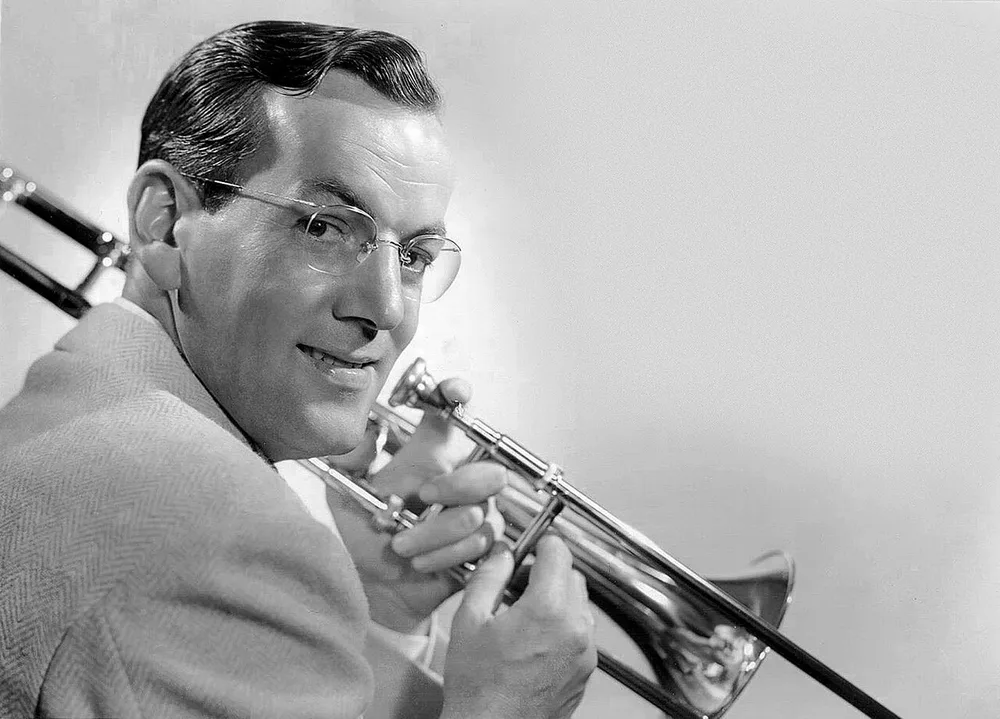
Glenn Miller with trombone, publicity portrait from a Billboard advertisement, 1942 Public domain (advertisement published in Billboard on May 16, 1942, without a copyright notice) — Wikimedia Commons — https://commons.wikimedia.org/wiki/File:Glenn_Miller_Billboard.jpg — original ad on page 27 of the May 16, 1942 issue of Billboard

Glenn Miller was born Alton Glen Miller on March 1, 1904, in Clarinda, Iowa, the son of Lewis Elmer and Mattie Lou (Cavender) Miller, and added the second n to his first name while in high school. He went to grade school in North Platte, Nebraska, and the family moved to Grant City, Missouri, in 1915. He bought his first trombone with money earned milking cows, and by 1916 he had switched to it from cornet and mandolin. The family settled in Fort Morgan, Colorado, in 1918, where he formed a dance band with classmates in his senior year and missed his own graduation in 1921 because he was playing a job out of town. He entered the University of Colorado at Boulder in 1923, spent most of his time chasing auditions and gigs, and left after failing three of five classes.
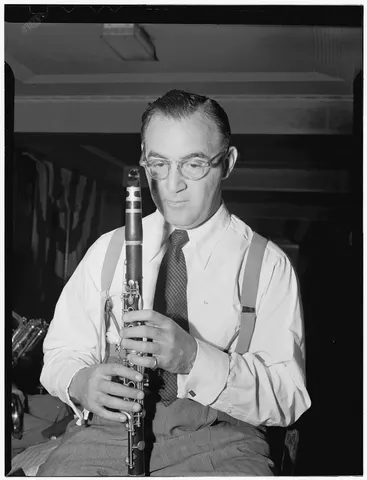
His apprenticeship was as a jazz sideman. In 1926 he landed a place in Ben Pollack's band in Los Angeles, which recorded for Victor in Chicago that December, including "When I First Met Mary" on December 9 with Benny Goodman on clarinet. He was Pollack's main trombone soloist until Jack Teagarden joined in 1928 and took most of the solos, at which point Miller decided his future lay in arranging and composing. He published a trombone songbook, 125 Jazz Breaks for Trombone, in Chicago in the late 1920s, and on June 23, 1928, he recorded in New York as part of Benny Goodman's Boys, cutting "Room 1411," his first known composition, written with Goodman and named for the apartment suite where they lived. That March he played in Nat Shilkret's all-star Victor session alongside Tommy Dorsey, Goodman and Joe Venuti. He wrote arrangements and played trombone on Dorsey Brothers dates for OKeh with Bing Crosby singing, among them "The Spell of the Blues," "Let's Do It" and "My Kinda Love." On November 14, 1929, the singer Red McKenzie hired him for a session that also had Coleman Hawkins, Pee Wee Russell, Eddie Condon and Gene Krupa. In 1930 he was in Red Nichols's Five Pennies and in the Broadway pit bands Nichols led for Strike Up the Band and Girl Crazy, alongside Goodman and Krupa. Settled in New York, he studied the Schillinger system with Joseph Schillinger, and a piece he composed under that tutelage, "Miller's Tune," was later rearranged for big band and renamed "Moonlight Serenade."
Through the early and mid 1930s he worked as trombonist, arranger and composer for the Dorsey Brothers, first in their Brunswick studio group and then in their short-lived orchestra, writing "Annie's Cousin Fanny," "Dese Dem Dose," "Harlem Chapel Chimes" and "Tomorrow's Another Day" in 1934 and 1935. In 1935 he put together an American orchestra for the British bandleader Ray Noble, where he worked out the arrangement that sets a lead clarinet over four saxophones, and he played on Noble recordings such as "Top Hat" and "Blue Moon" with the singer Al Bowlly. On April 25, 1935, he recorded "Solo Hop" under his own name for Columbia, with Bunny Berigan, Charlie Spivak, Claude Thornhill and Ray Bauduc in the band. His first orchestra, formed in 1937, made records for Decca but never distinguished itself, and it broke up after a last show at the Ritz Ballroom in Bridgeport, Connecticut, on January 2, 1938.
The second band, formed in 1938, is the one the world remembers. Miller gave the clarinet the melody, doubled by a tenor saxophone, with the other three saxophones harmonizing within an octave, and hired Wilbur "Willie" Schwartz to play the lead clarinet. The band opened at the Raymor Ballroom in Boston on April 16, 1938, and began recording for Bluebird, RCA Victor's budget label, that September. The early months were thin enough that he borrowed money from Tommy Dorsey to keep going, until the businessman Cy Shribman financed the band. Engagements at the Meadowbrook Ballroom in Cedar Grove, New Jersey, and above all at the Glen Island Casino in New Rochelle, New York, where it opened on May 17, 1939, put it on the national radio networks, and by the end of that summer it was the most popular dance band in the country. On April 4, 1939, it recorded "Moonlight Serenade," and on August 1, 1939, "In the Mood." Miller's band played Carnegie Hall on October 6, 1939, on a bill with Goodman, Paul Whiteman and Fred Waring. From December 1939 to September 1942 it was heard three times a week on CBS for Chesterfield cigarettes. "Tuxedo Junction" followed on February 5, 1940, "Pennsylvania 6-5000" on April 28, 1940, "Chattanooga Choo Choo" on May 7, 1941 and "A String of Pearls" on November 8, 1941. RCA Victor presented him with the first gold record for "Chattanooga Choo Choo" on February 10, 1942. The band appeared in two Twentieth Century Fox films, Sun Valley Serenade (1941) and Orchestra Wives (1942), both with the Nicholas Brothers, and the first with Dorothy Dandridge in the "Chattanooga Choo Choo" number. By the count usually cited, his civilian band placed 16 records at number one and 69 in the top ten in four years. It gave its last performance on September 27, 1942, in Passaic, New Jersey, after he had joined the Army. In the final broadcast of the Chesterfield series he introduced Harry James as his successor.
Miller volunteered at 38, giving up a civilian income of about 20,000 dollars a week. He reported as a captain in October 1942 and was transferred to the Army Air Forces in November. His Army Air Forces unit was authorized on March 20, 1943, and trained at Yale University in New Haven, drawing jazz players from the big bands and string players from symphony orchestras, and it combined dance-band jazz, popular songs and light classics with a full string section. It included a jazz band led by the drummer Ray McKinley, and its marching band played jazz arrangements of marches and blues tunes, to the annoyance of traditionalists. From June 1943 it broadcast the weekly I Sustain the Wings from New York and recorded V-Discs for servicemen overseas. At the request of General Eisenhower the unit was sent to Britain in June 1944, was quartered in Bedford, and from July 9, 1944, played a steady schedule of broadcasts for the Allied Expeditionary Forces Programme and a run of concerts at American air bases.
In mid-December 1944 the unit was preparing to move to Paris, and Miller wanted to fly ahead to make the arrangements. On December 15, 1944, he boarded a single-engine Noorduyn UC-64A Norseman at RAF Twinwood Farm near Bedford, piloted by Flight Officer John R. S. Morgan, with Lieutenant Colonel Norman Baessell also aboard, and it took off at 1:55 in the afternoon bound for France. The aircraft was never seen again. Miller was listed as missing in action when his flight from England to France never arrived, and the Army later declared him dead a year and a day after the disappearance. An Eighth Air Force board of inquiry in January 1945 concluded the plane was lost over the English Channel through a combination of human error, mechanical failure and weather. No wreckage has been recovered, and the cause remains uncertain, though the available evidence points to an accident over the water. He was awarded the Bronze Star Medal posthumously in 1945, and his name is on the Tablets of the Missing at the Cambridge American Cemetery in England. The Army Air Forces band, under Jerry Gray, played its scheduled Christmas Day broadcast from Paris and continued its work until it was discharged in 1946.
The Glenn Miller Orchestra of today is a different ensemble from the one Miller led. With the permission of his estate, a new Glenn Miller Orchestra made its debut at the Capitol Theatre in New York on January 24, 1946, under the former Miller tenor saxophonist Tex Beneke, and after the success of the 1954 film The Glenn Miller Story a second one was formed under Ray McKinley. Orchestras working under the name have kept touring since, performing his arrangements, and they are separate from the man and from the two bands he led himself. The recordings made under his own direction between 1938 and 1944 are the body of work behind the name. He received a Grammy Lifetime Achievement Award in 2003, and the Glenn Miller Archives at the University of Colorado Boulder, begun in 1969, holds recordings, documents and memorabilia from his career.
Miller was a dance-band leader first, and he said as much: he did not want the orchestra billed as a jazz band. The sound was a specific piece of orchestration, a clarinet playing the melody with a tenor saxophone on the same note and three more saxophones voiced close together, over muted brass and a four-square rhythm section, and the band was known for rehearsing until the playing was exact. He set out his own method of writing in Glenn Miller's Method for Orchestral Arranging (1943). His staff arrangers, among them Jerry Gray, Bill Finegan and Billy May, wrote much of the book, and "In the Mood" came to him as an existing riff piece by Joe Garland, which he had reworked for his band.
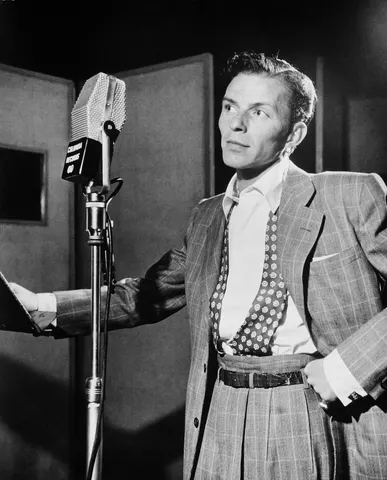
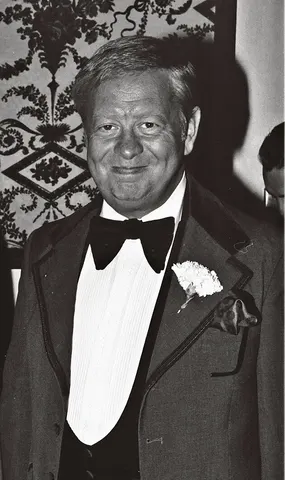
Critics divided over him during his life and after it. Some thought the rehearsed precision drained the feeling out of the playing and pulled popular music away from the hot jazz of Goodman and Count Basie, and in a 1997 article for JazzTimes Doug Ramsey called him overrated. Gunther Schuller and Gary Giddins defended him, and Giddins, writing in The New Yorker in 2004, argued that "Moonlight Serenade" had held audiences as few records ever have. The jazz credentials are not in doubt: he spent the 1920s and early 1930s as a working jazz trombonist and arranger on sessions with Pollack, Goodman, the Dorsey Brothers, Red Nichols and Red McKenzie, his bands carried real soloists such as Bobby Hackett, Johnny Best and Al Klink, and "In the Mood," "Moonlight Serenade" and "Chattanooga Choo Choo" are all in the Grammy Hall of Fame's jazz category. Down Beat readers elected him to its Hall of Fame in 1953. Louis Armstrong reportedly carried Miller's recordings on tape reels when he toured. Frank Sinatra held up the Miller records as a standard in a 1948 interview, and several Miller musicians played on his own sessions in the late 1940s and early 1950s. Mel Tormé credited Miller with advice early in his career, and the pianist George Shearing's locked-hands quintet sound was influenced by the voicing of Miller's saxophone section.
- "Moonlight Serenade" / "Sunrise Serenade" (1939, Bluebird) - The theme song, recorded April 4, 1939, and the clearest statement of the clarinet-lead sound; inducted into the Grammy Hall of Fame in 1991.
- "In the Mood" / "I Want to Be Happy" (1939, Bluebird) - Recorded August 1, 1939, with a tenor saxophone duel between Tex Beneke and Al Klink and a trumpet solo by Clyde Hurley; Grammy Hall of Fame (1983) and Library of Congress National Recording Registry (2004).
- "Tuxedo Junction" / "Danny Boy" (1940, Bluebird) - Erskine Hawkins's tune, slowed down and given trumpet fanfares, with Johnny Best and Bobby Hackett as soloists.
- "Pennsylvania 6-5000" (1940, Bluebird) - The band-chant record named for the telephone number of the Hotel Pennsylvania, with an improvised trumpet solo by Johnny Best, recorded April 28, 1940.
- "Chattanooga Choo Choo" (1941, Bluebird) - The first gold record, from Sun Valley Serenade, with Tex Beneke, Paula Kelly and the Modernaires; Grammy Hall of Fame (1996).
- "A String of Pearls" (1941, Bluebird) - Jerry Gray's number, with Bobby Hackett's cornet solo, recorded November 8, 1941.
- The Glenn Miller Carnegie Hall Concert (recorded 1939, RCA Victor, 1957) - The concert of October 6, 1939, on the same bill as Goodman, Whiteman and Waring, released as a live album eighteen years later.
- "Solo Hop" (1935, Columbia) - His first recording under his own name, with Bunny Berigan, Charlie Spivak and Claude Thornhill, from before the famous band existed.
Glenn Miller: Full Discography
Discogs artist: Glenn Miller (77991) · also filed as Glenn Miller And His Orchestra (335671) and Glenn Miller And The Army Air Force Band (456877) · Born Alton Glen Miller, March 1, 1904, Clarinda, Iowa
Glenn Miller recorded 266 ten-inch 78 rpm singles with his orchestra between 1938 and 1942, and his catalogue has been repackaged ever since, so this file is a selection and not a full listing. It covers the singles that defined the civilian orchestra, the sideman, arranger and early leader sessions of 1926 to 1938, the Army Air Forces band of 1943 and 1944, and the main compilations and live albums, with the chart positions Billboard published. Records issued under the name Glenn Miller Orchestra after his disappearance in 1944 are by the successor orchestras and are filed on Discogs as a separate artist, The Glenn Miller Orchestra (276034), so they are not listed here.
Leader: Selected Singles of Glenn Miller and His Orchestra, 1938-1942
| Single | Recorded | Label (Catalog) | Personnel & Notes | Charts | Listen | Buy |
|---|---|---|---|---|---|---|
| "My Reverie" / "King Porter Stomp" | September 1938 | Bluebird | The first release by the reformed orchestra on RCA Victor's Bluebird label, with a vocal by Ray Eberle | No. 11 | — | — |
| "Moonlight Serenade" / "Sunrise Serenade" | April 4, 1939, New York | Bluebird (B-10214) | The theme song, composed by Miller. Bob Price, Legh Knowles and Dale McMickle (trumpets), Miller, Al Mastren and Paul Tanner (trombones), Wilbur Schwartz (clarinet, alto saxophone), Hal McIntyre (alto saxophone), Stanley Aronson (alto, baritone saxophone), Tex Beneke and Al Klink (tenor saxophone), Chummy MacGregor (piano), Allen Reuss (guitar), Rowland Bundock (bass), Frank Carlson (drums). Grammy Hall of Fame, 1991 | No. 3 | — | — |
| "Little Brown Jug" / "Pavanne" | April 10, 1939, New York | Bluebird (B-10286) | Arranged by Bill Finegan. Hal McIntyre, Tex Beneke, Wilbur Schwartz, Stanley Aronson and Al Klink (saxophones), Bob Price, Dale McMickle and Legh Knowles (trumpets), Miller, Paul Tanner and Al Mastren (trombones), Chummy MacGregor (piano), Rowland Bundock (bass), Allen Reuss (guitar), Moe Purtill (drums). A staple of the band's book | No. 10 | — | — |
| "In the Mood" / "I Want to Be Happy" | August 1, 1939, New York | Bluebird (B-10416) | A reworking of a riff piece associated with Joe Garland, with a tenor saxophone duel between Tex Beneke and Al Klink and a sixteen-bar trumpet solo by Clyde Hurley. Al Mastren and Paul Tanner (trombones), Hurley, Legh Knowles and Dale McMickle (trumpets), Wilbur Schwartz (clarinet), Hal McIntyre (alto saxophone), Beneke, Klink and Harold Tennyson (tenor saxophone), Chummy MacGregor (piano), Richard Fisher (guitar), Rowland Bundock (bass), Moe Purtill (drums). The final arranger is not documented. Grammy Hall of Fame, 1983; Library of Congress National Recording Registry, 2004 | No. 1 | — | — |
| "Tuxedo Junction" / "Danny Boy (Londonderry Air)" | February 5, 1940, New York | Bluebird (B-10612) | Erskine Hawkins's tune in a slower arrangement with trumpet fanfares, Johnny Best on lead trumpet and Bobby Hackett among the soloists. Hal McIntyre, Beneke, Schwartz, Jimmy Abato and Klink (saxophones), Clyde Hurley, Best, R. D. McMickle and Knowles (trumpets), Miller, Tommy Mack, Tanner and Frank D'Annolfo (trombones), MacGregor, Bundock, Fisher, Purtill. Reported first-week sales of 115,000 | No. 1 | — | — |
| "Pennsylvania 6-5000" / "Rug Cutter's Swing" | April 28, 1940, New York | Bluebird (B-10754) | Music by Jerry Gray, named for the telephone number of the Hotel Pennsylvania, home of the band's Café Rouge engagements. A band chant instead of the published lyric, with an improvised trumpet solo by Johnny Best. Released June 1940 | No. 5 | — | — |
| "Chattanooga Choo Choo" / "I Know Why (And So Do You)" | May 7, 1941, Hollywood | Bluebird (B-11230) | From the film Sun Valley Serenade, by Harry Warren and Mack Gordon, arranged by Jerry Gray, with Tex Beneke, Paula Kelly and the Modernaires. Number one on December 7, 1941. The first record certified gold, presented February 10, 1942, for sales of 1.2 million. Grammy Hall of Fame, 1996 | No. 1 | — | — |
| "A String of Pearls" / "Day Dreaming" | November 8, 1941, New York | Bluebird (B-11382) | Music by Jerry Gray. Bobby Hackett plays the cornet solo. Babe Russin, Beneke, Schwartz, Ernie Caceres and Klink (saxophones), Best, McMickle, Billy May and Alec Fila (trumpets), Miller, Jimmy Priddy, Tanner and D'Annolfo (trombones), MacGregor, Edward "Doc" Goldberg (bass), Hackett (guitar, cornet), Purtill | No. 1 | — | — |
| "American Patrol" / "Soldier, Let Me Read Your Letter" | April 2, 1942, Hollywood | Victor (27873) | Jerry Gray's swing arrangement of F. W. Meacham's 1885 march, recorded while the band was filming Orchestra Wives, with Bobby Hackett on guitar | — | — | — |
| "(I've Got a Gal In) Kalamazoo" / "At Last" | May 20, 1942, Hollywood | Victor (27934) | From Orchestra Wives, arranged by Jerry Gray, with Tex Beneke, Marion Hutton and the Modernaires. Nominated for an Academy Award for Best Original Song. The B side is the Warren and Gordon ballad "At Last" | No. 1 | — | — |
Sideman, Arranger and Early Leader Sessions, 1926-1938
Miller's work before the famous orchestra was jazz-band work, and it is documented only in part. The rows below are the sessions that can be named with confidence. A dash means the detail was not found in the sources consulted.
| Year | Project (Leader) | Title | Label | Catalog | Role | Notes |
|---|---|---|---|---|---|---|
| 1926 | Ben Pollack and His Californians | "When I First Met Mary" | Victor | 20394 | Trombone | Recorded December 9, 1926, in Chicago, with Benny Goodman on clarinet. The band was also recorded privately on cylinders that fall; Miller's solo contribution to individual sides is not itemized |
| 1928 | All-Star Orchestra directed by Nat Shilkret | Session of March 21, 1928 | Victor | — | Trombone | With Tommy Dorsey, Benny Goodman and Joe Venuti; titles not itemized |
| 1928 | Benny Goodman's Boys | "Room 1411" / "Jungle Blues" | Brunswick | 4013 | Trombone, co-composer | Recorded June 23, 1928, in New York. Miller's first known composition, written with Goodman. Jimmy McPartland (cornet), Fud Livingston (tenor saxophone), Vic Breidis (piano), Dick Morgan (guitar), Harry Goodman (tuba), Ray Bauduc (drums) |
| 1928 | The Dorsey Brothers | "The Spell of the Blues," "Let's Do It," "My Kinda Love" | OKeh | — | Arranger, trombone | Vocals by Bing Crosby |
| 1929 | Red McKenzie | "Hello, Lola" and "If I Could Be With You One Hour Tonight" | — | — | Trombone | Session of November 14, 1929, with Coleman Hawkins (tenor saxophone), Pee Wee Russell (clarinet), Eddie Condon (guitar) and Gene Krupa (drums) |
| 1930 | Red Nichols and His Five Pennies | Studio recordings | — | — | Trombone | Also in the Broadway pit bands Nichols led for Strike Up the Band and Girl Crazy, with Benny Goodman and Gene Krupa |
| 1934-35 | The Dorsey Brothers | "Annie's Cousin Fanny" (1934), "Dese Dem Dose," "Harlem Chapel Chimes," "Tomorrow's Another Day" | — | — | Composer, arranger, trombone | "Annie's Cousin Fanny" was banned by radio stations in 1934 for its suggestive lyric |
| 1935 | Ray Noble and His Orchestra | "Top Hat," "Blue Moon" | — | — | Trombone; assembled the American orchestra | Vocals by Al Bowlly. Members of the orchestra included Claude Thornhill, Bud Freeman and Charlie Spivak |
| 1935 | Glenn Miller (own name) | "Solo Hop" / "In a Little Spanish Town" | Columbia | CO-3058-D | Leader, arranger, trombone | Recorded April 25, 1935, in New York. Bunny Berigan and Charlie Spivak (trumpets), Claude Thornhill (piano), Eddie Miller (tenor saxophone), Johnny Mince (clarinet, alto saxophone), Larry Hall (guitar), Delmar Kaplan (bass), Ray Bauduc (drums) |
| 1938 | Glenn Miller and His Orchestra | "Sold American" | Brunswick | — | Leader | Recorded May 23, 1938, at the first session of the reformed orchestra; remade for Bluebird on June 27, 1939 |
Army Air Forces Band, 1943-1944
The Army Air Forces orchestra, billed as Captain and then Major Glenn Miller and the Army Air Forces Band, was a larger unit than the civilian band, with a string section, a jazz band led by Ray McKinley and a piano quartet led by Mel Powell. It is filed on Discogs as Glenn Miller And The Army Air Force Band (456877).
| Item | Date | Notes |
|---|---|---|
| I Sustain the Wings (radio series) | June 5, 1943 to June 10, 1944 (CBS, then NBC) | Weekly broadcast from New York; the unit was succeeded on the series by another Army Air Forces orchestra when it went overseas, and resumed it in 1945 |
| V-Discs | 1943-1944 | Recordings made for servicemen overseas. The civilian band's 1939 "Moonlight Serenade" was also issued as an Army V-Disc in November 1943, and its "In the Mood" in February 1944 |
| "Sun Valley Jump" | October 1944 | Issued as a V-Disc by Glenn Miller and the Army Air Forces Training Command Orchestra; written by Jerry Gray |
| "Chattanooga Choo Choo" (new recording) | October 1944 | Issued as a V-Disc, with Ray McKinley and the Crew Chiefs on vocals |
| The Final: His Last Recordings | Compiled 2010 | A collection of his last known recorded performances, from November 1944, with spoken items from the German-language broadcasts and the BBC announcement of his disappearance |
Compilations and Live Albums
Miller's albums are all compilations of the original singles or of broadcasts, issued after the recordings were made. Several reached number one on the Billboard albums charts after his disappearance.
| Album | Year | Label (Catalog) | Notes | Charts | Listen | Buy |
|---|---|---|---|---|---|---|
| Up Swing | 1944 | RCA Victor (P-146) | A four-disc 78 rpm album shared with Tommy Dorsey, Benny Goodman and Artie Shaw, released February 17, 1944; reissued on LP in 1951 (LPT-12) | No. 4 | — | — |
| Glenn Miller (also known as Glenn Miller and His Orchestra) | 1944 | RCA Victor (P-148) | A four-disc 78 rpm set of reissued recordings (20-1564 to 20-1567), released April 1944, including "Moonlight Serenade," "American Patrol" and "Song of the Volga Boatmen" | No. 1 for 16 weeks; RIAA Gold (1968) | — | — |
| Glenn Miller Masterpieces, Volume II | 1947 | RCA Victor (P-189) | A four-disc 78 rpm set (20-2410 to 20-2413) including "Chattanooga Choo Choo" and "Runnin' Wild" | No. 1 for 6 weeks | — | — |
| Glenn Miller Plays Selections From the Film "The Glenn Miller Story" | 1954 | RCA Victor (LPT 3057) | Original Miller recordings and broadcasts chosen to accompany the biographical film; the first Miller LP certified Gold (June 28, 1961) | No. 1 for 11 weeks | — | — |
| The Glenn Miller Carnegie Hall Concert | 1957 (recorded October 6, 1939) | RCA Victor (LPM-1506) | The orchestra's set at the ASCAP anniversary concert, with Ray Eberle and Marion Hutton; released December 20, 1957 | No. 19 | — | — |
| Pure Gold | 1975 | RCA | Ten original 1939-1942 studio recordings; RIAA Gold (1984) | — | — | — |
| The Essential Glenn Miller | 1995 | RCA / Bluebird (07863 66520-2) | Compact disc compilation of the Bluebird and Victor hits | — | — | — |
| The Complete Glenn Miller | 1991 | — | A 13-CD set of the studio recordings | — | — | — |
Honors
| Year | Honor | Work | Notes |
|---|---|---|---|
| 1945 | Bronze Star Medal (posthumous) | Commander, Army Air Force Band | Awarded for service from July 9 to December 15, 1944; presented to Helen Miller in March 1945 |
| 1953 | Down Beat Hall of Fame | — | Elected in the Down Beat readers poll |
| 1983 | Grammy Hall of Fame | "In the Mood" (1939) | Listed in the jazz category |
| 1991 | Grammy Hall of Fame | "Moonlight Serenade" (1939) | Listed in the jazz category |
| 1996 | Grammy Hall of Fame | "Chattanooga Choo Choo" (1941) | Listed in the jazz category |
| 2003 | Grammy Lifetime Achievement Award | — | — |
| 2004 | Library of Congress National Recording Registry | "In the Mood" (1939) | — |
- Ben Pollack - the drummer and bandleader in whose Californians Miller played trombone from 1926; Jack Teagarden's arrival in 1928 pushed him toward arranging.
- Benny Goodman - fellow Pollack sideman and co-composer of "Room 1411" (1928).
- Tommy Dorsey and Jimmy Dorsey - the Dorsey Brothers, for whom he arranged, composed and played in the early 1930s; Tommy Dorsey lent him money in 1938.
- Red Nichols - Five Pennies recordings and Broadway pit bands in 1930.
- Coleman Hawkins - recorded at Red McKenzie's session of November 14, 1929, alongside Pee Wee Russell, Eddie Condon and Gene Krupa.
- Ray Noble and Al Bowlly - Miller assembled Noble's American orchestra in 1935 and played on recordings such as "Top Hat" and "Blue Moon."
- Joseph Schillinger - the theorist he studied with, whose system underlies the origin of "Moonlight Serenade."
- Chummy MacGregor, Jerry Gray, Bill Finegan and Billy May - pianist and arrangers at the center of the civilian band's book.
- Tex Beneke, Ray Eberle, Marion Hutton, Paula Kelly and the Modernaires - the band's singers.
- Hal McIntyre, Willie Schwartz, Al Klink, Paul Tanner, Johnny Best, Bobby Hackett, Trigger Alpert and Moe Purtill - players in the civilian orchestra.
- Ray McKinley, Mel Powell, Johnny Desmond and Norman Leyden - members of the Army Air Forces unit in 1943 and 1944.
- The Nicholas Brothers and Dorothy Dandridge - the dancers and singer in the film performances of "Chattanooga Choo Choo" and "(I've Got a Gal In) Kalamazoo."
- Erskine Hawkins and Joe Garland - composer of "Tuxedo Junction" and arranger of "In the Mood," two of the band's biggest records.
- Harry James - introduced by Miller as the host of his Chesterfield radio series when he left for the Army in 1942.
More Swing Artists
See all 179 Swing artists →More American Jazz Artists
See all 646 American artists →- Spotify artist page
- Discogs
- Glenn Miller Orchestra, the continuing touring orchestra
- Glenn Miller Collections, University of Colorado Boulder
- His profile on jazzprofiles.com
- r/CrossoverJazz
- Wikipedia: Glenn Miller
- Wikipedia: Glenn Miller Orchestra
- Wikipedia: Glenn Miller discography
- Wikipedia: Moonlight Serenade
- Wikipedia: In the Mood
- Wikipedia: Chattanooga Choo Choo
- Wikipedia: Tuxedo Junction
- Wikipedia: Pennsylvania 6-5000
- Wikipedia: A String of Pearls
- Wikipedia: Room 1411
- Wikipedia: Solo Hop
- Wikipedia: The Glenn Miller Carnegie Hall Concert
- Wikipedia: DownBeat Jazz Hall of Fame
- Wikipedia: Grammy Lifetime Achievement Award
- Glenn Miller Collections, University of Colorado Boulder
- Discogs: Glenn Miller
- MusicBrainz: Glenn Miller
- BroadwayWorld: Glenn Miller Orchestra to Perform at Popejoy Hall in 2026