 JAZZPROFILES lives in the music 2,303 Jazz Artists fully Profiled!
Jimmy Dorsey
Last updated November 3, 2026
Listen on Spotify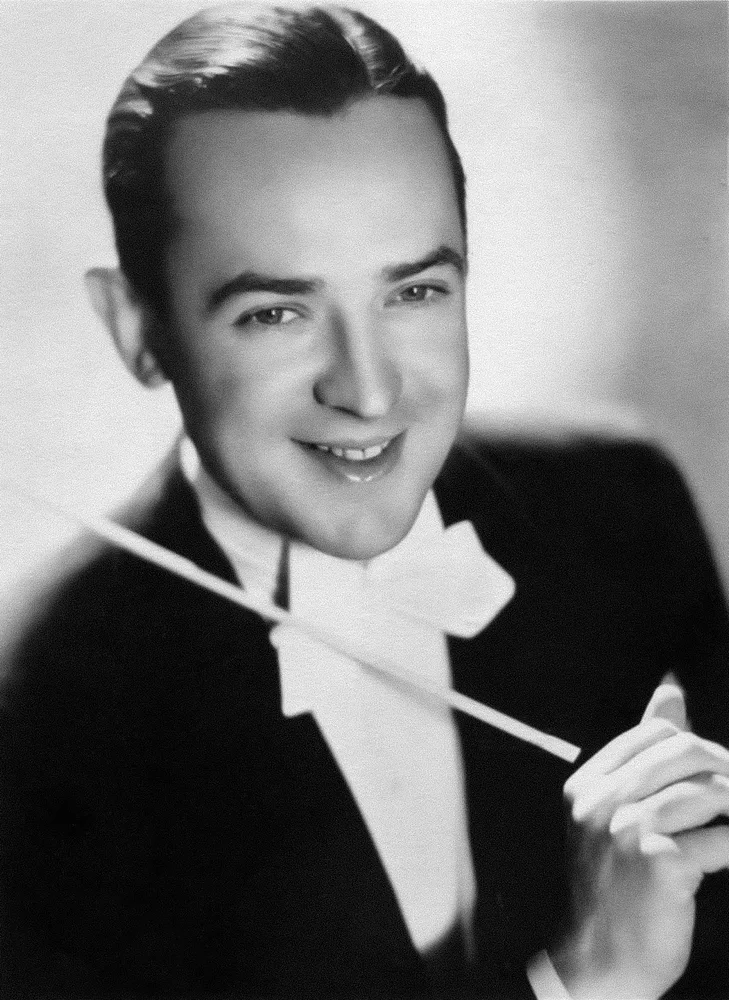
Jimmy Dorsey, 1943 publicity portrait by the Maurice Seymour studio, as printed in the 1943 Billboard Music Yearbook Public Domain (published in the United States in 1943 without a copyright notice; Wikimedia Commons tags it PD-US-no notice) — Wikimedia Commons: https://commons.wikimedia.org/wiki/File:Jimmy_Dorsey_Billboard_2.jpg

James Francis Dorsey was born on February 29, 1904, in Shenandoah, Pennsylvania, the first son of Thomas Francis Dorsey, a coal miner who became a music teacher and marching-band director, and Theresa (Langton) Dorsey. By the age of seven he was playing in his father's band, and at nine he made his first public appearance on trumpet with J. Carson McGee's King Trumpeters in New York in 1913. He switched to alto saxophone in 1915 and then took up the clarinet, choosing an Albert-system instrument rather than the Boehm system used by most of his contemporaries, including Benny Goodman and Artie Shaw. With his younger brother Tommy Dorsey on trombone he formed Dorsey's Novelty Six, later Dorsey's Wild Canaries, one of the first jazz bands to be heard on the radio.
In the 1920s he moved through the leading dance and jazz bands of the East Coast: the Scranton Sirens, the California Ramblers (from around 1924), Jean Goldkette, Red Nichols, Ben Pollack, Frankie Trumbauer, and Paul Whiteman, doing a great deal of freelance radio and studio work in New York between engagements. He took the clarinet solo on "Singin' the Blues," recorded on February 4, 1927, by Trumbauer's orchestra with Bix Beiderbecke and guitarist Eddie Lang, a record later placed in the Grammy Hall of Fame. He joined Ted Lewis's band in 1930 and toured Europe with it, and on September 15, 1930, he played clarinet and alto saxophone on the first recording of Hoagy Carmichael's "Georgia on My Mind," alongside Bix, Lang, Joe Venuti, Jack Teagarden, and Bud Freeman. His composition "Tailspin," written with Trumbauer, was recorded by Whiteman in April 1934 and by the Dorsey Brothers in February 1935.
From 1927 the brothers also recorded as the Dorsey Brothers Orchestra, first as a studio-only group for OKeh, where Glenn Miller wrote arrangements and played trombone on early sessions that included "The Spell of the Blues," "Let's Do It," and "My Kinda Love" with Bing Crosby singing. Their first chart entry was "Coquette" in June 1928. In 1934 they formed a permanent touring band and signed with Decca, and in 1935 they had two number-one records, "Lullaby of Broadway" and "Chasing Shadows." The partnership ended on the bandstand in May 1935 when Tommy walked out in an argument over the tempo of "I'll Never Say Never Again Again." Jimmy kept the band, billed it for a few months as the Dorsey Brothers Orchestra in the hope that his brother would return, and from September 1935 led it as Jimmy Dorsey and His Orchestra on Decca. The orchestra backed Crosby on the radio program Kraft Music Hall from December 1935 to July 1937, appearing on 73 broadcasts and on Crosby's Decca records, among them the 1936 hit "Pennies from Heaven."
The early band was regarded as more jazz-oriented than Tommy's, and it recorded instrumentals such as "Dorsey Stomp," "Tap Dancer's Nightmare," "Parade of the Milk Bottle Caps," and "John Silver," with Bobby Byrne, Ray McKinley, Don Matteson, and Skeets Herfurt in the ranks alongside the singers Bob Eberly and Kay Weber. After he left the Crosby show in 1937 and began to tour on his own, the hits came quickly: "Is It True What They Say About Dixie?" and, in 1938, "Change Partners," both number one. Helen O'Connell joined in 1939, and her duets with Eberly, built in a three-part form in which Eberly sang a slow ballad chorus, the band and Dorsey's saxophone took the middle, and O'Connell finished at a faster tempo, sometimes in Spanish, produced the band's biggest records, among them "Amapola," which was number one for ten weeks in 1941, "María Elena," "Green Eyes," and "Blue Champagne." Almost every record the band released from 1939 to 1943 was a hit. Tutti Camarata arranged many of the Latin-flavored numbers, and pianist and arranger Joe Lipman, who joined in 1939, contributed heavily to the repertoire. "Tangerine" followed in 1942, and on July 14, 1942, Dorsey was the first to record "Brazil" (Ary Barroso's "Aquarela do Brasil") for Decca, with Eberly and O'Connell singing Bob Russell's English lyrics. In 1944 "Bésame Mucho," with Eberly and Kitty Kallen, was another number one, and Wikipedia counts eleven number-one hits for the orchestra in all. The band also kept a jazz side: "Contrasts" was its signature instrumental, Dizzy Gillespie wrote arrangements for Dorsey and shares the credit on "Grand Central Getaway," and the guitarist Herb Ellis joined the band after leaving Glen Gray's Casa Loma Orchestra and stayed through 1947, recording some of his first solos there.
Dorsey and his brother combined their orchestras to record a V-Disc on March 15, 1945, and in 1947 he signed with MGM Records and the brothers played themselves in the film The Fabulous Dorseys, which included a cameo by Art Tatum. After the commercial decline of the late 1940s he recorded Dixieland-style sides for Columbia in 1950, which led to his first LP, and then disbanded his own orchestra. In 1953 he joined the Tommy Dorsey Orchestra as co-leader and featured soloist, and the group was billed as the Dorsey Brothers Orchestra. After an appearance on Jackie Gleason's CBS program on December 26, 1953, the brothers hosted the CBS series Stage Show from 1954 to 1956; in January 1956 it carried the first national television appearances of Elvis Presley. Jimmy was diagnosed with throat cancer in 1956. When Tommy passed away on November 26, 1956, Jimmy took over the orchestra. His last recording session, for Fraternity Records, produced "So Rare," in an arrangement influenced by the rhythm-and-blues saxophonist Earl Bostic; it reached number two on the Billboard chart and earned a gold record, the highest placing for a big band in the first decade of rock and roll. Dorsey died of throat cancer in New York City on June 12, 1957, at the age of 53. The U.S. Postal Service issued a stamp honoring Jimmy and Tommy Dorsey in 1996, and the Recording Academy added his 1942 recording of "Brazil" to the Grammy Hall of Fame in 2009.
Dorsey is considered one of the most important and influential alto saxophonists of the big band and swing eras. English Wikipedia says Charlie Parker and Lester Young both acknowledged him as an influence on their styles, German Wikipedia adds Ornette Coleman, and the profile of James Moody on JazzProfiles.com lists Dorsey among that saxophonist's earliest models. His orchestra was above all a hit-making dance band, with eleven number-one records, most of them vocal duets by Bob Eberly and Helen O'Connell on ballads and Latin-American songs, and for years he was commercially overshadowed by Benny Goodman's band and then by his brother's. AllMusic's William Ruhlmann argues that amid those vocal hits it is easy to forget that the Dorsey band was also a serious jazz outfit whose members stretched out when they could: its instrumentals included "Contrasts" and "John Silver," "Sorghum Switch" (1942) used a surprisingly modern electric guitar sound, and Dorsey was willing to work elements of bebop into the book. The jazz case for him rests on that, on his 1920s and early 1930s work with Bix Beiderbecke, Frankie Trumbauer, Joe Venuti, and Eddie Lang, and on the Dixieland sides of 1950, and it is the same swing-era bandleader footing as his brother's, with a pop-chart output that is larger than his jazz one.
- "Singin' the Blues" (1927, OKeh) - Frankie Trumbauer's orchestra with Bix Beiderbecke and Eddie Lang, recorded February 4, 1927, with Dorsey's clarinet solo; one of the first jazz recordings inducted into the Grammy Hall of Fame, in 1977.
- "Georgia on My Mind" (1930, Victor) - Hoagy Carmichael's first recording of his song, September 15, 1930, with Dorsey on clarinet and alto saxophone, Bix Beiderbecke, Eddie Lang, Joe Venuti, Jack Teagarden, and Bud Freeman; the record entered the Grammy Hall of Fame in 2014.
- "Tailspin" (1934 and 1935) - Dorsey and Trumbauer's composition, recorded by Paul Whiteman's orchestra on April 17, 1934 (Victor 24668) and by the Dorsey Brothers Orchestra on February 6, 1935, and a jazz standard of the period.
- "Contrasts" (1940, Decca 3198) - His signature instrumental, written in 1932 and recorded for Decca on April 30, 1940, and kept in the book for the rest of his career.
- "Amapola" (1941, Decca 3629) - Recorded February 3, 1941: the Eberly and O'Connell duet with Dorsey's saxophone in the middle section, number one for ten weeks and his biggest hit. Spotify - Amapola Listen
- "Brazil (Aquarela do Brasil)" (1942, Decca 18460) - The first recording of Ary Barroso's samba, made July 14, 1942, with Eberly and O'Connell; it entered the Grammy Hall of Fame in 2009. Spotify - Brazil Listen
- "Tangerine" (1942, Decca 4123) - Recorded December 10, 1941, and issued in January 1942: another Latin-tinged duet for Eberly and O'Connell, featured in the film The Fleet's In (1942). Spotify - Tangerine Listen
- "So Rare" (1957, Fraternity F-755) - His last recording session and last hit, in an arrangement shaped by Earl Bostic's saxophone style; number two on Billboard and a gold record. Spotify - So Rare Listen
Jimmy Dorsey: Full Discography
Discogs artist ID 299282 ("Jimmy Dorsey," real name James Dorsey, born February 29, 1904, in Shenandoah, Pennsylvania, died June 12, 1957, in New York City) lists several hundred entries, most of them compilations, radio-transcription LPs, and appearances on other artists' records. Discogs files his bands under separate entities, which were checked: Jimmy Dorsey And His Orchestra (artist ID 341400, hundreds of entries, mostly Decca 78 rpm singles), Jimmy Dorsey And His Original "Dorseyland" Jazz Band (2064438, 45 entries, the 1949 to 1951 Columbia Dixieland sides), The Dorsey Brothers Orchestra (1181345), and The Dorsey Brothers (2220093). His catalog is among the largest of the swing era and almost all of it was issued as 78 rpm singles that were later compiled, so the leader table below is a curated selection of 20 releases rather than an exhaustive list: the Dorsey Brothers hits, the first Decca hits, the Latin-flavored recordings of 1941 and 1942, the 1950 Dixieland sides, and his last hit, "So Rare." The reissue series The Complete Jimmy Dorsey in Disco Order (Ajaz Records, 27 or more volumes) and the Joyce Records radio-broadcast LPs are the fullest documentation of the 1930s and 1940s orchestra. Catalog numbers are those of the first or best-documented pressing found; recording dates come from Discogs release notes, Wikipedia, and AllMusic, and where a date is not documented the cell says so.
As Leader / Co-Leader
| Album Title | Recording Date(s) | Release Date | Label | Catalog Number | Format(s) | Personnel | Role | Reissue History | Spotify | Buy | Notes |
|---|---|---|---|---|---|---|---|---|---|---|---|
| Oodles Of The Noodles / Three Moods | 1932, New York | 1932 | Brunswick | A 500.204 (French pressing; original US issue not confirmed) | 10-inch 78 rpm single | Jimmy Dorsey and Tommy Dorsey; lineup not itemized | Co-leader (Dorsey Brothers) | Not confirmed | — | — | One of the Dorsey Brothers' early Brunswick sides; "Oodles of Noodles" is Dorsey's own composition. |
| Coquette | 1928, New York | June 1928 | OKeh | Not specified | 10-inch 78 rpm single | Dorsey Brothers Orchestra with vocal by Bill Dutton | Co-leader (Dorsey Brothers) | Not confirmed | — | — | The first chart entry for the Dorsey Brothers Orchestra. |
| Let's Do It (Let's Fall in Love) | 1929, New York | 1929 | OKeh | Not specified | 10-inch 78 rpm single | Dorsey Brothers Orchestra with Bing Crosby (vocal); Glenn Miller arranged and played trombone on early sessions of this period | Co-leader (Dorsey Brothers) | Not confirmed | — | — | The Dorsey Brothers' first top-ten record. |
| You Let Me Down / Where Am I? | 1935, New York (date not specified) | 1935 | Decca | 602 | 10-inch 78 rpm single | Jimmy Dorsey and His Orchestra (lineup not itemized on the release) | Leader | Not confirmed | — | — | His first chart entry under the Jimmy Dorsey and His Orchestra name, December 1935. |
| Robins And Roses / Is It True What They Say About Dixie? | 1936 | 1936 | Brunswick | 02226 (UK pressing; the original US issue was on Decca and its number is not confirmed) | 10-inch 78 rpm single | Jimmy Dorsey and His Orchestra with Bob Eberly (vocal); lineup not itemized on the release | Leader | Not confirmed | — | — | "Is It True What They Say About Dixie?" was his first number-one record as a bandleader, in June 1936. |
| That Feeling Is Gone / John Silver | 1938, New York (date not specified) | 1938 | Decca | 1860 | 10-inch 78 rpm single | Jimmy Dorsey and His Orchestra (lineup not itemized on the release) | Leader | Not confirmed | — | — | "John Silver," co-written by Dorsey, reached number 13 on Billboard in 1938, per Wikipedia. |
| Change Partners / The Yam | 1938, New York (date not specified) | October 1938 | Decca | 2002 | 10-inch 78 rpm single | Jimmy Dorsey and His Orchestra with Bob Eberly (vocal); lineup not itemized on the release | Leader | Not confirmed | — | — | From the RKO film Carefree; a number-one record in October 1938. |
| Contrasts / Tonight (Perfidia) | April 30, 1940 (A side) and May 10, 1940 (B side), New York | 1940 | Decca | 3198 | 10-inch 78 rpm single | Jimmy Dorsey and His Orchestra (lineup not itemized on the release) | Leader | Reissued on Decca coupled with "Embraceable You" in 1947 (Discogs) | — | — | "Contrasts" is Dorsey's self-penned theme song; it dates from 1932. |
| Amapola / Donna Maria | February 3, 1941, New York | 1941 | Decca | 3629 | 10-inch 78 rpm single | Jimmy Dorsey (alto saxophone, clarinet, leader); Milt Yaner, Sam Rubinowitch (alto saxophones); Charles Frazier, Herbie Haymer (tenor saxophones); Jimmy Campbell, Nate Kazebier, Shorty Solomon (trumpets); Don Matteson, Nat Lobovsky, Sonny Lee (trombones); Joe Lipman (piano); Guy Smith (guitar); Jack Ryan (bass); Buddy Schutz (drums), all uncredited on the label; Bob Eberly and Helen O'Connell sing "Amapola" per Wikipedia and AllMusic | Leader | Later paired with "You Forgot About Me" on a Decca single (Discogs) | Spotify - Amapola | — | Number one for ten weeks in 1941, his biggest hit. |
| Maria Elena / Green Eyes (Aquellos Ojos Verdes) | March 19, 1941, New York | April 1941 | Decca | 3698 | 10-inch 78 rpm single | Jimmy Dorsey (alto saxophone, clarinet, leader); Milt Yaner, Sam Rubinowitch (alto saxophones); Charles Frazier, Herbie Haymer (tenor saxophones); Jimmy Campbell, Nate Kazebier, Shorty Solomon (trumpets); Don Matteson, Nat Lobovsky, Sonny Lee (trombones); Joe Lipman (piano); Guy Smith (guitar); Jack Ryan (bass); Buddy Schutz (drums), all uncredited on the label | Leader | Reissued on later Decca singles and on MCA compilations (Discogs) | Spotify - Green Eyes | — | Both sides were number-one records in 1941, with Bob Eberly and Helen O'Connell singing. |
| Tangerine / Ev'rything I Love | December 10, 1941 (A side) and December 22, 1941 (B side), New York | January 1942 | Decca | 4123 | 10-inch 78 rpm single | Jimmy Dorsey (alto saxophone, clarinet, leader) and orchestra with Joe Lipman (piano and arranger); the other musicians are uncredited on the label | Leader | Coupled with "Blue Champagne" on a 1943 Decca reissue (Discogs) | Spotify - Tangerine | — | "Tangerine" is from the Paramount film The Fleet's In; "Ev'rything I Love" is from the Broadway show Let's Face It. |
| My Devotion / Sorghum Switch | Not specified, 1942, New York | July 1942 | Decca | 18372 | 10-inch 78 rpm single | Jimmy Dorsey and His Orchestra (lineup not itemized on the release) | Leader | Not confirmed | — | — | AllMusic singles out "Sorghum Switch" for its surprisingly modern electric guitar sound. |
| Daybreak / Brazil (Aquarela do Brasil) | July 14, 1942, New York | October 1942 | Decca | 18460 | 10-inch 78 rpm single | Jimmy Dorsey (alto saxophone, clarinet, leader); Milt Yaner, Sam Rubinowitch (alto saxophones); Charles Frazier, Herbie Haymer (tenor saxophones); Jimmy Campbell, Nate Kazebier, Shorty Solomon (trumpets); Don Matteson, Nat Lobovsky, Sonny Lee (trombones); Joe Lipman (piano); Guy Smith (guitar); Jack Ryan (bass); Buddy Schutz (drums), all uncredited on the label; Bob Eberly and Helen O'Connell sing on "Brazil" | Leader | Not confirmed | Spotify - Brazil | — | The first recording of Ary Barroso's samba with English lyrics; Grammy Hall of Fame, 2009 (Decca 18460B). |
| My Ideal / Bésame Mucho (Kiss Me Much) | Not specified, 1943, New York | January 1944 | Decca | 18574 | 10-inch 78 rpm single | Jimmy Dorsey and His Orchestra with Bob Eberly (vocal chorus, as credited on the release); AllMusic also credits Kitty Kallen on "Bésame Mucho" | Leader | Coupled with "They're Either Too Young or Too Old" on a Brunswick pressing (Discogs) | — | — | "Bésame Mucho" was a number-one record in 1944, charting in Billboard's best-selling retail list of February 19, 1944. |
| Dorseyland Dance Parade | 1949 to 1950 (exact dates not specified) | July 1950 | Columbia | CL 6114 | 10-inch LP | Jimmy Dorsey and His Original "Dorseyland" Jazz Band (lineup not itemized on the release) | Leader | Collected on later Columbia and Collectables reissues (Discogs) | — | — | Dixieland-style sides made after he left Decca for Columbia. |
| Dixieland Band From Santa Claus Land / It's The Dreamer In Me | 1950 (date not specified) | 1950 | Columbia | 39035 | 10-inch 78 rpm single | Jimmy Dorsey and His Original "Dorseyland" Jazz Band (lineup not itemized on the release) | Leader | Not confirmed | — | — | A Dixieland recording of his own novelty "Dixieland Band from Santa Claus Land" and of his song "It's the Dreamer in Me." |
| Dixie By Dorsey | 1949 to 1950 (exact dates not specified) | Not specified (Canadian pressing checked) | Columbia | CL 608 (Canadian pressing) | 12-inch LP, mono | Jimmy Dorsey (clarinet), Charlie Teagarden (trumpet), Cutty Cutshall (trombone), Frank Maynes (tenor saxophone), Dick Cary (piano), Carl Kress (guitar), Bill Lolatte (bass), Ray Bauduc (drums), as credited on a Columbia promotional single taken from the album | Leader | Reissued on later Columbia and Collectables releases (Discogs) | — | — | His first LP, a Dixieland set including "Jazz Me Blues," "Tin Roof Blues," "High Society," and "South Rampart Street Parade." |
| So Rare / Sophisticated Swing | Not specified, 1956 to 1957 | February 9, 1957 | Fraternity Records | F-755 | 7-inch 45 rpm single | Jimmy Dorsey with orchestra and chorus (the credit given on the release) | Leader | Reissued on later singles and compilations (Discogs) | Spotify - So Rare | — | Number two on the Hot 100 for four weeks; his last hit and a gold record. |
| The Fabulous Jimmy Dorsey | 1956 to 1957 (exact dates not specified) | 1957 | Fraternity Records | F-1008 | 12-inch LP, mono | Jimmy Dorsey, His Orchestra and Chorus; Discogs credits Lee Castle, Art Tancredi, Bill Spano, John Frosk (trumpets), Will Bradley, Earl Swope, Jack Raines, Vinnie Forest (trombones), Buzzy Brauner, Daniel Trimboli, Skippy Galluccio, Frank Maynes, George Perry (saxophones), Joe Massamino (piano), Steve Jordan (guitar), Bill Cronk (bass), Tommy Widdicombe (drums) | Leader | Not confirmed | — | — | The 1950s orchestra revisiting "Contrasts," "Amapola," and "Maria Elena" alongside "So Rare," "June Night," and "Sophisticated Swing." |
| The Great Jimmy Dorsey | Earlier Decca recordings (dates not itemized) | 1957 | Decca | DL 8609 | 12-inch LP, mono | Jimmy Dorsey and His Orchestra (lineup not itemized on the release) | Leader | Not confirmed | — | — | A Decca LP of his earlier singles, including "Contrasts," "Star Eyes," "Bésame Mucho," and "Embraceable You." |
As Sideman (selected major credits)
Dorsey led his own bands from 1935 and had been a studio and band sideman for the previous decade, so his sideman credits fall in the 1920s and early 1930s. This is a representative selection of what is documented; catalog numbers are not given where the session is known only from other sources.
| Year | Project (Leader) | Title | Label | Catalog | Role | Notes |
|---|---|---|---|---|---|---|
| 1924 to 1925 | The California Ramblers | Dance and jazz sides for many labels | Various | Not specified | Member | Dorsey joined the group in New York around 1924; Discogs lists the California Ramblers among his groups. |
| 1920s | Red Nichols and His Five Pennies; Bix and His Rhythm Jugglers; Joe Venuti's Blue Four; Eddie Lang's Orchestra; Miff Mole's Molers | Studio sides | Various | Not specified | Clarinet, alto saxophone | Discogs lists Dorsey as a member of each of these studio groups; individual sessions are not itemized here. |
| February 4, 1927 | Frankie Trumbauer and His Orchestra (Frankie Trumbauer) | Singin' the Blues / Clarinet Marmalade | OKeh | 40772 | Clarinet | With Bix Beiderbecke (cornet), Bill Rank (trombone), Doc Ryker (alto saxophone), Paul Mertz (piano), Eddie Lang (guitar), and Chauncey Morehouse (drums); Dorsey takes the clarinet solo. Grammy Hall of Fame, 1977. |
| September 15, 1930 | Hoagy Carmichael and His Orchestra (Hoagy Carmichael) | Georgia on My Mind | Victor | 23013 | Clarinet, alto saxophone | With Bix Beiderbecke, Eddie Lang, Joe Venuti, Jack Teagarden, and Bud Freeman, Carmichael singing. The 1930 recording entered the Grammy Hall of Fame in 2014. |
| 1929 to 1933 | Ethel Waters | Columbia studio sides | Columbia | Not specified | Clarinet, alto saxophone | Her profile lists Dorsey among the studio accompanists on her Columbia sessions of these years. |
| April 17, 1934 | Paul Whiteman and His Orchestra (Paul Whiteman) | Tailspin / G Blues | Victor | 24668 | Composer (with Frankie Trumbauer) | Features Frankie Trumbauer; "Tailspin" was written by Dorsey and Trumbauer, and Dorsey's playing on the Whiteman recording is not confirmed. The Dorsey Brothers Orchestra recorded it for Decca on February 6, 1935. |
| 1936 to 1937 | Bing Crosby | Decca records and the Kraft Music Hall radio program | Decca | Not specified | Orchestra leader | The Jimmy Dorsey orchestra accompanied Crosby on 73 broadcasts, December 1935 to July 1937, and on his Decca records, including "Pennies from Heaven" (1936). |
Recordings made after Dorsey's death under his name, including the Fabulous Dorsey Orchestra's releases under later leaders, are separate from his own discography and are not listed here.
- Tommy Dorsey - younger brother, trombonist and partner in the Dorsey Brothers from the 1920s, rival bandleader from 1935, and co-leader of the Dorsey Brothers Orchestra and co-host of Stage Show from 1953 until Tommy's death in 1956.
- Bix Beiderbecke - cornetist on the 1927 "Singin' the Blues" and the 1930 "Georgia on My Mind."
- Glenn Miller - trombonist and arranger on the early Dorsey Brothers OKeh sessions, including the Bing Crosby vocals.
- Frankie Trumbauer - C-melody saxophonist, Dorsey's bandmate in the Goldkette and Whiteman orchestras and co-writer of "Tailspin."
- Joe Venuti, Eddie Lang, Jack Teagarden, Bud Freeman - fellow players on the 1930 "Georgia on My Mind" session.
- Bing Crosby - singer on the Dorsey Brothers' 1929 OKeh sides, and host of Kraft Music Hall, which the Jimmy Dorsey orchestra accompanied from December 1935 to July 1937.
- Bob Eberly, Helen O'Connell, Kitty Kallen - the orchestra's principal vocalists, Eberly from 1935, O'Connell from 1939, and Kallen after O'Connell left in 1942.
- Joe Lipman, Tutti Camarata - arrangers; Lipman was pianist and chief arranger from 1939, and Camarata arranged many of the Latin-flavored hits.
- Dizzy Gillespie - arranged for Dorsey in the early 1940s and shares composer credit on "Grand Central Getaway."
- Herb Ellis - guitarist with the band from 1945 to 1947, where he recorded some of his first solos, and co-composer of "Outer Drive."
- Paul Whiteman, Ted Lewis, Jean Goldkette, Red Nichols, Ben Pollack, the California Ramblers - the bands he worked in during the 1920s and early 1930s.
- Ethel Waters - her Columbia sessions of 1929 to 1933 used Dorsey among the studio accompanists, per her profile.
- James Moody, Serge Chaloff, Stan Getz, Maynard Ferguson, Al Hirt, Ray Anthony - saxophonists and brass players who passed through the orchestra in the 1940s or, in Moody's case, learned from his records, per their profiles.
- Ray McKinley, Bobby Byrne - drummer and trombonist in the 1930s band.
- Art Tatum - appeared in The Fabulous Dorseys (1947).
- Elvis Presley - made his first national television appearances on Stage Show in January 1956.
More Swing Artists
See all 217 Swing artists →More American Jazz Artists
See all 820 American artists →- Wikipedia: Jimmy Dorsey
- Wikipedia (German): Jimmy Dorsey
- Wikipedia: The Dorsey Brothers
- Wikipedia: Singin' the Blues (1920 song)
- Wikipedia: Georgia on My Mind
- Wikipedia: Aquarela do Brasil
- Wikipedia: Tailspin (song)
- Wikipedia: Joe Lipman
- AllMusic: Jimmy Dorsey, biography by William Ruhlmann
- Discogs: Jimmy Dorsey (artist 299282)
- MusicBrainz: Jimmy Dorsey
- JazzProfiles.com: Tommy Dorsey
- JazzProfiles.com: Bix Beiderbecke
- JazzProfiles.com: Herb Ellis
- JazzProfiles.com: Dizzy Gillespie
- JazzProfiles.com: James Moody