 JAZZPROFILES lives in the music 1,572 Jazz Artists fully Profiled!
 Harry James
Last updated September 5, 2026
Listen on Spotify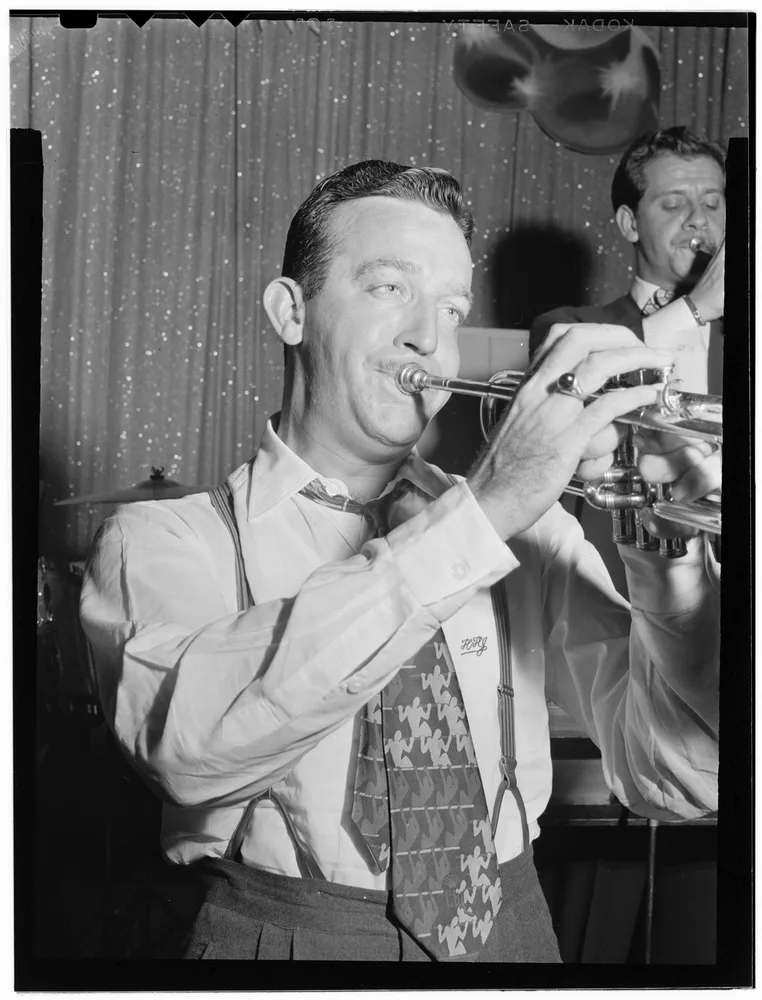
Portrait of Harry James at a Coca-Cola radio show rehearsal, New York, N.Y., between 1946 and 1948 Public domain (William P. Gottlieb collection, Library of Congress; released into the public domain per Gottlieb's wishes, February 16, 2010) — Wikimedia Commons — https://commons.wikimedia.org/wiki/File:Harry_James_(Gottlieb_04521).jpg
.jpg)
Harry Haag James was born March 15, 1916, in Albany, Georgia, into a family working the Mighty Haag Circus: his father, Everett Robert James, was the circus's bandleader, and his mother, Myrtle Maybelle Stewart, was an acrobat and horseback rider. James performed in the circus himself from around age four, first as a contortionist and then on snare drum, before his father began drilling him on trumpet at eight using the Arban method. By twelve he was leading the second band of the Christy Brothers Circus. The family settled in Beaumont, Texas, in 1924, and as a teenager James won first place as trumpet soloist at the Texas Band Teachers Association contest in May 1931. His first steady professional job was at the Peabody Hotel in Memphis, where bandleader Ben Pollack heard him and hired him in 1935.
James stayed with Pollack until early 1937, then joined Benny Goodman's orchestra, where his blazing sight-reading earned him the nickname "The Hawk" and where he sat in the trumpet section alongside players who would go on to lead their own name bands. Goodman, recognizing James's talent, put up financial backing for him to leave and start his own orchestra. Harry James and His Orchestra debuted in Philadelphia in January 1939 and struggled at first. Later that spring James heard an unknown singer on a radio broadcast from the Rustic Cabin in Englewood, New Jersey, and signed him: Frank Sinatra made his first professional recordings with the James band, including "All or Nothing at All," cut August 31, 1939, and released that year to little notice (it became a million-seller only after Columbia reissued it in 1943, once Sinatra was already famous with Tommy Dorsey). Sinatra left James for Dorsey's band that November after only about six months; James, unable to match Dorsey's offer, released him from his contract without objection.
The band's fortunes turned in 1941, when James added a string section and scored his first Top Ten hit with the self-composed instrumental "Music Makers," followed that fall by "You Made Me Love You," which reached the Top Five and made James a star. Through the war years his orchestra became one of the most commercially successful in the country: "I've Heard That Song Before," cut July 31, 1942, with vocalist Helen Forrest, hit number one and sold over a million copies, and "I Had the Craziest Dream," also with Forrest, was introduced in the 1942 film Springtime in the Rockies and topped the charts for 22 weeks. James's orchestra succeeded Glenn Miller's on the Chesterfield Cigarettes radio program in 1942, and he appeared in a string of Hollywood musicals, including Private Buckaroo and Springtime in the Rockies (both 1942), Best Foot Forward (1943), and Two Girls and a Sailor (1944).
In 1943 James married actress and pin-up star Betty Grable; a 1945 U.S. Treasury report named them the highest-paid couple in the country. Their marriage lasted until 1965 and produced two daughters. James had earlier married singer Louise Tobin in 1935 (divorced 1943, two sons), and later married Joan Boyd in 1967 (divorced 1970, one son). In 1950 James dubbed the trumpet playing for Kirk Douglas in the film Young Man with a Horn, and the Columbia soundtrack album, credited to James and Doris Day, reached number one on the Billboard album chart.
As the big-band era faded commercially in the 1950s, James signed with Capitol Records in 1955 and, working increasingly with arrangements from former Count Basie saxophonist Ernie Wilkins, moved his band toward a harder-swinging, Basie-influenced sound, documented on albums including Harry James in Hi-Fi (1955) and Wild About Harry! (1957). He kept the orchestra working steadily through the 1960s and 1970s, largely as a Las Vegas and touring attraction, and continued recording for Dot, MGM, and other labels into the 1970s. Diagnosed with lymphatic cancer in 1983, James kept performing until his last engagement, June 26, 1983, in Los Angeles, and died nine days later, on July 5, 1983, in Las Vegas. Frank Sinatra delivered the eulogy at his funeral. James was inducted into the Big Band and Jazz Hall of Fame in 1983 and has a star on the Hollywood Walk of Fame, awarded February 8, 1960.
James built his technique on his father's rigorous classical drilling, but his sound came from Louis Armstrong and the blues he absorbed growing up in Texas; Armstrong himself reportedly told Lionel Hampton, on hearing James play, "That white boy, he plays like a jig." That combination gave James an instantly recognizable trumpet voice: a bravura, wide-vibrato attack, capable of both blistering high-register solos and syrupy, sentimental ballad playing, deployed with a showman's sense of when to hold a phrase and when to let a lip glissando rip. It made him one of the most commercially successful bandleaders of the swing era, and also, to many jazz critics, one of the most compromised: his post-1941 hits with strings were dismissed by some contemporaries as sentimental "schmaltz" chasing pop success rather than jazz substance, even as musicians recognized the sheer instrumental command behind it. His mid-1950s pivot toward a harder, Basie-styled book won back some critical respect and produced some of his most purely jazz-oriented recorded work.
- "Ciribiribin" (1939, Brunswick) - James's theme song and signature showpiece almost from the start of his own band, built around his trademark high-note trumpet cadenza. Spotify - Ciribiribin Listen
- "All or Nothing at All" (recorded 1939, Columbia; reissued 1943) - Frank Sinatra's first professional recording, made as the band's new, still-unknown vocalist; a commercial failure on first release, it became a million-seller once reissued after Sinatra's solo fame. Spotify - All or Nothing at All Listen
- "You Made Me Love You" (1941, Columbia) - The Top Five hit, recorded May 20, 1941, that turned James from a struggling bandleader into a national star after he added strings to the orchestra. Spotify - You Made Me Love You Listen
- "I've Heard That Song Before" (1942, Columbia) - A number one, million-selling hit featuring vocalist Helen Forrest, recorded on the last day before the 1942-44 musicians' union recording ban. Spotify - I've Heard That Song Before Listen
- Young Man with a Horn soundtrack (1950, Columbia) - James dubbed the trumpet for Kirk Douglas's character in the film; the soundtrack album, credited to James and Doris Day, hit number one on Billboard. Spotify - With a Song in My Heart Listen
- Wild About Harry! (1957, Capitol) - James's mid-career reinvention in a harder, Count Basie-influenced idiom, arranged largely by former Basie saxophonist Ernie Wilkins. Spotify - Wild About Harry Listen
Harry James: Full Discography
Harry James was an extraordinarily prolific bandleader. His Discogs entry (artist ID 313097, the canonical page for the American trumpeter/bandleader, distinct from unrelated same-named artists) credits him with over 340 individually catalogued releases plus more than a thousand additional "appearance" credits, built up over nearly five decades of 78 rpm singles, radio transcriptions, film soundtracks, and studio albums for Brunswick, Columbia, Capitol, MGM, Dot, and other labels. Exhaustive coverage is not attempted here. The table below curates the 20 most significant, commercially important, or historically documented items in his catalog, verified against the Discogs API and Wikipedia's Harry James discography page.
As Leader / Co-Leader
| Title | Recording Date(s) | Release Date | Label | Catalog Number | Format(s) | Personnel | Role | Reissue History | Spotify | Buy | Notes |
|---|---|---|---|---|---|---|---|---|---|---|---|
| Ciribiribin / Sweet Georgia Brown | Recorded 1939 | 1939 | Brunswick | Not confirmed | Shellac, 10", 78 RPM | Harry James and His Orchestra | Leader | Frequently reissued on compilations | Spotify - Ciribiribin | — | James's signature theme song from the earliest months of his own band |
| Home James / Jesse | Recorded 1939 | 1939 | Not confirmed | Not confirmed | Shellac, 78 RPM | Harry James and His Orchestra | Leader | Not confirmed | — | — | Early single from the new band's first year |
| One O'Clock Jump / Two O'Clock Jump | Recorded 1939 | 1941 | Columbia | Not confirmed | Shellac, 10", 78 RPM | Harry James and His Orchestra | Leader | Frequently reissued on compilations | — | — | James's own answer to the Basie standard he later fully embraced stylistically in the 1950s |
| All or Nothing at All / Flash | Recorded August 31, 1939 | 1940 (orig.); reissued 1943 | Columbia | Not confirmed | Shellac, 10", 78 RPM | Harry James and His Orchestra, vocal Frank Sinatra | Leader | Reissued 1943 under "Frank Sinatra with Harry James and His Orchestra" billing once Sinatra was a star; widely anthologized since | — | — | Sinatra's first professional recording; a flop on first release, a million-seller on reissue |
| Montevideo / Music Makers | Recorded 1941 | 1941 | Columbia | Not confirmed | Shellac, 10", 78 RPM | Harry James and His Orchestra | Leader | Frequently reissued on compilations | — | — | "Music Makers," a James original, was his first Top Ten hit, in April 1941 |
| You Made Me Love You / A Sinner Kissed an Angel | Recorded May 20, 1941 | 1941 | Columbia | Not confirmed | Shellac, 10", 78 RPM | Harry James and His Orchestra | Leader | Frequently reissued on compilations | Spotify - You Made Me Love You | — | Top Five hit that established James as a star after he added a string section |
| I've Heard That Song Before / Moonlight Becomes You | Recorded July 31, 1942 | 1942 | Columbia | Not confirmed | Shellac, 10", 78 RPM | Harry James and His Orchestra, vocal Helen Forrest | Leader | Frequently reissued on compilations | Spotify - I've Heard That Song Before | — | Number one, million-selling hit; recorded on the last day before the 1942-44 recording ban |
| Sleepy Lagoon / Trumpet Blues | Recorded 1942 | 1942 | Columbia | Not confirmed | Shellac, 10", 78 RPM | Harry James and His Orchestra | Leader | Frequently reissued on compilations | — | — | Instrumental hit, later a Grammy Hall of Fame entry as "Trumpet Blues and Cantabile" |
| Concerto for Trumpet / Trumpet Blues and Cantabile | Recorded 1942 | 1942 | Parlophone (UK pressing) | Not confirmed | Shellac, 10", 78 RPM | Harry James and His Orchestra | Leader | Inducted into the Grammy Hall of Fame, 1999 | — | — | A showcase for James's classical-influenced trumpet technique |
| I Had the Craziest Dream (from Springtime in the Rockies) | Recorded 1942 | 1942 | 20th Century Fox / Columbia | Not confirmed | Film cue; Shellac, 10", 78 RPM | Harry James and His Orchestra, vocal Helen Forrest | Leader | Frequently reissued on compilations | — | — | Introduced in the film; the James/Forrest recording topped the charts for 22 weeks |
| Harry James (Armed Forces Radio Service transcription) | Recorded 1944 | 1944 | War Department, Armed Forces Radio Service | Not confirmed | Vinyl, 16" transcription disc | Harry James and His Orchestra | Leader | Not confirmed | — | — | Wartime radio transcription disc |
| All-Time Favorites | Not specified in Discogs data | 1946/1948 | Columbia | Not confirmed | Shellac and Vinyl, 10", Album, Compilation | Harry James and His Orchestra | Leader | Multiple pressings 1946-1948 | — | — | Early hits compilation issued while the band was still a top commercial draw |
| Young Man with a Horn (soundtrack) | Recorded 1950 | 1950 | Columbia | Not confirmed | Vinyl, 10", Album | Doris Day and Harry James (trumpet dubbed for Kirk Douglas's on-screen role) | Featured soloist | Reissued on CD | Spotify - With a Song in My Heart | — | Reached number one on the Billboard album chart |
| Harry James in Hi-Fi | Recorded 1955 | 1955 | Capitol | Not confirmed | Vinyl, LP, Album, Mono | Harry James and His Orchestra | Leader | Reissued on CD as part of "The Complete Harry James in Hi-Fi" | — | — | First album for Capitol after signing in 1955; began James's harder-swinging, Basie-influenced later period |
| Wild About Harry! | Recorded May 1957 | 1957 | Capitol | Not confirmed | Vinyl, LP, Album, Mono/Stereo | Harry James and His Orchestra; arrangements by Ernie Wilkins | Leader | Reissued on CD and streaming | Spotify - Wild About Harry | — | Widely cited as James's best-regarded later-period album, in a Count Basie-inspired idiom |
| The New James | Not specified in Discogs data | 1958 | MGM | Not confirmed | Vinyl, LP, Album | Harry James and His Orchestra | Leader | Not confirmed | — | — | Continuation of the Basie-influenced sound after leaving Capitol |
| Harry James and His New Swingin' Band | Not specified in Discogs data | 1959 | MGM | Not confirmed | Vinyl, LP, Album | Harry James and His Orchestra | Leader | Not confirmed | — | — | |
| Harry James Plays Neal Hefti | Not specified in Discogs data | 1961 | MGM | Not confirmed | Vinyl, LP, Album | Harry James and His Orchestra; arrangements by Neal Hefti | Leader | Not confirmed | — | — | Another Basie-adjacent arranger project |
| The Solid Gold Trumpet of Harry James | Not specified in Discogs data | 1962 | Dot | Not confirmed | Vinyl, LP, Album | Harry James and His Orchestra | Leader | Not confirmed | — | — | |
| Harry James' Greatest Hits | Not specified in Discogs data | 1965/1967 | Columbia / CBS | Not confirmed | Vinyl, LP, Compilation, Mono/Stereo | Harry James and His Orchestra | Leader | Multiple pressings through the 1970s | — | — | Best-known compilation of the classic 1939-1946 Columbia sides |
As Sideman (selected major credits)
James recorded only a small amount of significant work as a credited sideman outside his own bands, since he led his own orchestra for essentially his entire career after 1939 and was a featured soloist within Ben Pollack's and Benny Goodman's orchestras (1935-1938) rather than a guest on other leaders' dates. His most notable non-bandleader screen and studio credit is his uncredited trumpet dubbing for Kirk Douglas in the 1950 film Young Man with a Horn (listed in the leader table above, since it was released commercially under his own name alongside Doris Day).
Sources: Discogs artist 313097 (live API query, August 2026); Wikipedia: Harry James discography.
- Benny Goodman - hired James into his orchestra in 1937 and personally financed James's departure to start his own band in 1939.
- Frank Sinatra - discovered by James at the Rustic Cabin in 1939 and signed as the new band's vocalist, making his first recordings with James before leaving for Tommy Dorsey's band later that year; the two remained close, and Sinatra delivered the eulogy at James's 1983 funeral.
- Helen Forrest - lead vocalist with the James orchestra from fall 1941 to December 1943, singing on the hits "I've Heard That Song Before," "I Had the Craziest Dream," and "I Don't Want to Walk Without You."
- Betty Grable - actress and pin-up star; James's second wife (1943-1965), with whom the U.S. Treasury named him the country's highest-paid entertainer in a 1945 report.
- Ernie Wilkins - former Count Basie saxophonist and arranger who wrote much of the harder-swinging book behind James's mid-to-late-1950s Capitol albums, including Wild About Harry!
- Ben Pollack - bandleader who gave James his first major professional job in 1935 after hearing him at the Peabody Hotel in Memphis.
More Big Band Artists
See all 202 Big Band artists →More American Jazz Artists
See all 567 American artists →- Wikipedia: Harry James
- Wikipedia: Harry James discography
- Discogs: Harry James (artist 313097)
- AllMusic: Harry James biography
- Britannica: Harry James
- Wikipedia: All or Nothing at All
- Wikipedia: I've Heard That Song Before
- Wikipedia: I Had the Craziest Dream
- Wikipedia: Wild About Harry!
- Wikipedia: Young Man with a Horn (soundtrack)