 JAZZPROFILES lives in the music 2,303 Jazz Artists fully Profiled!
Harry Edison
Last updated November 7, 2026
Listen on Spotify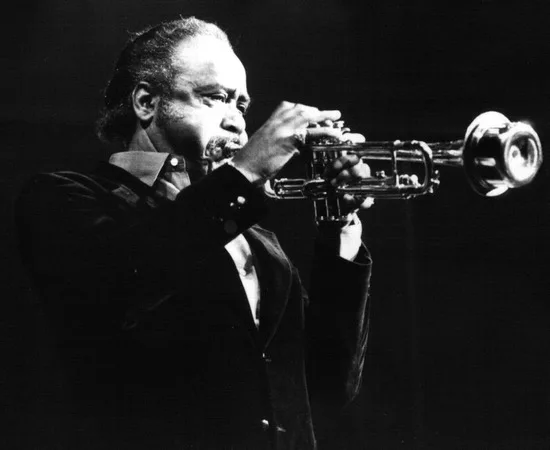
Harry "Sweets" Edison performing in Paris, France, May 5, 1980, photographed by Lionel Decoster CC BY-SA 3.0 (own work by the photographer, Lionel Decoster, also dual-licensed under the GFDL) — Wikimedia Commons — https://commons.wikimedia.org/wiki/File:Harry_Edison.jpg

Harry Edison was born on October 10, 1915, in Columbus, Ohio, and spent his early childhood in Louisville, Kentucky, where an uncle introduced him to music. He returned to Columbus at twelve and began playing trumpet with local bands, including a group led by Earl Hood that gave him his first paid work while he was still in high school. In 1933 he joined the Jeter-Pillars Orchestra, then worked with the Mills Blue Rhythm Band and Lucky Millinder's orchestra before moving to New York in 1937 and joining the Count Basie Orchestra that same year.
The nickname that became his professional name came from that band. As Edison told DownBeat in 1956, he was the youngest man in the group in March 1937, and one snowy day, while the musicians waited in the lobby of New York's Woodside Hotel for the bus to a run of one-night stands, Lester Young teased him about his sweet style and began calling him "Sweetie Pie." The name was shortened to "Sweets" within a few months and stayed with him for the rest of his life, which is why nearly every record and review bills him as "Sweets" while this profile is filed under Harry Edison. In the Basie trumpet section he worked beside Buck Clayton, and his section mates included Young, Buddy Tate, Freddie Green, and Jo Jones. He came to prominence as a soloist with the band and wrote and arranged for it occasionally, and he appeared with Young in the 1944 short film Jammin' the Blues, directed by Gjon Mili. Edison spent thirteen years with Basie, until the orchestra was temporarily disbanded in 1950.
Afterward he led his own groups, toured with Norman Granz's Jazz at the Philharmonic, and freelanced with other orchestras before settling on the West Coast in the early 1950s, where he became one of Los Angeles's most sought-after studio trumpeters. He is heard on records by Billie Holiday, Frank Sinatra, Nat King Cole, Billy Daniels, Margaret Whiting, Bing Crosby, and Ella Fitzgerald. His work for Sinatra and the arranger Nelson Riddle is the best known of this period: Riddle gave him a microphone separate from the rest of the trumpet section, and he answered Sinatra's vocals with short phrases played through a Harmon mute, a role the National Endowment for the Arts singled out on Songs for Swingin' Lovers! (1956). In 1955 he made two quintet albums for Granz's Norgran label, Buddy and Sweets with Buddy Rich and Pres and Sweets with Young. In 1956 he began a run of three albums with Ben Webster, including Gee Baby, Ain't I Good to You (recorded 1957), and in January 1957 he was part of the small group behind Holiday on the Verve sessions that produced Songs for Distingué Lovers. Leader dates followed for Verve and Roulette, among them Mr. Swing, Sweetenings, and Patented by Edison (1960), a quintet with Tommy Flanagan, Elvin Jones, the tenor saxophonist Jimmy Forrest, and the bassist Tommy Potter, and Together (1961), a collaboration with the singer Joe Williams.
Through the 1960s and 1970s Edison worked in studio orchestras for television, including The Hollywood Palace and The Leslie Uggams Show, played on Sinatra specials, and was prominent on the soundtrack and soundtrack album of the 1972 film Lady Sings the Blues. From 1973 he was musical director for the comedian Redd Foxx at theatre dates, concerts, and in Las Vegas. Back with Granz, now at Pablo Records, he recorded The Trumpet Kings Meet Joe Turner (September 1974) with Dizzy Gillespie, Roy Eldridge, and Clark Terry, a duo album with Oscar Peterson (December 1974), and Edison's Lights (1976), on which Basie himself plays piano on four tracks, followed by a series of albums with the tenor saxophonist Eddie "Lockjaw" Davis. He appeared frequently in Europe and Japan until shortly before his death, was the Los Angeles Jazz Society's first Tribute Honoree, and was named a Jazz Master by the National Endowment for the Arts in 1992.
Edison passed away at his home in Columbus, Ohio, on July 27, 1999, of prostate cancer, at the age of 83.
Edison's sound was built on economy. As the writer Will Friedwald has noted, he was a master at saying a great deal in very few notes, and many of his parts on Sinatra records amount to a handful of well-placed phrases from a Harmon-muted horn. The approach came out of the Basie band, where a relaxed beat and plenty of space did as much work as the notes, and his tone was the warm, singing one that earned him the nickname. Singers and leaders returned to him repeatedly: Lester Young and Billie Holiday had worked beside him in the 1930s Basie band and sought him out again for Granz's 1950s sessions, a pattern repeated with Ben Webster, Buddy Rich, Oscar Peterson, and Eddie "Lockjaw" Davis, who became a regular partner late in his career. In the Pablo "trumpet kings" sessions he stood beside Roy Eldridge, Dizzy Gillespie, and Clark Terry, setting his understatement against louder, more virtuosic styles. His most lasting contribution was as a Hollywood studio musician, whose muted trumpet backs singers on many records, and he kept performing in the United States, Europe, and Japan until shortly before his death.
- Pres and Sweets (1956, Norgran) - Quintet date co-led with Lester Young, recorded November 1, 1955, with Oscar Peterson, Herb Ellis, Ray Brown, and Buddy Rich; it reunited two Basie bandmates in a Los Angeles small-group setting.
- Buddy and Sweets (1955, Norgran) - Quintet album co-led with Buddy Rich, recorded in Los Angeles in September 1955, with Jimmy Rowles, Barney Kessel, and the bassist John Simmons.
- Gee Baby, Ain't I Good to You (1958, Verve) - Recorded March 1957 with Ben Webster, Oscar Peterson, Ray Brown, and Alvin Stoller, with Barney Kessel and Herb Ellis sharing the guitar chair; one of Edison's three albums with Webster.
- Songs for Distingué Lovers (1958, Verve) - Edison and Ben Webster behind Billie Holiday in January 1957, with Jimmy Rowles and Barney Kessel; a small-group session that reunited Holiday with two Basie-era colleagues.
- Songs for Swingin' Lovers! (1956, Capitol) - Sinatra and Nelson Riddle's swing album, with Edison among the trumpets. Spotify - Songs for Swingin' Lovers! Listen
- Jazz Giants '58 (1958, Verve) - Recorded August 1, 1957, with Stan Getz, Gerry Mulligan, Oscar Peterson, Herb Ellis, Ray Brown, and Louis Bellson, an all-star session with Edison as a front-line horn.
- Jawbreakers (1962, Riverside) - An early pairing with the tenor saxophonist Eddie "Lockjaw" Davis, recorded in New York on April 18, 1962; the two worked together again on Pablo in the 1970s.
- Edison's Lights (1976, Pablo) - Recorded May 5, 1976, in Los Angeles with Davis, John Heard, and Jimmie Smith, and Count Basie at the piano on the first four tracks. Spotify - Edison's Lights Listen
Harry Edison: Full Discography
Discogs artist ID 258469 ("Harry Edison," also credited as Harry "Sweets" Edison, born October 10, 1915, in Columbus, Ohio, died July 27, 1999) lists more than 1,800 entries across leader, collaborative, sideman, track-appearance and compilation releases, many of them reissues of the same sessions. His small groups are filed under separate Discogs entries, including Harry Edison And His Orchestra (artist ID 446670), Harry Edison Quintet (6404454), Harry Edison Six (7903639) and the Spike Robinson / "Sweets" Edison Quintet (4193105), and these were checked. Because Edison appeared on a very large number of records over six decades, the leader table below is a curated selection of 20 releases rather than an exhaustive list, and the sideman table is a representative set of the best-documented credits, led by his Count Basie years, the Billie Holiday and Frank Sinatra sessions, and the Norman Granz small-group dates. Recording dates, catalog numbers and personnel come from Wikipedia, Discogs and the other profiles on JazzProfiles.com; where a detail could not be confirmed the cell says so, and where Wikipedia and Discogs differ on a release year the Notes column says so.
As Leader / Co-Leader
| Album Title | Recording Date(s) | Release Date | Label | Catalog Number | Format(s) | Personnel | Role | Reissue History | Spotify | Buy | Notes |
|---|---|---|---|---|---|---|---|---|---|---|---|
| Buddy and Sweets | September 1955, Los Angeles | 1955 | Norgran | MGN 1038 | LP | Harry "Sweets" Edison (trumpet), Buddy Rich (drums), Jimmy Rowles (piano), Barney Kessel (guitar), John Simmons (bass) | Co-leader (billed with Buddy Rich) | Reissued on Verve as MGV 8129 | — | — | Produced by Norman Granz. |
| Pres and Sweets | November 1, 1955, Radio Recorders, Hollywood | 1956 | Norgran | MG N-1043 | LP | Lester Young (tenor sax), Harry Edison (trumpet), Oscar Peterson (piano), Herb Ellis (guitar), Ray Brown (bass), Buddy Rich (drums) | Co-leader (billed with Lester Young) | Reissued on Verve | — | — | Produced by Norman Granz. Wikipedia's discography dates it 1955, the year of the session. |
| Sweets | September 4, 1956, Los Angeles | 1956 | Clef | MGC 717 | LP | Harry Edison (trumpet), Ben Webster (tenor sax), Jimmy Rowles (piano), Barney Kessel (guitar), Joe Mondragon (bass), Alvin Stoller (drums) | Leader (billed as Harry Edison and His Orchestra) | Not confirmed | — | — | The first of three albums with Ben Webster. |
| Gee Baby, Ain't I Good to You | March 5 and 30, 1957, Los Angeles | 1958 | Verve | MG V-8211 | LP | Harry Edison (trumpet), Ben Webster (tenor sax), Oscar Peterson (piano), Herb Ellis (guitar, tracks 3, 6, 7), Barney Kessel (guitar, tracks 1, 2, 4, 5), Ray Brown (bass), Alvin Stoller (drums) | Leader | Not confirmed | — | — | Produced by Norman Granz. Wikipedia's discography dates it 1957; the first pressing is generally given as 1958. |
| Going for Myself | July 31, 1957, Hollywood; bonus tracks February 7, 1958, New York | 1958 | Verve | MGV 8298 | LP | Harry Edison (trumpet), Lester Young (tenor sax, clarinet on two tracks), Oscar Peterson (piano), Herb Ellis (guitar), Ray Brown (bass), Louis Bellson (drums); New York bonus session: Lou Stein (piano), Herb Ellis, Ray Brown, Mickey Sheen (drums) | Co-leader (billed with Lester Young) | Reissued on CD in 2012 with bonus tracks | — | — | One of Young's last studio recordings. Wikipedia dates the album 1957; the Verve LP is generally given as 1958. |
| Jazz Giants '58 | August 1, 1957, Capitol Studios, Hollywood | 1958 | Verve | Not confirmed | LP | Harry Edison (trumpet), Stan Getz (tenor sax), Gerry Mulligan (baritone sax), Herb Ellis (guitar), Oscar Peterson (piano), Ray Brown (bass), Louis Bellson (drums) | Co-leader (billed with Stan Getz and Gerry Mulligan) | Reissued in 1966 as Gerry's Time; CD in 2008 in the Verve Originals series | — | — | An all-star session produced by Norman Granz. |
| The Swinger | Not confirmed | 1958 | Verve | Not confirmed | LP | Not confirmed | Leader | Combined with Mr. Swing on a 1999 two-CD Verve compilation; the sessions were also issued by Fresh Sound in 2009 | — | — | Personnel not confirmed. |
| Sweetenings | November 12 to 14, 1958, New York | 1958 | Roulette | SR 52023 | LP | Harry Edison (trumpet), Jimmy Forrest (tenor sax), Kenny Drew and Jimmy Jones (piano), Joe Benjamin and John Simmons (bass), Charlie Persip (drums) | Leader | Later coupled with Patented by Edison | — | — | Produced by Teddy Reig. Includes "Jive at Five," credited to Count Basie and Edison. |
| Mr. Swing | September 18, 1958, New York | 1960 | Verve | MG V-8353 | LP | Harry Edison (trumpet), Jimmy Forrest (tenor sax), Jimmy Jones (piano), Freddie Green (guitar), Joe Benjamin (bass), Charlie Persip (drums) | Leader | Combined with The Swinger on a 1999 two-CD Verve compilation | — | — | Produced by Norman Granz. Recorded in 1958, issued in 1960. |
| Patented by Edison | February 12, 1960, New York | 1960 | Roulette | SR 52041 | LP | Harry Edison (trumpet), Jimmy Forrest (tenor sax), Tommy Flanagan (piano), Tommy Potter (bass), Elvin Jones (drums) | Leader | Later coupled with Sweetenings | — | — | Produced by Teddy Reig. Mostly standards. |
| Together | Not confirmed | 1961 | Roulette | Not confirmed | LP | Harry Edison and Joe Williams (vocals) with a small group; personnel not confirmed | Co-leader (billed with Joe Williams) | Reissued in 2001 coupled with Have a Good Time on one release | — | — | Credited to Joe Williams and Harry "Sweets" Edison. |
| Jawbreakers | April 18, 1962, New York | 1962 | Riverside | JLP-39 | LP | Harry Edison (trumpet), Eddie "Lockjaw" Davis (tenor sax), Hugh Lawson (piano), Ike Isaacs (bass), Clarence Johnston (drums) | Co-leader (billed with Eddie "Lockjaw" Davis) | Reissued with The Inventive Mr. Edison (American Jazz Classics, 2014) | — | — | — |
| Wanted to Do One Together | Not confirmed | 1962 | Columbia | Not confirmed | LP | Harry Edison (trumpet), Ben Webster (tenor sax); rest of the group not confirmed | Co-leader (billed with Ben Webster) | Not confirmed | — | — | Credited to Ben Webster and "Sweets" Edison. |
| The Trumpet Kings Meet Joe Turner | September 19, 1974, Los Angeles | 1975 | Pablo | 2310-717 | LP | Big Joe Turner (vocals), Dizzy Gillespie, Roy Eldridge, Harry "Sweets" Edison and Clark Terry (trumpets), Pee Wee Crayton (guitar), Jimmy Robins (piano), Chuck Norris (bass), Washington Rucker (drums) | Co-leader (one of four trumpet "kings") | Not confirmed | — | — | Produced by Norman Granz. |
| Oscar Peterson and Harry Edison | December 21, 1974 | 1975 | Pablo | Not confirmed | LP | Harry "Sweets" Edison (trumpet), Oscar Peterson (piano) | Co-leader (billed with Oscar Peterson) | Not confirmed | — | — | A trumpet-and-piano duo album produced by Norman Granz. |
| Edison's Lights | May 5, 1976, RCA Recording Studios, Los Angeles | 1976 | Pablo | 2310 780 | LP | Harry Edison (trumpet), Eddie "Lockjaw" Davis (tenor sax), Count Basie (piano, tracks 1-4), Dolo Coker (piano, tracks 5-8), John Heard (bass), Jimmie Smith (drums) | Leader | Reissued digitally in 2020 | Spotify - Edison's Lights | — | Produced by Norman Granz. |
| Simply Sweets | September 22, 1977, Group IV Recording Studios, Hollywood | 1978 | Pablo | 2310 806 | LP | Harry Edison (trumpet), Eddie "Lockjaw" Davis (tenor sax), Dolo Coker (piano), Harvey Newmark (bass), Jimmie Smith (drums) | Co-leader (billed with Eddie "Lockjaw" Davis) | Not confirmed | — | — | Produced by Norman Granz. |
| Jusa Bit 'O' Blues, Volume 1 and Volume 2 | Not confirmed | 1989 (Volume 1) and 1990 (Volume 2) | Capri Records | Not confirmed | CD | Spike Robinson (tenor sax), Harry "Sweets" Edison (trumpet); rest of the group not confirmed | Co-leader (Spike Robinson / "Sweets" Edison Quintet) | Not confirmed | — | — | Two volumes with the tenor saxophonist Spike Robinson. |
| Dear Mr. Basie | Not stated on the release | 1990 | Concord Jazz | CCD-4420 | CD | Frank Wess (tenor sax, flute), Harry "Sweets" Edison, Joe Newman, Snooky Young, Al Aarons and Ray Brown (trumpet), Al Grey, Benny Powell, Grover Mitchell and Michael Grey (trombone), Marshall Royal and Curtis Peagler (alto sax), Billy Mitchell (tenor sax), Bill Ramsey (baritone sax), Ronnell Bright (piano), Ted Dunbar (guitar), Eddie Jones (bass), Gregg Field (drums) | Co-leader (Frank Wess - Harry Edison Orchestra) | Not confirmed | — | — | A big band of Basie alumni playing the Basie book, six years after Basie's death. |
| Oscar Peterson + Harry Edison + Eddie "Cleanhead" Vinson | November 12, 1986, Ocean Way Studio, Hollywood | 1987 | Pablo | Not confirmed | LP | Oscar Peterson (piano), Harry "Sweets" Edison (trumpet), Eddie "Cleanhead" Vinson (alto sax), Joe Pass (guitar), Dave Young (bass), Martin Drew (drums) | Co-leader (billed with Oscar Peterson and Eddie Vinson) | Not confirmed | — | — | Produced by Norman Granz. |
As Sideman (selected major credits)
| Year | Project (Leader) | Title | Label | Catalog | Role | Notes |
|---|---|---|---|---|---|---|
| 1937-1950 | Count Basie Orchestra | Decca, Columbia and other recordings by the Basie band | Various | — | Trumpet (band member) | Thirteen years in the band; credited on a large number of singles and albums, not itemized here. |
| 1944 | Lester Young and others | Jammin' the Blues (short film, Warner Bros.) | — | — | Trumpet | Directed by Gjon Mili; released November 9, 1944. |
| 1955 | Barney Kessel | To Swing or Not to Swing (Barney Kessel, Vol. 3) | Contemporary | C 3513 | Trumpet (tracks 2, 3, 6 to 10) | Recorded March 28 and July 26, 1955. Spotify - To Swing Or Not To Swing (Vol. 3) |
| 1955 | Billie Holiday | Music for Torching with Billie Holiday | Clef | MG C-669 | Trumpet | Recorded August 23 and 25, 1955, Los Angeles, with Benny Carter, Jimmy Rowles, Barney Kessel, John Simmons and Larry Bunker. |
| 1956 | Billie Holiday | Velvet Mood | Clef | MG C-713 | Trumpet | From the same August 1955 sessions as Music for Torching. |
| 1956 | Frank Sinatra | Songs for Swingin' Lovers! | Capitol | Not confirmed | Trumpet | Arranged by Nelson Riddle; sessions October 1955 to January 1956. Spotify - Songs for Swingin' Lovers! |
| 1956 | Lionel Hampton (with Art Tatum) | Lionel Hampton And His Giants | Norgran | Not confirmed | Trumpet | Also with Buddy Rich, Red Callender and Barney Kessel; later reissued within the Tatum Group Masterpieces volumes. |
| 1956 | Billie Holiday | Lady Sings the Blues | Clef | MG C-721 | Trumpet (tracks 9 to 12) | Edison plays on the September 3, 1954, Los Angeles session that fills the second half of the album. |
| 1957 | Nat King Cole | After Midnight | Capitol | W-782 | Trumpet (guest) | Recorded 1956 with Willie Smith, Juan Tizol and Stuff Smith as the other guests. Spotify - After Midnight: The Complete Session |
| 1957 | Ben Webster | King of the Tenors (originally issued as The Consummate Artistry of Ben Webster) | Verve (Norgran MGN 1001 in 1954) | MGV-8020 | Trumpet | Recorded in 1953 with Benny Carter and the Oscar Peterson trio. Spotify - King Of The Tenors |
| 1957 | Billie Holiday | Body and Soul | Verve | MG V-8197 | Trumpet | Recorded January 3, 4, 7 and 9, 1957, Los Angeles, with Ben Webster, Jimmy Rowles and Barney Kessel. Spotify - Body and Soul |
| 1958 | Billie Holiday | Songs for Distingué Lovers | Verve | MGV-8257 | Trumpet | Recorded January 1957 at Capitol Studios; Wikipedia gives a 1958 release. |
| 1959 | Billie Holiday | All or Nothing at All | Verve | MG V-8329 | Trumpet | Recorded in August 1956 and January 1957; issued 1959 per Discogs, 1958 per some sources. |
| 1959 | Duke Ellington and Johnny Hodges | Back to Back: Duke Ellington and Johnny Hodges Play the Blues | Verve | MG V-8317 | Trumpet | Spotify - Back To Back (Duke Ellington And Johnny Hodges Play The Blues) |
| 1972 | Gerry Mulligan | The Age of Steam | A&M | SP 3036 | Trumpet | Recorded February to July 1971 with Bud Shank, Bob Brookmeyer, Tom Scott and Roger Kellaway. Spotify - The Age Of Steam |
| 1974-75 | Oscar Peterson and the Trumpet Kings | Jousts | Pablo | — | Trumpet (duets, tracks 4 and 8) | Piano duets with five trumpeters: Edison, Roy Eldridge, Dizzy Gillespie, Jon Faddis and Clark Terry. |
| 1991 | Lionel Hampton and the Golden Men of Jazz | Live at the Blue Note | Telarc | — | Trumpet | All-star live date with Hank Jones and Clark Terry. Spotify - Live at the Blue Note |
| 1996 | James Carter | Conversin' with the Elders | Atlantic | 82908-2 | Trumpet (guest, tracks 3 and 6) | With Craig Taborn, Lester Bowie, Hamiet Bluiett and Buddy Tate as guests on other tracks. Spotify - Conversin' with the Elders |
- Count Basie Orchestra - his professional home from 1937 until the band broke up in 1950, with Buck Clayton, Lester Young, Buddy Tate, Freddie Green, and Jo Jones among his colleagues; Count Basie later played piano on part of Edison's Edison's Lights (1976).
- Lester Young - Basie bandmate who gave him the name "Sweets," co-leader of Pres and Sweets (1955), and his partner on Going for Myself (July 1957), with Oscar Peterson, Herb Ellis, Ray Brown, and Louis Bellson.
- Ben Webster - tenor saxophonist on Edison's Sweets (1956), Gee Baby, Ain't I Good to You (1957), and Wanted to Do One Together (Columbia, 1962), and a partner on Holiday's 1957 sessions.
- Billie Holiday - singer from the Basie years who later recorded with him on Music for Torching and Velvet Mood (1955) and on Songs for Distingué Lovers, Body and Soul, and All or Nothing at All (1957).
- Frank Sinatra - the singer behind his best-known studio work, including Songs for Swingin' Lovers! (1956), in the Nelson Riddle orchestra's trumpet section.
- Buddy Rich - co-leader of Buddy and Sweets (1955) and drummer on Pres and Sweets.
- Eddie "Lockjaw" Davis - tenor saxophonist who co-led Jawbreakers (1962) with him and returned for Edison's Lights (1976) and Simply Sweets (recorded 1977).
- Joe Williams - singer on the 1961 Roulette album Together.
- Oscar Peterson - pianist on many Granz sessions, Edison's duo partner on Oscar Peterson and Harry Edison (recorded December 21, 1974), and a duet partner on two tracks of Oscar Peterson and the Trumpet Kings: Jousts.
- Herb Ellis, Ray Brown, Barney Kessel, Jimmy Rowles - Los Angeles Granz rhythm-section partners across Pres and Sweets, Buddy and Sweets, Sweets (1956), and the Holiday sessions.
- Stan Getz, Gerry Mulligan - front-line partners on Jazz Giants '58.
- Dizzy Gillespie, Roy Eldridge, Clark Terry - fellow trumpeters on The Trumpet Kings Meet Joe Turner (recorded September 19, 1974), with the singer Big Joe Turner.
- Tommy Flanagan, Elvin Jones - rhythm section on Patented by Edison (February 1960), with Jimmy Forrest on tenor and Tommy Potter on bass.
- Johnny Hodges, Duke Ellington - Edison played trumpet on the 1959 Verve album Back to Back, with Ellington at the piano.
- Nat King Cole - leader of the small-group After Midnight sessions (1956), on which Edison was one of the guests.
- Benny Carter - saxophonist who shared Edison's Los Angeles circle in the 1950s, including the August 1955 Holiday sessions that produced Music for Torching and Velvet Mood.
- Nelson Riddle - arranger of the Sinatra albums on which Edison recorded; he gave Edison a separate microphone for his obbligatos.
- Redd Foxx - comedian for whom Edison served as musical director from 1973.
More Swing Artists
See all 217 Swing artists →More American Jazz Artists
See all 820 American artists →- Wikipedia: Harry Edison
- Wikipedia: Pres and Sweets
- Wikipedia: Buddy and Sweets
- Wikipedia: Songs for Distingué Lovers
- Wikipedia: Gee Baby, Ain't I Good to You (album)
- Wikipedia: Jazz Giants '58
- Wikipedia: Jammin' the Blues
- Wikipedia: Edison's Lights
- Wikipedia: The Trumpet Kings Meet Joe Turner
- National Endowment for the Arts: Harry "Sweets" Edison, NEA Jazz Master
- Encyclopedia.com: Edison, Harry "Sweets"
- Discogs: Harry Edison (artist 258469)
- MusicBrainz: Harry Edison
- JazzProfiles.com: Billie Holiday
- JazzProfiles.com: Buddy Rich
- JazzProfiles.com: Johnny Hodges
- JazzProfiles.com: Nat King Cole