 JAZZPROFILES lives in the music 1,572 Jazz Artists fully Profiled!
 Noble Sissle
Last updated September 5, 2026
Listen on Spotify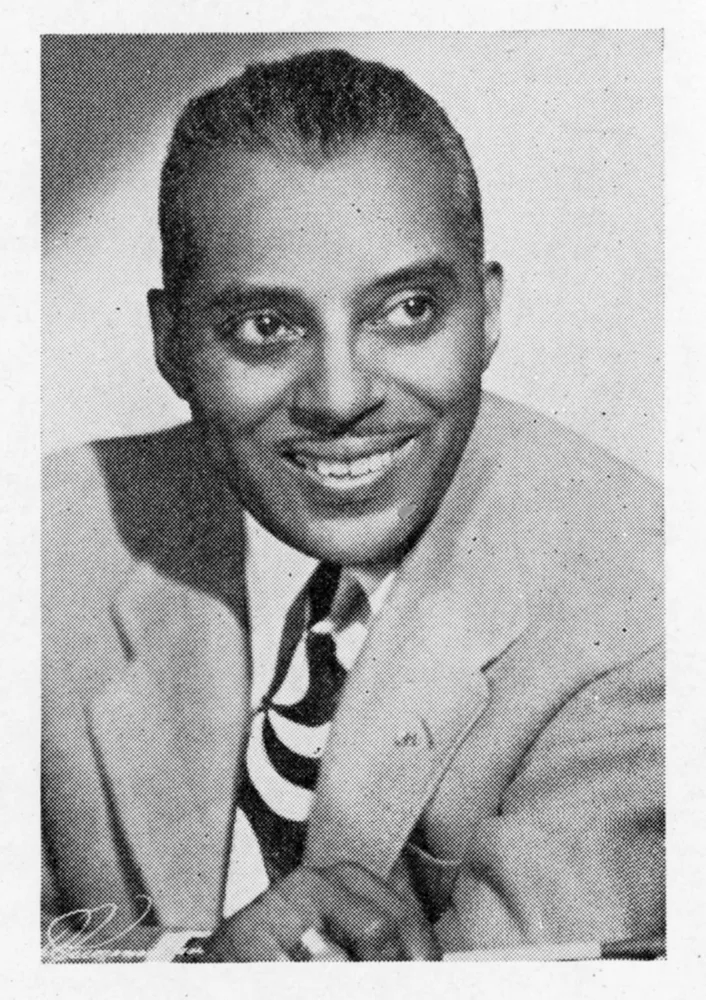
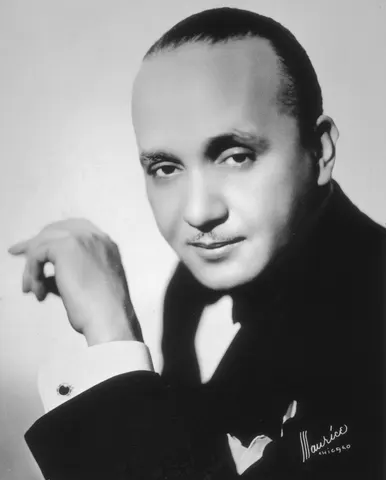
Noble Sissle, studio portrait published in 1936, the year his orchestra recorded Lena Horne's first sides for Decca with Sidney Bechet in the reed section. Reproduced from Maud Cuney-Hare's *Negro Musicians and Their Music* (Washington, D.C.: The Associated Publishers, Inc., 1936), p. 155. Public Domain (Wikimedia Commons {{PD-US-not renewed}}: first published in the United States in 1936, copyright not renewed) — Wikimedia Commons, https://commons.wikimedia.org/wiki/File:Maud_Cuney_Hare-155-Noble_Sissle.jpg

Noble Lee Sissle was born July 10, 1889, in Indianapolis, Indiana, the son of Rev. George A. Sissle, pastor of the city's Simpson M. E. Chapel, and Martha Angeline (nee Scott) Sissle, a school teacher and juvenile probation officer. The family moved to Cleveland, where he sang in church choirs and as a soloist with his high school glee club; as a teenager he won a discrimination suit against a Cleveland movie theater that had forced him into the balcony, one of the earliest NAACP-backed cases. He attended DePauw University in Greencastle, Indiana on scholarship, transferred to Butler University in Indianapolis, then left school for music. In 1914 he put together his first band for a residency at the Severin Hotel in Indianapolis. He moved to Baltimore in 1915 and worked in Bob Young's band, where the second pianist on some nights was Luckey Roberts and the regular pianist was Eubie Blake. Later that year Sissle led his own band at the Cocoanut Grove in Palm Beach, Florida.
In early 1916 he joined one of James Reese Europe's society orchestras in New York as a guitarist and vocalist, and persuaded Europe to hire Blake as well. When Europe organized a regimental band for the 15th Infantry Regiment (Colored) of the New York National Guard, later the 369th Infantry "Hell Fighters," Sissle enlisted with him in December 1916 and served as drum major and lead vocalist. The band played syncopated music rather than standard military repertoire and is credited with introducing jazz to France. Sissle had begun recording for Pathe in early 1917 and sang several vocals on the Pathe discs Europe's 369th band cut in early 1919 after it went civilian; the labels billed him as "Lieut. Noble Sissle." On May 9, 1919, Europe was stabbed to death in Boston by one of his own drummers, and Sissle, with Blake's help, took temporary charge of the band. He left the army as a second lieutenant with the 370th Infantry Regiment.
Sissle and Blake turned their songwriting partnership into a vaudeville act, the Dixie Duo, then built it out into a full production with the comedy team of Flournoy Miller and Aubrey Lyles, who wrote the book. Shuffle Along premiered at the 63rd Street Music Hall in 1921 and ran 504 performances, the first hit Broadway musical written by and about African Americans and the first all-Black show on Broadway in over a decade. Sissle wrote the lyrics to Blake's music, including "I'm Just Wild About Harry," which Harry Truman adopted as his 1948 campaign song, and "Love Will Find a Way." The cast and the touring companies carried Josephine Baker, Florence Mills, Adelaide Hall and Paul Robeson through early in their careers. The partners followed it with Elsie (1923) and The Chocolate Dandies (1924), the second a lavish production that lost money, and cut dozens of vocal-and-piano sides for Victor, OKeh and Edison between 1923 and 1927. They also made three Phonofilm sound shorts for Lee de Forest in 1923, among the earliest surviving film of Black musical performers.
The two played a 1926 residency at London's Kit Kat Club and returned to the United States that August, but Sissle went back to London alone in 1927 for a solo act accompanied by pianist Harry Revel, and the partnership lapsed. Cole Porter told him that Fred Waring's band was leaving Les Ambassadeurs in Paris and that the room wanted an American replacement; Sissle assembled a band for the summer 1928 residency there, and the French press began calling him "the Ace of Syncopation," a billing that turned up on his Parlophone record labels. He sailed for Paris again with his own band in May 1929 and worked Paris, Monte Carlo, Ostend and London before returning to New York in December 1930. The band he led through these years was a serious one. His HMV sessions at Hayes, Middlesex on September 10 and October 10, 1929 used clarinetist Buster Bailey, trumpeter Demas Dean and the violinist Juice Wilson; by the Columbia session in London on December 11, 1930, the trumpets were Arthur Briggs and Tommy Ladnier, with Rudy Jackson (recently out of Duke Ellington's band) and Frank "Big Boy" Goudie in the reeds and Gracie Fields guesting on a vocal. British Pathe filmed the band at Ciro's Club in London in 1931 playing "Little White Lies" and "Happy Feet," and a broadcast from New York's Park Central Hotel that year broke that hotel's color bar.
Sidney Bechet joined the band for its first American sessions after the return, cutting six Brunswick sides in New York on February 24 and April 21, 1931, alongside Ladnier and Briggs. Bechet stayed with Sissle on and off for most of the next seven years, and the association is the central fact of Sissle's jazz career: it kept Bechet working and recorded through the years when his own reputation had faded, and Sissle eventually built dates around him. The band appeared in the Vitaphone short That's the Spirit (1932) with Cora La Redd and cut four sides in Chicago on August 15, 1934 as Noble Sissle and His International Orchestra, including "Polka Dot Rag," which Bechet co-wrote with tenor saxophonist James Toliver and Sissle. A car crash in the summer of 1936 left Sissle injured and idled the band for a stretch. On March 11, 1936, in New York, the orchestra recorded six titles for Decca that included the first records Lena Horne ever made, at eighteen, "That's What Love Did to Me" and "I Take to You," cut while she was touring with the band as "Helena Horne"; the same session produced "You Can't Live in Harlem," with a half-chorus of Bechet's soprano. In April 1937 the full orchestra cut "Bandana Days," "I'm Just Wild About Harry" and "Dear Old Southland" for Variety, and two days later Sissle put Bechet in front of just his rhythm section as Noble Sissle's Swingsters for "Okey-Doke" and "Characteristic Blues." A last Swingsters date for Decca on February 10, 1938 produced "Viper Mad," "Blackstick," "Southern Sunset" and "Sweet Patootie," with Clarence Brereton on trumpet, Gil White on tenor and O'Neil Spencer on drums. Five of the six 1937-38 small-group sides were written or co-written by Bechet.
From 1938 Sissle led the house band at Billy Rose's Diamond Horseshoe in the basement of New York's Paramount Hotel, a residency he held for more than twelve years, interrupted by USO tours during World War II that included a trip to Europe and a traveling version of Shuffle Along. He was the first president of the Negro Actors Guild of America, formed in 1936 by Fredi Washington, W. C. Handy, Paul Robeson and Ethel Waters and operating from 1937. He broke publicly with Al Jolson over blackface in a signed 1938 Pittsburgh Courier piece. In 1950 he succeeded Bill "Bojangles" Robinson as honorary mayor of Harlem, and a Shuffle Along sequel reached Broadway in 1952. He played Eisenhower's 1953 inaugural, was signed as a disc jockey by New York station WMGM in January 1954 for a show built on Black recording artists, ran his own music publishing company, and operated a nightclub called Noble's. Repeated muggings led him to close the club and move to Florida. He reunited with Blake for recordings as late as 1969, and their last collaboration was a song honoring Martin Luther King Jr. He developed Alzheimer's disease in his final years and died in Tampa on December 17, 1975.
Sissle was a light, clearly enunciated tenor (Laird and Rust's discography describes him as a baritone, and the DAHR name file notes the disagreement) whose singing came out of the concert and glee-club tradition rather than the blues, which is exactly why the Sissle and Blake sides sound like a different music from what Bessie Smith or Louis Armstrong were cutting in the same years. His real contribution to jazz was made as an employer and an organizer. The bands he led between 1929 and 1938 were commercial dance orchestras with a string section, and jazz critics have been consistently hard on them: the Rust-derived Harlem Fuss discography calls the 1921 Sizzling Syncopators sides "mainly of historical interest, comprising very little jazz elements," and clarinetist and critic Eric Seddon judged Bechet "a bad fit in this sort of music" and mostly wasted in the section. But Sissle hired and kept working Bechet, Tommy Ladnier, Buster Bailey, Arthur Briggs, Rudy Jackson, Wendell Culley, Clarence Brereton and pianist Harry Brooks, and he gave Lena Horne her first job and her first records. By 1937 he had drawn the right conclusion from Benny Goodman's small groups and put Bechet out front on his own, producing the Swingsters sides that are the strongest jazz to carry Sissle's name. As a lyricist his reach was much wider than his own bandstand: "I'm Just Wild About Harry" and "Love Will Find a Way" entered the standard repertoire, and "Yeah Man!," with a Sissle lyric, became a swing-era feature for Fletcher Henderson's orchestra in 1933.
- Sissle and Blake Sing Shuffle Along (2016, Harbinger Records / The Musical Theater Project) - the Shuffle Along score in its authors' own voices, pairing 1921-era originals with the demonstration recordings Sissle and Blake made in 1950 for a planned revival. Spotify - Sissle & Blake Sing Shuffle Along Listen
- "Okey-Doke" / "Characteristic Blues" (rec. April 16, 1937, Variety 648) - Noble Sissle's Swingsters: Bechet as the only horn over Sissle's rhythm section, with Billy Banks shouting encouragement. The best jazz on any record bearing Sissle's name. Not found by verified web lookup on Spotify as a standalone release.
- "Viper Mad" / "Sweet Patootie" and "Blackstick" / "Southern Sunset" (rec. February 10, 1938, Decca 7429 and 2129) - the last Swingsters date, expanded to trumpet and tenor, with three Bechet compositions. Not found by verified web lookup on Spotify as a standalone release.
- "That's What Love Did to Me" / "I Take to You" (rec. March 11, 1936, Decca 778 and 847) - Lena Horne's first commercial recordings, made at eighteen while touring as Sissle's band vocalist.
- "The Basement Blues" / "Roll On, Mississippi, Roll On" (rec. April 21, 1931, Brunswick 6129 and 6111) - a W. C. Handy blues arranged for the full band, with open-horn Tommy Ladnier and a Bechet solo, the strongest of the 1931 Brunswicks.
- "Polka Dot Rag" / "Under the Creole Moon" (rec. August 15, 1934, Chicago, Decca 153) - Noble Sissle and His International Orchestra, both titles Bechet co-compositions, with vocals split between Billy Banks, Lavaida Carter and Sissle.
- Sissle & Blake Early Rare Recordings Volume 1 (2010 compilation of 1921-1924 sides) - fourteen of the Sissle-and-Blake voice-and-piano sides, including "Baltimore Buzz," "Love Will Find a Way" and "Down Hearted Blues." Spotify - Sissle & Blake Early Rare Recordings Volume 1 Listen
- "Camp Meeting Day" / "Miranda" (rec. September 10, 1929, Hayes, Middlesex, HMV B-5709) - both Sissle compositions, cut in England with Buster Bailey and violinist Juice Wilson in the band.
Noble Sissle: Full Discography
Noble Sissle's recorded output is almost entirely a 78 rpm singles catalog, cut between 1917 and 1938 and reissued only piecemeal, so this file is organized by recording session rather than by album. Three sources were combined and cross-checked: the Discography of American Historical Recordings (UC Santa Barbara) name record 105510, which holds 92 matrix entries for Sissle across Victor, Columbia, OKeh, Brunswick, Edison, Decca, ARC and Master, dated 1919 to 1945 and listing his roles as tenor vocal, leader, lyricist, songwriter and composer; the annotated personnel discography The Recordings of Noble Sissle and His Bands at harlem-fuss.com, built on Brian Rust's Jazz and Ragtime Records 1897-1942 with corrections from the compiler's own listening and from Anthony Barnett's research on the 1929 English band; and six separate Discogs artist entities that between them carry his credits.
The Buy column is always a dash: no affiliate program is set up for this site. Spotify coverage of this material is thin and unreliable, so individual sessions are marked "Not confirmed" rather than pointed at a look-alike public-domain-era compilation.
Sissle as leader is one of two distinct catalogs. The other is the Sissle and Blake voice-and-piano duo catalog of 1920 to 1927, which Discogs asks to be credited to the combined entity Sissle & Blake rather than to either man separately. Both are covered below. A third, much larger body of work exists in which Sissle appears only as lyricist or composer on other bandleaders' records; a representative selection of those is listed at the end, kept strictly separate so the site does not imply he played on them.
As Leader: bands under his own name
Personnel below is taken from the Harlem Fuss / Rust discography, which distinguishes documented from probable identifications; where that source lists a name in italics as probable rather than documented, it is flagged in the Notes column.
| Session / Titles | Recording Date | Location | Label | Catalog / Matrix | Format | Personnel | Role | Reissue History | Spotify | Buy | Notes |
|---|---|---|---|---|---|---|---|---|---|---|---|
| Noble Sissle and his Sizzling Syncopators: "Loveless Love," "Royal Garden Blues" | January 1921 | New York | Pathe Actuelle | 020493 / mx 69062, 69063 | Shellac 10", 78 rpm | Sissle (vocal, leader); unknown and Frank DeBraithe (trumpets); Frank Withers (trombone); Edgar Campbell (clarinet); Nelson Kincaid (alto); unknown (flute); Eubie Blake (piano); unknown (tuba); Steve Wright (drums) | Leader, vocalist | Not reissued on LP or CD as far as the Harlem Fuss compiler could establish | Not confirmed | — | The whole arrangement is scored, with very little improvised. Rust's editions disagree on whether the trumpeter is "De Braithe" or "De Broite" |
| Noble Sissle and his Sizzling Syncopators: "Royal Garden Blues" (three takes) | c. February 2, 1921 | New York | Emerson | 10367 / mx 41533-2, -3, -4 | Shellac 10", 78 rpm | As above | Leader, vocalist | None found | Not confirmed | — | Rust lists three issued takes; which take survives on which pressing is not established |
| Noble Sissle and his Sizzling Syncopators: "Boll Weevil Blues," "Loveless Love" | c. March 2, 1921 | New York | Emerson | 10357 / mx 41671, 41672 | Shellac 10", 78 rpm | Sissle (vocal, leader); DeBraithe (trumpet); Withers (trombone); Campbell (clarinet); Kincaid (alto); unknown (tenor); Blake (piano); Wright (drums) | Leader, vocalist | None found | Not confirmed | — | No tuba on this date, and the hot trumpet part of the earlier session is gone |
| Noble Sissle and his Sizzling Syncopators: further 1921 sides, including "Baltimore Buzz" / "In Honey Suckle Time," "Low Down Blues" / "Long Gone," "My Mammy's Tears" | 1921 | New York | Emerson | 10357-10367 series | Shellac 10", 78 rpm | Not fully documented | Leader, vocalist | Reissued on Noble Sissle And His Sizzling Syncopators (Classic Jazz Masters) | Not confirmed | — | Rust does not give a complete personnel for every 1921 Emerson matrix |
| Noble Sissle and his Orchestra: "Kansas City Kitty," "On the Lazy Amazon" (unissued), "Camp Meeting Day," "Miranda" | September 10, 1929 | Hayes, Middlesex, England | HMV | B-5731, B-5709 / mx Bb-17326 to Bb-17329 | Shellac 10", 78 rpm | Sissle (vocal, leader); Demas Dean, Clifton "Pike" Davis (trumpets); James Revey (trombone); Rudy Jackson, Buster Bailey (alto, clarinet); Ramon Usera (tenor, clarinet); William Roseman, Juice Wilson (violins); Lloyd Pinkney (piano); Warren Harris (banjo, vocal); Henry "Bass" Edwards (tuba); Jesse Baltimore (drums) | Leader, vocalist | Jazz In Britain: The 20's (Parlophone PMC 7075, LP); Retrieval RTR 79069; Classic Jazz Masters 22 (LP) | Not confirmed | — | "Camp Meeting Day" and "Miranda" are Sissle compositions. Personnel here follows Anthony Barnett's corrected list, which matches the surviving band photograph, not the older published personnel |
| Noble Sissle and his Orchestra: "I'm Crooning a Tune About June," a waltz, "You Want Lovin' and I Want Love" (two takes), "Yet You Forgot?" (unissued) | October 10, 1929 | Hayes, Middlesex, England | HMV | B-5731, B-5723 / mx Bb-18031 to Bb-18034 | Shellac 10", 78 rpm | As September 10, 1929 | Leader, vocalist | Classic Jazz Masters 22 (LP) for take -2 of "You Want Lovin'" | Not confirmed | — | Short alto solo attributed by the Harlem Fuss compiler to Rudy Jackson; two tenor spots by Usera |
| Noble Sissle and his Sizzling Syncopators: "Daughter of the Latin Quarter," "You Can't Get to Heaven That Way," "Sunny Sunflower Land," "Confessin'" | December 11, 1930 | London | Columbia (UK) | CB-192, CB-193 / mx WA-10968 to WA-10971 | Shellac 10", 78 rpm | Sissle (leader, vocal); Arthur Briggs, Tommy Ladnier (trumpets); Billy Burns (trombone); Ralph Duquesne, Rudy Jackson (alto, clarinet); Ramon Usera, Frank "Big Boy" Goudie (tenor, clarinet); Lloyd Pinkney (piano, celeste); Frank Ethridge (banjo); Edward Cole (tuba); Jack Carter (drums); Gracie Fields (vocal on one title); male band choir | Leader, vocalist | Classic Jazz Masters 22 (LP) | Not confirmed | — | "Sunny Sunflower Land" is a Sissle composition. "You Can't Get to Heaven That Way" carries a muted Ladnier solo and a Chicago-style Rudy Jackson clarinet chorus |
| Noble Sissle and his Orchestra: "Little White Lies," "Happy Feet" (soundtrack) | 1931 | London (Ciro's Club) | British Pathe film, Pathetone Weekly | not issued on disc | Film soundtrack | As December 11, 1930, minus Goudie; Jack Carter (drums, vocal); unknown step dancer | Leader, vocalist | Issued on the Jazzedit DVD Tommy Ladnier's Recordings; the soundtrack has not appeared on LP or CD | Not confirmed | — | The two titles run together without a pause. Sissle takes a vocal chorus on each |
| Noble Sissle and his Sizzling Syncopators: "Got the Bench, Got the Park," "In a Cafe on the Road to Calais," "Loveless Love" | February 24, 1931 | New York | Brunswick | 6073 / mx E-36120 to E-36122 | Shellac 10", 78 rpm | Sissle (leader, vocal); Briggs, Ladnier (trumpets); Burns (trombone); Jackson, Duquesne (alto, clarinet); Usera (tenor, clarinet); Sidney Bechet (soprano, clarinet, bass sax); Pinkney (piano); Ethridge (guitar); Cole (string bass); Carter (drums) | Leader, vocalist | Classic Jazz Masters 22 (LP); "In a Cafe on the Road to Calais," originally unissued, later surfaced on Fat Cat's Jazz 199 (LP) | Not confirmed | — | Bechet's first date with Sissle. He plays mostly bass saxophone here, with no written part |
| Noble Sissle and his Sizzling Syncopators: "The Basement Blues," "Wha'd Ya Do to Me?," "Roll On, Mississippi, Roll On" | April 21, 1931 | New York | Brunswick | 6129, 6111 / mx E-36644 to E-36646 | Shellac 10", 78 rpm | As February 24, 1931 | Leader, vocalist | Classic Jazz Masters 22 (LP) | Not confirmed | — | The strongest of the two 1931 dates. "Basement Blues" (W. C. Handy) has open-horn Ladnier and a Bechet solo. "Roll On, Mississippi" has a 40-bar chorus rather than the usual 32 |
| Noble Sissle and his Orchestra: "St. Louis Blues," "Jig-Time," "Tiger Rag," plus one unidentified title (soundtrack) | late 1932 or early 1933 | New York | Vitaphone film That's the Spirit (Warner Bros.) | not issued on disc | Film soundtrack | Sissle (vocal, leader); Wendell Culley, Clarence Brereton (trumpets); Wilbur de Paris (trombone); Buster Bailey (clarinet); two unknown (alto, clarinet); Ramon Usera (tenor); Oscar Madera and two unknown (violins); Harry Brooks (piano); Howard Hill (guitar); Edward Coles (tuba); Jack Carter (drums); Cora La Redd (vocal, dance) | Leader, vocalist | Harlequin HQ 2038 (LP) | Not confirmed | — | Personnel is partly visual identification from the film; the alto players could not be named. The complete short circulates online |
| Noble Sissle and his International Orchestra: "Under the Creole Moon," "The Old Ark Is Moverin'," "Loveless Love," "Polka Dot Rag" | August 15, 1934 | Chicago | Decca | 153, 154 / mx C-9295 to C-9298 | Shellac 10", 78 rpm | Sissle (vocal, leader); Wendell Culley, Demas Dean, Clarence Brereton (trumpets); Chester Burrill (trombone); Harvey Boone (alto, clarinet); Ramon Usera (alto, violin); James Toliver (tenor); Sidney Bechet (clarinet, soprano); Oscar Madera (violin); Harry Brooks (piano); Howard Hill (guitar); Edward Coles (string bass); Jack Carter (drums); Billy Banks and Lavaida Carter (vocals); band choir | Leader, vocalist | Classic Jazz Masters 22 (LP); The Entire Sessions (Fat Cat's Jazz 199, LP); reissued repeatedly on Bechet anthologies | Not confirmed | — | "Polka Dot Rag" is credited to Bechet, Toliver and Sissle; "Under the Creole Moon" to Sissle and Bechet; "Loveless Love" to Handy. Sissle sings only the Caribbean-flavored title and leaves the rest to Banks and Carter |
| Noble Sissle and his Orchestra: "That's What Love Did to Me," "You Can't Live in Harlem," "I Wonder Who Made Rhythm," "'Tain't a Fit Night Out for Man or Beast," "I Take to You," "Rhythm of the Broadway Moon" | March 11, 1936 | New York | Decca (one title on Columbia UK) | Dec 766, 778, 847; Col FB-1493 / mx 60888 to 60893 | Shellac 10", 78 rpm | Sissle (vocal, leader); Culley, Dean, Brereton (trumpets); Burrill (trombone); Sidney Bechet (clarinet, soprano); Chauncey Haughton, Don Pasqual (alto, clarinet); Gilbert White (tenor, flute); Oscar Madera (violin); Harry Brooks (piano, celeste); Jimmy Miller (guitar); Jimmy Jones (string bass); Wilbert Kirk (drums); Lena Horne (vocals on two titles); Billy Banks (vocals on two); band choir | Leader, vocalist | The Entire Sessions (Fat Cat's Jazz 199, LP); the Horne titles reissued on Lena Horne anthologies including La Selection 1936-1941 (L'Art Vocal) and The Fabulous Lena Horne (ASV Living Era) | Not confirmed | — | Lena Horne's first commercial recordings. "You Can't Live in Harlem" carries a half-chorus of Bechet's soprano. Composer credits were not printed on the Fat Cat's Jazz reissue and are not established here |
| Noble Sissle and his Orchestra featuring Sidney Bechet: "Bandana Days" (two takes), "I'm Just Wild About Harry" (two takes), "Dear Old Southland," "St. Louis Blues" | April 14, 1937 | New York | Variety (Master) | Vri 552 / mx M 398 to M 401 | Shellac 10", 78 rpm | Sissle (director); Culley, Dean, Brereton (trumpets); Burrill, George Matthews (trombones); Sidney Bechet (clarinet, soprano, bass sax); Jose Madera, Don Pasqual (alto, clarinet); James Toliver, Gilbert White (tenors); Erskine Butterfield (piano); Jimmy Miller (guitar); Jimmy Jones (string bass); Wilbert Kirk (drums); Billy Banks (vocal on one title) | Leader / director | CBS 63093 (LP); Columbia C3L 30 (LP); Mosaic Select 22 | Not confirmed | — | Sources disagree on the extent of this session: DAHR lists four matrices M 398 to M 401, the fourth being "St. Louis Blues" with a Sissle vocal, while the Harlem Fuss discography lists only M 398 to M 400. Both agree on the date and the first three titles. The last full-orchestra date under Sissle's name. "Bandana Days" and "I'm Just Wild About Harry" are Blake and Sissle songs from Shuffle Along, sixteen years on |
| Noble Sissle's Swingsters featuring Sidney Bechet: "Okey-Doke" (two takes), "Characteristic Blues" (two takes) | April 16, 1937 | New York | Variety | Vri 648 / mx M 406, M 407 | Shellac 10", 78 rpm | Sidney Bechet (clarinet, soprano); Jimmy Miller (guitar); Jimmy Jones (string bass); Wilbert Kirk (drums); Billy Banks (vocals) | Leader (nominal; Sissle does not play or sing) | Alternate take of "Characteristic Blues" on Swing 323; both takes of both titles on Mosaic Select 22 | Not confirmed | — | Bechet as the only horn over Sissle's rhythm section. "Okey-Doke" is Bechet's; "Characteristic Blues" is credited to Bechet and Sissle. The Harlem Fuss compiler argues the date should properly have been billed to Bechet. The two issued takes of "Characteristic Blues" differ in Billy Banks's shouted aside |
| Noble Sissle's Swingsters: "Viper Mad," "Blackstick," "Southern Sunset (When the Sun Sets Down South)," "Sweet Patootie" | February 10, 1938 | New York | Decca | 2129, 7429 / mx 63263 to 63266 | Shellac 10", 78 rpm | Clarence Brereton (trumpet); Sidney Bechet (soprano, clarinet); Gil White (tenor); Harry Brooks (piano, arranger); Jimmy Miller (guitar); Jimmy Jones (string bass); O'Neil Spencer (drums, vocals on two titles) | Leader (nominal; Sissle does not play or sing) | Chronogical Classics 593; Brunswick 87508 (LP, Germany); Coral reissue 1953; numerous Bechet anthologies | Not confirmed | — | Two labels credit these to "Sidney 'Pops' Bechet with Noble Sissle's Swingsters." "Viper Mad" is Bechet and Clarence Williams, "Blackstick" is Bechet, "Southern Sunset" is Bechet and Harry Brooks. Rust lists a -B take of "Southern Sunset" that Delaunay, Mauerer and Tom Lord do not; the Harlem Fuss compiler treats it as doubtful |
| Noble Sissle & The Chic-Chocs: "Harlem's Poppin" / "There's a Bit of Virginia in Ya" | not established | not established | Broadway Record Co., Inc. | not established | Shellac / vinyl single | Not documented | Leader | None found | Not confirmed | — | Dated 1952 by Discogs; not in DAHR and not in the Rust-based discography, so the date and personnel are unverified here |
Not covered above, deliberately. Sissle recorded a substantial run of band-accompanied vocal solos under his own name for Pathe, Emerson, Edison and Regal between 1917 and the end of 1920, including "That's the Kind of a Baby for Me," "Mirandy" / "On Patrol in No Man's Land," "Affectionate Dan," "Crazy Blues," "Great Camp Meetin' Day" and "Love Will Find a Way." These used anonymous studio orchestras rather than a band of his own, and the Harlem Fuss discography omits them on the grounds that they cannot seriously be treated as the work of Noble Sissle's own orchestra. They are real Sissle records and are listed on Discogs artist 307453; they are simply not band-leader dates. The same applies to the 1919 Pathe sides billed to "Lieut. Noble Sissle and Lieut. Jim Europe's Singing Serenaders," which are James Reese Europe's records with Sissle singing.
As Co-Leader: Sissle and Blake, voice and piano
The duo catalog, credited on Discogs to the combined entity Sissle & Blake. Sissle sings, Blake plays piano; on a handful of titles a cornet is added. All were 10-inch 78s.
| Titles | Recording Date | Label | Matrix | Notes |
|---|---|---|---|---|
| "Waitin' for the Evenin' Mail," "Down-Hearted Blues" | May 25, 1923 | Victor | B-27975, B-27976 | Male vocal solo with piano |
| "Low Down Blues," "Everybody Struttin' Now," "Honeysuckle Time" | May 17, 1923 | Victor | trial recordings, undocumented matrices | Sissle lyrics on all three |
| "Don't Love Me Blues," "Dear Li'l Pal" | August 17, 1923 | Victor | B-28383, B-28387 | Sissle lyrics |
| "Sweet Henry (The Pride of Tennessee)," "Old Fashioned Love" | January 8, 1924 | Victor | B-29188, B-29189 | |
| "Manda," "Jassamine Lane," "Dixie Moon" | March 7, 1924 | Victor | B-29585 to B-29587 | All three from The Chocolate Dandies, Sissle lyrics |
| "Manda," "Fate Is the Slave of Love" | August 27, 1924 | Victor | B-30683, B-30684 | Vocal with piano and cornet |
| "Broken Busted Blues," "You Ought to Know" | May 27, 1925 | Edison | 10407, 10408 | |
| "Ukulele Lullaby," plus one unidentified title | August 17, 1926 | OKeh | 74284, 74285 | |
| "'Deed I Do," "You Know, I Know, Ev'rything's Made for Love," "Crazy Blues," "Pickaninny Shoes" | February 5, 1927 | OKeh | W80394 to W80397 | |
| "Slow River" and others | May 10, 1927 | OKeh | W81073 onward | |
| Shuffle Along of 1950 demonstration recordings | 1950 | not commercially issued at the time | — | Sissle and Blake performing their own score for a planned revival. Later issued on Sissle and Blake Sing Shuffle Along (2016, Harbinger Records / The Musical Theater Project) alongside 1921-era originals. Spotify |
Modern reissues of the duo catalog: Sissle & Blake Early Rare Recordings Volume 1 (2010, 14 tracks, verified on Spotify); Shuffle Along (1976, New World Records LP); Sissle and Blake Sing Shuffle Along (2016, Harbinger Records, 21 tracks); James Reese Europe Featuring Noble Sissle: The Complete Pathe Recordings 1919 (1996, IAJRC).
As Lyricist or Composer on Other Artists' Records (representative selection)
Sissle did not play on any of these. They are listed to show the reach of the songs, and are kept out of the performance tables above deliberately.
| Year | Artist | Title | Label | Matrix | Sissle's role |
|---|---|---|---|---|---|
| December 20, 1919 | Peerless Quartet | "Good-Night, Angeline" | Columbia | 78874 | Songwriter |
| c. September 1919 | Peerless Quartet | "Goodnight, Angeline" | OKeh | S-7026 | Songwriter |
| June 30, 1921 | Mary Stafford | "Shuffle Along" | Columbia | 79919 | Lyricist |
| May 1921 | Gertrude Saunders with the Black Devil Orchestra (J. Tim Brymn) | "I'm Craving for That Kind of Love" | OKeh | S-7905 | Lyricist |
| c. September 1921 | Selvin's Orchestra | "Love Will Find a Way" | Brunswick | 6414-6416 | Songwriter |
| c. November 1921 | Joseph Samuels Jazz Band | "Gypsy Blues" | OKeh | o-8228 | Composer |
| December 5, 1921 | Harmony Eight (with James P. Johnson) | "Bandana Days" | OKeh | S-70351 | Composer |
| c. July 1922 | Marion Harris with Isham Jones Orchestra | "I'm Just Wild About Harry" | Brunswick | 8442-8444 | Lyricist |
| c. May 1922 | Oriole Terrace Orchestra | "Serenade Blues" | Brunswick | 8154-8155 | Composer |
| April 2, 1923 | Kaplan's Melodists | "Two Hearts in Tune" | Edison | 8901 | Songwriter |
| August 1924 | Annie Summerford | "Low Down Blues" | OKeh | 8740 | Lyricist |
| December 14, 1925 | Clement Doucet and Jean Wiener (piano duet) | "I Would Like to Know Why" | Columbia (UK) | WL263 | Songwriter |
| July 1928 | Fred Elizalde (piano solo) | "Westward Bound" | Brunswick (UK) | catalog 187-b | Songwriter |
| May 9, 1932 | Jack Denny and the Waldorf-Astoria Hotel Orchestra, vocal Frank Luther | "Hello, Sweetheart, Hello!" | Victor | BRC-72554 | Lyricist |
| July 29, 1933 | King's Jesters | "Yeah Man" | Victor | BS-75978 | Lyricist |
| August 18, 1933 | Fletcher Henderson's Orchestra | "Yeah Man!" | ARC | 13827 | Lyricist |
| June 11, 1945 | Tony Pastor Orchestra | "That's the Stuff Ya Gotta Watch" | Victor | D5VB-1064 | Songwriter |
Coverage caveats
- Discogs splits Sissle's credits across at least eight entities and does not cross-reference them: Noble Sissle (307453), Noble Sissle And His Orchestra (334074), Noble Sissle Swingsters (373831), Noble Sissle's Swingsters (2679511, a near-duplicate of the previous), Noble Sissle And His Sizzling Syncopators (1001544), Noble Sissle And His International Orchestra (373825), Noble Sissle's Southland Singers (6906717), and Sissle & Blake (3403470). Building this catalog from any single one of them would have missed most of it. See the notes file for the identity work behind this.
- His European recordings are under-documented in the American sources. DAHR is a US-label discography and does not carry the Parlophone and HMV sides he cut in England in 1927 to 1929 beyond a couple of UK Columbia and Brunswick entries; those are visible on Discogs (roughly a dozen Parlophone singles from 1927-28) but without session dates or personnel. Only the two 1929 HMV sessions and the December 1930 London Columbia session have documented personnel, via Rust and Barnett.
- Recording locations for the 1936 and 1937 sessions are given as New York by the Harlem Fuss discography; DAHR does not print a location for those matrices, so this is single-sourced.
- Spotify: the two verified albums linked above are the only confirmed releases found. Two artist pages exist and were verified by fetching their embed data: Noble Sissle and Noble Sissle & His Orchestra. Individual 78 sides do circulate there on scattered public-domain compilations, but no session-level release was confirmed, so those rows say "Not confirmed" rather than "absent from Spotify."
- Eubie Blake - pianist and composer; met Sissle in Bob Young's band in Baltimore in 1915 and wrote with him for more than fifty years. The Dixie Duo vaudeville act, Shuffle Along (1921), Elsie (1923), The Chocolate Dandies (1924), the 1923-1927 Victor, OKeh and Edison vocal sides, Shuffle Along of 1933, the 1950 demonstration recordings, and a final song for Martin Luther King Jr. in 1968.
- James Reese Europe - bandleader; hired Sissle into his society orchestra in 1916 as guitarist and vocalist, brought him into the 15th Infantry band as drum major, and recorded him on the 1919 Pathe sides. Killed in Boston on May 9, 1919. Not profiled on this site.
- Sidney Bechet - soprano saxophone, clarinet, bass saxophone; in and out of Sissle's bands from the February 24, 1931 Brunswick session through the February 10, 1938 Swingsters date. Co-wrote "Polka Dot Rag," "Under the Creole Moon" and "Characteristic Blues" with Sissle. Not profiled on this site.
- Lena Horne - vocalist; joined the band in 1935 at eighteen, billed as "Helena Horne," toured with it, and made her first records at Sissle's March 11, 1936 Decca session before leaving later that year. Not profiled on this site.
- Tommy Ladnier - trumpet; the band's principal hot soloist on the London Columbia sides of December 11, 1930 and the New York Brunswick sides of 1931. Not profiled on this site.
- Buster Bailey - clarinet and alto saxophone; in the orchestra for the HMV sessions of September and October 1929 in England, and identifiable in the 1932 Vitaphone short That's the Spirit. Not profiled on this site.
- Arthur Briggs - trumpet; the American expatriate lead and hot trumpeter alongside Ladnier on the 1930-31 sides. Not profiled on this site.
- Harry Brooks - piano and arranger; Sissle's pianist through the 1932-1938 bands, and the same Harry Brooks who wrote the Connie's Hot Chocolates score with Fats Waller and Andy Razaf in 1929, including "Ain't Misbehavin'." Arranged and co-wrote "Southern Sunset" with Bechet in 1938.
- Flournoy Miller and Aubrey Lyles - comedy team who wrote the book for Shuffle Along and played its comic leads.
- Rudy Jackson, Wendell Culley, Demas Dean, Clarence Brereton, Ramon Usera, Chester Burrill, James Toliver, Jimmy Miller, Jimmy Jones, Wilbert Kirk, O'Neil Spencer, Billy Banks - the long-serving core of the orchestras between 1929 and 1938. Jackson had come from Duke Ellington's band; Culley later spent a decade in Count Basie's trumpet section. None profiled on this site.
- Fredi Washington, W. C. Handy, Paul Robeson and Ethel Waters - founders of the Negro Actors Guild of America in 1936, of which Sissle became the first president.
More American Jazz Artists
See all 567 American artists →- Spotify artist page: Noble Sissle
- Spotify artist page: Noble Sissle & His Orchestra
- Discogs: Noble Sissle
- Discogs: Noble Sissle And His Orchestra
- Discogs: Sissle & Blake
- Wikipedia: Noble Sissle
- Wikipedia: Shuffle Along
- Wikipedia: Negro Actors Guild of America
- Wikipedia: Harry Brooks (composer)
- Discography of American Historical Recordings (UCSB): Noble Sissle, 92 matrix records, 1919-1945
- Harlem Fuss: The Recordings of Noble Sissle and His Bands (PDF), an annotated personnel discography built on Rust's Jazz and Ragtime Records 1897-1942, incorporating John Chilton's Who's Who of Jazz biography and Anthony Barnett's research on the 1929 English personnel
- AllMusic: Noble Sissle, biography by Ron Wynn
- The Syncopated Times: Noble Sissle, A Messenger of Musical Uplift, by Steve Provizer
- The Syncopated Times / Red Hot Jazz Archive: Noble Sissle and his International Orchestra
- The Jazz Clarinet (Eric Seddon): Sidney Bechet with Noble Sissle 1931-1938
- Encyclopedia.com: Sissle, Noble (Lee)
- Discogs: Noble Sissle (artist 307453)