 JAZZPROFILES lives in the music 1,572 Jazz Artists fully Profiled!
 Lisle Atkinson
Last updated September 7, 2026
Listen on Spotify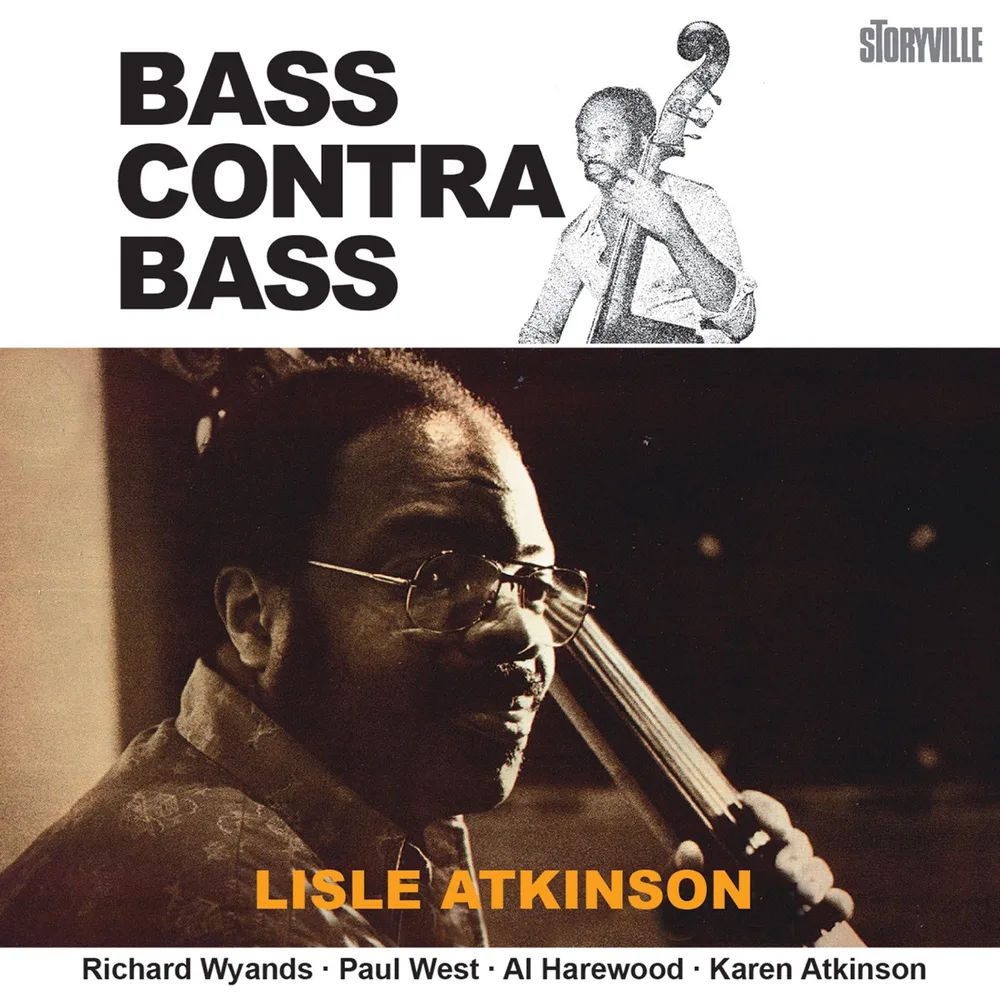
Cover art for Lisle Atkinson's "Bass Contra Bass" (Storyville Records), featuring a photograph of Atkinson — used as a stand-in, no free-licensed photo of Atkinson could be located after a genuine search. Standard copyright, all rights reserved — held by Storyville Records. This is not a Creative Commons–licensed image; it is used here as an honestly-disclosed editorial stand-in for a real photo. — Downloaded directly from the Apple Music/iTunes artwork CDN (https://music.apple.com), full-resolution cover scan. Saved locally as portrait.jpg in this folder.
Lisle Arthur Atkinson (sometimes credited as Lysle Atkinson) was born September 16, 1940, in New York City. He started on violin at four and gave his first public concert at six. At twelve he switched to double bass and won admission to the High School of Music & Art, the Manhattan public arts school later folded into LaGuardia High School, where he played in the school orchestra. He went on to earn a degree at the Manhattan School of Music.
The break came almost as soon as he graduated: from 1962 to 1966, Atkinson was Nina Simone's bassist, present on four of her most enduring albums — Nina Simone at Carnegie Hall (1963, Colpix), Broadway-Blues-Ballads (1964, Philips), Pastel Blues (1965, Philips), and Wild Is the Wind (1966, Philips). Session documentation confirms his bass credit directly on the Carnegie Hall and Pastel Blues releases. In the same stretch he also worked with the New York Bass Violin Choir and guitarist Les Spann.
The Simone years established him, and the two decades that followed made him one of New York's most reliably working bassists across bebop and hard bop. He recorded with Betty Carter from 1969 to 1971, including her self-released 1970 Bet-Car LP Betty Carter. His 1970s session and touring credits read like a cross-section of the era's working scene: Kenny Burrell, George Coleman, Andrew Cyrille, Maynard Ferguson, Dizzy Gillespie, Jon Hendricks, Helen Humes, Hank Jones, Wynton Kelly, Howard McGhee, Horace Parlan, Hazel Scott, Norman Simmons, Frank Strozier, Billy Taylor, Clark Terry, Mary Lou Williams, Stanley Turrentine, and the Thad Jones–Mel Lewis Big Band. Discogs's session-level data shows this wasn't guest-star work but steady band membership: he's a formal member of the Howard McGhee Sextet, the Norman Simmons Quartet, the Frank Strozier Sextet, the George Coleman Octet, and the Horace Parlan Quintet (Frank-ly Speaking, 1977, SteepleChase).
One 1976 date stands out for who else was in the room. The National Jazz Ensemble, Chuck Israels's repertory big band, recorded Vol. 1 (Chiaroscuro Records) with Atkinson on bass alongside alto saxophonist Lee Konitz — profiled separately on this site — in the earliest documented point of contact between the two, a decade earlier than the "1980s" shorthand sometimes attached to their association. That same year Atkinson also surfaced in rougher-edged company: drummer Andrew Cyrille's loft-jazz session Junction (IPS Records), recorded live at Studio Rivbea and Columbia University's Wollman Auditorium with tenor saxophonist David S. Ware and trumpeter Ted Daniel, and billed on the cover as one of four co-credited musicians alongside Cyrille — a rare avant-garde credit inside an otherwise straight-ahead career.
1978 brought an unusually productive week. On October 12, Atkinson recorded as sideman on pianist Richard Wyands's Then, Here And Now; the very next day, October 13, he stepped into the leader's chair for his own session, Bass Contra Bass — both cut for the Danish Jazzcraft label with overlapping personnel (Wyands, drummer Al Harewood), both released in 1979. Bass Contra Bass, true to its title, paired Atkinson with fellow bassist Paul West for a set of bass-forward duets and features, with liner notes by Ron Carter; it stands as his sole outright leader album from the era. Storyville Records reissued it twice — LP in 1983, CD in 1998 — and gave the Wyands date a parallel 1998 CD reissue that re-billed it to "Richard Wyands, Lisle Atkinson, David Lee," elevating Atkinson from sideman to co-credited artist after the fact. The following year, 1980, he co-billed a trio session with pianist Norman Simmons and drummer Al Harewood, Midnight Creeper.
In 1983 Atkinson formed his most personal project, the Neo-Bass Ensemble, co-led with his wife and fellow bassist Karen Atkinson. Its unusual instrumentation — Lisle and Karen plus up to four additional bassists, one or two cellos, and a conventional piano-and-drums rhythm section — became a fixture of annual summer concerts at Symphony Space in Manhattan, drawing guest bassists as prominent as Ron Carter and Richard Davis. The ensemble made two studio albums under his leadership: Hit It (1995, Inspire Productions) and Bebop Meets Bass Thru the Neo-Bass Ensemble (2005, self-released) — his final dated studio credit on Discogs.
Through the 1990s and into the 2000s, Atkinson's steadiest working relationship ran through the Barry Harris circle, alongside Harris's longtime drummer Leroy Williams — both profiled separately on this site. The clearest recorded evidence of that three-way partnership sits on guitarist Roni Ben-Hur's TCB Records dates: Backyard (recorded March 1995 at Van Gelder Recording Studio, with Harris on piano and Williams on drums) and Sofia's Butterfly (recorded September 10, 1997, trio format with Ben-Hur and Williams). In the same period he recorded two Norman Simmons trio dates made in Japan, Manha De Carnaval (2002) and In Private (2004), both with drummer Paul Humphrey; sideman work with guitarist Joshua Breakstone spanning 2009 to 2016; and dates with singer Jeanne Lee and pianist Sir Charles Thompson. Throughout the 1990s he also taught on the Jazzmobile faculty, holding down Saturday workshops in Harlem alongside the same generation of players he'd spent three decades recording with.
Atkinson died March 25, 2019, in New York City, at age 78, having belonged to Local 802 — the New York musicians' union — for 60 years. He was survived by his wife and Neo-Bass Ensemble co-leader Karen, brother Leon, sister Marilyn, three children, and five grandchildren.
A classically trained bassist who transitioned early from violin, Atkinson built his reputation first as Nina Simone's bassist through the mid-1960s, then as one of New York's most steadily working sidemen across three decades of bebop and hard-bop bandstands — a career defined less by star billing than by sustained membership in other musicians' working groups: the Howard McGhee Sextet, the Norman Simmons Quartet, the Horace Parlan Quintet, and, from the 1990s on, the Barry Harris/Leroy Williams circle. His one outright leader statement, Bass Contra Bass (1979), and his long-running Neo-Bass Ensemble both point toward a genuine interest in the double bass itself as a compositional voice — a duo album built around two basses, and a working group built around as many as six.
- Nina Simone at Carnegie Hall (1963, Colpix) - His first major recorded credit, from his four years as Simone's bassist. Spotify - Nina Simone At Carnegie Hall Listen
- Pastel Blues (1965, Philips) - One of two Simone studio albums where Discogs directly credits his bass playing. Spotify - Pastel Blues Listen
- Junction (1976, Andrew Cyrille & Māōnō, IPS Records) - A rare avant-garde/loft-jazz credit, recorded live at Studio Rivbea with David S. Ware and Ted Daniel; not currently available on Spotify.
- Bass Contra Bass (recorded October 13, 1978; released 1979, Jazzcraft; reissued Storyville 1983/1998) - His sole outright leader album, a bass-duo session with Paul West. Spotify - Bass Contra Bass Listen
- Then, Here And Now (recorded October 12, 1978; released 1979 as Richard Wyands's date, Jazzcraft; re-billed to a trio incl. Atkinson on the 1998 Storyville reissue) - Recorded the day before Bass Contra Bass, with the same core personnel. Spotify - Then, Here And Now Listen
- Backyard (Roni Ben-Hur with the Barry Harris Trio, recorded March 1995, TCB Records) - The clearest recorded document of the Harris/Williams/Atkinson circle, with Barry Harris on piano and Leroy Williams on drums. Spotify - Backyard Listen
Lisle Atkinson: Full Discography
Verified against the live Discogs API (artist ID 403314), which returns 156 release credits for this artist across a 1976-2024 span (his death in 2019 predates the tail-end reissue/compilation credits, which belong to earlier recordings he played on). Atkinson's career is overwhelmingly a sideman career, anchored by four years as Nina Simone's bassist (1962-1966, before his Discogs-documented credits begin) and three decades of working-band membership after. Full 12-column detail is given for his own leader/co-leader dates and for the landmark sideman sessions discussed in the profile; the remainder of his credits are summarized in the appendix.
As Leader / Co-Leader
| Album Title | Recording Date(s) | Release Date | Label | Catalog Number | Format(s) | Personnel | Role | Reissue History | Spotify | Buy | Notes |
|---|---|---|---|---|---|---|---|---|---|---|---|
| Junction | May 23 & June 12, 1976, Studio Rivbea & Wollman Auditorium (Columbia University), NYC | 1976 | IPS (Institute of Percussive Studies) | IPS ST003 | Vinyl, LP, Album | Andrew Cyrille (drums, bells, gong, kalimba, voice, producer), David S. Ware (tenor sax), Ted Daniel (trumpet, flugelhorn), Lisle Atkinson (bass violin); liner notes by Stanley Crouch | Co-billed (quartet, Cyrille's date) | None found | Not found | — | Billed on the cover to "Andrew Cyrille & Māōnō With David Ware, Ted Daniel, Lisle Atkinson" — a genuine co-credit, not solely Cyrille's album, but not an Atkinson-led date either |
| Bass Contra Bass | Recorded October 13, 1978, Blue Rock Studio, NYC | 1979 | Jazzcraft Records | Jazzcraft 7 | Vinyl, LP, Album | Lisle Atkinson (bass, arranged by), Paul West (bass), Richard Wyands (piano), Al Harewood (drums), Karen Atkinson (flute, track "Karen"); liner notes by Ron Carter | Leader | Reissued Storyville (D) SLP 4084, 1983 (LP); reissued Storyville (D) STCD 8270, September 1998 (CD) | Spotify - Bass Contra Bass (1998 Storyville CD edition) | — | His sole outright leader album; a bass-duo session with Paul West |
| Then, Here And Now | Recorded October 12, 1978, NYC | 1979 (orig.); 1998 (re-billed reissue) | Jazzcraft Records (1979); Storyville Records (1998) | Jazzcraft 6 (1979 LP); no catalog no. listed (1998 CDr) | Vinyl, LP, Album (1979); CDr, Album (1998) | Richard Wyands (piano), Lisle Atkinson (bass), David Lee (drums); 1979 liner notes by Horace Parlan | Sideman (1979 original); re-billed to co-leader trio "Richard Wyands, Lisle Atkinson, David Lee" (1998 reissue) | Storyville reissued as CDr in 1998, re-crediting Atkinson from sideman to co-billed artist | Spotify - Then, Here And Now (billed to Lisle Atkinson) | — | Recorded the day before Bass Contra Bass, same Jazzcraft sessions, overlapping personnel |
| Midnight Creeper | Recorded Penthouse Studios, NYC, September 1979 | 1980 | Milljac Pub Co. | MJP 1001 | Vinyl, LP, Album, Stereo | Norman Simmons (piano, cover design), Lisle Atkinson (bass), Al Harewood (drums) | Co-leader (trio) | None found | Not found | — | Billed to "Norman Simmons - Lisle Atkinson And Al Harewood" |
| Hit It | Not specified in Discogs data | 1995 | Inspire Productions | IPCD0003 | CD, Album | The Neo-Bass Ensemble, featuring Lisle Atkinson; full session personnel not itemized in Discogs extraartists | Leader (Neo-Bass Ensemble) | None found | Not found | — | First album under the Neo-Bass Ensemble, the multi-bassist group Atkinson co-founded with wife Karen Atkinson in 1983 |
| Manha De Carnaval | Recorded Hotel Motherlake AKINA, Shiga, Japan, July 27, 2001 | 2002-06-15 | Sound Hills Records | SSCD 8117 | CD, Album | Norman Simmons (piano), Lisle Atkinson (bass), Paul Humphrey (drum) | Co-leader (trio) | None found | Not found | — | Billed to "Norman Simmons, Lisle Atkinson, Paul Humphrey" |
| In Private | Tracks 1-3, 6-9 recorded Japan, July 27, 2001; tracks 4, 5, 10 recorded Seltzer Sound, NYC, January 2002 | 2004-08-17 | Savant | SCD 2056 | CD, Album | Norman Simmons (piano, producer, credited as "Leader" in Discogs extraartists), Lisle Atkinson (bass), Paul Humphrey (drums) | Co-billed (trio); Discogs itself tags Simmons specifically as "Leader" despite the shared billing | None found | Not found | — | Same Japan sessions that also produced Manha De Carnaval |
| Bebop Meets Bass Thru The Neo Bass Ensemble | Not specified in Discogs data | 2005-11-15 | Not On Label (Neo-Bass Ensemble self-released) | None | CDr | The Neo-Bass Ensemble, featuring Lisle Atkinson; full session personnel not itemized in Discogs extraartists | Leader (Neo-Bass Ensemble) | None found | Not found | — | His final dated studio credit on Discogs |
As Sideman — Landmark Dates
| Album Title | Recording Date(s) | Release Date | Label | Catalog Number | Format(s) | Personnel (Atkinson's credit) | Role | Reissue History | Spotify | Buy | Notes |
|---|---|---|---|---|---|---|---|---|---|---|---|
| Nina Simone At Carnegie Hall | Live, Carnegie Hall, NYC, April 12, 1963 | 1963 | Colpix Records | CP 455 | Vinyl, LP, Album, Mono | Lisle Atkinson (bass) | Sideman (bass) | Numerous CD/streaming reissues since | Spotify - Nina Simone At Carnegie Hall (expanded compilation edition) | — | His earliest major recorded credit |
| Broadway - Blues - Ballads | Not specified in Discogs data for original pressing | 1964 | Philips | PHM 200-148 | Vinyl, LP, Album, Mono | No extraartists itemized on the original 1964 pressing; a 2006 Verve CD reissue (0602498886953) credits "Lisle Atkinson - Percussion," not bass — likely a Discogs role misattribution given his documented role as Simone's bassist in this period | Sideman (era-documented, not confirmed at track level on this release) | Reissued CD, Verve Records, 2006 | Spotify - Broadway-Blues-Ballads | — | Included on the strength of his 1962-1966 Simone tenure; treat the specific "Percussion" Discogs credit with caution |
| Pastel Blues | Not specified in Discogs data | 1965 | Philips | PHS 600-187 | Vinyl, LP, Album, Stereo | Lisle Atkinson (bass) | Sideman (bass) | Numerous reissues since | Spotify - Pastel Blues | — | |
| Wild Is The Wind | Tracks recorded New York, 1965-1966 (per compilation notes) | 1966 (orig. Philips PHM(S) 2(6)00-207); credited via 1990 compilation | Philips (1966); Mercury/PolyGram (1990 reissue) | none listed (1966); 846 892-2 (1990) | Vinyl, LP (1966); CD, Compilation, Remastered (1990) | Lisle Atkinson (bass), credited on the 1990 "Wild Is The Wind / High Priestess Of Soul" CD compilation that reprints the 1966 album | Sideman (bass) | Reissued as a 2-LP-in-1-CD compilation with High Priestess of Soul, 1990 | Spotify - Wild Is The Wind / High Priestess Of Soul | — | Discogs does not itemize a standalone credited release for the 1966 original; his bass credit is documented via this compilation |
| Betty Carter | Not specified in Discogs data | 1970 | Bet-Car Productions | MK 1001 | Vinyl, LP, Album | Lisle Atkinson (bass) | Sideman (bass) | None found | Not found | — | Self-released on Carter's own Bet-Car label |
| National Jazz Ensemble Vol. 1 | Not specified in Discogs data | 1976 | Chiaroscuro Records | CR-140 | Vinyl, LP, Album | Lisle Atkinson (bass), Lee Konitz (alto saxophone), Chuck Israels (director) | Sideman (bass) | Reissued/expanded as "National Jazz Ensemble (1975-1976)," 2002 and 2018 | Not found | — | Earliest documented recorded credit alongside Lee Konitz |
| Frank-ly Speaking | Not specified in Discogs data | 1977 | SteepleChase | SCS-1076 | Vinyl, LP, Album, Stereo | Lisle Atkinson (bass) | Sideman (bass), Horace Parlan Quintet member | None found | Not found | — | |
| Backyard | Recorded March 1995, Van Gelder Recording Studio | 1995 | TCB Records | 95902 | CD, Album | Roni Ben-Hur (guitar), Barry Harris (piano), Lisle Atkinson (bass), Leroy Williams (drums), Amy London (vocals) | Sideman (bass) | None found | Spotify - Backyard | — | Direct recorded evidence of the Harris/Williams/Atkinson circle |
| Sofia's Butterfly | Recorded September 10, 1997 | 1997 | TCB Records | 98802 | CD, Album | Roni Ben-Hur (guitar), Lisle Atkinson (bass), Leroy Williams (drums), Amy London (vocals) | Sideman (bass) | None found | Not found | — | Same Harris/Williams/Atkinson circle, trio format |
| Good To Go, With A Tribute To Bu | Not specified in Discogs data | 1997 | Soul Note | 121292-2 | CD, Album | Andrew Cyrille (drums), Lisle Atkinson (bass) | Sideman (bass), The Andrew Cyrille Trio member | None found | Not found | — | |
| Cookin' At Carlos I | Not specified in Discogs data | 1990 | Musicmasters | CIJD6 0230 | CD, Album | Benny Carter (alto sax), Lisle Atkinson (double bass) | Sideman (bass) | None found | Not found | — | First of three documented Benny Carter dates (1990-1992) |
Appendix — Remaining Sideman, Guest, and Compilation Credits
The remaining ~140 Discogs credits fall into these groups (full detail available via the artist API link above):
- Nina Simone catalog reissues and compilations — roughly 45 credits spanning 1989-2024, mostly repackagings of the four original 1963-1966 studio/live albums above (Colpix, Philips, and later RCA/Legacy/Verve reissue campaigns), plus various-artist Simone compilations ("The Best Of...", "Verve Jazz Masters," "Verve Remixed," etc.).
- Betty Carter reissues — Roulette-era compilations from 1994 and 2003 drawing on his 1969-71 tenure.
- Benny Carter — More Cookin' (1991, Musicmasters) and Harlem Renaissance (1992, Musicmasters), plus a 2011 Nimbus box-set reissue, rounding out the Benny Carter dates alongside Cookin' At Carlos I above.
- 1970s-80s working-band credits — additional dates with the Howard McGhee Sextet/Howard McGhee-Benny Bailey Sextet (Home Run, 1979/1999/2016 reissues; Live At Emerson's, 1979; Jazzbrothers, 1978), the Norman Simmons Quartet/Quintet (Ramira The Dancer, 1977; I'm... The Blues, 1981; 13th Moon, 1986; Synthesis, 2002), the Frank Strozier Sextet (Remember Me, 1977; Dance Dance, 1976), the George Coleman Octet (Revival, 1978), Walt Dickerson Trio (Peace, 1976), John Gordon (Step By Step, 1976; Erotica Suite, 1978), Grover Mitchell And His Orchestra (Truckin', 1988), Danny Mixon Trio (Mixin With Mixon, 1984), Richard Wyands Trio (The Arrival, 1992), Junior Cook/George Coleman Octet (Stablemates, 1990), Hal Singer (No Rush, 1992), Sir Charles Thompson (Robbins' Nest, 1993; Stardust, 1994), Gerry Eastman (Songbook, 1995), and the loft-jazz Wildflowers series (1977/1995/1999/2019 reissues).
- 2000s-2010s late-career sideman credits — Ryo Fukui (Ryo Fukui In New York, 1999, reissued 2022), Hilton Ruiz (Enchantment, 2003), Ray Bryant (Godfather, 2004), Kenny Burrell (Prime Live At The Downtown Room, 2009), Andrew Cyrille & Haitian Fascination (Route De Frères, 2011, TUM Records), Hugh Lawson & Richard Wyands (Jazzcraft Studio Recordings 1977-78, 2012, Storyville), and the Joshua Breakstone Trio/Cello Quartet (No One New, 2009; 2nd Avenue, 2015; 88, 2016).
- Compilation/track-level appearances — additional various-artist jazz-vocal and standards compilations (The Beat Generation, The Mercury Songbook, We'll Have Manhattan, A Jazz Valentine, Jazz For Lovers, Jazz Feelings, and similar) spanning 1992-2013, mostly repackaging tracks from the Nina Simone and Betty Carter sessions already listed above.
Group memberships confirmed directly on his Discogs artist record: Barry Harris Trio, Howard McGhee Sextet, Jazz Contemporaries, The New York Bass Violin Choir, The Andrew Cyrille Trio, National Jazz Ensemble, Frank Strozier Sextet, The George Coleman Octet, Horace Parlan Quintet, Grover Mitchell And His Orchestra, Norman Simmons Quartet, Richard Wyands Trio, Roni Ben-Hur Trio, Joshua Breakstone Trio, and The Cello Quartet.
- Nina Simone - her bassist, 1962-1966.
- Betty Carter - sideman, 1969-1971.
- Richard Wyands, Al Harewood - core personnel on his 1978 Jazzcraft sessions (Bass Contra Bass, Then, Here And Now).
- Andrew Cyrille - co-credited on the 1976 loft-jazz date Junction.
- Norman Simmons - recurring trio partner, 1980-2004 (Midnight Creeper, Manha De Carnaval, In Private).
- Karen Atkinson - his wife and fellow bassist; co-leader of the Neo-Bass Ensemble from 1983.
- Lee Konitz - fellow personnel on the National Jazz Ensemble's Vol. 1 (1976); profiled separately on JazzProfiles.com.
- Barry Harris - association from the mid-1990s into the 2000s, documented on the Roni Ben-Hur sessions; profiled separately on JazzProfiles.com.
- Leroy Williams - bandmate on the same Roni Ben-Hur sessions (Backyard, 1995; Sofia's Butterfly, 1997); profiled separately on JazzProfiles.com.
- Roni Ben-Hur, Joshua Breakstone - guitarists he recorded with repeatedly, 1995-2016.
- Benny Carter, Kenny Burrell, George Coleman, Howard McGhee, Horace Parlan, Frank Strozier, Jeanne Lee, Sir Charles Thompson - further recorded collaborators.