 JAZZPROFILES lives in the music 1,572 Jazz Artists fully Profiled!
 Albert Ayler
Last updated September 7, 2026
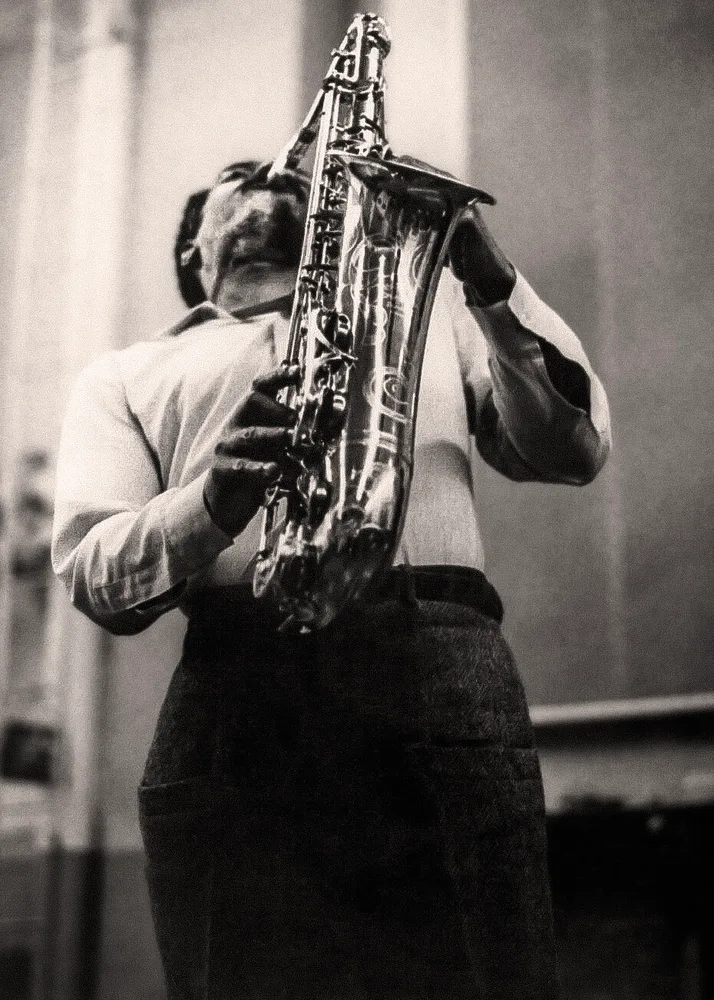
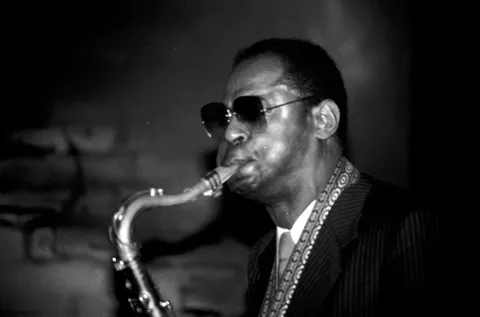
Albert Ayler, publicity photograph for ABC/Impulse! Records taken at Capitol Studios, New York, circa 1967-68 (most likely during the sessions for *Love Cry*) Public Domain (published in the United States between 1931 and 1977 without a copyright notice) — Wikimedia Commons — https://commons.wikimedia.org/wiki/File:Albert_Ayler_(1967%E2%80%9368_photo_portrait_for_ABC_Impulse!).jpg
.jpg)
Albert Ayler was born July 13, 1936, in Cleveland, Ohio, and raised in the suburb of Shaker Heights. His father, Edward Ayler, was a semiprofessional saxophonist and violinist who taught Albert alto saxophone and played duets with him in church, exposing him early to both swing and bebop records. Classmates at John Adams High School, from which he graduated in 1954, nicknamed him "Little Bird" for his command of Charlie Parker's vocabulary. At sixteen he was already playing R&B-style tenor with blues harmonica player Little Walter. He served in the U.S. Army from 1958 to 1959, switching from alto to tenor saxophone in the regiment band; stationed in France, he played alongside future composer Harold Budd and was exposed firsthand to the martial band music whose melodies would later surface throughout his own compositions.
After his discharge Ayler settled in Sweden, leading Swedish and Danish radio ensembles through 1962-63 and, by his own account, jamming unpaid with Cecil Taylor's group over that winter, though no recording of that pairing survives. His earliest surviving recordings as a leader come from this period: a trio date cut October 25, 1962, in Stockholm (later issued as Something Different!!!!!!), and a standards session recorded January 14, 1963, in Copenhagen with bassist Niels-Henning Ørsted Pedersen (My Name Is Albert Ayler), both still closer to bebop than to what followed.
Ayler moved to New York in 1963 and, on February 24, 1964, cut two entirely different albums at Atlantic Studios in a single day with the same core trio of Henry Grimes (bass) and Sunny Murray (drums): Spirits (reissued as Witches & Devils), his first freely improvised New York date, and, with pianist Call Cobbs added, Goin' Home (later reissued as Swing Low Sweet Spiritual), a set of hymns and spirituals played with unusual directness. That June 14 he taped a live trio set at the Cellar Café with bassist Gary Peacock and Murray, released more than a decade later as Prophecy; three weeks after that, on July 10, 1964, the same trio recorded Spiritual Unity for the fledgling ESP-Disk label, the album now regarded as his definitive breakthrough. A week after that session he took part in New York Eye and Ear Control, the soundtrack to Michael Snow's experimental film, a collective date billed jointly to Ayler, trumpeter Don Cherry, alto saxophonist John Tchicai, trombonist Roswell Rudd, Peacock, and Murray. That fall he toured Europe with Cherry, recording the quartet date Ghosts (also issued as Vibrations) in Copenhagen on September 14, 1964, home to the earliest recording of "Ghosts," the folk-like theme that became his signature.
Through 1965 Ayler expanded his working band to include his younger brother, trumpeter Donald Ayler, and altoist Charles Tyler, documented on the one-sided live LP Bells (Town Hall, May 1, 1965) and the quintet date Spirits Rejoice (Judson Hall, September 23, 1965). In 1966, at John Coltrane's urging, Ayler signed to Impulse! Records, Coltrane's own label, and that December recorded the concert material issued as In Greenwich Village, plus a February 1967 studio track, "For John Coltrane," on which Ayler switched to alto. When Coltrane died that July, Ayler performed at his funeral at St. Peter's Lutheran Church in Manhattan alongside Ornette Coleman. Love Cry, recorded that August with Donald, Call Cobbs, Alan Silva, and Milford Graves, was the last studio album to feature the two brothers together before Donald suffered a nervous breakdown later that year.
Ayler's final years brought a deliberate, controversial change in direction, driven partly by his relationship with singer and lyricist Mary Parks (also known as Mary Maria) and partly by producer Bob Thiele's push for commercial material. New Grass (1969) added a horn section, backing singers, and drummer Bernard Purdie's funk-inflected beat; Music Is the Healing Force of the Universe (recorded 1969, released 1970) pushed further into rock and gospel, featuring guitarist Henry Vestine of Canned Heat and drummer Muhammad Ali, the younger brother of drummer Rashied Ali. Both records drew sharp criticism from listeners who wanted a return to the ESP-Disk-era sound, and Ayler's 1969 open letter to the magazine The Cricket describing apocalyptic spiritual visions reflected a musician under increasing personal strain despite his by-then substantial critical reputation; he remained poor for essentially his entire career.
In July 1970 Ayler traveled to France to perform at the Fondation Maeght in Saint-Paul-de-Vence with Cobbs, bassist Steve Tintweiss, drummer Allen Blairman, and Parks; the two resulting live albums, released as Nuits de la Fondation Maeght, Volume 1 and Volume 2, turned out to be his final recorded performances. He disappeared in New York on November 5, 1970, and his body was recovered from the East River at the foot of the Congress Street Pier in Brooklyn on November 25. His death was widely reported as a probable suicide, though the exact circumstances have never been fully established. He was 34.
Ayler discarded the harmonic vocabulary of bebop almost entirely, building his music instead from deliberately simple, folk-like material: children's songs, New Orleans-style marches, and Protestant hymns, all delivered through a huge, cracked, vocalized tone and a wide, pathos-heavy vibrato that critics likened to a human voice or a shout. His improvisations pushed into the saxophone's extreme upper and lower registers, relying on overblowing, microtonal bends, and screaming multiphonics rather than conventional swing rhythm, dismantling melody and harmony to explore the raw physical sound of the horn. John Coltrane championed him directly, signing him to Impulse! and crediting Ayler with reaching "an area that it seems I hadn't got to"; Coltrane's own final recordings with drummer Rashied Ali, including Meditations and the posthumously issued Stellar Regions, absorbed some of that influence. Ayler's reception in his own lifetime was sharply divided between critics and fans who heard a genuinely new spiritual language in jazz and others baffled or hostile toward it, especially once his late-1960s turn toward funk and rock arrangements split even his admirers. He placed himself and his two closest saxophone contemporaries in explicitly spiritual terms, reportedly describing the three as "Trane was the Father, Pharoah was the Son, I am the Holy Ghost" - a line Pharoah Sanders himself repeated for the rest of his life. Ayler's influence proved much longer-lived than his commercial fortunes: saxophonists including Charles Gayle, Peter Brötzmann, David S. Ware, and Ken Vandermark all built directly on his vocabulary, and his "wild sound," in the words of one later assessment, anticipated elements of noise and hardcore rock decades before those genres existed.
- Spiritual Unity (recorded July 10, 1964; released 1965, ESP-Disk) - The trio with Gary Peacock and Sunny Murray that defined his mature sound, and ESP-Disk's first jazz release.
- Spirits / Witches & Devils (recorded Feb. 24, 1964; released 1964/1965, Debut/Freedom) - His first New York studio session as a leader, introducing the "Spirits" theme central to his later book.
- Bells (recorded live May 1, 1965; released 1965, ESP-Disk) - A single continuous performance at Town Hall, originally pressed on one side of the LP.
- Ghosts / Vibrations (recorded Sept. 14, 1964; released 1965, Debut/Freedom) - A Copenhagen quartet date with trumpeter Don Cherry, containing the earliest recording of his best-known theme.
- Spirits Rejoice (recorded Sept. 23, 1965; released 1965, ESP-Disk) - Quintet date adding brother Donald Ayler on trumpet and Charles Tyler on alto.
- New York Eye and Ear Control (recorded July 17, 1964; released 1966, ESP-Disk) - A collective free-jazz soundtrack for Michael Snow's film, with Don Cherry, John Tchicai, and Roswell Rudd.
- In Greenwich Village (recorded Dec. 1966/Feb. 1967; released 1967, Impulse!) - His Impulse! debut, signed at John Coltrane's urging, including the studio track "For John Coltrane."
- Love Cry (recorded Aug. 1967; released 1968, Impulse!) - The last studio date to feature brother Donald before his breakdown later that year.
Albert Ayler: Full Discography
Identity confirmed via the live Discogs API — artist ID 202309 ("Albert Ayler," real name Albert Ayler, born July 13, 1936 Cleveland OH, died November 1970, brother of Donald Ayler — matching Wikipedia and the site's other sources exactly). Discogs lists 41 distinct "Main"-role master releases under his name, but the great majority are reissues, compilations, and retitled reworkings of the same handful of studio and live sessions (a single 1962 Bird Notes 10-inch has been reissued under at least a half-dozen different titles and labels since). The table below itemizes his actual recording sessions in chronological order — roughly 16 distinct dates — rather than every catalog number; where a session was issued under more than one title, both are named so a later editor doesn't duplicate the entry. Ayler led or co-led essentially all of his own recorded output; he has no significant separate sideman discography (see note at the end of the table).
As Leader / Co-Leader
| Album Title | Recording Date(s) | Release Date | Label | Catalog Number | Format(s) | Personnel | Role | Reissue History | Spotify | Buy | Notes |
|---|---|---|---|---|---|---|---|---|---|---|---|
| Something Different!!!!!! | Recorded October 25, 1962, Stockholm, Sweden | 1963 | Bird Notes | BNLp 1 | Vinyl, LP | Albert Ayler (tenor sax), Torbjörn Hultcrantz (bass), Sune Spångberg (drums) | Leader | Reissued repeatedly (including as part of 2018's Something Different! The First Recordings Vol. 1 & 2 and 2024's 1964 Recordings: First Visit Completed) | Not confirmed (Spotify API quota exhausted during this build) | — | His earliest surviving recording as a leader, cut during his 1962-63 Sweden residency; a standards-based trio date, still close to his bebop roots |
| My Name Is Albert Ayler | Recorded January 14, 1963, Copenhagen, Denmark | 1964 | Debut Records | DEB-140 | Vinyl, LP | Albert Ayler (tenor sax), Niels Brønsted (piano), Niels-Henning Ørsted Pedersen (bass), Ronnie Gardiner (drums) | Leader | Later reissued on CD (Fantasy/OJC) | Not confirmed (quota exhausted) | — | A standards session ("Summertime," "Billie's Bounce," "On Green Dolphin Street") introduced by Ayler himself on tape; a companion, untitled set of additional tracks from the same Copenhagen visit ("Softly as in a Morning Sunrise," "Good Bait") has surfaced on later archival compilations |
| Spirits (reissued as Witches & Devils) | Recorded February 24, 1964, Atlantic Studios, New York City | 1964 (as Spirits, Debut, Denmark); reissued 1965 as Witches & Devils (Freedom, US) | Debut Records / Freedom | DEB 146 (Debut) | Vinyl, LP | Albert Ayler (tenor sax), Norman Howard (trumpet), Henry Grimes and/or Earle Henderson (bass, alternating tracks), Sunny Murray (drums) | Leader | Reissued under both titles for decades, with the two title tracks swapped in running order between pressings | Not confirmed (quota exhausted) | — | His first New York studio date as a leader; the session that introduced the "Spirits"/"Witches and Devils" theme central to his later repertoire |
| Goin' Home (reissued as Swing Low Sweet Spiritual) | Recorded the same day as the Spirits session, February 24, 1964, Atlantic Studios, New York City | Shelved for years; first issued 1971 as Swing Low Sweet Spiritual (Osmosis, Netherlands); later reissued under the original title Goin' Home | Osmosis Records | 4001 | Vinyl, LP | Albert Ayler (tenor and soprano sax), Call Cobbs (piano), Henry Grimes (bass), Sunny Murray (drums) | Leader | Reissued on CD in the 1990s and 2013 under Goin' Home | Not confirmed (quota exhausted) | — | Recorded at the same session as Spirits/Witches & Devils but a completely different program: hymns and spirituals ("Deep River," "When the Saints Go Marching In," "Nobody Knows the Trouble I've Seen") played with unusual directness and almost no free improvisation |
| Prophecy | Recorded live June 14, 1964, Cellar Café, New York City | 1975 | ESP-Disk | ESP-3030 | Vinyl, LP | Albert Ayler (tenor sax), Gary Peacock (bass), Sunny Murray (drums) | Leader | Later expanded/reissued (e.g. Bells / Prophecy, 1997) | Not confirmed (quota exhausted) | — | The first-ever recording of the Ayler/Peacock/Murray trio, taped by Paul Haines three weeks before the Spiritual Unity studio session; shelved for over a decade |
| Spiritual Unity | Recorded July 10, 1964, New York City | 1965 | ESP-Disk | ESP 1002 | Vinyl, LP | Albert Ayler (tenor sax), Gary Peacock (bass), Sunny Murray (drums) | Leader | Reissued continuously since 1965, including a Japanese pressing and 2020's The Early Albums Collection | Not confirmed (quota exhausted) | — | ESP-Disk's first jazz release and Ayler's definitive breakthrough recording |
| New York Eye and Ear Control | Recorded July 17, 1964, New York City | 1966 | ESP-Disk | ESP 1016 | Vinyl, LP | Albert Ayler (tenor sax), Don Cherry (trumpet), John Tchicai (alto sax), Roswell Rudd (trombone), Gary Peacock (bass), Sunny Murray (drums) | Co-leader (collective billing) | None found | Not confirmed (quota exhausted) | — | Soundtrack to Michael Snow's experimental film of the same name; a free-collective date billed to all six players, not to Ayler alone |
| Ghosts (also issued as Vibrations) | Recorded September 14, 1964, Copenhagen, Denmark | 1965 | Debut Records / Freedom | DEB 144 | Vinyl, LP | Albert Ayler (tenor sax), Don Cherry (trumpet), Gary Peacock (bass), Sunny Murray (drums) | Leader (Albert Ayler Quartet) | Reissued under both the Ghosts and Vibrations titles depending on territory | Not confirmed (quota exhausted) | — | Cut during Ayler's late-1964 European tour with Cherry; contains the earliest recorded version of "Ghosts," his best-known theme |
| Bells | Recorded live May 1, 1965, Town Hall, New York City | 1965 | ESP-Disk | ESP 1010 | Vinyl, LP (originally one-sided) | Albert Ayler (tenor sax), Donald Ayler (trumpet), Charles Tyler (alto sax), Lewis Worrell (bass), Sunny Murray (drums) | Leader | Reissued on CD, including combined with Prophecy (1997); one of the most heavily bootlegged/variant-pressed Ayler titles per ESP-Disk's own catalog notes | Not confirmed (quota exhausted) | — | A single continuous 20-minute performance, originally pressed on one side of the LP only |
| Spirits Rejoice | Recorded September 23, 1965, Judson Hall, New York City | 1965 | ESP-Disk | ESP 1020 | Vinyl, LP | Albert Ayler (tenor sax), Donald Ayler (trumpet), Charles Tyler (alto sax), Call Cobbs (harpsichord, one track), Henry Grimes and Gary Peacock (bass), Sunny Murray (drums) | Leader (Albert Ayler Quintet) | Reissued on CD | Not confirmed (quota exhausted) | — | First studio-billed appearance of brother Donald Ayler in the working band; features two bassists |
| In Greenwich Village | Recorded live December 18, 1966 (Village Theater/Village Vanguard) plus a studio track, "For John Coltrane," recorded February 24, 1967 | 1967 | Impulse! | A-9155 | Vinyl, LP | Albert Ayler (tenor and alto sax), Donald Ayler (trumpet), Michel Samson (violin), Bill Folwell and/or Henry Grimes (bass), Beaver Harris (drums) | Leader | Expanded 1998 as Live in Greenwich Village: The Complete Impulse Recordings | Not confirmed (quota exhausted) | — | Ayler's Impulse! debut, signed at John Coltrane's urging in 1966; "For John Coltrane" has Ayler on alto sax |
| Love Cry | Recorded August 1967, New York City | 1968 | Impulse! | AS-9165 | Vinyl, LP | Albert Ayler (tenor sax, vocals), Donald Ayler (trumpet), Call Cobbs (harpsichord/piano), Alan Silva (bass), Milford Graves (drums) | Leader | Reissued on CD | Not confirmed (quota exhausted) | — | The last studio album to feature brother Donald before his 1967 breakdown |
| New Grass | Recorded early 1969, New York City | 1969 | Impulse! | AS-9175 | Vinyl, LP | Albert Ayler (tenor sax, vocals), Call Cobbs (piano/organ), Bill Folwell (bass), Bernard Purdie (drums), Burt Collins and Joe Newman (trumpets), Garnett Brown (trombone), Seldon Powell (reeds), The Soul Singers (backing vocals), Mary Parks (lyrics, backing vocals); produced by Bob Thiele | Leader | None found | Not confirmed (quota exhausted) | — | A deliberate turn toward funk, soul, and rock arrangements at producer Bob Thiele's urging; polarized critics and fans on release |
| Music Is the Healing Force of the Universe | Recorded 1969 (exact session date not confirmed via Discogs or Wikipedia) | 1970 | Impulse! | AS-9191 | Vinyl, LP | Albert Ayler (tenor sax, vocals), Mary Parks / Mary Maria (vocals, lyrics), Bill Folwell and/or Stafford James (bass), Muhammad Ali (drums), Henry Vestine of Canned Heat (guitar) | Leader | None found | Not confirmed (quota exhausted) | — | Continued the rock/gospel-inflected direction of New Grass; drummer is Muhammad Ali, Rashied Ali's younger brother, not Rashied Ali himself |
| Nuits de la Fondation Maeght, Volume 1 & Volume 2 | Recorded live July 25-27, 1970, Fondation Maeght, Saint-Paul-de-Vence, France | 1970-71 | Shandar (France) | SR 10 000 (Vol. 1) / SR 10 004 (Vol. 2) | Vinyl, LP | Albert Ayler (tenor sax), Call Cobbs (piano), Steve Tintweiss (bass), Allen Blairman (drums), Mary Maria / Mary Parks (vocals) | Leader | Later compiled/expanded, including 2022's Revelations: The Complete ORTF 1970 Fondation Maeght Recordings | Not confirmed (quota exhausted) | — | Ayler's final recorded performances, four months before his death |
| The Last Album | Posthumous compilation | 1971 | Impulse! | AS-9208 | Vinyl, LP | Drawn from the 1969-70 Folwell/Vestine/Muhammad Ali-era studio pool (personnel per-track, not separately itemized by Discogs) | Leader (posthumous compilation) | None found | Not confirmed (quota exhausted) | — | Assembled and released by Impulse! after Ayler's death from unreleased material of the New Grass/Music Is the Healing Force era |
As Sideman
Ayler has no significant sideman discography under another leader's name. Wikipedia describes him jamming unpaid with Cecil Taylor's ensemble in Sweden over the winter of 1962-63, but no recording of that association is known to survive. His one genuinely collective, non-self-billed date is New York Eye and Ear Control (1964, above), credited jointly to all six musicians rather than to a single leader. Every other Discogs "Appearance"/"TrackAppearance" credit under his name is a compilation, tribute, or sampler reusing tracks from the leader sessions already listed above, not a distinct new recording.
- Sunny Murray - drummer on nearly every key 1964-65 session, from Spirits/Witches & Devils through Spirits Rejoice.
- Gary Peacock - bassist in the classic trio documented on Prophecy and Spiritual Unity (1964), and on New York Eye and Ear Control.
- Don Cherry - trumpeter and European-tour partner, co-billed on New York Eye and Ear Control (1964) and leading the Ghosts/Vibrations quartet with him that September.
- Donald Ayler - younger brother and trumpeter in the working band from 1965 (Bells, Spirits Rejoice) through Love Cry (1967), until a nervous breakdown ended their collaboration.
- Charles Tyler - alto saxophonist on Bells and Spirits Rejoice (1965).
- Call Cobbs - pianist/harpsichordist across multiple sessions spanning Goin' Home (1964) to the final Nuits de la Fondation Maeght concerts (1970).
- John Coltrane - mentor and champion who urged Ayler's 1966 signing to Impulse! Records; Ayler performed at Coltrane's funeral in July 1967.
- Rashied Ali - documented, per Ali's own biography, as one of the early-1960s New York avant-garde leaders Ali backed on club dates, though no commercially released recording pairing the two has surfaced on Discogs; Ali's younger brother, drummer Muhammad Ali, did record with Ayler on Music Is the Healing Force of the Universe and The Last Album (1969-70).
- Mary Parks (Mary Maria) - companion, lyricist, and vocalist during Ayler's final years, from New Grass (1969) through the 1970 Fondation Maeght concerts.
- Milford Graves and Alan Silva - drummer and bassist, respectively, on Love Cry (1967-68).