 JAZZPROFILES lives in the music 1,572 Jazz Artists fully Profiled!
 Alice Coltrane
Last updated September 7, 2026
Listen on Spotify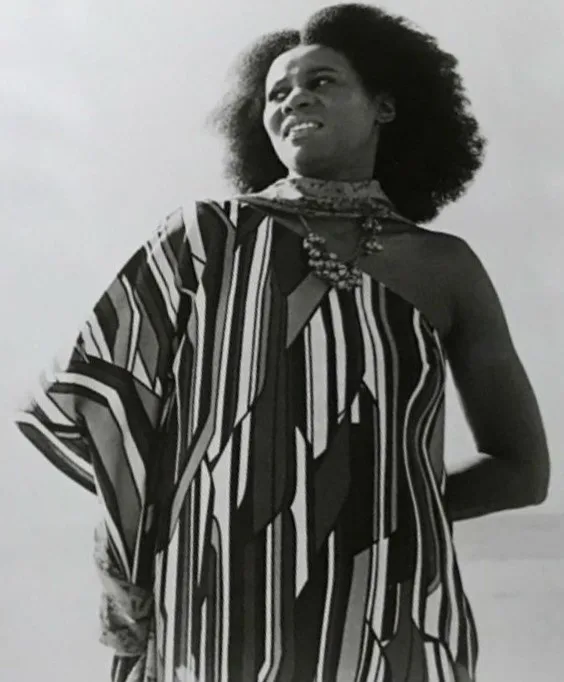
Alice Coltrane in a 1972 publicity photo issued to promote her Impulse! album *World Galaxy* Public Domain (publicity still published in the United States between 1931 and 1977 without a copyright notice; photographer unknown) — Wikimedia Commons — https://commons.wikimedia.org/wiki/File:Alice_Coltrane_1972.jpg

Alice Lucille McLeod was born August 27, 1937, in Detroit, Michigan, the daughter of Solon McLeod, a delivery truck driver from Clayton, Alabama, and Anna Johnston McLeod, who sang in church choir. The house was full of musicians. Her half-brother Ernie Farrow (1928-1969) became one of Detroit's busiest bassists, best known for his years in Yusef Lateef's group; her younger sister Marilyn McLeod went on to write for Motown, including Diana Ross's "Love Hangover." The vibraphonist and pianist Terry Pollard, six years older and a friend of the family, gave Alice a piano to practice on when she was around eight. She attended Northeastern High School, playing timpani and snare drum in the concert band because the band had no chair for a pianist, and graduated in June 1955. Her first commercial record came two years later, playing electric piano with a Detroit show quartet called the Premiers on a 1957 Fortune Records single.
In 1959 she married the Detroit singer Kenneth "Pancho" Hagood, who had recorded with Dizzy Gillespie and Miles Davis, and went with him to Paris. There she worked as intermission pianist at the Blue Note and became a protege of Bud Powell. Her earliest surviving jazz recordings are from a French television broadcast on January 9, 1960, where she played "Strike Up the Band" and "Lover Man" alongside saxophonist Lucky Thompson, guitarist Jimmy Gourley, bassist Pierre Michelot, and drummer Kenny Clarke. The marriage did not survive the year. Her daughter Michelle was born in Paris on October 22, 1960, and by the end of that year Alice was back in the United States, first taking a file clerk's job in New York and then returning to Detroit to play full time. She worked the city's show bars in trios and a sextet with drummer George Goldsmith and trombonist George Bohanon, and wrote "Soulsphere," recorded for Motown's Workshop Jazz imprint on drummer Roy Brooks's album Beat.
Late in 1962 vibraphonist Terry Gibbs needed a pianist for his New York quartet. Bassist Herman Wright, a fellow Detroiter, put McLeod's name forward, and Terry Pollard, who had held the same chair years earlier, made the introduction. Gibbs auditioned her in Manhattan around January 1963 and hired her on the spot. She recorded four albums with him that year, starting with Terry Gibbs Plays Jewish Melodies in Jazztime (Mercury, produced by Quincy Jones), where the sleeve credited her under her married name, Alice Hagood. She also learned enough vibraphone from Gibbs to trade four-mallet duets with him onstand. During a Birdland run from July 18 to 31, 1963, the Gibbs quartet alternated sets nightly with John Coltrane's quartet. Coltrane was separated from his first wife, Naima; he and Alice connected immediately. She left Gibbs on short notice that October to travel with Coltrane's group on its European tour, and the two married in 1965.
In January 1966 she took over the piano chair in Coltrane's band from McCoy Tyner, who had left after Meditations, unable to hear himself over the two drummers. Elvin Jones followed him out a few weeks later, leaving Rashied Ali as sole drummer alongside Alice, Jimmy Garrison, and Pharoah Sanders. That group carried Coltrane through the last eighteen months of his life, and Alice is on nearly every document of it: Live at the Village Vanguard Again! (May 28, 1966), the Japanese tour tapes issued as Live in Japan and Concert in Japan, Offering: Live at Temple University (November 11, 1966), Expression, Stellar Regions, and The Olatunji Concert, taped April 23, 1967, three months before Coltrane's passing. Where Tyner had built vertical fourth-voiced pillars under the horns, she played washes, tremolos and arpeggiated clusters, a rippling harmonic bed rather than a chordal frame. Audiences and critics who had come for the classic quartet were not uniformly kind about the change, and the charge that Coltrane had installed his wife in the band followed her for decades.
Coltrane died July 17, 1967, at 40, leaving Alice with four children under seven. A Lyon and Healy concert harp he had ordered was delivered to the house after his death, and she taught herself to use it. Her first album under her own name, A Monastic Trio, was cut at the family's Dix Hills, Long Island home on January 29 and June 6, 1968, with Sanders, Garrison, Rashied Ali and Ben Riley, and released on Impulse! that December with liner notes by Amiri Baraka. Six more Impulse! albums followed in five years, and the arc across them is one of the steepest in postwar jazz: the harp-and-piano trio of Huntington Ashram Monastery (May 14, 1969) with Ron Carter and Ali; the two-tenor quintet of Ptah, the El Daoud (January 26, 1970) with Sanders and Joe Henderson; the tamboura drones and modal calm of Journey in Satchidananda (November 1970), with Cecil McBee, Ali, and Charlie Haden on the live Village Gate track; the shrieking microtonal string writing of Universal Consciousness (1971), whose parts she composed and Ornette Coleman transcribed for the violinists; the Peter Max sleeve and full string orchestra of World Galaxy (1972), which reworked "My Favorite Things" and "A Love Supreme" around narration by Swami Satchidananda; and Lord of Lords (July 1972), a sixteen-piece string date with Haden and Riley that set excerpts from Stravinsky's The Firebird next to her own compositions.
Her spiritual life was pulling faster than her recording schedule. After Coltrane's death she went through a period of weight loss, insomnia and visions that she later described in terms of tapas, austerity practice, and by the early 1970s she had taken mantra initiation from Swami Satchidananda and was studying Vedanta seriously. She moved to California, founded the Vedantic Center in 1975, and received the monastic name Turiyasangitananda, which she rendered as "the Transcendental Lord's highest song of bliss." Four albums for Warner Bros. document the crossing: Eternity (1976), which contains an orchestral setting of The Rite of Spring alongside the Wurlitzer feature "Spiritual Eternal"; Radha-Krsna Nama Sankirtana (1977), gospel-inflected bhajans sung by students of the Vedantic Center with her daughter Sita Michelle on tamboura and her son John Jr. on drums; Transcendence (1977); and the double live Transfiguration, recorded April 16, 1978 at Schoenberg Hall, UCLA, in an organ trio with Reggie Workman and Roy Haynes. That concert was, as her biographer Franya Berkman put it, her farewell to the jazz business.
For the next quarter century she was a swamini first and a recording artist a distant second. The Vedantic Center opened the Shanti Anantam Ashram in the Santa Monica Mountains near Malibu in 1983, rededicated as Sai Anantam Ashram on July 3, 1994; she served as its spiritual director, led kirtan, and wrote books including Endless Wisdom I (1982) and Divine Revelations (1995). The music of those years was made for the congregation and sold only through the ashram's Avatar Book Institute: Turiya Sings (1982), Divine Songs (1987), Infinite Chants (1990) and Glorious Chants (1995), on cassette apart from the last. Wurlitzer organ, synthesizer, her own singing voice and a devotional choir replaced the harp and the horns. She returned to public recording in 2004 with Translinear Light, produced by her son Ravi and cut across sessions from April 2000 to June 2004 with Haden, Jack DeJohnette, James Genus, Jeff "Tain" Watts and her son Oran. Three American concerts followed in the fall of 2006, the first she had given in roughly twenty-five years: September 23 at Hill Auditorium in Ann Arbor, presented by the University Musical Society on what would have been John Coltrane's eightieth birthday, and a November 4 date at the San Francisco Jazz Festival with Ravi, Roy Haynes and Charlie Haden. She was 69 when she passed away of respiratory failure at West Hills Hospital in Los Angeles on January 12, 2007, and she is buried beside John Coltrane at Pinelawn Memorial Park in Farmingdale, New York.
Alice Coltrane is the musician who did the most to turn spiritual jazz from an adjective into a genre. Her piano came out of Bud Powell and Detroit bebop, and she never lost the bebop musician's ear (Bennie Maupin, a schoolmate, remembered that she could transcribe a theme after one hearing), but what she built on top of it was something else: sheets of tremolo and arpeggio instead of comped chords, and, from 1968, a jazz harp vocabulary that had almost no precedent outside Dorothy Ashby's work. She was also a serious orchestral composer at a time when very few jazz musicians of either sex were writing for strings on their own records, and Universal Consciousness and Lord of Lords remain among the strangest and most uncompromising uses of a string section in the music's history. The critical record on her is uneven for reasons that have as much to do with who she was as with what she played: she was dismissed for years as the widow who inherited a band, and the devotional albums after 1975 were largely ignored on release. That has reversed. Journey in Satchidananda landed at number 446 on Rolling Stone's 2020 list of the 500 greatest albums, Universal Consciousness has drawn a 10 from Pitchfork and five stars from DownBeat, and her influence runs through Kamasi Washington, Brandee Younger, Radiohead and her own great-nephew Steven Ellison, who records as Flying Lotus. In 2024 and 2025 the Coltrane family and the John and Alice Coltrane Home ran "The Year of Alice," a program of reissues, concerts, a Hammer Museum exhibition and a LINES Ballet premiere built entirely around her work.
- Journey in Satchidananda (recorded 1970, released 1971, Impulse!) - Harp, tamboura drone and Pharoah Sanders's soprano over Cecil McBee's ostinato bass, the record that defined spiritual jazz for everyone who came after. Spotify - Journey in Satchidananda Listen
- Ptah, the El Daoud (recorded January 26, 1970; released 1970, Impulse!) - A two-tenor quintet with Sanders and Joe Henderson, Ron Carter and Ben Riley, cut in her own basement; "Turiya and Ramakrishna" is her most-streamed performance. Spotify - Ptah The El Daoud Listen
- Universal Consciousness (1971, Impulse!) - Harp and organ against four violins playing string parts she composed and Ornette Coleman transcribed, with Jack DeJohnette and Clifford Jarvis on drums. Spotify - Universal Consciousness Listen
- A Monastic Trio (recorded 1968, released 1968, Impulse!) - Her debut as a leader, dedicated to John Coltrane and played by what was left of his last band: Sanders, Jimmy Garrison and Rashied Ali. Spotify - A Monastic Trio Listen
- Lord of Lords (recorded July 1972; released 1973, Impulse!) - Sixteen strings, timpani, Charlie Haden and Ben Riley, closing her Impulse! run with a setting of Stravinsky's The Firebird. Spotify - Lord Of Lords Listen
- Transfiguration (recorded April 16, 1978; released 1978, Warner Bros.) - The UCLA organ-trio concert with Reggie Workman and Roy Haynes, her last jazz release for twenty-six years. Spotify - Transfiguration Listen
- Translinear Light (2004, Impulse!) - The comeback record, produced by her son Ravi, with Haden, Jack DeJohnette and the Sai Anantam Ashram Singers. Spotify - Translinear Light Listen
- World Spirituality Classics 1: The Ecstatic Music of Alice Coltrane Turiyasangitananda (2017, Luaka Bop) - The compilation that pulled the ashram cassettes out of private circulation and reframed the devotional years as central rather than marginal. Spotify - World Spirituality Classics 1 Listen
- The Carnegie Hall Concert (recorded February 21, 1971; released 2024, Impulse!) - A benefit for Swami Satchidananda's Integral Yoga Institute, with Pharoah Sanders and Archie Shepp both in the front line, unheard for 53 years. Spotify - The Carnegie Hall Concert Listen
Alice Coltrane: Full Discography
Identity confirmed via the live Discogs API. The primary entity is artist ID 42058 ("Alice Coltrane," realname "Alice Coltrane nee Alice McLeod," born August 27, 1937, Detroit; died January 12, 2007, Los Angeles), credited on 339 releases in total (38 as "Main"/leader, 130 "Appearance," 110 track-level appearances, 41 unofficial releases, 20 production credits). Four separate billing entities on Discogs hold releases that belong to the same person and are folded into the tables below: Alice Coltrane With Strings (807099), which holds World Galaxy; Turiyasangitananda (3993598), which holds the ashram cassettes and the Luaka Bop compilation; Alice McLeod (3021135); and Alice Hagood (1904143), which holds the first Terry Gibbs album she played on.
Her leader catalog is large enough (and thick enough with reissues, twofers and posthumous compilations) that this table does not attempt exhaustive coverage. It is a curated selection of her most significant leader and co-leader releases: the complete Impulse! and Warner Bros. studio runs, all four Sai Anantam Ashram devotional albums, and the major posthumous releases. Straight compilations and reissue packages are included only where they carry previously unreleased material or historical weight. The sideman table below is likewise a representative set, not a complete log.
The Buy column is always a dash: no affiliate program is set up for this site yet. Spotify's catalogue could not be searched directly, so every Spotify link below was located by web search and then verified against the album page itself for artist, title and tracklist. Where no confident match was found, the cell reads "not confirmed on Spotify" rather than guessing.
As Leader / Co-Leader
| Album Title | Recording Date(s) | Release Date | Label | Catalog Number | Format(s) | Personnel | Role | Reissue History | Spotify | Buy | Notes |
|---|---|---|---|---|---|---|---|---|---|---|---|
| Cosmic Music | February 2, 1966 (Coast Recorders, San Francisco) and January 29, 1968 (Dix Hills, NY) | Late 1968 (private pressing); Impulse! reissue 1969 | Coltrane Recording Corporation; Impulse!/ABC | AU-4950; AS-9148 | Vinyl, LP, Album | Alice Coltrane (piano), John Coltrane (tenor sax, bass clarinet, cover art), Pharoah Sanders (tenor sax, flute), Jimmy Garrison (bass, violin), Rashied Ali (drums), Ben Riley (drums), Ray Appleton (drums) | Co-leader (billed John Coltrane / Alice Coltrane) | Reissued by Impulse! in 1969 after the original Coltrane Records private pressing | Not confirmed on Spotify | — | Released posthumously; John Coltrane appears on only two tracks, "Manifestation" and "Reverend King." "Manifestation" is Alice's first recorded appearance with him |
| A Monastic Trio | January 29 and June 6, 1968, Coltrane home studio, Dix Hills, NY | December 1968 | Impulse! / ABC Records | A-9156 / AS-9156 | Vinyl, LP, Album, Stereo | Alice Coltrane (piano, harp, composer, producer), Pharoah Sanders (tenor sax, flute, bass clarinet), Jimmy Garrison (bass), Rashied Ali (drums), Ben Riley (drums); Bob Thiele executive producer; Roy Musgnug engineer; liner notes by Amiri Baraka and Pauline Rivelli | Leader | 1998 CD reissue adds three bonus tracks including an edited 1967 piano solo | Spotify - A Monastic Trio | — | Her debut as a leader, dedicated to "the mystic, Ohnedaruth, known as John Coltrane" |
| Huntington Ashram Monastery | May 14, 1969, Coltrane home studio, Dix Hills, NY | 1969 | Impulse! / ABC Records | AS-9185 | Vinyl, LP, Album, Stereo, gatefold | Alice Coltrane (harp on tracks 1-3, piano on tracks 4-6, composer, liner notes, producer), Ron Carter (bass), Rashied Ali (drums, percussion); Roy Musgnug engineer | Leader | Paired with World Galaxy on a 2011 Impulse! twofer | Spotify - Huntington Ashram Monastery | — | Trio date split between a harp half and a piano half |
| Ptah, the El Daoud | January 26, 1970, basement studio, Coltrane home, Dix Hills, NY | October 1970 | Impulse! / ABC Records | AS-9196 | Vinyl, LP, Album | Alice Coltrane (piano, harp), Pharoah Sanders (tenor sax, alto flute, bells), Joe Henderson (tenor sax, alto flute), Ron Carter (bass), Ben Riley (drums); Ed Michel producer; W. L. Barneke engineer; liner notes by Leonard Feather | Leader | Multiple CD and vinyl reissues; part of the 2024-25 "Year of Alice" reissue program | Spotify - Ptah The El Daoud | — | All four compositions by Coltrane. "Turiya and Ramakrishna" is her most-streamed track |
| Journey in Satchidananda | November 8, 1970, Dix Hills, NY; track B2 ("Isis and Osiris") live at the Village Gate, NYC, July 4, 1970 | February 1971 | Impulse! / ABC Records | AS-9203 | Vinyl, LP, Album, Stereo, gatefold | Studio: Alice Coltrane (harp, piano), Pharoah Sanders (soprano sax, percussion), Cecil McBee (bass), Rashied Ali (drums), Tulsi (tamboura), Majid Shabazz (bells, tambourine). Live track: Alice Coltrane (harp), Sanders, Ali, Charlie Haden (bass), Vishnu Wood (oud) | Leader (billed "featuring Pharoah Sanders") | Verve Acoustic Sounds Series audiophile reissue; many CD and LP editions | Spotify - Journey in Satchidananda | — | Ranked number 446 on Rolling Stone's 2020 list of the 500 Greatest Albums of All Time |
| Universal Consciousness | April 6, May 14 and June 19, 1971; A&R Recording, NYC and Coltrane studios, Dix Hills | September 1971 | Impulse! / ABC Records | AS-9210 | Vinyl, LP, Album, Stereo, gatefold | Alice Coltrane (harp, organ, composer, producer), Jimmy Garrison (bass), Jack DeJohnette (drums), Clifford Jarvis (drums, percussion, bells), John Blair / Julius Brand / Leroy Jenkins / Joan Kalisch (violins); Ed Michel co-producer; string parts composed by Coltrane and transcribed for the violinists by Ornette Coleman | Leader | Paired with Lord of Lords on a 2011 Impulse! twofer | Spotify - Universal Consciousness | — | Pitchfork 10/10; DownBeat five stars. Discogs credits only DeJohnette and Jarvis on drums; Wikipedia also lists Rashied Ali, unconfirmed |
| World Galaxy | November 15-16, 1971, The Record Plant, NYC (mixed at The Village Recorder, LA) | May 1972 | Impulse! / ABC Records | AS-9218 | Vinyl, LP, Album, Stereo, Quadraphonic, gatefold | Alice Coltrane (piano, organ, harp, tamboura, arranger, orchestrator), Frank Lowe (tenor sax, percussion), Reggie Workman (bass), Ben Riley (drums, percussion), Elayne Jones (timpani), Leroy Jenkins (violin solo), 15-piece string section led by concertmaster David Sackson, Swami Satchidananda (narration); Ed Michel producer; cover design by Peter Max | Leader (billed "Alice Coltrane With Strings") | Reissued on a 2011 Impulse! twofer with Huntington Ashram Monastery | Spotify - World Galaxy | — | Frames a three-part "Galaxy" suite between reworkings of John Coltrane's "My Favorite Things" and "A Love Supreme." Billed on Discogs to a separate artist entity |
| Lord of Lords | July 5-13, 1972, The Village Recorder, Los Angeles | January 1973 | Impulse! / ABC Records | AS-9224 | Vinyl, LP, Album, Stereo, gatefold | Alice Coltrane (harp, piano, organ, timpani, percussion, arranger), Charlie Haden (bass), Ben Riley (drums, percussion), 16-piece string section (violins, violas, cellos); Ed Michel producer; Baker Bigsby engineer | Leader | 2011 Impulse! twofer with Universal Consciousness | Spotify - Lord Of Lords | — | Her last Impulse! studio album. Includes "Stravinsky: Excerpts from The Firebird" and "Going Home," adapted from Dvorak's Ninth Symphony |
| Reflection on Creation and Space (A Five Year View) | Compiled from sessions of January 29 and June 6, 1968; January 26, 1970; November 8, 1970; June 19, 1971; November 15-16, 1971 | May 1973 | Impulse! / ABC Records | AS-9232-2 | Vinyl, 2xLP, Compilation, Stereo, Quadraphonic | Compiled personnel across her Impulse! catalog: Alice Coltrane, Charlie Haden / Jimmy Garrison / Reggie Workman (bass), Ben Riley / Rashied Ali (drums), string sections; producers Alice Coltrane, Bob Thiele, Ed Michel | Leader (retrospective) | None found | Not confirmed on Spotify | — | A label-assembled five-year retrospective, some tracks in edited form |
| Illuminations | 1974, Los Angeles | September 1974 | Columbia | PC 32900 | Vinyl, LP, Album, Stereo | Devadip Carlos Santana (guitar), Turiya Alice Coltrane (harp, piano, Wurlitzer, string arrangement and conducting), Jules Broussard (sax, flute), Tom Coster (keyboards), Dave Holland (bass), Jack DeJohnette (drums), Armando Peraza (percussion), Jimmy Bond (bass), 13-piece string section; produced by Coltrane, Santana and Coster | Co-leader (with Carlos Santana) | Reissued 2001 as part of the Santana set Divine Light | Not confirmed on Spotify | — | Billed to both artists under their Sanskrit names |
| Eternity | August 13, August 15, September 5 and October 15, 1975; The Burbank Studios, the Coltrane home and Westlake Audio, Los Angeles | 1976 | Warner Bros. Records | BS 2916 | Vinyl, LP, Album, Stereo | Alice Coltrane (piano, organ, Wurlitzer, harp, arranger, composer), string section led by concertmaster Murray Adler, horn section contracted by George Bohanon; Ed Michel producer; Baker Bigsby engineer; liner notes signed Turiyasangitananda | Leader | Included in Spiritual Eternal: The Complete Warner Bros. Studio Recordings (Real Gone Music, 2018); reissued during the 2024-25 "Year of Alice" | Not confirmed on Spotify | — | Her first Warner Bros. album. Track B3 is an orchestral setting of Stravinsky's The Rite of Spring; the Wurlitzer feature "Spiritual Eternal" opens the record |
| Radha-Krsna Nama Sankirtana | August 1976; The Record Plant, Sausalito and The Village Recorder, Los Angeles | 1977 | Warner Bros. Records | BS 2986 | Vinyl, LP, Album | Alice Coltrane (organ, electric piano, harp, percussion, arranger), Sita Michelle Coltrane (tamboura), Arjuna John Coltrane Jr. (drums), students of the Vedantic Center (vocals, percussion, handclaps); Ed Michel producer | Leader | Included in Spiritual Eternal (2018) | Spotify - Radha-Krsna Nama Sankirtana | — | Gospel-inflected settings of bhajans and mantras; the 19-minute "Om Namah Sivaya" closes the record. She sent a copy to A. C. Bhaktivedanta Swami Prabhupada, who wrote back on March 12, 1977 |
| Transcendence | May 5-18, 1977; The Village Recorder and The Burbank Studios, Los Angeles | 1977 | Warner Bros. Records | BS 3077 | Vinyl, LP, Album | Alice Coltrane (harp, organ, piano, Fender Rhodes, tamboura, tambourine, wind chimes, arranger, recording supervisor), string ensemble: David Montagu / Jay Rosen / Murray Adler (violin), Pamela Goldsmith (viola), Fred Seykoura (cello), vocal group; Ed Michel producer | Leader | Included in Spiritual Eternal (2018) | Not confirmed on Spotify | — | Side one is harp and strings, side two devotional vocal bhajans; includes "Wisdom Eye," one of her most-streamed pieces |
| Transfiguration | Live, April 16, 1978, Schoenberg Hall, UCLA, Los Angeles (strings on "Prema" recorded at Westlake Audio) | 1978 | Warner Bros. Records | 2WB 3218 | Vinyl, 2xLP, Album | Alice Coltrane (organ, piano), Reggie Workman (bass), Roy Haynes (drums); string section on "Prema" including Michelle Sita Coltrane (violin); Ed Michel producer | Leader | CD reissues; part of the 2024-25 reissue program | Spotify - Transfiguration | — | Her last commercial jazz release until 2004. Includes John Coltrane's "Leo" in two parts |
| Turiya Sings | Recorded at the Vedantic Center, California | 1982 | Avatar Book Institute | ABI-100 | Cassette, Album, Stereo | Alice Coltrane (vocals, organ, synthesizer), strings led by concertmaster Murray Adler | Leader | Reissued 2021 by Impulse! as Kirtan: Turiya Sings, using alternate voice-and-Wurlitzer mixes Ravi Coltrane found in 2004; full official reissue announced by Matador in 2026 | Not confirmed on Spotify (see Kirtan below) | — | The first of four albums made for the ashram congregation and sold only through it. Two 1982 cassette variants exist, with and without synthesizer |
| Divine Songs | Recorded at the Vedantic Center, California | 1987 | Avatar Book Institute | AB-101 | Cassette, Album | Alice Coltrane Turiyasangitananda (vocals, organ, synthesizer), students of the Vedantic Center (vocal accompaniment, percussion) | Leader (billed "Alice Coltrane Turiyasangitananda") | Announced for full official reissue by Matador Records, 2026; release date not yet set | Not confirmed on Spotify | — | Five of the ten tracks on the 2017 Luaka Bop compilation are drawn from this cassette |
| Infinite Chants | Recorded at the Sai Anantam Ashram, California | 1990 | Avatar Book Institute | AB-102 | Cassette, Album | Alice Coltrane Turiyasangitananda (organ, synthesizer, arranger), John Panduranga (male lead vocal), students of the Vedantic Center (chanting, percussion); Baker Bigsby sound engineer | Leader | Announced for full official reissue by Matador Records, 2026 | Not confirmed on Spotify | — | |
| Glorious Chants | Recorded at the Sai Anantam Ashram, California | 1995 | Avatar Book Institute | ABI-104 | CD, Album | Alice Coltrane Turiyasangitananda (organ, synthesizer, arranger), Sandhya Sanjana (female vocal), Sairam Iyer (male vocal), Joshua Spiegelman (flute), students of Sai Anantam Ashram (chorus) | Leader | Announced for full official reissue by Matador Records, 2026 | Not confirmed on Spotify | — | The only one of the four ashram albums issued on CD rather than cassette |
| Astral Meditations | Compiled from 1968-1972 sessions | 1999 | Impulse! | IMP 12422 | CD, Compilation, tri-fold digipak | Compiled personnel; sequenced and compiled by Patrick Forge and Kerstan Mackness | Leader (compilation) | None found | Not confirmed on Spotify | — | Draws on A Monastic Trio, Ptah, the El Daoud, Journey in Satchidananda, Universal Consciousness, World Galaxy, and the John Coltrane albums Infinity and Cosmic Music |
| Translinear Light | April 28-29, 2000 (Ocean Way, Hollywood); April 14, 2002 (Vedantic Center Mandir, Agoura); February 18, 2004 (Capitol Studios); April 27-28, 2004 (O'Henry Sound, Burbank); June 12, 2004 (Shivani Studios, Woodland Hills) | September 28, 2004 | Impulse! | 0602498619292 | CD, Album | Alice Coltrane (piano, Wurlitzer organ, synthesizer, arranger), Ravi Coltrane (tenor and soprano sax, percussion, producer), Oran Coltrane (alto sax), Charlie Haden (bass), James Genus (bass), Jack DeJohnette (drums, synth drum), Jeff "Tain" Watts (drums), The Sai Anantam Ashram Singers | Leader | None found | Spotify - Translinear Light | — | Her first commercial release in 26 years, produced by her son Ravi. Includes John Coltrane's "Crescent" and "Leo" |
| World Spirituality Classics 1: The Ecstatic Music of Alice Coltrane Turiyasangitananda | Sourced from the 1982-1995 ashram tapes | May 5, 2017 | Luaka Bop | LBOP-087 | 2xLP / CD, Compilation | Alice Coltrane (all songs), The Sai Anantam Ashram Singers and named ashram vocalists; Baker Bigsby original recording engineer; liner notes by Ashley Kahn, Andy Beta, Mark McNeill and Surya Botofasina; mastered by Greg Calbi | Leader (compilation) | None; a Record Store Day 7-inch, "Er Ra," was issued alongside it in 2017 | Spotify - World Spirituality Classics 1 | — | Tracks sourced from Divine Songs (five), Infinite Chants (two) and Glorious Chants (one). The release that brought the devotional period to a general audience |
| Spiritual Eternal: The Complete Warner Bros. Studio Recordings | 1975-1977 sessions | 2018 | Real Gone Music | (2xCD, remastered) | 2xCD, Compilation, Remastered | Compiled personnel from Eternity, Radha-Krsna Nama Sankirtana and Transcendence | Leader (compilation) | None found | Not confirmed on Spotify | — | Collects the three Warner Bros. studio albums; the live Transfiguration is not included |
| Kirtan: Turiya Sings | Recorded 1982, Vedantic Center | July 16, 2021 | Impulse! / UMe | B0033705-02 | CD / 2xLP, Album | Alice Coltrane (vocals, Wurlitzer organ, composer); Ravi Coltrane producer, Sita Coltrane associate producer; Baker Bigsby original recording; Steve Genewick mix, Kevin Reeves mastering | Leader | Reissue of the 1982 cassette in its unadorned voice-and-organ mixes | Spotify - Kirtan: Turiya Sings | — | Strips away the strings and synthesizer of the circulated 1982 version, using alternate mixes Ravi Coltrane located in 2004 |
| The Carnegie Hall Concert | Live, February 21, 1971, Carnegie Hall, New York City | March 22, 2024 | Impulse! / UMe | 00602458828696 | 2xLP / CD, Album, Stereo, gatefold with 12-page booklet | Alice Coltrane (piano, harp, percussion), Pharoah Sanders (tenor and soprano sax, flute, fife, percussion), Archie Shepp (tenor and soprano sax, percussion), Jimmy Garrison (bass), Cecil McBee (bass), Ed Blackwell (drums), Clifford Jarvis (drums), Kumar Kramer (harmonium), Tulsi (tamboura); Ed Michel original recording producer; Ken Druker producer; Ashley Kahn consulting producer | Leader | First release of a 1971 tape | Spotify - The Carnegie Hall Concert | — | A benefit for Swami Satchidananda's Integral Yoga Institute, on a bill with Laura Nyro and the Rascals. Two Alice Coltrane compositions and two by John Coltrane ("Africa," "Leo"). Pitchfork 8.4 |
As Sideman (selected major credits)
| Year | Project (Leader) | Title | Label | Catalog | Role | Notes |
|---|---|---|---|---|---|---|
| 1957 | The Premiers | "When You Are In Love" / "The Trap Of Love" | Fortune Records | 7-inch single | Electric piano (billed Alice McLeod) | Her first commercial record, made in Detroit with drummer Joe Carter, trombonist George Bohanon and bassist Jesse Carter |
| 1963 | Terry Gibbs | Terry Gibbs Plays Jewish Melodies in Jazztime | Mercury | SR 60812 | Piano (billed Alice Hagood) | Recorded at A&R Studios, NYC, January 11-12, 1963; produced by Quincy Jones. Her first featured recording as a jazz soloist |
| 1963 | Terry Gibbs | Hootenanny My Way | Time Records | S/2105 | Piano (billed Alice McLeod) | With Jimmy Raney (guitar) and Al Epstein (tenor sax, congas) |
| 1963 | Terry Gibbs | The Family Album | Jazz Legacy (1978) | JL. 72 / 22 | Piano (billed Alice McLeod) | Recorded in New York, February 19, 1963, with her half-brother Ernie Farrow on bass. Never released commercially at the time; issued in 1978 |
| 1963 | Terry Gibbs | El Nutto | Limelight | LM 82005 | Piano (billed Alice McLeod) | Recorded April 15, 1963, engineered by Phil Ramone; released 1964. Reissued in 2021 billed to "Terry Gibbs & Alice Coltrane" |
| 1963 | Roy Brooks | Beat | Workshop Jazz | WS 220 | Composer ("Soulsphere") | Recorded for Motown's jazz imprint. Discogs credits Hugh Lawson on piano; McLeod's contribution is the composition |
| 1966 | John Coltrane | Live at the Village Vanguard Again! | Impulse! | AS-9124 | Piano | Recorded May 28, 1966, with Pharoah Sanders, Jimmy Garrison and Rashied Ali |
| 1966 | John Coltrane | Live in Japan / Concert in Japan | Impulse! | Piano | From the July 1966 Japanese tour; issued in various configurations from 1973 onward. She produced the 1973 Concert in Japan release | |
| 1966 | John Coltrane | Offering: Live at Temple University | Impulse! (2014) | Piano | Recorded November 11, 1966; officially released 2014 | |
| 1967 | John Coltrane | Expression | Impulse! | AS-9120 | Piano | The last album released in John Coltrane's lifetime |
| 1967 | John Coltrane | Stellar Regions | Impulse! (1995) | Piano | Recorded February 15, 1967; shelved until Alice Coltrane rediscovered the tapes, released 1995 | |
| 1967 | John Coltrane | The Olatunji Concert: The Last Live Recording | Impulse! (2001) | Piano | Recorded April 23, 1967, John Coltrane's final documented live performance | |
| 1968 | Roland Kirk | Left & Right | Atlantic | SD 1518 | Harp | Recorded in New York, June 17-18, 1968; produced by Joel Dorn. Also on the date: Pepper Adams |
| 1970 | Laura Nyro | Christmas and the Beads of Sweat | Columbia | Harp | ||
| 1970 | McCoy Tyner | Extensions | Blue Note | BN-LA 006-F | Harp | Recorded February 9, 1970 at Van Gelder Studio with Wayne Shorter, Gary Bartz, Ron Carter and Elvin Jones; released 1972 |
| 1972 | John Coltrane | Infinity | Impulse! | AS-9225 | Harp, organ, strings, producer | Posthumous album assembled from John Coltrane's tapes with overdubs and arrangements added by Alice Coltrane |
| 1973 | Joe Henderson | The Elements | Milestone | M-9053 | Piano, harp, tamboura, harmonium | Recorded October 15-17, 1973, The Village Recorder, Los Angeles, with Charlie Haden, Leon "Ndugu" Chancler, Michael White and Kenneth Nash; produced by Orrin Keepnews. Billed "Joe Henderson featuring Alice Coltrane"; released 1974 |
| 1976 | Charlie Haden | Closeness | Horizon / A&M | SP-710 | Harp (duo) | The duet "For Turiya," one of four bass duos on the album; Haden's other partners were Ornette Coleman, Keith Jarrett and Paul Motian |
Beyond these, Discogs logs 130 further "Appearance" credits and 110 track-level credits for the primary Alice Coltrane entity, most of them anthologies, John Coltrane compilations, and posthumous samplers, plus later work such as her appearance on Ganavya's Daughter of a Temple (2024). Those are not itemized here.
- John Coltrane - husband from 1965 and bandleader from January 1966 until his death in July 1967; she also produced the posthumous releases Cosmic Music, Infinity, Interstellar Space and Concert in Japan from his tapes.
- Rashied Ali - bandmate in John Coltrane's final group and her most frequent drummer as a leader, on A Monastic Trio (1968), Huntington Ashram Monastery (1969) and Journey in Satchidananda (1970); profiled separately on JazzProfiles.com.
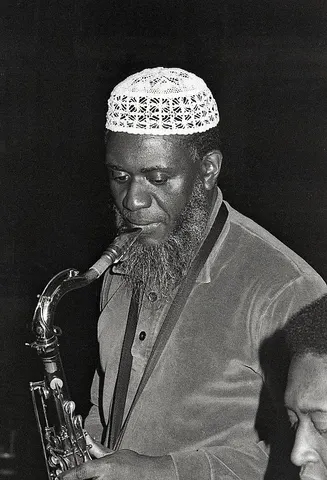
- Pharoah Sanders - front-line saxophonist in John Coltrane's last band and on her first three leader dates, plus the 1971 Carnegie Hall concert.
- Jimmy Garrison - bassist in John Coltrane's group and on A Monastic Trio, Universal Consciousness and the Carnegie Hall concert.
- Ron Carter - bassist on Huntington Ashram Monastery (1969) and Ptah, the El Daoud (1970).
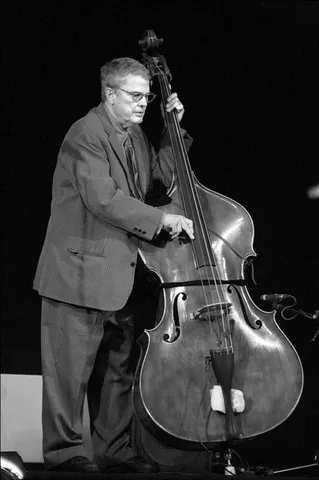
- Charlie Haden - bassist on the Journey in Satchidananda live track, Lord of Lords (1972) and Translinear Light (2004); their duo "For Turiya" is on Haden's Closeness (1976), and he was in her final concert band in November 2006.
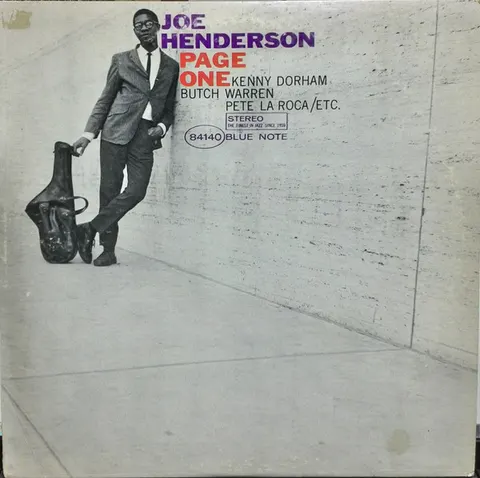
- Joe Henderson - second tenor on Ptah, the El Daoud (1970) and the leader who featured her on The Elements (1974).
- Ed Michel - producer of most of her Impulse! and Warner Bros. albums from 1970 to 1978, and consulted on the 2024 Carnegie Hall release.
- Ben Riley - drummer on Ptah, the El Daoud, World Galaxy and Lord of Lords.
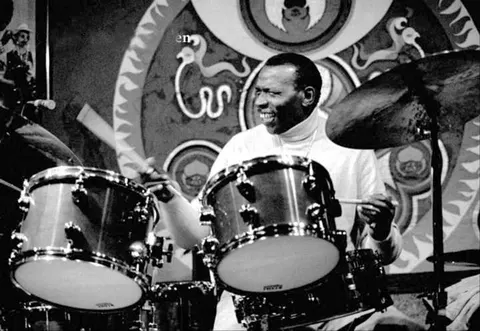
- Reggie Workman and Roy Haynes - the Transfiguration trio (1978); Haynes also played her last public concert in 2006.
- Terry Gibbs - her employer from January to October 1963, across four albums; she was billed variously as Alice McLeod and Alice Hagood.
- Carlos Santana - co-leader of Illuminations (Columbia, 1974), which she also arranged and conducted the strings for.
- Ravi Coltrane and Oran Coltrane - her sons, both saxophonists; Ravi produced Translinear Light (2004) and Kirtan: Turiya Sings (2021).
More Spiritual Jazz Artists
See all 46 Spiritual Jazz artists →More American Jazz Artists
See all 567 American artists →- Wikipedia: Alice Coltrane
- Discogs: Alice Coltrane (artist 42058)
- Lewis Porter: "Alice Coltrane, 1: Before John. Family History, Ernie Farrow..."
- Lewis Porter: "Alice Coltrane, 2: Back in Detroit, More Recordings, & Meeting John"
- Wikipedia: A Monastic Trio
- Wikipedia: Huntington Ashram Monastery
- Wikipedia: Ptah, the El Daoud
- Wikipedia: Journey in Satchidananda
- Wikipedia: Universal Consciousness
- Wikipedia: World Galaxy
- Wikipedia: Lord of Lords (album)
- Wikipedia: Eternity (Alice Coltrane album)
- Wikipedia: Radha-Krsna Nama Sankirtana
- Wikipedia: Transcendence (Alice Coltrane album)
- Wikipedia: Transfiguration (Alice Coltrane album)
- Wikipedia: Translinear Light
- Wikipedia: The Carnegie Hall Concert (Alice Coltrane album)
- Wikipedia: The Ecstatic Music of Alice Coltrane Turiyasangitananda
- Wikipedia: John Coltrane
- The John and Alice Coltrane Home: The Year of Alice
- Matador Records: Alice Coltrane Turiyasangitananda devotional albums announcement
- Rolling Stone: 500 Greatest Albums podcast, Alice Coltrane