JAZZPROFILES lives in the music 2,555 Jazz Artists fully Profiled!
Tullio De Piscopo
Last updated November 10, 2026
Listen on Spotify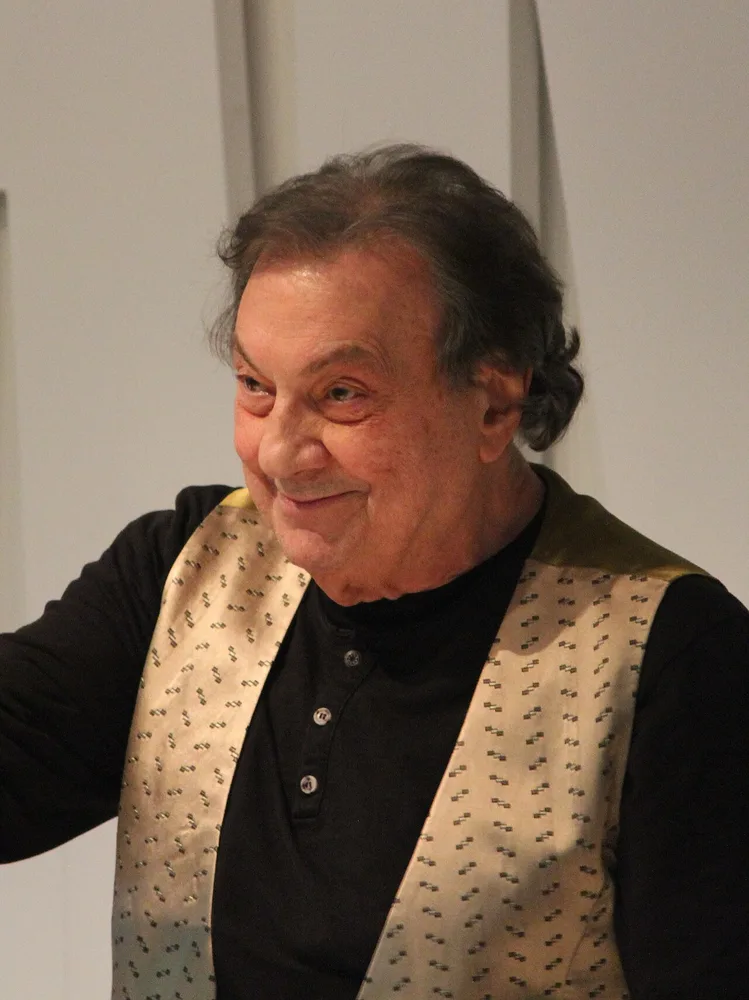
Tullio De Piscopo at a press conference at the Sanremo Festival, February 2026 CC BY-SA 4.0 — Wikimedia Commons · https://commons.wikimedia.org/wiki/File:Tullio_De_Piscopo_al_Festival_di_Sanremo_2026_(headshot).jpg · Ferdinando Traversa (Ferdi2005), own work, WikiPortraits at the 2026 Festival di Sanremo

Tullio De Piscopo was born in Naples on February 24, 1946, and grew up in the Porta Capuana district. His father played drums and percussion in the orchestra of the Teatro San Carlo, and his older brother Romeo, also a drummer, worked in groups around Bagnoli. By thirteen Tullio was playing the nightclubs near the NATO base there, which were full of American soldiers, and he went on to play in Neapolitan jazz groups. In 1969 he moved north to Turin, where he became the regular drummer at the Swing Club, and later that year he settled in Milan.
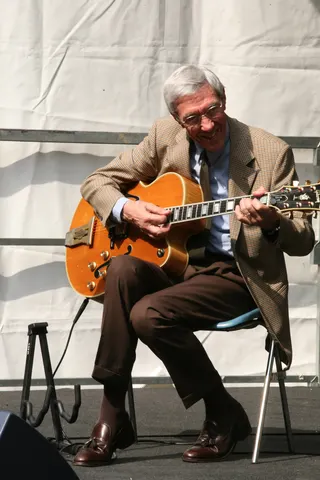
Milan made him a working drummer in every sense. In the early 1970s he joined the group of guitarist Franco Cerri, first as a quartet with guitarist Angelo Arienti and bassist Giorgio Azzolini (the quartet record 6, Dire, 1971), then in a quintet with Nando De Luca, the bassist and arranger Pino Presti and the saxophonist Giorgio Baiocco. With Presti he formed a rhythm section that Italian sources describe as one of the most sought-after in the country through the 1970s, and the two worked together on sessions for singers such as Mina, for arrangers and for dance bands. He also played on the first Italian rock opera, Tito Schipa Jr.'s Orfeo 9 (1973), and on the New Trolls' Atomic System (1973).
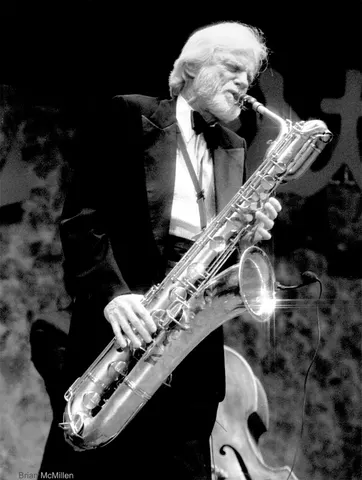
The jazz work of those years was substantial. In 1972 he recorded the live set at the Ljubljana jazz festival with pianist Guido Manusardi that was issued as Live Suite (BASF, 1974). At Umbria Jazz in Orvieto in July 1974 he played with Gerry Mulligan, Gianni Basso and Renato Sellani. That year he also played drums and percussion on Astor Piazzolla's Libertango (Carosello) and on Summit, the Piazzolla and Mulligan session, and in 1976 he was the drummer on Gerry Mulligan Meets Enrico Intra, with Enrico Intra, Pino Presti and the soprano saxophonist Giancarlo Barigozzi. Other Italian jazz leaders who used him include the pianist Romano Mussolini (Mirage, 1974, percussion), Enrico Intra again on Paopop (1975, percussion), the trumpeter Oscar Valdambrini and trombonist Dino Piana (Afrodite, 1977) and Piana with the American trombonist Kai Winding (Duo "Bones", 1979).
His own records began with Suonando la batteria moderna (Vedette, 1974), a drum-method LP of rhythm exercises that range from samba and rock to swing and Afro-Jazz. Sotto e 'ncoppa (Carosello, 1976), recorded in Milan in October 1975 and credited to the Tullio De Piscopo Revolt Group, was the first real statement: a jazz-rock and fusion record built on Neapolitan themes, with Peter Guidi on soprano saxophone, Giorgio Baiocco on tenor saxophone, flute and vibraphone, and De Piscopo on drums, congas and lead vocals. Vol. 2 followed in 1976. Future Percussion (Carosello, 1978), recorded in Milan in January 1978 by the Tullio De Piscopo Quintet with Larry Nocella on tenor saxophone, pianist Luigi Bonafede, guitarist Giorgio Cocilovo, bassist Lucio Terzano and percussionist Luis Agudo, is his quintet jazz session of the decade. Italian journalists voted him best musician of the year six times running, from 1977 to 1982, and in 1979 he won a Telegatto as best session musician.
The early 1980s tied the jazz and pop sides together. Metamorphosis (Ring, 1981), with keyboardist Oscar Rocchi, was a fusion record; Bluesology (Dire, 1981) paired him with Dado Moroni, the flugelhornist Franco Ambrosetti and Niels-Henning Ørsted Pedersen for a program that includes "All Blues," "A Child Is Born" and the title tune; and he drummed on Pino Daniele's Vai mò (1981) and recorded Acqua e viento (1983) with Daniele, Don Cherry and Famoudou Don Moye. Then came "Stop Bajon (Primavera)," a rap written by Daniele that reached No. 1 in Italy and charted in Germany and the United Kingdom, followed by "Radio Africa" with Mory Kanté (1985). "Andamento lento" won the Festivalbar in 1988, and he appeared at Sanremo with "E allora e allora" (1989) and "Qui gatta ci cova" (1993). Even at the height of that fame he kept jazz musicians around him: Bello carico (EMI, 1988) features bassist Alphonso Johnson and, on selected tracks, the drummers Billy Cobham and Omar Hakim, and in 1987 he toured Europe with Gato Barbieri.
From the 1990s on the jazz records come back to the front. Zzacotturtaic (Fonit Cetra, 1995), with the Orchestra Sinfonica di Milano and the choir of La Scala, and Pasiòn Mediterranea (1997) were broad crossover projects; Classic in Jazz (with bassist Stefano Cerri and Cesare Poggi) set classical keyboard pieces, among them Scarlatti and Bach, for a jazz trio; and Planet Jazz (Splasc(h), 2001), by the Tullio De Piscopo Italian Jazz Machine with Rosario Bonaccorso on bass and Alessio Menconi on guitar, was a post-bop program of jazz standards. In 2011 he played in the MTM trio with pianist Mike Melillo and Massimo Moriconi, the same pair who join him in saxophonist Massimo Urbani's quartet on Max Leaps In (Philology, 2000), and in the 2010s he recorded Bitter Sweet (Hydra Music, 2013) with clarinetist Buddy DeFranco, followed by a self-issued disc, Double Quartet (2014), that credits DeFranco, pianist Andrea Pozza and bassist Luciano Milanese. In 2021 he formed a jazz trio with bassist Aldo Zunino and Dado Moroni. He received a lifetime-achievement Leone d'oro in Venice in June 2022 and at the 2026 Sanremo festival accompanied the singers LDA and Aka 7even on "Andamento lento." A box set, 80 Tullio (Cimbarecord), followed in April 2026, the year he turned 80.
De Piscopo is the best-known drummer in Italy, and the reputation rests on an unusual combination: the precision of a jazz-trained studio player, the power and showmanship of a soloist (a 1986 television drum contest against Billy Cobham is part of his public story), and a Neapolitan melodic and rhythmic accent that runs through everything from Sotto e 'ncoppa to "Stop Bajon." His own albums are broader than the jazz tag: much of the catalog from 1983 on is pop, dance and Italian song, which is how some reference sites file him (AllMusic lists him under Pop/Rock and International), and that side is part of the story told here. The jazz-side evidence is the rest of the career: a decade in the Milan scene beside Franco Cerri, Gerry Mulligan, Astor Piazzolla and Enrico Intra, leader dates such as Future Percussion, Bluesology and Planet Jazz, and a 2011 stage tribute to Buddy Rich. Apple Music files his artist page under Jazz. He is also a regular partner of Pino Daniele, whose band of Neapolitan players, among them Tony Esposito, James Senese, Rino Zurzolo and Joe Amoruso, fused blues, funk and jazz.
- Sotto e 'ncoppa (1976, Carosello) - His first full leader statement as the Tullio De Piscopo Revolt Group: Neapolitan themes played as jazz-rock, with two reed players and a keyboardist in a Milan band.
- Future Percussion (1978, Carosello) - The quintet record with Larry Nocella, Luigi Bonafede and Lucio Terzano, his quintet jazz album of the decade.
- Gerry Mulligan Meets Enrico Intra (1976, Pausa) - A sideman landmark: the baritone saxophonist with Intra's rhythm section, De Piscopo on drums.
- Summit (1974) - Astor Piazzolla and Gerry Mulligan together, with De Piscopo on drums and percussion; later reissued as Summit-Reunion Cumbre and with the Piazzolla album Lumière.
- Bluesology (1981, Dire) - A quartet date with Dado Moroni, Franco Ambrosetti and Niels-Henning Ørsted Pedersen, built on standards and jazz repertoire.
- Acqua e viento (1983, Bagaria/EMI) - Recorded with Pino Daniele, Don Cherry and Famoudou Don Moye; the album that holds "Stop Bajon," the crossover hit that made his name outside jazz.
- Bello carico (1988, EMI) - The funk-fusion pop record with Alphonso Johnson on bass and Billy Cobham and Omar Hakim on drums, containing "Andamento lento."
- Planet Jazz (2001, Splasc(h)) - His Italian Jazz Machine in a post-bop program, produced and played by De Piscopo, with Rosario Bonaccorso and Alessio Menconi.
Tullio De Piscopo: Full Discography
Discogs artist: Tullio De Piscopo (31759) · Quintet entry 1271911 · Revolt Group entry 2131184 · Italian Jazz Machine entry 4165304 · Born February 24, 1946, Naples
Tullio De Piscopo has more than 700 releases on Discogs, most of them sideman credits and compilations. The tables below are a selection: his own albums in full, plus the jazz sideman dates that matter most. His pop singles and the long run of session credits for Italian singers are not itemized.
As Leader and Co-Leader
| Album | Year | Label (Catalog) | Personnel & Notes | Listen | Buy |
|---|---|---|---|---|---|
| Suonando la batteria moderna | 1974 | Vedette (VPA 8179) | Instructional LP of drum rhythms played by De Piscopo, from samba and medium rock to swing and Afro-Jazz. | — | — |
| Sotto e 'ncoppa (Tullio De Piscopo Revolt Group) | 1976 | Carosello (CLN 25061) | Recorded in Milan, October 1975. De Piscopo (drums, congas, harmonica, lead vocals), Gigi Cappellotto (electric bass), Sergio Farina (guitars), Tony De Piscopo (percussion, timpani), Sante Palumbo (keyboards), Peter Guidi (soprano saxophone), Giorgio Baiocco (tenor and soprano saxophones, flute, vibraphone). Jazz-rock and fusion on Neapolitan themes. | — | — |
| Tullio De Piscopo Vol. 2 | 1976 | Carosello (CLN 25067) | Giorgio Cocilovo (acoustic guitar), Stefano Cerri (electric bass), Sergio Farina (electric guitar), Maurizio Preti (percussion, timbales); Angelo Arienti engineering. | — | — |
| Future Percussion (Tullio De Piscopo Quintet, with Luis Agudo) | 1978 | Carosello (CLE 21038) | Recorded in Milan, January 1978. Larry Nocella (tenor saxophone), Luigi Bonafede (piano), Giorgio Cocilovo (guitar), Lucio Terzano (bass), Luis Agudo (percussion). Six tracks, including "Say It (Over and Over Again)" and "3 for Larry." | — | — |
| Concerto per un film: L'Arma | 1978 | Carosello (CLN 25080) | Music from Pasquale Squitieri's film L'arma, arranged and conducted by Nando De Luca; includes "Black Star" and a West Side Story medley. | — | — |
| Tullio De Piscopo Live | 1981 | Carosello (CLN 25089) | Live album; tracks include "What's New," "63rd Street Blues" and "Tin Tin Deo." Personnel not confirmed. | — | — |
| Metamorphosis (with Oscar Rocchi) | 1981 | Ring (RLP 511) | Fusion LP: Oscar Rocchi (keyboards), Sergio Farina (guitar), Julius Farmer (bass), Hugo Heredia (soprano saxophone, flute), Cicci Santucci (trumpet, bugle), De Piscopo (percussion). | — | — |
| Bluesology (with Dado Moroni, Franco Ambrosetti and Niels-Henning Ørsted Pedersen) | 1981 | Dire (FO 363) | Quartet date: Dado Moroni (piano), Franco Ambrosetti (flugelhorn), Niels-Henning Ørsted Pedersen (bass), De Piscopo (drums). Tracks include "All Blues," "A Child Is Born," "Bluesology" and "Prelude to a Kiss." | — | — |
| Acqua e viento | 1983 | Bagaria / EMI Italiana | With Pino Daniele (arrangements and performance), Don Cherry, Famoudou Don Moye, Joe Amoruso and Rino Zurzolo; produced by Willy David. Contains "Stop Bajon" and "I' sono 'e notte." | — | — |
| Passaggio da Oriente | 1985 | Costa Est / EMI Italiana (64 2403881) | Funk and pop-fusion LP arranged with Corrado Rustici and David Sancious; includes "Radio Africa" and "E fatto 'e sorde! E?" | — | — |
| Drum Symphony | 1986 | Costa Est / EMI Italiana (64 2406531) | Soundtrack to the film Francesca è mia, with the title piece in studio and live versions. | — | — |
| Bello carico | 1988 | Costa Est / EMI Italiana (64 7908181) | Alphonso Johnson (bass), Billy Cobham and Omar Hakim (drums, selected tracks), Chester Thompson (keyboards), Mike Miller and Ronnie Jackson (guitars); includes "Andamento lento" and "Drums in the Air." | — | — |
| Album | 1989 | Costa Est / EMI Italiana (64 7922571) | Collection built around his hits, produced by Willy David; includes "E allora e allora" and "Stop Bajon." | — | — |
| De Piscopo | 1991 | Costa Est / EMI Italiana (66 7962341) | Pop and world-rhythm album arranged with François Bréant and Giampaolo Casati; includes "Oulèlè Magidì," "Jastaò" and "Bird Mania." | — | — |
| Cosmopolitana | 1993 | Costa Est / EMI Italiana (7 81459 1) | Includes "Qui gatta ci cova." Personnel not confirmed. | — | — |
| Three for One (with Sal Nistico) | 1993 | A.V. Arts (AVJ CD 005) | Jazz program billed with the tenor saxophonist Sal Nistico, including "Little Italy" and "Song for Larry." Recording date and personnel not confirmed. | — | — |
| Zzacotturtaic | 1995 | Fonit Cetra (CDL 393) | With the Orchestra Sinfonica di Milano and the choir of La Scala, arranged and directed by Euro Ferrari. | — | — |
| Pasiòn Mediterranea | 1997 | Tring (TAP012) | Produced by De Piscopo; includes "Astor" and "Maronna che rumba." | — | — |
| Classic in Jazz (with Stefano Cerri and Cesare Poggi) | 1998 | Tring; later on Azzurra Music (TBP-JABO 13) | Classical keyboard pieces (Scarlatti, Bach and others) arranged for a jazz trio. | — | — |
| Planet Jazz (Tullio De Piscopo Italian Jazz Machine) | 2001 | Splasc(h) (CDH 1501.2) | Post-bop program with Claudio Chiara and George Robert (alto saxophones), Rosario Bonaccorso (bass), Alessio Menconi (guitar); De Piscopo drums and produces. Tracks include "Exodus," "Tricotism" and "Our Delight." | — | — |
| Jazz Friends | Not confirmed | Azzurra Music | Listed on reference sites; details not confirmed. | — | — |
| Live in Zurich at Moods Club (Pummarola Blues Band) | 2004 | RAI Trade (RTP0018) | Live set of his own songs, including "Pummarola Blues," "Stop Bajon" and "Andamento lento." | — | — |
| Bona jurnata | 2007 | Capriccio (CAPR 001) | Vocal and pop-oriented album produced by De Piscopo. | — | — |
| Tango para mi suerte | 2009 | Not on a label | Instrumental program including "Percussion Power" and the title tune. | — | — |
| Questa è la storia | 2010 | Edel Italia (0205529CET) | Two-disc anthology; the second disc is drum-focused. | — | — |
| Bitter Sweet | 2013 | Hydra Music | Jazz standards program ("The Song Is You," "East of the Sun," "Just in Time") made with clarinetist Buddy DeFranco. | — | — |
| Double Quartet | 2014 | Not on a label | Credits Buddy DeFranco (clarinet), Andrea Pozza (piano), Luciano Milanese (bass), Sal Nistico (tenor saxophone) and De Piscopo (drums); the program overlaps with Bitter Sweet. | — | — |
| TDP50 (Musica senza padrone 1965/2015) | 2015 | Warner Music Italy | Triple-CD retrospective released November 13, 2015; the credits include Gerry Mulligan, Astor Piazzolla and Massimo Urbani. | — | — |
| 80 Tullio | 2026 | Cimbarecord (CIMLP025) | Vinyl box set released April 18, 2026 for his 80th birthday year, with live versions of his best-known songs. | — | — |
Selected Singles
| Single | Year | Label | Notes |
|---|---|---|---|
| "Stop Bajon (Primavera)" / "Stadera" | 1984 | Bagaria / EMI Italiana | Written by Pino Daniele. No. 1 in Italy; No. 12 in Germany (December 1984) and No. 58 in the United Kingdom (March 1987). |
| "E fatto 'e sorde! E?" / "Radio Africa" | 1985 | EMI Italiana | "Radio Africa" is a collaboration with the Guinean singer Mory Kanté. |
| "Andamento lento" | 1988 | Costa Est / EMI | Sanremo 1988; Festivalbar winner the same year. |
| "E allora e allora" | 1989 | EMI Italiana | Sanremo 1989. |
| "Jastaò" | 1990 | EMI Italiana | Summer 1990 single. |
| "Qui gatta ci cova" | 1993 | Costa Est / EMI | Sanremo 1993. |
As Sideman (selected jazz credits)
| Year | Project (Leader) | Title | Label | Catalog | Role | Notes |
|---|---|---|---|---|---|---|
| 1971 | Quartetto Franco Cerri (Franco Cerri) | 6 | Dire | FO 338 | Drums | Quartet with Angelo Arienti and Giorgio Azzolini. |
| 1973 | New Trolls | Atomic System | Magma | MAGL 18003 | Drums | Joined the group for this album and its tour in 1973 and 1974. |
| 1973 | Tito Schipa Jr. | Orfeo 9 | Not confirmed | Not confirmed | Performer (instrument not confirmed) | First Italian rock opera; music direction by Bill Conti. |
| 1974 | Guido Manusardi Quartet (live, Ljubljana, 1972) | Live Suite | BASF | Not confirmed | Drums | With bassist Giorgio Azzolini. |
| 1974 | Astor Piazzolla | Libertango | Carosello | CLN 25039 | Drums, percussion, effects | Carosello release; Piazzolla with Italian studio players. |
| 1974 | Gerry Mulligan and Astor Piazzolla | Summit | Erre T.V. | RTV 25046 | Drums, percussion | Also issued as Summit-Reunion Cumbre. |
| 1974 | Romano Mussolini Trio | Mirage | PDU | Pld.A 6018 | Percussion | Soul-jazz and jazz-funk date. |
| 1975 | Enrico Intra | Paopop | Rifi | RDZ-ST 14259 | Percussion | Jazz-funk and experimental pieces with Giancarlo Barigozzi on reeds. |
| 1976 | Gerry Mulligan Meets Enrico Intra | Gerry Mulligan Meets Enrico Intra | Pausa | PR-7010 | Drums | With Pino Presti (electric bass), Sergio Farina (guitar) and Giancarlo Barigozzi (soprano saxophone). |
| 1977 | Oscar Valdambrini-Dino Piana Quintet | Afrodite | Vedette | VPA 8337 | Drums | With Giorgio Azzolini (bass) and Oscar Rocchi (piano). |
| 1977 | Larry Nocella | No Secret | Harmony | LPH 8021 | Percussion | Jazz-funk and disco-era studio date with Julius Farmer on bass. |
| 1978 | Sante Palumbo | Jazz Promotion | Dire | FO 350 | Drums | Contemporary jazz date with Guerrino Allifranchini and Stefano Cerri. |
| 1978 | Enrico Intra | Momento Intra | Rifi | RDZ ST 14293 | Percussion | De Piscopo also has two writing credits. |
| 1979 | Kai Winding and Dino Piana | Duo "Bones" | Red Record | VPA 143 | Drums | With Enrico Pieranunzi (piano) and Giovanni Tommaso (bass). |
| 1979 | Franco Battiato | L'era del cinghiale bianco | EMI | 3C 064-18285 | Drums, percussion | Pop-rock album that reached No. 1 in Italy. |
| 1980 | Dado Moroni | Jazz Piano | Dire | Not confirmed | Drums (per Moroni's profile) | With Julius Farmer on bass. |
| 1981 | Pino Daniele | Vai mò | EMI | 3C 064-18550 | Drums | Track-level drum credit across the album. |
| 1982 and 1984 | Pino Daniele | Bella 'mbriana; Sciò | EMI | Not confirmed | Drums (per Wikipedia) | Further Daniele albums on which he is credited. |
| 2000 | Massimo Urbani Quartet | Max Leaps In | Philology | W 181.2 | Drums | With Mike Melillo (piano) and Massimo Moriconi (bass); released in 2000. |
Outside jazz he is credited on records by Franco Battiato, Mina (arrangements by Pino Presti), Fabrizio De André, Giorgio Gaber, Enzo Jannacci, Adriano Celentano, Fausto Papetti and Pino Daniele, and he wrote scores for several films, among them Mi manda Picone, Razza selvaggia, Naso di cane and 32 dicembre. Credits listed as "Not confirmed" come from Wikipedia or another source that does not give a catalog number.
- Franco Cerri - bandleader of the Milan quartet and quintet De Piscopo played in from the early 1970s (6, 1971).
- Giorgio Azzolini - bassist in the Cerri quartet and on Live Suite with Manusardi (1972).
- Guido Manusardi - pianist, Ljubljana jazz festival set issued as Live Suite (BASF, 1974).
- Gerry Mulligan - Umbria Jazz, Orvieto, July 1974; Summit (1974); Gerry Mulligan Meets Enrico Intra (1976).
- Enrico Intra - pianist and arranger on Gerry Mulligan Meets Enrico Intra and Paopop (1975).
- Astor Piazzolla - Libertango and Summit, both 1974.
- Pino Presti - bassist and arranger, his rhythm-section partner for most of the 1970s and a sideman on the Mulligan and Intra record.
- Gianni Basso, Renato Sellani - Umbria Jazz, 1974.
- Larry Nocella, Luigi Bonafede, Lucio Terzano - the saxophonist, pianist and bassist of the 1978 quintet on Future Percussion.
- Kai Winding, Dino Piana, Oscar Valdambrini, Romano Mussolini - leaders and co-leaders of Italian jazz records on which he played drums or percussion (1974 to 1979).
- Dado Moroni, Franco Ambrosetti, Niels-Henning Ørsted Pedersen - Bluesology (1981); Moroni also in the 2021 trio.
- Don Cherry, Famoudou Don Moye, Pino Daniele - Acqua e viento (1983); Daniele's own Vai mò, Bella 'mbriana and Sciò albums feature De Piscopo on drums.
- Billy Cobham, Alphonso Johnson, Omar Hakim - guests on Bello carico (1988); De Piscopo and Cobham took part in a 1986 television drum contest.
- Gato Barbieri - European tour, 1987.
- Tony Esposito, Rino Zurzolo, James Senese, Joe Amoruso - fellow Neapolitan players in the Daniele circle (reunion concerts in 2008).
- Buddy DeFranco, Andrea Pozza, Luciano Milanese - Bitter Sweet (2013) and Double Quartet (2014).
- Massimo Urbani, Mike Melillo, Massimo Moriconi - Max Leaps In (Philology, 2000) and the MTM trio.
- Stefano Cerri, Cesare Poggi - Classic in Jazz (1998 to 2000).
- Rosario Bonaccorso, Alessio Menconi, Claudio Chiara, George Robert - Planet Jazz (2001).
- English Wikipedia also lists Chet Baker, Gil Evans, Stéphane Grappelli, Slide Hampton and Eumir Deodato among the musicians he has played with.
- Outside jazz: Franco Battiato, Fabrizio De André, Mina, Lucio Dalla, Giorgio Gaber, Enzo Jannacci, Adriano Celentano, Fausto Papetti, Armando Trovajoli, Manu Chao.