 JAZZPROFILES lives in the music 2,303 Jazz Artists fully Profiled!
Walter Wanderley
Last updated November 3, 2026
Listen on Spotify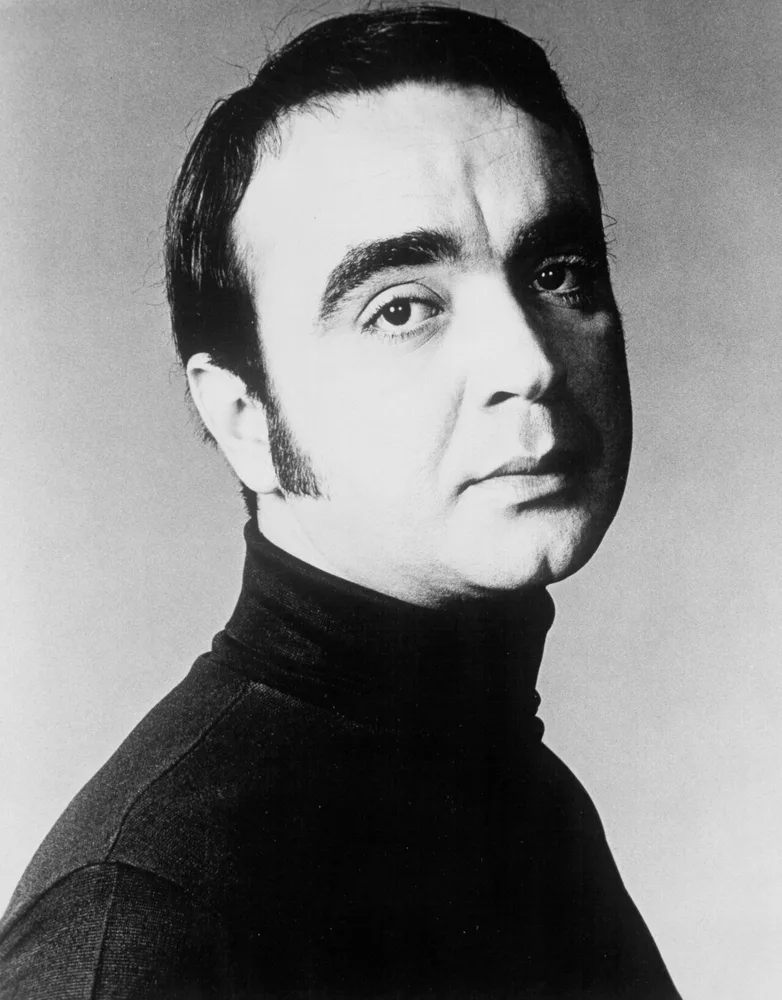
Walter Wanderley in an A&M Records publicity photograph, circa 1969 Public domain (published in the United States in 1969 without a copyright notice) — Wikimedia Commons — https://commons.wikimedia.org/wiki/File:Walter_Wanderley_(1969_A%26M_publicity_photo).jpg — A&M Records

Walter José Wanderley Mendonça was born in Recife, Pernambuco, on May 12, 1932. He began working as a professional musician in his home state and moved to São Paulo at the end of the 1950s, where he played organ in nightclub bands, among them the house group at the Bar Claridge and later the band at the Boate Oásis, where the singer Isaurinha Garcia brought him in. She became his wife, and by the 1940s and 1950s she was one of the best-known singers in Brazil. His first recorded appearance, in 1959, was as organist on a track of one of her Odeon records.
In 1960 he took a job at the Captains Bar of the Hotel Comodoro with a group billed as Walter Wanderley e seu Conjunto, and the band accompanied singers on records and television programs, among them Garcia, Dóris Monteiro and João Gilberto. Wanderley's group is the one heard on part of Gilberto's 1961 Odeon album João Gilberto. His own LPs for Odeon followed in quick succession: Eu, Você e Walter Wanderley (1960), Sucessos Dançantes em Ritmo de Romance (1961), O Sucesso é Samba (1961), Samba é Samba and E o Bolero (1962), and O Samba é Mais Samba and Samba no Esquema (1963). In 1964 he changed the makeup of his group and signed with Philips, which issued Entre Nós, Órgão, Sax e Sexy (made with the saxophonist Portinho) and O Toque Inconfundível de Walter Wanderley that year, then O Autêntico Walter Wanderley, Samba Só and Quarteto Bossamba in 1965.
The record that made his name outside Brazil came in 1966. By the account on English Wikipedia, the producer Creed Taylor brought Wanderley's trio to the United States at the urging of Tony Bennett. The trio was Wanderley on organ, Claudio Slon on drums and José Marino on bass, and it recorded for Verve under Taylor's production. The first album, Rain Forest (Verve V6-8658), included an instrumental treatment of "Summer Samba," known on the record label as "So Nice." Marcos Valle had written the song in 1964 with Portuguese words by his brother Paulo Sérgio Valle, and Wanderley's organ version first charted in August 1966, reaching No. 3 on Billboard's Easy Listening chart and No. 26 on the Hot 100. Rain Forest reached No. 22 on the Top LPs chart. Alongside the trio, the album used a small group of American jazz and studio players: Joe Grimm on flute, Bucky Pizzarelli on guitar, Urbie Green on trombone and Bobby Rosengarden on percussion, with Rudy Van Gelder engineering. Bennett's endorsement appeared on the back cover, where he told listeners who liked Ella, Duke, Basie and Sinatra that they would love Wanderley's music.
Taylor paired the trio with Astrud Gilberto for A Certain Smile, a Certain Sadness, recorded in September 1966 and issued by Verve at the height of the American bossa nova craze. Wanderley recorded six albums for Verve between 1966 and 1968. After Rain Forest and the Gilberto collaboration came Chegança (1967) with the same trio, then Batucada and Kee-Ka-Roo in 1967, and Popcorn (1967), a collaboration with the Brazilian singer and guitarist Luiz Henrique Rosa. In the same period he formed a band called The Carnival with Bob Matthews, João Palma, José Soares and Janis Hansen, all former members of Sérgio Mendes's Brasil '66.
When the trio ended, Wanderley kept recording. When It Was Done (1968, credited to the Walter Wanderley Set) and Moondreams (1969) came out on A&M with the CTI imprint, and the trio reunited briefly in 1971 for The Return of the Original. His later records were made for GNP Crescendo, including Brazil's Greatest Hits! (1980) and Perpetual Motion Love (1981). He also made numerous personal appearances, including a concert tour of Mexico. English Wikipedia says that alcoholism blighted his later career. He passed away from bone cancer on September 4, 1986, in San Francisco, aged 54.
Wanderley belongs to the crossover side of Brazilian music, and the pop side of it is plain: the records that reached an American audience were short, melodic organ instrumentals of familiar bossa nova and samba songs, built for radio and for the lounge. What distinguishes them is the playing. He worked mainly on the Hammond B-3, and on later records and in concert on a Hammond L Series, with a staccato, stuttering articulation that sounds nothing like the sustained, blues-based organ of the American soul-jazz players. The jazz side of the work is in the company he kept on the sessions: a trio with a swinging bass and drums rhythm section, Creed Taylor's production at Verve and CTI, and sidemen such as Urbie Green and Bucky Pizzarelli. The Verve sessions also drew on the repertoire of the Brazilian songwriters of his own generation and the one before it, including Marcos Valle, Antonio Carlos Jobim, Durval Ferreira and Oscar Castro-Neves. Tony Bennett's cover blurb is the clearest period statement of how he was heard, and a later AllMusic reviewer, Thom Jurek, wrote that his "Summer Samba" is regarded as perhaps a more definitive bossa nova tune than "The Girl from Ipanema."
- Rain Forest (1966, Verve) - The American breakthrough, with the trio, a handful of American jazz and studio sidemen and the instrumental "Summer Samba (So Nice)." Spotify - Rain Forest Listen
- A Certain Smile, a Certain Sadness (1966, Verve) - The trio behind Astrud Gilberto, recorded in September 1966 under Creed Taylor. Spotify - A Certain Smile, A Certain Sadness
- Chegança (1967, Verve) - The trio's second Verve album, built around Wanderley's own organ arrangements. Spotify - Chegança Listen
- Batucada (1967, Verve) - A 1967 Verve album on which Marcos Valle, the composer of "Summer Samba," plays guitar and arranges several of the tracks next to Wanderley. Spotify - Batucada Listen
- Popcorn (1967, Verve) - Made with the singer and guitarist Luiz Henrique Rosa, with Sivuca on accordion and Wanderley adding electric piano and harpsichord to the organ. Spotify - Popcorn Listen
- Moondreams (1969, A&M / CTI) - One of his two albums for the A&M and CTI partnership, issued alongside the singles "Surfboard" and "Andança." Spotify - Moondreams Listen
- Samba No Esquema de Walter Wanderley (1963, Odeon) - A sample of the Brazilian organ records he made in São Paulo before signing with Philips. Spotify - Samba No Esquema Listen
Walter Wanderley: Full Discography
Discogs artist: Walter Wanderley (3747) · Born May 12, 1932, Recife, Brazil · Died September 4, 1986, San Francisco, California
Walter Wanderley was a Brazilian organist and pianist, born in Recife on May 12, 1932, who made more than a dozen LPs in Brazil, mostly for Odeon and Philips in São Paulo before reaching the United States in 1966. There, with his trio of drummer Claudio Slon and bassist José Marino and producer Creed Taylor at Verve, he recorded "Rain Forest" (1966), whose instrumental "Summer Samba (So Nice)" reached No. 26 on the Billboard Hot 100 and No. 3 on the Easy Listening chart. Six Verve albums between 1966 and 1968 followed, among them "A Certain Smile, a Certain Sadness" with Astrud Gilberto, "Chegança," "Batucada" and "Popcorn" with Luiz Henrique Rosa, then two albums for A&M and CTI, a trio reunion in 1971 and records for GNP Crescendo in 1980 and 1981. He passed away in San Francisco on September 4, 1986. The tables below list his albums as leader or co-leader with labels and catalog numbers as far as they are documented, and a short list of his sideman and accompanist work.
Leader and Co-Leader Albums
| Album | Year | Label | Personnel & Notes | Listen | Buy |
|---|---|---|---|---|---|
| Festa Dançante | 1959 | RGE | — | — | |
| Feito Sob Medida | 1959 | Odeon (MOFB 3109) | — | — | |
| Eu, Você e Walter Wanderley | 1960 | Odeon (MOFB 3085) | — | — | |
| Sucessos Dançantes em Ritmo de Romance | 1961 | Odeon (MOFB 3155) | — | — | |
| O Sucesso é Samba | 1961 | Odeon (MOFB 3204) | Spotify | — | |
| Samba é Samba | 1962 | Odeon (MOFB 3248) | Issued as Samba é Samba com Walter Wanderley. | Spotify | — |
| O Samba é Mais Samba | 1962 | Odeon (MOFB 3285) | Issued as O Samba é Mais Samba com Walter Wanderley. | Spotify | — |
| E o Bolero | 1962 | Odeon (MOFB 3289) | A record of boleros. | — | — |
| Samba no Esquema | 1963 | Odeon (MOFB 3358) | Issued as Samba no Esquema de Walter Wanderley. | Spotify | — |
| Walter Wanderley's Brazilian Organ | 1963 | Capitol (ST-1856) | A United States release. | — | — |
| Entre Nós | 1964 | Philips (P 632.197 L) | — | — | |
| Órgão, Sax e Sexy (with Portinho) | 1964 | Philips (P 632.721 L) | Organ and saxophone record co-billed to the saxophonist Portinho. | — | — |
| O Toque Inconfundível de Walter Wanderley | 1964 | Philips (P 632.726 L) | Spotify | — | |
| Quarteto Bossamba | 1965 | Som Maior | — | — | |
| O Autêntico Walter Wanderley | 1965 | Philips (P 632.757 L) | Spotify | — | |
| Samba Só | 1965 | Fermata | — | — | |
| Sucessos + Boleros | 1966 | Philips (P 632.894 L) | Issued as Sucessos + Boleros = Walter Wanderley, the last of his Brazilian LPs before the move to the United States. | — | — |
| Rain Forest | 1966 | Verve (V6-8658) | Walter Wanderley (organ, piano, arrangements), Claudio Slon (drums), José Marino (bass), Joe Grimm (flute), Bucky Pizzarelli (guitar), Urbie Green (trombone), Bobby Rosengarden (percussion). Produced by Creed Taylor, engineered by Rudy Van Gelder, liner notes by Tony Bennett. Contains the instrumental "Summer Samba (So Nice)," No. 26 on the Billboard Hot 100 and No. 3 on the Easy Listening chart in 1966. The album reached No. 22 on the Top LPs chart. | Spotify | — |
| A Certain Smile, a Certain Sadness (with Astrud Gilberto) | 1966 | Verve (V6-8673) | Recorded in September 1966. Astrud Gilberto (vocals), Walter Wanderley (organ), José Marino (bass), Claudio Slon (drums), Bobby Rosengarden (percussion). Produced by Creed Taylor, engineered and mastered by Rudy Van Gelder. Includes "So Nice (Summer Samba)," "Goodbye Sadness (Tristeza)," "Call Me" and "Here's That Rainy Day." A 1998 CD reissue added two further tracks from the same sessions. | Spotify | — |
| Chegança (The Walter Wanderley Trio) | 1967 | Verve (V6-8676) | Wanderley (electric organ, arrangements) with the trio, Bobby Rosengarden and Sol Gubin (percussion). Produced by Creed Taylor. Released in February 1967. Includes "Amãnhã" (a single), "Água de Beber," "Here's That Rainy Day" and "A Man and a Woman." | Spotify | — |
| Brazilian Blend | 1967 | Philips (PHM 600-227) | — | — | |
| Organ-ized | 1967 | Philips (PHM 200-233) | — | — | |
| Batucada | 1967 | Verve (V6-8706) | Walter Wanderley (electric organ, piano; arranger of six tracks) and Marcos Valle (guitar; arranger of four tracks), with José Marino and Sebastião Neto (bass), Dom Um Romão and Paulinho Magalhães (drums), Lu Lu Ferreira (percussion) and the vocalists Talya Ferro and Cláudio Miranda on some tracks. Produced by Creed Taylor. Includes "On the South Side of Chicago," "Batucada (The Beat)" and "Wave." | Spotify | — |
| Popcorn (with Luiz Henrique Rosa) | 1967 | Verve (V6-8734) | Co-led with the Brazilian singer and guitarist Luiz Henrique Rosa. Wanderley (organ, electric piano, harpsichord), Luiz Henrique (guitar, vocals, percussion), Sivuca (accordion), José Marino (bass), the flutists Melvin Tax and Romeo Penque and the drummers James Kappes, Gary Chester and Donald MacDonald; produced by Bob Morgan. Includes "Kee-Ka-Roo," "Popcorn" and "A Different Beat." | Spotify | — |
| Murmúrio | 1967 | Tower (ST 5058) | — | — | |
| Kee-Ka-Roo | 1967 | Verve (V6-8739) | — | — | |
| When It Was Done (Walter Wanderley Set) | 1968 | A&M / CTI (SP-3018) | Credited to the Walter Wanderley Set. | Spotify | — |
| Moondreams | 1969 | A&M / CTI (SP-3022) | Issued the same year as the singles "Surfboard" and "Andança." | Spotify | — |
| The Return of the Original | 1971 | Beverly / Canyon (SULP 19004) | A brief reunion of the original trio. | — | — |
| Brazil's Greatest Hits! | 1980 | GNP Crescendo | — | — | |
| Perpetual Motion Love | 1981 | GNP Crescendo (GNPD 2142) | — | — |
Compilations and reissues are not itemized.
Accompanist and Sideman Work (selected)
| Year | Project (Leader) | Title | Label | Catalog | Role | Notes |
|---|---|---|---|---|---|---|
| 1959 | Isaurinha Garcia | A track on one of her Odeon records, "E daí...?" (Miguel Gustavo) | Odeon | — | Organ | His first recorded appearance. |
| 1961 | João Gilberto | João Gilberto | Odeon | MOFB 3202 | Band (Walter Wanderley's group) | Part of the album was recorded with Wanderley's group; the rest with an orchestra conducted by Antonio Carlos Jobim. |
| 1960s | Dóris Monteiro | Records and television appearances | Odeon | — | Band | His group accompanied her in São Paulo; individual releases are not itemized here. |
- Creed Taylor - producer of his Verve albums from 1966 and the man who brought the trio to the United States.
- Astrud Gilberto - the vocalist on A Certain Smile, a Certain Sadness (1966).
- Claudio Slon and José Marino - drummer and bassist of the Walter Wanderley Trio on the 1966 and 1967 Verve albums and the 1971 reunion.
- Isaurinha Garcia - the singer he married; he played on her records and in her band from 1959.
- João Gilberto - accompanied by Wanderley's group on part of his 1961 Odeon album.
- Dóris Monteiro - another of the singers Wanderley's group accompanied in São Paulo.
- Luiz Henrique Rosa - guitarist and singer, co-credited on Popcorn (1967).
- Marcos Valle - composer of "Summer Samba"; plays guitar and arranges on Batucada (1967).
- Sivuca - accordionist on Popcorn.
- Bucky Pizzarelli, Urbie Green, Joe Grimm, Bobby Rosengarden - guitar, trombone, flute and percussion on Rain Forest.
- Rudy Van Gelder - engineer on Rain Forest and A Certain Smile, a Certain Sadness.
- Portinho - saxophonist on Órgão, Sax e Sexy (1964).
- Bob Matthews, João Palma, José Soares, Janis Hansen - his bandmates in The Carnival.
- Tony Bennett - wrote the liner notes for Rain Forest and is credited in accounts of how the trio reached Verve.

More Samba-Jazz Artists
See all 65 Samba-Jazz artists →More Brazilian Jazz Artists
See all 35 Brazilian artists →- Wikipedia: Walter Wanderley
- Wikipedia: Summer Samba
- Wikipedia: Rain Forest (Walter Wanderley album)
- Wikipedia: A Certain Smile, a Certain Sadness
- Dicionário Cravo Albin da Música Popular Brasileira: Walter Wanderley
- Discogs: Walter Wanderley
- MusicBrainz: Walter Wanderley
- Wikimedia Commons: Walter Wanderley (1969 A&M publicity photo)