 JAZZPROFILES lives in the music 1,572 Jazz Artists fully Profiled!
 Don Cherry
Last updated September 26, 2026
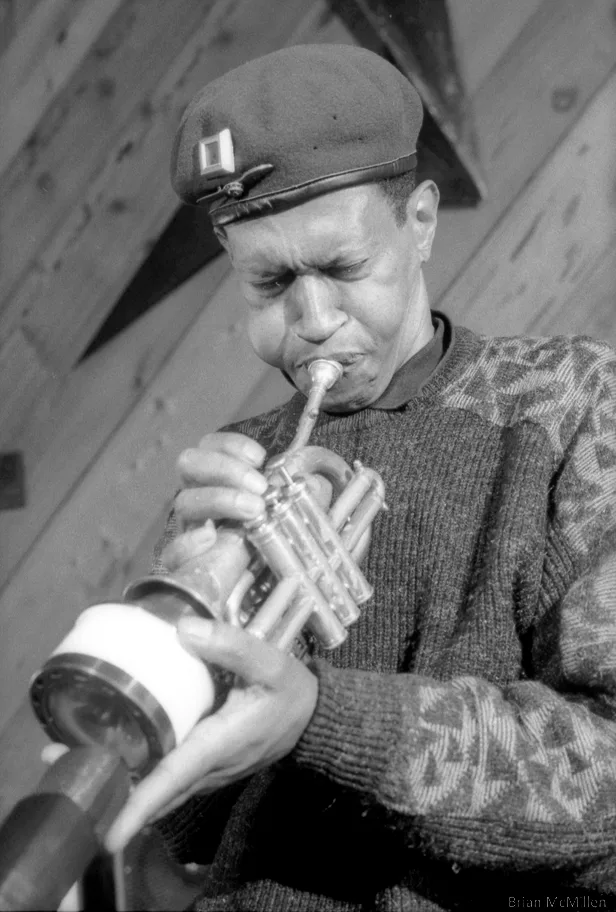
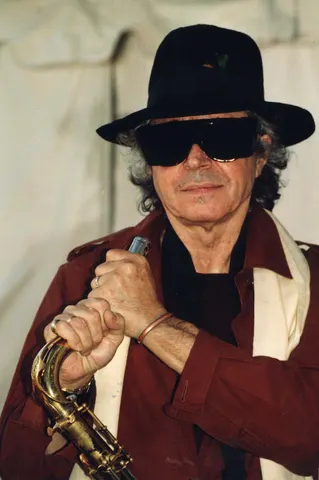
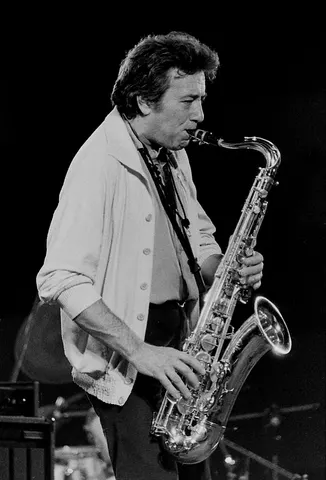
Don Cherry performing at the Bach Dancing & Dynamite Society, Half Moon Bay, California, February 19, 1989 CC BY-SA 4.0 — Wikimedia Commons — https://commons.wikimedia.org/wiki/File:Don_Cherry_1989.jpg (photo by Brian McMillen)

Donald Eugene Cherry was born November 18, 1936, in Oklahoma City, Oklahoma. His father, who was African-American, played trumpet and owned the Cherry Blossom Club, which hosted Charlie Christian and Fletcher Henderson; his mother, who had Choctaw ancestry, and his grandmother both played piano. The family moved to Watts, Los Angeles, in 1940, where his father tended bar at the Plantation Club on Central Avenue, a hub of the city's jazz scene. Cherry attended Fremont High School but was transferred to a reform school after skipping classes to play in a rival school's swing band; there he met drummer Billy Higgins, who would become a lifelong collaborator. By the early 1950s he was working the Los Angeles scene, informally mentored in jam sessions by trumpeter Clifford Brown, touring with saxophonist James Clay, and serving as pianist in trumpeter Art Farmer's group. Beginning in late 1958 he joined a quintet led by alto saxophonist Ornette Coleman that also featured pianist Walter Norris, documented on Something Else!!!! (Contemporary, 1958) and Tomorrow Is the Question! (1959).
Cherry became a permanent fixture of Coleman's quartet once it dropped the piano, playing what would become his signature instrument, the pocket trumpet, alongside bassist Charlie Haden and Higgins on The Shape of Jazz to Come (Atlantic, recorded May 22, 1959) and Change of the Century (Atlantic, 1959-60), then with bassist Scott LaFaro and drummer Ed Blackwell on This Is Our Music (1960). In December 1960 he took part in Free Jazz: A Collective Improvisation, Coleman's double-quartet recording pairing Cherry, Haden, Higgins, and Coleman with a second quartet of Eric Dolphy, Freddie Hubbard, Scott LaFaro, and Blackwell, an album whose title gave the movement its name. The following year Cherry stepped outside the Coleman axis to record Evidence (New Jazz, recorded November 1, 1961) with soprano saxophonist Steve Lacy, Higgins, and bassist Carl Brown, an all-Thelonious Monk and Ellington/Strayhorn repertoire session that showed Cherry could work as fluently inside Monk's tunes as inside Coleman's.
Through the first half of the 1960s Cherry moved fluidly among the emerging New York avant-garde. He co-led The Avant-Garde with John Coltrane (recorded 1960, released on Atlantic in 1966), toured and recorded with Sonny Rollins on Our Man in Jazz (RCA Victor, 1962), and co-founded the New York Contemporary Five with saxophonists Archie Shepp and John Tchicai, a group that recorded for the Fontana and Sonet labels during a 1963 European tour. He also worked and recorded with Albert Ayler, including the session that became Ghosts (Debut, 1964). As he later recalled, the scene that took shape around these musicians in New York in the early 1960s pulled in a new generation of players; drummer Rashied Ali, newly arrived from Philadelphia, backed Cherry, Ayler, Shepp, and saxophonist Pharoah Sanders as he established himself in that circle before his own association with Coltrane began in 1965.
Cherry made his recorded debut as a leader with Complete Communion (Blue Note, recorded December 24, 1965, released May 1966), a quartet date built as two continuous, multi-part suites, with tenor saxophonist Gato Barbieri (whom Cherry had discovered while living in Rome), bassist Henry Grimes, and Blackwell on drums. He expanded the group to a septet for Symphony for Improvisers (Blue Note, recorded September 19, 1966, released August 1967), adding vibraphonist Karl Berger, bassist Jean-Francois Jenny-Clark, and tenor saxophonist Sanders to the same continuous-suite format. Where Is Brooklyn? (Blue Note, recorded November 11, 1966, released 1969) returned to a quartet with Sanders, Grimes, and Blackwell and was his last album for the label.
By the late 1960s Cherry was working increasingly outside conventional jazz instrumentation and increasingly in Europe. Eternal Rhythm (MPS, 1969) documented a large ensemble organized for the November 1968 Berlin Jazz Festival that incorporated Indonesian gamelan instruments borrowed from the Indonesian embassy in Bonn, with Cherry himself playing cornet, gamelan, several flutes, bells, and voice. That same period produced "Mu" First Part and "Mu" Second Part (BYG Actuel, recorded August 22, 1969, in Paris), a stripped-down duo session with Blackwell. Cherry settled in Tagarp, in southern Sweden, with his wife, textile designer and visual artist Moki Cherry, converting an old schoolhouse into a home and performance space where the two developed "Organic Music Society," a communal, workshop-based practice blending jazz with folk and devotional musics from around the world; the album of the same name (Caprice, released October 1973) combined a 1972 studio session with documentary field recordings. He also led the separate, full-length Relativity Suite (JCOA, recorded February 14, 1973, at Blue Rock Studio in New York) with the Jazz Composer's Orchestra, produced trumpet and voice for Allen Ginsberg's Songs of Innocence and Experience (MGM, 1970), recorded Actions (Philips, 1971) with classical composer Krzysztof Penderecki, and appeared on Carla Bley's Escalator Over the Hill (JCOA, 1971).
Cherry spent the rest of his career deepening this world-jazz fusion while periodically returning to his Coleman-era circle. Brown Rice (recorded 1975, released in Italy on EMI in 1975 and in the US on A&M/Horizon in 1977) reunited him with Haden and Higgins alongside saxophonist Frank Lowe, fusing Indian, African, and Arabic modes with electrified, Miles Davis-indebted jazz-rock. From 1978 to 1982 he was a third of Codona, a trio with multi-instrumentalist Collin Walcott and percussionist Nana Vasconcelos that made three self-titled albums for ECM; he was also a founding member of Old and New Dreams, a quartet of Coleman alumni with saxophonist Dewey Redman, Haden, and Blackwell, whose Old and New Dreams (Black Saint, recorded October 1976), a second self-titled album (ECM, recorded August 1979), Playing (ECM, live recording, June 1980), and A Tribute to Blackwell (Black Saint, live recording from the November 1987 Ed Blackwell Festival benefit in Atlanta, held after Blackwell's kidney illness) spanned more than a decade. He also recorded the duo albums Music/Sangam (Europa, recorded June 1978) with Indian tabla master Ustad Latif Ahmed Khan and El Corazon (ECM, 1982) with Blackwell, and later Home Boy (Sister Out) (Barclay, 1985), a reggae- and funk-inflected Paris session; Art Deco (A&M, recorded August 1988 at Van Gelder Studio) reunited the Shape of Jazz to Come rhythm section of Haden and Higgins with saxophonist James Clay; and Multikulti (A&M, recorded 1988-90, released September 1990) and Dona Nostra (ECM, recorded March 1993 at Rainbow Studio, Oslo, with Swedish saxophonist Lennart Aberg, pianist Bobo Stenson, and Turkish percussionist Okay Temiz, released March 1994) closed out his recording career. He was stepfather to singer Neneh Cherry and father to musicians David Ornette Cherry, Eagle-Eye Cherry, and Jan and Christian "Ricky" Cherry. Don Cherry passed away on October 19, 1995, in Malaga, Spain, of liver cancer, at age 58; he was inducted into the Oklahoma Jazz Hall of Fame in 2011.
Cherry is best known for two connected things: co-inventing, alongside John Coltrane's bandmates and Ornette Coleman, the harmonically open, pulse-driven language of free jazz in the late 1950s and early 1960s, and then spending the following three decades pulling jazz outward into what would later be called world music or world-fusion, years before "world music" was a marketing category. His playing, most often on a compact pocket trumpet rather than a standard-length horn, favored a vocal, keening tone and short, darting phrases over Coleman's harmolodic freedom from fixed chord changes; critics and historians treat his work in the Coleman quartet, alongside Charlie Haden and Billy Higgins, as equal in historical weight to Coleman's own contribution. From the mid-1960s on, first through his Blue Note leader dates with Gato Barbieri and Pharoah Sanders and then, after his move to Sweden, through the Organic Music Society and groups like Codona, he built a genuinely cross-cultural practice, incorporating Indonesian gamelan, Indian raga and tabla, West African stringed instruments like the doussn'gouni, and Turkish and North African modes directly into jazz performance rather than merely quoting them. That combination, restless improviser and border-crossing bandleader, made him a direct influence on later generations of jazz musicians pursuing non-Western material, and AllMusic's Chris Kelsey has called him "one of the most influential jazz musicians of the late 20th century."
- The Shape of Jazz to Come (recorded May 22, 1959; released 1959, Ornette Coleman Quartet, Atlantic) - The record that established the quartet format Cherry helped build, with Charlie Haden and Billy Higgins. Spotify - The Shape Of Jazz To Come
- Complete Communion (recorded Dec. 24, 1965; released May 1966, Blue Note) - Cherry's recorded debut as a leader, two continuous multi-part suites with Gato Barbieri, Henry Grimes, and Ed Blackwell. Spotify - Complete Communion Listen
- Symphony for Improvisers (recorded Sept. 19, 1966; released Aug. 1967, Blue Note) - The Complete Communion quartet expanded to a septet with Karl Berger and Pharoah Sanders. Spotify - Symphony For Improvisers Listen
- Where Is Brooklyn? (recorded Nov. 11, 1966; released 1969, Blue Note) - Cherry's final Blue Note leader date, with Pharoah Sanders, Henry Grimes, and Ed Blackwell. Spotify - Where Is Brooklyn Listen
- "Mu" First Part (recorded Aug. 22, 1969; released 1969, BYG Actuel) - A stripped-to-essentials duo with drummer Ed Blackwell, Cherry also on piano and Indian/bamboo flute.
- Brown Rice (recorded 1975; released 1975 Italy/1977 US, EMI/A&M-Horizon) - A landmark of jazz world-fusion, reuniting Cherry with Charlie Haden and Billy Higgins.
- Codona (recorded Sept. 1978; released 1979, ECM, with Collin Walcott and Nana Vasconcelos) - The first of three trio albums blending jazz improvisation with Indian, Brazilian, and African instrumentation. Spotify - The Codona Trilogy Listen
- Old and New Dreams (recorded Aug. 1979; released 1979, ECM) - The Ornette Coleman-alumni quartet with Dewey Redman, Charlie Haden, and Ed Blackwell revisiting Coleman's book. Spotify - Old And New Dreams
Don Cherry: Full Discography
Identity confirmed via the live Discogs API — artist ID 42757 ("Don Cherry," realname Donald Eugene Cherry, born Nov 18 1936 Oklahoma City / died Oct 19 1995 Malaga, father of Eagle-Eye Cherry and David Ornette Cherry, stepfather of Neneh Cherry — all matching the biographical record). Disambiguated from several same-name Discogs entities: "Don Cherry (2)" (a 1950s-60s American pop/country singer, "Band of Gold"), "Don Cherry (3)" and "Don Cherry (5)" (unrelated later artists), and David Ornette Cherry (his son, a separate artist page). Discogs credits this artist ID on 860 releases total: 105 in a "Main"/leader role, 507 sideman "Appearance" credits, 149 track-level "TrackAppearance" credits, 98 unofficial/bootleg pressings, and 1 producer credit.
Cherry is a hugely prolific bandleader whose catalog spans free jazz, world-fusion, and dozens of one-off international sessions; this file does not attempt exhaustive coverage. It curates the roughly 25 most significant, historically important, or widely reissued leader/co-leader recordings, plus a representative set of major sideman dates, rather than itemizing all 860 credits. Group-billing note: as with several other artists in this sweep, a number of Cherry's most important co-led albums are Discogs-classified under separate group-artist entities rather than his own "Main" list (Codona's three albums live entirely under group ID 540585, and two of the four Old and New Dreams albums live under group ID 1356164), and are included below because they are essential to any real account of his career.
As Leader / Co-Leader
| Album Title | Recording Date(s) | Release Date | Label | Catalog Number | Format(s) | Personnel | Role | Reissue History | Spotify | Buy | Notes |
|---|---|---|---|---|---|---|---|---|---|---|---|
| Something Else!!!! | Recorded 1958, Los Angeles | 1958 | Contemporary Records | C 3551 | Vinyl, LP, Album, Mono | Ornette Coleman (alto sax), Don Cherry (cornet), Walter Norris (piano), Don Payne (bass), Billy Higgins (drums) | Sideman (Ornette Coleman Quintet) | Reissued on OJC | Not confirmed on Spotify under this exact edition | — | Coleman's recording debut as a leader; Cherry's first significant studio session |
| Evidence | Recorded November 1, 1961, Van Gelder Studio, Englewood Cliffs NJ | 1962 | New Jazz | NJLP 8271 | Vinyl, LP, Album, Mono | Steve Lacy (soprano sax), Don Cherry (trumpet), Carl Brown (bass), Billy Higgins (drums) | Co-billed ("Steve Lacy With Don Cherry") | Reissued on OJC and, 2022, Modern Silence | Not found on Spotify | — | All-Thelonious Monk repertoire plus two Ellington/Strayhorn tunes; a secondary source (jazzmessengers.com) gives Nov 14, 1961 instead of the Discogs-sourced Nov 1, 1961 |
| Complete Communion | Recorded December 24, 1965, Van Gelder Studio, Englewood Cliffs NJ | May 1966 | Blue Note | BLP 4226 / BST 84226 | Vinyl, LP, Album, Mono | Don Cherry (cornet), Gato Barbieri (tenor sax), Henry Grimes (bass), Ed Blackwell (drums) | Leader | Reissued on CD (Rudy Van Gelder Edition remaster) | Spotify - Complete Communion | — | Cherry's debut as a leader; two continuous, multi-part suites rather than discrete tracks; Barbieri discovered by Cherry while both lived in Rome |
| Symphony for Improvisers | Recorded September 19, 1966, Van Gelder Studio, Englewood Cliffs NJ | August 1967 | Blue Note | BLP 4247 / BST 84247 | Vinyl, LP, Album, Mono | Don Cherry (cornet), Pharoah Sanders (tenor sax), Karl Berger (vibraphone), Jean-Francois Jenny-Clark (bass), Henry Grimes (bass), Ed Blackwell (drums) | Leader | Reissued on CD (Rudy Van Gelder Edition remaster) | Spotify - Symphony For Improvisers (RVG Edition) | — | Two side-long medleys, "Symphony for Improvisers" and "Manhattan Cry," each fusing four compositions |
| Where Is Brooklyn? | Recorded November 11, 1966, Van Gelder Studio, Englewood Cliffs NJ | 1969 | Blue Note | BST 84311 | Vinyl, LP, Album | Don Cherry (cornet), Pharoah Sanders (tenor sax), Henry Grimes (bass), Ed Blackwell (drums) | Leader | Reissued 2022 on Ezz-thetics paired with Eternal Rhythm | Not confirmed on Spotify under this exact edition | — | Cherry's final Blue Note leader date, held for nearly three years before release |
| Eternal Rhythm | Recorded live November 11-12, 1968, Berlin Jazz Festival | 1969 | MPS Records | MPS 15 204 ST | Vinyl, LP, Album | Don Cherry (cornet, gamelan, flutes, bells, voice), large international ensemble organized for the festival | Leader | Reissued 2022 on Ezz-thetics paired with Where Is Brooklyn? | Not found on Spotify | — | Incorporates Indonesian gamelan instruments loaned by the Indonesian embassy in Bonn |
| "Mu" First Part | Recorded August 22, 1969, Studio Saravah, Paris | 1969 | BYG Actuel | 529.301 | Vinyl, LP, Album | Don Cherry (pocket trumpet, piano, Indian/bamboo flute), Ed Blackwell (drums) | Co-leader (duo) | Reissued 2013 with Second Part and Orient (Charly/BYG 2xCD) | Not found on Spotify | — | Recorded the same day as "Mu" Second Part |
| "Mu" Second Part | Recorded August 22, 1969, Studio Saravah, Paris | 1970 | BYG Actuel | 529.331 | Vinyl, LP, Album | Don Cherry (pocket trumpet, piano, flutes, voice, bells, percussion), Ed Blackwell (drums) | Co-leader (duo) | Reissued 2013 (see above) | Not found on Spotify | — | |
| Relativity Suite | Recorded February 14, 1973, Blue Rock Studio, New York City | 1973 | JCOA Records | LP 1006 | Vinyl, LP, Album | Don Cherry (trumpet, conch, voice, percussion; producer), Jazz Composer's Orchestra ensemble | Leader/Producer | None found | Not found on Spotify | — | A large-ensemble work distinct from the shorter "Relativity Suite" track on Organic Music Society; the two should not be conflated |
| Organic Music Society | Documentary/field recordings 1971-72, studio session August 14, 1972 | October 1973 | Caprice Records | RIKS DLP 1 | Vinyl, LP, Album, Stereo/Mono | Don Cherry with Moki Cherry, Terry Riley, and an ensemble of Swedish and visiting musicians | Leader | None found | Not found on Spotify | — | Mixes one studio date with portable-machine documentary recordings of Cherry's Organic Music Society workshops in Sweden |
| Brown Rice | Recorded 1975 | 1975 (Italy, EMI); 1977 (US/Japan, A&M-Horizon) | EMI (Italy) / A&M-Horizon (US) | EMI 3C 064-18107 (Italy) | Vinyl, LP, Album, Stereo | Don Cherry (trumpet, piano, electric piano, vocals), Charlie Haden (bass, tracks 1/2/4), Billy Higgins (drums), Frank Lowe (sax, tracks 1/3/4), Ricky Cherry (piano/electric piano), Hakim Jamil (bass, track 3), Verna Gillis (vocals, track 1), Moki Cherry (tambura, track 2), Bunchie Fox (bongos, track 1) | Leader | Reissued numerous times; original US A&M/Horizon edition catalog not separately confirmed via Discogs API | Not found on Spotify under either matched edition | — | Landmark of jazz/world-fusion, blending Indian, African, and Arabic modes with electrified jazz-rock |
| Hear & Now | Recorded December 1976, mixed January 1977, Electric Lady Studios, NYC | 1977 | Atlantic | SD 18217 | Vinyl, LP, Album | Don Cherry with guests including Michael Brecker (courtesy Arista), Lenny White (courtesy Nemperor), Collin Walcott | Leader | None found | Not found on Spotify | — | |
| Old and New Dreams | Recorded October 1976, Generation Sound Studios, NYC | 1977 | Black Saint | BSR 0013 | Vinyl, LP, Album | Don Cherry (trumpet), Dewey Redman (tenor sax), Charlie Haden (bass), Ed Blackwell (drums) | Co-leader (group; billed to "Old And New Dreams") | None found | Not found on Spotify | — | First album by the Ornette Coleman-alumni quartet; Discogs files this under group entity 1356164, separate from the 1979 ECM album of the same title |
| Codona | Recorded September 1978, Tonstudio Bauer, Ludwigsburg | April 1979 | ECM Records | ECM 1132 | Vinyl, LP, Album | Don Cherry (trumpet, flutes, doussn'gouni, voice), Collin Walcott (sitar, tabla, hammered dulcimer, sanza, voice), Nana Vasconcelos (berimbau, cuica, percussion, voice) | Co-leader (trio; billed to "Codona") | Reissued 2008 as part of The Codona Trilogy | Spotify - The Codona Trilogy (compilation of all 3 Codona albums) | — | Discogs files all three Codona albums under group entity 540585, invisible in Cherry's personal "Main" list |
| Music / Sangam | Recorded June 1978, Studio Davout, Paris | 1982 | Europa Records | JP 2009 | Vinyl, LP, Album | Don Cherry (trumpet, keyboards, gong, bamboo flute, doussn'gouni, vocals), Ustad Latif Ahmed Khan (tabla) | Co-leader (duo) | None found | Not found on Spotify | — | Recorded four years before release |
| Playing | Recorded live June 1980, Theater am Kornmarkt, Bregenz, Austria | 1981 | ECM Records | ECM 1205 | Vinyl, LP, Album | Don Cherry (trumpet), Dewey Redman (tenor sax), Charlie Haden (bass), Ed Blackwell (drums) | Co-leader (group, Old and New Dreams) | None found | Not found on Spotify | — | Live concert recording |
| Codona 2 | Recorded May 1980, Tonstudio Bauer, Ludwigsburg | 1981 | ECM Records | ECM 1177 | Vinyl, LP, Album | Same trio as Codona | Co-leader (trio) | None found | Not found on Spotify | — | |
| El Corazon | Recorded February 1982, Tonstudio Bauer, Ludwigsburg | 1982 | ECM Records | ECM 1230 | Vinyl, LP, Album, Stereo | Don Cherry (pocket trumpet, piano, melodica, doussn'gouni, organ), Ed Blackwell (drums) | Co-leader (duo) | None found | Not found on Spotify | — | Duo studio date; several tracks are Cherry compositions dedicated to other musicians (e.g. Roland Alphonso) |
| Codona 3 | Recorded September 1982 (digital recording), Tonstudio Bauer, Ludwigsburg | 1983 | ECM Records | ECM-1-1243 | Vinyl, LP, Album | Same trio as Codona | Co-leader (trio) | None found | Not found on Spotify | — | Final Codona album |
| Home Boy (Sister Out) | Recorded May-June 1985, Studio Caroline, Paris | 1985 | Barclay | 827 488-1 | Vinyl, LP, Album | Don Cherry (vocals, doussn'gouni, trumpet, piano, synthesizer, melodica) with a Paris session band | Leader | None found | Not found on Spotify | — | Reggae- and funk-inflected; title track "Art Deco" here is a different composition from the 1988 album of that name |
| A Tribute to Blackwell | Recorded live November 7, 1987, Ed Blackwell Festival, Woodruff Arts Center, Atlanta | 1990 per Wikipedia / 1992 CD pressing per Discogs (Black Saint 120113-2) | Black Saint | 120113-2 | CD | Don Cherry (trumpet), Dewey Redman (tenor sax), Charlie Haden (bass), Ed Blackwell (drums) | Co-leader (group, Old and New Dreams) | None found | Not found on Spotify | — | Recorded at a benefit festival held after Blackwell's kidney illness; release-year conflict between sources noted rather than guessed |
| Art Deco | Recorded August 27-30, 1988, Van Gelder Recording Studio, Englewood Cliffs NJ | 1989 | A&M Records | 395 258-2 | CD, Album | Don Cherry (trumpet), James Clay (tenor sax), Charlie Haden (bass), Billy Higgins (drums) | Leader | None found | Not found on Spotify under this edition | — | Reunites the Shape of Jazz to Come-era rhythm section (Haden, Higgins) with Texas tenor James Clay; recorded direct to two-track digital tape |
| Multikulti | Recorded December 1988-February 1990, multiple studios (NYC, Santa Monica, Hollywood) | September 18, 1990 | A&M Records | 395 323-2 | CD, Album | Don Cherry with a large rotating cast across sessions | Leader | None found | Not found on Spotify | — | Produced by David Cherry and John L. Price |
| Dona Nostra | Recorded March 1993, Rainbow Studio, Oslo | March 22, 1994 | ECM Records | ECM 1448 | CD | Don Cherry (trumpet), Lennart Aberg (tenor/soprano sax, alto flute), Bobo Stenson (piano), Anders Jormin (bass), Anders Kjellberg (drums), Okay Temiz (percussion) | Co-leader | None found | Not found on Spotify | — | Cherry's last studio album; produced by Manfred Eicher |
As Sideman (selected major credits)
| Year | Project (Leader) | Title | Label | Catalog | Role | Notes |
|---|---|---|---|---|---|---|
| 1959 | Ornette Coleman Quartet | The Shape of Jazz to Come | Atlantic | 1317 | Cornet | Recorded May 22, 1959; with Charlie Haden and Billy Higgins |
| 1959-60 | Ornette Coleman Quartet | Change of the Century | Atlantic | 1327 | Cornet | |
| 1960 | Ornette Coleman Quartet | This Is Our Music | Atlantic | 1353 | Cornet | With Scott LaFaro replacing Haden and Ed Blackwell replacing Higgins on drums |
| 1960/1961 | Ornette Coleman Double Quartet | Free Jazz: A Collective Improvisation | Atlantic | 1364 | Pocket Trumpet | Recorded Dec. 21, 1960; the double-quartet session that gave "free jazz" its name |
| 1960 (rel. 1966) | John Coltrane / Don Cherry | The Avant-Garde | Atlantic | 1451 | Cornet | Co-led session, held six years before release; full John Coltrane catalog covered in his own JazzProfiles.com profile |
| 1961-62 | Ornette Coleman | Ornette! / Ornette on Tenor | Atlantic | 1378 / 1394 | Cornet | Late entries in the original Coleman quartet's Atlantic run |
| 1962 | Sonny Rollins | Our Man in Jazz | RCA Victor | LSP-2612 | Trumpet | Recorded live at the Village Gate; extended live workouts with Rollins on tenor |
| 1963 | New York Contemporary Five | Consequences / Vol. 1-2 | Fontana / Sonet | various | Trumpet | Co-founded with Archie Shepp and John Tchicai; recorded during a 1963 European tour |
| 1964 | Albert Ayler | Ghosts | Debut Records (Fantasy reissue) | DEB-146 | Trumpet | Also toured Europe with Ayler in this period |
| 1961 | Steve Lacy | Evidence | New Jazz | NJLP 8271 | Trumpet | See "As Leader/Co-Leader" table above (co-billed) |
| 1971 | Carla Bley / Jazz Composer's Orchestra | Escalator Over the Hill | JCOA | EOTH 839 | Trumpet | Large-scale "chronotransduction," multiple credited soloists |
| 1971 | Krzysztof Penderecki | Actions | Philips | 6521 018 | Trumpet | Free-improvisation ensemble led by the classical composer |
| 1987 | Ornette Coleman | In All Languages | Caravan of Dreams | CDP 85008 | Trumpet | Reunion disc with the original Coleman quartet (Cherry, Haden, Higgins) alongside a second disc by Coleman's electric Prime Time band |
Cherry's remaining 507 "Appearance" and 149 "TrackAppearance" Discogs credits (1958-2024, including many posthumous compilations, reissues, and archival live releases such as the Ezz-thetics revisits and the 2020s "Live In..." series) are not itemized exhaustively here; they span dozens of one-off European sessions, film soundtrack work (including the 1973 Holy Mountain score for Alejandro Jodorowsky), and guest appearances on albums by artists including Lou Reed (The Bells, 1979) and Ian Dury and the Blockheads (1980-81 tour).
- Ornette Coleman - bandleader, 1958-1961 (quintet and quartet years) and periodic later reunions through Old and New Dreams and In All Languages (1987); profiled separately on JazzProfiles.com.
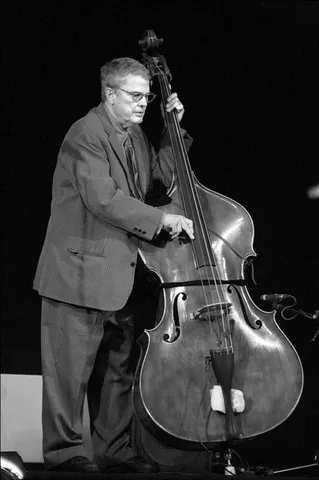
- Charlie Haden - bassist alongside Cherry in Coleman's Atlantic quartet (1959-60), on Brown Rice (1975), Old and New Dreams (1976-90), and Art Deco (1988).
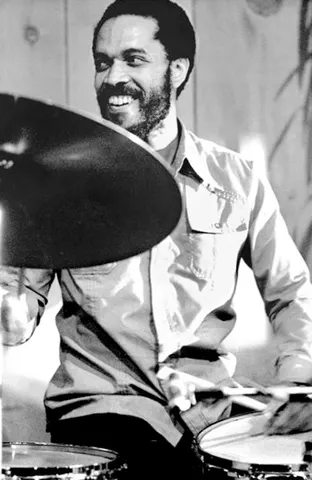
- Billy Higgins - drummer from the earliest Coleman dates (1958) through Evidence (1961), Brown Rice (1975), and Art Deco (1988); a friendship dating to their reform-school years together in Los Angeles.
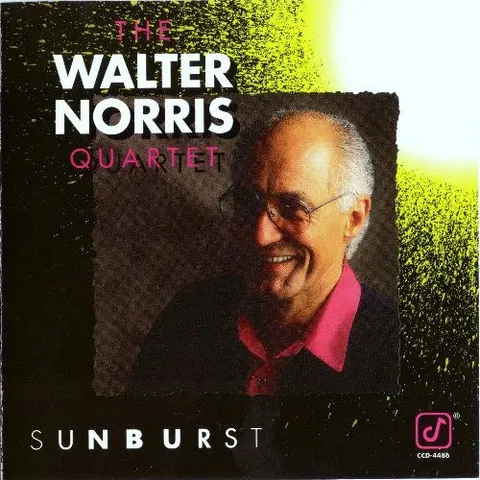
- Walter Norris - pianist in Coleman's pre-Atlantic quintet, documented on Something Else!!!! and Tomorrow Is the Question! (1958-59).
- Steve Lacy - co-led Evidence (Prestige/New Jazz, 1961), an all-Monk-repertoire session.
- John Coltrane - co-led The Avant-Garde (recorded 1960, released 1966).
- Gato Barbieri - tenor saxophonist on Cherry's Blue Note leader dates Complete Communion and Symphony for Improvisers (1965-66), discovered by Cherry while both were living in Rome.
- Ed Blackwell - drummer and longtime duo/group partner across four decades: Coleman's quartet, the Complete Communion-era Blue Note dates, the "Mu" duo (1969), El Corazon (1982), and Old and New Dreams; not currently profiled separately on JazzProfiles.com.
- Pharoah Sanders - tenor saxophonist on Symphony for Improvisers and Where Is Brooklyn? (1966-69).
- Archie Shepp - co-founded the New York Contemporary Five (1963) with Cherry and John Tchicai.
- Albert Ayler - recorded and toured Europe with Cherry in the early-to-mid 1960s, including the session that became Ghosts (1964).
- Collin Walcott and Nana Vasconcelos - trio partners in Codona (1978-82); neither currently profiled separately on JazzProfiles.com.
- Dewey Redman - saxophonist in Old and New Dreams (1976-90).
- Rashied Ali - part of the same early-1960s New York free-jazz circle; Ali backed Cherry, along with Ayler, Shepp, and Sanders, as he established himself on the scene before joining John Coltrane's band in 1965.
- Moki Cherry - wife, Swedish textile designer and visual artist, and collaborator on the Organic Music Society project from the late 1960s until her death in 2009.
- Franco Tonani (drums) - one of two drummers on Giorgio Gaslini's Nuovi Sentimenti (New Feelings), recorded in Milan on February 4, 1966 with Cherry on pocket trumpet. Profiled on JazzProfiles.com.
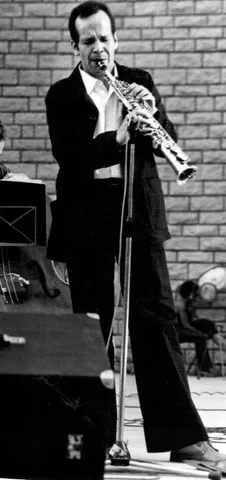
- Gianni Bedori (alto saxophone, flute) - credited with Cherry on Giorgio Gaslini's Nuovi Sentimenti (New Feelings) Suite, recorded in Milan in 1966. Profiled on JazzProfiles.com.
More Free Jazz Artists
See all 269 Free Jazz artists →More American Jazz Artists
See all 567 American artists →Note on Spotify: Don Cherry's Spotify artist page is conflated with at least one other recording artist of the same name (its listed "top tracks" include "Band of Gold," a 1956 hit by a different, unrelated 1950s pop singer named Don Cherry), so no artist-page link is given here to avoid pointing readers to the wrong catalog. Individual album links above were checked one at a time against title, personnel, and track structure.
- Wikipedia: Don Cherry (trumpeter)
- Discogs: Don Cherry (artist 42757)
- Wikipedia: Complete Communion
- Wikipedia: Symphony for Improvisers
- Wikipedia: Where Is Brooklyn?
- Wikipedia: Brown Rice (album)
- Wikipedia: Codona (album)
- Wikipedia: Old and New Dreams (1979 album)
- Wikipedia: A Tribute to Blackwell
- Wikipedia: Multikulti (album)
- Wikipedia: Evidence (Steve Lacy album)