 JAZZPROFILES lives in the music 2,555 Jazz Artists fully Profiled!
Armando Trovajoli
Last updated November 10, 2026
Listen on Spotify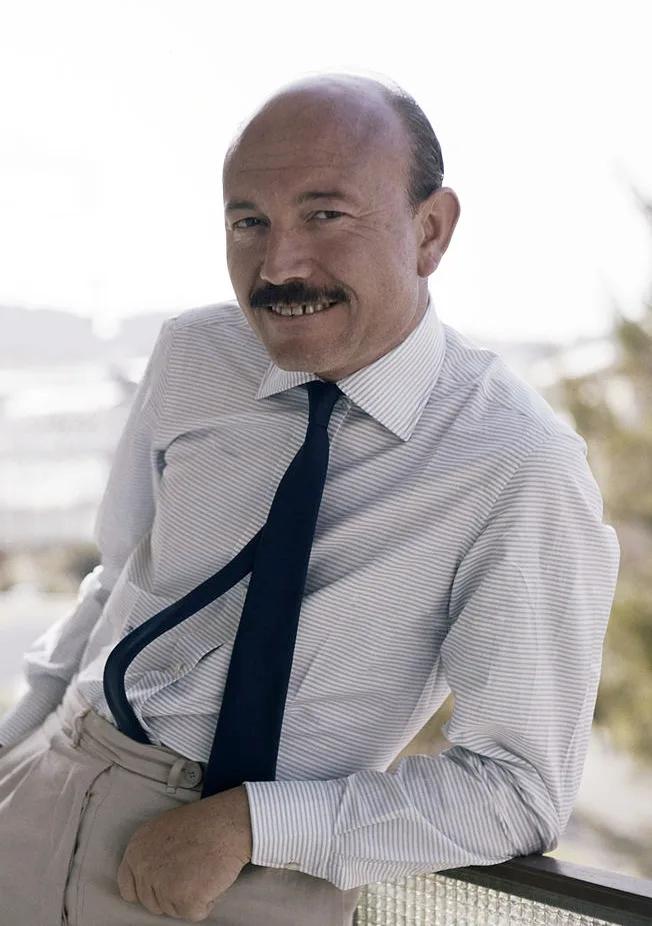
Armando Trovajoli, 1960 Public domain (Italian photograph more than 20 years old, Commons template PD-Italy) — Wikimedia Commons - https://commons.wikimedia.org/wiki/File:Armando_Trovajoli_1960.jpg - Unknown photographer, Mondadori Publishers

Armando Trovajoli (the family name is also spelled Trovaioli, and many of his records use that form) was born in Rome on September 2, 1917. He began on the violin as a child, then took a diploma in piano and composition at the Santa Cecilia conservatory in Rome. His jazz apprenticeship came before the diploma, which he completed in 1948. In 1937 he joined the orchestra of Rocco Grasso, who made him the band's pianist the following year, and in 1939 he played with the orchestra of Sesto Carlini, one of the best-regarded Italian jazz ensembles of the period. From 1940 to 1943 he served as an army officer, sent to the Balkan front and later posted near Rome, and he was discharged in 1944.
When the Allies reached Rome that year he formed Il club del ritmo with guitarist Libero Tosoni, and the group played the city's clubs and theatres. After the war he kept alternating jazz with light music. In 1949 he was chosen to represent Italy at the international jazz festival in Paris, where he played the Salle Pleyel with Gorni Kramer on bass and Gil Cuppini on drums. The festival bill also carried Charlie Parker and Miles Davis.
The first run of recordings dates from 1950 and 1951, issued on Parlophon under the series title Musica per i vostri sogni. They include trio 78s with Franco Cerri and drummer Paolo Tagliaferri (Body and Soul and Lullaby in Rhythm, What Is This Thing Called Love), solo-piano sides on Fascinating Rhythm and Sophisticated Lady (November 1950), and, in 1951, Yesterdays, Easy to Love, Lady Bird and All the Things You Are, one side of them with a string orchestra. One 1950 disc pairs his trio on Big City Blues with a side by the Roman New Orleans Jazz Band. In the same years RAI gave him a light-music orchestra built around strings, harp, vibraphone, electric guitar and his own piano, and Italian Wikipedia describes its radio broadcasts as having a clear jazz orientation. In 1952 and 1953 he and Piero Piccioni alternated as conductor of the weekly broadcast Eclipse, an unusually refined program for radio orchestras of the time. He also appeared as a soloist in Gershwin repertoire in 1951, at the Teatro San Carlo in Naples and at the Basilica of Maxentius in Rome.
Film work then became the larger part of his life. He shared the score of Bitter Rice (1949) with Goffredo Petrassi, and in 1951 he wrote music for Anna, including the song El Negro Zumbón, an international hit. By the end of his career he had composed or conducted more than 300 scores, working with Vittorio De Sica, Dino Risi and, across almost his whole filmography, Ettore Scola; English Wikipedia notes that many of the scores for Commedia all'italiana comedies were jazz scores. He conducted the Sanremo Festival orchestra in 1953 and arranged the winning song, Viale d'autunno, and he wrote the Garinei and Giovannini musicals Rugantino (1962), Ciao Rudy and Aggiungi un posto a tavola, with Roma nun fa' la stupida stasera from Rugantino becoming his best-known song. He married the actress Pier Angeli in 1962 (they divorced in 1969) and received the David di Donatello career award in 2007.
The most concentrated jazz documentation falls between 1958 and 1963. RAI's light-music orchestra in Rome, which he founded in 1958 and which Kramer, Lelio Luttazzi and Piero Piccioni later directed, was one outlet; the saxophonist Gianni Basso worked in a radio orchestra under Trovajoli from 1956 to 1958. On RCA Italiana he recorded the orchestral album Songs by Night (1958), then two piano-trio albums with Berto Pisano on bass, Sergio Conti on drums and Enzo Grillini on guitar: Trovajoli Jazz Piano (1959), with Round Midnight, Walkin' and Have You Met Miss Jones, and Softly (1959), which adds Gino Marinacci on flute. A February 1960 seven inch, Round Midnight, carries three of those trio performances. His quartet's Round Midnight was one of the Italian jazz selections on RCA's 1960 compilation Il Jazz in Italia: 4 Dimensioni, next to the Romano Mussolini Quartet and the Nunzio Rotondo Quartet. The Beat Generation (1960) is the big-band record: a big band credited with six trombones, five trumpets and seven saxophones, including Basso, Oscar Valdambrini, Dino Piana, Gino Marinacci, Livio Cerveglieri, Attilio Donadio and Baldo Panfili, playing arrangements by Trovajoli on pieces such as Blues and Bonjour Tristano. In 1963 he followed with a three-volume Gershwin series for RCA Italiana, with Nora Orlandi's vocal group.
He remained a public presence in Rome into his nineties. In Casa del Jazz's 2008 tribute recording Omaggio a Armando Trovajoli, made on March 20, 2008 by the Dino e Franco Piana Jazz Orchestra with arrangements by Franco Piana, he plays piano himself on two tracks, Piaceva alle donne and Roma nun fa' la stupida stasera, while Enrico Pieranunzi takes the piano on a third. He passed away in Rome on February 28, 2013, at 95. The Museo di Roma in Trastevere marked the tenth anniversary with the exhibition Armando Trovajoli. Una leggenda in musica, which ran from March 11 to May 14, 2023.
Trovajoli's jazz is a pianist's and an orchestrator's jazz that sits close to the light-music world he also worked in. The 1950s trio records favor standards (Porter, Kern, Rodgers and Hart, Monk's Round Midnight) played in a clean, swinging, melodic style with bass, drums and guitar behind him, and the later RCA catalogue is filed under jazz with swing, cool jazz and easy listening as style tags. The Gershwin records of 1963 and a 1970 promotional LP on the same repertoire show where his affections lay: American songbook material treated by a large orchestra with a vocal chorus. The Beat Generation points in a more modern direction, with a title track and a piece called Bonjour Tristano whose title nods to the pianist Lennie Tristano.
He should be read plainly as a film and theatre composer who was also a working jazz pianist, not as a jazz specialist. His own phrasing and orchestration move between jazz, popular song and screen music with little friction, which suits the jazz-flavored comedy scores English Wikipedia singles out. A 2023 exhibition text describes him as a jazz lover who played with many leading jazz musicians and names Duke Ellington, Miles Davis, Chet Baker, Stéphane Grappelli and Django Reinhardt, but the dates and settings of those meetings are not documented in the sources consulted, so they are not treated here as recorded collaborations.
- Fascinating Rhythm / Sophisticated Lady (1950, Parlophon PA 115) - The Gershwin and Ellington pairing on a Musica per i vostri sogni 78, among the earliest documented jazz piano records he made.
- Body and Soul / Lullaby in Rhythm (1950, Parlophon PA 106) - Trio 78 with Franco Cerri on guitar and Paolo Tagliaferri on drums.
- Trovajoli Jazz Piano (1959, RCA Italiana LPM 10049) - His clearest jazz piano LP, a quartet date of standards with Berto Pisano, Sergio Conti and Enzo Grillini.
- Softly (1959, RCA Italiana LPM 10064) - The companion quartet album, with Gino Marinacci's flute and a harp guitar added.
- The Beat Generation (1960, RCA PML 10300) - Big-band record with many of Rome's leading jazz horn players.
- Round Midnight (1960, RCA Italiana EPA 10049-1) - Seven inch of three trio performances, including Monk's title tune.
- Gershwin / Trovajoli (1963, RCA Italiana PML 10336 to 10338) - Three LPs of Gershwin songs with orchestra and the 4 + 4 di Nora Orlandi chorus.
- Omaggio a Armando Trovajoli (2008, Casa del Jazz) - A tribute by the Dino e Franco Piana Jazz Orchestra on which Trovajoli himself plays on two tracks.
Armando Trovajoli: Full Discography
Discogs artist: Armando Trovaioli (128977) · Real name Armando Trovajoli · Born September 2, 1917, Rome
Discogs files his work under several entries: the main one above, Armando Trovaioli E La Sua Orchestra, and a few small groups (a quartet, a sextet and a soloists' ensemble). All of them were checked. Most of his output is film, theatre and radio music, about 1,400 credited rows in all, so this page covers the jazz and jazz-adjacent records and summarizes the rest. Catalog numbers and personnel come from the individual releases; where a detail is not shown there it is marked as not confirmed.
Leader: Albums
| Album | Year | Label (catalog) | Personnel & Notes | Listen | Buy |
|---|---|---|---|---|---|
| Songs by Night | 1958 | RCA Italiana (LPM 10026) | Orchestral album of standards (Stardust, The Man I Love, Nuages) and film themes (Prigionieri del cielo, Desirée), billed to Armando Trovaioli e la sua Orchestra. Personnel not confirmed | — | — |
| Trovajoli Jazz Piano | 1959 | RCA Italiana (LPM 10049) | Trovajoli (piano), Berto Pisano (bass), Sergio Conti (drums), Enzo Grillini (guitar). Ten standards including Round Midnight, Walkin', Nice Work If You Can Get It and Have You Met Miss Jones | — | — |
| Softly | 1959 | RCA Italiana (LPM 10064) | Trovajoli (piano), Berto Pisano (bass), Sergio Conti (drums), Enzo Grillini (guitar), Gino Marinacci (flute), Franco Chiari (harp guitar). Includes Just One of Those Things, Lullaby in Rhythm, Bernie's Tune and Whispering | — | — |
| The Beat Generation | 1960 | RCA (PML 10300) | Big band led by Trovajoli on piano, arranger and conductor. Saxophones: Attilio Donadio, Livio Cerveglieri and Sergio Valenti (alto), Gianni Basso, Marcello Cianfanelli and William Hawthorne (tenor), Gino Marinacci (baritone). Trumpets: Baldo Panfili, Beppe Cuccaro, Nini Rosso, Nino Culasso, Oscar Valdambrini. Trombones: Bill Gilmore, Dino Piana, Ennio Gabbi, Enzo Forte, Mario Midana, Mario Pezzotta. Rhythm: Berto Pisano (bass), Jimmy Pratt and Sergio Conti (drums), Enzo Grillini and Franco Pisano (electric guitar). Tracks include Blues, O.B. Street Blues and Bonjour Tristano | — | — |
| Musical Nightcap | 1961 | RCA Camden (CAS 598) | Orchestral album of standards and Brazilian and Portuguese themes (On the Street Where You Live, The Lady Is a Tramp, Rio de Janeiro). Personnel not confirmed | — | — |
| Gershwin / Trovajoli, Volume 1 (1919 to 1928) | 1963 | RCA Italiana (PML 10336) | With the 4 + 4 di Nora Orlandi vocal group. Swanee, Fascinating Rhythm, Someone to Watch Over Me, The Man I Love | — | — |
| Gershwin / Trovajoli, Volume 2 (1929 to 1935) | 1963 | RCA Italiana (PML 10337) | With the 4 + 4 di Nora Orlandi. Liza, Embraceable You, I Got Rhythm, Summertime | — | — |
| Gershwin / Trovajoli, Volume 3 (1936 to 1937) | 1963 | RCA Italiana (PML 10338) | With the 4 + 4 di Nora Orlandi. They Can't Take That Away from Me, A Foggy Day, Love Is Here to Stay | — | — |
| Un'ora con George Gershwin | 1970 | RCA Italiana (KIS 234) | Promotional LP of Gershwin songs with the 4 + 4 di Nora Orlandi. Issued September 1970 | — | — |
Leader: Singles and EPs, 1950 to 1960
| Release | Year | Label (catalog) | Personnel & Notes | Listen | Buy |
|---|---|---|---|---|---|
| What Is This Thing Called Love / Aftermoon Blues | 1950 | Parlophon (TT 9367), 78 rpm | Trovajoli (piano), Franco Cerri (bass), Paolo Tagliaferri (drums). Released March 1950 | — | — |
| Big City Boogie / Sergio's Blues | 1950 | Parlophon (TT 9494), 78 rpm | Side A, Big City Blues, is Trovajoli's trio with Cerri on bass and Tagliaferri on drums; side B is by the Roman New Orleans Jazz Band, a separate group. Released March 1950 | — | — |
| Body and Soul / Lullaby in Rhythm | 1950 | Parlophon (PA 106), 78 rpm | Trovajoli (piano), Cerri (guitar), Tagliaferri (drums). Part of the Musica per i vostri sogni series | — | — |
| Fascinating Rhythm / Sophisticated Lady | 1950 | Parlophon (PA 115), 78 rpm | Trovajoli (piano). Released November 20, 1950. Musica per i vostri sogni, album no. 3 | — | — |
| Yesterdays / Easy to Love | 1951 | Parlophon (PA 116), 78 rpm | Trovajoli (piano). Musica per i vostri sogni, album no. 3 | — | — |
| Lady Bird / All the Things You Are | 1951 | Parlophon (PA 117), 78 rpm | Trovajoli (piano); Discogs notes a string orchestra on the second side | — | — |
| Round Midnight | 1960 | RCA Italiana (EPA 10049-1), 7 inch EP | Round Midnight, These Foolish Things, Have You Met Miss Jones. Trovajoli (piano), Berto Pisano (bass), Sergio Conti (drums), Enzo Grillini (guitar). Released February 1960 | — | — |
Guest and Compilation Appearances
| Year | Project (Leader) | Title | Label | Catalog | Role | Notes |
|---|---|---|---|---|---|---|
| 1960 | Various artists | Il Jazz in Italia: 4 Dimensioni | RCA Italiana | LPM 60000(2) | Quartet leader | Round Midnight by the Armando Trovaioli Quartet, on the compilation's modern side beside Romano Mussolini, Nunzio Rotondo, Franco Cerri and the Basso-Valdambrini quintet |
| 2008 | Dino e Franco Piana Jazz Orchestra | Omaggio a Armando Trovajoli | Casa del Jazz | CdJ3_04 | Piano, tracks 6 and 9 | Recorded March 20, 2008 at Casa del Jazz, Rome. Arrangements and conducting by Franco Piana; Trovajoli plays on Piaceva alle donne and Roma nun fa' la stupida stasera, and Enrico Pieranunzi plays piano on 7 Uomini d'oro. A tribute to him, not his own release |
| 2011 | Various artists | Jazz in Italy in the 50s: Rare and Unissued Jazz Concerts | Riviera Jazz Records | RJR CD 018 | Sextet leader | Track 5, "Sestetto," by I Solisti di Armando Trovaioli; recording date not confirmed |
Film, Theatre and Radio Work
Trovajoli composed or conducted more than 300 film scores, among them Bitter Rice (1949, shared with Goffredo Petrassi), Anna (1951), Two Women (1960), Yesterday, Today and Tomorrow (1963), A Special Day (1977) and numerous Ettore Scola films, and he wrote the musicals Rugantino (1962), Ciao Rudy and Aggiungi un posto a tavola. Hundreds of soundtrack singles, EPs and LPs for CAM, RCA Italiana and others carry his name; they are not itemized here.
Awards
| Year | Award | Result |
|---|---|---|
| 2007 | David di Donatello, Career Award | Winner |
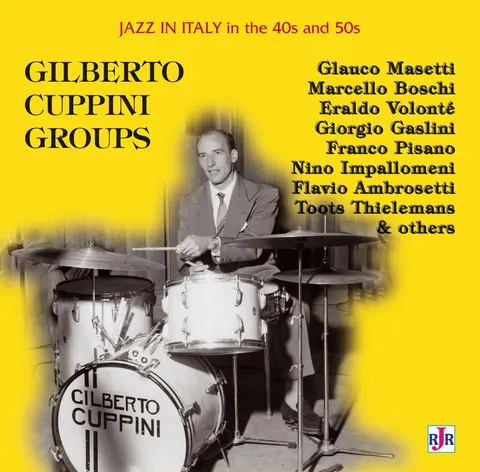
- Gil Cuppini - drummer in the trio, with Gorni Kramer on bass, that represented Italy at the 1949 Paris jazz festival.
- Franco Cerri - bass and guitar on his 1950 Parlophon trio 78s.
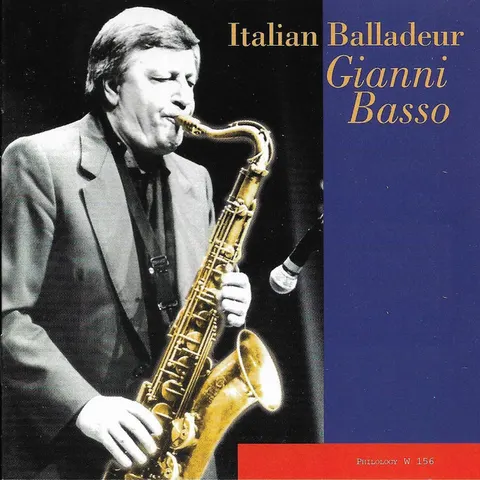
- Gianni Basso - tenor saxophonist in a radio orchestra under Trovajoli from 1956 to 1958 and in the sax section of The Beat Generation (1960).
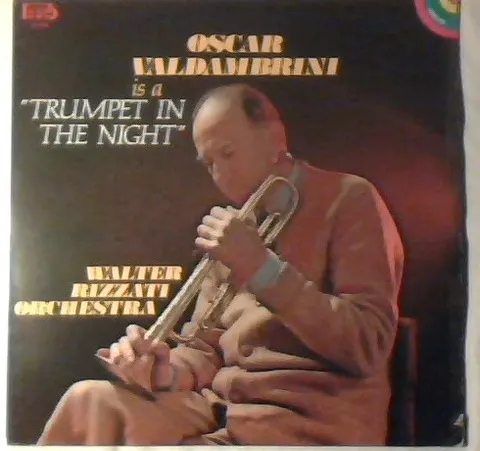
- Oscar Valdambrini, Dino Piana, Gino Marinacci, Livio Cerveglieri, Attilio Donadio, Baldo Panfili - horn players in the The Beat Generation orchestra (1960); Marinacci also plays flute on Softly (1959).
- Berto Pisano, Sergio Conti, Enzo Grillini - bass, drums and guitar in his late-1950s RCA trio and quartet recordings, and again in the 1960 Round Midnight seven inch.
- Piero Piccioni - co-conductor of the radio program Eclipse in 1952 and 1953.
- Nora Orlandi and the 4 + 4 di Nora Orlandi - vocal group on the three 1963 Gershwin albums.
- Franco Piana and Dino Piana - arranger and trombonist behind Omaggio a Armando Trovajoli (2008), where Trovajoli plays on tracks 6 and 9.
- Enrico Pieranunzi - plays piano on track 8 of the same tribute album.
- Gianni Savelli, Claudio Corvini, Mario Corvini, Massimo Pirone - section players on the 2008 tribute.
- Jazz figures named in a 2023 exhibition text as people he played with: Duke Ellington, Miles Davis, Chet Baker, Stéphane Grappelli and Django Reinhardt. No specific session or date is documented for these.
More Swing Artists
See all 273 Swing artists →More Italian Jazz Artists
See all 554 Italian artists →- Wikipedia: Armando Trovajoli
- Wikipedia (Italian): Armando Trovajoli
- Discogs: Armando Trovaioli
- MusicBrainz: Armando Trovajoli
- Finestre sull'Arte: exhibition at the Museo di Roma in Trastevere, 2023
- Kronos Records: Armando Trovajoli (1917 - 2013)
- Discogs: Omaggio a Armando Trovajoli (Dino e Franco Piana Jazz Orchestra, 2008)
- Discogs: Il Jazz in Italia: 4 Dimensioni (RCA Italiana, 1960)