 JAZZPROFILES lives in the music 1,765 Jazz Artists fully Profiled!
Tadayuki Harada
Last updated October 21, 2026
Listen on Spotify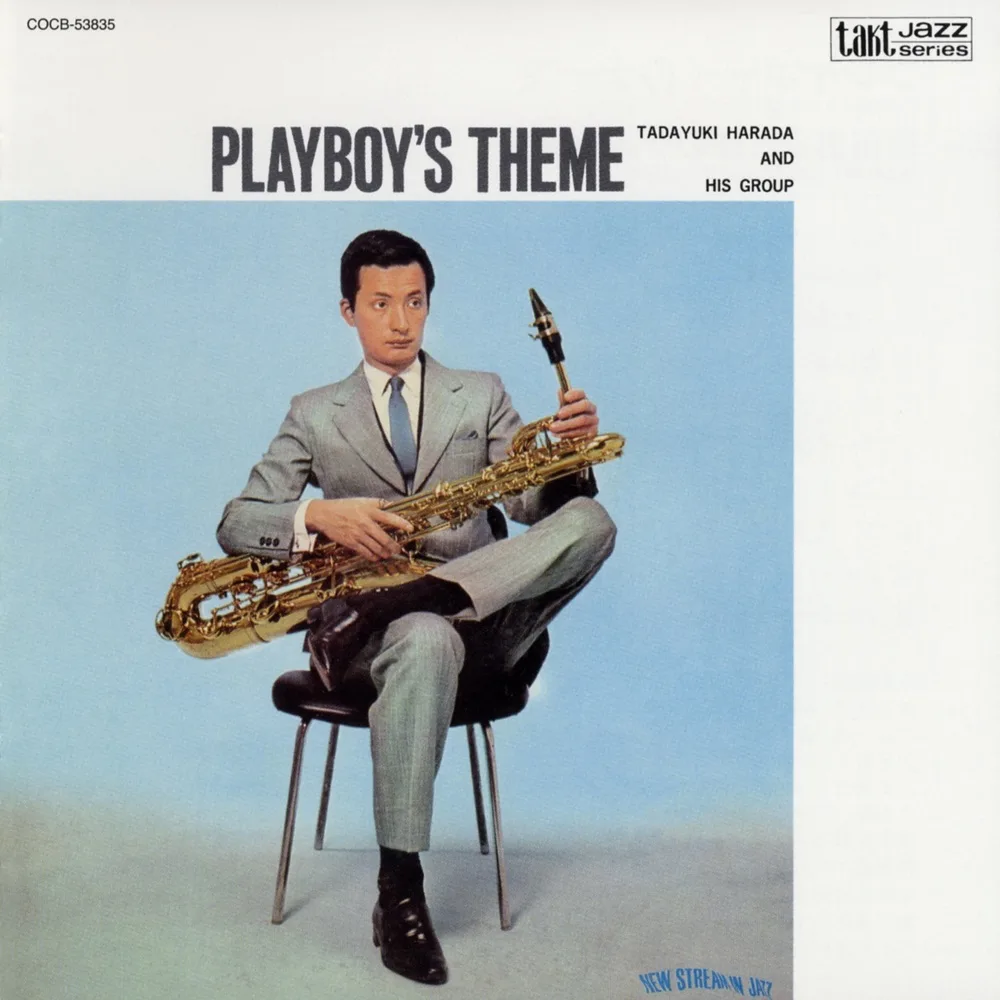
Tadayuki Harada on the cover of *Playboy's Theme* (Tadayuki Harada and His Group, Takt Jazz, 1968), his own leader album. Standard copyright, all rights reserved, held by Nippon Columbia (Takt Jazz series). This is not a Creative Commons or public-domain image; it is an album cover shown as an honestly disclosed editorial identification image. — https://music.apple.com/jp/album/playboys-theme/1753221154
Tadayuki Harada (原田忠幸) is a baritone saxophonist from Kyoto whose career follows the whole arc of postwar Japanese big-band jazz: the dance halls and American-base clubs of the early 1950s, the Swing Journal poll era, a few years as a studio and show musician in Los Angeles and Las Vegas, and then forty years of Tokyo sessions, recordings and club dates. Columbia Japan's reissue notes call him the country's foremost baritone saxophonist, and a 2010 magazine interview places him at the top of that field in Japan.
He was born on July 30, 1936, in Kyoto, into a musical family. His father was the drummer Jimmy Harada (ジミー原田, real name Joji Harada, 1911 to 1995), who ran a popular band in the Kansai region before the war and later led Jimmy Harada and the Old Boys. His older brother Isamu Harada is also a jazz drummer, and Isamu's son Shuntaro Harada was an original drummer of The Square, the group now known as T-Square. Tadayuki says he dreamed of professional baseball as a boy, and that the family's move to Tokyo after the war ended that plan. Band members lived in the family house in Kyoto, so music came as a matter of course.
His first instrument was the clarinet, which his father bought him when he left middle school. His teacher was Raymond Conde, the Filipino clarinetist whose Gay Septet was one of the most popular groups of the early postwar jazz boom. Harada worked as the band boy for about two years, learning from the older players, then played alto saxophone at Yokohama's Cliffside Club. In 1955, at 19, he ran into the bandleader Nobuo Hara on a train and was invited to join Nobuo Hara and the Sharps and Flats as a baritone saxophonist. By his own account the band had never carried a baritone before, he did not own one, and Hara borrowed a horn for him; he taught himself the instrument with no model to follow. He stayed under two years and often backed the singer Chiemi Eri.
In 1957 he joined the West Liners, then led by the tenor saxophonist Konosuke Saijo (西條孝之介), a group built on the West Coast sound of Stan Getz and Lee Konitz. Norio Maeda wrote the arrangements, and the band was soon renamed for its drummer, Takeshi Inomata. On May 10, 1961, at TBS Hall in Tokyo, a group of young modern players recorded Modern Jazz Show Case as the Modern Jazz Playboys: Sadao Watanabe on alto saxophone, Akira Miyazawa on tenor, Harada on baritone, Hideto Kanai on bass and Inomata on drums, playing "Moanin'," "A Night in Tunisia," "The Preacher" and other hard bop repertoire that Japanese listeners had loved since the 1950s.
His most visible session of the decade came in July 1964. On the 16th and 17th, in a TBS studio in Tokyo, Toshiko Akiyoshi, working at the time as Toshiko Mariano, led an all-star Japanese big band with the bassist Paul Chambers and the drummer Jimmy Cobb as guests and Charlie Mariano arranging most of the book. Harada was the baritone saxophonist, in a reed section with Sleepy Matsumoto (Hidehiko Matsumoto), Miyazawa, Hiroshi Okazaki and Shigeo Suzuki, and a brass section that included Terumasa Hino and Hiroshi Suzuki. It came out in the United States on Vee-Jay as Jazz in Japan, and in Japan as Toshiko & Modern Jazz.
In August 1966 he left the West Liners together with Maeda, and the next month he went to the United States. He has said he wanted to test himself abroad, and that his partner, the singer Izumi Yukimura, wanted to sing there. In Los Angeles he found work slowly, mostly in studios, shows and film scoring, with help from the actress Shirley MacLaine. In January 1967 he and Yukimura were married in Reno, Nevada, where she was the vocalist and he was in the band for a Donald O'Connor show. After about a year and a half he moved to Las Vegas for show work, and he later called the exposure to big-name singers and bands the most valuable thing he took home. He meant to settle there, but calls from Yukimura's management brought him back to Japan, and the work offers waiting for him in Tokyo kept him. The marriage later ended in divorce.
On a return to Tokyo in 1968 he recorded Playboy's Theme for the Takt Jazz label on May 1 and 2, with Maeda writing string arrangements around a band that included Masaru Imada and Maeda on piano, Sadanori Nakamure on guitar, Inomata on drums, and a horn section of Shigeo Suzuki, Hiroshi Okazaki, Ichiro Mimori, Yoichi Kanai, Tetsuo Fushimi, Keiri Okubo and Hiroshi Nemoto. The program mixes the hits of the day ("Sunny," "A Whiter Shade of Pale," "The Look of Love") with "Mercy, Mercy, Mercy" and the title tune. Columbia Japan issued it on CD for the first time in July 2009 and describes it as popular with club DJs.
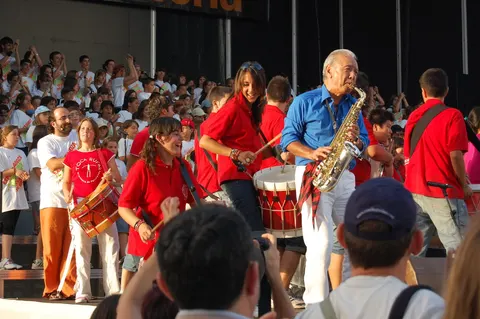
By 1971 he was settled in Japan again and formed his own big band in 1971, The Hearts, with an unusual front line of four trumpets and two saxophones. The same year he joined Inomata's jazz-rock band The Third, recording Hare Krishna / The Third First Album on April 6 and 10, 1971, with Maeda conducting. In June 1975 he was one of the seven players on Inomata and Maeda's Alone Together, cut in a single day at Iino Hall. From 1979 he was a member of Maeda's Wind-Breakers, which he described in 2010 as still his main regular job. He also made leader records of Japanese pop and television themes, including Love Sounds from T.V. Drama Themes (Columbia, 1976), and in 1979 Discogs credits him as producer of Maria Asahina's disco-soul album Maria, an Alfa record with arrangements by Harvey Mason, Kouichi Sugiyama and Yellow Magic Orchestra. Asahina is Yukimura's daughter.
By his own account he led the band for Frank Sinatra's five Japan tours, in 1974, 1985, 1989, 1991 and 1992, and he lists Marlene Dietrich, Anita O'Day, Helen Merrill, Natalie Cole, Sammy Davis Jr. and Quincy Jones among the visitors he played behind. In 1994 he toured New York with Inomata's All Stars, playing Carnegie Hall and the Apollo Theater. He calls Gerry Mulligan, whom he first met at TBS Hall in the 1950s, a teacher for life, and says he received his guidance in the 1990s.
Midnight Sun (Sax Record, 2002) is a quintet album of standards under his own name, recorded on April 24, 2002, at the Kanagawa Prefectural Public Hall, with Toshihiko Ogawa on piano, Sadanori Nakamure on guitar, Kunimitsu Inaba on bass and Shinnosuke Takahashi on drums. He turned 90 on July 30, 2026, and Japanese Wikipedia lists him as living. In 2010, reflecting on 55 years as a professional, he said that jazz was something he had lived alongside his whole life and that his happiest moments were playing favorite tunes with close friends.
Harada plays a Selmer New York baritone saxophone made in Elkhart, with a Meyer mouthpiece, and his sound is the thick, rounded one that a big-band baritone needs. He says the instrument changes the whole band: when a baritone joins a full band, the sound gains body and thickness. That is the role he filled for Hara, for Saijo and Inomata, for Maeda's Wind-Breakers, and for the visiting Americans who hired him.
His model for the instrument was the West Coast school. The West Liners were formed around the sound of Stan Getz and Lee Konitz, and he names Gerry Mulligan as the baritone player who taught him most. Alongside the section work he has a ballad and standards voice of his own, which Midnight Sun puts in the open: "Angel Eyes," "Here's That Rainy Day," "These Foolish Things," "I Loves You, Porgy" and an unaccompanied reading near the end of the program.
His recorded range is wide. The same musician is on a 1956 Swing Journal all-star disc, a 1964 Toshiko Akiyoshi big-band session, 1970s jazz-rock sessions with Inomata, television themes and Japanese pop covers under his own name, and albums by singers from Helen Merrill's 1963 Tokyo recording to Yuming's 1975 Cobalt Hour. Japanese-language sources record that he finished in the top five of the Swing Journal reader poll every year, in the "other instruments" category. Asked what he learned in America, he said that technical skill is assumed there and that individuality is what gets a player noticed.
- Toshiko & Modern Jazz (1964, Columbia; also issued as Jazz in Japan on Vee-Jay) - Toshiko Akiyoshi's all-star Japanese big band with Paul Chambers and Jimmy Cobb, arranged by Charlie Mariano, recorded July 16 and 17, 1964. Harada is the baritone saxophonist. Spotify - Toshiko & Modern Jazz Listen
- Modern Jazz Show Case (1961, Modern Jazz Playboys, Columbia ZS-1015) - Watanabe, Miyazawa, Harada and Inomata in an eight-track hard bop program recorded at TBS Hall. YouTube - Modern Jazz Show Case, full album Listen
- Playboy's Theme (1968, Tadayuki Harada and His Group, Takt Jazz; Columbia CD reissue COCB-53835) - his strongest leader record: ten pop and soul tunes in string-backed jazz arrangements by Norio Maeda. Spotify - Playboy's Theme · Apple Music - Playboy's Theme Listen
- Hare Krishna / The Third First Album (1971, Takeshi Inomata and The Third, Express ETP-9032) - Inomata's large jazz-rock band with Maeda conducting, recorded April 1971. YouTube - full album Listen
- Alone Together (1975, Audio Lab ALJ-1035) - the septet date billed to Inomata, Maeda, Arakawa, Saijo, Harada, Igarashi and Fushimi, recorded at Iino Hall on June 6, 1975. YouTube - Alone Together Listen
- Midnight Sun (2002, Sax Record SAX-2) - his quintet album of standards with Toshihiko Ogawa, Sadanori Nakamure, Kunimitsu Inaba and Shinnosuke Takahashi. Buy
Tadayuki Harada (原田忠幸) - Full Discography
Japanese jazz baritone saxophonist and bass clarinettist, bandleader and session musician. Born July 30, 1936, Kyoto. Discogs artist 870564.
Name variations on record: T. Harada, T.Harada, Tadayuki Harada And His Group, 原田忠幸, 原田忠行.
Group affiliations: Tadayuki Harada & His Group, Takeshi Inomata & His West Liners, Takeshi Inomata And His Friends, Wind-Breakers, Motohiko Hino & His Friends, Kazumi Watanabe With Orchestra, Modern Jazz Playboys, The Modern Jazz All Stars.
Leader
| Album | Year | Label | Personnel | Notes | Listen | Buy |
|---|---|---|---|---|---|---|
| Playboy's Theme (as Tadayuki Harada and His Group; Japanese title プレイボーイのテーマ) | 1968 | Takt Jazz (Nippon Columbia); Columbia XMS-10004-CT promo LP, 1969; CD reissue Columbia COCB-53835, 2009 | Tadayuki Harada (baritone saxophone), Shigeo Suzuki and Hiroshi Okazaki (alto saxophone, flute), Ichiro Mimori and Yoichi Kanai (tenor saxophone), Tetsuo Fushimi and Keiri Okubo (trumpet), Hiroshi Nemoto (flute, baritone saxophone), Masaru Imada and Norio Maeda (piano), Tatsuro Takimoto (bass), Takeshi Inomata (drums), Sadanori Nakamure (guitar), Yonosuke Segawa (percussion), with a string orchestra; arrangements by Norio Maeda | Recorded May 1 and 2, 1968. Ten tracks: "Theme from The Monkees," "Sunny," "Cinnamon and Clove," "A Whiter Shade of Pale," "The Look of Love," "Going Out of My Head," "Playboy's Theme," "Constant Rain," "For Me," "Mercy, Mercy, Mercy." The 2009 CD was the first on that format; the Columbia notes call it popular with club DJs. Discogs master 2377585. | Spotify · Apple Music | Amazon |
| 手紙 / 時は流れる (Tegami / Toki wa Nagareru) | 1971 | Express, EP-7774 | Tadayuki Harada (baritone saxophone) with orchestra | Twelve Japanese pop songs of the day played as instrumentals, among them "手紙," "京都の恋" and "時は流れる." Discogs master 3693378; tagged Jazz and Pop (Kayokyoku, Instrumental). | not found | Amazon |
| Love Sounds from T.V. Drama Themes (as Tadayuki Harada and His Hearts Grand Orchestra) | 1976 | Columbia, KZ-7057 | Tadayuki Harada (baritone saxophone) and The Hearts Grand Orchestra; arranged by Norio Maeda and Toshihiko Ogawa | Released January 1976. Twelve Japanese television-drama themes, including "太陽にほえろ" and "華麗なる一族." | not found | Amazon |
| A Moment of Love | undated | MCA Records, JMC-5004 | Tadayuki Harada (baritone saxophone) | Twelve easy-listening pop and film themes, among them "Alfie," "The Look of Love," "Born Free" and "Love Is Blue." No year on the Discogs entry. | not found | Amazon |
| Midnight Sun | 2002 | Sax Record, SAX-2 | Tadayuki Harada (baritone saxophone, leader), Toshihiko Ogawa (piano), Sadanori Nakamure (guitar), Kunimitsu Inaba (bass), Shinnosuke Takahashi (drums) | Recorded April 24, 2002, at the Kanagawa Prefectural Public Hall (small hall). Thirteen tracks, mostly standards, with one duet and one unaccompanied solo; track 13 is an extra track. HDCD, 59:46. | not found | Amazon |
Co-Leader
| Album | Year | Label | Co-billed with | Personnel | Notes | Listen | Buy |
|---|---|---|---|---|---|---|---|
| Alone Together (アローン・トゥギャザー) | 1975 | Audio Lab. Record, ALJ-1035 | Takeshi Inomata, Norio Maeda, Yasuo Arakawa, Konosuke Saijo, Akitoshi Igarashi, Tetsuo Fushimi | Takeshi Inomata (drums), Norio Maeda (piano), Yasuo Arakawa (bass), Konosuke Saijo (tenor saxophone), Tadayuki Harada (baritone saxophone), Akitoshi Igarashi (alto saxophone), Tetsuo Fushimi (trumpet) | Recorded at Iino Hall, June 6, 1975. Eight tracks: "These Foolish Things," "I'll Remember You," "In a Sentimental Mood," "Like Someone in Love," "Alone Together," "Love Is Here to Stay," "You Don't Know What Love Is," "The Things We Did Last Summer." Presented by Okihiko Sugano. Discogs master 1062399. | Full album on YouTube | Amazon |
| The Enchanted Jazz Violin (魅惑のジャズ・ヴァイオリン) | 1970 | Toshiba Records, TP-7472 | Akira Ishikawa, Kiyoshi Sugimoto, Tadaaki Ono, Tetsuo Fushimi, Kaoru Iiyoshi, Isao Eto, Hiroshi Okazaki | Tadaaki Ono (violin), Kaoru Iiyoshi (piano, arranger), Kiyoshi Sugimoto (electric guitar), Isao Eto (electric bass), Akira Ishikawa (drums), Hiroshi Okazaki (tenor saxophone), Tetsuo Fushimi (trumpet), Tadayuki Harada (baritone saxophone), Royal Golden Strings | Twelve standards, "Stardust" to "The Last Waltz." Discogs notes the pressing as not commercially released. Discogs master 3164919. | not found | Amazon |
Guest, sideman and compilation appearances
Chronological. Discogs lists 108 further entries under artist 870564, two of them producer credits; the five leader releases and two co-leader releases above are not repeated here. Entries are mostly Discogs masters, so the year is the first release of the title.
| Year | Release | Actual leader | Label | Listen | Buy |
|---|---|---|---|---|---|
| 1956 | The Swing Journal All Star Bands = スイング・ジャーナル・オールスター・バンド | Various | not found | Amazon | |
| 1956 | The Swing Journal All Star Bands - Part 1 | Various | King Records | not found | Amazon |
| 1957 | Jazz Message From Tokyo = ジャズ・メッセージ・フロム・トウキョウ | Various | Spotify - Jazz Message from Tokyo | Amazon | |
| 1957 | Jazz Message From Tokyo - Part 3 = ジャズ・メッセージ・フロム・トウキョウ一第3集 | Various | King Records | Spotify - Jazz Message from Tokyo | Amazon |
| 1958 | Modern Jazz | The Modern Jazz All Stars | not found | Amazon | |
| 1958 | Modern Jazz Concert At Video Hall, Tokyo - Leading 4 Combos In Japan = モダーン・ジャズ・コンサート・アット・ヴィデオ・ホール | Various | not found | Amazon | |
| 1958 | Tokyo Canaries | Mitsuko Miyake, Kiyoko Maruyama With All-Star Jazzmen | not found | Amazon | |
| 1958 | Winners Of The Swing Journal Critic Poll, 1958 = 1958年度スイング・ジャーナル批評家選出オール・スターズ | Various | not found | Amazon | |
| 1959 | Jazz Festival Of Japan (1) | Swing Journal All-Stars 1958 | Toshiba Records | not found | Amazon |
| 1959 | Jazz Festival Of Japan (2) | Swing Journal All-Stars 1958 | not found | Amazon | |
| 1960 | Modern Jazz Composer's Corner | Various | not found | Amazon | |
| 1960 | Modern Jazz Screen Mood | Modern Jazz Playboys | not found | Amazon | |
| 1960 | Swing Journal Presents Reader's Idea: Far East Coast Jazz | Swing Journal All Stars | Spotify - Reader's Idea (Far East Coast Jazz) | Amazon | |
| 1961 | Karuizawa Music Inn Vol.1 | Various | Apple Music - Karuizawa Music Inn Vol. 1 | Amazon | |
| 1961 | Modern Jazz Show Case = モダン・ジャズ・ショー・ケイス | Modern Jazz Playboys = モダン・ジャズ・プレイボーイズ | Full album on YouTube | Amazon | |
| 1961 | TV & Screen Hits | Modern Jazz All Stars | Toshiba Records | not found | Amazon |
| 1962 | Ballata della Tromba/Champs-Elysées | Takeshi Inomata & His West Liners | King Records | not found | Amazon |
| 1962 | Dancing In The Dark = ダンシング・イン・ザ・ダーク | Dark Ducks, Takeshi Inomata & His "West Liners" | King Records | not found | Amazon |
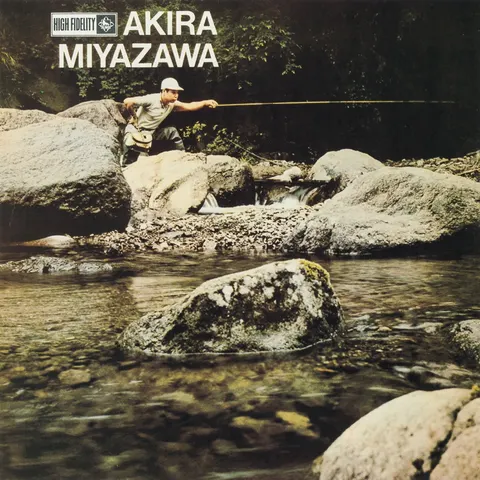
| 1962 | Yamame | Akira Miyazawa = 宮沢昭 | not found | Amazon | |
| 1963 | Helen Merrill In Tokyo = ヘレン・メリル・イン・トウキョウ | Helen Merrill | Spotify - Helen Merrill in Tokyo | Amazon | |
| 1963 | Jazz Festival At Karuizawa Newtown - 1 = ジャズ・フェスティバル 第1集 〜軽井沢ニュータウンで録音〜 | Various | Victor | not found | Amazon |
| 1963 | Jazz Festival At Karuizawa Newtown - 2 = ジャズ・フェスティバル 第2集 〜軽井沢ニュータウンで録音〜 | Various | Victor | not found | Amazon |
| 1963 | Jazz Festival At Karuizawa Newtown - 3 = ジャズ・フェスティバル 第3集 〜軽井沢ニュータウンで録音〜 | Various | Victor | not found | Amazon |
| 1963 | Modern Jazz = モダン・ジャズ(2) | Various | Victor | not found | Amazon |
| 1963 | ステレオ・モダンムード | Various | Kodama Press | not found | Amazon |
| 1964 | Modern Jazz Screen Mood | West Liner's | not found | Amazon | |
| 1964 | Modern Jazz Screen Mood = モダン・ジャズ・スクリーン・ムード | West Liner's = ウェスト・ライナーズ | Columbia | not found | Amazon |
| 1965 | Jazz In Japan Recorded In Tokyo | Toshiko Mariano And Her Big Band Featuring: Paul Chambers (3) / Jimmy Cobb / Sleepy Matsumoto / Shigeo Suzuki | Spotify - Toshiko & Modern Jazz | Amazon | |
| 1967 | Youngmen Essential 12 | Various | Kodama Press | not found | Amazon |
| 1969 | 朝日の当たる家/ビート!ビート!ビート! | Various (track appearance) | Toshiba Records | not found | Amazon |
| 1970 | Hit! Hit! Hit! | T. Inomata Sound Limited | Victor | not found | Amazon |
| 1970 | Jazz & Rock "Out" 真夏の夜のロック | J.Inagaki + Soul Big Media = Jiro Inagaki & Soul Media | not found | Amazon | |
| 1970 | Jazz Rock in Stravinsky | Takeshi Inomata Group | not found | Amazon | |
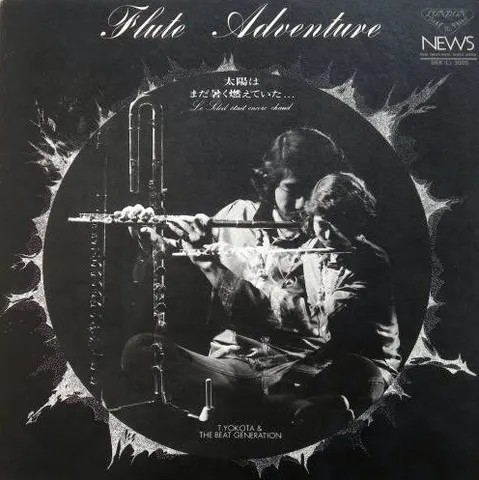
| 1970 | エキサイティング・フルート = Exciting Flute | Toshiaki Yokota | not found | Amazon | |
| 1971 | Beat Drums = ビート・ドラム | Motohiko Hino & His Friends | not found | Amazon | |
| 1971 | Five Sax/Close to You | Norio Maeda | Columbia | not found | Amazon |
| 1971 | Hare Krishna / The Third First Album = ハレ・クリシュナ/ザ・サード・ファースト・アルバム | The Third (2) = ザ・サード | Full album on YouTube | Amazon | |
| 1971 | Inomata Meets Rock | Inomata Takesi & Sound Limited | not found | Amazon | |
| 1971 | My Way | Takeshi Inomata & His West Liners | not found | Amazon | |
| 1971 | Q | Kanai,Hideto Group | not found | Amazon | |
| 1971 | 花嫁 | Norihiko Hashida And Climax = はしだのりひことクライマックス | not found | Amazon | |
| 1972 | Morning Glory / The Third 2 | The Third (2) | not found | Amazon | |
| 1973 | By The Red Stream | Jiro Inagaki & Big Soul Media , Composed, Arranged And Conducted By Hiromasa Suzuki | not found | Amazon | |
| 1973 | Love Is Here To Stay / Sawa Sings Standard Jazz | Tamaki Sawa | not found | Amazon | |
| 1973 | Technics Interplay | Various | Technics | not found | Amazon |
| 1973 | ルーム・ライト オリジナル・ア・ラ・カルト | 由紀さおり | Express | not found | Amazon |
| 1974 | Lo-D Master Disc Series | Kazuo Yashiro Duo & Trio with Eiji Kitamura, Ichiro Masuda, Toshihiko Ogawa & His Grooving Eight | Lo-D | not found | Amazon |
| 1975 | Cobalt Hour = コバルト・アワー | 荒井由実 = Yuming | not found | Amazon | |
| 1975 | Dedicated To Duke Ellington / The Third Concert | The Third (2), Norio Maeda | not found | Amazon | |
| 1975 | Get Happy | Takeshi Inomata And His Friends | not found | Amazon | |
| 1975 | The Third Concert / Original Compositions By Norio Maeda | The Third (2), Norio Maeda | not found | Amazon | |
| 1976 | Drum Drum Drum / Let's Swing!! | Jimmy Takeuchi | Toshiba Records | not found | Amazon |
| 1976 | N.Maeda Meets 5 Saxophones | Norio Maeda | not found | Amazon | |
| 1977 | Norio Maeda & The West Liners | Norio Maeda & The West Liners | not found | Amazon | |
| 1977 | West Liners With Terry Mizushima | West Liners With Terry Mizushima | Victor | not found | Amazon |
| 1977 | 帰結 | West Liners | King Records | not found | Amazon |
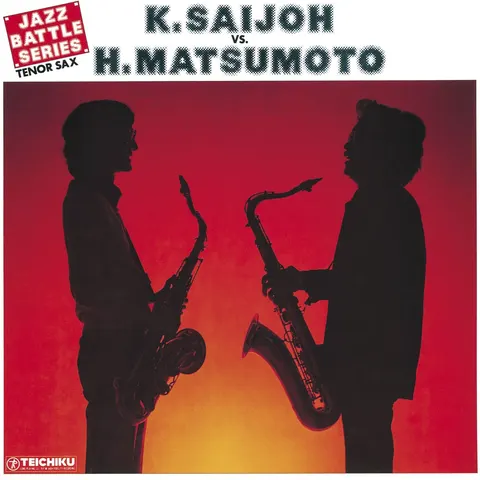
| 1978 | Early Autumn | Kohnosuke Saijoh & West Liners | King Records | not found | Amazon |
| 1978 | *High Grade Sounds Selected By Diatone * | Various | Diatone | not found | Amazon |
| 1978 | Modern Punch For You | Various | not found | Amazon | |
| 1978 | Steffanie De Praia = 海辺のステファニー | Naoya Matsuoka = 松岡直也 | not found | Amazon | |
| 1978 | The Jazz | Various | Diatone | not found | Amazon |
| 1978 | アメリカ! アメリカ! アメリカ! = America! America! America! | ピンク・レディー = Pink Lady | not found | Amazon | |
| 1979 | Maria | Maria Asahina (Harada credited as producer) | not found | Amazon | |
| 1979 | Smash Hits On Alfa 1979 - D.J. Sampler = ハイライト盤 スマッシュ・ヒッツ・オン・アルファ | Various | Alfa | not found | Amazon |
| 1980 | *Coffee Time Popular Collection * | Norio Maeda and his Grand Orchestra | Toshiba Records | not found | Amazon |
| 1980 | Illusion = 横笛幻想 | Michiko Akao = 赤尾三千子 | not found | Amazon | |
| 1980 | U.S.A. Studio Connection | Goro Noguchi | Polydor | not found | Amazon |
| 1980 | Wind-Breaker | Wind-Breakers | not found | Amazon | |
| 1981 | New York State Of Mind | Harumi Kaneko | Philips | not found | Amazon |
| 1981 | Runaway | Super Sax Ensemble | Far East | not found | Amazon |
| 1981 | 甄妮 | 甄妮 | not found | Amazon | |
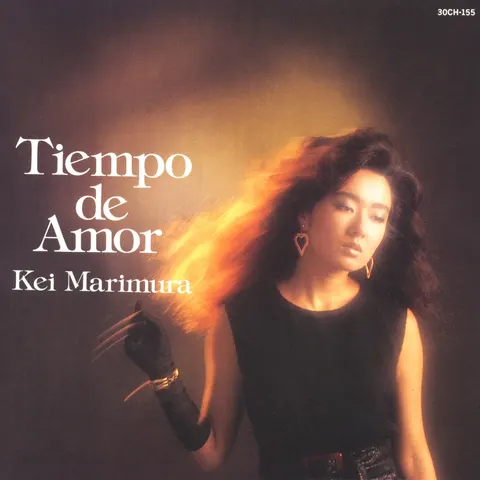
| 1982 | Elegance | 真梨邑ケイ = Kei Marimura | not found | Amazon | |
| 1982 | Midnight Runner | 円道一成 = Issei Endoh | not found | Amazon | |
| 1982 | Niagara Triangle Vol.2 = ナイアガラ トライアングル Vol.2 | Niagara Triangle | not found | Amazon | |
| 1982 | Tweed | Ryohei Yamanashi = 山梨鐐平 | not found | Amazon | |
| 1983 | Jazz Scene '57 = ジャズ・シーン'57 | Various | Full House (3) | not found | Amazon |
| 1983 | Misty | Norio Maeda & Wind-Breakers | Discomate | not found | Amazon |
| 1983 | P.S. I Love You | Kei Marimura | not found | Amazon | |
| 1984 | 15歳―不確かな季節― | 仙道敦子 | not found | Amazon | |
| 1984 | Hold You Tonight | Masaki Ueda (2) | not found | Amazon | |
| 1984 | Sing Along Standard Jazz Vol.1-5 | CBS・ソニー・グランドオーケストラ | CBS/Sony | not found | Amazon |
| 1985 | Digital Jazz Standards Collection 50 = デジタル・ジャズ・スタンダード名曲全集 50 | Various | CBS/Sony | not found | Amazon |
| 1987 | Joy And Pain | Satoshi Ikeda | not found | Amazon | |
| 1992 | Bottom Line | Yoshitaka Minami = 南佳孝 | Sony | not found | Amazon |
| 1992 | New Standard | Yoshitaka Minami | Sony | not found | Amazon |
| 1993 | Namco Video Game Graffiti Volume 9 | Various | Victor | not found | Amazon |
| 1994 | The High Colour Club Presents "Sunday Jazz Concert" At The Sankei Hall, Tokyo | Various | not found | Amazon | |
| 1997 | Breath Of Air | The Sax Syndicate | Cisco Music, T.S.C.C. | not found | Amazon |
| 1999 | Isn't It Lupintic?: Lupin The Third TV Special Original Sound Track = ルパン三世 Isn't It Lupintic? | Yuji Ono = 大野雄二, You & Explosion Band = ユー&エクスプロージョン・バンド | not found | Amazon | |
| 2000 | Isn't It More Lupintic? = ルパン三世 Isn't It more Lupintic? | You & Explosion Band = ユー&エクスプロージョン・バンド | not found | Amazon | |
| 2001 | Dear Tokyo | Kazumi Watanabe With Orchestra | not found | Amazon | |
| 2001 | In Tokyo & Sings Folk | Helen Merrill | not found | Amazon | |
| 2001 | Lupin The Third: Isn't It Lupintic? | You & The Explosion Band | Vap | not found | Amazon |
| 2003 | Shibuya Jazz Classics | Naoya Matsuoka | Solid Records (6) | not found | Amazon |
| 2003 | Shibuya Jazz Classics - Sleep Walker Collection - Columbia Issue | Sleep Walker | Solid Records (6) | not found | Amazon |
| 2004 | Yumi Arai 1972-1976 | Yumi Arai | not found | Amazon | |
| 2005 | Made In Y.O. = メイド イン Y.O. | Yuji Ohno = 大野雄二, You & The Explosion Band = ユー&エクスプロージョン・バンド | not found | Amazon | |
| 2007 | Bridge Over Troubled Water | J. Inagaki And His Big Soul Media | not found | Amazon | |
| 2009 | Dynamic Jazz | NHK All Stars | Polydor | not found | Amazon |
| 2011 | I'm a woman, Now | Miki Yamaoka, Noro Maeda & Windbreakers | Impex Records Japan, T.S.C.C. | not found | Amazon |
| 2013 | Memory Lane | Jiro Inagaki & Soul Media | not found | Amazon | |
| 2023 | ディスコ・ギャル = Disco Gal | 朝比奈マリア (Harada credited as producer) | not found | Amazon | |
| undated | Dbx Encoded Disc Vol.1 | Takeshi Inomata | not found | Amazon | |
| undated | Dbx Encoded Disc Vol.2 | Unknown Artist | not found | Amazon | |
| undated | Easy Rider | Toshiyuki Miyama & The New Herd | Toshiba Records | not found | Amazon |
| undated | Galaxy Of Golden Hits (Hit Hit Hit 180) ~ むすび泣くサックス/恍惚の世界 ☆ ディスカヴァー・ジャパン | Various | Toshiba Records | not found | Amazon |
| undated | Salute To Sir Duke | We 3 + Three | Denon | not found | Amazon |
| undated | また逢う日まで - 歌謡ヒット・パレード100 | Various (track appearance) | not found | Amazon |
Sources
- Discogs: Tadayuki Harada, artist 870564
- Discogs: Tadayuki Harada and His Group, artist 952685
- Discogs: Playboy's Theme, master 2377585
- Discogs: Midnight Sun, Sax Record SAX-2
- Discogs: Alone Together, Audio Lab ALJ-1035
- Discogs: The Enchanted Jazz Violin, Toshiba TP-7472
- Discogs: Modern Jazz Show Case, Columbia ZS-1015
- Discogs: Toshiko And Modern Jazz, Columbia COCB-53621
- Discogs: Hare Krishna / The Third First Album, Express ETP-9032
- Discogs: Love Sounds From T.V. Drama Themes, Columbia KZ-7057
- Discogs: Maria, Maria Asahina, Alfa ALPD-101
- Columbia Japan: Playboy's Theme, COCB-53835
- TONTON club interview, Vol. 21: 原田忠幸
- Takeshi Inomata - drummer and bandleader of the West Liners and The Third; Harada plays baritone saxophone on the Modern Jazz Playboys' Modern Jazz Show Case (1961), on Hare Krishna / The Third First Album (1971), and on Alone Together (1975), and joined Inomata's All Stars for the 1994 New York tour.
- Norio Maeda - arranger and pianist of the West Liners, Harada's co-departure in August 1966, arranger of Playboy's Theme (1968) and of the 1976 Love Sounds from T.V. Drama Themes, conductor of Hare Krishna / The Third First Album, pianist on Alone Together, and bandleader of the Wind-Breakers, which Harada joined in 1979.
- Sadanori Nakamure - guitarist on Midnight Sun (2002), Playboy's Theme (1968) and Hare Krishna / The Third First Album (1971).
- Toshiko Akiyoshi - leader of the July 1964 all-star big-band session, on which Harada played baritone saxophone.
- Charlie Mariano, Paul Chambers and Jimmy Cobb - arranger, bassist and drummer on the same 1964 session.
- Terumasa Hino, Hidehiko Matsumoto, Akira Miyazawa and Hiroshi Suzuki - fellow members of the 1964 big band, as listed on Discogs. Miyazawa is also in the front line of Modern Jazz Show Case.
- Sadao Watanabe - alto saxophone on Modern Jazz Show Case (1961).
- Kiyoshi Sugimoto and Akira Ishikawa - guitar and drums on The Enchanted Jazz Violin (Toshiba, 1970), a jazz-violin LP on which Harada plays baritone saxophone.
- Shunzo Ohno - trumpet on Hare Krishna / The Third First Album (1971).
- Jiro Inagaki - saxophonist and bandleader on whose Jazz & Rock "Out" (1970) Harada plays baritone saxophone, and whose By the Red Stream (1973) he also appears on.
- Masaru Imada - pianist on Playboy's Theme (1968), per Columbia Japan's release credits.
- Ryuichi Sakamoto and Harvey Mason - on Maria (Alfa, 1979), a Maria Asahina album on which Discogs credits Harada as producer.
- Kunimitsu Inaba - bassist on Midnight Sun (2002) and in the lineup photographed for The Hearts.
- Konosuke Saijo, Akitoshi Igarashi and Tetsuo Fushimi - tenor saxophone, alto saxophone and trumpet on Alone Together (1975); Saijo led the West Liners, and Harada plays baritone saxophone on Saijo's own Early Autumn (King, 1978).
- Nobuo Hara - bandleader of the Sharps and Flats, whom Harada joined in 1955.
- Isamu Harada - his older brother, a drummer, and a member of The Hearts.
- Masanaga Harada (bass) - bassist on Yamame (1962), the Akira Miyazawa session on which Tadayuki plays baritone saxophone and clarinet; a separate musician who shares the surname.
- Toshiaki Yokota - flutist and leader of Exciting Flute (Express EP-7766, 1970), on which Harada plays baritone saxophone.
- Kei Marimura - jazz vocalist on whose Elegance (Discomate, 1982) and P.S. I Love You (1983) Discogs credits him on baritone saxophone.
- Jun Suzuki - bassist on Hit! Hit! Hit! (1970) and, in 1971, on Inomata Meets Rock, Five Sax / Close to You and The Third's Hare Krishna, all with Harada on baritone saxophone.
- Shigemichi Domoto - trombonist alongside Harada in the horn sections of Jazz Rock in Stravinsky, Jazz & Rock "Out", By The Red Stream, Saori Yuki's 1973 album and four of The Third's releases from 1971 to 1975.
More Big Band Artists
See all 219 Big Band artists →More Japanese Jazz Artists
See all 262 Japanese artists →- Spotify artist page: Tadayuki Harada and His Group
- Spotify artist page: Tadayuki Harada (compilation appearances)
- Discogs: Tadayuki Harada
- Columbia Japan: Playboy's Theme reissue page
- Tadayuki Harada on JazzProfiles.com
- r/JapaneseJazz
- Wikipedia (Japanese): 原田忠幸
- TONTON club interview, Vol. 21: 原田忠幸 (2010)
- Columbia Japan: 原田忠幸と彼のグループ / プレイボーイのテーマ, COCB-53835
- ALSO Online SAX guide: 原田忠幸
- Discogs: Tadayuki Harada, artist 870564
- Discogs: Tadayuki Harada, Midnight Sun, Sax Record SAX-2
- Discogs: Toshiko And Modern Jazz, Columbia COCB-53621
- Discogs: Takeshi Inomata and others, Alone Together, Audio Lab ALJ-1035
- Discogs: Modern Jazz Playboys, Modern Jazz Show Case, Columbia ZS-1015
- Discogs: The Third, Hare Krishna / The Third First Album, Express ETP-9032
- Wikipedia (Japanese): 雪村いづみ