 JAZZPROFILES lives in the music 1,765 Jazz Artists fully Profiled!
Kei Marimura
Last updated October 21, 2026
Listen on Spotify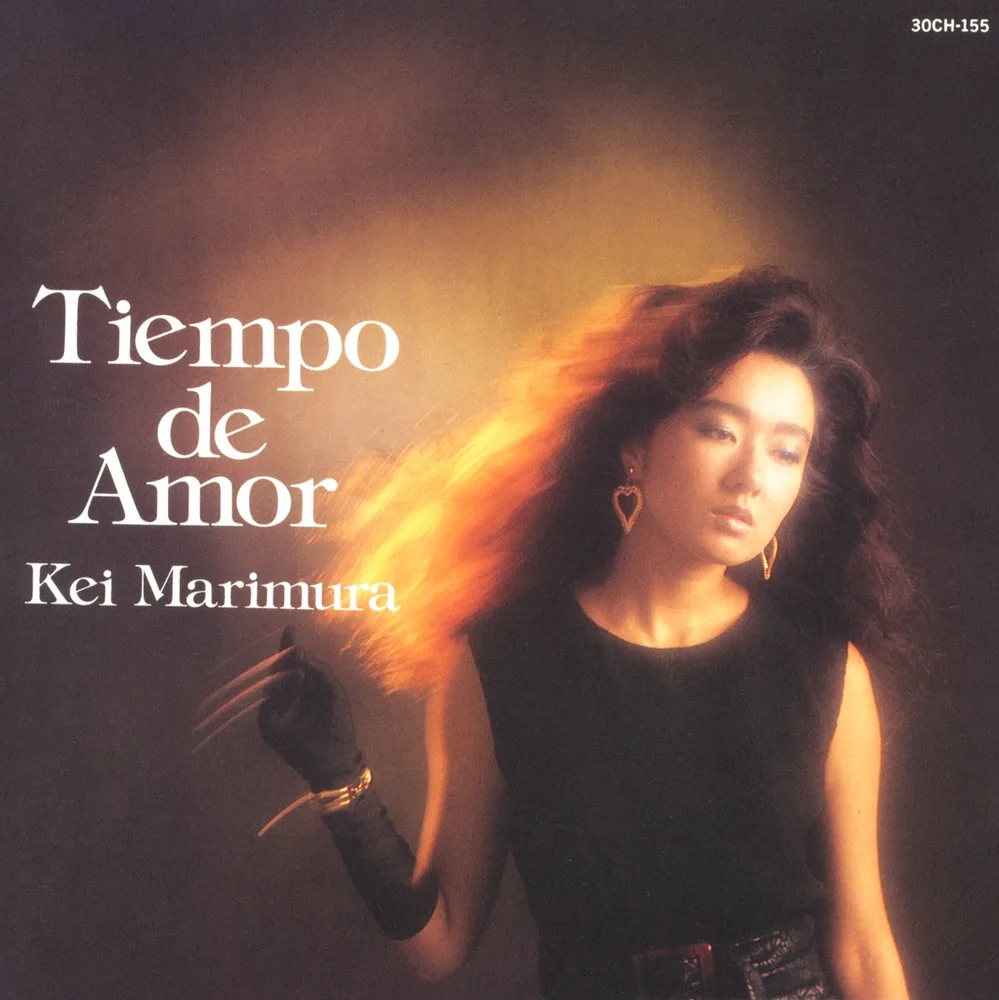
Kei Marimura on the cover of Tiempo de Amor (Continental, 1985). Standard copyright, all rights reserved, held by the label and rights holder. This is not a Creative Commons or public-domain image; it is an album cover shown as an honestly disclosed editorial identification image. — https://coverartarchive.org/release/c1f8d4bb-9d5f-4240-8e83-2a6a721563b1 (front cover, 1200 px; MusicBrainz release c1f8d4bb-9d5f-4240-8e83-2a6a721563b1)
Kei Marimura (真梨邑ケイ, sometimes written 真理邑ケイ) is a Japanese jazz vocalist, actress and author, born on August 29, 1957, in Chiyoda, in central Tokyo. Her career has always run on two tracks that she has never tried to separate. As a singer she is a standards vocalist who made her major-label debut in 1982 and has recorded for Discomate and Teichiku's Continental label; as a public figure she has worked since 1976 as a television and film actress (her early credits are under her birth name, Kawaguchi Kyoko, 川口今日子), a photo-book and image-video subject, a film director and a novelist. Her jazz records are the subject of this profile, and the acting and entertainment side is stated here plainly so that the two are not confused.
She grew up in Chiyoda, attended Shoei Girls' school, and after graduating trained as an actress at the Toho Gendai-geki research institute. Her official profile says she was signed in 1982 by the Ozawa music office, whose president came to her himself, and that the same year Discomate released her first album, Elegance, which she describes as her debut as a jazz vocalist on the major-label side. The record was arranged by Norio Maeda, produced by Jiro Inagaki, and backed by Maeda's Wind-Breakers, the quartet of the clarinettist Eiji Kitamura and the Yasuo Arakawa Trio. Discogs credits Masahiko Ozu among the drummers, with Tadayuki Harada on baritone saxophone and Konosuke Saijo on tenor. Her official profile names Kitamura as the senior player who first heard her as a jazz singer and had her sing with his quintet before she had a record contract, and says she also sat in with George Kawaguchi's Big Four before her debut. Mood Indigo followed in November 1982.
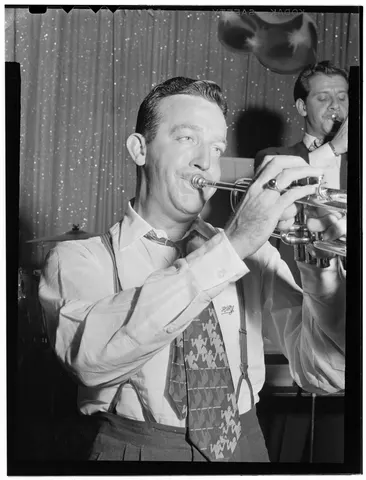
Television amplified the debut. In the 1982 to 1983 season she co-hosted the TBS music programme Yoru wa Kibun de with Kitamura, and Japanese Wikipedia lists a TBS radio jazz programme of hers that ran from 1982 to 1987. Her third album, The Man I Love (Discomate, 1983), is the record she is best known for as a jazz singer. Discogs credits Nelson Riddle as an arranger alongside Maeda, with Maeda's Wind-Breakers and Toshio Mori and Blue Coats as the bands; her official profile and Japanese Wikipedia both say the trumpeter Harry James guested, and Discogs credits Harry James on trumpet on Favourite Standard, the 1984 CD compilation that draws on these albums. The album reached the top ten of the Oricon album chart and earned a gold disc, and Japanese Wikipedia says it won a hit award and a work award; her own profile gives its sales as over 40,000 copies, which she calls unusual for a jazz vocal record. P.S. I Love You (1983) and the concert album Beautiful Dreamer Live (1984), which has a companion laserdisc recorded live on July 11, 1983, followed; Inagaki is credited as producer on five of her Discomate releases between 1982 and 1984.
In 1985 she moved to Teichiku Records and its Continental label. That year she sang a duet single with the film star and singer Yujiro Ishihara, "Sayonara wa Hirusagari," a kayokyoku release that is her best-known work outside jazz and the release her Spotify artist page features. Tiempo de Amor (November 1985), arranged by Makoto Matsushita, leans toward Latin pop and what Discogs files under City Pop; the 1986 singles "Shiseikatsu" with "Final Flight" and "Starlight Lover" with "It's My Night" lean the same way. Her return to jazz material came with La Califusa (November 1986), a bossa nova and Brazilian set recorded at Monterey in Los Angeles and Eastside Studio in New York, with the guitarist John Pisano, the harmonica player Toots Thielemans, the percussionist Paulinho Da Costa, the saxophonist Justo Almario and the drummer Claudio Slon credited on it. The Continental (1987) is a collection of songs from the 1930s musicals and films, played by a large studio band with Makoto Yano conducting and, in the trumpet section, Jun Miyake.
The 1990s records are the most mixed. She produced Nouveau (1991), arranged by Kazumi Watanabe and Kiyoshi Morita, and Mucho Mucho (1992) is a set of Latin standards; Discogs files both under pop. Her official profile says she has released 35 albums in all, a larger number than Discogs shows under her name. A two-disc Brilliant Best from Teichiku followed in November 2010, collecting the 1980s jazz and bossa nova recordings.
Away from music she wrote and directed the film Mermaid (2001), published the novel Intimacy (Tokuma Shoten, 2011) and appeared in many films and television dramas, including Yasha (1985) and the Toei police film Mottomo Abunai Deka (1989); she has more than a dozen photo books to her name and, in September 2009, released an adult-oriented image DVD, Jyoji, which the ZAKZAK entertainment site covered at the time as a release by the jazz singer. In March 2022 she marked forty years since her debut, and her official blog shows her still performing jazz concerts and appearing in films in 2026, including a new film, Akai Jitensha, whose completion screening is set for November 11, 2026. She turned 69 in August 2026.
Marimura's jazz is a standards singer's: the American songbook of the 1930s through the 1950s, sung straight and arranged for big band or a small swing group. The tracklists show it plainly: "The Very Thought of You," "Bewitched," "On a Slow Boat to China," "Autumn Leaves," "Cheek to Cheek," "Take the A Train," "You'd Be So Nice to Come Home To." Her own profile lists Chet Baker, Stan Getz, Nat King Cole, Frank Sinatra, Tony Bennett, Doris Day, Billie Holiday, Peggy Lee and Anita O'Day among her favourites, and says the 1930s to 1950s American standard repertoire is what she sings. It also reports that the original liner notes for Elegance, by the critics Hisamitsu Noguchi, Shoichi Yui and Kei Aoki, welcomed her as a throwback to a 1930s torch singer with some of the nostalgic charm of Doris Day.
The arrangements are the other half of the sound. On the 1982 to 1984 records they come from Norio Maeda and, on The Man I Love, Nelson Riddle, which puts her in front of a big-band or swing orchestra rather than a trio, and Discogs tags The Man I Love as Big Band and several of the albums as Vocal. From 1985 her records branch out: the Latin pop of Tiempo de Amor, the bossa nova of La Califusa, the jazz-funk and City Pop of the 1986 singles, the film-musical standards of The Continental and the Latin repertoire of Mucho Mucho.
How to place her is a fair question. Discogs labels the 1982 to 1984 albums, La Califusa, The Continental and the 2010 best-of as jazz, and labels Nouveau and Mucho Mucho as pop; she is also a known actress, a kayokyoku duet partner of Yujiro Ishihara, and a long-running photo-book and image-video subject. Her own web profile and blog describe her as a jazz vocalist first, and her recorded legacy is overwhelmingly standards and bossa nova, so she is treated here as a jazz singer who also has a large public career in entertainment.
- The Man I Love (1983, Discomate DSP-5118) - The signature record: top ten on the Oricon album chart, a gold disc, and arrangements by Nelson Riddle and Norio Maeda for big bands led by Maeda and Toshio Mori. YouTube - The Man I Love, full album Listen · Buy
- Elegance (1982, Discomate DSP-4006) - The debut, with Eiji Kitamura's quartet, the Yasuo Arakawa Trio and Maeda's Wind-Breakers behind her, and Jiro Inagaki producing. YouTube - Elegance, full album Listen · Buy
- P.S. I Love You (1983, Discomate DSP-5120) - A small-band standards set with Inagaki and Konosuke Saijo on tenor saxophones, Tadayuki Harada on baritone and Maeda among three pianists. YouTube - P.S. I Love You, full album Listen · Buy
- La Califusa (1986, Continental CI-49) - Her bossa nova record, made in Los Angeles and New York with John Pisano, Toots Thielemans, Paulinho Da Costa, Justo Almario and Claudio Slon. YouTube - La Califusa, full album Listen · Buy
- Tiempo de Amor (1985, Continental CI-40) - The crossover record, arranged by Makoto Matsushita, filed by Discogs under City Pop, Kayokyoku and Bossa Nova. YouTube - Tiempo de Amor, full album Listen · Buy
- "Sayonara wa Hirusagari" (1985, with Yujiro Ishihara, Teichiku RE-698) - The kayokyoku duet that sits outside her jazz catalogue. Spotify - Sayonara wa Hirusagari Listen
Kei Marimura (真梨邑ケイ) - Full Discography
Japanese jazz vocalist and actress. Born August 29, 1957, Chiyoda, Tokyo, Japan. Discogs artist 4381893.
Name variations on record: Kei Marimura, 真梨邑ケイ, 真理邑ケイ. Discogs gives her real name as 田原今日子 (Tahara Kyoko); her early acting credits are under 川口今日子 (Kawaguchi Kyoko).
Group affiliations: none listed.
Her own web profile says she has released 35 albums in all; the entries below are the ones documented at release level, from her 1982 debut to the 2010 best-of. Discogs files most of the 1982 to 1984 releases, La Califusa, The Continental and the 2010 best-of under Jazz, and Nouveau and Mucho Mucho under Pop.
Leader
| Album | Year | Label | Personnel | Notes | Listen | Buy |
|---|---|---|---|---|---|---|
| Elegance | 1982 | Discomate, DSP-4006 | Kei Marimura (vocals); Norio Maeda (arranger, piano, leader of the Wind-Breakers); Eiji Kitamura Quartet (Kitamura, clarinet); Yasuo Arakawa Trio; Jiro Inagaki (producer, tenor saxophone, flute); Tadayuki Harada (baritone saxophone); Konosuke Saijo (tenor saxophone); Masahiko Ozu, Hajime Ishimatsu, Takeshi Watanabe (drums); Yasuo Arakawa, Ikuo Ikezawa (bass); Akira Kumasaka, Masahiro Sayama (piano); Shungo Sawada (guitar); Susumu Kazuhara, Tetsuo Fushimi (trumpet); Yasushi Harada (trombone); guests Shigeo Suzuki (alto saxophone) and Takeru Shiraiso (trumpet) | Debut album. Twelve standards from "The Very Thought of You" to "After You've Gone." Discogs style: Vocal. | YouTube | Amazon |
| Mood Indigo | November 1982 | Discomate, DSP-4007 | Kei Marimura (vocals); Norio Maeda (arranger); Wind-Breakers (accompaniment) | Twelve tracks, from "As Time Goes By" to "Night and Day." | YouTube | Amazon |
| The Man I Love | 1983 | Discomate, DSP-5118 | Kei Marimura (vocals); Nelson Riddle and Norio Maeda (arrangers); Norio Maeda, Toshio Mori and Blue Coats, Wind-Breakers (accompaniment); Hiroshi Okazaki (vocal advisor); Jiro Inagaki (producer); Chuck Britz, Yasuo Morimoto (recording engineers) | Her best-known jazz album: top ten on the Oricon album chart, a gold disc, and a hit award and a work award according to Japanese Wikipedia. Discogs styles: Big Band, Vocal. The trumpeter Harry James is named as the guest by her official profile and Japanese Wikipedia. | YouTube | Amazon |
| P.S. I Love You | 1983 | Discomate, DSP-5120 | Kei Marimura (vocals); Norio Maeda, Masahiro Sayama, Keisuke Egusa (piano); Jiro Inagaki, Konosuke Saijo (tenor saxophone); Tadayuki Harada (baritone saxophone); Susumu Kazuhara, Yasushi Harada (trumpet); Yasuo Arakawa, Nobuyuki Aoshima (bass); Hajime Ishimatsu (drums); Shungo Sawada (guitar); Minoru Ishiyama, Tadaomi Anai (percussion); Jiro Inagaki (producer) | Ten tracks including "Autumn Leaves," "Stardust" and a hit-song medley. Reissued on CD by Teichiku in 1986 (30CH-217). | YouTube | Amazon |
| Beautiful Dreamer Live | February 1984 | Discomate, DSP-5121 | Kei Marimura (vocals); Norio Maeda (arranger); Jiro Inagaki and Soul Media, Toshio Mori and Blue Coats (backing bands); Jiro Inagaki (producer) | Concert album, fourteen tracks from "Beautiful Dreamer" to "S'Wonderful," including "Take the A Train." | not found | Amazon |
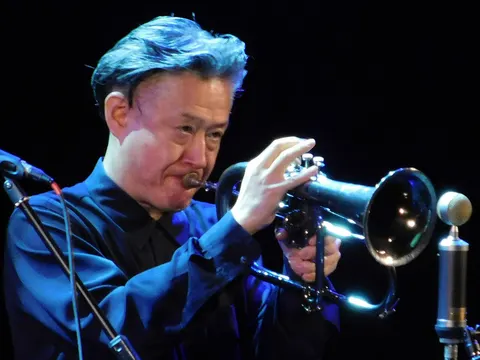
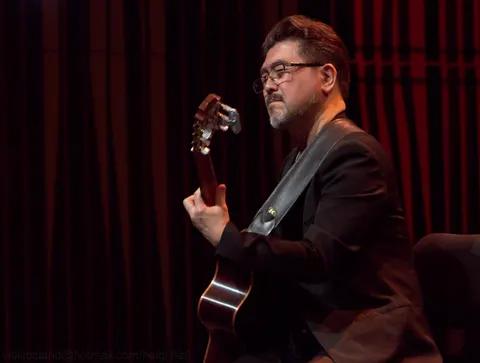
| Tiempo de Amor | November 21, 1985 | Continental, CI-40 | Kei Marimura (vocals); Makoto Matsushita (arranger, synthesizer, guitar, chorus); Masahiro Miyazaki (drums); Hideki Matsubara, Yasuo Tomikura (bass); Masato Matsuda, Toshiro Imaizumi (keyboards); Masami Nakagawa (flute); Shigeo Fuchino (saxophone); Yoshikazu Kishi (trumpet, flugelhorn); Nakanishi Group (strings) | Discogs styles: City Pop, Kayokyoku, Bossa Nova. Reissued on CD (Teichiku, 30CH-155, 1986). | YouTube | Amazon |
| La Califusa | November 21, 1986 | Continental, CI-49 | Kei Marimura (vocals); John Pisano (acoustic guitar); Toots Thielemans (harmonica); Paulinho Da Costa (percussion); Justo Almario (tenor and soprano saxophone); Claudio Slon (drums); Octavio Bailly Jr (bass); Frank Zottoli (keyboards, voice); backing vocals by Connie Claywell, J.C. Robbins, Jennifer Robin, Kate Yanai Markowitz and Kelly Crane | Bossa nova and Brazilian songbook, from "One Note Samba" to "Quiet Nights of Quiet Stars." Recorded at Monterey, Los Angeles, and Eastside Studio, New York; Greg Scott recorded and remixed. | YouTube | Amazon |
| The Continental (コンチネンタル) | September 21, 1987 | Continental, 28CV-3 | Kei Marimura (vocals); Makoto Yano (conductor, keyboards); Koji Haijima (conductor); trumpets Jun Miyake, Kenji Yoshida, Masahiro Kobayashi, Fumio Shiroyama; trombones Harumi Mita, Kenichiro Hayashi, Takaaki Hayakawa, Yasuo Hirauchi; strings (Ohno Group, Shinohara Strings), harp, koto, kokyu and percussion | Nine songs from the 1930s musicals and films, from "Anything Goes" to "Lullaby of Broadway." Discogs style: Jazz. | not found | Amazon |
| Nouveau | March 21, 1991 | Continental, TECN-28082 | Kei Marimura (vocals, producer); Kazumi Watanabe, Kiyoshi Morita (arrangers); Kiyoshi Morita (keyboards); Hiroaki Kumon (piano); Jun Okada (guitar); Nobuaki Kobayashi (bass); Toyohisa Hosiba (drums); Fumio Hayashi (saxophone) | Eleven tracks, opening with "Prologue" and closing with "Epilogue." Discogs files it under Pop. | not found | Amazon |
| Mucho Mucho | October 21, 1992 | Continental, TECN-30194 | Kei Marimura (vocals) | Ten Latin standards, among them "Besame Mucho," "Quizas, Quizas, Quizas" and "Historia de un Amor." Discogs files it under Pop. | not found | Amazon |
Best-of and compilation albums under her name
| Album | Year | Label | Notes | Listen | Buy |
|---|---|---|---|---|---|
| Favourite Standard | November 21, 1984 | Discomate, CDP-6 (CD) | Sixteen tracks drawn from her four Discomate studio albums. Arrangers credited: Nelson Riddle, Norio Maeda, Shinichi Tanabe; Harry James credited on trumpet; Jiro Inagaki, producer. | not found | Amazon |
| ブリリアント・ベスト (Brilliant Best) | November 24, 2010 | Teichiku Records, TECH-30211/2 (2 CDs) | Remastered best-of: disc one gathers standards and film-musical songs, disc two the bossa nova and Latin repertoire. | not found | Amazon |
Singles
| Single | Year | Label | Notes | Listen | Buy |
|---|---|---|---|---|---|
| "Stardust Night" / "Secret Rendezvous" | 1984 | Discomate, DSP-228 (7") | Discogs styles: Jazz-Funk, Soul, Kayokyoku. | not found | Amazon |
| "Sayonara wa Hirusagari" / "Ai Forever" (with Yujiro Ishihara) | November 1985 | Teichiku Records, RE-698 (7") | Duet single. Discogs style: Kayokyoku. Spotify carries both sides. | Spotify | Amazon |
| "Shiseikatsu" (私生活) / "Final Flight" | 1986 | Continental, CE-59 (7") | Both tracks also on Tiempo de Amor. | YouTube | Amazon |
| "Starlight Lover" / "It's My Night" | September 21, 1986 | Continental, CE-73 (7") | Discogs styles: Jazz-Funk, City Pop, Contemporary Jazz. | YouTube | Amazon |
Video
| Title | Year | Label | Notes | Listen | Buy |
|---|---|---|---|---|---|
| Beautiful Dreamer | 1984 | Pioneer, MJ156-15MM (laserdisc) | Concert video, 55 minutes, recorded live on July 11, 1983; Norio Maeda arranger. Includes "Take the A Train" and "The Man I Love." | not found | not found |
Appearances on other artists' releases and compilations
| Release | Year | Label | Her part | Listen | Buy |
|---|---|---|---|---|---|
| ベスト12 (Best 12), Yujiro Ishihara | January 5, 1986 | Teichiku Records, 30CH-163 | "Sayonara wa Hirusagari" and "Ai Forever," the duets with Ishihara | not found | Amazon |
| 17th Memorial The Superior, Yujiro Ishihara (DVD-Audio and DVD box) | October 31, 2003 | Teichiku Records | The same two duets | not found | not found |
| Yujiro Ishihara 23rd Memorial (32-CD box) | 2009 | Teichiku Entertainment | "Sayonara wa Hirusagari" (twice, once as a featured credit) and "Ai Forever" | not found | not found |
| "和"ボッサ・ヴィンテージ -Japanese Bossa Nova Compilation- | October 24, 2012 | Teichiku Records, TECH-22326 | "Sayonara wa Hirusagari," track 18 | not found | Amazon |
Sources
- Discogs: Kei Marimura, artist 4381893, release-by-release credits for every item above
- MusicBrainz: 真梨邑ケイ
- Wikipedia (Japanese): 真梨邑ケイ
- Official profile
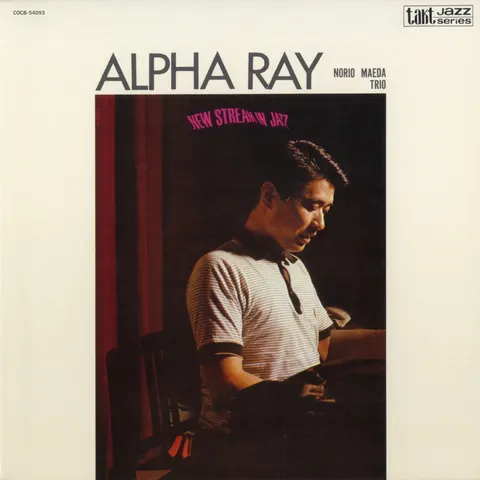
- Norio Maeda - arranger on Elegance, Mood Indigo, The Man I Love and Beautiful Dreamer Live, and the leader of the Wind-Breakers who accompany her on the first three; Discogs also credits him as an arranger on Favourite Standard.
- Jiro Inagaki - producer of five of her Discomate releases (1982 to 1984) and credited on tenor saxophone and flute on Elegance, tenor saxophone on P.S. I Love You, and as leader of Jiro Inagaki and Soul Media on Beautiful Dreamer Live.
- Eiji Kitamura - clarinet on Elegance with the Eiji Kitamura Quartet; her co-host on the TBS programme Yoru wa Kibun de, and by her own account the jazz mentor who first brought her into a band.
- Masahiko Ozu - one of three drummers credited on Elegance.
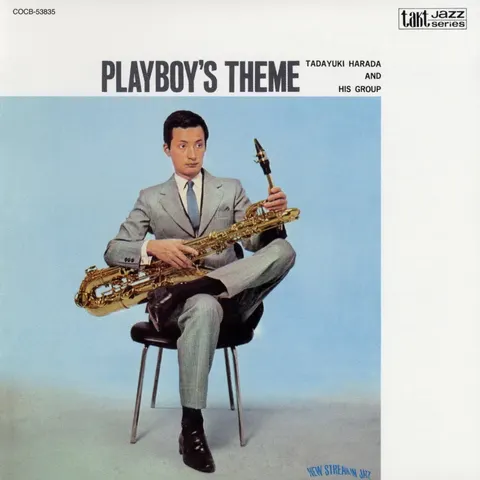
- Tadayuki Harada - baritone saxophone on Elegance and P.S. I Love You.
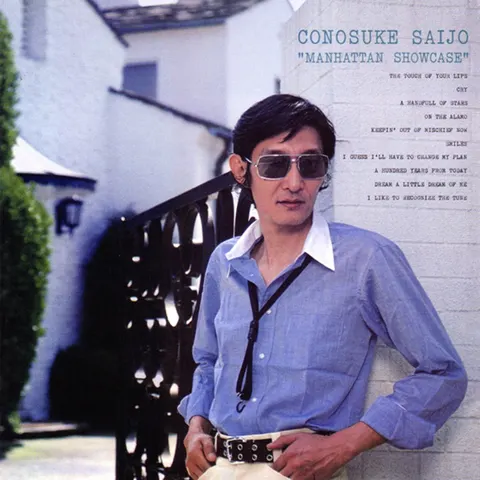
- Konosuke Saijo - tenor saxophone on Elegance and P.S. I Love You.
- Harry James - trumpet, credited on Favourite Standard (1984) and named as the guest on The Man I Love by her official profile and Japanese Wikipedia.
- Jun Miyake - trumpet on The Continental (1987).
- Kazumi Watanabe - arranger on Nouveau (1991).
- Nelson Riddle - credited as an arranger on The Man I Love and Favourite Standard.
- Yujiro Ishihara - duet partner on "Sayonara wa Hirusagari" and "Ai Forever" (Teichiku, 1985).
- John Pisano, Toots Thielemans, Paulinho Da Costa, Justo Almario, Claudio Slon, Octavio Bailly Jr - the Los Angeles and New York musicians credited on La Califusa (1986).
- Makoto Matsushita - arranger, guitarist and synthesizer player on Tiempo de Amor (1985).
- Makoto Yano - conductor and keyboardist on The Continental (1987).
- Masami Nakagawa - flute on Tiempo de Amor (Continental, 1985).
More Vocal Jazz Artists
See all 127 Vocal Jazz artists →More Japanese Jazz Artists
See all 262 Japanese artists →- Spotify artist page
- Official blog (Japanese)
- Official profile (Japanese)
- Instagram: @keimarimura.official
- Discogs: Kei Marimura
- MusicBrainz: 真梨邑ケイ
- Kei Marimura on JazzProfiles.com
- r/JapaneseJazz
- Wikipedia (Japanese): 真梨邑ケイ
- Wikipedia: Kei Marimura
- Wikidata: Q6383533
- Official profile and blog, keimarimura-love.cocolog-nifty.com
- Discogs: Kei Marimura, artist 4381893
- Discogs: Elegance, Discomate DSP-4006
- Discogs: The Man I Love, Discomate DSP-5118
- Discogs: La Califusa, Continental CI-49
- MusicBrainz: artist 1e406916-f57f-4bb7-b875-dbe2732ce897
- ZAKZAK, September 24, 2009 (archived)