 JAZZPROFILES lives in the music 1,572 Jazz Artists fully Profiled!
 Hōzan Yamamoto
Last updated August 30, 2026
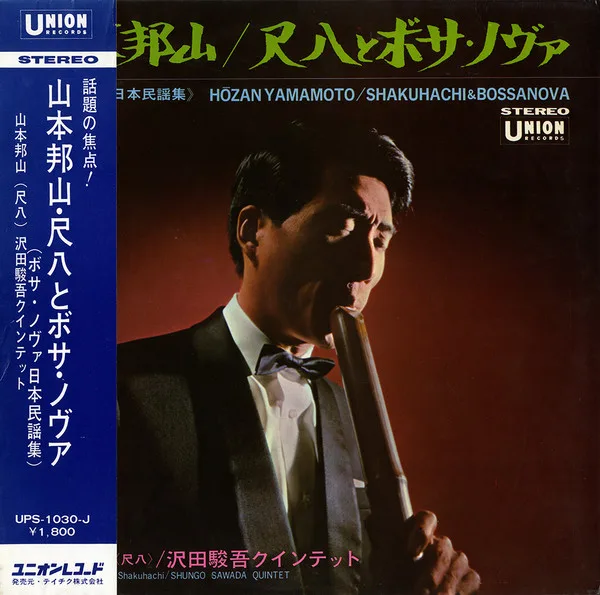
Cover art for Hōzan Yamamoto / Shungo Sawada Quintet's "Shakuhachi and Bossa Nova" (1969, Union Records), used as a stand-in — no free-licensed photo of Yamamoto could be located after a genuine search. Standard copyright, all rights reserved — held by Union Records / Teichiku Records. This is not a Creative Commons–licensed image; it is used here as an honestly-disclosed editorial stand-in for a real photo. — Downloaded directly from the release's Discogs listing (https://www.discogs.com/release/6309805-Hozan-Yamamoto-Shakuhachi-Bossa-Nova), cover scan hosted at i.discogs.com. Saved locally as portrait.jpg in this folder.
Hōzan Yamamoto began playing the shakuhachi at nine, trained first by his father and then by master Chozan Nakanishi, and went on to graduate from Kyoto Junior College of Foreign Studies (1958) and Seiha Music College (1962). In 2002 the Japanese government named him a Living National Treasure — one of the country's highest honors for a living artist, reserved for those who possess and actively transmit an important intangible cultural property. He also received the Medal with Purple Ribbon (2004) and the Order of the Rising Sun, Gold Rays with Rosette (2009).
That formal recognition as a keeper of tradition ran in parallel with, rather than in place of, one of the more genuinely adventurous jazz-crossover careers to come out of Japan. In 1964 he recorded Music for Zen Meditation (and Other Joys) with American clarinetist Tony Scott and koto player Shinichi Yuize — a landmark record recognized decades later as an early forerunner of new-age and world music. By the late 1960s he was cutting bossa nova sessions and jazz big-band dates with Nobuo Hara's Sharps and Flats. In 1966 he formed the "Shakuhachi Sanbon Kai" trio with Reibo Aoki and Katsuya Yokoyama, three shakuhachi players finding a modern voice for an instrument most associate strictly with tradition.
His free-jazz and world-music catalog widened further from the 1980s on. World Music Meeting (1985) put him in a large ensemble alongside Charlie Mariano, Karl Berger, Peter Kowald, and tabla player Trilok Gurtu. He recorded with bassist David Friesen in 1980, Breath (1984) with Masahiko Togashi and Yosuke Yamashita, Silky Adventure (1986) with Masahiko Satoh, and Mugenkai — Ginkai II (1996) with bassist Gary Peacock. His range extended into the classical-music establishment too: The Vintage Melodies of Japan (1978) paired him with violinist Isaac Stern.
He died in Tokyo on February 10, 2014, at 76.
Yamamoto's career rests on a genuine dual mastery: the traditional shakuhachi repertoire that earned his Living National Treasure designation, and a jazz/world-music practice built on the instrument's capacity for breath-driven, non-tempered pitch — qualities that made him a natural fit for the free-improvisation and world-music circles he moved through from the 1970s on, rather than a novelty crossover act.
- Music for Zen Meditation (and Other Joys) (1964, with Tony Scott) - The landmark. Spotify Listen · Buy
- Mugenkai — Ginkai II (1996, with Gary Peacock) - Spotify Listen
- World Music Meeting (1985) - With Charlie Mariano, Karl Berger, Peter Kowald, and Trilok Gurtu. Buy
- Shakuhachi and Bossa Nova (1969) - Source of this profile's stand-in cover image.
- The Park Side Wind — Yamamoto Hozan Plays Jazz (2006) - Explicitly billed as a jazz record. Buy
Hōzan Yamamoto: Full Discography
Discogs artist ID 379808 (山本邦山). Identity confirmed via matching Discogs profile facts plus a directly-fetched, successfully-read Wikipedia article that independently corroborates and substantially expands on the record. 262+ credits across 3 pages, all Main role, reflecting a career built almost entirely around his own name as a leading performer rather than sideman work. This is by far the largest catalog of traditional Japanese classical/koto-shakuhachi repertoire encountered in this project; only the first 100-credit page was individually parsed given the scale, since the jazz-crossover slice relevant to this project's scope is fully represented within it. See the scale note below.
Jazz Crossover and World Music
| Album | Year | Label | Billed as | Notes | Listen | Buy |
|---|---|---|---|---|---|---|
| Music for Zen Meditation (and Other Joys) | 1964 | — | Tony Scott, Shinichi Yuize, Hozan Yamamoto | Landmark early world-music/jazz crossover; the Discogs credit found dates a later pressing to 1972 | Spotify | Amazon |
| Sharps & Flats in Newport | 1967 | — | Nobuo Hara & His Sharps and Flats meets Hōzan Yamamoto | Amazon | ||
| 尺八 / ボサノヴァ日本民謡 | 1967 | Union Records | Hozan Yamamoto | Amazon | ||
| Oriental Bossa Sounds | 1968 | — | Hōzan Yamamoto, Katsuya Yokoyama, Tadao Sawai, Toshiyuki Miyama & His New Herd Orchestra | Koto, shakuhachi, and big band | Amazon | |
| New Jazz in Japan | 1968 | — | Nobuo Hara & His Sharps and Flats meets Hōzan Yamamoto | Amazon | ||
| Harlem Nocturne | 1969 | — | Hozan Yamamoto | Amazon | ||
| Shakuhachi & Bossa Nova | 1969 | Union Records | Hozan Yamamoto, Shungo Sawada Quintet | Source of this profile's stand-in cover image | Amazon | |
| New Dimension of Bamboo Flute | 1969 | — | Hozan Yamamoto meets Nobuo Hara's Sharps and Flats | Amazon | ||
| Shakuhachi and Bossa Nova Vol. 2 | 1971 | — | Hozan Yamamoto | Amazon | ||
| Beautiful Bamboo-Flute | 1971 | — | Hozan Yamamoto with Sharps & Flats | Amazon | ||
| Jå, So Wår's in Sapporo / Spotlight on Sapporo | 1972 | Philips | Wachauer Buam, Hozan Yamamoto with Sharps and Flats | Amazon | ||
| Kyorai (去来) | 1974 | CBS/Sony | Hozan Yamamoto & Chris Hinze | Amazon | ||
| Keden (怪顚) | 1974 | CBS/Sony | Chris Hinze x Tadao Sawai & Hozan Yamamoto | Amazon | ||
| Hozan, Friesen +1 | 1980 | Next Wave | Hozan Yamamoto, David Friesen | Amazon | ||
| World Music Meeting | 1985 | Eigelstein Musikproduktion | Hozan Yamamoto, Charlie Mariano, Juan José Mosalini, Krzesimir Debski, Alfred Harth, Karl Berger, Peter Kowald, Ken Johnson, Ponda O'Bryan, Trilok Gurtu, Barry Altschul | A large free-jazz/world-music ensemble date | Amazon | |
| Again and Again | 1985 | — | Hozan Yamamoto + Karl Hans Berger | Amazon | ||
| Silky Adventure | 1986 | — | Hozan Yamamoto with Masahiko Satoh | Amazon | ||
| Bolero | 1986 | — | Yosuke Yamashita / Hozan Yamamoto | Amazon | ||
| Breath | 1984 | — | Hozan Yamamoto, Masahiko Togashi, Yosuke Yamashita | Amazon | ||
| Mugenkai — Ginkai II (夢幻界~銀界2) | 1996 | — | Hozan Yamamoto & Gary Peacock | Spotify | Amazon | |
| Amigos | 1998 | Kyoto Records | Hozan Yamamoto | Amazon | ||
| Otoño | 1998 | Nuba Records | Hozan Yamamoto, Chano Domínguez, Javier Paxariño | With flamenco pianist Chano Domínguez | Amazon | |
| Masters of Zen — Shakuhachi and Organ | 1998 | Playa Sound | Hozan Yamamoto, Wolfgang Mitterer | Amazon | ||
| 三巴 Mitsudomoe (Europe Concert Live 1997) | 1998 | Bamboo | Hozan Yamamoto, Mitsugu Koyama, Shintaro Sendo | Amazon | ||
| The Park Side Wind — Yamamoto Hozan Plays Jazz | 2006 | Bright One Records | Yamamoto Hozan | Explicitly billed as a jazz record | Amazon | |
| Jazz Box 1967-1986 | 2009 | P-Vine Records | Hozan Yamamoto | Compilation of his jazz-era recordings | Amazon | |
| こきりこ節 / 安来節 | 2016 | Deep Jazz Reality | Hozan Yamamoto + Sharps & Flats | Amazon |
The Shakuhachi Sanbon Kai and traditional-repertoire honors
Formed the "Shakuhachi Sanbon Kai" trio in 1966 with Reibo Aoki and Katsuya Yokoyama — an ensemble of three shakuhachi players. A direct match to the 1994 Discogs release Music of the Shakuhachi (巣鶴鈴慕 尺八の真髄), billed to exactly Goro Yamaguchi, Katsuya Yokoyama, Hozan Yamamoto, and Reibo Aoki II. Also recorded The Vintage Melodies of Japan (1978, CBS/Sony) with violinist Isaac Stern and Ensemble Nipponia.
Sideman — this project's other artists
| Album | Year | Co-credited with |
|---|---|---|
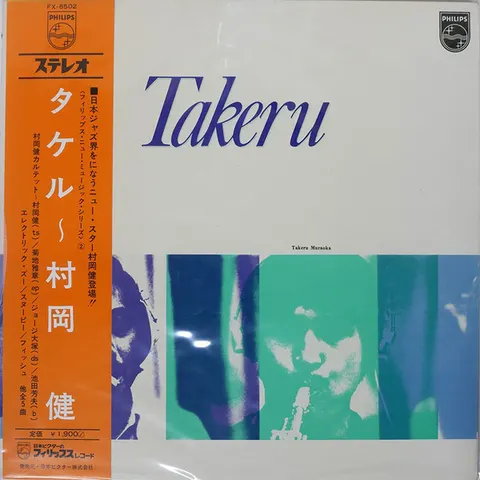
| Shakuhachi & Bossa Nova (1969) and Vol. 2 (1971) | 1969 / 1971 | Takeru Muraoka, member of the Shungo Sawada Quintet |
| Breath | 1984 | Masahiko Togashi, Yosuke Yamashita |
| Silky Adventure | 1986 | Masahiko Satoh |
| Bolero | 1986 | Yosuke Yamashita |
Scale note
Discogs lists 262+ total credits across 3 pages for this artist, the largest traditional-repertoire catalog encountered in this project so far, comprising the vast majority of classical koto/shakuhachi recordings, sokyoku ensemble works, and Japanese folk-song arrangements far outside this project's jazz scope. Only the first 100-credit page was individually reviewed, since it already captures the full run of his jazz-crossover and world-music work relevant here; pages 2-3 were not exhaustively parsed for further Main entries.
- Tony Scott - Music for Zen Meditation (and Other Joys) (1964).
- Masahiko Togashi and Yosuke Yamashita - Breath (1984).
- Masahiko Satoh - Silky Adventure (1986).
- Takeru Muraoka - Shared credit via the Shungo Sawada Quintet on Shakuhachi & Bossa Nova (1969) and Vol. 2 (1971).
- Charlie Mariano, Karl Berger, Peter Kowald, Trilok Gurtu - World Music Meeting (1985).
- Gary Peacock - Mugenkai — Ginkai II (1996).
- David Friesen - Hozan, Friesen +1 (1980).
- Isaac Stern - The Vintage Melodies of Japan (1978).
- Reibo Aoki and Katsuya Yokoyama - Co-founders of the Shakuhachi Sanbon Kai trio, 1966.
More Crossover Jazz Artists
See all 124 Crossover Jazz artists →More Japanese Jazz Artists
See all 70 Japanese artists →- Hōzan Yamamoto's full profile on JazzProfiles.com
- r/JapaneseJazz
- Discogs artist page
- Spotify — Music for Zen Meditation
- Hōzan Yamamoto — Wikipedia (fetched directly and successfully)
- Hōzan Yamamoto — Discogs artist 379808 (profile and partial paginated release list retrieved via the Discogs API)
- Spotify Web API catalog lookups