 JAZZPROFILES lives in the music 2,555 Jazz Artists fully Profiled!
Jack Diéval
Last updated November 14, 2026
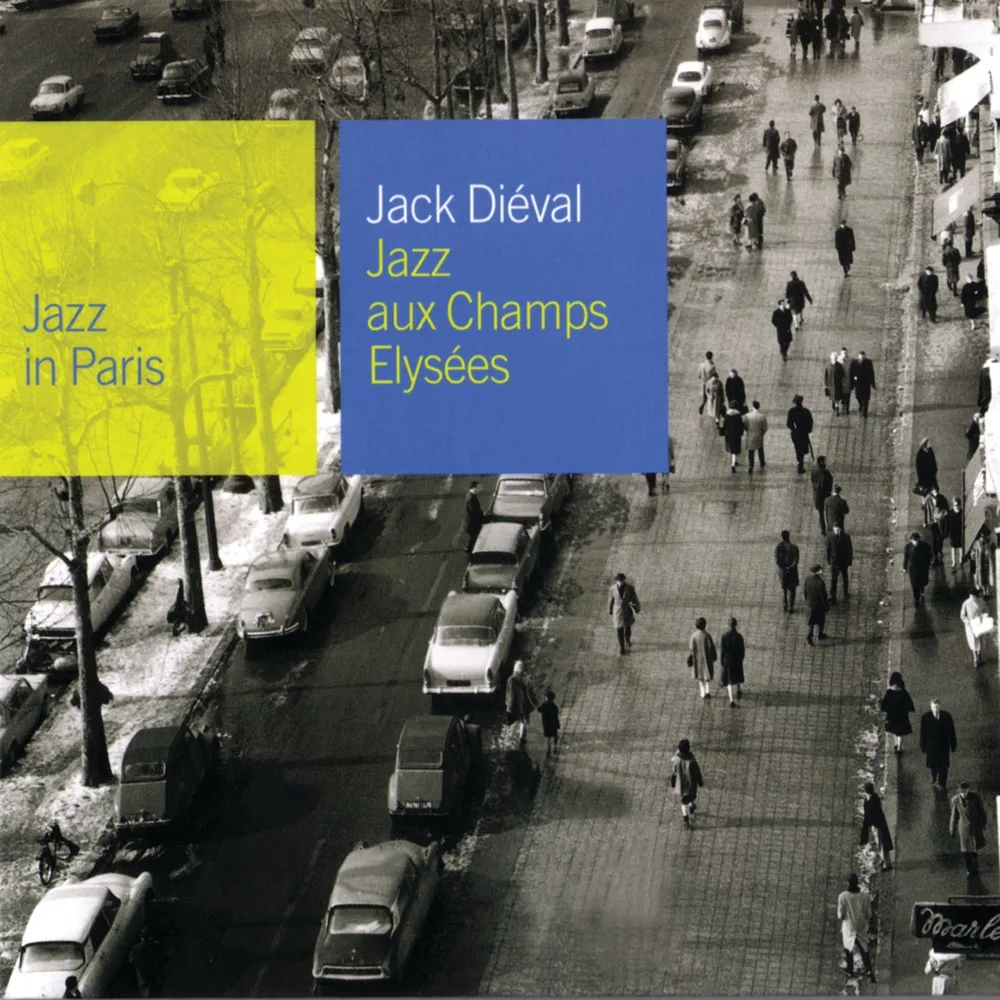
Cover of *Jazz in Paris: Jazz aux Champs-Élysées* (Decca France, 2002), a Jazz in Paris series CD credited to Jack Diéval. The cover is a black and white street scene of the Champs-Élysées with the series' coloured title panels; it is not a photograph of the artist. Standard copyright, all rights reserved, held by the record label. This is not a Creative Commons or public-domain image; it is an album cover shown as an honestly disclosed editorial identification image. — Apple Music artwork for the album, https://music.apple.com/us/album/jazz-in-paris-jazz-aux-champ-%C3%A9lys%C3%A9es/1443621084
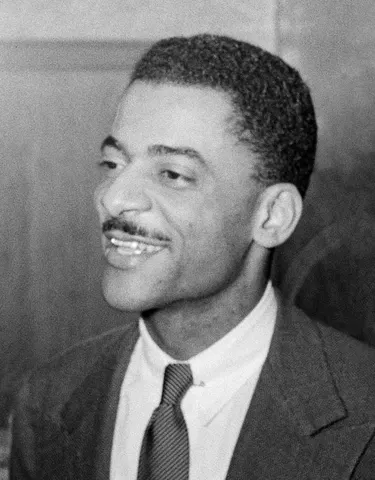
Jacques Joseph Jean Diéval, known as Jack, was born on December 21, 1920, in Douai, in the Nord region of northern France. He became one of the best-known jazz pianists in postwar Paris, then a radio and television presenter, a composer of songs and library music, and a long-serving board member of the French authors' society SACEM. His parents were musicians who led a jazz ensemble called the Dédé Jazz Band. He studied at the Douai conservatoire with Victor Gallois and was playing professionally in Lille from the age of fourteen. Before the war he worked in northern France with the drummer André Jourdan, and during it he played in officers' clubs and toured Tunisia and Algeria; in 1942 he spent a short time at Tunis Radio.
In Paris he worked for the singer Lucienne Boyer and then, from 1943 to 1946, in the orchestra of Alix Combelle, where he stayed about two and a half years. German Wikipedia places him at a record session with Django Reinhardt and Hubert Rostaing in Paris on May 15, 1946. In 1947 he made records with the tenor saxophonist Don Byas and put his own quartet on 78s for the Blue Star and Le Chant du Monde labels. By 1948 he led a trio with the bassist Lucien Simoën and André Jourdan, and he accompanied Coleman Hawkins at the Théâtre Marigny. In 1949 he played the Paris jazz festival with the altoist Hubert Fol, directly after Miles Davis and Tadd Dameron, and the same year he became the regular accompanist of the singer Henri Salvador. The lyricist Boris Vian had already written two texts for him in 1945, "Ce n'est que l'ombre d'un nuage" and "J'ai donné rendez-vous au vent".
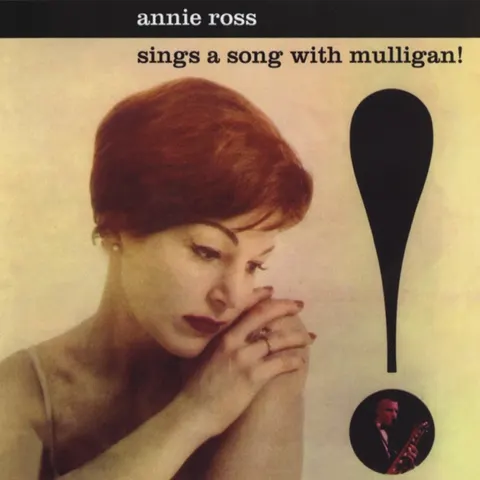
The Swing label recorded him steadily around 1949. He is the pianist on Hubert Rostaing's sextet 78 "Be-Bop Tune" / "Auber Blues", cut on December 30, 1948, and January 31, 1949, and he led a quartet that recorded "Tea for Two" with the trumpeter Bill Coleman on October 4, 1949, with Paul Vernon on tenor saxophone, Emmanuel Soudieux on bass and Richie Frost on drums. In Paris on February 10 and 22, 1950, he recorded a quartet and quintet session with the visiting tenor saxophonist James Moody, the trombonist Nat Peck, Soudieux and Frost, with Annie Ross singing on "Le Vent Vert"; the American label Prestige issued the sides as the 10-inch LP New Sounds From France. His own quintet, formed in 1953, included the trombonist Bill Tamper and the saxophonist Jean-Claude Fohrenbach.
In 1954 he created the radio programme Jazz aux Champs-Élysées for French radio and television, which he presented until 1972; it was renamed Musique aux Champs-Élysées in 1964. A house band, the J.A.C.E. All-Stars, played on it, and the first 10-inch LPs of the series, issued by La Voix de son Maître in 1954 and 1955, paired him with players such as the altoist Hubert Fol, the bassist Pierre Michelot, Fohrenbach and, on the second volume, the violinist Stéphane Grappelli. A 1957 Polydor LP under the programme's name carried the J.A.C.E. All-Stars, with the tenor saxophonist Guy Lafitte and the guitarist Sacha Distel among the players. He also produced and presented television programmes, among them Paris Carrefour du Monde and Club du piano, and he fronted the CBS compilation LP Jack Diéval présente: Club du piano n° 1 (1967). In the 1950s he led a trio with the trumpeter Doc Cheatham, accompanied Eartha Kitt and Gérard Badini, played the light-music festival in Stuttgart each year from 1954 to 1956, and was invited to a BBC festival in London in 1957. French Wikipedia credits his 1956 album Fou de rock'n'roll, by his Septuor, with the prize of the Disque-Jockey Association.
In 1961 he formed a trio with the bassist Jacques Hess and the drummer Franco Manzecchi, and guests who worked with it included Guy Lafitte, Lucky Thompson, Sonny Stitt, the singer Dionne Warwick and Eric Dolphy. On June 11, 1964, in a Paris studio, Diéval was the pianist in the septet that Dolphy led for a radio recording, with Donald Byrd, the tenor saxophonist Nathan Davis, Hess, the conga player Jacky Bambou and Manzecchi. It was made eighteen days before Dolphy's death and was later issued as Naima (1987) and Unrealized Tapes (1988), and in full in 2010. Later records of his own include the two-piano album Ambiance pour 2 pianos with Art Simmons, bassist Jimmy Woode and Manzecchi (Polydor, 1966), a quartet LP with the guitarist René Thomas (Relax, 1967), a Beatles EP with his trio (1967), and the 1969 Philips LP Le Chemin "Jazz Oratorio", in which his piano and the Paris Jazz Quartet, with Roger Guérin on trumpet, Michel Gaudry on bass and Jean-Louis Viale on drums, alternate modal jazz movements with the vocal soloist Maria d'Apparecida. In 1970 he played the Nice festival with Guérin, and in 1973 he composed Le Serpent Vert. A live double album from the Comédie des Champs-Élysées, 30 Years of Jazz From Gershwin to Duke Ellington (United Artists, 1976), has him leading a quartet with Guérin, the trumpeter Benny Bailey, Gaudry and Viale.
His best-known composition came in 1960: the melody of "J'ai le mal de toi", to words by Michel Rivgauche, which became known as "Parlez-moi de lui". Dalida recorded it in 1966, Françoise Hardy in 1968, and Cher in 1972 as "The Way of Love", with English words by Al Stillman. Alongside the jazz records he wrote and recorded a large body of light and library music for Chappell, including the Dance and Mood Music volumes with his orchestra. In June 1981 he went back to Douai for the filming of a documentary. SACEM elected him to its board in 1982, he became a vice-president in 1984, and he was re-elected in 1985, 1988, 1993, 1996 and 1997; in 2001 SACEM gave him its Grand Prix du jazz. He passed away in Paris on October 31, 2012, at the age of 91.
Diéval was nicknamed "le Debussy du jazz" and "l'impressionniste du jazz", names that suggest a light, colouristic touch on swing and bebop material. German Wikipedia reports that he named Earl Hines, Nat King Cole and Mel Powell as his influences, while Boris Vian heard a strong Teddy Wilson in his playing. He recorded straight-ahead small-group jazz in the 1940s and 1950s, a modal and operatic suite in 1969, and, for the library catalogues, short pieces for orchestra and for piano that move between jazz, waltz and easy listening. His reputation rests as much on his radio programme and his song as on his records, and the players around him on record included Bill Coleman, James Moody, Pierre Michelot and Franco Manzecchi.
- Be-Bop Tune / Auber Blues (1949, Swing SW. 311) - a 78 credited to Hubert Rostaing and his sextet "avec Jack Diéval", recorded in December 1948 and January 1949 with Hubert Rostaing on clarinet, Robby Poitevin on vibraphone and Arthur Motta on drums.
- Tea for Two / Don't Blame Me (1949, Swing SW. 320) - his quartet with Bill Coleman on trumpet, recorded on October 4, 1949.
- New Sounds From France (1953, Prestige PRLP 157) - the Paris sides of February 1950 with James Moody, Nat Peck and, on "Le Vent Vert", Annie Ross.
- Jazz aux Champs-Élysées (1954, La Voix de son Maître FFLP 1030) - the first LP of his radio series, with Hubert Fol, Pierre Michelot, Jean-Claude Fohrenbach, Maurice Meunier, Benny Vasseur, Géo Daly and Pierre Lemarchand.
- Jazz aux Champs-Élysées N° 2 (1955, La Voix de son Maître FFLP 1042) - a trio set with Stéphane Grappelli on violin, Benoît Quersin on bass and Jean-Louis Viale on drums.
- Jazz in Paris: Jazz aux Champs-Élysées (2002, Decca France) - a CD in the Jazz in Paris series that gathers radio-programme material, from the signature tune and band introductions to "Jumpin' at the Woodside", "Solitude", "The Man I Love" and "Tenderly". Apple Music - Jazz in Paris: Jazz aux Champs-Élysées Listen
- Unrealized Tapes (Eric Dolphy, 1988, West Wind LP 016) - the June 11, 1964 Paris radio session with Eric Dolphy, Donald Byrd, Nathan Davis, Jacques Hess, Jacky Bambou and Franco Manzecchi, with Diéval on piano. Spotify - The Complete Last Recordings: In Hilversum & Paris 1964
- Le Chemin "Jazz Oratorio" (1969, Philips 849.513 BY) - two long suites for piano, the Paris Jazz Quartet and a vocal soloist, with Roger Guérin.
- 30 Years of Jazz From Gershwin to Duke Ellington (1976, United Artists UAD 60135/36) - a live double album from the Comédie des Champs-Élysées, with Guérin, Benny Bailey, Michel Gaudry and Jean-Louis Viale.
Jack Diéval: Full Discography
French jazz pianist, composer and radio host, born December 21, 1920 in Douai, died October 31, 2012 in Paris. Discogs artist 560105 (https://www.discogs.com/artist/560105). His records are spread over a number of separate Discogs entries for his own bands (Jack Diéval Trio, Quartett, Quintet, Sextet, Septuor, Orchestre and Grand Orchestre, and the J.A.C.E. All-Stars), and the releases of all of them are included below. Years follow Discogs; where Wikipedia gives a different year, the Notes cell says so. Catalogue numbers and personnel are given only where a Discogs release record or another source shows them, and "Not confirmed" marks what could not be verified.
The first table lists records under his own name or his own groups, including co-billed records. The second is a selection of sideman and accompanist credits, not an exhaustive list.
Leader and group releases
| Album | Year | Label | Personnel | Notes | Listen | Buy |
|---|---|---|---|---|---|---|
| Hallelujah / Boogie-Woogie Number Two (78 rpm, Jack Diéval Quartet) | 1947 | Blue Star | Jack Diéval (piano); other musicians not confirmed | Catalogue number not confirmed. | — | — |
| Sophisticated Lady / Diggin' for Diz (78 rpm) | 1947 | Le Chant du Monde | Jack Diéval (piano); other musicians not confirmed | Catalogue number not confirmed. | — | — |
| How High's the Moon / Jack's Idea (78 rpm) | 1947 | Le Chant du Monde | Jack Diéval (piano); other musicians not confirmed | Catalogue number not confirmed. | — | — |
| Big Tailor's Blues / Yard Bird Suite (78 rpm) | 1947 | Le Chant du Monde | Jack Diéval (piano); other musicians not confirmed | Catalogue number not confirmed. | — | — |
| Pepper Mood / C. Jam Blues (78 rpm) | 1948 | Le Chant du Monde | Jack Diéval (piano); other musicians not confirmed | Catalogue number not confirmed. | — | — |
| Sweet Lorraine / Shufflin' in the Hollywood (78 rpm) | 1948 | Le Chant du Monde | Jack Diéval (piano); other musicians not confirmed | Catalogue number not confirmed. | — | — |
| Lover Man / Auber Blues (78 rpm, Jack Diéval et son orchestre à cordes) | 1948 | Blue Star | Jack Diéval (piano) with strings; other musicians not confirmed | Catalogue number not confirmed. | — | — |
| Be-Bop Tune / Auber Blues (78 rpm, Hubert Rostaing et son Sextette avec Jack Diéval) | 1949 | Swing SW. 311 | Hubert Rostaing (clarinet), Jack Diéval (piano), Robby Poitevin (vibraphone), Ladislas Czabanick (bass, A side), Emmanuel Soudieux (bass, B side), Lucien Gallopain (guitar, B side), Arthur Motta (drums) | Co-billed. "Be-Bop Tune" was recorded on December 30, 1948 and "Auber Blues" on January 31, 1949. | — | — |
| Tea for Two / Don't Blame Me (78 rpm, Jack Diéval et son quartette avec Bill Coleman) | 1949 | Swing SW. 320 | Jack Diéval (piano), Bill Coleman (trumpet), Paul Vernon (tenor saxophone), Emmanuel Soudieux (bass), Richie Frost (drums) | Recorded October 4, 1949. | — | — |
| Jumpin' in C / The Man I Love (78 rpm, Jack Diéval et son quartette and trio) | 1949 | Swing | Jack Diéval (piano); other musicians not confirmed | Discogs bills the two sides to a quartet and a trio. Catalogue number not confirmed. | — | — |
| I Can't Get Started / Blue Skies (78 rpm) | 1950 | Swing | Jack Diéval (piano); other musicians not confirmed | Catalogue number not confirmed. | — | — |
| No / Lou-Easy (78 rpm) | 1950 | Swing | Jack Diéval (piano); other musicians not confirmed | Catalogue number not confirmed. | — | — |
| Bebop Tune No. 1 / Michele by Accident (78 rpm) | 1950 | Pacific | Jack Diéval (piano), James Moody (tenor saxophone), Nat Peck (trombone), Emmanuel Soudieux (bass), Richie Frost (drums) | Personnel follows the Prestige LP below, which collects the same February 1950 sides. Catalogue number not confirmed. | — | — |
| New Sounds From France (10-inch LP, Jack Diéval and his Quartet with James Moody and Annie Ross) | 1953 | Prestige PRLP 157 | Side A and "Head Light" / "Big Chief Peckham": Jack Diéval (piano), James Moody (tenor saxophone), Nat Peck (trombone), Emmanuel Soudieux (bass), Richie Frost (drums), Annie Ross (vocals on "Le Vent Vert"). B3 and B4 are by Moody with Art Simmons (piano), Alvin Banks (bass) and Clarence Terry (drums) | The Diéval tracks were recorded in Paris on February 10 and 22, 1950. Wikipedia dates the original issue to 1950. | — | — |
| Jazz aux Champs-Élysées (10-inch LP) | 1954 | La Voix de son Maître FFLP 1030 | Jack Diéval (piano), Hubert Fol (alto saxophone), Jean-Claude Fohrenbach (tenor saxophone), Maurice Meunier (clarinet), Benny Vasseur (trombone), Géo Daly (vibraphone), Emmanuel Soudieux and Pierre Michelot (bass), Pierre Lemarchand (drums) | Six tracks including "Royal Garden Blues" and "Just Squeeze Me". | — | — |
| Danse (Jack Diéval Quintet et son Nouveau Quintette Mélodique) | 1954 | Riviera | Jack Diéval (piano); other musicians not confirmed | Catalogue number not confirmed. | — | — |
| Jack Diéval, son sextette et l'Orchestre de jazz de la Télévision sarroise | 1954 | La Voix de son Maître | Jack Diéval (piano) and sextet; members not confirmed | Catalogue number not confirmed. | — | — |
| Jazz aux Champs-Élysées N° 2 (10-inch LP, Jack Diéval et Stéphane Grappelli) | 1955 | La Voix de son Maître FFLP 1042 | Jack Diéval (piano), Stéphane Grappelli (violin), Benoît Quersin (bass), Jean-Louis Viale (drums) | Nine standards including "Pennies From Heaven" and "Louise". | — | — |
| Fou de rock and roll (Septuor Jack Diéval) | 1957 | Polydor | Jack Diéval (piano) and septet; members not confirmed | Discogs dates it 1957; French Wikipedia lists it as a 1956 album and says it won the prize of the Disque-Jockey Association. Catalogue number not confirmed. | — | — |
| Super rock and roll (Septuor Jack Diéval) | 1957 | Not confirmed | Jack Diéval (piano) and septet; members not confirmed | Catalogue number not confirmed. | — | — |
| Jazz aux Champs-Élysées (10-inch LP, Jack Diéval et le J.A.C.E. All-Stars) | 1957 | Polydor 45 558 | Jack Diéval (piano), Guy Lafitte (tenor saxophone), Michel de Villers (baritone saxophone), Sacha Distel (guitar), Paul Rovére (bass), Christian Garros (drums) | Recorded on June 24, 1957 at the Pigalle Theatre in Paris. Ten tracks, from the programme signature tune and band introductions to "Jumpin' at the Woodside", "Solitude" and "Blues for Polydor". Produced by Paul Durand. | — | — |
| Le Disque du concours sur l'amour | 1960 | Prestige (France) | Jack Diéval (piano); other musicians not confirmed | Not the American Prestige label. Catalogue number not confirmed. | — | — |
| Ambiance pour 2 pianos (Jack Diéval and Art Simmons) | 1966 | Polydor 658 006 | Jack Diéval and Art Simmons (pianos), Jimmy Woode (bass), Franco Manzecchi (drums) | Twelve standards including "Summertime", "Tea for Two" and "Body and Soul", recorded on Steinway pianos. Year follows Discogs; French Wikipedia lists a 1959 Pathé issue (SPAM-67) and German Wikipedia gives 1964. | — | — |
| Globe-Trotter | 1966 | Decca | Jack Diéval (piano) and orchestra; members not confirmed | Catalogue number not confirmed. | — | — |
| Relaxez-vous avec Jack Diéval et son quartette | 1967 | Relax 33003 | Jack Diéval (piano), René Thomas (guitar), Jacques Hess (bass), Franco Manzecchi (drums) | Standards, Beatles songs and his own pieces. German Wikipedia dates it 1966. | — | — |
| Jack Dieval Plays the Beatles (EP) | 1967 | Relax EP 40.001 | Jack Diéval (piano), Jacques Hess (bass), Franco Manzecchi (drums) | Four songs: "Michelle", "All My Loving", "Yesterday" and "And I Love Her". | — | — |
| Dance and Mood Music, Vol. 5 (Jack Diéval, son piano et son grand orchestre) | 1968 | Chappell DMM 305 | Jack Diéval (piano) and orchestra; members not confirmed | Library music, twelve pieces credited to him including "Sur les links" and "Safari". | Apple Music | — |
| Dance and Mood Music, Vol. 1 | Not confirmed | Chappell DMM 301 | Jack Diéval (piano) and orchestra; members not confirmed | Library music, twelve tracks including "Reflets de Seine". | Apple Music | — |
| Le Chemin "Jazz Oratorio" (Jack Diéval and the Paris Jazz Quartet) | 1969 | Philips 849.513 BY | Jack Diéval (piano, composer), Roger Guérin (trumpet), Michel Gaudry (bass), Jean-Louis Viale (drums), Marie-Louise Girod (piano), Maria d'Apparecida (soloist) | Two long suites; Discogs describes them as alternating modal jazz with opera-style writing. Odette Gartenlaub is also credited with the music. | — | — |
| Dance and Mood Music, Vol. 12 (Jack Diéval et le Paris Jazz Quartet) | 1970 | Chappell DMM 312 | Jack Diéval (piano) and the Paris Jazz Quartet; other members not confirmed | Ten pieces including "Campus No. 1" and "Jazzomaniac". | Apple Music | — |
| Classic & Rhythm for Dreaming | 1971 | Concert Hall | Jack Diéval (piano); other musicians not confirmed | Catalogue number not confirmed. | — | — |
| Sur les link's (Jack Diéval's Music) | 1975 | Philips 7251 708 | Jack Diéval (piano) and orchestra; members not confirmed | Fourteen tracks; Discogs lists this as a cassette compilation. French Wikipedia lists the album as 1976 (Philips 6444 570). | — | — |
| 30 Years of Jazz From Gershwin to Duke Ellington (Live at the Comédie des Champs-Élysées) | 1976 | United Artists UAD 60135/36 | Jack Diéval (piano), Benny Bailey and Roger Guérin (trumpet), Michel Gaudry (bass), Jean-Louis Viale (drums) | Live double album with an Ellington medley, "My Funny Valentine", "Groovin' High" and "Mack the Knife". | — | — |
| Jack Diéval Trio | 1978 | International Tunes & Songs | Jack Diéval (piano) and trio; members not confirmed | Catalogue number not confirmed. | — | — |
| Live at the "Comedie des Champs Elysees" (Jack Dieval Quintet) | 1978 | Gold Star | Jack Diéval (piano) and quintet; members not confirmed | Discogs title, catalogue number not confirmed; it may overlap with the 1976 live album above. | — | — |
| Piano Magic (Jack Dieval and Frank Rover) | 1992 | Ariola Express | Jack Diéval (piano), Frank Rover | Catalogue number not confirmed. | — | — |
| Archive: Cocktail Club (Jack Dieval and Henri Renaud) | 2000 | Chappell Recorded Music Library | Jack Diéval and Henri Renaud (piano) | Library compilation. | Apple Music | — |
| Jazz in Paris: Jazz aux Champs-Élysées (CD, Jack Diéval et le J.A.C.E. All-Stars) | 2002 | Decca France | Jack Diéval (piano) with the programme's house band; individual credits not confirmed here | Sixteen tracks: programme signature tunes and band introductions, the ten tracks of the 1957 Polydor LP and others such as "Learnin' the Blues" and "Tenderly". | Apple Music | — |
| Music, the Food of Life (The Jack Dieval's Sextet) | 2003 | Cristal Records | Jack Diéval (piano) and sextet; members not confirmed | Catalogue number not confirmed. AllMusic lists it as 2004. | — | — |
Sideman and accompanist credits (selection)
| Year | Project (Leader) | Title | Label | Catalog | Role | Notes |
|---|---|---|---|---|---|---|
| 1946 | Django Reinhardt and Hubert Rostaing | Paris record session of May 15, 1946 | Not confirmed | Not confirmed | Piano | Source is German Wikipedia; the titles it names are "Swingtime in Springtime", "Yours and Mine", "On the Sunny Side of the Street" and "I Won't Dance". Not checked against a release record. |
| 1947 | Alix Combelle | Jam-Session 78s | Swing | Not confirmed | Piano | Discogs filing not checked. |
| 1949 | Bill Coleman | 1940-1949 (compilation) | Classics | Not confirmed | Piano | Collects his Swing quartet sides with Bill Coleman, 2002. |
| 1949 to 1950 | James Moody | 1949-1950 (compilation) | Classics | Not confirmed | Piano | Includes the Paris sides with his quartet, 2001. |
| 1950 | Henri Salvador | "Saint-Germain des Prés" / "C'est le be-bop" | Polydor | Not confirmed | Not itemised on Discogs | Boris Vian co-wrote "C'est le be-bop" with Diéval, according to a 2012 obituary. |
| 1957 | Pierre Dudan and Dany Dauberson | Pierre Dudan rencontre Dany Dauberson | Pacific | Not confirmed | Not itemised on Discogs | Credit shown under his quartet's Discogs entry. |
| 1963 | Simone Langlois | Toi et ton sourire | Philips | Not confirmed | Not itemised on Discogs | Credit shown under his grand orchestre's Discogs entry. |
| 1964 | Eric Dolphy | Unrealized Tapes (recorded June 11, 1964) | West Wind LP 016 | 1988 | Piano | Discogs release record credits him on piano; the session has Donald Byrd, Nathan Davis, Jacques Hess, Jacky Bambou and Franco Manzecchi. Part of the same session also appeared on Naima (1987) and in full on The Complete Last Recordings: In Hilversum & Paris 1964 (2010). |
| 1973 | Agnés Sarkis | "J'ai le mal de toi" / "Barcelone" (single) | Pathé | Not confirmed | Orchestra leader | Billed to Agnés Sarkis with Jack Diéval and his grand orchestre. |
| 1978 | Agnés Sarkis | Un prénom pour la vie | International Tunes & Songs | Not confirmed | Orchestra leader | Billed to Agnés Sarkis with Jack Diéval and his orchestra. |
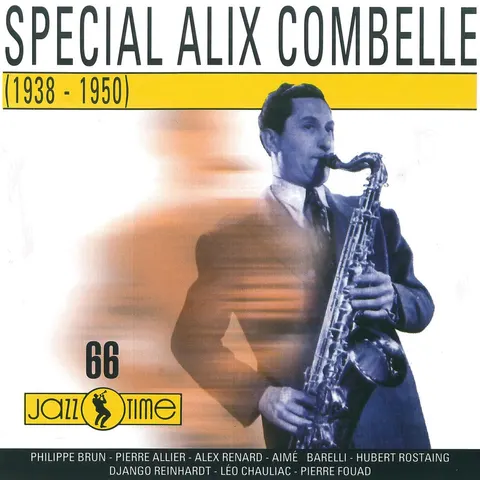
- Alix Combelle - the saxophonist and bandleader in whose orchestra he worked in Paris from 1943 to 1946.
- Django Reinhardt and Hubert Rostaing - accompanied on a Paris record session in 1946; Rostaing's sextet recorded "Be-Bop Tune" / "Auber Blues" with him in 1948 and 1949.
- Don Byas - tenor saxophonist with whom he recorded in 1947.
- Coleman Hawkins - accompanied at the Théâtre Marigny in Paris in 1948.
- Henri Salvador - the singer for whom he was the regular accompanist from 1949.
- Boris Vian - lyricist who wrote two texts for him in 1945.
- Bill Coleman, with Paul Vernon, Emmanuel Soudieux and Richie Frost - the front line and rhythm section of the Swing 78 "Tea for Two" (October 4, 1949).
- James Moody, Nat Peck and Annie Ross - the Paris sessions of February 1950 issued as New Sounds From France.
- Hubert Fol, Pierre Michelot, Jean-Claude Fohrenbach, Maurice Meunier, Benny Vasseur, Géo Daly and Pierre Lemarchand - the players on the 1954 Jazz aux Champs-Élysées LP.
- Stéphane Grappelli, Benoît Quersin and Jean-Louis Viale - the violinist, bassist and drummer of the 1955 second volume.
- Guy Lafitte and Sacha Distel - saxophonist and guitarist among the players of the 1957 Polydor Jazz aux Champs-Élysées.
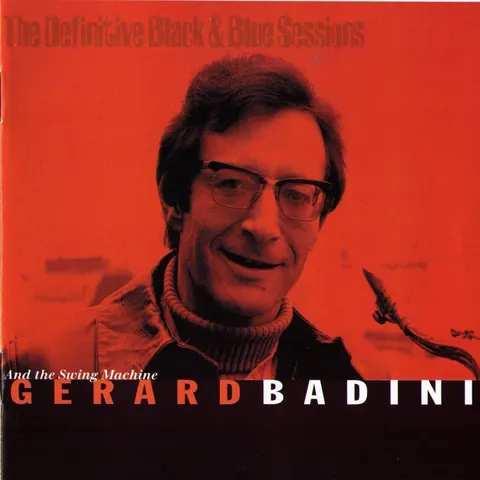
- Eartha Kitt and Gérard Badini - accompanied in the 1950s.
- Jacques Hess and Franco Manzecchi - bassist and drummer of his early-1960s trio, who also play on Ambiance pour 2 pianos (Manzecchi), the Beatles EP and the Relax quartet LP.
- Eric Dolphy, Donald Byrd, Nathan Davis and Jacky Bambou - his colleagues on the June 11, 1964 radio session.
- Art Simmons and Jimmy Woode - the second pianist and the bassist of Ambiance pour 2 pianos.
- René Thomas - guitarist on the Relax quartet LP.
- Roger Guérin, Michel Gaudry and Jean-Louis Viale - trumpeter, bassist and drummer on Le Chemin "Jazz Oratorio" (1969) and, with Benny Bailey, the 1976 live album.
More Swing Artists
See all 273 Swing artists →More French Jazz Artists
See all 170 French artists →- Apple Music artist page
- Discogs
- MusicBrainz
- AllMusic
- Wikipedia (English)
- Wikipedia (French)
- Wikidata
- BnF catalogue
- Jack Diéval on JazzProfiles.com
- Wikipedia (English): Jack Diéval
- Wikipedia (French): Jack Diéval
- Wikipedia (German): Jacques Diéval
- Wikipedia (French): Parlez-moi de lui
- Wikipedia (English): Unrealized Tapes
- Disparition de Jack Diéval, obituary by Gildas Lefeuvre (November 4, 2012)
- Wikidata: Jack Diéval (Q547699)
- Discogs: Jack Diéval
- MusicBrainz: Jack Diéval
- AllMusic: Jack Dieval
- Apple Music: Jack Diéval