 JAZZPROFILES lives in the music 2,555 Jazz Artists fully Profiled!
Hubert Rostaing
Last updated November 14, 2026
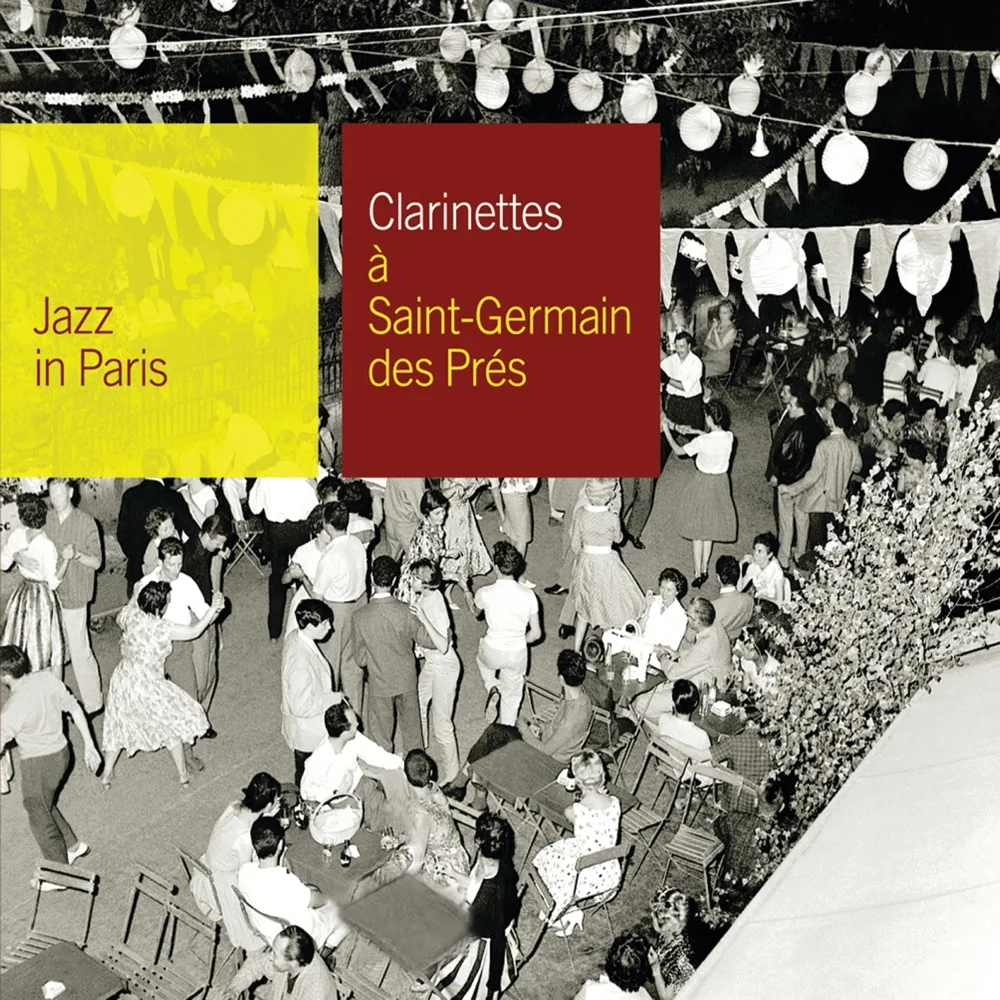
Cover of *Clarinettes à Saint-Germain des Prés* (Gitanes Jazz Productions 013 543-2, 2001), a CD with Hubert Rostaing billed first, which reissues his 1957 album *Clarinette Parade* as tracks 1 to 12. The cover is a period photograph of a dance floor, not a photograph of the artist. Standard copyright, all rights reserved, held by the rights holders of the release. This is not a Creative Commons or public-domain image; it is an album cover shown as an honestly disclosed editorial identification image. — Apple Music artwork for the album, https://music.apple.com/fr/album/clarinettes-%C3%A0-saint-germain-des-pr%C3%A9s/1443545973
Hubert Rostaing was a clarinettist and saxophonist who became the voice of the clarinet in Django Reinhardt's wartime Quintette du Hot Club de France, then led his own Paris bands, played on the scores of André Hodeir and later turned to film music. He was born Hubert Louis Auguste Rostaing on September 17, 1918, in Lyon, and moved with his family to Algiers when he was young. There he studied at the local conservatory and, as a teenager, played clarinet and saxophone in local venues with a band called the Red Hotters, which also toured Morocco and Tunisia.
After a 1938 tour that reached Luxembourg he settled in Paris, hoping to work the clubs around Place Pigalle. He spent time in Lille, returned to Algiers for a while, and came back to Paris for good in 1940 to play cabaret on the Champs-Élysées. His break came through the war. Django Reinhardt's Quintette du Hot Club de France had been playing in England when hostilities began, and Stéphane Grappelli chose to stay in London. Reinhardt went home and needed a new lead voice; he asked the saxophonist Alix Combelle, who was busy with another job and recommended Rostaing instead. Django Reinhardt took him on, first as a saxophonist, and Rostaing then switched to clarinet. His playing was raw at first, and he worked hard enough that by 1944 a listeners' survey named him the best clarinettist of the Hot Club. His model was Benny Goodman.
Rostaing stayed with the Quintette du Hot Club de France on and off until 1948. Discogs credits him on clarinet on the Swing singles that carry the band's wartime repertoire: "Nuages" and "Les Yeux noirs", recorded in Paris on December 13, 1940, with Alix Combelle also on clarinet on "Nuages", then "Swing 42" and "Dinette", both recorded on September 11, 1941. He had already recorded with Reinhardt on October 22, 1940, on tenor saxophone in Aimé Barelli's orchestra for the Swing single "Indecision" and "Oui, c'est ça". A Blue Star single of 1948 credits him on alto saxophone beside Reinhardt and the American trumpeter Rex Stewart, on "Night and Day" and "Confessin'". During the same years he made his own records for Swing as Hubert Rostaing et son orchestre, from 1941, worked with the orchestras of Raymond Legrand, Fred Adison and Jacques Hélian, and in 1948 and 1949 led a sextet on Swing singles whose titles include "Fugology", "Be-Bop Tune" and "Paris-Bop".
In the Paris of the 1940s and 1950s he was also a studio and stage musician of unusual range. He worked with André Hodeir on film and concert scores including Autour d'un récif (1949) and Saint-Tropez (1953), and in the autumn of 1956 he played alto saxophone on four tracks of the Philips album Plays André Hodeir, on which the drummer Kenny Clarke led a sextet with Martial Solal at the piano. Under the pseudonyms Earl Cadillac, Dick Rasurell and Joe Kalamazoo he recorded French rock and roll and dance music, and in classical music he was a dedicatee of Jean Barraqué's Concerto, giving its world premiere with the BBC Symphony Orchestra. On April 27, 1957, he accompanied Nat King Cole at the Palais de Chaillot, and that year he led the orchestra at the Alhambra for Maurice Chevalier. In 1958 and 1959 he was part of Bob Castella's small group behind Yves Montand's recitals, and Philips issued Montand records billed with Hubert Rostaing et son orchestre in 1960 and 1961.
For Vega he made a run of records in 1957 and 1958. They include the trio albums with the pianist Pierre Spiers and the drummer Jerry Mengo, the Benny Goodman tribute Clarinette Parade, recorded in May 1957 at the Pathé-Magellan studio in Paris with Martial Solal on piano, and Notre ami Django (1958), a tribute with Henri Crolla, André Ekyan and Stéphane Grappelli. From 1956 until his death he worked mainly as a composer, arranger, orchestrator, conductor and music director, on 53 films and television series by the count of English Wikipedia. His credits include Cette sacrée gamine (1956), Where Is Parsifal? (1984) and Eye of the Widow. He passed away in Paris on June 10, 1990, at the age of 71, and is buried in the Montmartre Cemetery.
Rostaing played clarinet in the swing idiom of Benny Goodman, and on the wartime records with Django Reinhardt he is the lead horn voice in the chair Stéphane Grappelli's violin had occupied. English Wikipedia notes that his playing lacked experience at first and that he practiced hard enough to be named the Hot Club's best clarinettist in a 1944 survey. He also played tenor and alto saxophone and, in some dance orchestras, bandoneon, and his range outside jazz was wide: Paris dance bands, the scored writing of André Hodeir, rock and roll under pseudonyms, a classical premiere and, from the mid-1950s, film scoring. Writing in The Clarinet in 2025, Jesse Krebs, as summarized on English Wikipedia, calls his collaboration with Reinhardt an important legacy and says his versatility deserves more recognition. His Vega trio records with Pierre Spiers and Jerry Mengo show a lighter side, with the clarinet in front of piano, celesta, harpsichord or organ and drums.
- "Nuages" / "Les Yeux noirs" (Django Reinhardt et le Quintette du Hot Club de France, Swing SW. 88, recorded in Paris on December 13, 1940) - the wartime single of Reinhardt's best-known composition, with Rostaing and Alix Combelle on clarinets, Tony Rovira on bass, Pierre Fouad on drums and Reinhardt and Joseph Reinhardt on guitars.
- "Swing 42" / "Mabel" (Django Reinhardt et le Quintette du Hot Club de France, Swing SW. 137, 1941) - Rostaing on clarinet with Fouad on drums and Reinhardt on guitar; "Swing 42" was recorded on September 11, 1941, with Emmanuel Soudieux on bass and Eugène Vées on guitar, and "Mabel" on December 13, 1940.
- "Dinette" / "Lentement Mademoiselle" (Django Reinhardt et le Quintette du Hot Club de France, Swing SW. 146, 1942) - another wartime quintet single with Rostaing on clarinet, recorded on September 11, 1941, and March 31, 1942.
- Hubert Rostaing et son Sextette, "Fugology" / "To Morrow" (Swing SW. 279, recorded April 14, 1948) - his own small group, with Robby Poitevin on vibraphone, Lucien Gallopain on guitar, Armand Motta on piano, Ladislas Czabanick on bass and Arthur Motta on drums; "Be-Bop Tune" / "Auber Blues" (Swing SW. 311, recorded December 30, 1948, and January 31, 1949) adds Jack Diéval on piano.
- Kenny Clarke's Sextet, Plays André Hodeir (Philips N 77.312 L, recorded October 26, November 21 and November 30, 1956) - the drummer Kenny Clarke leading a Paris band through Hodeir's arrangements, with Martial Solal, Billy Byers and Armand Migiani; Rostaing plays alto saxophone on four tracks ("Oblique", "Jeru", "Eronel" and "Tahiti"). Apple Music - Kenny Clarke's Sextet Plays Andre Hodeir
- Clarinette Parade, Hommage à Benny Goodman (Vega V 30 S 787, recorded May 1957) - his own tribute to Goodman, made at the Pathé-Magellan studio in Paris with Martial Solal, Michel Hausser, Alphonse Masselier and Roger Paraboschi, with most of the tunes written by Rostaing. Apple Music - Clarinette Parade Listen
- Clarinettes à Saint-Germain des Prés (Gitanes Jazz Productions 013 543-2, 2001) - a CD that reissues Clarinette Parade as tracks 1 to 12 and pairs it with a 1956 Barclay session by the clarinettist Maurice Meunier with René Urtreger and Pierre Michelot. Apple Music - Clarinettes à Saint-Germain des Prés
- Henri Crolla, André Ekyan, Stéphane Grappelli and Hubert Rostaing, Notre ami Django: Hommage de ses compagnons (Vega V 30 S 805, 1958) - the tribute LP with Henri Crolla, Stéphane Grappelli, Emmanuel Soudieux and the pianists Maurice Vander and René Urtreger, playing "Minor Swing", "Nuages", "Djangologie" and "Swing 42".
Hubert Rostaing: Full Discography
French clarinettist, saxophonist, bandleader, arranger and film composer, born in Lyon on September 17, 1918, who passed away in Paris on June 10, 1990. Discogs files his releases under artist 441793 (https://www.discogs.com/artist/441793-Hubert-Rostaing), which lists about 700 entries, most of them compilations, film-music and chanson records and other artists' records on which he is credited as arranger, conductor or orchestra leader. His bands and pseudonyms sit under separate Discogs entries, among them Hubert Rostaing Et Son Orchestre (698055), Hubert Rostaing Et Son Sextette (1001548), Hubert Rostaing Trio (4146631), Hubert Rostaing Et Sa Formation Jazz (3008652), Earl Cadillac Et Son Orchestre (3466142), Dick Rasurell Et Ses Berlurons (1781019) and Joe Kalamazoo (3720032). This discography follows the jazz records that carry his name and the jazz sessions on which he is credited as a player; the dance-orchestra and chanson accompaniment records, which run to well over a hundred titles, are not itemized. Where a catalog number, date or personnel list could not be confirmed, the cell says so.
Role key: Leader means the record is billed to Rostaing or his own band. Co-billed means his name appears beside others on the sleeve. Sideman rows give the instrument credited on the release record.
Leader and co-billed releases
| Album | Recording Date(s) | Release Date | Label | Catalog Number | Format | Personnel | Role | Notes | Listen | Buy |
|---|---|---|---|---|---|---|---|---|---|---|
| "Indecision" / "Oui, c'est ça" (billed Hubert Rostaing et Aimé Barelli et leur orchestre) | October 22, 1940, Paris | 1940 | Swing | SW. 87 | 10-inch 78 rpm | Hubert Rostaing (tenor saxophone), Aimé Barelli and Christian Bellest (trumpets), Alix Combelle (tenor saxophone), Django Reinhardt (guitar), Francis Luca (bass), Pierre Fouad (drums) | Co-billed | "Oui, c'est ça" was written by Barelli and arranged by Reinhardt. | — | — |
| Hubert Rostaing et son Orchestre, Swing singles: "Horizons" / "Champs-Élysées"; "Irène" / "Fa majeur" | Not confirmed | 1941 | Swing | Not confirmed | 10-inch 78 rpm | Not documented | Leader | His first records under his own name in the Discogs listing. | — | — |
| Hubert Rostaing et son Orchestre, Swing singles: "Par hasard" / "Aurore"; "Parc Monceau" / "L'Oeil noir" | Not confirmed | 1942 | Swing | Not confirmed | 10-inch 78 rpm | Not documented | Leader | Further singles of 1942 were issued on Rythme, including "Adieu" / "Paulette". | — | — |
| Hubert Rostaing & Stan Brenders et son grand orchestre, "Hésitation" / "Mohican" | Not confirmed | 1942 | Rythme | Not confirmed | 10-inch 78 rpm | Not documented | Co-billed | Recorded with the Belgian bandleader Stan Brenders; a later CD, Brüssel 1940 - 1943 (Antikbuero, 2005), collects Brenders recordings. | — | — |
| Hubert Rostaing et son Orchestre, Swing singles: "Trop tôt" / "Blues à trois voix"; "Première idée d'Eddie" / "Seconde idée d'Eddie" | Not confirmed | 1943 | Swing | Not confirmed | 10-inch 78 rpm | Not documented | Leader | — | — | |
| Hubert Rostaing et son Orchestre, Swing singles: "Trop tard" / "Malgré moi" (1944); "Mop. Mop." / "November Blues" (1946); "Chelsea Bridge" / "Table of a Fool" and "Ice Cream Blues" / "On the Sunny Side of the Street" (1947) | Not confirmed | 1944 to 1947 | Swing | Not confirmed | 10-inch 78 rpm | Not documented | Leader | — | — | |
| Hubert Rostaing et son Sextette, "Fugology" / "To Morrow" | April 14, 1948 | 1948 | Swing | SW. 279 | 10-inch 78 rpm | Hubert Rostaing (clarinet), Robby Poitevin (vibraphone), Lucien Gallopain (guitar), Armand Motta (piano), Ladislas Czabanick (bass), Arthur Motta (drums) | Leader | Both tunes are credited to Rostaing; "Fugology" is co-credited with Poitevin. | — | — |
| Hubert Rostaing, "Star Dust" / Hubert Rostaing et son Sextette, "Sur une gamme" | October 12, 1948 | 1949 | Swing | SW. 293 | 10-inch 78 rpm | Hubert Rostaing (saxophone on "Star Dust", clarinet on "Sur une gamme"), Robby Poitevin (vibraphone), Jean-Pierre Sasson (guitar), Armand Motta (piano), Ladislas Czabanick (bass), Arthur Motta (drums) | Leader | — | — | |
| Hubert Rostaing et son Sextette avec Jack Diéval, "Be-Bop Tune" / "Auber Blues" | December 30, 1948 ("Be-Bop Tune") and January 31, 1949 ("Auber Blues") | 1949 | Swing | SW. 311 | 10-inch 78 rpm | Hubert Rostaing (clarinet), Jack Diéval (piano), Robby Poitevin (vibraphone), Ladislas Czabanick (bass, "Be-Bop Tune"), Emmanuel Soudieux (bass, "Auber Blues"), Lucien Gallopain (guitar, "Auber Blues"), Arthur Motta (drums) | Leader | Both tunes were written by Diéval. | — | — |
| Hubert Rostaing et son Sextette, other Swing singles including "Playback Swing" / "Washington Blues", "High Tide" / "Champs-Élysées Club", "Lost Week End" / "Guest in the Nest", "Laurence" / "Paris-Bop", "Sunday" / "Figaro", "Roby-Bop" / "Sunday", "Blue Skies" / "Bouquet", "The Hucklebuck" / "Half Century Blues" and "Jasmine" / "Still Flyin'" | Not confirmed | 1948 to 1950 | Swing | Not confirmed | 10-inch 78 rpm | Not documented here | Leader | Nine further singles by the sextet are listed on Discogs. | — | — |
| Hubert Rostaing Trio and Hubert Rostaing et son Trio, singles including "Huguette" / "Trio Blues" (Swing), "Just Squeeze Me" / "Whose Dream Are You", "Just A-Settin' and A-Rockin'" / "Glad to Meet You" and, with the trumpeter Howard McGhee, "To Be Bop or Not to Be Bop" / "Nicole" (Blue Star) | Not confirmed | Not confirmed | Swing; Blue Star | Not confirmed | 10-inch 78 rpm | Not documented | Leader | The Discogs entries for these singles carry no year. | — | — |
| Rex Stewart Quintet with Django Reinhardt and Hubert Rostaing, "Night and Day" / "Confessin'" | Not confirmed | 1948 | Blue Star | B.S. N° 73 | 10-inch 78 rpm | Rex Stewart (trumpet), Hubert Rostaing (alto saxophone), Django Reinhardt (guitar), Ladislas Czabanick (bass), Ted Curry (drums) | Co-billed | Supervised by Hugues Panassé. | — | — |
| Un trio célèbre, un septuor charmant (Pierre Spiers, Hubert Rostaing, Jerry Mengo) | Not confirmed | 1957 | Vega | V 35 M 723 | 10-inch LP, mono | Hubert Rostaing (clarinet), Pierre Spiers (piano, celesta, harpsichord, harp, organ), Jerry Mengo (drums) | Co-billed | Eight tracks, including "Jitter Bach", "La Plus belle chose au monde" and "La Grenouille". | — | — |
| Le Trio... (Pierre Spiers, Hubert Rostaing, Jerry Mengo) | Not confirmed | 1957 | Vega | Not confirmed | 10-inch LP and 7-inch EP | Not documented | Co-billed | Issued in several Vega formats. | — | — |
| Encore! Encore! (Pierre Spiers, Jerry Mengo, Hubert Rostaing) | Not confirmed | 1957 | Vega | Not confirmed | LP | Not documented | Co-billed | Apple Music | — | |
| Hubert Rostaing et sa clarinette | Not confirmed | 1957 | Vega | Not confirmed | 10-inch LP and 7-inch singles | Not documented | Leader | Related Vega EPs of 1957 include Amour et mariage, Toutes les heures qui sonnent and 4 succès de Mistinguett (with Pierre Spiers). | — | — |
| Clarinette Parade, Hommage à Benny Goodman | May 1957, Pathé-Magellan studio, Paris | 1957 | Vega | V 30 S 787 | LP | Hubert Rostaing (clarinet), Martial Solal (piano), Michel Hausser (vibraphone), Alphonse Masselier (bass), Roger Paraboschi (drums); on "Sweet Renée", "Lady Be Good" and "Cherokee" also Fernand Verstraete (trumpet), Charles Verstraete and Nat Peck (trombones) | Leader | Twelve tracks, nine of them written by Rostaing, plus Solal's "L'Heure tourne". The sidemen are uncredited on the label. Cover illustration by Pierre Teulon. | Apple Music | — |
| Cette sacrée gamine (Henri Crolla et Hubert Rostaing) | Not confirmed | 1957 | Vega | V 45 P 1653 | 7-inch EP | Not itemized | Co-billed | Film music: "Les Filles sensass'", "Jardin dans la nuit", "Boïdi boïdi boïdi boï" and "Dans ma tête". Also issued as an Apple Music EP. | — | — |
| Notre ami Django: Hommage de ses compagnons (Henri Crolla, André Ekyan, Stéphane Grappelli, Hubert Rostaing) | Not confirmed | 1958 | Vega | V 30 S 805 | LP | Hubert Rostaing (clarinet), Stéphane Grappelli (violin), André Ekyan (saxophone), Henri Crolla (guitar), Maurice Vander and René Urtreger (piano), Géo Daly (vibraphone), Emmanuel Soudieux (bass), Al Levitt and Pierre Lemarchand (drums) | Co-billed | Ten tracks: "Swing 39", "Minor Swing", "Manoir de mes réves", "Swing From Paris", "Artillerie lourde", "Nuages", "Djangologie", "Anouman", "Swing 42" and "Place de Brouckère". The release record gives no per-track credits. | — | — |
| Pour bercer B.B. | Not confirmed | 1958 | Vega | V 30 S 804 | LP, mono | Hubert Rostaing (conductor), Henri Crolla (guitar on four tracks), Christiane Legrand (vocals on "Paris B.B.") | Leader (orchestra) | Film and dance music; he is credited as conductor, not as a clarinettist. | — | — |
| Clarinettes à Saint-Germain des Prés (Hubert Rostaing and Maurice Meunier) | 1957 (tracks 1 to 12); January and February 1956 (tracks 13 to 24) | 2001 | Gitanes Jazz Productions | 013 543-2 | CD, compilation | Tracks 1 to 12: Clarinette Parade personnel above. Tracks 13 to 24: Maurice Meunier (clarinet, alto saxophone), René Urtreger or Raymond Fol (piano), Pierre Michelot (bass), Jean-Louis Viale or Christian Garros (drums), William Boucaya (baritone saxophone on four tracks) | Co-billed | Reissues the Vega LP 30 S 787 and the Barclay LP 84 025. Liner notes by Alain Tercinet. | Apple Music | — |
Film soundtrack releases
| Album | Year | Label | Format | Notes |
|---|---|---|---|---|
| Le Trèfle à 5 feuilles (Georges Moustaki, Hubert Rostaing) | 1972 | Polydor | 7-inch single | Film soundtrack, co-billed; Rostaing's role is not itemized. |
| La Grande Abbuffata (Orchestra Hubert Rostaing) | 1973 | Rifi | LP | Italian edition of music from La Grande Bouffe. |
| La Première fois (René Urtreger et Hubert Rostaing) | 1976 | Pathé | 7-inch | Film soundtrack, co-billed. |
| Tir groupé / Ronde de nuit (Hubert Rostaing, Ivan Jullien) | 1983 | Milan | LP | Film soundtracks, co-billed. |
| La Baston (Hubert Rostaing, Ivan Jullien and the band Trust) | 1985 | Epic | LP | Soundtrack of the film by Jean-Claude Missiaen. |
As sideman (selected credits)
A representative set of jazz sessions, with the instrument credited on each release record; Django Reinhardt's Swing singles were reissued many times and the later compilations are not itemized.
| Year | Project (Leader) | Title | Label | Catalog | Role | Notes |
|---|---|---|---|---|---|---|
| 1940 | Django Reinhardt, Quintette du Hot Club de France avec Alix Combelle | "Nuages" / "Les Yeux noirs" | Swing | SW. 88 | Clarinet | Recorded in Paris on December 13, 1940; Combelle plays a second clarinet on "Nuages". |
| 1940 and 1946 | Django Reinhardt, Quintette du Hot Club de France | "All of Me" / "Swingtime in Springtime" | Swing | SW. 218 | Clarinet on "All of Me" (recorded December 17, 1940), alto saxophone on "Swingtime in Springtime" (May 15, 1946) | Alix Combelle plays tenor saxophone on "All of Me". |
| 1941 | Django Reinhardt, Quintette du Hot Club de France | "Swing 42" / "Mabel" | Swing | SW. 137 | Clarinet | "Mabel" recorded December 13, 1940; "Swing 42" September 11, 1941. |
| 1942 | Django Reinhardt, Quintette du Hot Club de France | "Dinette" / "Lentement Mademoiselle" | Swing | SW. 146 | Clarinet | Recorded September 11, 1941, and March 31, 1942. |
| 1946 | Django Reinhardt, Quintette du Hot Club de France | "On the Sunny Side of the Street" / "I Won't Dance" | Swing | SW. 249 | Alto saxophone | Both sides recorded May 15, 1946. |
| 1946 | Jam Session N° 5 | "Swing Mamy" / "Blues My Naughty Sweetie Gives to Me" | Swing | SW. 233 | Alto saxophone | Recorded November 22, 1946, with Aimé Barelli, Jean Aldegon, Pierre Foucault, Daniel Giaccardo, Léo Petit and André Jourdan. |
| 1947 | Tyree Glenn and His Orchestra with Don Byas | Blue Star shellac set (includes "Mad Monk", "Billie's Bounce", "I Surrender Dear" and "I Can't Get Started") | Blue Star | 2 | Alto saxophone | With Don Byas, Billy Taylor, Jean Bouchéty, Buford Oliver and Jean-Jacques Tilché. |
| 1949 | André Hodeir | Musiques de films par André Hodeir (Autour d'un récif, Saint-Tropez) | Swing | M. 33.343 | Alto saxophone and clarinet on Autour d'un récif | The jazz ballet was recorded in 1949; the LP was released in the mid-1950s (Discogs gives 1953). |
| 1956 | Kenny Clarke's Sextet | Plays André Hodeir | Philips | N 77.312 L | Alto saxophone on four tracks ("Oblique", "Jeru", "Eronel", "Tahiti") | Recorded October 26, November 21 and November 30, 1956, with Martial Solal, Billy Byers, Armand Migiani and Jean Warland; Boris Vian produced. |
| 1975 | Rex Stewart | Rex in Paris, 1947-1948 | Barclay | 80.972/973 | Clarinet and alto saxophone on two tracks | Double-LP compilation of Rex Stewart's Paris sessions. |
Discogs also files a handful of releases under Producer for Rostaing, on records by Bernard Chabert (1969), Pierre Roselli (1970) and Georges Moustaki (1971 and 1984); those are production or arranging credits, not performances, and are not itemized here.
- Django Reinhardt - led the Quintette du Hot Club de France on the wartime Swing singles on which Rostaing plays clarinet. For "Swing 42" the rhythm section was Emmanuel Soudieux on bass, Pierre Fouad on drums and Eugène Vées on guitar.
- Alix Combelle - the saxophonist and bandleader who passed Rostaing's name to Reinhardt in 1940 when Combelle himself declined the job.
- Aimé Barelli - the trumpeter and bandleader whose orchestra recorded the Swing single "Indecision" and "Oui, c'est ça" on October 22, 1940, with Rostaing on tenor saxophone and Reinhardt on guitar.
- André Hodeir - composer and arranger; Rostaing played on his film and concert scores of 1949 and 1953 and on the 1956 album of his arrangements led by Kenny Clarke.
- Kenny Clarke - the drummer who led the sextet of the 1956 Philips album Plays André Hodeir, on four tracks of which Rostaing plays alto saxophone.
- Pierre Spiers and Jerry Mengo - pianist and drummer of his Vega trio records of 1957 and 1958, including Un trio célèbre, un septuor charmant and Encore! Encore!.
- Henri Crolla - guitarist; joint billing with Rostaing on the 1957 Vega records of the film music for Cette sacrée gamine and on the Django tribute Notre ami Django.
- Rex Stewart - the American trumpeter whose quintet, with Reinhardt on guitar and Rostaing on alto saxophone, made a Blue Star single of "Night and Day" and "Confessin'" in 1948.
- René Urtreger and Ivan Jullien - co-credited with him on 1976 and 1983 to 1985 film soundtrack releases.
More Swing Artists
See all 273 Swing artists →More French Jazz Artists
See all 170 French artists →- Discogs
- AllMusic
- MusicBrainz
- Apple Music artist page
- Wikipedia (English)
- Wikipedia (French)
- BnF data
- IMDb
- Hubert Rostaing on JazzProfiles.com
- Wikipedia (English): Hubert Rostaing
- Wikipedia (French): Hubert Rostaing
- Wikidata: Hubert Rostaing (Q1633380)
- MusicBrainz: Hubert Rostaing
- Discogs: Hubert Rostaing, artist 441793
- Discogs: Swing 42 / Mabel, Swing SW. 137
- Discogs: Dinette / Lentement Mademoiselle, Swing SW. 146
- Discogs: Un Trio Célèbre, Un Septuor Charmant, Vega V 35 M 723
- BnF data: Hubert Rostaing
- [Jesse Krebs, Hubert Rostaing: Django's Clarinetist, The Clarinet 52 (4), September 2025]
- Scott Yanow: Hubert Rostaing biography, AllMusic
- JazzProfiles: Quintette du Hot Club de France