 JAZZPROFILES lives in the music 1,146 Jazz Artists fully Profiled!
 Jacques Loussier
Last updated September 13, 2026
Listen on Spotify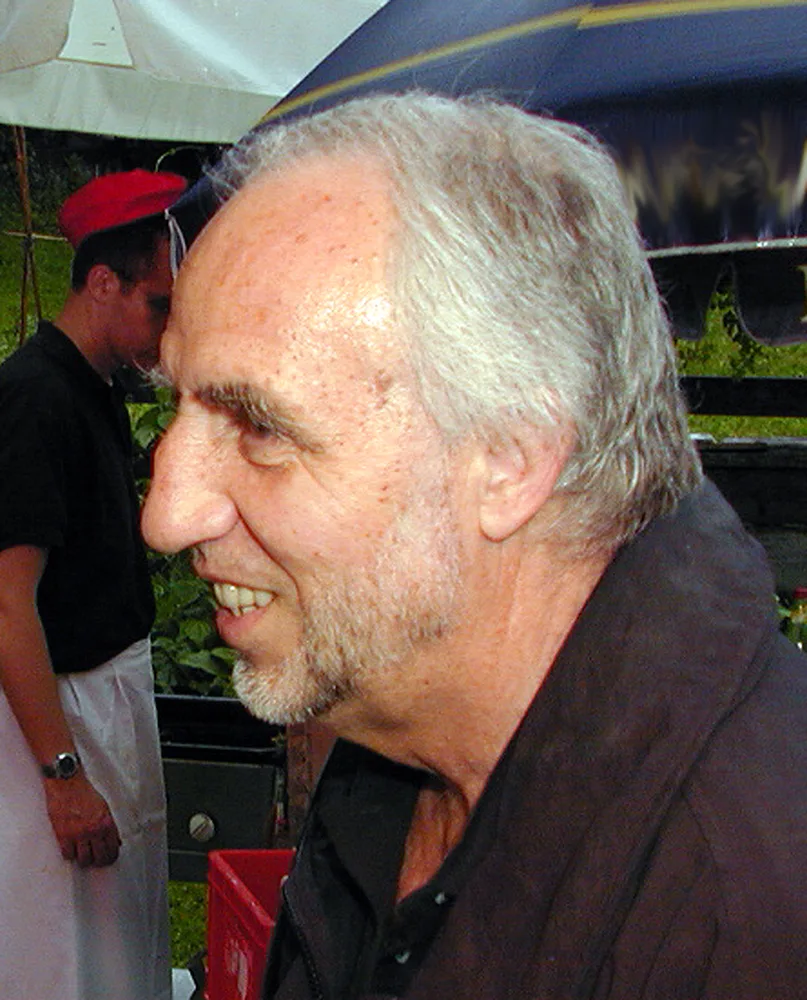
Jacques Loussier at a celebration in Munich, Germany, 2004 CC BY-SA 3.0 — Wikimedia Commons — https://commons.wikimedia.org/wiki/File:Jacques_Loussier-02.jpg
Jacques Loussier was born October 26, 1934, in Angers, France, and began piano lessons at ten. At eleven he heard a piece from the Notebook for Anna Magdalena Bach and was transfixed; two years later, in Paris, he met the pianist Yves Nat, who set him a series of short study projects and steered him toward the Conservatoire National Superieur de Musique, where Loussier enrolled at sixteen and studied under Nat for six years. Rather than pursue a purely classical career afterward, he traveled through the Middle East and Latin America, spending roughly a year in Cuba absorbing music well outside the conservatory tradition, and returned to Paris to work as an accompanist and arranger for popular singers of the day, including Frank Alamo and Catherine Sauvage, for whom he arranged and conducted "Jacques Loussier et son Orchestre" on a run of chanson recordings through the early and mid-1960s.
In 1959 Loussier formed a trio with bassist Pierre Michelot, previously a member of Django Reinhardt's Quintette du Hot Club de France, and drummer Christian Garros, built around a simple, radical idea: playing Bach's keyboard and orchestral works as a jazz piano trio, retaining Bach's melodic and harmonic material while opening it up to swung rhythm, walking bass, and improvised variation. The resulting Play Bach series, issued on Decca beginning with a 1960 debut LP recorded in Paris, became a genuine commercial phenomenon: the trio sold more than six million albums in its first fifteen years, eventually topped seven million records overall, and performed more than 3,000 concerts. A 1966 tour of Germany was formally endorsed by the Bonn government as a contribution to Franco-German cultural understanding. Critical reaction split sharply from public enthusiasm: classical purists were frequently hostile, with one American critic dismissing the group's playing as "tiresome and offensive," while Loussier maintained that he was not subverting Bach but honoring an improvising tradition Bach himself had practiced as a working keyboardist.
The original trio wound down by the late 1970s as Loussier turned toward composing for film and television, eventually completing scores for more than one hundred productions, including the theme for the French television series Thierry la Fronde and the score for the 1968 war film Dark of the Sun. In 1977 he opened Studio Miraval on his property in Correns, Provence; the studio became internationally known in its own right, hosting sessions for artists including Pink Floyd (parts of The Wall), Elton John, Sting, Chris Rea, and Sade, and the surrounding Château Miraval estate was later purchased by Brad Pitt and Angelina Jolie and developed as a vineyard.
Loussier revived the Jacques Loussier Trio in 1985 to mark the 300th anniversary of Bach's birth, with drummer André Arpino and bassist Vincent Charbonnier; Benoît Dunoyer de Segonzac joined on bass in 1997 after Charbonnier suffered a stroke, and this lineup remained together for the rest of Loussier's performing career. Recording for Telarc from the mid-1990s onward, the reconstituted trio widened its repertoire well beyond Bach, releasing jazz-trio interpretations of Vivaldi's The Four Seasons (1997), Satie's Gymnopédies and Gnossiennes (1998), Ravel's Boléro (1999), Debussy (2000), Handel's Water Music and Music for the Royal Fireworks (2002), Beethoven's Symphony No. 7 (2003), a solo-piano set of Chopin's Nocturnes (2004), and Mozart piano concertos (2005), alongside further Bach anniversary releases in 1999 and 2009. In 2002 Loussier filed a $10 million lawsuit against Eminem and Dr. Dre, alleging that the beat of "Kill You," from The Marshall Mathers LP, had been lifted from his 1979 electronic composition "Pulsion"; the case was settled out of court. Loussier continued performing into his late seventies, suffering a stroke onstage on July 14, 2011, during a concert at the Klavier-Festival Ruhr in Germany, after which he retired from performing. He died March 5, 2019, in Blois, France, at eighty-four.
Loussier's music is usually described, including by the artist himself, as third stream: a genuine synthesis of jazz and classical vocabulary rather than a novelty crossover, built from a classically exact reading of Bach's counterpoint laid over a swinging, walking-bass jazz-trio rhythm section, with substantial passages of trio improvisation grafted onto the original themes. His conservatory training under Yves Nat gave him a level of technical fluency with the source material that distinguished his records from lighter "classics with a beat" novelty records of the same era, and he defended the format for decades against critics who considered it a dilution of Bach rather than, in his own view, a continuation of the improvisatory practice Baroque keyboardists were themselves expected to exercise. Reception shifted over his career: early Play Bach records drew real hostility from classical purists and only lukewarm interest from jazz critics, but by the time of the trio's 1997 recording of Vivaldi's The Four Seasons, much of that resistance had softened into recognition of a distinct, durable idiom that Loussier had sustained, virtually unchanged in its basic method, across five decades and dozens of albums.
- Play-Bach No. 1 (1960, Decca) - The original trio's debut with bassist Pierre Michelot and drummer Christian Garros, opening a series that eventually sold millions of copies worldwide. Spotify - Jacques Loussier Play Bach (Vol. 1) Listen
- Play Bach No. 5 (1967, Decca) - The closing volume of the original Decca run before the trio wound down later in the decade. Spotify - Jacques Loussier Trio Play Bach No. 1 & 2 Listen
- Bach: Brandenburg Concerto No. 5 (1969, London Records) - A trio-plus-orchestra recording with the Royal Philharmonic Orchestra, including the "Air on the G String" arrangement later used for more than thirty years in UK Hamlet cigar advertising. Spotify - Air on the G string (‘Hamlet advert’) Listen
- Pulsion (1979, CBS) - An electronically colored departure from the Bach format, recorded at his own Studio Miraval; its title track became the subject of a 2002 copyright dispute with Eminem and Dr. Dre, settled out of court. Spotify - Pulsion Listen
- Vivaldi: The Four Seasons (1997, Telarc) - The reconstituted trio's most acclaimed later recording, widely credited with turning critical opinion in Loussier's favor. Spotify - Vivaldi: The Four Seasons Listen
- Satie: Gymnopédies - Gnossiennes (1998, Telarc) - The first studio recording with new bassist Benoît Dunoyer de Segonzac. Spotify - Satie: Gymnopédies & Gnossiennes Listen
- Take Bach (2000, Universal) - A multi-piano collaboration with the Turkish piano duo Güher and Süher Pekinel, reworking Bach's concertos for two and three pianos. Spotify - Take Bach Listen
- Schumann: Kinderszenen (Scenes from Childhood) (2011, Telarc) - Loussier's final studio recording, released the same year a stroke ended his performing career. Spotify - Schumann: Kinderszenen (Scenes From Childhood) Listen
Jacques Loussier: Full Discography
Identity confirmed via the live Discogs API, artist ID 289960 ("Jacques Loussier," French jazz pianist and composer, matching birth/death dates and biography). Loussier's main Discogs entry runs to more than 500 credited releases, the large majority decades of Play Bach reissues, repackagings, and "best of" compilations across dozens of countries and formats, plus a separate career of more than one hundred film and television scores far outside this site's jazz focus. A related Discogs entity, "Jacques Loussier Trio" (artist ID 513237), duplicates much of the same Play Bach catalog under group billing rather than documenting a different musician. This table itemizes his significant original studio recordings, as leader of the Jacques Loussier Trio across both its 1959-1970s and 1985-2011 incarnations, plus a small representative sample of his 1960s work as an arranger and conductor for other artists; it does not attempt to catalog the extensive reissue history or his film and television composing career.
As Leader / Co-Leader
| Album Title | Recording Date(s) | Release Date | Label | Catalog Number | Format(s) | Personnel | Role | Reissue History | Spotify | Buy | Notes |
|---|---|---|---|---|---|---|---|---|---|---|---|
| Play-Bach No. 1 | Recorded 1959-1960, Paris | 1960 | Decca (France) | 153.905 | Vinyl, LP, Mono | Jacques Loussier (piano), Pierre Michelot (bass), Christian Garros (drums) | Leader (Jacques Loussier Trio) | Reissued repeatedly for decades in dozens of countries, including a 1962 stereo Decca pressing (SSL. 40.500) and a 2000 Speakers Corner audiophile vinyl reissue | Not confirmed via Spotify search under this exact volume title; the trio's Bach catalog is broadly available there under later compilations | — | The trio's debut, opening the Play Bach series that eventually sold millions of copies |
| Play Bach No. 2 | Recorded 1960, Paris | 1960 | Decca (France) | 153.918 | Vinyl, LP, Mono | Jacques Loussier (piano), Pierre Michelot (bass), Christian Garros (drums) | Leader (Jacques Loussier Trio) | Reissued on London Records in the UK and US and on further Decca pressings through the 1960s-70s | Spotify - Jacques Loussier Trio Play Bach No. 1 & 2 | — | |
| Play Bach No. 3 | Recorded 1962 | 1962 | Decca (France) | 154.003 (mono) / SSL 40.507 (stereo) | Vinyl, LP | Jacques Loussier (piano), Pierre Michelot (bass), Christian Garros (drums) | Leader (Jacques Loussier Trio) | Reissued internationally on London Records and Omega | Not confirmed via Spotify search under this exact volume title | — | |
| Play Bach No. 4 | Recorded 1963 | 1963 | Decca (France) | SSL 40.516 | Vinyl, LP, Stereo | Jacques Loussier (piano), Pierre Michelot (bass), Christian Garros (drums) | Leader (Jacques Loussier Trio) | Reissued on London Records and further Decca pressings | Not confirmed via Spotify search under this exact volume title | — | |
| Play Bach No. 5 | Recorded 1967 | 1967 | Decca (France) | SSL 40.205 | Vinyl, LP, Stereo | Jacques Loussier (piano), Pierre Michelot (bass), Christian Garros (drums) | Leader (Jacques Loussier Trio) | Reissued on London Records | Not confirmed via Spotify search under this exact volume title | — | Closing volume of the original trio's Decca run before its dissolution later in the decade |
| Bach: Brandenburg Concerto No. 5 (incl. "Air on the G String") | Recorded 1969 | 1969 | London Records (Phase 4 Stereo) | SPC-21044 | Vinyl, LP, Stereo | Jacques Loussier (piano, arranger, conductor), Pierre Michelot (bass), Christian Garros (drums), with the Royal Philharmonic Orchestra | Leader | None found | Not confirmed via Spotify search under this specific 1969 LP title; the "Air on the G String" arrangement is separately available there as a later-recorded single track | — | The "Air on the G String" track was used for more than thirty years in UK Hamlet cigar advertising |
| Pulsion | Recorded 1979, Studio Miraval | 1979 | CBS | 84078 | Vinyl, LP, Stereo | Jacques Loussier (piano, composer), Luc Heller (percussion) | Leader | Reissued 2021 on Sony Music Masterworks (vinyl and FLAC digital) | Spotify - Pulsion (2021 reissue) | — | Title track was the subject of a 2002 copyright lawsuit against Eminem and Dr. Dre over "Kill You," settled out of court |
| Bach to the Future | Recorded 1985-1986 | 1986 | Start Records | STL 8 | Vinyl, LP | Jacques Loussier (piano, arranger, producer), Vincent Charbonnier (bass), André Arpino (percussion) | Leader (reconstituted Jacques Loussier Trio) | None found | Not confirmed via Spotify search under this specific title | — | Among the first studio recordings of the trio reformed for Bach's 1985 tricentenary |
| Reflections of Bach | Recorded 1987 | 1987 | Start Records | STL9 | Vinyl, LP | Jacques Loussier (piano, arranger, producer), Vincent Charbonnier (bass), André Arpino (percussion) | Leader (reconstituted Jacques Loussier Trio) | None found | Not confirmed via Spotify search under this specific title | — | |
| Vivaldi: The Four Seasons | Recorded 1996-1997 | 1997 | Telarc Jazz | CD-83417 | CD, Album | Jacques Loussier (piano, producer, arranger), Vincent Charbonnier (double bass), André Arpino (drums) | Leader (Jacques Loussier Trio) | None found | Spotify - Vivaldi: The Four Seasons | — | Widely credited as the recording that turned critical opinion toward Loussier's format |
| Satie: Gymnopédies - Gnossiennes | Recorded 1998 | 1998 | Telarc Jazz | CD-83431 | CD, Album | Jacques Loussier (piano, producer), Benoît Dunoyer de Segonzac (bass), André Arpino (drums) | Leader (Jacques Loussier Trio) | None found | Spotify - Satie: Gymnopédies & Gnossiennes | — | First studio recording with Dunoyer de Segonzac on bass |
| The Bach Book: 40th Anniversary Album | Recorded 1998-1999 | 1999 | Telarc Jazz | CD-83474 | CD, Album | Jacques Loussier (piano), Vincent Charbonnier (double bass), André Arpino (drums) | Leader (Jacques Loussier Trio) | None found | Spotify - The Bach Book | — | Marked 40 years since the original trio's 1959 founding; Discogs credits Charbonnier on bass here, so the exact date of the Dunoyer de Segonzac handover is not precisely fixed across every release of this period |
| Take Bach | Recorded 2000 | 2000 | Universal | 9722317 | CD, Album | Jacques Loussier (arranger), Benoît Dunoyer de Segonzac (double bass), André Arpino (drums), with Güher & Süher Pekinel (piano duo) | Co-leader (with Güher & Süher Pekinel) | None found | Spotify - Take Bach | — | Multi-piano arrangements of Bach's concertos for two and three pianos |
| Water Music & Royal Fireworks | Recorded 2001-2002 | 2002 | Telarc | CD-83544 | CD, Album | Jacques Loussier (piano, arranger), Benoît Dunoyer de Segonzac (bass), André Arpino (drums) | Leader (Jacques Loussier Trio) | None found | Spotify - Handel: Water Music and Royal Fireworks | — | |
| Impressions of Chopin's Nocturnes | Recorded 2003-2004 | 2004 | Telarc | CD-83602 | CD, Album | Jacques Loussier (solo piano) | Leader (solo) | None found | Spotify - Impressions on Chopin's Nocturnes | — | A solo-piano recording, unlike the trio format of most of his other Telarc releases |
| Schumann: Kinderszenen (Scenes from Childhood) | Recorded 2010-2011 | 2011 | Telarc | TEL-32270-02 | CD, Album | Jacques Loussier (piano, arranger), Benoît Dunoyer de Segonzac (bass), André Arpino (drums) | Leader (Jacques Loussier Trio) | None found | Spotify - Schumann: Kinderszenen (Scenes From Childhood) | — | His final studio recording, released the year of the onstage stroke that ended his performing career |
As Arranger / Session Work (selected)
| Year | Project (Leader) | Title | Label | Catalog | Role | Notes |
|---|---|---|---|---|---|---|
| 1963 | Frank Alamo | Surf! | Barclay | SBGE 83.123 | Orchestrated By | One of several early-1960s hit singles Loussier arranged and conducted for the young French pop singer |
| 1966 | Catherine Sauvage | Catherine Sauvage Chante Kurt Weill | Philips | P 77.936 L | Orchestra (arranger, conductor) | Loussier arranged and conducted "Jacques Loussier et son Orchestre" on several Catherine Sauvage albums through the 1960s, one of a number of chanson singers he worked with as a young arranger before the Play Bach trio's success |
Loussier's Discogs credits also include arranging and orchestra-leading work behind numerous other early-1960s French chanson singles, not itemized here.
- Pierre Michelot - founding bassist of the Jacques Loussier Trio from 1959 into the 1970s; previously a member of Django Reinhardt's Quintette du Hot Club de France.
- Christian Garros - founding drummer of the Jacques Loussier Trio alongside Michelot from 1959.
- André Arpino - drummer of the reconstituted trio from its 1985 reformation until Loussier's 2011 retirement.
- Vincent Charbonnier - bassist of the reconstituted trio from 1985 until 1997.
- Benoît Dunoyer de Segonzac - bassist from 1997, replacing Charbonnier after a stroke, through the trio's final recordings.
- Güher and Süher Pekinel - Turkish piano-duo partners on the multi-piano Bach arrangements of 2000's Take Bach.