 JAZZPROFILES lives in the music 2,555 Jazz Artists fully Profiled!
Sacha Distel
Last updated November 14, 2026
Listen on Spotify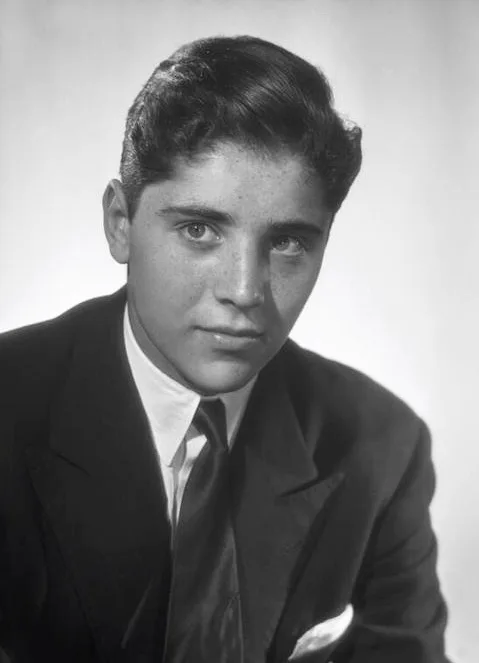
Sacha Distel, photographed by Studio Harcourt in 1949, when he was sixteen and learning the guitar. Public domain. The Wikimedia Commons file page states that the work was released into the public domain by its copyright holder, Studio Harcourt and the French government, for any use without conditions. — Wikimedia Commons, File:Sacha Distel 1949.jpg - https://commons.wikimedia.org/wiki/File:Sacha_Distel_1949.jpg (original held by the Grand Palais RMN: https://images.grandpalaisrmn.fr/ark:/36255/08-537964)

Sacha Distel (born Alexandre Distel, January 29, 1933, in Paris) is remembered by most listeners as the smooth French singer of "Scoubidou", "La Belle Vie" and "Raindrops Keep Falling on My Head". Before any of that he was a modern jazz guitarist, and through the middle 1950s he was one of the busiest guitarists on the Paris scene, recording with French players and with visiting Americans. He never left jazz entirely after he became a pop star: he went back to it for an album arranged by the trombonist Slide Hampton in 1968, for a Pablo Records session in 1983, and for jazz concerts into the 1990s. This profile covers both halves of that career.
His father, Léonide Distel, was a Russian-Jewish emigré born in Odesa; his mother, Andrée Ventura, was a pianist born in Constantinople; his uncle was the bandleader Ray Ventura, whose orchestra Les Collégiens was a fixture of French popular music. Distel started on piano and switched to guitar after Ventura's orchestra settled in Paris. In 1947, while a film Ventura was producing was being shot, he asked the orchestra's guitarist and singer Henri Salvador for lessons. At his Paris lycée he formed a New Orleans style band with school friends, but in 1948 he heard Dizzy Gillespie's orchestra in Paris, discovered bebop, and turned his own group toward the modern style. That group, built around the tenor saxophonist Hubert Damisch (later a well-known art historian) and the pianist Mimi Perrin, won the prize for best small modern orchestra at a jazz night at the Coliséum, and Distel took a prize as best guitarist. Marc Myers of JazzWax adds that he won first place in a national competition in 1951. At nineteen, in 1952, Ventura sent him to New York to learn English and the music-publishing trade; he bought an electric guitar there, heard the records of Stan Getz and Jimmy Raney, and came home, French Wikipedia says, full of jazz.
Back in Paris he worked the clubs of Saint-Germain-des-Prés and the Latin Quarter, among them the Caveau de la Huchette. Myers dates his first recording session to 1953, with the Raymond Le Sénéchal Sextet for Vogue (the 10-inch LP Modern Jazz in Paris, Vogue LD 147, dated June 1, 1953 on Discogs, with Fats Sadi on vibraphone), and writes that through the decade he recorded for Vogue, Barclay, Swing and Philips, as a sideman with European musicians and with touring Americans and as a leader. A photograph from June 1954 shows him at the Club Saint-Germain, on the Rue Saint-Benoît, with the guitarists Jimmy Gourley, René Thomas and Jimmy Raney. In May 1954 he was in the Hubert Fol / Sacha Distel Quintette recorded at the Apollo-Théâtre in Paris for the Philips LP Jazz Boom n° 1, with Fol on alto saxophone and René Urtreger, Pierre Michelot and Jean-Baptiste "Mac Kac" Reilles in the rhythm section. On March 18, 1955 he was the guitarist in Lionel Hampton's Paris band, a live date with the trumpeters Nat Adderley, Benny Bailey and Bernard Hulin and the French horn player David Amram, issued on EmArcy as Crazy Rhythm and Jam Session in Paris and on Barclay as Lionel Hampton and His French New Sound. The day before, March 17, he was on the Swing 10-inch LP Rencontre à Paris by the tenor saxophonists Don Rendell and Bobby Jaspar, again with Amram; Jaspar's Plays... Gone With the Winds (Swing) and the Barclay LP Modern Jazz au Club Saint-Germain (1956, credited to Bobby Jaspar All Stars, with René Urtreger on piano) also carry his guitar, as does Jack Diéval's Jazz aux Champs-Élysées (Polydor, recorded June 24, 1957).
In 1956 he made his own records. Jazz d'aujourd'hui (Versailles, a 10-inch LP recorded on May 28 and on June 1 and 2) has arrangements and compositions by the American trombonist Billy Byers, who shared an apartment with him in Paris, and a rhythm section that includes Pierre Michelot and, on two tracks, the American bassist George Duvivier and pianist Gene DiNovi; Lionel Hampton wrote the liner notes. The Columbia EP Jean-Pierre Sasson Plays With Sacha Distel paired him with a second guitarist. In December 1956 (the 4th and 7th, according to English Wikipedia) he recorded Afternoon in Paris with John Lewis of the Modern Jazz Quartet, with the tenor saxophonist Barney Wilen, bassists Pierre Michelot and Percy Heath and drummers Connie Kay and Kenny Clarke. It was issued in 1957 by Atlantic in the United States and by Versailles in France, credited to Lewis and Distel, and AllMusic's Alex Henderson rated it four stars. In September 1957 he co-led a quintet with the tenor saxophonist and flutist Bobby Jaspar, René Urtreger on piano, Benoît Quersin or Paul Rovère on bass and Al Levitt on drums, recording six pieces, most of them by Byers. A Discogs artist note says Jazz Hot magazine and several critics voted him best guitarist in the 1950s.
In 1957, Myers writes, Henri Salvador played him a Frank Sinatra album and he began to sing. In December 1958 he introduced "Scoubidou" in a recital at the Casino in Algiers, accompanied by a jazz trio; released in 1959, it made him a national name, and the Académie Charles-Cros gave him its Grand Prix that year. In 1961, at Roger Vadim's request, he wrote the tune "Marina" for the "L'Orgueil" episode of the film Les Sept Péchés capitaux; he recorded it on December 6, 1961 with Pierre Michelot, Kenny Clarke, the organist Raymond Le Sénéchal and the trumpeter Bernard Hulin. With English words by Jack Reardon it became "The Good Life", a No. 18 hit in the United States for Tony Bennett in 1963. His French version of "Raindrops Keep Falling on My Head" gave him a No. 10 hit in Britain in 1970. He was made a Chevalier of the Légion d'honneur in 1997. From the 1960s on, the large majority of his records were French pop and variety albums.
The jazz recordings of his later years are fewer but real. Back to Jazz, recorded on November 12, 1968 in Paris and on November 19 in London and issued in 1969 on La Voix de son Maître (Pathé Marconi), is arranged and played by Slide Hampton, with a studio orchestra on the Paris sessions and a British big band on the London ones; it sets two Jobim songs and two of Distel's own tunes beside four Hampton originals. In 1983 he made My Guitar and All That Jazz, issued in the United States on Norman Granz's Pablo label (2310-892), recorded at Studio Davout in Paris with the pianist Maurice Vander, the drummer André Ceccarelli, the bassist Bernard Paganotti, the flutist François Jeanneau and two other guitarists, and including a new version of "Afternoon in Paris". French Wikipedia lists jazz concerts at the Petit Journal Montparnasse in 1992 and 1995, and in 2003 he released But Beautiful, an album of standards with Liza Minnelli and Dionne Warwick as guests. His last stage appearance, on May 7, 2004, was a duet with the singer Sanseverino at the Victoires du Jazz ceremony in Deauville. He passed away on July 22, 2004, aged 71, at Rayol-Canadel-sur-Mer, near Saint-Tropez.
On guitar Distel played in the relaxed, bop-based modern style of the early 1950s that he first heard on records by Stan Getz and Jimmy Raney. Myers, writing in 2012, judged him less nimble than his countryman René Thomas but richly melodic, clever with harmony and gently, ambitiously swinging, and thought that he carried what he had learned on the jazz guitar into his singing, in the manner of Nat King Cole. His first teacher on the instrument was Henri Salvador, and the American trombonist Billy Byers, with whom he shared a Paris apartment, wrote most of the music on his 1956 and 1957 leader dates. English Wikipedia's list of jazz musicians he worked with, taken from the second edition of The New Grove Dictionary of Jazz, runs from Kenny Clarke, Jimmy Gourley and Lionel Hampton to Martial Solal, René Urtreger and Barney Wilen. The Subgenres above describe the jazz side of his work only; after 1959 he was above all a singer of French variety songs, and that part of his career is outside what this profile tags.
- Afternoon in Paris (John Lewis and Sacha Distel, 1957, Atlantic 1267) - the best-known jazz record with his name on it, recorded in Paris in December 1956 with Barney Wilen and two American-French rhythm sections. Apple Music - Afternoon in Paris
- Jazz d'aujourd'hui (1956, Versailles STD 2010) - his own 10-inch LP, with Billy Byers's arrangements and a Paris rhythm section; the Gene DiNovi and George Duvivier tracks include a version of "'Round About Midnight". Apple Music - Jazz d'aujourd'hui
- Bobby Jaspar & Sacha Distel Quintette (recorded September 1957, Versailles) - six pieces with Jaspar and René Urtreger, among them "Scotch Bop", "Everything Happens to Me" and "No Sad Song for Sacha". Apple Music - Jazz hors série (EP) Listen
- Lionel Hampton, Crazy Rhythm (recorded March 18, 1955, EmArcy MG-36034) - Distel on guitar in Hampton's French band, with Nat Adderley, Benny Bailey, David Amram and René Urtreger. Apple Music - Crazy Rhythm
- Back to Jazz with Slide Hampton (1969, La Voix de son Maître 2C 062-10025) - the trombonist arranges two Jobim songs, two Distel tunes and four of his own originals. Apple Music - Back to Jazz
- My Guitar and All That Jazz (1983, Pablo 2310-892) - the Paris session with Maurice Vander, André Ceccarelli and François Jeanneau. Apple Music - My Guitar and All That Jazz Listen
- Sacha Distel: Jazz Guitarist (Gitanes Jazz Productions 980 692-0, 2003) - a two-disc survey of the 1950s leader dates, the Apollo-Théâtre quintet, "Marina" and Back to Jazz. Apple Music - Jazz Guitarist Listen
- But Beautiful (2003) - a late album of standards, with Liza Minnelli and Dionne Warwick as guests. Apple Music - But Beautiful Listen
Sacha Distel: Full Discography
French jazz guitarist and singer. Born January 29, 1933, Paris; passed away July 22, 2004. Discogs artist 269321.
Discogs lists more than 2,300 entries under his name (releases, masters, reissues and compilations), and the great majority are French and international pop and variety records from 1957 onward. This discography covers the jazz side: his own jazz dates, the co-led albums, and the sideman sessions on which he plays guitar. Discogs files several of his group billings on separate artist pages (Hubert Fol / Sacha Distel Quintette, Bobby Jaspar & Sacha Distel Quintette, Sacha Distel Et Son Quartette, Sacha Distel Et Son Ensemble and Sacha Distel Quintet); those pages were checked and their jazz releases are included below.
Name variations on record: Alexandre Distel, Alexandre "Sacha" Distel, A. Distel, S. Distel, Sacha. He is billed as Sacha Distel Et Son Quartette, Et Son Ensemble, Et Son Orchestre and Y Su Conjunto on some jazz releases.
Leader and co-leader
| Album | Year | Label | Personnel | Notes | Listen | Buy |
|---|---|---|---|---|---|---|
| Jean-Pierre Sasson Plays With Sacha Distel (7-inch EP) | 1956 | Columbia, ESDF 1111 (France) | Jean-Pierre Sasson (electric guitar), Sacha Distel (electric guitar), Benoît Quersin (bass), Christian Garros (drums) | Four pieces: "Winter Holiday", "Two Guitar Blues", "Joan" and "Goofy the Cat". Recording date not confirmed. | Apple Music | — |
| Jazz d'aujourd'hui (Sacha Distel et son orchestre; 10-inch mono LP) | 1956 | Versailles, STD 2010 (France) | Sacha Distel (guitar), Billy Byers (trombone, arranger), Jean Liesse (trumpet), Georges Grenu (tenor saxophone), William Boucaya (baritone saxophone, bass clarinet), Pierre Michelot (bass), Christian Garros (drums); on "'Round About Midnight" and "Avec ces yeux-là": Gene DiNovi (piano), George Duvivier (bass), Charles Saudrais (drums) | Recorded May 28 and June 1 and 2, 1956 in Paris. Eight tracks, six of them by Byers; also Thelonious Monk's "'Round About Midnight" and Michel Legrand's "Avec ces yeux-là". Liner notes by Lionel Hampton. Discogs also files it as Jazz d'Aujourd'hui by Sacha Distel Y Su Conjunto. | Apple Music | — |
| Afternoon in Paris (John Lewis and Sacha Distel) | 1957 | Atlantic, 1267 (US, mono); Versailles, MEDX 12005 (France) | John Lewis (piano), Sacha Distel (guitar), Barney Wilen (tenor saxophone), Pierre Michelot (bass, tracks 1 to 3), Percy Heath (bass, tracks 4 to 6), Connie Kay (drums, tracks 1 to 3), Kenny Clarke (drums, tracks 4 to 6) | Recorded December 4 and 7, 1956 in Paris (dates as given by English Wikipedia). "I Cover the Waterfront", "Dear Old Stockholm", "Afternoon in Paris", "All the Things You Are", "Bags' Groove", "Willow Weep for Me". Later issues include Atlantic ATL-5013 (Japan, 1958), Oriole MG 20036 (UK, 1959), Koch Jazz KOC-CD-8509 (US CD, 1999), Lone Hill Jazz LHJ10233 (Spain CD, 2006) and Decca France 572 902-9 (CD, 2017). | Apple Music | — |
| Bobby Jaspar & Sacha Distel Quintette (EP, billed on Discogs as Scotch Hop) | Recorded 1957; EP year not confirmed (Discogs lists 1960) | Versailles, EP 90 302 (France) | Bobby Jaspar (tenor saxophone, flute on "Stop and Go"), Sacha Distel (guitar), René Urtreger (piano), Benoît Quersin and Paul Rovère (bass), Al Levitt (drums) | Recorded September 11 and 12, 1957 in Paris. The EP carries "Scotch Bop", "Everything Happens to Me", "Competition" and "Sacha, Bill et Bobby"; "No Sad Song for Sacha" and "Stop and Go" come from the same session and a Versailles LP (8020). Most pieces are by Billy Byers. | Apple Music | — |
| Les 7 Péchés capitaux: L'Orgueil (film music EP, Sacha Distel et son ensemble) | 1962 | Philips, 432 760 (France) | Sacha Distel (guitar), Bernard Hulin (trumpet), Raymond Le Sénéchal (organ), Pierre Michelot (bass), Kenny Clarke (drums) | "Marina" and "Blue Waltz de l'Orgueil", recorded December 6, 1961 at the Studio Blanqui, Paris, for the episode of the Vadim film. "Marina" became "The Good Life". | — | — |
| Back to Jazz (Sacha Distel with Slide Hampton) | 1969 | La Voix de son Maître / Pathé Marconi, 2C 062-10025 (France, stereo LP); Columbia / Electrola, 1C 062-10025 (Germany); issued in Canada by Pathé as La Belle Vie x The Good Life (Capitol, SPAM 67.330) | Paris tracks (November 12, 1968): Sacha Distel (guitar), Slide Hampton (trombone, arranger), Paul Piguillem (guitar), Gérard Gustin (piano), Paul Rovère (bass), Marcel Blanche (drums), studio orchestra. London tracks (November 19, 1968): Slide Hampton (trombone, arranger), Laurie Holloway (piano), Frank Clarke (bass), Ronnie Stephenson (drums), trumpets Bobby Haughey, Duncan Campbell, Eddie Blair and Tony Fisher, trombones Bobby Lamb, Gibb Wallace, Nat Peck and Ted Barker, saxophones Ronnie Chamberlain, Roy Willox, Keith Bird, Tommy Whittle and Don Honeywill | Paris: "Felicidade", "The Good Life", "The Girl from Ipanema", "Francine". London, all Slide Hampton compositions: "Bird", "Living Room", "Who Can Tell Me Why?", "Saki". | Apple Music | — |
| My Guitar and All That Jazz | 1983 | Pablo, 2310-892 (US); Carrere, 67975 (France, LP) and 97.975 (France, CD) | Sacha Distel (guitar, producer), Eric Lelanne (trumpet), François Jeanneau (flute), Alain Hatot (saxophone), Maurice Vander (piano), Raymond Gimenes and Sylvano Santorio (guitars), Bernard Paganotti (bass), Tonio Rubio (bass, percussion), André Ceccarelli (drums) | Studio Davout, Paris; no session date is published. Eleven tracks: "A Night in Tunisia", "L'Aube", "Amour tout court", "My Own Blues", "Leyenda", "Parle-moi de toi", "Aranjuez mon amour", "Afternoon in Paris", "Gymnoromance", "Jean et Sébastien", "À vol d'amour". Personnel as listed by JazzDisco. | Apple Music | — |
| Jazzy | 1988 | Not confirmed | Not confirmed | Release year from Apple Music's catalog; label, catalog number and personnel not confirmed. | Apple Music | — |
| But Beautiful | 2003 | Not confirmed | Not confirmed | An album of standards with Liza Minnelli and Dionne Warwick as guests on some tracks; a deluxe edition adds unplugged versions. Label and catalog number not confirmed. | Apple Music | — |
Compilations devoted to his jazz recordings
| Album | Year | Label | Contents | Notes | Listen | Buy |
|---|---|---|---|---|---|---|
| Sacha Distel: Jazz Guitarist (2 CD, remastered) | 2003 | Gitanes Jazz Productions, 980 692-0 (France) | Disc 1: all of Jazz d'aujourd'hui, the September 1957 Jaspar quintet tracks, and "Half Nelson" and "I'll Remember April" with Hubert Fol (May 1954, Apollo-Théâtre). Disc 2: "Marina" and "Blue Waltz de l'Orgueil" (1961) and all eight tracks of Back to Jazz (1968). | Recording dates are printed in the release notes. Remastered at Art et Son Studio, Paris. | Apple Music | — |
| Cannes 1958 - Jazz sur la Croisette (various artists) | 2009 | Jazz Magazine | Distel's quartet is among the groups on this live document of the 1958 Cannes jazz festival. | Contents of his set not itemized. | — | — |
Sideman and guest appearances
Chronological. Role is guitar throughout.
| Year | Release | Actual leader | Label | Details | Listen | Buy |
|---|---|---|---|---|---|---|
| 1953 (recorded June 1) | Modern Jazz in Paris (10-inch LP) | Raymond Le Sénéchal Sextet | Vogue, LD 147 (France) | Sacha Distel (guitar), Raymond Le Sénéchal (piano), Fats Sadi (vibraphone), Francis Weisc (clarinet), Marcel Dutrieux (bass), Jean-Baptiste "Mac Kac" Reilles (drums). Eight pieces: "Israel", "Kesquesadi", "Venez donc chez moi", "There's No You", "Aluminium", "C'est la première fois", "Move", "Que disent-elles". | — | — |
| 1954 (recorded May; Discogs lists the album under 1955) | Jazz Boom n° 1 (various artists), two tracks | Hubert Fol / Sacha Distel Quintette | Philips, 77 101 (France) | "Half Nelson" and "I'll Remember April", recorded at the Apollo-Théâtre, Paris. Hubert Fol (alto saxophone), Sacha Distel (guitar), René Urtreger (piano), Pierre Michelot (bass), Jean-Baptiste "Mac Kac" Reilles (drums). | — | — |
| 1955 (recorded March 17) | Rencontre à Paris (10-inch LP) | Don Rendell et Bobby Jaspar | Swing, M. 33.344 (France) | Don Rendell and Bobby Jaspar (tenor saxophones), David Amram (French horn), Maurice Vander (piano), Sacha Distel (guitar), Guy Pedersen (bass), Mac Kac (drums). "Pot Luck", "Olympia", "Dave's Blues", "King Fish", "Thou Swell", "A Long Way from Home". | — | — |
| 1955 | Plays... Gone With the Winds (10-inch LP) | Bobby Jaspar | Swing, M. 33.351 (France) | Bobby Jaspar (tenor saxophone), Sacha Distel (guitar), David Amram (horn), Jean-Louis Chautemps (clarinet), Claude Foray (oboe), Emile Debru (bassoon), Raymond Lefebvre (flute), Benoît Quersin and Guy Pedersen (bass), Jacques David and Mac Kac (drums). Track-by-track personnel not itemized on Discogs. | — | — |
| 1955 | Crazy Rhythm | Lionel Hampton | EmArcy, MG-36034 (US) | Recorded live in Paris, March 18, 1955. Lionel Hampton (vibraphone), Sacha Distel (guitar), Nat Adderley, Benny Bailey and Bernard Hulin (trumpets), David Amram (French horn), Maurice Meunier (clarinet, tenor saxophone), William Boucaya (baritone saxophone), René Urtreger (piano), Guy Pedersen (bass), Mac Kac (drums). "Crazy Rhythm", "Night and Day", "Red Ribbon", "A la French". | Apple Music | — |
| 1955 | Jam Session in Paris | Lionel Hampton | EmArcy, MG 36035 (US) | Same band and same live date (March 18, 1955). "Voice of the North", "I Cover the Waterfront", "Zebu", "All the Things You Are". | — | — |
| 1955 | Lionel Hampton and His French New Sound, Vol. 2 | Lionel Hampton | Barclay, 84004 (France) | Same date. "Voice of the North", "A la French", "Crazy Rhythm", "Zebu". Reissued on CD by Gitanes Jazz Productions (549 406-2, 2000). | Apple Music | — |
| 1956 | Lionel Hampton and His French New Sound, Vol. 1 | Lionel Hampton | Barclay, 84005 (France) | Same date. "All the Things You Are", "I Cover the Waterfront", "Red Ribbon", "Night and Day". Reissued on CD by Gitanes Jazz Productions (549 405-2, 2000). | Apple Music | — |
| 1956 | Modern Jazz au Club Saint-Germain (also issued in the US as Bobby Jaspar and His All Stars, EmArcy MG 36105) | Bobby Jaspar All Stars | Barclay, 84.023 (France) | Bobby Jaspar (tenor saxophone; flute on "I'll Remember April"), Sacha Distel (guitar), René Urtreger (piano), Benoît Quersin (bass), Jean-Louis Viale (drums). "Bag's Groove", "Memory of Dick", "Milestones", "Minor Drops", "I'll Remember April", "You Stepped Out of a Dream", "I Can't Get Started", "A Night in Tunisia". | — | — |
| 1957 (recorded June 24) | Jazz aux Champs-Élysées (10-inch LP) | Jack Diéval et le J.A.C.E. All-Stars | Polydor, 45 558 (France) | Jack Diéval (piano), Sacha Distel (guitar), Guy Lafitte (tenor saxophone), Michel de Villers (baritone saxophone), Paul Rovère (bass), Christian Garros (drums). Recorded at the Pigalle Theatre, Paris. Reissued on CD by Gitanes Jazz Productions (018 419-2, 2002). | — | — |
| 1957 | France - U.S.A. (various artists, Versailles compilation) | Various | Versailles, STDX 8.020 (France) | Distel plays on "All the Things You Are" (John Lewis, Barney Wilen, Percy Heath, Kenny Clarke) and "I Cover the Waterfront" (Lewis, Wilen, Pierre Michelot, Connie Kay), both from Afternoon in Paris, and on "No Sad Song for Sacha" and "Stop and Go" (Bobby Jaspar, René Urtreger, Benoît Quersin, Al Levitt), the latter two recorded on September 11, 1957 and previously unreleased. | — | — |
Discogs also lists him in group billings with Pierre Michelot's orchestra and in pop sessions; those releases are not itemized here.
Pop and variety recordings
From 1957 onward Distel made a very large catalogue of French pop, variety and easy-listening records, among them the 1959 single "Scoubidou" (Philips), the 1962 album From Paris with Love (RCA Victor), the 1970 album Sacha Distel (Warner Bros.) and, in 2004, When I Fall in Love (UCJ). They are on Discogs and are not itemized here.
- John Lewis - co-leader of Afternoon in Paris (recorded December 1956, Atlantic 1267), on which Distel plays guitar; the two are also billed together on a 1960 release of "Bags' Groove".
- Lionel Hampton - leader of the live Paris date of March 18, 1955 documented on Crazy Rhythm, Jam Session in Paris and the two Barclay volumes of French New Sound, all crediting Distel on guitar; Hampton also wrote the liner notes to Jazz d'aujourd'hui (1956).
- Slide Hampton - trombonist and arranger of Back to Jazz (Paris, November 12, and London, November 19, 1968), billed with Distel on the record.
- Kenny Clarke - drummer on the second half of Afternoon in Paris (tracks 4 to 6) and on the "Marina" session of December 6, 1961.
- Percy Heath and Connie Kay - the Modern Jazz Quartet's bassist and drummer on Afternoon in Paris: Heath plays bass on tracks 4 to 6 and Kay drums on tracks 1 to 3, with Pierre Michelot on bass for the first three tracks and Kenny Clarke on drums for the last three.
- David Amram and Nat Adderley - French horn player and trumpeter in Hampton's Paris band on Crazy Rhythm (March 18, 1955).
- George Duvivier - bassist, with the pianist Gene DiNovi and the drummer Charles Saudrais, on two tracks of Jazz d'aujourd'hui (1956).
- Claude Bolling - his orchestra is billed with Distel on Philips singles and EPs of 1959 to 1961, among them Hommage à Django (1961).
- Billy Byers - American trombonist and arranger; composer of most of the pieces on Jazz d'aujourd'hui and the 1957 quintet session, and a close friend in Paris.
- Bobby Jaspar, René Urtreger, Pierre Michelot, Barney Wilen - tenor saxophonist and flutist, pianist, bassist and tenor saxophonist with whom he recorded in Paris between 1954 and 1957 (Jaspar and Urtreger on the September 1957 quintet; Urtreger and Michelot with Hubert Fol in 1954; Wilen and Michelot on Afternoon in Paris).
- Hubert Fol, Jean-Pierre Sasson, Raymond Le Sénéchal - the alto saxophonist of the 1954 Apollo-Théâtre quintet; the guitarist with whom he shared the 1956 Columbia EP; the organist of the 1953 Vogue sextet and of the "Marina" session.
- Maurice Vander, André Ceccarelli, François Jeanneau - pianist, drummer and saxophonist and flutist on My Guitar and All That Jazz (1983).
More Bebop Artists
See all 246 Bebop artists →More French Jazz Artists
See all 170 French artists →- Spotify artist page
- Discogs: Sacha Distel
- MusicBrainz: Sacha Distel
- Wikipedia (English)
- Wikipédia (français)
- Bibliothèque nationale de France: catalogue entry
- JazzWax: Sacha Distel, Guitarist-Singer (Marc Myers, 2012)
- Sacha Distel on JazzProfiles.com
- Wikipedia: Sacha Distel
- Wikipédia: Sacha Distel
- Wikipedia: Afternoon in Paris (album)
- Marc Myers, JazzWax: Sacha Distel, Guitarist-Singer (2012)
- Discogs: Sacha Distel, artist 269321
- Discogs: Sacha Distel, Jazz Guitarist, Gitanes Jazz Productions 980 692-0
- Discogs: Jazz D'aujourd'hui, Versailles STD 2010
- Discogs: Lionel Hampton, Crazy Rhythm, EmArcy MG-36034
- Discogs: John Lewis and Sacha Distel, Afternoon in Paris
- JazzDisco: Pablo Records 1983-1986
- MusicBrainz: Sacha Distel