 JAZZPROFILES lives in the music 2,303 Jazz Artists fully Profiled!
Clifford Jordan
Last updated November 6, 2026
Listen on Spotify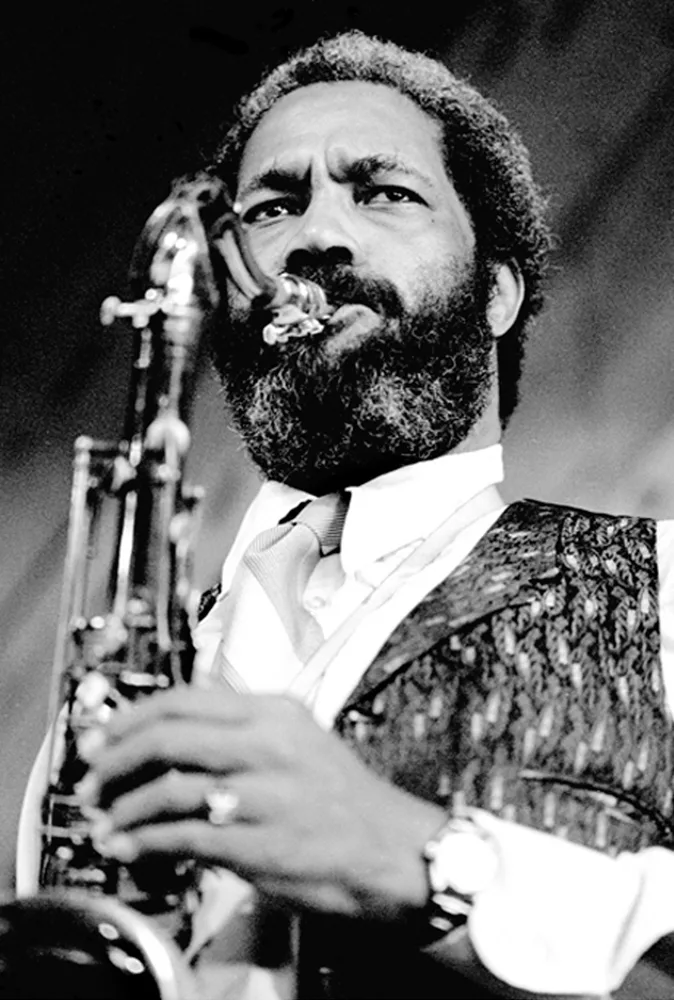
Clifford Jordan performing with pianist Barry Harris at the Bach Dancing & Dynamite Society, Half Moon Bay, California, July 6, 1980, photographed by Brian McMillen CC BY-SA 4.0 — Wikimedia Commons — https://commons.wikimedia.org/wiki/File:Clifford_Jordan.jpg

Clifford Laconia Jordan was born on September 2, 1931, in Chicago, the only child of a middle-class family. He began on piano as a small child and took up the saxophone at 13. At DuSable High School, which had a celebrated music program, his schoolmates included the tenor saxophonists John Gilmore and Johnny Griffin. While still a student he played neighborhood parties and dances, and he went on to lead a dance band, work in rhythm-and-blues groups, and play bebop in Chicago with Max Roach and Sonny Stitt.
Jordan moved to New York in 1957 and began recording almost at once. That year he made three albums for Blue Note: Blowing In from Chicago, a two-tenor date with Gilmore recorded on March 3 with Horace Silver, bassist Curly Russell, and Art Blakey; Cliff Jordan, a septet session of June 2 with Lee Morgan, Curtis Fuller, alto saxophonist John Jenkins, pianist Ray Bryant, bassist Paul Chambers, and drummer Art Taylor; and Cliff Craft, recorded on November 10 with Art Farmer, pianist Sonny Clark, bassist George Tucker, and drummer Louis Hayes, and released in 1958. He also played on Blue Note sessions led by Chambers and Clark that year. Over the next several years he worked in the bands of Horace Silver (1957-58), J.J. Johnson (1959-60), Kenny Dorham (1961-62), and Max Roach, whose Impulse! albums Percussion Bitter Sweet (recorded in 1961) and It's Time (1962) both feature him.
In 1960 he began a working partnership with pianist Cedar Walton that lasted for the rest of his career; Walton is the pianist on Jordan's Riverside album Spellbound (1960), a quartet date with bassist Spanky DeBrest and drummer Albert Heath. Jordan's Jazzland albums followed: Starting Time (1961); A Story Tale (1961), shared with alto saxophonist Sonny Red and featuring Tommy Flanagan and Elvin Jones; and Bearcat, recorded in late 1961 and early 1962 with Walton, bassist Teddy Smith, and drummer J. C. Moses. In 1964 he joined the sextet of Charles Mingus, with Eric Dolphy, trumpeter Johnny Coles, pianist Jaki Byard, and drummer Dannie Richmond, and toured Europe with it. The sextet's 1964 concerts were recorded for live albums that include Town Hall Concert, Cornell 1964 (recorded March 18, 1964, and not issued until 2007), and the Enja releases Mingus in Europe. Dolphy died in West Berlin that June. Jordan's own These Are My Roots: Clifford Jordan Plays Leadbelly appeared on Atlantic in 1965, and he later toured West Africa and the Middle East with the pianist Randy Weston for the U.S. State Department.
In 1968 Jordan was music director of the first Dancemobile, a flatbed truck that took dance performances into New York neighborhoods, and in 1969 he moved briefly to Belgium, working there and frequently in Paris. He was back in New York by late 1969 and signed with Strata-East, the musician-run label, for which he made a trio of albums built largely on his own writing. In the World, recorded in 1969 with a cast that included Don Cherry, Kenny Dorham, trombonist Julian Priester, pianist Wynton Kelly, bassists Richard Davis and Wilbur Ware, and drummers Ed Blackwell, Roy Haynes, and Albert Heath, was issued in 1972. Glass Bead Games, a double album recorded in 1973 with pianists Stanley Cowell and Walton, bassists Bill Lee and Sam Jones, and drummer Billy Higgins, came out in 1974 and became his most celebrated record. The third, Drink Plenty Water, was recorded in 1974 with spoken word by the actor David Smyrl and a small vocal ensemble that included Jordan's daughter Donna, and it stayed unreleased until 2023. In 1972 he had played Lester Young in the Brooklyn Academy of Music production of Lady Day: A Musical Tragedy.
Through the 1970s and 1980s Jordan recorded steadily for Muse, SteepleChase, Bee Hive, Soul Note, Criss Cross, and other labels. He was a guest on Walton's A Night at Boomers albums (1973) and played in Walton's quartet in 1974-75. His own groups with Walton, Sam Jones, and Higgins appeared on SteepleChase as Clifford Jordan and the Magic Triangle (Firm Roots and The Highest Mountain, both recorded in West Germany in 1975, and three volumes of On Stage, recorded in the Netherlands the same year), and the same four players made the live Paris set Night of the Mark VII (Muse, 1975), named for his new Selmer tenor. In 1980 he was part of an all-star Independence Day celebration in Senegal with Dizzy Gillespie, Kenny Clarke, and Percy and Jimmy Heath. Hyde Park After Dark (1981) reunited him with Chicago veterans including tenor saxophonist Von Freeman, bass trumpeter Cy Touff, and pianist Norman Simmons. In the 1980s he renewed his partnership with Art Farmer on Mirage, You Make Me Smile, and several Contemporary albums, and made Two Tenor Winner with Junior Cook and Royal Ballads for Criss Cross. He was named a BMI Jazz Pioneer in 1984.
Jordan taught throughout his career, giving lessons through Jazzmobile, serving on the faculty of the Henry Street Settlement, and giving concerts in New York public schools. In the early 1990s he led a big band that played regularly at Eddie Condon's in New York. Its album Down Through the Years, recorded live there in 1991 and issued by Milestone in 1992, includes trumpeter Dizzy Reece, alto saxophonist Jerome Richardson, baritone saxophonist Charles Davis, euphonium player Bernard McKinney, who is credited there as Kiane Zawadi, and pianist Ronnie Mathews. Jordan passed away from lung cancer in New York on March 27, 1993, at the age of 61.
Jordan was a hard-bop tenor player with a robust, personal sound, rooted in the Chicago tenor tradition that he returned to on Hyde Park After Dark. A DownBeat reviewer heard a strong Sonny Rollins influence on Spellbound, and Scott Yanow wrote that he had a sound of his own almost from the start and that his playing became more distinctive during his time with Charles Mingus. He was a capable inside-and-outside player who held his own beside Eric Dolphy in the 1964 sextet, though Yanow noted that he was not a pacesetter in the avant-garde. The Strata-East records of the 1970s show his more ambitious side: Glass Bead Games sets hard-swinging rhythm sections to pieces named for Paul Robeson, John Coltrane, Cal Massey, and Eddie Harris, and Drink Plenty Water adds speech and voices. His compositions, among them "Highest Mountain," "Powerful Paul Robeson," and "Glass Bead Games," stayed in the repertoire of his regular partners, especially Cedar Walton. Late in life he carried the same language into the writing for his big band. Reviewers have tended to treat him as a dependable player rather than a trendsetter, and his reputation rests on steady, high-quality work as a leader and sideman from 1957 until his last years.
- Blowing In from Chicago (1957, Blue Note) - Jordan's first date as a leader, a heated two-tenor session with John Gilmore and a rhythm section of Horace Silver, Curly Russell, and Art Blakey. Spotify - Blowing In From Chicago Listen
- Cliff Craft (1958, Blue Note) - A relaxed quintet date recorded on November 10, 1957, with Art Farmer and Sonny Clark, in which Jordan plays "Sophisticated Lady" without the trumpet. Spotify - Cliff Craft Listen
- Spellbound (1960, Riverside) - A quartet record with Cedar Walton, Spanky DeBrest, and Albert Heath that includes "Lush Life" and "Au Privave." Spotify - Spellbound Listen
- Bearcat (1962, Jazzland) - Quartet session with Walton, Teddy Smith, and J. C. Moses that Scott Yanow called one of his best all-around recordings. Spotify - Bearcat Listen
- These Are My Roots: Clifford Jordan Plays Leadbelly (1965, Atlantic) - Jordan's settings of Lead Belly songs such as "Goodnight Irene" and "Black Betty." Spotify - These Are My Roots: Clifford Jordan Plays Leadbelly Listen
- Glass Bead Games (1974, Strata-East) - A double album with pianists Stanley Cowell and Cedar Walton, bassists Bill Lee and Sam Jones, and drummer Billy Higgins, widely regarded as the most important work of his career. Spotify - Glass Bead Games Listen
- Night of the Mark VII (1975, Muse) - A live quartet set recorded in Paris with Walton, Sam Jones, and Billy Higgins, the same rhythm section as on the Magic Triangle records.
- Cornell 1964 (2007, Blue Note) - A sideman landmark: a Charles Mingus sextet concert recorded on March 18, 1964, with Eric Dolphy and Jordan in the front line.
Clifford Jordan: Full Discography
Discogs artist ID 264626 ("Clifford Jordan," real name Clifford Laconia Jordan, born September 2, 1931, in Chicago, died March 27, 1993, in New York) lists roughly 450 entries across leader dates, sideman appearances, compilations and unofficial releases. Several of his leader records are filed under separate Discogs entries and were reconciled into the first table: Clifford Jordan Quartet (artist ID 338737, which holds Spellbound, Bearcat, Glass Bead Games, Night of the Mark VII, Repetition, Half Note, Royal Ballads and Live at Ethell's), Clifford Jordan And The Magic Triangle (3504745, the SteepleChase quartet records), The Clifford Jordan Big Band (4511374), Clifford Jordan Quintet (3916256), Clifford Jordan & Friends (16549958), and Lee Morgan - Clifford Jordan Quintet (3462964). One published biography counts 42 recordings as a leader. The first table lists 37 leader and co-leader albums that are documented in detail, and the second table is a representative set of his best-known work as a sideman rather than an exhaustive one. Catalog numbers are those of the first or best-documented release; recording dates come from Wikipedia, Discogs release notes and MusicBrainz, and where the sources differ the Notes column says so. A dash in a cell means the detail was not confirmed.
As Leader / Co-Leader
| Album Title | Recording Date(s) | Release Date | Label | Catalog Number | Format(s) | Personnel | Role | Reissue History | Spotify | Buy | Notes |
|---|---|---|---|---|---|---|---|---|---|---|---|
| Blowing In from Chicago | March 3, 1957 | July 1957 | Blue Note | BLP 1549 | LP | Clifford Jordan, John Gilmore (tenor saxophones), Horace Silver (piano), Curly Russell (bass), Art Blakey (drums) | Co-leader (billed with John Gilmore) | Blue Note CD 1994 added a bonus track (CDP 7243 8 28977 2 9); Analogue Productions reissue, 2010 (CBNJ 1549 SA) | Spotify - Blowing In From Chicago | — | First date as a leader. Gilmore was otherwise best known for his work with Sun Ra. |
| Cliff Jordan | June 2, 1957 | December 1957 | Blue Note | BLP 1565 | LP | Lee Morgan (trumpet), Curtis Fuller (trombone), John Jenkins (alto saxophone), Cliff Jordan (tenor saxophone), Ray Bryant (piano), Paul Chambers (bass), Art Taylor (drums) | Leader | Japanese CD reissue TOCJ-1565 (1996); Blue Note reissue, 2024 | Spotify - Cliff Jordan | — | Septet date; Jordan is billed as Cliff Jordan. |
| Jenkins, Jordan and Timmons | 1957 | 1960 | New Jazz | NJLP 8232 | LP | John Jenkins (alto saxophone), Clifford Jordan (tenor saxophone), Bobby Timmons (piano), Wilbur Ware (bass), Dannie Richmond (drums) | Co-leader (billed with John Jenkins and Bobby Timmons) | Original Jazz Classics CD, OJCCD-251-2 (1994) | — | — | Wikipedia dates the release to 1957; Discogs and MusicBrainz give 1960. |
| Cliff Craft | November 10, 1957 | March 1958 | Blue Note | BLP 1582 | LP | Clifford Jordan (tenor saxophone), Art Farmer (trumpet, except "Sophisticated Lady"), Sonny Clark (piano), George Tucker (bass), Louis Hayes (drums) | Leader | Blue Note CD, 1997 (CDP 7243 8 56584 2 6) | Spotify - Cliff Craft | — | Jordan's third Blue Note album of 1957. |
| Spellbound | 1960 | November 1960 | Riverside | RLP 9340 | LP | Clifford Jordan (tenor saxophone), Cedar Walton (piano), Spanky DeBrest (bass), Albert Heath (drums) | Leader | Original Jazz Classics CD, OJCCD 766-2 | Spotify - Spellbound | — | Includes "Lush Life" and "Au Privave." |
| Starting Time | June 14 and 15, 1961 | 1961 | Jazzland | JLP 52 | LP | Clifford Jordan (tenor saxophone), Kenny Dorham (trumpet), Cedar Walton (piano), Wilbur Ware (bass), Albert Heath (drums) | Leader | — | — | — | Recording dates are from the original label notes on Discogs. |
| A Story Tale | 1961 | 1961 | Jazzland | JLP 40 | LP | Clifford Jordan (tenor saxophone), Sonny Red (alto saxophone), Tommy Flanagan (piano, tracks 1-5), Ronnie Mathews (piano, tracks 6-8), Art Davis (bass), Elvin Jones (drums) | Co-leader (billed with Sonny Red) | — | — | — | Two-horn quintet record. |
| Bearcat | Late 1961 and early 1962 | 1962 | Jazzland | — | LP | Clifford Jordan (tenor saxophone), Cedar Walton (piano), Teddy Smith (bass), J. C. Moses (drums) | Leader | Japanese CD reissue, Jazzland VICJ-41663 (2006) | Spotify - Bearcat | — | A Chicago Tribune review of the 1991 reissue praised it as energetic, smiling hard bop. |
| These Are My Roots: Clifford Jordan Plays Leadbelly | 1965 | 1965 | Atlantic | SD 1444 | LP | Clifford Jordan (tenor saxophone), Roy Burrowes (trumpet), Julian Priester (trombone), Cedar Walton (piano), Chuck Wayne (banjo), Richard Davis (bass), Albert Heath (drums), Sandra Douglas (vocals, tracks 3 and 8) | Leader | CD reissues on Koch Jazz (KOC-CD-8522, 1998) and Collectables (COL-CD-6522, 2004) | Spotify - These Are My Roots: Clifford Jordan Plays Leadbelly | — | Mono issue Atlantic 1444. |
| Soul Fountain | 1966 | 1970 | Vortex | 2010 | LP | Clifford Jordan (tenor saxophone, flute, piano), Jimmy Owens (trumpet, flugelhorn), Julian Priester (trombone), Frank Owens, John Patton (organ), Bob Cranshaw, Ben Tucker (bass), Bobby Durham, Billy Higgins (drums), Ray Barretto (congas), and percussionists | Leader | — | — | — | Recorded for Atlantic and held until Vortex, its subsidiary, issued it four years later. |
| In the World | 1969 | 1972 | Strata-East | SES-19721 | LP | Clifford Jordan (tenor saxophone), Don Cherry (cornet), Kenny Dorham (trumpet), Julian Priester (trombone), Wynton Kelly (piano), Richard Davis (bass, cello), Wilbur Ware (bass), Ed Blackwell, Roy Haynes, Albert Heath (drums) | Leader | Included in The Complete Clifford Jordan Strata-East Sessions (Mosaic MD6-256, 2013) | — | — | The first of his Strata-East albums. |
| Glass Bead Games | 1973 | 1974 | Strata-East | — | 2xLP | Clifford Jordan (tenor saxophone), Stanley Cowell (piano, tracks 1, 4-7, 10, 11), Cedar Walton (piano, tracks 2, 3, 8, 9, 12), Bill Lee (bass, same tracks as Cowell), Sam Jones (bass, same tracks as Walton), Billy Higgins (drums, percussion) | Leader | Included in The Complete Clifford Jordan Strata-East Sessions (Mosaic MD6-256, 2013) | Spotify - Glass Bead Games | — | Double album; AllMusic called the sessions among the most important work of his career. Spotify lists it under the Clifford Jordan Quartet. |
| Drink Plenty Water | 1974 | January 5, 2023 | Harvest Song | HS2022-1 | — | Clifford Jordan (tenor saxophone), Bill Hardman (trumpet), Dick Griffin (trombone), Charlie Rouse (bass clarinet), Bernard Fennell (cello), Stanley Cowell (piano), Sam Jones, Bill Lee (bass), Billy Higgins (drums), David Smyrl (spoken word), Donna Jordan Harris (vocals), Kathy O'Boyle, Denise Williams, Muriel Winston (backing vocals) | Leader | — | — | — | Intended as his third Strata-East album and left unissued for almost fifty years. |
| Half Note | 1974 | 1985 | SteepleChase | — | LP | Clifford Jordan (tenor saxophone), Cedar Walton (piano), Sam Jones (bass), Albert Heath (drums) | Leader | — | Spotify - Half Note (Live) | — | Live quartet recording. |
| Firm Roots | 1975, West Germany | 1975 | SteepleChase | SCS 1033 | LP | Clifford Jordan (tenor saxophone; flute on "Angel in the Night"), Cedar Walton (piano), Sam Jones (bass), Billy Higgins (drums) | Leader (billed as Clifford Jordan and the Magic Triangle) | First issued in the US on Inner City (IC 2033); Japanese CD, Think! THCD-466 (2017) | — | — | — |
| The Highest Mountain | 1975, West Germany | 1976 | SteepleChase | SCS-1047 | LP | Clifford Jordan (tenor saxophone; flute on "Miss Morgan"), Cedar Walton (piano), Sam Jones (bass), Billy Higgins (drums) | Leader (billed as Clifford Jordan and the Magic Triangle) | — | — | — | Not the same record as the CD reissue of Night of the Mark VII, which used the same title. |
| On Stage, Vol. 1 | 1975, Netherlands | 1977 | SteepleChase | SCS-1071 | LP | Clifford Jordan (tenor saxophone), Cedar Walton (piano), Sam Jones (bass), Billy Higgins (drums) | Leader (billed as Clifford Jordan and the Magic Triangle) | — | — | — | Live. Volumes 2 and 3 followed from the same recordings in 1978 and 1979. |
| On Stage, Vol. 2 | 1975, Netherlands | 1978 | SteepleChase | — | LP | Same quartet as Vol. 1 | Leader (billed as Clifford Jordan and the Magic Triangle) | — | — | — | Live. |
| On Stage, Vol. 3 | 1975, Netherlands | 1979 | SteepleChase | — | LP | Same quartet as Vol. 1 | Leader (billed as Clifford Jordan and the Magic Triangle) | — | — | — | Live. |
| Night of the Mark VII | 1975, Paris | 1975 | Muse | MR 5076 | LP | Clifford Jordan (tenor saxophone), Cedar Walton (piano), Sam Jones (bass), Billy Higgins (drums) | Leader | — | — | — | Live quartet set; the track titles for "One for Amos" and "Midnight Waltz" are swapped on every issue. |
| Remembering Me-Me | 1976, New York | 1977 | Muse | MR 5105 | LP | Clifford Jordan (tenor saxophone), Roy Burrowes (trumpet, flugelhorn), Chris Anderson (piano, electric piano), Wilbur Ware, Kiyoto Fujiwara (bass), George Avaloz (drums), Hank Diamond Smith, Boo Boo Monk, Donna Jordan, Terri Plair (vocals) | Leader | — | — | — | — |
| Inward Fire | 1977, New York | 1978 | Muse | MR 5128 | LP | Clifford Jordan (tenor saxophone, flute), Dizzy Reece (trumpet), Howard Johnson (tuba), Pat Patrick (tenor saxophone, flute), Muhal Richard Abrams (piano), Jimmy Ponder (guitar), Richard Davis (bass), Louis Hayes, Grover Everette (drums), Azzedine Weston (congas), Donna Jewel Jordan, Joe Lee Wilson (vocals) | Leader | — | — | — | — |
| Hello, Hank Jones | 1977, New York | 1978 | Eastworld | EWLF-98003 | LP | Clifford Jordan (tenor saxophone), Hank Jones (piano), Reggie Workman (bass), Freddie Waits (drums) | Leader | — | — | — | Recorded direct to disc and issued in Japan. |
| The Adventurer | 1978, New York | 1980 | Muse | MR 5163 | LP | Clifford Jordan (tenor saxophone, alto saxophone, flute), Tommy Flanagan (piano), Bill Lee (bass), Grady Tate (drums) | Leader | CD reissue, 32 Jazz 32181 (2000) | — | — | — |
| Hyde Park After Dark | 1981, Chicago | 1983 | Bee Hive | BH 7014 | LP | Clifford Jordan, Von Freeman (tenor saxophones), Cy Touff (bass trumpet), Norman Simmons (piano, arranger), Victor Sproles (bass), Wilbur Campbell (drums) | Leader | — | — | — | A reunion of Chicago players from the 1950s. Wikipedia gives 1981 as the release year; Discogs and MusicBrainz give 1983. |
| Repetition | 1984, New York | 1984 | Soul Note | — | — | Clifford Jordan (tenor saxophone), Barry Harris (piano), Walter Booker (bass), Vernel Fournier (drums) | Leader | — | — | — | — |
| Dr. Chicago | 1984 | 1985 | Bee Hive | BH 7018 | LP | Clifford Jordan (tenor saxophone), Red Rodney (trumpet, flugelhorn), Jaki Byard (piano), Ed Howard (bass), Vernel Fournier (drums) | Leader | — | — | — | — |
| Two Tenor Winner | 1984, Netherlands | 1985 | Criss Cross Jazz | Criss 1011 | CD | Clifford Jordan, Junior Cook (tenor saxophones), Kirk Lightsey (piano), Cecil McBee (bass), Eddie Gladden (drums) | Co-leader (billed as the Clifford Jordan Quintet featuring Junior Cook) | — | — | — | — |
| The Rotterdam Session | 1985, Netherlands | 1985 | Audio Daddio | — | — | Clifford Jordan (tenor saxophone), Philly Joe Jones (drums), James Long (bass) | Co-leader (billed with Philly Joe Jones and James Long) | — | — | — | One of Philly Joe Jones's last recordings. |
| Royal Ballads | Late 1986 | 1987 | Criss Cross Jazz | Criss 1025 | CD | Clifford Jordan (tenor saxophone), Kevin O'Connell (piano), Ed Howard (bass), Vernel Fournier (drums) | Leader | — | — | — | Discogs and MusicBrainz date the first issue to 1986; Wikipedia gives 1987. |
| Live at Ethell's | 1987, Baltimore | 1990 | Mapleshade | — | — | Clifford Jordan (tenor saxophone), Kevin O'Connell (piano), Ed Howard (bass), Vernel Fournier (drums) | Leader | — | — | — | Live. |
| Blue Head | 1989 | 1990 | Candid | CCD 79041 | CD | David "Fathead" Newman (alto saxophone, tenor saxophone, flute), Clifford Jordan (tenor saxophone, soprano saxophone), Ted Dunbar (guitar), Charles "Buddy" Montgomery (piano), Todd Coolman (bass), Marvin "Smitty" Smith (drums) | Co-leader (billed with David "Fathead" Newman) | — | — | — | Live at the Riverside Park Arts Festival. |
| Masters from Different Worlds | 1989 | 1994 | Mapleshade | MS 01732 | CD | Clifford Jordan (tenor and soprano saxophones), Ran Blake (piano), Julian Priester (trombone), Windmill Saxophone Quartet, Steve Williams (drums), Alfredo Mojica (congas), Claudia Polley (vocals) | Co-leader (billed with Ran Blake) | — | — | — | — |
| Four Play | 1990, Tokyo | 1990 | DIW | DIW-8037 | CD | Clifford Jordan (tenor saxophone), James Williams (piano), Richard Davis (bass), Ronnie Burrage (drums) | Leader | — | — | — | — |
| Play What You Feel | 1990, New York | 1997 | Mapleshade | MS 03232 | CD | Clifford Jordan Big Band: Clifford Jordan, Junior Cook, Lou Orenstein, Willie Williams (tenor saxophones), Charles Davis, John Jenkins (saxophones), Robert Eldridge (baritone saxophone), Joe Gardner, Dean Pratt, Dizzy Reece, Don Sickler (trumpets), Benny Powell, Kiane Zawadi (trombones), Ronnie Mathews (piano), Ed Howard (bass), Tommy Campbell (drums) | Leader (big band) | — | — | — | Live in New York. |
| The Mellow Side of Clifford Jordan | 1989-1991 | 1997 | Mapleshade | — | — | Clifford Jordan (tenor and soprano saxophones) with varying guests, among them Kenny Reed, Julian Priester, Carter Jefferson, Larry Willis, Chris Anderson, Mike LeDonne, and Rudy Turner | Leader | — | — | — | Ballad-oriented collection from sessions across three years. |
| Down Through the Years: Live at Condon's, New York | October 7, 1991 | 1992 | Milestone | MCD-9197-2 | CD | Clifford Jordan Big Band: Clifford Jordan (tenor saxophone), Stephen Furtado, Dean Pratt, Dizzy Reece, Don Sickler (trumpets), Brad Shigeta (trombone), Kiane Zawadi (euphonium), Jerome Richardson, Sue Terry (alto saxophones), Lou Orenstein, Willie Williams (tenor saxophones), Charles Davis (baritone saxophone), Ronnie Mathews (piano), David Williams (bass), Vernel Fournier (drums) | Leader (big band) | — | — | — | AllMusic describes it as his final recording as a leader. |
As Sideman (selected major credits)
| Year | Project (Leader) | Title | Label | Catalog | Role | Notes |
|---|---|---|---|---|---|---|
| 1957 | Paul Chambers | Paul Chambers Quintet | Blue Note | BLP 1564 | Tenor saxophone | Recorded May 19, 1957, with Donald Byrd, Tommy Flanagan, and Elvin Jones. |
| 1957 | Sonny Clark | Sonny Clark Quintets | Blue Note | BLP 1592 | Tenor saxophone | Jordan plays on three tracks; those tracks were reissued on My Conception (2008). |
| 1957 | Sahib Shihab | The Jazz We Heard Last Summer | Savoy | — | Tenor saxophone | — |
| 1958 | Horace Silver | Further Explorations | Blue Note | BLP 1589 | Tenor saxophone | Quintet with Art Farmer and Louis Hayes. |
| 1960 | Lee Morgan | Here's Lee Morgan | Vee-Jay | LP 3007 | Tenor saxophone | — |
| 1960 | Lee Morgan | Expoobident | Vee-Jay | VJLP 3015 | Tenor saxophone | — |
| 1961 | J.J. Johnson | J.J. Inc. | Columbia | CL 1606 | Tenor saxophone | Sextet with Freddie Hubbard, Cedar Walton, Arthur Harper, and Albert Heath. |
| 1961 | Max Roach | Percussion Bitter Sweet | Impulse! | A-8 | Tenor saxophone | Recorded August 1961 with Booker Little, Julian Priester, Eric Dolphy, Mal Waldron, Art Davis, and Abbey Lincoln. |
| 1962 | Max Roach | It's Time | Impulse! | A-16 | Tenor saxophone | — |
| 1962 | Max Roach | Speak, Brother, Speak! | Fantasy | — | Tenor saxophone | Reissued on CD as OJCCD 646-2. |
| 1962 | Lee Morgan | Take Twelve | Jazzland | JLP 80 | Tenor saxophone | — |
| 1962 | Pony Poindexter | Pony's Express | Epic | LA 16035 | Tenor saxophone | — |
| 1963 | Eric Dolphy | Conversations | FM | FM 308 | Tenor saxophone | Recorded in 1963. |
| 1968 | Eric Dolphy | Iron Man | Douglas International | SD 785 | Tenor saxophone | Recorded in 1963 and issued after Dolphy's death. |
| 1964 | Charles Mingus | Town Hall Concert | Jazz Workshop | JWS-005-S | Tenor saxophone | Sextet with Eric Dolphy, Johnny Coles, Jaki Byard, and Dannie Richmond. |
| 1966 | Charles Mingus | Right Now: Live at the Jazz Workshop | Fantasy | 86017 | Tenor saxophone | Recorded in 1964. |
| 1980 | Charles Mingus | Mingus in Europe, Volumes I and II | Enja | — | Tenor saxophone | Recorded in 1964 in Wuppertal, Germany; Jordan is on tracks 1 and 3 of Volume I. |
| 2007 | Charles Mingus | Cornell 1964 | Blue Note | 0946 3 92210 2 8 | Tenor saxophone | Recorded March 18, 1964, at Cornell University and issued for the first time in 2007. |
| 1965 | Charles McPherson | Con Alma! | Prestige | PRST 7427 | Tenor saxophone | Two-horn date with Alan Dawson on drums. |
| 1966 | Joe Zawinul | Money in the Pocket | Atlantic | — | Tenor saxophone | — |
| 1968 | Cedar Walton | Spectrum | Prestige | — | Tenor saxophone | — |
| 1969 | Cedar Walton | The Electric Boogaloo Song | Prestige | PR 7618 | Tenor saxophone | — |
| 1971 | Charles Tolliver | Music Inc. | Strata-East | — | Tenor saxophone | — |
| 1972 | Richard Davis | Epistrophy & Now's the Time | Muse | MR 5002 | Tenor saxophone | — |
| 1973 | Cedar Walton | A Night at Boomers, Vol. 1 and Vol. 2 | Muse | — | Tenor saxophone (special guest) | Billed to the Cedar Walton Trio with Sam Jones and Billy Higgins. |
| 1976 | Cedar Walton (The Pentagon) | The Pentagon | East Wind | — | Tenor saxophone | — |
| 1978 | Dizzy Reece | Manhattan Project | Bee Hive | BH 7001 | Tenor saxophone | — |
| 1982 | Mal Waldron | What It Is | Enja | — | Tenor saxophone | Quartet with Cecil McBee and Dannie Richmond. |
| 1982 | Art Farmer | Mirage | Soul Note | SN 1046 | Tenor saxophone | — |
| 1985 | Slide Hampton | Roots | Criss Cross Jazz | Criss 1015 | Tenor saxophone | Billed as the Slide Hampton Quintet featuring Clifford Jordan. |
| 1986 | Art Farmer | You Make Me Smile | Soul Note | 121076-2 | Tenor saxophone | Recorded in 1984. |
| 1986 | Carmen McRae | Any Old Time | Denon | 33CY-1216 | Tenor saxophone | Japanese release. |
| 1987 | Andrew Hill | Shades | Soul Note | 1113 CD | Tenor saxophone | — |
| 1987 | Art Farmer | Something to Live For: The Music of Billy Strayhorn | Contemporary | CCD-14029-2 | Tenor saxophone | — |
| 1988 | Art Farmer | Blame It on My Youth | Contemporary | CCD-14042-2 | Tenor saxophone | — |
| 1989 | Art Farmer | Ph.D. | Contemporary | CCD-14055-2 | Tenor saxophone | — |
| 1990 | Carmen McRae | Carmen Sings Monk | Novus | PD 83086 | Tenor saxophone | Recorded in 1988. |
| 1992 | Dizzy Gillespie | To Bird with Love | Telarc | CD-83316 | Tenor saxophone | — |
| 1994 | Art Farmer | Live at Sweet Basil | Evidence | ECD 22104-2 | Tenor saxophone | Recorded in 1992. |
| 2014 | Lee Morgan and Clifford Jordan (quintet) | Live in Baltimore 1968 | Fresh Sound | FSR-CD 824 | Tenor saxophone, co-leader | Discogs lists a first release in 1993; the quintet is billed under both names. |
- Horace Silver - bandleader whose quintet he joined in 1957 and who played piano on Blowing In from Chicago; Jordan is also on Silver's Further Explorations (1958).
- J.J. Johnson - trombonist whose sextet he joined in 1959-60, including the album J.J. Inc.
- Kenny Dorham - co-leader with Jordan of a group in the early 1960s, according to Wikipedia.
- Max Roach - drummer in whose groups he worked in the early 1960s; Jordan is the tenor saxophonist on Percussion Bitter Sweet, It's Time, and Speak, Brother, Speak!
- Cedar Walton - pianist and closest long-term partner, on Spellbound, Bearcat, Glass Bead Games, the Magic Triangle records, and Walton's own A Night at Boomers.
- Charles Mingus - bandleader of the 1964 sextet with Eric Dolphy, heard on Town Hall Concert, Cornell 1964, and Mingus in Europe.
- Eric Dolphy - fellow member of the 1964 Mingus sextet and a frequent collaborator in the early 1960s, on Percussion Bitter Sweet and the sessions released as Conversations and Iron Man.
- Art Farmer - trumpeter and flugelhornist; Jordan played on Cliff Craft (1957) and rejoined Farmer in the 1980s on Mirage, You Make Me Smile, and several Contemporary albums.
- Lee Morgan - trumpeter on Cliff Jordan (1957) and Jordan's front-line partner on Morgan's Vee-Jay albums Here's Lee Morgan and Expoobident (1960) and later in a Lee Morgan-Clifford Jordan quintet, heard on Live in Baltimore 1968.
- Sonny Clark, Paul Chambers, Louis Hayes, Curtis Fuller, Ray Bryant - Blue Note colleagues from 1957 sessions on which Jordan was a leader or sideman.
- Billy Higgins, Sam Jones - rhythm-section partners on Glass Bead Games, Night of the Mark VII, and the Magic Triangle recordings.
- Philly Joe Jones, Slide Hampton, Mal Waldron, Barry Harris - 1980s partners: Philly Joe Jones on The Rotterdam Session (1985), Slide Hampton on Roots (1985), Mal Waldron on What It Is (1982), and Barry Harris in Jordan's working groups, per his official biography.
- Joe Zawinul, Charles McPherson, Andrew Hill, Carmen McRae - bandleaders on albums on which Jordan was a sideman: Money in the Pocket (1966), Con Alma! (1965), Shades (1987), and Carmen McRae's late-1980s recordings.
- John Gilmore, Sonny Red, Junior Cook, Von Freeman - fellow tenor and alto saxophonists with whom he shared leader billing, on Blowing In from Chicago, A Story Tale, Two Tenor Winner, and Hyde Park After Dark.
- Don Cherry, Wynton Kelly, Roy Haynes - participants in the 1969 sessions for In the World, alongside Kenny Dorham, Julian Priester, Richard Davis, Wilbur Ware, Ed Blackwell, and Albert Heath.
- Chris Anderson, Muhal Richard Abrams, Hank Jones, Reggie Workman, Walter Booker - pianists and bassists on Jordan's leader dates of the later 1970s and 1980s: Chris Anderson on Remembering Me-Me (1976), Muhal Richard Abrams on Inward Fire (1977), Hank Jones and Reggie Workman on Hello, Hank Jones (1977), and Walter Booker, with Barry Harris, on Repetition (1984).
- Ronnie Mathews, Charles Davis, Bernard McKinney - members of the Clifford Jordan Big Band; all three are on Down Through the Years (1991), where McKinney plays euphonium under the name Kiane Zawadi, and Mathews is also on Play What You Feel.
- Randy Weston - pianist with whom he toured West Africa and the Middle East for the U.S. State Department in the late 1960s.
More Hard Bop Artists
See all 363 Hard Bop artists →More American Jazz Artists
See all 820 American artists →- Wikipedia: Clifford Jordan
- Wikipedia: Blowing In from Chicago
- Wikipedia: Cliff Jordan (album)
- Wikipedia: Cliff Craft
- Wikipedia: Spellbound (Clifford Jordan album)
- Wikipedia: Bearcat (album)
- Wikipedia: Glass Bead Games
- Wikipedia: Hyde Park After Dark
- Wikipedia: Down Through the Years
- Wikipedia: Cornell 1964
- Blue Note Records: Clifford Jordan biography, by Scott Yanow
- All About Jazz: Clifford Jordan biography
- AllSolos: Clifford Jordan
- Discogs: Clifford Jordan (artist 264626)
- MusicBrainz: Clifford Jordan
- JazzProfiles.com: Cedar Walton
- JazzProfiles.com: Albert Heath