 JAZZPROFILES lives in the music 1,572 Jazz Artists fully Profiled!
 Clive Davis
Last updated September 12, 2026
Listen on Spotify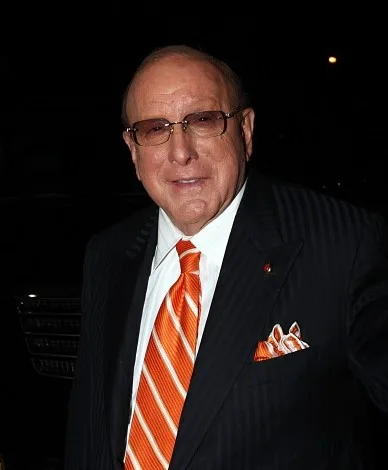
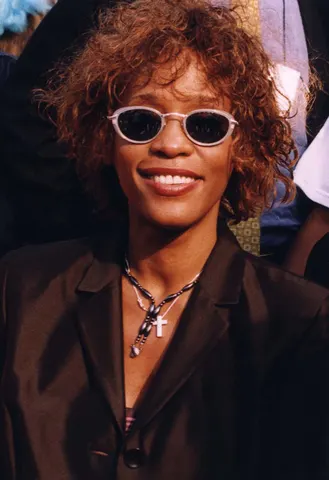
Clive Davis, Chairman & CEO of BMG Label Group, outside the XChange event space where Vacheron Constantin honored him for his achievement in the music industry, November 2007. Dual-licensed: GNU Free Documentation License v1.2+ and Creative Commons Attribution 3.0 Unported (CC BY 3.0) — Wikimedia Commons — https://commons.wikimedia.org/wiki/File:Clive_Davis.jpg (photo by Christopher Peterson)
Clive Davis was born April 4, 1932, in Brooklyn, New York. He studied at New York University on a full scholarship and went on to Harvard Law School, also on scholarship, graduating with top honors and being admitted to the New York Bar in 1957. He joined Columbia Records in 1960 as assistant counsel, rose to General Counsel, was named Vice President and General Manager in 1966, and became President of Columbia Records in 1967 — a lawyer by training who had never run a record label, let alone an A&R department, before taking the job.
Davis's Columbia tenure is remembered first for reshaping the label around rock and pop — Janis Joplin, Santana, Chicago, Blood, Sweat & Tears, Bruce Springsteen — but it carries a genuine, specific jazz-fusion credit alongside that. In 1971 he personally co-wrote the liner notes (with critic Don DeMicheal) for Weather Report's self-titled debut album, a hands-on level of involvement unusual for a label president and confirmed directly in the album's own production credits. That same year, Columbia signed guitarist John McLaughlin's new group, the Mahavishnu Orchestra, whose members most booking agents wouldn't touch because nobody could say who the audience was; Davis later said the label "got solidly behind" the band anyway, subsidizing a tour where they opened for the Byrds to build them an audience from nothing. In March 1973, in the final months of his Columbia presidency, the label released Sextant, Herbie Hancock's first album for Columbia after his move from Warner Bros. — the beginning of a relationship that would produce Head Hunters later that same year, after Davis was gone.
The most consequential of these jazz connections, though, involved an artist Davis hadn't signed and didn't produce. Miles Davis had joined Columbia in 1955 under an earlier regime, but by the start of the 1970s he was drawing a label salary while, in Clive Davis's account, resenting Columbia's newer signings — he complained that "long-haired white kids" like the members of Blood, Sweat & Tears and Chicago were "stealing" his audience and selling millions doing it. Rather than treat that as a fight, Davis says he offered Miles an unusual role: sit in as an informal guest at some of his own A&R meetings and listening sessions, watching how young, mostly white college audiences reacted to new music, and report back on what actually resonated. Miles agreed, and by his and Davis's account, the record that came out of that exposure to the era's rock audience was Bitches Brew — the double album, released in 1970, that became the commercial and critical opening statement of jazz fusion. Davis has said Miles called him afterward to credit the album's success directly to him. Separately, Davis pushed to get Miles's electric band onto rock bills entirely outside the jazz circuit, working with promoter Bill Graham to book him into venues like the Fillmore East and West alongside acts such as the Steve Miller Band and the Grateful Dead — bookings that exposed Miles's 1970s fusion period to an audience jazz clubs never could have reached on their own.
Davis's run at Columbia ended abruptly on May 29, 1973, when he was summoned by CBS president Arthur Taylor and fired without warning, then served with a civil complaint alleging roughly $94,000 in improper expense-account spending, including redecorating his apartment and paying for his son's bar mitzvah. The firing came weeks after Columbia's director of artist relations was separately dismissed over padded contractor bills, and much of the music press at the time read the expense charges as a cover story for a deeper payola-and-drug-scandal cloud hanging over the label. Davis always maintained the charges were overstated. He founded Arista Records in 1974, building it within a few years into one of the most profitable labels in the industry before selling it to Bertelsmann (BMG) in 1980 while staying on as its chief; there he shifted almost entirely into pop and R&B, most famously discovering and shaping the career of a teenage Whitney Houston, whose own career is covered in full in her JazzProfiles.com profile. He was later Chief Creative Officer of Sony Music and founded NYU's Clive Davis Institute of Recorded Music. In 2000, the Rock and Roll Hall of Fame gave him its Ahmet Ertegun Award, recognizing non-performers whose work shaped the music industry.
Davis died June 22, 2026, at his home in New York City, at age 94. His longtime representative said the cause was an age-related illness; he had been hospitalized briefly in late May 2026 for a respiratory issue before returning home, and died surrounded by family.
Davis wasn't a musician and made no claim to being one — his reputation rested on an ear he trusted more than any formal training, and a willingness to back that instinct with the label's money even when the commercial case wasn't obvious. The Mahavishnu Orchestra is the clearest example: a group "most agents wouldn't promote" because nobody could identify their audience, subsidized onto tour bills anyway until they built one. The Weather Report liner notes are a smaller but telling detail — a label president who put his own name and words on the back of an avant-garde jazz-fusion record rather than leaving it entirely to the artists and critics. And the Bitches Brew story, by Davis's own account, wasn't him dictating a musical direction to Miles Davis so much as engineering an exposure — putting a skeptical, restless jazz legend in the room with the rock audience Columbia was chasing and letting Miles draw his own conclusions. That pattern — pairing an artist with an audience or a moment rather than a sound — is the same instinct he later applied at Arista with Whitney Houston and, decades on, with Alicia Keys: less a jazz aesthetic than a talent-spotting and audience-building philosophy that happened, for a few pivotal years at Columbia, to land squarely inside jazz fusion's formative period.
- Weather Report (1971, Columbia) — Weather Report's self-titled debut. Davis is individually credited as co-writer of the liner notes (with critic Don DeMicheal), confirmed in the release's own production credits — the most concrete, primary-source credit found for him on any jazz recording. Spotify - Weather Report
- The Inner Mounting Flame (1971, Columbia, Mahavishnu Orchestra) — Signed to Columbia and, per Davis's own account, subsidized onto a national tour opening for the Byrds specifically because no booking agent would otherwise take the risk on them. Spotify - The Inner Mounting... Listen
- Bitches Brew (1970, Columbia, Miles Davis) — Not a Davis signing (Miles joined Columbia in 1955), but the album Miles himself credited to the "special guest" role Clive Davis gave him inside Columbia's rock-audience listening sessions, and to Davis's later push to book Miles's band on rock bills via promoter Bill Graham. Spotify - Bitches Brew Listen
- Sextant (1973, Columbia, Herbie Hancock) — Hancock's first Columbia release, issued in March 1973, roughly eight weeks before Davis's ouster from the label; the deal that brought Hancock to Columbia fell within Davis's presidency, even though the more famous Head Hunters followed after Davis was gone. Spotify - Sextant Listen
Clive Davis: Discography
Clive Davis was a record executive and A&R figure, not a performing musician, so there is no leader/sideman discography in the usual sense. What follows is a table of the jazz-relevant Columbia Records albums he is directly and verifiably connected to — either through an individual production credit confirmed on the release itself, or through his own documented account of signing or backing the artist. Verified against the live Discogs API (artist ID 233669) plus, for the two albums without an individual Discogs credit for Davis, contemporary reporting cited in final-profile.md.
Jazz-Relevant Columbia Recordings
| Album Title | Recording Date(s) | Release Date | Label | Catalog Number | Format(s) | Personnel | Role | Reissue History | Spotify | Buy | Notes |
|---|---|---|---|---|---|---|---|---|---|---|---|
| Weather Report | Not specified in Discogs data | 1971-05-12 (per contemporary/Wikipedia sourcing; this Columbia pressing's own Discogs metadata shows June 1971) | Columbia | C 30661 | Vinyl, LP, Album, Stereo | Wayne Shorter (saxophone), Joe Zawinul (piano, keyboards), Miroslav Vitous (bass), Alphonse Mouzon (drums), Airto Moreira (percussion) | Liner Notes (individually credited on the release, alongside critic Don DeMicheal) | Multiple CD/vinyl reissues exist across the decades; not itemized in full in this pass — see the Discogs master page | Spotify - Weather Report | — | The single strongest, most concrete Discogs-verified Clive Davis jazz credit — he put his own name on the back of the record |
| The Inner Mounting Flame | Recorded August 14, 1971, CBS Studios, New York City | 1971-11-03 | Columbia | KC 31067 | Vinyl, LP, Album, Stereo | John McLaughlin (guitar, composer), Jerry Goodman (violin), Jan Hammer (piano), Rick Laird (bass), Billy Cobham (drums) | Label president — no individual production/liner credit on this release; signed the group to Columbia and, per his own later account, subsidized their early touring (opening for the Byrds) because no booking agent would otherwise take them on | Not itemized in this pass — see the Discogs master page | Spotify - The Inner Mounting... | — | Mahavishnu Orchestra's debut; Davis quote sourced to Colin Harper's Bathed in Lightning (Jawbone Press, 2014), not a Discogs credit |
| Bitches Brew | Recorded August 19-21, 1969, Columbia 30th Street Studio, NYC | 1970 | Columbia | GP 26 | Vinyl, 2xLP, Album, Stereo | Miles Davis (trumpet), Wayne Shorter (soprano sax), Chick Corea, Joe Zawinul, Larry Young (electric piano), John McLaughlin (electric guitar), Dave Holland, Harvey Brooks (bass), Jack DeJohnette, Lenny White, Don Alias (drums); liner notes by Ralph J. Gleason, produced by Teo Macero | Label president — no individual production/liner credit on this release (liner notes are Ralph J. Gleason's). Miles Davis was signed to Columbia in 1955 by George Avakian, well before Davis's presidency. Davis's connection is the "special guest star" listening-session role he says he offered Miles, which by both men's account led directly to this session, plus his push to book Miles's band on rock bills via promoter Bill Graham | Reissued many times, including The Complete Bitches Brew Sessions (1998) box set; not itemized in full in this pass — see the Discogs master page | Spotify - Bitches Brew | — | Reused/re-verified from this vault's own Miles Davis profile (14-miles-davis-profile), where George Avakian — not Clive Davis — is correctly credited with signing Miles to Columbia |
| Sextant | Not specified in Discogs data | 1973-03-30 | Columbia | KC 32212 | Vinyl, LP, Album, Stereo | Herbie Hancock (electric piano, Clavinet, Mellotron, piano), Bennie Maupin (soprano sax, bass clarinet, piccolo flute), Eddie Henderson (trumpet, flugelhorn), Julian Priester (trombone), Buster Williams (bass), Billy Hart (drums), Patrick Gleeson (synthesizer); produced by David Rubinson & Friends, Inc. | Label president — no individual production/liner credit on this release; Hancock's move to Columbia (from Warner Bros.) fell within the final ~8 weeks of Davis's presidency, before his May 29, 1973 ouster | Not itemized in this pass — see the Discogs master page | Spotify - Sextant | — | Hancock's more famous Head Hunters (Oct. 1973) followed after Davis had already left Columbia, so it is excluded from this table |
Excluded from this table
Clive Davis's broader discography as a producer credit spans roughly 740 Discogs release/master entries (via GET /artists/233669/releases), the overwhelming majority from his post-1974 Arista/RCA/J Records/BMG pop and R&B career — Whitney Houston, Santana's Supernatural-era comeback, Alicia Keys, Barry Manilow, Rod Stewart's Great American Songbook series, and many more. None of that catalog is jazz-relevant, so it is not itemized here; the full public list is browsable via the Discogs artist page.
- Weather Report (Wayne Shorter, Joe Zawinul, Miroslav Vitous, Alphonse Mouzon, Airto Moreira) — Davis personally co-wrote the liner notes for their 1971 Columbia debut.
- Mahavishnu Orchestra (John McLaughlin, Jan Hammer, Jerry Goodman, Rick Laird, Billy Cobham) — signed to Columbia in 1971; Davis subsidized their early touring.
- Miles Davis — not signed by Davis, but the artist whose Bitches Brew sessions and rock-circuit bookings Davis's account of Columbia's early-1970s A&R strategy is most closely tied to; profiled separately on JazzProfiles.com.
- Herbie Hancock — brought to Columbia for 1973's Sextant in the final months of Davis's presidency; profiled separately on JazzProfiles.com (CrossoverJazz vault).
- Whitney Houston — signed to Arista in the 1980s and developed into the biggest pop star of her era; profiled separately on JazzProfiles.com.

More American Jazz Artists
See all 567 American artists →- Spotify artist page — confirmed via direct page check: "Clive Davis Commentary" tracks and executive biography, not a performer page.
- The Washington Post: Clive Davis, recording executive and star-maker, dies at 94
- NPR: Clive Davis, music executive and champion of legendary pop artists, has died at 94
- Variety: Clive Davis, Grammy-Winning Record Producer and Music Executive, Dies at 94
- The A.V. Club: R.I.P. Clive Davis, prolific music executive and discoverer of talent — source for the Bitches Brew "special guest star" account, in Davis's own words.
- The Afterword: "God's Orchestra," a chapter from Colin Harper's Bathed in Lightning: John McLaughlin, the 60s and the Emerald Beyond (Jawbone Press, 2014) — source for the Mahavishnu Orchestra touring-subsidy quote.
- Rock & Roll Hall of Fame: Clive Davis, inductee page
- Discogs: Clive Davis
- Billboard: 21 Music Legends Developed, Signed or Boosted by Clive Davis' Golden Touch