 JAZZPROFILES lives in the music 2,059 Jazz Artists fully Profiled!
Bill Lee
Last updated October 29, 2026
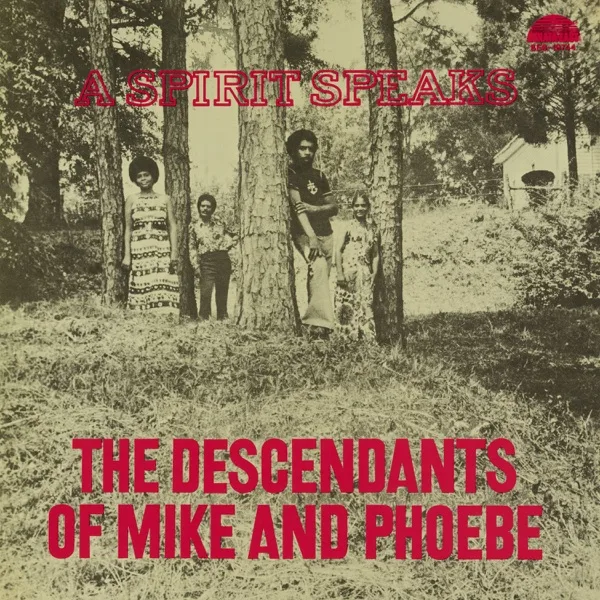
The four members of The Descendants of Mike and Phoebe, Bill Lee's family group, on the cover of *A Spirit Speaks* (Strata-East, 1974): Lee, his sisters Consuela Lee Moorehead and A. Grace Lee Mims, and his brother Clif Lee, photographed in Snow Hill, Alabama. The sleeve does not label which figure is which. Album cover art (not a CC-licensed artist photo), used as the only available image showing the artist. Copyright is held by the label and the photographer, Howard A. Mims. No Creative Commons or public-domain photograph of Bill Lee was located. — Apple Music artwork for the 2025 reissue, 600 x 600 pixels, https://is1-ssl.mzstatic.com/image/thumb/Music221/v4/35/11/9a/35119aba-a61c-cf64-0334-3f75046026e7/118229.jpg/600x600bb.jpg

William James Edwards Lee III was born on July 23, 1928, in Snow Hill, Alabama, one of seven children in a musical household. His father, Arnold Wadsworth Lee, played cornet and led bands, and his mother, Alberta Grace Edwards Lee, was a concert pianist. His maternal grandfather, William J. Edwards, had founded the Snow Hill Normal and Industrial Institute, the school at the center of the family's history in the town. Lee went to Morehouse College in Atlanta, where his schoolmates included Martin Luther King Jr. and the future drummer and bandleader Babatunde Olatunji, and graduated in 1951. Charlie Parker's records drew him toward bebop and the double bass. In 1954 he married Jacqueline Shelton, an art teacher, and they raised five children, among them the filmmaker Spike Lee, born in 1957.
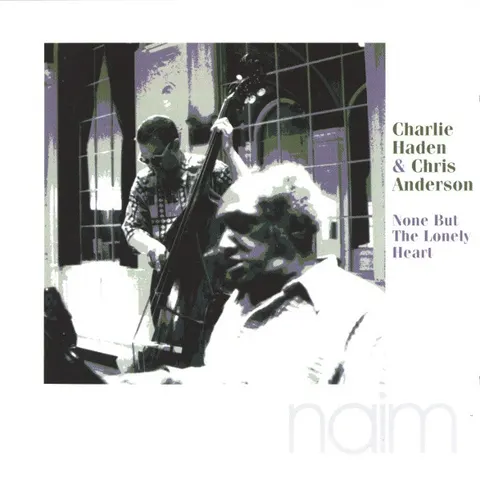
After college he played in small jazz groups in Atlanta and Chicago. In Chicago he was the house bassist at the Gate of Horn, a folk club, and he worked with the pianist Chris Anderson, a friend since the late 1940s, and with the saxophonist Frank Strozier and the pianist Billy Wallace. In 1959 he moved his family to Fort Greene, Brooklyn, and he lived in the neighborhood for the rest of his life.
New York in 1959 sat where the jazz clubs met the Greenwich Village folk revival, and Lee worked both sides. Odetta was his first major folk association, and his bass is on her 1959 and 1960 Vanguard albums and on the Newport Folk Festival recordings of those years. He played on Harry Belafonte's Belafonte Returns to Carnegie Hall (1960) and on records by Josh White, Theodore Bikel, Judy Collins, Ian and Sylvia, the Clancy Brothers, Tom Rush, Peter, Paul and Mary and Gordon Lightfoot. He is the bassist on Simon and Garfunkel's debut, Wednesday Morning, 3 A.M. (1964), and on Bob Dylan's Bringing It All Back Home, where he plays on the electric first side and on the solo acoustic closer "It's All Over Now, Baby Blue," recorded in January 1965. Obituaries put his total at more than 250 albums.
The jazz work ran alongside. He plays on nine of the twelve tracks of Aretha Franklin's first Columbia album, Aretha (1961), recorded with the Ray Bryant Combo, on most of Ray Bryant's Con Alma (1961), on John Handy's No Coast Jazz and Johnny Griffin's Change of Pace (Riverside, 1961), and on Chris Anderson's Inverted Image and Frank Strozier's March of the Siamese Children (both Jazzland, 1962). He was also writing for others. Max Roach recorded his "Jodie's Cha-Cha" and "Deeds, Not Words" for Deeds, Not Words (Riverside, 1958), his "Sporty" on Max Roach + 4 on the Chicago Scene (1958), and his "Quiet as It's Kept," which gave its name to the 1959 Mercury album.
By his estate's account, he and fellow bassists formed a group called Professionals Unlimited in 1967, which became the New York Bass Violin Choir, an ensemble of basses he directed and for which he wrote and arranged. In the 1970s he found a home at Strata-East, the musician-owned label started in 1970 and 1971 by Charles Tolliver and Stanley Cowell. For it he recorded with two groups of his own. The Descendants of Mike and Phoebe, named for ancestors on his mother's side who had been enslaved in Alabama, brought together his sister Consuela Lee Moorehead on piano, his sister A. Grace Lee Mims on vocals and his brother Clif Lee on flugelhorn, with Billy Higgins and Sonny Brown on percussion; A Spirit Speaks was recorded at Minot Studios in White Plains, New York, on December 19 to 21, 1973, and released in 1974. The Brass Company, which he co-founded with the trumpeter Bill Hardman and Higgins, made Colors (1975), a brass-and-rhythm record that includes Bob Stewart on tuba and Bernard McKinney, credited as Kiane Zawadi, on euphonium. He also played on other artists' Strata-East dates, among them Clifford Jordan's Glass Bead Games (1974) and Stanley Cowell's Regeneration (1976). The bass choir's own album followed in 1980, with Ron Carter, Richard Davis, Milt Hinton, Sam Jones, Lisle Atkinson and Michael Fleming alongside him, and with George Coleman on tenor saxophone and Harold Mabern on piano for two pieces.
The 1970s also tested his principles. As fusion spread and electric bass became standard, he refused to give up the upright instrument, and he told a reporter that he could never live with himself if he switched. He lost some work over it. He kept writing what he called narrative folk-jazz operas, including Baby Sweets, written with Sonny Brown, and One Mile East, drawn from his childhood summers in Snow Hill, and staged them at Central Park, Lincoln Center and the Newport Jazz Festival.
Spike Lee's first films gave him his widest audience. He scored the short Joe's Bed-Stuy Barbershop: We Cut Heads (1983) and then the first four features. For She's Gotta Have It (1986) he played bass, produced and arranged the Island Records soundtrack and wrote its "Nola" theme, with Cedar Walton and Stanley Cowell on piano, Harold Vick on saxophones, Virgil Jones on trumpet, Joe Chambers and Kenny Washington on drums and Ronnie Dyson singing; he also plays Nola's father on screen. For School Daze (1988) he wrote and produced several pieces, including "Straight and Nappy" and "Wake Up Suite," and he appears on screen as the bassist in Phyllis Hyman's quartet. For Do the Right Thing (1989) he composed and conducted the score with his Natural Spiritual Orchestra, recorded at RCA Studios in New York on December 12 to 16, 1988, with Branford Marsalis on tenor and soprano saxophone, the trumpeters Terence Blanchard and Marlon Jordan, Donald Harrison on alto saxophone and Kenny Barron and James Williams on piano. For Mo' Better Blues (1990) he was the music director. The soundtrack album, credited to the Branford Marsalis Quartet featuring Blanchard, lists him as one of its producers and as the writer of its title track and of "Again, Never," a piece the quartet's recording took to a Grammy nomination for Best Jazz Instrumental Performance, Group.
He and his son stopped working together in the early 1990s after a falling out over money and family matters, and Terence Blanchard, who had played on the Mo' Better Blues music, became Spike Lee's regular composer. Lee went on leading groups of his own. By his estate's account, his Mo' Betta Quartet and Quintet played in the 1990s and 2000s with musicians including Donald Harrison, Javon Jackson, Joe Chambers, Ronnie Mathews and his son T@NE on alto saxophone, and a later Natural Spiritual Orchestra drew in younger players such as the trumpeter Theo Croker and the harpist Brandee Younger. He gave master classes and taught at Oberlin Conservatory, New York University and Long Island University, and into his nineties he hosted long jam sessions at his Fort Greene apartment.
Bill Lee passed away at his Brooklyn home on May 24, 2023, at the age of 94, as Spike Lee announced. Since then the music has kept coming back into print. On April 25, 2025, Mack Avenue Records, which holds the Strata-East license, reissued A Spirit Speaks, Colors and The New York Bass Violin Choir. His estate's label, New Version Music, released The Descendants of Mike and Phoebe II on April 2, 2026, the original score for School Daze on May 19, 2026, and the original score for Mo' Better Blues on May 31, 2026.
Lee's writing joined bebop harmony to church music. A 2008 New York Times review heard the dense chord movement of bebop and hard bop resolving into something plain, earnest and earthy, and that mix runs from the Strata-East records to the film cues. Charlie Parker was the formative influence, and Lee stayed with the acoustic double bass through the electric decades. His arrangements for the bass choir push the instrument into its upper register and into thumb-position playing, so that seven basses behave like a choir with a bottom and a melody. His estate's biography also credits him with a harmonic approach he called the Twelve Resolutions, built on dominant chords drawn from diminished-chord sets, and points to the end of "Straight and Nappy" as an example.
A second thread is the folk revival, where he was a working bassist on other people's records, and a third is film, where his scores mix jazz, gospel and orchestral writing. These are the parts of his career that reach beyond jazz, and the crossover reputation that grew out of them is real, but he was a jazz bassist first, and the Strata-East albums and the bass choir are where his own voice is clearest. Players of later generations kept his tunes in circulation: José James recorded "Nola" on The Dreamer, Russell Malone recorded "Biskit," and Eric Alexander and Gary Smulyan both recorded "Don't Follow the Crowd," while Steve Wilson took up "Be One" on Step Lively (1995).
- Aretha (1961, Columbia) - Aretha Franklin's first Columbia album, with the Ray Bryant Combo; Lee is the bassist on nine of its twelve tracks.
- Deeds, Not Words (1958, Riverside) - Max Roach's album with Booker Little and George Coleman, which carries two of Lee's compositions, "Jodie's Cha-Cha" and the title track.
- A Spirit Speaks (1974, Strata-East) - The Descendants of Mike and Phoebe, his family group with two sisters and a brother, and the record where his songwriting and spirituals are most personal. Apple Music - A Spirit Speaks Listen
- Colors (1975, Strata-East) - The Brass Company, with Bill Hardman, Billy Higgins and a front line of trumpets, flugelhorns, euphonium and tuba. Apple Music - Colors
- The New York Bass Violin Choir (1980, Strata-East) - Seven bassists under his direction, including Ron Carter, Richard Davis, Milt Hinton and Sam Jones, playing his pieces and excerpts from his opera Baby Sweets. Apple Music - The New York Bass Violin Choir
- She's Gotta Have It (1986, Island) - The soundtrack to Spike Lee's debut feature, a small-group jazz score with "Nola" at its center.
- Do the Right Thing (Original Score) (1989, Columbia) - His Natural Spiritual Orchestra with Branford Marsalis, Terence Blanchard and Donald Harrison. Apple Music - Do the Right Thing Listen
- Mo' Better Blues (Original Score) (2026, New Version Music) - The film's own score, with the Natural Spiritual Orchestra, issued three years after his death. Apple Music - Mo' Better Blues Listen
Bill Lee: Full Discography
Discogs artist: Bill Lee (2) (211398) · Real name William James Edwards Lee III · Born July 23, 1928, Snow Hill, Alabama · Died May 24, 2023, Brooklyn, New York
Lee led few records and played on a great many. The tables below give his own albums and co-led groups, his film and television scores, a selection of his sideman work, and the compositions of his that other leaders recorded. Discogs lists several hundred releases with his credit. Several other musicians named Bill Lee, including a film and stage singer and a gospel artist, have separate entries, and none of their credits are included here.
As Leader and Co-Leader
| Album | Year | Label | Personnel & Notes | Listen | Buy |
|---|---|---|---|---|---|
| A Spirit Speaks (The Descendants of Mike and Phoebe) | 1974 | Strata-East (SES-19744) | Recorded December 19 to 21, 1973 at Minot Studios, White Plains, New York. Lee (bass, vocals on two tracks), Consuela Lee Moorehead (piano), A. Grace Lee Mims (soprano vocals), Clif Lee (flugelhorn), Billy Higgins and Sonny Brown (percussion). Lee wrote "Coltrane," "Chick Chick," "Don't Be a Stranger" and "Too Little, Too Late." Reissued April 25, 2025 by Mack Avenue Records | Apple Music | — |
| Colors (The Brass Company) | 1975 | Strata-East (SES-19752) | Recorded June 4 and July 3, 1974 at Minot Studios. Directed by Lee, Bill Hardman and Billy Higgins; Lee plays bass and arranged the album. Bill Hardman, Eddie Preston, Harry Hall and Lonnie Hillyer (trumpets), Clif Lee and Kamal Abdul Alim (flugelhorns), Charles Stephens (trombone), Kiane Zawadi (euphonium; Bernard McKinney), Bob Stewart (tuba), Higgins and Sonny Brown (drums). The sleeve names Clifford Jordan, Stanley Cowell and Charles Tolliver as guest artists. Lee wrote "Spanish Dancer," "High Steppin'" and the four-part "Colors." Reissued April 25, 2025 by Mack Avenue Records | Apple Music | — |
| The New York Bass Violin Choir (The New York Bass Violin Choir) | 1980 | Strata-East (SES-8003) | Lee directs and plays bass; the other basses are Lisle Atkinson, Michael Fleming, Milt Hinton, Richard Davis, Ron Carter and Sam Jones, with Sonny Brown (percussion) and, on two pieces, Harold Mabern (piano) and George Coleman (tenor saxophone). Assembled from live and studio recordings made between 1969 and 1975, including the Music Inn in Lenox, Massachusetts (1969), the Village Vanguard (1970) and Minot Studios (1975), and built around excerpts from his opera Baby Sweets. Reissued April 25, 2025 by Mack Avenue Records | Apple Music | — |
Posthumous releases from his estate
| Album | Year | Label | Notes | Listen | Buy |
|---|---|---|---|---|---|
| The Descendants of Mike and Phoebe II | April 2, 2026 | New Version Music | Eleven tracks credited to Bill Lee, including his "Fulton Street Symphony" | Apple Music | — |
| School Daze (Original Score) | May 19, 2026 | New Version Music | Lee's score for the 1988 film, with the Natural Spiritual Orchestra; release date as stated by his estate | — | — |
| Mo' Better Blues (Original Score) | May 31, 2026 | New Version Music | Twenty tracks, credited to Bill Lee and the Natural Spiritual Orchestra | Apple Music | — |
Singles from the Natural Spiritual Orchestra on New Version Music: "Mo' Better Blues (Opening)" (April 17, 2024), "Mo' Better Blues (Reprise)" (April 24, 2024), "Jesus Is a Lonely Man" (June 12, 2024), "P.R. Vamp 1" (June 20, 2024), "Country Boy Blues (Version 2)" (October 15, 2024), "Lemons and Honey (Piano Version)" (May 28, 2025), "Tim" (June 4, 2025) and "Listen to Your Heart" (June 11, 2025).
Film Scores and Soundtracks
Lee wrote the music for five of Spike Lee's early films. The first, Joe's Bed-Stuy Barbershop: We Cut Heads (1983), has no soundtrack album.
| Film | Year | Album | Label | Lee's role | Listen | Buy |
|---|---|---|---|---|---|---|
| She's Gotta Have It | 1986 | She's Gotta Have It (Original Motion Picture Soundtrack) | Island (90528-1) | Bass, producer, arranger, composer; liner notes with Spike Lee. Cedar Walton and Stanley Cowell (piano), Harold Vick (saxophones), Virgil Jones (trumpet, flugelhorn), Joe Chambers and Kenny Washington (drums), Ronnie Dyson (vocals). He also plays Nola's father on screen | — | — |
| School Daze | 1988 | School Daze (Original Motion Picture Soundtrack) | EMI-Manhattan (E1-48680) | Composer and producer of "Straight and Nappy," "One Little Acorn" (two versions), "Be One" and "Wake Up Suite"; producer of "I'm Building Me a Home." A multi-artist soundtrack | — | — |
| Do the Right Thing | 1989 | Do the Right Thing (Original Score) | Columbia (OC 45406) | Composer, producer, mixer and conductor; credited to Bill Lee featuring Branford Marsalis. Recorded December 12 to 16, 1988 at RCA Studios, New York, with the Natural Spiritual Orchestra. Branford Marsalis (tenor and soprano saxophone), Terence Blanchard and Marlon Jordan (trumpets), Donald Harrison (alto saxophone), Kenny Barron and James Williams (piano), Robert Hurst (bass), Jeff "Tain" Watts (drums) | Apple Music | — |
| Mo' Better Blues | 1990 | Music from Mo' Better Blues | Columbia (CK 46792) | Producer, with Delfeayo Marsalis and Raymond Jones, and writer of "Mo' Better Blues" and "Again, Never." Credited to the Branford Marsalis Quartet featuring Terence Blanchard; the quartet's recording of "Again, Never" was nominated for a Grammy | — | — |
As Sideman (selected major credits)
Lee's credit list is large and mostly in folk and pop sessions. This table keeps the jazz dates and the best-known folk and pop ones.
| Year | Project (Leader) | Title | Label | Catalog | Role | Notes |
|---|---|---|---|---|---|---|
| 1957 | Odetta | Odetta at the Gate of Horn | Tradition | — | Bass | |
| 1959 | Odetta | My Eyes Have Seen | Vanguard | — | Bass | |
| 1960 | Odetta | Odetta at Carnegie Hall | Vanguard | — | Bass | Recorded April 8, 1960 |
| 1960 | Harry Belafonte | Belafonte Returns to Carnegie Hall | RCA Victor | — | Bass | Two tracks, recorded May 2, 1960 |
| 1960 | John Handy | No Coast Jazz | Roulette | SR 52058 | Bass | Quartet with Don Friedman (piano) and Lex Humphries (drums) |
| 1961 | Aretha Franklin with the Ray Bryant Combo | Aretha | Columbia | CS 8412 (stereo), CL 1612 (mono) | Bass | Nine of twelve tracks, recorded between August 1960 and January 1961; Milt Hinton plays the others. Released February 27, 1961 |
| 1961 | Ray Bryant Trio | Con Alma | Columbia | CL 1633 | Bass | Most tracks; Arthur Harper plays one. Recorded December 1960, with Mickey Roker on drums |
| 1961 | Johnny Griffin | Change of Pace | Riverside | — | Bass | Recorded February 1961; Lee also wrote "Nocturne" and "As We All Know" |
| 1961 | John Lee Hooker | The Folk Lore of John Lee Hooker | Vee-Jay | — | Bass | Two tracks recorded at the Newport Folk Festival, June 25, 1960 |
| 1962 | Chris Anderson | Inverted Image | Jazzland | JLP 957 | Bass | Trio album with Philly Joe Jones and Walter Perkins on drums; Lee wrote "Only One" and co-wrote "See You Saturday" |
| 1962 | Frank Strozier | March of the Siamese Children | Jazzland | — | Bass | All tracks; Lee wrote "Don't Follow the Crowd" and "Lap." Recorded March 28, 1962 |
| 1962 | Judy Collins | Golden Apples of the Sun | Elektra | — | Bass | |
| 1962 | Ian and Sylvia | Ian & Sylvia | Vanguard | — | Bass | Most tracks |
| 1964 | Simon and Garfunkel | Wednesday Morning, 3 A.M. | Columbia | — | Double bass | Their debut album |
| 1965 | Bob Dylan | Bringing It All Back Home | Columbia | — | Bass | Recorded January 1965; plays on side one and on "It's All Over Now, Baby Blue." Released March 22, 1965 |
| 1966 | Peter, Paul and Mary | Peter, Paul and Mary Album | Warner Bros. | — | Bass | All tracks except three |
| 1966 | Gordon Lightfoot | Lightfoot! | United Artists | — | Bass | |
| 1968 | Harold Mabern | A Few Miles from Memphis | Prestige | — | Bass | With George Coleman and Buddy Terry (tenor saxophones), Walter Perkins (drums) |
| 1969 | Harold Mabern | Rakin' and Scrapin' | Prestige | — | Bass | With Blue Mitchell, George Coleman and Hugh Walker |
| 1971 | Richard Davis | The Philosophy of the Spiritual | Cobblestone | — | Bass | All tracks; Lee wrote "Monica," "The Rabbi," "Baby Sweets" and "Juan Valdez" |
| 1974 | Clifford Jordan Quartet | Glass Bead Games | Strata-East | SES 19737/8 | Bass violin | Plays in the first of the two quartets, with Stanley Cowell and Billy Higgins; Sam Jones and Cedar Walton play in the second. Lee wrote "John Coltrane" (with Clif Lee), "Eddie Harris" and "Biskit" |
| 1976 | Stanley Cowell | Regeneration | Strata-East | SES-19765 | Bass | Several tracks, including "The Gembhre" and "Lullabye." Recorded April 27, 1975 |
| 1976 | Billy "C" | Where Have You Been Billy Boy | Strata-East | — | Bass, arranger | All tracks |
| 1979 | Richard Davis | Harvest | Muse | — | Bass, co-producer, arranger | Co-wrote "Half Pass" and "A Third Away" with Davis |
| 1980 | Clifford Jordan | The Adventurer | Muse | — | Bass | Recorded February 9, 1978 |
| 1998 | UA | Ametora | Speedstar | — | Bass, composer, producer | Two tracks, "Toro" and "Your Favorite Song," recorded in Brooklyn |
| 2014 | Mike Bloomfield | From His Head to His Heart to His Hands | Sony Legacy | — | Bass | Three tracks from a 1964 audition for John Hammond at Columbia |
Compositions Recorded by Other Leaders
| Year | Leader | Title | Label | Lee composition(s) |
|---|---|---|---|---|
| 1958 | Max Roach | Deeds, Not Words | Riverside (RLP 12-280) | "Jodie's Cha-Cha," "Deeds, Not Words" (recorded September 4, 1958) |
| 1958 | Max Roach + 4 | On the Chicago Scene | EmArcy (MG 36132) | "Sporty" (recorded June 3, 1958) |
| 1960 | Max Roach + 4 | Quiet as It's Kept | Mercury (MG 20491) | "Quiet as It's Kept" (recorded July 21, 1959) |
| 1964 | Max Roach | The Many Sides of Max | Mercury | "Connie's Bounce" (recorded January 22, 1959) |
| 1984 | Bill Hardman | Focus | Muse | "Too Little, Too Late" |
| 1985 | Billy Higgins | Mr. Billy Higgins | Riza | "John Coltrane" |
| 1991 | Ronnie Mathews | Dark Before the Dawn | DIW | "Meaning Something" |
| 1995 | Steve Wilson | Step Lively | Criss Cross | "Be One" |
| 1997 | Gary Smulyan | Gary Smulyan with Strings | Criss Cross | "Don't Follow the Crowd" |
| 1999 | Donald Harrison | Free to Be | Impulse! (IMPD-283) | "Again, Never" |
| 2008 | José James | The Dreamer | Brownswood | "Nola" |
| 2011 | Eric Alexander | Don't Follow the Crowd | HighNote | "Don't Follow the Crowd" |
| 2016 | Russell Malone | All About Melody | HighNote | "Biskit" |
- Max Roach - recorded Lee's compositions in 1958 and 1959, among them "Jodie's Cha-Cha," "Deeds, Not Words," "Sporty" and "Quiet as It's Kept."
- Aretha Franklin and Ray Bryant - the 1960 and 1961 Columbia sessions for her first album and Bryant's trio records.
- Chris Anderson - pianist and friend, with Lee on the trio records My Romance and Inverted Image.
- Billy Higgins - percussion on A Spirit Speaks, drums on Colors and on Clifford Jordan's Glass Bead Games, and a co-founder of the Brass Company.
- Consuela Lee Moorehead, A. Grace Lee Mims and Clif Lee - his sisters and brother, the other members of the Descendants of Mike and Phoebe.
- Bill Hardman, Bob Stewart and Bernard McKinney - Brass Company colleagues on Colors.
- Clifford Jordan, Stanley Cowell and Charles Tolliver - fellow Strata-East artists; Jordan and Cowell recorded with Lee, and Tolliver and Cowell founded the label.
- Ron Carter, Sam Jones, Richard Davis, Milt Hinton, Lisle Atkinson and Michael Fleming - the other bassists on The New York Bass Violin Choir, with George Coleman and Harold Mabern on two tracks; Mabern and Coleman also recorded with Lee on Mabern's Prestige albums A Few Miles from Memphis (1968) and Rakin' and Scrapin' (1969).
- Spike Lee - his son, the director of the five films Lee scored from 1983 to 1990.
- Branford Marsalis, Terence Blanchard, Donald Harrison and Kenny Barron - the jazz players on the Do the Right Thing and Mo' Better Blues recordings.
- Cedar Walton and Kenny Washington - pianist and drummer on the She's Gotta Have It soundtrack.
- Phyllis Hyman - he appears as the bassist in her on-screen quartet in School Daze.
- Duke Ellington - named in obituaries among the leaders he worked with; no specific recording is documented.
- Outside jazz: Odetta, Bob Dylan, Simon and Garfunkel, Peter, Paul and Mary, Judy Collins, Harry Belafonte, Josh White, Theodore Bikel, Ian and Sylvia, Gordon Lightfoot, Tom Rush and John Lee Hooker.
More Hard Bop Artists
See all 334 Hard Bop artists →More American Jazz Artists
See all 646 American artists →- New Version Music (the official site of his estate)
- Apple Music - The Descendants of Mike and Phoebe II
- Discogs
- Wikipedia
- AllMusic
- IMDb
- His profile on jazzprofiles.com
- r/CrossoverJazz
- Wikipedia: Bill Lee (musician)
- New Version Music: Bio and Credits
- Pitchfork: Bill Lee, Jazz Musician and Father of Spike Lee, Dies at 94
- New York Amsterdam News: Jazz bassist Bill Lee, transitions at 94
- Local 802 Allegro: Standing on the Shoulders of Those Who Came Before Me
- AllMusic: Bill Lee
- Discogs: Bill Lee (2)
- Wikipedia: Deeds, Not Words
- Wikipedia: Max Roach + 4 on the Chicago Scene
- Wikipedia: Quiet as It's Kept
- Wikipedia: Bringing It All Back Home
- Wikipedia: Aretha (1961 album)
- Wikipedia: Wednesday Morning, 3 A.M.
- Wikipedia: Mo' Better Blues (soundtrack)
- Mack Avenue Records: The New York Bass Violin Choir
- Discogs: Do the Right Thing (Original Score)
- Discogs: A Spirit Speaks