 JAZZPROFILES lives in the music 1,002 Jazz Artists fully Profiled!
 Buster Williams
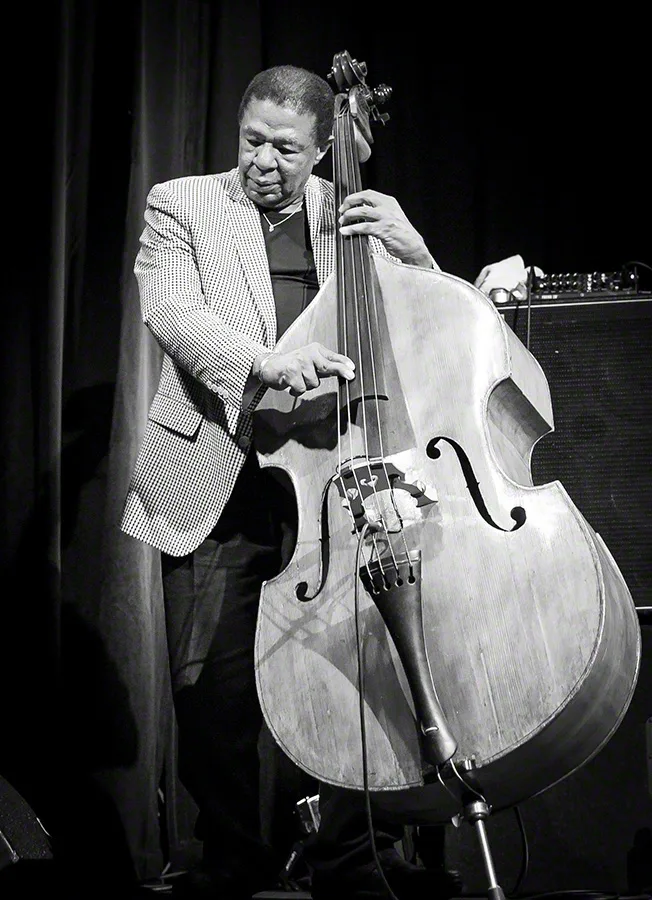
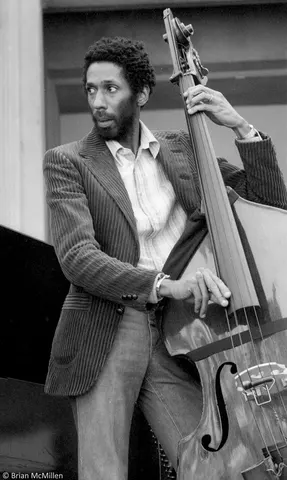
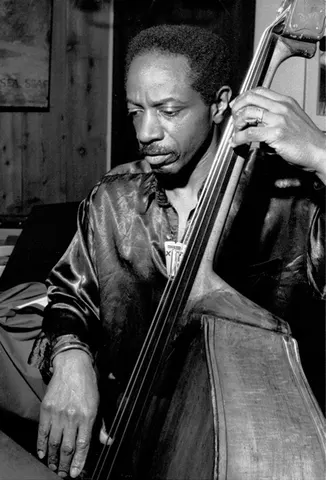
Buster Williams on double bass at Nasjonal Jazzscene Victoria, Oslo, August 14, 2016, playing the opening night of the Oslo Jazz Festival with the Chestnut, Williams & White trio CC BY-SA 4.0 — Wikimedia Commons — https://commons.wikimedia.org/wiki/File:Buster_Williams_Victoria_Oslo_Jazzfestival_(210724).jpg (photograph by Tore Sætre, User:Tsaetre, own work)
.jpg)
Charles Anthony "Buster" Williams Jr. was born April 17, 1942, in Camden, New Jersey. His father, Charles Anthony Williams Sr., played bass, drums, and piano and held band rehearsals in the family home, so the son grew up inside the music. What settled the instrument for him was his father's record of "Star Dust" featuring Oscar Pettiford. He was still in junior high school when he took his first professional job, covering a date his father had double-booked. As a teenager he practiced with the pianist Sam Dockery, who was working in Jimmy Heath's Philadelphia band on a regular double bill with the alto saxophonist Sam Reed. When his father handed him a Monday night of his own at a club called Rip's in 1959, Williams hired Reed for the gig, calculating that it would put him in front of Heath. Two days later Reed called him for work, and Heath hired him the week after that. Williams graduated from Camden High School in 1960 and later studied composition, harmony, and theory with Dr. Roland Wiggins at Combs College of Music in Philadelphia, attending irregularly around his touring schedule.
The Rip's strategy set a pattern. In 1960 the bassist Nelson Boyd called Williams Sr. to cover a Philadelphia weekend with Gene Ammons and Sonny Stitt, and the father again sent his son. After the first set on the Friday night, Ammons and Stitt asked the eighteen-year-old to come on tour. He stayed roughly a year, from 1960 into 1961, until the band was stranded in Kansas City and the rhythm section had to take a week's work with Al Hibbler to buy train fare home. His first two recordings came out of that association, both cut in Chicago in August 1961: Dig Him! for Argo and Boss Tenors for Verve. Singers came next, and they defined the rest of the decade. Dakota Staton hired him in 1961 after hearing him in Wilmington, Delaware; Betty Carter followed in 1962 and Sarah Vaughan in 1963, taking him on his first European tour. From 1964 he worked steadily with Nancy Wilson, recording several Capitol albums with her and moving to Los Angeles to be near the work.
The West Coast years widened his range fast. Alongside Wilson he recorded five Pacific Jazz albums with the Jazz Crusaders, worked with Kenny Dorham, and cut a date with the Harold Land and Bobby Hutcherson quintet. By his own account he was the first call whenever Ray Brown was unavailable. In 1967 he spent several months in the Miles Davis Quintet, substituting for Ron Carter, and it was there that he met Herbie Hancock. Little of that tenure was recorded: his only trace in the Davis catalog is a single 1967 Hollywood session added as a bonus track to the CD reissue of Sorcerer, an album whose original LP has Carter on every track.
Williams moved to New York in October 1968 and became one of the busiest bassists in the city. He played with Art Blakey, Herbie Mann, and Mary Lou Williams, and recorded for Atlantic, Blue Note, and Prestige behind McCoy Tyner, Dexter Gordon, Roy Ayers, Stanley Turrentine, Frank Foster, Illinois Jacquet, and Ammons again, the last newly out of a seven-year sentence at Joliet. The connection made in the Davis quintet then paid off: Hancock brought him into the band that became the Mwandishi Sextet, and Williams held the bass chair for its entire run. He is on The Prisoner (recorded at Van Gelder Studio in April 1969) and Fat Albert Rotunda (1969), then on the three albums that define the group, Mwandishi (Warner Bros., 1971), Crossings (Warner Bros., 1972), and Sextant (Columbia, 1973), and on two Capricorn dates under Eddie Henderson's name. The sextet ran acoustic bass, electric bass, Fender Rhodes, Moog, and ARP synthesizers through a band that also held Bennie Maupin, Julian Priester, Henderson, and Billy Hart, and every member took a Swahili name. Williams became Mchezaji, a credit that still appears on the sleeve of Mwandishi beside his own.
His first album as a leader, Pinnacle, was recorded at Blue Rock Studios in New York across four August days in 1975 and released on Muse, with Hart on drums, Sonny Fortune on saxophones and flute, Woody Shaw on trumpet, Earl Turbinton on reeds, and Onaje Allan Gumbs on keyboards. Four more leader dates followed by 1980: Crystal Reflections (Muse, 1976), the trio record Tokudo with Kenny Barron and Ben Riley (Denon, cut in Tokyo in January 1978), Heartbeat (Muse, recorded in 1978), and the string-augmented Dreams Come True (Buddah, recorded in 1978 and issued in 1980). He also anchored the three Milestone albums on which Ron Carter soloed on piccolo bass, and he was nominated for a Grammy Award for Love for Sale, the first record credited to The Great Jazz Trio, with Hank Jones and Tony Williams. Then his own recording almost stopped: between 1980 and 1998 he made just one album under his own name, Something More (In+Out, 1989), cut over two days in March at Van Gelder Studio with Hancock, Wayne Shorter, Al Foster, and trumpeter Shunzo Ohno, and carrying five Williams originals. Something More became the name of his working band from 1990 onward.
The gap in leader dates was not a gap in work. In 1982 Williams joined two collective bands at once. The Timeless All Stars put him with Harold Land, Curtis Fuller, Hutcherson, Cedar Walton, and Billy Higgins; their first album, It's Timeless, was taped live at Keystone Korner in San Francisco on April 28, 1982. Sphere, with Barron, Riley, and Charlie Rouse, began as a Thelonious Monk tribute and made its first record for Elektra/Musician on February 17, 1982, the day Monk died, before broadening into standards and the members' own writing. Sphere ran until Rouse's death in 1988 and reconvened from 1997 to 2002 with Gary Bartz in the saxophone chair. Across the same decades Williams toured with Hancock, recorded with Larry Coryell, Stanley Cowell, Steve Turre, Frank Morgan, Chet Baker, Emily Remler, and Shirley Horn, and did steady studio work for film and television, including Mackenna's Gold under Quincy Jones in 1969, Angelo Badalamenti's score for Twin Peaks: Fire Walk with Me, and Terence Blanchard's for Clockers.
From 1997 the leader records resumed and kept coming: Somewhere Along the Way, Lost in a Memory, Live at the Montreux Jazz Festival 1999, and Joined at the Hip for the Swiss label TCB, Houdini for Sirocco (recorded in Brooklyn in March 2000 with Geri Allen and Lenny White), and Griot Libertè for HighNote, recorded at Van Gelder Studio in February 2004, engineered and mastered by Rudy Van Gelder, and issued as a hybrid SACD with a five-channel surround mix. 65 Roses came from a 2006 cystic fibrosis benefit concert in Mountain View, California, with Barron and White; Live Volume 1 was self-released as a download in 2008. Two Smoke Sessions albums followed, Audacity in 2018 and Unalome in 2023, the latter credited to the Buster Williams Something More Septet. He has also worked in a string of long-running groups: 4 Generations of Miles with Fortune, Mike Stern, and Jimmy Cobb; a trio with Cyrus Chestnut and White; the Wallace Roney Quintet; and Denny Zeitlin's trio with Matt Wilson.
Williams and his wife Veronica, whom he met in junior high school and married in 1965, took up the Nichiren Buddhist practice of chanting Nam-myoho-renge-kyo in 1972 after she was concussed in a car accident, and he has remained a member of Soka Gakkai International since. Griot Libertè was written out of a later health crisis, Veronica's recovery from a coma following a heart attack. He founded the Buster Williams School of Music as a non-profit in 2013, growing it out of a summer class he had run the previous year for the IDEA Performing Arts Center in Camden. Adam Kahan's documentary Buster Williams: Bass to Infinity was released in 2019. In February 2026 the Mellon Foundation and the Jazz Foundation of America named him to the second cohort of Jazz Legacies Fellows, an award of $100,000 in unrestricted funds plus stipends, and that April Time Traveler Recordings reissued Pinnacle for Record Store Day, remastered from the original analog tapes and pressed for the first time since 1975.
The Penguin Guide to Jazz on CD called Williams "one of the key sidemen in modern jazz," crediting him with a firm grounding in harmony, counterpoint, and orchestration, and it is that harmonic command, rather than sheer propulsion, that other bassists tend to name first. His tone is dark, fat, and unforced, and his time is steady enough that four decades of singers, from Nancy Wilson and Sarah Vaughan through Carmen McRae and Shirley Horn, kept calling him back. What distinguishes him from the other first-call bassists of his generation is range: he swings a Muse hard-bop date and plays electric bass through a Moog-heavy sextet with the same conviction, which is why Herbie Hancock could build the Mwandishi band around him and Nancy Wilson could build a nightclub act around him in the same decade. Oscar Pettiford was the model that first made him choose the instrument, and Pettiford's idea of the bass as a solo voice stayed with him: reviewing Houdini in Down Beat, Thomas Conrad described the record as a lesson in how a bassist can move forward in an ensemble without unbalancing it. Williams plays a copy of a late-1800s Panormo, and he has taught the music as well as played it, running a school of his own in Camden since 2013.
- Mwandishi (1971, Warner Bros.) - The first of the three albums that define Herbie Hancock's electric sextet, with Williams on acoustic and electric bass under the name Mchezaji. Spotify - Mwandishi
- Crossings (1972, Warner Bros.) - The sextet at its most exploratory, adding Patrick Gleeson's Moog to a band already stretching form past the tune. Spotify - Crossings Listen
- Sextant (1973, Columbia) - Three long pieces and the group's last album, with Williams doubling Fender bass and acoustic bass across all of it. Spotify - Sextant Listen
- Pinnacle (1975, Muse) - His leader debut, recorded weeks after the sextet broke up and still carrying its funk and its openness, with Woody Shaw, Sonny Fortune, and Billy Hart. Reissued from the original tapes in 2026.
- Four in One (1982, Elektra/Musician) - Sphere's first album, all Thelonious Monk tunes, recorded on the day Monk died with Kenny Barron, Charlie Rouse, and Ben Riley.
- Something More (1989, In+Out) - The one leader date of his long recording gap and the source of his band's name, with Hancock, Wayne Shorter, and Al Foster playing five Williams originals. Spotify - Something More Listen
- Griot Libertè (2004, HighNote) - A quartet date written out of a family emergency, cut at Van Gelder Studio and released in hybrid SACD with a surround mix. Spotify - Griot Liberte Listen
- Unalome (2023, Smoke Sessions) - His most recent album, a septet record made at eighty with Lenny White, George Colligan, and Stefon Harris. Spotify - Unalome Listen
Buster Williams: Full Discography
Identity confirmed via the live Discogs API: artist ID 74212 ("Buster Williams," realname Charles Anthony Williams, Jr., born April 17, 1942, Camden, New Jersey), whose linked group memberships include The Crusaders, Harold Land Quintet, Shirley Horn Trio, Kenny Barron Trio, Steve Kuhn Trio, The Jazztet, Timeless All Stars, and Sphere. That ID carries 655 entries: 51 tagged as leader or co-leader billing, 523 sideman appearances, 38 track-level credits, 2 production credits, and 41 unofficial pressings. A distinct Discogs entity, "Buster Williams (2)" (artist 6352461, an alias of Thomas Williams), is a different person and none of its credits are used here. Williams also records under the alias Mchezaji, the Swahili name he took in Herbie Hancock's Mwandishi Sextet, which appears alongside his own on the sleeve of Mwandishi.
Six of his own leader albums are filed on Discogs under three linked group entities rather than his individual ID: Buster Williams Trio (artist 1979365), Buster Williams Quartet (artist 3031659), and Buster Williams Quintet (artist 558001). All three were resolved and folded into the table below.
The leader table is complete for his catalog as a billed leader or co-leader. The sideman table is a selection of his most significant credits, not an itemization of the 500-plus sideman entries Discogs lists for him.
As Leader / Co-Leader
| Album Title | Recording Date(s) | Release Date | Label | Catalog Number | Format(s) | Personnel | Role | Reissue History | Spotify | Buy | Notes |
|---|---|---|---|---|---|---|---|---|---|---|---|
| Pinnacle | August 6, 7, 11 and 14, 1975, Blue Rock Studios, New York City | 1975 | Muse Records | MR 5080 | Vinyl, LP, Album | Buster Williams (acoustic bass, Fender bass, vocals), Sonny Fortune (alto flute, soprano saxophone, flute), Earl Turbinton (bass clarinet, soprano saxophone), Woody Shaw (trumpet), Onaje Allan Gumbs (electric piano, Moog and ARP synthesizers), Billy Hart (drums), Guilherme Franco (percussion), Suzanne Klewan and Marcus (vocals) | Leader | Reissued April 18, 2026 by Time Traveler Recordings (Muse Master Edition Series) as a Record Store Day 180-gram LP, remastered from the original analog tapes | — | — | Produced by Elliot Meadow; the first reissue since the original pressing |
| Crystal Reflections | August 30, 1976, Generation Sound Studios, New York City | 1976 | Muse Records | MR 5101 | Vinyl, LP, Album | Buster Williams (bass), Kenny Barron (acoustic piano, electric piano), Jimmy Rowles (acoustic piano, one track), Roy Ayers (vibraphone), Billy Hart (drums), Nobu Urushiyama (percussion, one track), Suzanne Klewan (voice, one track) | Leader | None found | — | — | Liner notes by Williams and Ron Carter |
| Tokudo | January 7, 1978, Nippon Columbia studio, Tokyo | September 1978 | Denon | YX-7531-ND | Vinyl, LP, Album | Buster Williams (bass), Kenny Barron (piano), Ben Riley (drums) | Leader (billed to the Buster Williams Trio) | None found | — | — | Japanese release, recorded in PCM; recording supervision by Tsutomu Ueno |
| Heartbeat | March 28 and 30 and April 3, 1978, Generation Sound Studio, New York City | 1979 | Muse Records | MR 5171 | Vinyl, LP, Album, Stereo | Buster Williams (bass, string arrangements), Kenny Barron (piano, four tracks), Jimmy Rowles (piano, one track), Ben Riley (drums, two tracks), Billy Hart (drums, three tracks), Gayle Dixon (violin), Pat Dixon (cello), Suzanne Klewan (vocals, one track) | Leader | None found | — | — | Wikipedia dates this record 1978; the Muse pressing carries a 1979 copyright, and the sessions are dated 1978 on the sleeve |
| Dreams Come True | September and October 1978, Columbia Recording Studios, New York City | 1980 | Buddah Records | BDS 5728 | Vinyl, LP, Album | Buster Williams (acoustic bass, piccolo bass), Kenny Barron (acoustic piano), Onaje Allan Gumbs (electric piano, arrangements), Hubert Laws (flute), Eddie Henderson (trumpet, flugelhorn), Ben Riley and Billy Hart (drums), Nobu Saito (percussion), a twelve-piece string section including John Blake and Akua Dixon, plus three backing vocalists | Leader | None found | Spotify - Dreams Come True | — | The most heavily produced of the early leader dates |
| Two as One (Live at Umbria Jazz) | July 1986, live at Umbria Jazz, Perugia, Italy | 1987 | Red Record | RR 214 (spine and labels); 123214-1 (rear cover) | Vinyl, LP, Album, Stereo | Kenny Barron (piano), Buster Williams (bass) | Co-leader (duo) | Expanded as The Complete Two as One, Red Record, 2xCD, 2023 | Spotify - The Complete Two as One | — | Produced by Alberto Alberti and Sergio Veschi |
| We Three | December 5, 1987, Big Box 901 Studio, Tokyo | 1987 | DIW | DIW-8017 | Vinyl, LP, Album | Stanley Cowell (piano), Freddie Waits (drums), Buster Williams (bass); all three also produced | Co-leader (collective trio) | None found | — | — | Japanese release with Japanese liner notes |
| Something More | March 8 and 9, 1989, Van Gelder Recording Studio, Englewood Cliffs, New Jersey | 1989 | In+Out Records | 7004-2 | CD, Album | Buster Williams (bass, piccolo bass, producer, arranger), Herbie Hancock (piano, keyboards), Wayne Shorter (tenor and soprano saxophone), Shunzo Ohno (trumpet), Al Foster (drums) | Leader | None found | Spotify - Something More | — | Five Williams originals plus "Sophisticated Lady"; recorded, mixed and mastered by Rudy Van Gelder. Gave the name to Williams's working band from 1990 |
| Somewhere Along the Way | Not specified in Discogs data | 1997 | TCB Records | TCB 97602 | CD, Album | Gary Bartz (alto and soprano saxophone), Stefon Harris (vibraphone), Carlos McKinney (piano), Buster Williams (bass), Lenny White (drums) | Leader (billed to the Buster Williams Quintet) | None found | — | — | Wikipedia dates this 1998; the TCB pressing is dated 1997 |
| Lost in a Memory | Not specified in Discogs data | 1999 | TCB Records | TCB 99252 | CD, Album | Geri Allen (piano), Stefon Harris (vibraphone), Buster Williams (bass, vocals), Lenny White (drums) | Leader (billed to the Buster Williams Quartet) | None found | — | — | Eight of the nine pieces written and arranged by Williams |
| Live at the Montreux Jazz Festival 1999 | July 4, 1999, Montreux, Switzerland | March 6, 2001 | TCB Records | TCB 20152 | CD, Album | Mulgrew Miller (piano), Steve Nelson (vibraphone), Buster Williams (bass), Carl Allen (drums) | Leader (billed to the Buster Williams Quartet) | None found | Spotify - Live at the Montreux Jazz Festival 1999 | — | Liner notes by Ira Gitler |
| Houdini | March 2000, Systems Two Studios, Brooklyn, New York | 2001 | Sirocco Jazz Limited | SJL 1014 | CD | Geri Allen (piano), Buster Williams (bass, producer), Lenny White (drums) | Leader (billed to the Buster Williams Trio) | None found | Spotify - Houdini | — | Reviewed in Down Beat by Thomas Conrad as a demonstration of the bass as a lead voice in a trio |
| Joined at the Hip | May 4 and 5, 1998 | May 7, 2002 | TCB Records | TCB 21202 | CD, Album | Steve Wilson (alto and soprano saxophone), Carlos McKinney (piano), Buster Williams (bass, vocals), Ali Jackson (drums) | Leader (billed to the Buster Williams Quartet) | None found | Spotify - Joined at the Hip | — | Recorded four years before release; liner notes by Ira Gitler |
| Griot Libertè | February 5, 2004, Van Gelder Studio, Englewood Cliffs, New Jersey | June 29, 2004 | HighNote Records | HCD 7123 | SACD, Hybrid, Multichannel, Stereo, Album | Stefon Harris (vibraphone, marimba), George Colligan (piano), Buster Williams (bass, producer), Lenny White (drums) | Leader | None found | Spotify - Griot Liberte | — | Engineered, mixed and mastered by Rudy Van Gelder; issued with a five-channel surround mix. Discogs spells the title "Griot Liberté" |
| On the Wings of an Eagle | March 10, 2006 | 2006 | Chesky Records | SACD318 | SACD, Hybrid, Multichannel, Album | John Hicks (piano), Buster Williams (bass), Louis Hayes (drums) | Co-leader (collective trio) | None found | Spotify - On the Wings of an Eagle | — | One of Hicks's last recordings; he died two months later |
| Zodiac Suite: Revisited | November 15, 2000, December 15, 2001, and January 8 and 9, 2003 | 2006 | Mary Records | M104 | CD, Album | Geri Allen (piano, musical director), Buster Williams (bass), Billy Hart (drums), Andrew Cyrille (drums, two tracks) | Co-leader (billed to The Mary Lou Williams Collective) | None found | — | — | Mary Lou Williams's 1945 suite, mixed and mastered by Teo Macero |
| 65 Roses | September 9, 2006, Mountain View Center for the Performing Arts, Mountain View, California | November 1, 2008 | BluePort Jazz | BP-J016 | CD, Album | Kenny Barron (piano), Buster Williams (bass), Lenny White (drums) | Leader (billed to the Buster Williams Trio) | None found | — | — | Recorded at a benefit concert for cystic fibrosis research, which is what the title refers to |
| Hancock Island: The Music of Herbie Hancock | Not specified in Discogs data | 2008 | Chesky Records | SACD 341 | SACD, Hybrid, Album | Lenny White (drums), Buster Williams (bass), George Colligan (piano), Steve Wilson (saxophone) | Co-leader (collective quartet) | None found | Spotify - Hancock Island | — | A quartet reading of Hancock repertoire, four decades after Williams played it in Hancock's own band |
| Buster Williams Live Volume 1 | Not specified | 2008 | Self-released (Buster Williams) | Not applicable | Digital download | Not itemized | Leader | None found | Spotify - Live Volume 1 | — | Issued as a download only; not pressed on physical media |
| Audacity | December 4, 2017, Sear Sound Studio C, New York City | June 15, 2018 | Smoke Sessions Records | SSR-1803 | CD, Album | Steve Wilson (saxophone), George Colligan (piano), Buster Williams (bass, liner notes), Lenny White (drums) | Leader | None found | Spotify - Audacity | — | Recorded live in the studio |
| Unalome | April 26 and 27, 2022, Sear Sound Studio C, New York City | February 24, 2023 | Smoke Sessions Records | SSR-2301 | CD, Album | Buster Williams (bass), Bruce Williams (saxophone, flute), Stefon Harris (vibraphone), George Colligan (piano), Lenny White (drums), Jean Baylor (vocals) | Leader (billed to the Buster Williams Something More Septet) | None found | Spotify - Unalome | — | Discogs lists six players against the septet billing; the seventh chair is not itemized there. Liner notes by Mark Ruffin |
| Portrait of a Moment | Not specified in Discogs data | May 30, 2025 | Red Record | 123354-2 | CD | Tommaso Perazzo (piano), Buster Williams (double bass), Marcello Cardillo (drums) | Co-leader (collective trio) | None found | Spotify - Portrait of a Moment | — | Mixed and mastered by David Darlington |
Williams also has leader-tagged Discogs entries that are shared or featured billings rather than his own dates: the Franco Ambrosetti sextet album Wings (Enja, 1984), Chet Baker's duo and quartet records with Wolfgang Lackerschmid, Larry Coryell's Toku Do, Denny Zeitlin's trio albums with Matt Wilson, and the Sphere and Timeless All Stars records. Those are treated as sideman or group credits here rather than as leader dates.
As Sideman (selected major credits)
| Year | Project (Leader) | Title | Label | Catalog | Role | Notes |
|---|---|---|---|---|---|---|
| 1961 | Gene Ammons and Sonny Stitt | Dig Him! | Argo | LP-697 | Bass | Recorded in Chicago, August 26, 1961; Williams's first recording session. Also issued as We'll Be Together Again (Prestige, 1968) |
| 1961 | Gene Ammons and Sonny Stitt | Boss Tenors: Straight Ahead from Chicago August 1961 | Verve | V6-8426 | Bass | Recorded in Chicago the following day, August 27, 1961; produced by Creed Taylor |
| 1963 | Sarah Vaughan | Sassy Swings the Tivoli | Mercury | 125 347 MCY (mono) | Bass | Recorded live at the Tivoli, Copenhagen, July 18, 1963, on Williams's first European tour |
| 1963-1969 | Nancy Wilson | Hollywood - My Way; The Nancy Wilson Show!; Lush Life; Welcome to My Love; Hurt So Bad | Capitol | Bass | The association that took Williams to Los Angeles and occupied most of his mid-1960s working life | |
| 1967 | The Jazz Crusaders | Uh Huh | Pacific Jazz | ST-20124 | Bass | The first of five Pacific Jazz albums with the group |
| 1967-1968 | Harold Land Quintet | The Peace-Maker | Cadet | LPS 813 | Bass | Recorded December 11, 1967 and February 26, 1968 at Annex Studios, Hollywood, with Bobby Hutcherson on vibraphone |
| 1967 | Miles Davis | Sorcerer | Columbia / Legacy | CK 65680 (CD reissue) | Bass, one track | Ron Carter plays on the original album. Williams appears only on a 1967 Hollywood session added as a bonus track to the CD reissue, recorded while he was substituting for Carter in the quintet |
| 1969 | Dexter Gordon | The Tower of Power! | Prestige | PR 7623 | Bass | Recorded April 2 and 4, 1969, with Barry Harris and Albert Heath; the companion album More Power! comes from the same sessions |
| 1969 | Herbie Hancock | The Prisoner | Blue Note | BST 84321 | Bass | Recorded April 18, 21 and 23, 1969 at Van Gelder Studio, with Joe Henderson, Johnny Coles, Hubert Laws and Albert Heath; produced by Duke Pearson |
| 1969 | Herbie Hancock | Fat Albert Rotunda | Warner Bros. | 1834 | Acoustic bass | Recorded at Van Gelder Studio; Jerry Jemmott plays electric bass on the two big-band tracks |
| 1971 | Herbie Hancock | Mwandishi | Warner Bros. | WS 1898 | Bass | Recorded at Wally Heider Studios, San Francisco; Williams is credited twice on the sleeve, as himself and as Mchezaji |
| 1972 | Herbie Hancock | Crossings | Warner Bros. | BS 2617 | Electric bass, acoustic bass, percussion | Recorded at Pacific Recording Studios, San Mateo, with Patrick Gleeson's Moog |
| 1973 | Herbie Hancock | Sextant | Columbia | KC 32212 | Fender bass, acoustic bass | The sextet's last album, three long pieces recorded in San Francisco |
| 1973 | Eddie Henderson | Realization | Capricorn | CP 0118 | Acoustic and Fender bass | Recorded February 27 and 28, 1973 at Different Fur Trading Company, San Francisco, with most of the Mwandishi band; Inside Out followed in 1974 |
| 1974 | Bennie Maupin | The Jewel in the Lotus | ECM | ECM 1043 ST | Bass | Recorded March 1974 at The Record Plant, New York, with Hancock, Billy Hart and Freddie Waits |
| 1974 | Woody Shaw | The Moontrane | Muse | MR 5058 | Bass, two tracks | Recorded December 11 and 18, 1974. Williams plays the first two pieces only; Cecil McBee plays the rest |
| 1974 | McCoy Tyner | Sama Layuca; Asante | Milestone; Blue Note | Bass | Asante was recorded in 1970 and shelved until 1974 | |
| 1975 | Stan Getz and Jimmy Rowles | The Peacocks | Columbia | JC 34873 | Bass | Recorded October 1975 in New York. The Discogs credit block for this release lists engineers and designers but no players; the personnel here follows Wikipedia and the sleeve |
| 1976 | The Great Jazz Trio | Love for Sale | East Wind (Japan); Inner City (US) | IC 6003 (US) | Bass | Recorded May 22, 1976 at Vanguard Studio, New York, with Hank Jones and Tony Williams. Williams's Grammy nomination came from this record |
| 1977 | Ron Carter Quartet | Piccolo | Milestone | M-55004 | Bass | Recorded live at Sweet Basil, New York, March 25 and 26, 1977, with Carter on piccolo bass and Kenny Barron on piano; Peg Leg and Pick 'Em followed |
| 1982 | Sphere | Four in One | Elektra Musician | 96-01661 | Bass | Recorded February 17, 1982, the day Thelonious Monk died, with Charlie Rouse, Kenny Barron and Ben Riley. Six further Sphere albums followed through 1997 |
| 1982 | Timeless All Stars | It's Timeless | Baystate | RJL-8032 | Bass | Recorded live at Keystone Korner, San Francisco, April 28, 1982, with Harold Land, Curtis Fuller, Bobby Hutcherson, Cedar Walton and Billy Higgins |
| 1988 | Emily Remler | East to Wes | Concord Jazz | CCD-4356 | Bass | Recorded May 1988 in New York with Hank Jones and Marvin "Smitty" Smith; liner notes by Nat Hentoff |
| 1992 | Angelo Badalamenti | Twin Peaks: Fire Walk with Me | Warner Bros. | Bass | One of several film scores Williams played on, alongside Mackenna's Gold (1969), Le Choix des Armes (1981) and Clockers (1995) |
The rest of the Discogs sideman log, which runs from 1961 to the present, includes further work with Art Blakey, Betty Carter, Carmen McRae, Shirley Horn, Sathima Bea Benjamin, Abdullah Ibrahim, Grant Green, Stanley Turrentine, Frank Foster, Charles McPherson, Cecil Payne, Houston Person, Hilton Ruiz, Buck Hill, Harold Mabern, Lee Konitz, Rahsaan Roland Kirk, Gil Evans, Helen Merrill, Larry Coryell, Steve Turre, Frank Morgan, Benny Golson, Renee Rosnes, Claudio Roditi, Benny Green, Cyrus Chestnut, Wallace Roney, Willie Jones III and Charles Tolliver, among several hundred others, not itemized exhaustively here.
- Herbie Hancock - met in the Miles Davis Quintet in 1967; bassist in the Mwandishi Sextet for its whole run (The Prisoner, Fat Albert Rotunda, Mwandishi, Crossings, Sextant), then a touring associate through the 1980s and 1990s and the pianist on Something More.
- Nancy Wilson - her bassist from 1964, on several Capitol albums; the association took him to Los Angeles and lasted, on and off, for decades.
- Kenny Barron - the longest of his partnerships: pianist on Crystal Reflections, Tokudo, Heartbeat, and 65 Roses, co-leader of the duo album Two as One (recorded live at Umbria Jazz in July 1986), and a bandmate in Sphere for two decades.
- Ben Riley and Charlie Rouse - the other half of Sphere, 1982 to 1988, with Riley also the drummer on Tokudo and part of Heartbeat.
- Billy Hart - Mwandishi bandmate and the drummer on Pinnacle, Crystal Reflections, Heartbeat, and Dreams Come True.
- Lenny White - drummer on most of the leader dates from Somewhere Along the Way (1997) onward, including Houdini, Griot Libertè, 65 Roses, Audacity, and Unalome.
- Ron Carter - the man he substituted for in the Davis quintet, and later the second bassist on Carter's three Milestone piccolo-bass albums and on the Le Choix des Armes film score.
- Bennie Maupin, Julian Priester, and Eddie Henderson - Mwandishi horn section; Williams also played on Henderson's Capricorn albums and on Maupin's The Jewel in the Lotus, and reconvened with Maupin and Priester in his Something More band in 2014.
- Gene Ammons and Sonny Stitt - his first touring job, 1960 to 1961, and his first records.
- Hank Jones and Tony Williams - The Great Jazz Trio, whose Love for Sale brought Williams his Grammy nomination.
- Harold Land, Curtis Fuller, Bobby Hutcherson, Cedar Walton, and Billy Higgins - the Timeless All Stars, formed 1982.
- Denny Zeitlin and Matt Wilson - a working trio across five albums from 1997 to 2024.
- Wikipedia: Buster Williams
- Discogs: Buster Williams (artist 74212)
- AllMusic: Buster Williams
- All About Jazz: Buster Williams
- Buster Williams, official site
- Wikipedia: Sphere (American band)
- Wikipedia: Griot Libertè
- Wikipedia: Buster Williams, From Bass to Infinity
- WRTI: Kenny Barron and Buster Williams among new Jazz Legacies Fellows (Nate Chinen, February 17, 2026)
- Bass Musician Magazine: Time Traveler Recordings' Pinnacle reissue (April 2026)
- JazzTimes: "Buster Williams: Blendability" (Ron Wynn, April 2001)