 JAZZPROFILES lives in the music 2,303 Jazz Artists fully Profiled!
Billy Strayhorn
Last updated November 3, 2026
Listen on Spotify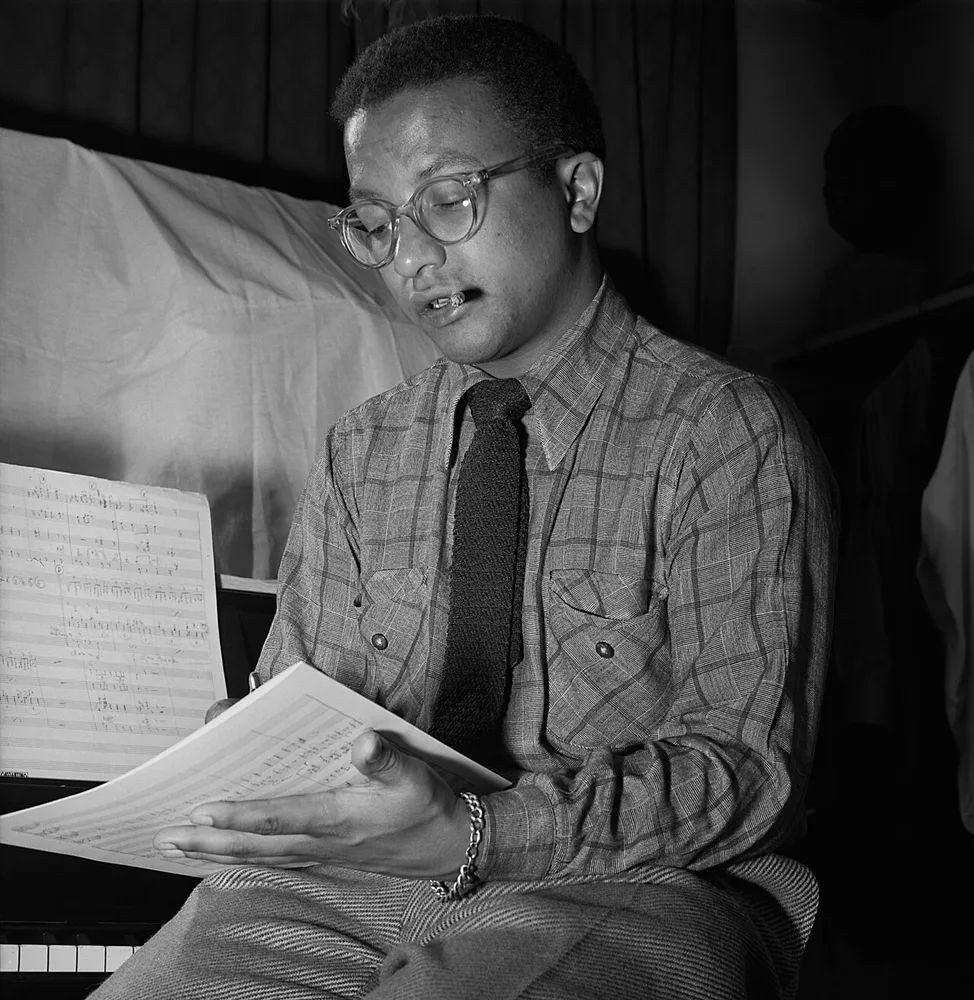
Billy Strayhorn at the piano with manuscript paper, New York, between 1946 and 1948, photographed by William P. Gottlieb (restored and cropped by Adam Cuerden) Public Domain (William P. Gottlieb collection, released by the photographer; Library of Congress: no known copyright restrictions) — Wikimedia Commons — https://commons.wikimedia.org/wiki/File:Billy_Strayhorn,_New_York,_N.Y.,_between_1946_and_1948_(William_P._Gottlieb_08211).jpg

William Thomas Strayhorn was born on November 29, 1915, in Dayton, Ohio, and grew up in the Homewood neighborhood of Pittsburgh, Pennsylvania. His mother sent him for long stretches to her family's home in Hillsborough, North Carolina, to keep him away from his father's drunken rages, and it was at his grandmother's house there that he first played hymns on her piano and listened to records on her Victrola. Back in Pittsburgh as a schoolboy, he took odd jobs to pay for his first piano and studied with Charlotte Enty Catlin. At Westinghouse High School, which also produced Erroll Garner and Ahmad Jamal, he played in the school band and studied with Carl McVicker, a teacher of Garner and Mary Lou Williams as well. He took classical studies at the Pittsburgh Music Institute, wrote a musical, led a trio that played daily on a local radio station, and wrote "Life Is Lonely" (later renamed "Lush Life"), "My Little Brown Book" and "Something to Live For." By nineteen he was writing for a professional show, Fantastic Rhythm.
He had hoped to become a classical composer, but the concert world of the 1930s offered little room for a Black musician. Hearing Art Tatum and Teddy Wilson at nineteen pushed him toward jazz, and he played around Pittsburgh in a combo called the Mad Hatters and, from 1937, wrote arrangements for Buddy Malone's dance band. He had seen Duke Ellington play in Pittsburgh in 1933 and met him in December 1938, when the band returned. Strayhorn explained how he would have arranged one of Ellington's own pieces, then showed him, and Ellington was impressed enough to bring members of the band in to listen. In early 1939 he moved to New York to work for Ellington, reportedly with no contract or formal agreement, as an arranger, composer, occasional pianist and collaborator. Through Ellington's son Mercer he met the musician Aaron Bridgers, his first partner, with whom he lived until Bridgers moved to Paris in 1947.
Strayhorn's arrival coincided with what many consider the Ellington orchestra's peak, the "Blanton-Webster" band that also included bassist Jimmy Blanton and tenor saxophonist Ben Webster. A 1940 dispute between ASCAP and the broadcasters kept Ellington's own catalog off the radio, and Strayhorn and Mercer Ellington, who were registered with ASCAP's rival BMI, helped write a fresh book for the band. "Take the 'A' Train," which Strayhorn is said to have composed in 1939 after Ellington sent him subway directions to Harlem, replaced "Sepia Panorama" as the theme; it was first recorded on January 15, 1941, for radio transcription, and the commercial recording of February 15, 1941, with a Ray Nance trumpet solo, became the band's signature. In the same years came "Raincheck," "Chelsea Bridge" and "A Flower Is a Lovesome Thing" (all 1941), "After All" and "Johnny Come Lately" (1942), "My Little Brown Book" and "Passion Flower" (1944), and "Lotus Blossom" (1946), all credited to him alone. Others, among them "Something to Live For," "Day Dream" and "Just A-Sittin' and A-Rockin'," were credited jointly with Ellington, and his "Sugar Hill Penthouse" section of Black, Brown and Beige (1943) went unacknowledged. He was also a pianist whom his peers respected: in the 1940s he had a cutting contest with Bud Powell, and Dizzy Gillespie, who watched, said Strayhorn turned the piano inside out; Max Roach recalled that after Strayhorn played at Minton's Playhouse nobody would follow him to the keyboard. "Lush Life" itself, which he said he wrote in 1936 while clerking in a Pittsburgh drugstore, had its first public performance on November 13, 1948, at Carnegie Hall, with Strayhorn and the vocalist Kay Davis appearing with the Ellington orchestra.
The 1950s brought larger forms. In 1950 Strayhorn helped Ellington prepare the extended concert arrangements of "Mood Indigo," "Sophisticated Lady" and "(In My) Solitude" for the LP Masterpieces by Ellington, without credit, and the same year the two recorded a set of piano duets for Mercer Records, later issued as Great Times! He is credited as co-composer of A Drum Is a Woman (1956), Such Sweet Thunder (1957), the Shakespeare suite whose pieces were written in under three weeks after the pair visited the Stratford, Ontario, festival in August 1956, and The Perfume Suite (1957). In the early 1950s he fleshed out an Ellington riff into "Satin Doll," adding harmony and a lyric that was later replaced by Johnny Mercer's. In 1956 he supervised the vocal overdubs in Los Angeles for Rosemary Clooney's Blue Rose, built on Ellington Orchestra backing tracks cut in New York. Away from Ellington he made some solo records, wrote revues for the New York social club the Copasetics, collaborated on theater projects with Luther Henderson, and wrote songs for Lena Horne, whom he coached on technique and who regarded him as the love of her life. Under his own name came Cue for Saxophone (Felsted, 1959; recorded April 14, 1959), a septet date that was really a Johnny Hodges session, issued under Strayhorn's name because Hodges was contracted to Verve and credited as "Cue Porter," and !!!Live!!!, a 1958 Ellington orchestra concert from Chicago's Blue Note club that Roulette originally released under Strayhorn's name.
He and Ellington scored Anatomy of a Murder (1959), regarded as the first significant Hollywood score by Black composers to use non-diegetic music, and arranged The Nutcracker Suite (1960) for Columbia, whose cover carried Strayhorn's name and picture beside Ellington's. In Paris in 1961 for the film Paris Blues, where "Take the 'A' Train" plays over the opening and Strayhorn went uncredited, he recorded The Peaceful Side in May at Barclay Studios, ten of his pieces for solo piano, bass, string quartet and a wordless vocal group, released in 1963 by United Artists Jazz. In December 1961 he arranged and conducted Johnny Hodges with Billy Strayhorn and the Orchestra (Verve, released 1962), with Jimmy Jones at the piano. A friend of Martin Luther King Jr. and an active supporter of the civil rights movement, he arranged and conducted "King Fit the Battle of Alabam'" for the 1963 revue and album My People. He was open about being gay among friends and the members of the band.
In June 1965 he gave the only concert of his career as a leader, to a sold-out house in the 450-seat New School auditorium in New York, presented by the Duke Ellington Jazz Society: a solo piano set, a trio set with bassist Wendell Marshall and drummer Dave Bailey, and a small-group set with Ellington sidemen including Clark Terry. Pianist Randy Weston, in the audience, said Strayhorn blew the hall away, and Dan Morgenstern praised the performance in DownBeat. His last recordings as a leader, made between January 1964 and August 1965, include small-group dates, accompaniment of the singer Ozzie Bailey and solo piano, and were collected in 1992 as Lush Life on Red Baron. He and Ellington finished the Far East Suite in December 1966 while his health declined; esophageal cancer had been diagnosed in 1964, and he submitted his last composition, "Blood Count," from the hospital. Strayhorn passed away in New York City on May 31, 1967, at fifty-one, with his partner Bill Grove at his side, and his ashes were scattered in the Hudson River by close friends. Ellington's memorial album ...And His Mother Called Him Bill, recorded between August 28 and November 15, 1967, is built from Strayhorn's compositions and ends with Ellington alone at the piano playing "Lotus Blossom" as the band packs up in the background.
Strayhorn was inducted into the Songwriters Hall of Fame in 1984, shared a Grammy Trustees Award with Ellington in 1968, and entered the International Society of Jazz Arrangers and Composers Hall of Fame in 2021. The Ellington orchestra's 1941 recording of "Take the 'A' Train" is in the Grammy Hall of Fame (1976). A historical marker stands at Westinghouse High School and another in Hillsborough, and Pittsburgh's former Regent Theater was renamed the Kelly Strayhorn Theater in 2000, in honor of Strayhorn and Gene Kelly. He joined Chicago's Legacy Walk in 2015 and was named to the 2026 class of the North Carolina Music Hall of Fame. In October 2026 Reservoir Media announced that it had acquired his publishing catalogue.
Strayhorn brought a classical composer's training in harmony and orchestration into the Duke Ellington band, studying the leader's scores until he had cracked what he called the "Ellington effect," so thoroughly that Gunther Schuller wrote it is often impossible to say where one man's work ends and the other's begins. His own pieces keep a bittersweet, introspective cast: "Lush Life," with its long verse and chromatic harmony, is an art song more than a pop tune, and "Chelsea Bridge" and "Blood Count" show the same mix of lush voicings and restraint. He said he wrote "Take the 'A' Train" with the brass-and-reed writing of Fletcher Henderson in mind. As a pianist he favored spare, formally shaped lines at slow tempos, and he was a trusted accompanist and arranger for singers and for the Ellington small groups. Fred Hersch called him a quadruple threat as composer, pianist, songwriter and arranger for jazz orchestra. His songs have been interpreted by John Coltrane and Johnny Hartman ("Lush Life," 1963), Stan Getz (seven recordings of "Blood Count"), Joe Henderson (the 1992 album Lush Life: The Music of Billy Strayhorn), Art Farmer (Something to Live For, 1987), Hersch (Passion Flower, 1996) and Jimmy Rowles (Jimmy Rowles Plays Duke Ellington and Billy Strayhorn, 1981), among many others. His reputation, long overshadowed by Ellington's, rose in the 1990s, helped by David Hajdu's 1996 biography Lush Life, and his role in the Ellington repertoire is now credited far more fully.
- Take the 'A' Train (1941, Victor) - Duke Ellington and His Orchestra's signature recording, with Ray Nance's trumpet solo, made February 15, 1941; Strayhorn's best-known composition and a Grammy Hall of Fame recording.
- Such Sweet Thunder (1957, Columbia) - The twelve-part Shakespeare suite by Ellington and Strayhorn, written after the 1956 Stratford, Ontario, festival visit.
- Great Times! (1963, Riverside) - Piano duets with Ellington from 1950 sessions, first issued by Mercer Records, with Strayhorn also on celeste on some tracks and Oscar Pettiford on cello.
- The Peaceful Side (1963, United Artists Jazz) - His most important record away from Ellington, ten of his own pieces recorded in Paris in May 1961. Spotify - The Peaceful Side Of Jazz Listen
- Johnny Hodges with Billy Strayhorn and the Orchestra (1962, Verve) - Strayhorn arranging and conducting for Johnny Hodges with a band of Ellington men, recorded December 11 and 12, 1961, and produced by Creed Taylor.
- Far East Suite (1967, RCA Victor) - The last major Ellington-Strayhorn suite, drawn from the orchestra's Middle East and Asia tours, and a Grammy winner.
- ...And His Mother Called Him Bill (1968, RCA Victor) - Ellington's tribute album of Strayhorn's music, including "Blood Count" and "Lotus Blossom," also a Grammy winner.
- Lush Life (1992, Red Baron) - His final 1964-65 recordings as a leader, collected as a posthumous album.
Billy Strayhorn: Full Discography
Discogs artist ID 258464 ("Billy Strayhorn," born William Thomas Strayhorn, November 29, 1915, in Dayton, Ohio, died May 31, 1967, in New York City) is dominated by compilations and by reissues of Duke Ellington albums that credit him as composer or arranger, so the tables below are a curated selection rather than an exhaustive list: his own recordings first, then the Ellington projects he co-wrote or arranged, then his credited sideman appearances and a short list of songbook tributes. Strayhorn led very few sessions of his own, and two of his best-known leader dates carry his name for contractual reasons (see the Notes column). Leader releases were read release by release on Discogs and checked against MusicBrainz and English Wikipedia; catalog numbers are those of the first or best-documented pressing, and where sources give different release years the Notes column says so.
As Leader / Co-Leader
| Album Title | Recording Date(s) | Release Date | Label | Catalog Number | Format(s) | Personnel | Role | Reissue History | Spotify | Buy | Notes |
|---|---|---|---|---|---|---|---|---|---|---|---|
| Mercer Records Presents the Billy Strayhorn Trio | October 3 and November 1950, New York | 1951 | Mercer Records | M-1001 (cover: LP 1001) | Vinyl, 10", LP, Album | Billy Strayhorn (piano), Duke Ellington (piano), Wendell Marshall (bass, side A), Joe Shulman (bass, side B) | Co-leader (billed with Ellington) | Eight tracks on this 10-inch issue; all twelve 1950 duet sides were collected on Riverside's Great Times! in 1963 (see below); also issued in France by Vogue | — | — | Two-piano duets of Ellington and Strayhorn pieces; Leonard Feather wrote the liner notes. |
| Great Times! | September 13, October 3 and November 1950, New York | 1963 | Riverside | RM 475 | Vinyl, LP, Compilation, Mono | Billy Strayhorn (piano; celesta on later tracks), Duke Ellington (piano), Oscar Pettiford (cello), Wendell Marshall, Joe Shulman, Lloyd Trotman (bass), Jo Jones (drums, two tracks) | Co-leader (billed with Ellington) | Issued on CD in the Original Jazz Classics series (OJCCD-108-2) in 1991 | — | — | Wikipedia dates the Riverside issue 1964 and Discogs and MusicBrainz 1963; this table follows the catalog entries. Includes "Take the 'A' Train" with Strayhorn on celesta and Pettiford on cello. |
| Cue for Saxophone | April 14, 1959, New York | 1959 | Felsted | FAJ 7008 | Vinyl, LP | Billy Strayhorn (piano), Johnny Hodges (alto saxophone, billed as "Cue Porter"), Harold "Shorty" Baker (trumpet), Quentin Jackson (trombone), Russell Procope (clarinet), Al Hall (bass), Oliver Jackson (drums) | Leader (billed as the Billy Strayhorn Septet) | Reissued by Vocalion in 1962 | — | — | Conceived by producer Stanley Dance as a Hodges small-group date; Hodges, under contract to Verve, appears under a pseudonym. |
| !!!Live!!! | 1958, Blue Note, Chicago | Not confirmed (see Notes) | Roulette | (S)R-52119 | Vinyl, LP, Stereo | Duke Ellington's orchestra | Billed as leader; the performance is by Ellington's orchestra | A Roulette issue numbered SRCP 3001 appears on MusicBrainz | — | — | A live Ellington orchestra set issued under Strayhorn's name. English Wikipedia gives a 1958 release; Discogs dates the Roulette stereo LP 1973 and MusicBrainz lists a 1969 Roulette issue, so the release date is left open. |
| The Peaceful Side | May 1961, Barclay Studios, Paris | 1963 | United Artists Jazz | UAJ 14010 | Vinyl, LP, Album, Mono | Billy Strayhorn (piano), Michel Gaudry (bass, five tracks), Paris String Quartet (strings, two tracks), Paris Blue Notes (vocal choir, three tracks) | Leader | Reissued by Solid State as The Peaceful Side of Billy Strayhorn (SS 18031, 1968), on CD by Capitol Jazz in 1996 as The Peaceful Side of Jazz, and by Blue Note in 2019 | Spotify - The Peaceful Side Of Jazz | — | Produced by Alan Douglas; ten of Strayhorn's own pieces, with Leonard Feather's liner notes. The Spotify link is to a reissue under the title The Peaceful Side of Jazz. |
| Johnny Hodges with Billy Strayhorn and the Orchestra | December 11 and 12, 1961, Van Gelder Studio, Englewood Cliffs, New Jersey | June 1962 | Verve | V-8452 (mono), V6-8452 (stereo) | Vinyl, LP, Album | Johnny Hodges (alto saxophone), Billy Strayhorn (arranger, conductor), Jimmy Jones (piano), Aaron Bell (bass), Sam Woodyard (drums), Bill Berry, Cat Anderson, Ed Mullens, Harold Baker, Howard McGhee (trumpets; McGhee on three tracks), Lawrence Brown, Quentin Jackson, Chuck Connors (trombones), Russell Procope, Harry Carney, Jimmy Hamilton, Paul Gonsalves (reeds) | Arranger and conductor on a Hodges date billed "with Billy Strayhorn" | Reissued on CD by Verve in 1999 and on LP by Speakers Corner and Analogue Productions in 2013 | — | — | Producer Creed Taylor; recording engineer Rudy Van Gelder. Strayhorn does not play piano on this record. |
| Lush Life | January 14, 1964, Basin Street East, New York (tracks 1-2); June 30, July 2 and August 14, 1965 | 1992 | Red Baron | AK 52760 | CD, Compilation | Billy Strayhorn (piano), Wendell Marshall (bass), Dave Bailey (drums), Clark Terry (trumpet, flugelhorn), Bob Wilber (clarinet, soprano saxophone), Willie Ruff (French horn), Ozzie Bailey (vocals) | Leader | No later reissue confirmed | — | — | His final recordings under his own name, issued posthumously; two tracks are mistitled on the original CD ("Smada" for "Boo-Dah," "Pick Side" for "Pig Sty"). |
| Day Dream: Complete 1945-1961 Sessions as a Leader | 1945-1961 | 2015 | Essential Jazz Classics | EJC55667 | CD, 2-CD set, Compilation | Billy Strayhorn (piano) with varying personnel | Leader | Compilation of his own small-group and solo dates | — | — | Release date and label from English Wikipedia and Discogs; track-level personnel not itemized here. |
Ellington Projects as Co-Composer and Arranger
Strayhorn wrote or arranged for Ellington's orchestra throughout 1939-1967. This is a selection of the albums where his role is documented as co-composer, arranger or collaborator; the full Ellington catalog is far larger.
| Year | Project (Leader) | Title | Label | Catalog | Role | Notes |
|---|---|---|---|---|---|---|
| 1951 | Duke Ellington | Masterpieces by Ellington | Columbia Masterworks | ML 4418 | Arranger (uncredited on the release) | Extended concert arrangements of "Mood Indigo," "Sophisticated Lady" and "(In My) Solitude"; recorded December 18, 1950; Ellington and Strayhorn both played piano. |
| 1956 | Rosemary Clooney with Duke Ellington and His Orchestra | Blue Rose | Columbia | CL 872 | Collaborator; supervised the vocal overdubs | Ellington's orchestra recorded the backing tracks in New York and Strayhorn directed Clooney's vocals in Los Angeles; recorded January and February 1956. |
| 1957 | Duke Ellington | A Drum Is a Woman | Columbia | CL 951 | Co-composer | Credited collaboration with Ellington; recorded September to December 1956. |
| 1957 | Duke Ellington and His Orchestra | Such Sweet Thunder | Columbia | CL 1033 | Co-composer, orchestration | Twelve-part Shakespeare suite; recorded August 1956 to May 1957. |
| 1959 | Duke Ellington | Anatomy of a Murder | Columbia | CL 1360 | Co-composer | Film score for Otto Preminger; recorded May 29 and June 1 and 2, 1959. Strayhorn's part in the score is documented by English Wikipedia; the Columbia record credits the music to Ellington alone. |
| 1960 | Duke Ellington and His Orchestra | The Nutcracker Suite | Columbia | CL 1541 | Adapter, credited with Ellington | Jazz adaptation of Tchaikovsky's suite; Strayhorn's name and picture appear on the original cover. |
| 1967 | Duke Ellington | Far East Suite | RCA Victor | LSP-3782 | Co-composer | Recorded December 19 to 21, 1966; won a Grammy. |
| 1968 | Duke Ellington | ...And His Mother Called Him Bill | RCA Victor | LSP-3906 | Composer of the repertoire (posthumous tribute) | Recorded August 28 to November 15, 1967; won a Grammy. |
As Sideman (selected credits)
Credits below are those English Wikipedia lists for Strayhorn as a sideman. Catalog numbers and the instrument on each track are not itemized, and Strayhorn's role on the Hodges small-group albums (pianist or composer-arranger) is not confirmed track by track here.
| Year | Project (Leader) | Title | Label | Catalog | Role | Notes |
|---|---|---|---|---|---|---|
| 1954 | Ben Webster | Music for Loving | Norgran | Not itemized | Credited sideman | |
| 1955 | Johnny Hodges | Castle Rock | Norgran | Not itemized | Credited sideman | Recorded in 1951. |
| 1955 | Johnny Hodges | Creamy | Norgran | Not itemized | Credited sideman | |
| 1956 | Johnny Hodges | Ellingtonia '56 | Norgran | Not itemized | Credited sideman | |
| 1956 | Johnny Hodges | Duke's in Bed | Verve | Not itemized | Credited sideman | |
| 1957 | Johnny Hodges | The Big Sound | Verve | Not itemized | Credited sideman | |
| 1958 | Johnny Hodges | Blues A-Plenty | Verve | Not itemized | Credited sideman | |
| 1958 | Johnny Hodges | Not So Dukish | Verve | Not itemized | Credited sideman | |
| 1965 | Joya Sherrill | Joya Sherrill Sings Duke | 20th Century Fox | TFM-3170 | Credited sideman | Recorded January 12 and 20, 1965. |
Songbook Tributes
| Year | Artist | Title | Label | Notes |
|---|---|---|---|---|
| 1981 | Jimmy Rowles | Jimmy Rowles Plays Duke Ellington and Billy Strayhorn | Columbia | Solo piano. |
| 1987 | Art Farmer | Something to Live For: The Music of Billy Strayhorn | Contemporary | With Clifford Jordan and James Williams. |
| 1992 | Joe Henderson | Lush Life: The Music of Billy Strayhorn | Verve | Henderson's Verve debut; it won him his first Grammy. |
| 1996 | Fred Hersch | Passion Flower: Fred Hersch Plays Billy Strayhorn | Nonesuch | Solo piano. |
| 1996 | Various artists | Lush Life: The Billy Strayhorn Songbook | Verve | Recordings by Sarah Vaughan, Art Farmer, Oscar Peterson, Dizzy Gillespie, Cecil Taylor, Stan Getz and others. |
| 2007 | Various artists | Billy Strayhorn: Lush Life | Blue Note | New recordings by Dianne Reeves, Joe Lovano, Hank Jones, Bill Charlap, Elvis Costello and others. |
- Duke Ellington - bandleader, employer and co-composer from 1939 to 1967; the two co-wrote the suites, wrote film scores for Anatomy of a Murder and Paris Blues, and recorded the piano duets of 1950.
- Johnny Hodges - the Ellington alto saxophonist featured on Cue for Saxophone (1959) and Johnny Hodges with Billy Strayhorn and the Orchestra (1962), and a soloist on "Blood Count."
- Lena Horne - singer he coached and wrote for in the 1950s.
- Ben Webster - tenor saxophonist in the Ellington band when Strayhorn joined; the two became friends.
- Rosemary Clooney - singer on Blue Rose (1956), recorded with Ellington's orchestra under Strayhorn's supervision in Los Angeles.
- Clark Terry - trumpeter in the Ellington band and a member of the small group at Strayhorn's New School concert in 1965.
- Oscar Pettiford - cellist on the 1950 duet sessions later issued as Great Times!
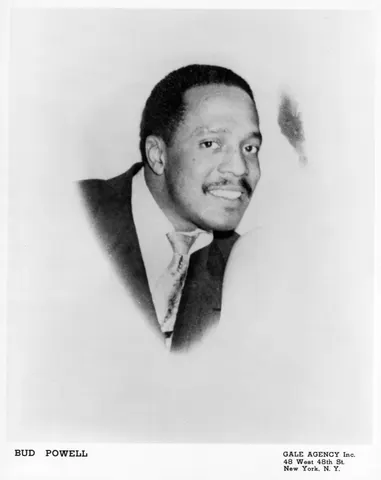
- Bud Powell, Dizzy Gillespie, Max Roach - fellow musicians in the 1940s stories of Strayhorn's piano playing, from a cutting contest with Powell to Minton's Playhouse.
- Creed Taylor - producer of the 1962 Hodges album that Strayhorn arranged and conducted.
- Ray Nance, Kay Davis, Joya Sherrill - the Ellington trumpeter and singer in the 1941 "A Train" recording, the vocalist at the 1948 "Lush Life" premiere, and the singer whose lyric the Ellington band adopted for "Take the 'A' Train."
- Jimmy Jones, Michel Gaudry, Wendell Marshall, Dave Bailey, Ozzie Bailey - pianist on the Hodges album, bassist on The Peaceful Side, the rhythm section at the 1965 concert, and a singer Strayhorn accompanied in 1964-65.
- Mercer Ellington, Luther Henderson, Aaron Bridgers - Ellington's son and fellow arranger, a theater collaborator, and Strayhorn's first partner.
More Big Band Artists
See all 272 Big Band artists →More American Jazz Artists
See all 820 American artists →- Wikipedia: Billy Strayhorn
- Wikipedia: Take the "A" Train
- Wikipedia: Lush Life (jazz song)
- Wikipedia: Such Sweet Thunder
- Wikipedia: Far East Suite
- Wikipedia: The Peaceful Side
- Wikipedia: Cue for Saxophone
- Wikipedia: Johnny Hodges with Billy Strayhorn and the Orchestra
- Wikipedia: ...And His Mother Called Him Bill
- Wikipedia: Blood Count
- Wikipedia: Satin Doll
- Wikipedia: Great Times!
- Wikipedia: Grammy Trustees Award
- Wikipedia: List of Songwriters Hall of Fame inductees
- AllMusic: Billy Strayhorn biography by Richard S. Ginell
- ISJAC Hall of Fame: Billy Strayhorn
- Music Week: Reservoir acquires catalogue of jazz composer Billy Strayhorn
- Chapelboro: Orange County musicians Billy Strayhorn, Arrogance to be inducted into NC Music Hall of Fame
- Discogs: Billy Strayhorn (artist 258464)
- MusicBrainz: Billy Strayhorn
- JazzProfiles.com: Joe Henderson
- JazzProfiles.com: Art Farmer
- JazzProfiles.com: Fred Hersch
- JazzProfiles.com: Jimmy Rowles