 JAZZPROFILES lives in the music 2,303 Jazz Artists fully Profiled!
Roy Eldridge
Last updated November 6, 2026
Listen on Spotify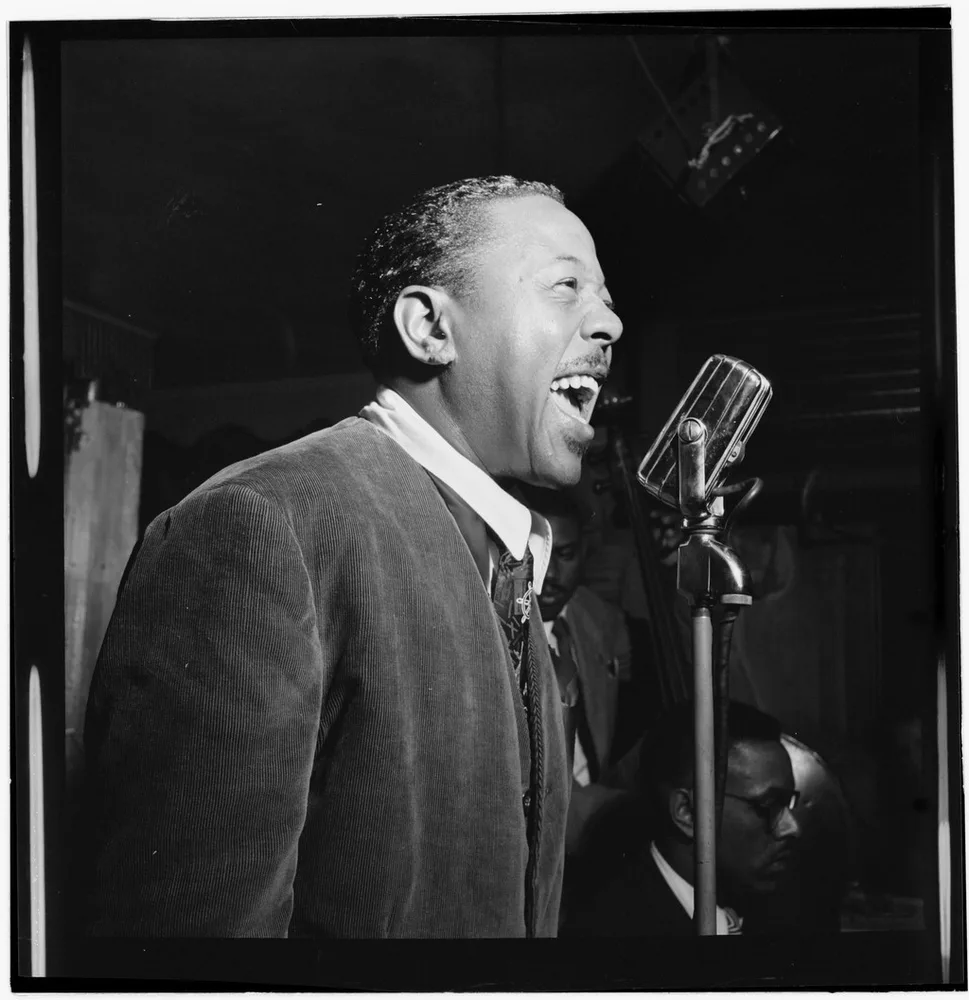
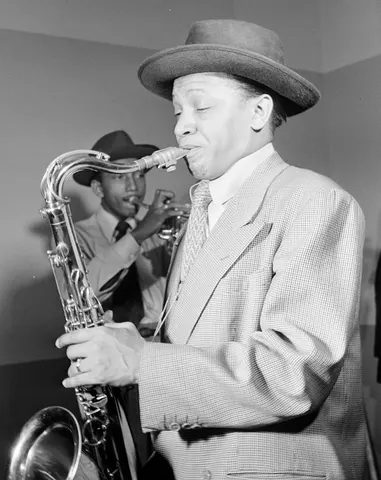
Roy Eldridge singing at the Spotlite club, New York, November 1946, photographed by William P. Gottlieb Public Domain (William P. Gottlieb collection, released to the public domain at the photographer's wishes; Library of Congress: no known copyright restrictions) — Wikimedia Commons — https://commons.wikimedia.org/wiki/File:Roy_Eldridge,_Spotlite_(Club),_New_York,_ca._Nov._1946_(William_P._Gottlieb_02271).jpg

David Roy Eldridge was born on January 30, 1911, on the North Side of Pittsburgh, Pennsylvania. His mother, Blanche, was a pianist who played by ear, and his father, Alexander, was a wagon teamster. He began on piano at five and took up drums at six, partly to follow his older brother Joe, a saxophonist, clarinetist and violinist who led a local band and talked him into switching to trumpet. Roy did little with the instrument at first. After his mother died when he was eleven he began shutting himself in his room to practice for hours, building up the high register that later became his calling card. He never became a confident sight-reader and leaned on his ear for much of his early career. He taught himself saxophone solos note for note, among them the 1926 turn by Coleman Hawkins on "The Stampede" with Fletcher Henderson's orchestra, and he later said that after hearing Hawkins and Benny Carter he resolved to play the trumpet like a saxophone.
Expelled from high school in the ninth grade, he left at sixteen with a traveling show that folded in Youngstown, Ohio, and then worked carnival and territory bands across the Midwest. At about twenty he led a Pittsburgh group billed as "Roy Elliott and his Palais Royal Orchestra," then joined a band led by Horace Henderson, Fletcher's younger brother, and later Speed Webb's band. In Milwaukee he took part in a well-remembered cutting contest with the trumpeter Jabbo Smith, who became a friend. He reached New York in November 1930 and worked in Harlem dance bands led by Cecil Scott, Elmer Snowden, Charlie Johnson and Teddy Hill, picking up the nickname "Little Jazz" for the contrast between his fierce playing and his small frame. His first widely noticed recorded solos came with Hill in 1935, and that July he played on Teddy Wilson's Brunswick small-group sides with Billie Holiday, among them "What a Little Moonlight Can Do" and "Miss Brown to You." In October 1935 he joined Fletcher Henderson's orchestra as lead trumpeter and featured soloist, singing now and then, and he stayed until September 1936. His solos on "Christopher Columbus" and "Blue Lou" from that year brought him a national following.
In the fall of 1936 he moved to Chicago and formed an octet with Joe Eldridge on alto saxophone and as arranger, with nightly radio broadcasts and recordings such as "After You've Gone" and "Wabash Stomp" that put his long solos in front. Worn down by the racism he met in the music business, he quit playing in 1938 to study radio engineering, then returned in 1939 and put together a ten-piece band that held a residency at New York's Arcadia Ballroom.
In April 1941, after offers from several white swing bands, he joined Gene Krupa's orchestra, becoming one of the first Black musicians to hold a permanent chair in a white big band. With the newcomer Anita O'Day he made "Let Me Off Uptown" and "Knock Me a Kiss," and a Benny Carter arrangement turned "Rockin' Chair" into a showcase for his tone and range. "Drum Boogie," a number he co-wrote with Krupa, was mimed by Barbara Stanwyck in Howard Hawks's 1941 film Ball of Fire, with Eldridge taking the long trumpet solo. The band broke up in July 1943 when Krupa was jailed on a marijuana charge. Eldridge freelanced in New York, then joined Artie Shaw's band in 1944. Racial incidents on the road led him to leave in October 1945, and the big band he formed afterward failed financially. Shaw recalled that crowds asked Eldridge for autographs after the show but that he could not get off the bus with the band to buy a hamburger.
After the war he became a mainstay of Norman Granz's Jazz at the Philharmonic tours, where he traded choruses with Dizzy Gillespie and Charlie Shavers. In 1950, on tour with Benny Goodman, he stayed in Paris, and the year in France restored his confidence in his own sound. Back in New York in 1951 he led a group at Birdland. From 1952 into the early 1960s he worked in small groups with Hawkins, Ella Fitzgerald and Earl Hines, and recorded steadily for Granz, including the two-trumpet sessions with Gillespie issued as Roy and Diz. In 1960 he joined Charles Mingus, Max Roach, Eric Dolphy and others on the Candid sessions of the Jazz Artists Guild issued as Newport Rebels. He toured with Fitzgerald from late 1963 until March 1965 and with the Count Basie Orchestra from July to September 1966, before returning to freelance work and festival appearances.
From 1969 he led the house band at Jimmy Ryan's on West 54th Street, a Dixieland room where he blended the traditional repertoire with his own faster, brasher manner. A stroke in 1970 slowed him, but he went back to the bandstand and sometimes sang or played drums or piano. He recorded for Pablo in the 1970s, including albums with Oscar Peterson, and was inducted into the DownBeat Jazz Hall of Fame in 1971. After a heart attack in 1980 he stopped playing trumpet, though he can still be heard at the piano on a 1986 edition of Marian McPartland's Piano Jazz. He lived in Hollis, Queens, where a street sign on the Van Wyck Expressway at Liberty Avenue honors him. He passed away at Franklin General Hospital in Valley Stream, New York, on February 26, 1989, at 78, three weeks after the death of his wife, Viola.
Eldridge built his trumpet style on saxophone models, chiefly Coleman Hawkins and Benny Carter, rather than on Louis Armstrong, whom he said he did not study closely until 1932. The result was a flashy, many-noted manner that ranged over three octaves, used harmony more adventurously than most trumpeters of his day, including tritone substitutions, and alternated rapid double-time bursts with a return to the main tempo. His tone was never pure or golden. Gary Giddins heard a vocal rasp and an urgent, rough humanity in it, and on "Rockin' Chair" that raspy edge is part of the effect. He loved the top of the horn and wrote the high register into solo after solo. From the mid-1930s he was often rated ahead of Armstrong as the model of modern hot trumpet playing, and Giddins ranked him the most emotionally compelling and far-reaching of the trumpeters who chose a rougher style than Armstrong's, a group that included Red Allen, Hot Lips Page and Rex Stewart. Ella Fitzgerald said he put more soul into one note than many players got into a whole song.
He was a major influence on Dizzy Gillespie, who spoke of him in near-messianic terms and who jammed and dueled with him at Minton's Playhouse in the early 1940s; his 1937 record "Heckler's Hop" was especially influential on Gillespie. Howard McGhee, Fats Navarro and Shorty Sherock also drew on him. Eldridge himself rejected the label of a bridge between Armstrong and bebop, and he said at the time that he did not understand Gillespie's bebop solos. He was fiercely competitive, famously willing to take on any trumpeter anywhere, and he was also a light, hoarse, rhythmic jazz singer, in the vein of Hot Lips Page according to Whitney Balliett.
- "Christopher Columbus" (1936, Vocalion) - A Fletcher Henderson record of March 1936 whose trumpet solos helped make Eldridge a national name as the era's leading hot soloist after Louis Armstrong.
- "Let Me Off Uptown" (1941, OKeh) - Gene Krupa's orchestra with Anita O'Day and Eldridge trading lines, a top-ten hit and one of the first interracial vocal duets on a hit record.
- "Rockin' Chair" (1941, OKeh) - A Benny Carter arrangement written as a trumpet showcase with the Krupa orchestra; its rasping tone and operatic cadenzas made it one of his best-known solos.
- Live! At the Three Deuces Club 1937 (1975, Jazz Archives) - Broadcast recordings of his Chicago octet with his brother Joe Eldridge, including "After You've Gone," "Heckler's Hop" and other tracks that show the high-register style that influenced Dizzy Gillespie.
- Little Jazz (1954, Clef) - Eight standards with the Oscar Peterson rhythm section and Buddy Rich, among them "Blue Moon," "Stormy Weather" and "I Only Have Eyes for You," from his first run of albums for Norman Granz.
- Roy and Diz (1955, Clef) - Two trumpeters in a duel and a partnership, with Dizzy Gillespie, Oscar Peterson, Herb Ellis, Ray Brown and Louis Bellson; "Trumpet Blues" is a joint composition.
- The Art Tatum - Roy Eldridge - Alvin Stoller - John Simmons Quartet (1955, Clef) - A rare quartet date with Art Tatum, recorded in 1955 and reissued by Pablo in 1975 as The Tatum Group Masterpieces.
- Hawkins! Eldridge! Hodges! Alive! At the Village Gate! (1963, Verve) - Live in New York with Coleman Hawkins and Johnny Hodges over a rhythm section of Tommy Flanagan, Major Holley and Eddie Locke.
- Little Jazz and the Jimmy Ryan All-Stars (1982, Pablo) - Recorded in 1975 with the house band he led at Jimmy Ryan's club, with Joe Muranyi on soprano saxophone and clarinet and Dick Katz on piano.
Roy Eldridge: Full Discography
Discogs artist ID 258459 ("Roy Eldridge," real name David Roy Eldridge, born January 30, 1911, in Pittsburgh, Pennsylvania, died February 26, 1989, in Valley Stream, New York) lists more than 2,000 entries, most of them reissues, compilations and appearances on other leaders' records. His small-group work is also filed under separate Discogs entries, among them "Roy Eldridge And His Orchestra," "The Roy Eldridge Quintet" and "Roy Eldridge Sextet," and these were checked against the main entry. Because he recorded for virtually every label over five decades, the leader table is a curated selection of 21 releases rather than an exhaustive list: the Clef and Verve albums of the 1950s, the Gillespie and Hawkins collaborations, and the Pablo and independent albums of the 1970s. Catalog numbers are those of the earliest pressing Discogs lists for the title, and where a recording date or lineup could not be confirmed the cell says so. His 1930s and 1940s singles with his own bands and the many V-Disc and radio transcription sides are not itemized.
As Leader / Co-Leader
| Album Title | Recording Date(s) | Release Date | Label | Catalog Number | Format(s) | Personnel | Role | Reissue History | Spotify | Buy | Notes |
|---|---|---|---|---|---|---|---|---|---|---|---|
| Live! At the Three Deuces Club 1937 | 1937, Three Deuces Club, Chicago | 1975 | Jazz Archives | JA 24 | Vinyl, LP | Roy Eldridge (trumpet), Joe Eldridge (alto saxophone), Scoops Carey (alto saxophone, clarinet), Truck Parham (bass), Zutty Singleton (drums), John Collins (guitar); full lineup not itemized | Leader | Reissued on CD as Live at the Three Deuces Club (Galaxy Music, Netherlands, 1995) | — | — | Live recording from his Chicago octet engagement. |
| And His "Little Jazz" | Paris, October 28, 1950, and March 28 and 29, 1951 | 1951 | Vogue | L.D. 004 | Vinyl, 10-inch LP | Roy Eldridge (trumpet) with William Boucaya (baritone saxophone), Barney Spieler and Guy De Fatto (bass), Armand Molinetti and Robert Barnet (drums); full lineup not itemized | Leader | Reissued in 2017 on CD (Jazz Connoisseur) | — | — | Made during his stay in France. |
| Roy Eldridge and Zoot Sims with the European Allstars | Not specified | 1954 | Discovery | DL-2009 | Vinyl, 10-inch LP, Mono | Roy Eldridge (trumpet), Zoot Sims (tenor saxophone), Pierre Michelot and Guy De Fatto (bass), Kenny Clarke, Ed Shaughnessy and Armand Moletti (drums); full lineup not itemized | Co-leader (billed with Zoot Sims) | Discogs files it under the master title Roy and Zoot | — | — | Track titles match the Paris recordings of 1950 and 1951; the recording date is not confirmed. |
| The Strolling Mr. Eldridge | Not specified | 1954 | Clef | EP-227 (Part 1); EP-240 (Part 2, 1955) | Vinyl, 7-inch EP | Roy Eldridge (trumpet), Oscar Peterson (piano), Herb Ellis (guitar), Ray Brown (bass), Alvin Stoller (drums, on EP-227) | Leader | Issued in Britain on Columbia (SEB 10036, SEB 10014); the tracks were later collected on the 1978 Verve double LP Dale's Wail | — | — | Two EPs with the Oscar Peterson trio and rhythm. |
| Little Jazz | Not specified | 1954 | Clef | MG C-683 | Vinyl, LP, Album | Roy Eldridge (trumpet), Oscar Peterson (piano), Herb Ellis (guitar), Ray Brown (bass), Buddy Rich (drums) | Leader | Reissued on Verve as MGV-8068 (1957); the whole program is also in Dale's Wail (Verve, 1978) | — | — | Eight standards with the Oscar Peterson rhythm section and Buddy Rich. |
| Roy and Diz | 1954 | 1955 | Clef | MG C-641 | Vinyl, LP, Album | Roy Eldridge and Dizzy Gillespie (trumpets), Oscar Peterson (piano), Herb Ellis (guitar), Ray Brown (bass), Louis Bellson (drums) | Co-leader (billed with Dizzy Gillespie) | Reissued on CD by Verve (521 647-2, 1994) | — | — | Recording year follows Wikipedia; Discogs dates the album 1955. |
| Roy and Diz #2 | 1954 | 1955 | Clef | MG C-671 | Vinyl, LP, Album | Roy Eldridge and Dizzy Gillespie (trumpets), Oscar Peterson (piano), Herb Ellis (guitar), Ray Brown (bass), Louis Bellson (drums) | Co-leader (billed with Dizzy Gillespie) | Reissued on CD by Verve (521 647-2, 1994) | — | — | Discogs dates the album 1954. The sessions were also issued as Trumpet Battle (Clef MG C-730, 1956) and The Trumpet Kings (Clef MG C-731, 1956). |
| The Art Tatum - Roy Eldridge - Alvin Stoller - John Simmons Quartet | 1955 | 1955 | Clef | MG C 679 | Vinyl, LP, Mono | Roy Eldridge (trumpet), Art Tatum (piano), John Simmons (bass), Alvin Stoller (drums) | Co-leader (billed with Art Tatum, Stoller and Simmons) | Reissued by Pablo as The Tatum Group Masterpieces (2310 734, 1975) | — | — | Eight standards, among them "Night and Day" and "I Surrender Dear." |
| Tour de Force | Not specified | 1957 | Verve | MGV-8212 | Vinyl, LP, Mono | Roy Eldridge, Dizzy Gillespie and Harry Edison (trumpets), Ray Brown (bass), Buddy Rich (drums); full lineup not itemized | Co-leader (billed with Gillespie and Edison) | Reissued on CD in Japan (Verve POCJ-2733, 1999) | — | — | Three long tracks: "Steeplechase," "Tour de Force" and a ballad medley. |
| That Warm Feeling | Not specified | 1957 | Verve | MG V 2088 | Vinyl, LP, Album, Mono | Roy Eldridge (trumpet) with Russell Garcia and strings | Leader (billed with Russell Garcia and Strings) | Reissued in Britain as String Along with Roy Eldridge (World Record Club T 167, 1962) | — | — | A ballad set of twelve standards with string arrangements. |
| The Urbane Jazz of Roy Eldridge and Benny Carter | Not specified | 1957 | Verve | MGV-8202 | Vinyl, LP, Album, Mono | Roy Eldridge (trumpet), Benny Carter (alto saxophone), John Simmons (bass), Alvin Stoller (drums); piano and further personnel not itemized | Co-leader (billed with Benny Carter) | Reissued in Japan as Urbane Jazz (Verve 23MJ 3061, 1981) | — | — | Ten tracks including "Where's Art" and "Wailing." |
| Laughin' to Keep from Cryin' | Not specified | 1958 | Verve | MG V-8316 | Vinyl, LP, Album, Mono | Lester Young (tenor saxophone), Roy Eldridge and Harry Edison (trumpets); rhythm section not itemized | Co-leader (billed with Lester Young and Harry Edison) | Reissued on CD by Verve (543 301-2, 2000) | — | — | Five tracks including "Salute to Benny" and "Romping." |
| Swingin' on the Town | Not specified | 1960 | Verve | MG V-8389 | Vinyl, LP, Album, Mono | Roy "Little Jazz" Eldridge Quartet: Roy Eldridge (trumpet), Benny Moten (bass), Eddie Locke (drums), with a pianist not itemized | Leader | Reissued on CD by Verve (314 559 828-2, 1999) | — | — | Twelve standards, including "Bossa Nova" and "All the Things You Are." |
| At the Opera House | Not specified | 1961 | Verve | MG V-8266 | Vinyl, LP | Coleman Hawkins (tenor saxophone), Roy Eldridge (trumpet); rhythm section not itemized | Co-leader (billed with Coleman Hawkins) | Reissued on CD by Verve (521 641-2, 1994) | — | — | A live set; the recording date is not confirmed. |
| Hawkins! Eldridge! Hodges! Alive! At the Village Gate! | 1962, Village Gate, New York | 1963 | Verve | Not confirmed | Vinyl, LP | Coleman Hawkins (tenor saxophone), Roy Eldridge (trumpet, tracks 1 to 3), Johnny Hodges (alto saxophone, tracks 1 to 3), Tommy Flanagan (piano), Major Holley (bass), Eddie Locke (drums) | Co-leader (billed with Coleman Hawkins and Johnny Hodges) | Reissued on CD with additional tracks | — | — | Personnel as given on Wikipedia. |
| The Nifty Cat | Not specified | Not confirmed (AllMusic gives 1970) | Master Jazz Recordings | MJR 8110 | Vinyl, LP, Album, Stereo | Roy Eldridge (trumpet), Nat Pierce (piano), Tommy Bryant (bass), Oliver Jackson (drums); full lineup not itemized | Leader | Reissued by New World Records (NW 349, 1986) | — | — | Six tracks including "5400 North" and "Jolly Hollis." |
| Mexican Bandit Meets Pittsburgh Pirate | 1973 (per Wikipedia) | 1986 | Fantasy | F-9646 | Vinyl, LP, Album | Paul Gonsalves (tenor saxophone), Roy Eldridge (trumpet), Cliff Smalls (piano), Sam Jones (bass), Eddie Locke (drums) | Co-leader (billed with Paul Gonsalves) | Reissued on CD by Original Jazz Classics (OJCCD-751-2, 1992) | — | — | Wikipedia dates the album 1973; the earliest Discogs entry is 1986. |
| Little Jazz and the Jimmy Ryan All-Stars | 1975 | 1982 | Pablo | 2310-869 | Vinyl, LP, Album, Stereo | Roy Eldridge (trumpet), Joe Muranyi (soprano saxophone, clarinet), Dick Katz (piano), Major Holley (bass), Eddie Locke (drums) | Leader | First issued in 1975 on Dre Records; reissued on CD by Original Jazz Classics (OJCCD 1058-2, 2001) | — | — | Recorded with the house band he led at Jimmy Ryan's club. |
| Happy Time | Not specified | 1975 | Pablo | 2310 746 | Vinyl, LP, Album | Roy Eldridge (trumpet), Oscar Peterson (piano), Joe Pass (guitar), Ray Brown (bass), Eddie Locke (drums) | Leader | Reissued on CD by Original Jazz Classics | — | — | Ten tracks including "Let Me Off Uptown." |
| Oscar Peterson & Roy Eldridge | Not specified | 1975 | Pablo | 2310 739 | Vinyl, LP, Album, Stereo | Roy Eldridge (trumpet), Oscar Peterson (piano, organ); further personnel not itemized | Co-leader (billed with Oscar Peterson) | Reissued in Japan (Pablo MW 2166) | — | — | Seven tracks, including "Little Jazz" and "Blues for Chu." |
| Jazz Maturity... Where It's Coming From | Not specified | 1978 | Pablo | 2310 816 | Vinyl, LP, Album, Stereo | Dizzy Gillespie and Roy Eldridge (trumpets), Ray Brown (bass), Mickey Roker (drums); piano not itemized | Co-leader (billed with Dizzy Gillespie) | Reissued on CD by Original Jazz Classics | — | — | Six long tracks including "Take the A Train." |
As Sideman (selected major credits)
A representative set of the most historically important sideman appearances, not an exhaustive list.
| Year | Project (Leader) | Title | Label | Catalog | Role | Notes |
|---|---|---|---|---|---|---|
| 1935 | Teddy Wilson (with Billie Holiday) | Small-group sides including "What a Little Moonlight Can Do" and "Miss Brown to You" | Brunswick | Not itemized | Trumpet | Recorded in July 1935 (the first Wilson and Holiday session is dated July 2, 1935, in Teddy Wilson's profile). |
| 1936 | Fletcher Henderson | "Christopher Columbus" and "Blue Lou" | Vocalion | Not itemized | Trumpet, featured soloist | He was lead trumpeter and featured soloist from October 1935 to September 1936. |
| 1941 | Gene Krupa and His Orchestra (with Anita O'Day) | "Let Me Off Uptown" and "Knock Me a Kiss" | OKeh | Not itemized | Trumpet, vocal | Eldridge joined the band in April 1941. |
| 1941 | Gene Krupa and His Orchestra | "Rockin' Chair" | OKeh | Not itemized | Trumpet | Benny Carter arranged the chart as a trumpet feature. |
| 1944-1945 | Artie Shaw and His Orchestra | Recordings with the 1944 to 1945 band | RCA Victor | Not itemized | Trumpet | Collected in the RCA reissue Artie Shaw and His Orchestra with Oran "Hot Lips" Page, Roy "Little Jazz" Eldridge, Volume 2 (1941-1945). |
| 1952 | Gene Krupa and Buddy Rich | The Drum Battle | Verve | MG V-8369 | Trumpet | Recorded at a Jazz at the Philharmonic concert in September 1952; released in 1960. |
| 1956 | Illinois Jacquet | Swing's the Thing | Clef | Not itemized | Trumpet | Sextet date recorded October 16, 1956, with Herb Ellis on guitar. |
| 1956 | Lester Young with Teddy Wilson | The Jazz Giants '56 | Norgran | Not itemized | Trumpet | Recorded January 12, 1956, with Vic Dickenson, Freddie Green, Gene Ramey and Jo Jones. |
| 1957 | Count Basie Orchestra | Count Basie at Newport | Verve | Not itemized | Trumpet | Date led by the Count Basie Orchestra. |
| 1957 | Coleman Hawkins, Roy Eldridge, Pete Brown and Jo Jones All Stars | At Newport | Verve | Not itemized | Trumpet | Live recording from the 1957 Newport Jazz Festival. |
| 1958 | Herb Ellis | Nothing But the Blues | Verve | Not itemized | Trumpet | Recorded in 1957 with Stan Getz, Ray Brown and Stan Levey, according to Herb Ellis's profile. |
| 1958 | Johnny Hodges | Blues-a-Plenty and Not So Dukish | Verve | Not itemized | Trumpet | Two albums led by Johnny Hodges. |
| 1959 | Ben Webster | Ben Webster and Associates | Verve | Not itemized | Trumpet | Date led by Ben Webster. |
| 1960 | Jazz Artists Guild (Charles Mingus and Max Roach) | Newport Rebels | Candid | CJM 8022 | Trumpet | Recorded in November 1960; the lineup also included Eric Dolphy, Jo Jones and Abbey Lincoln. |
| 1964 | Ella Fitzgerald | Ella at Juan-les-Pins | Verve | Not itemized | Trumpet | Recorded while he toured in her group. |
| 1966 | Count Basie Orchestra | Basie Swingin' Voices Singin' and Broadway Basie's...Way | ABC-Paramount; Command | Not itemized | Trumpet | Made during his three-month stay with the orchestra. |
| 1973 | Buddy Tate | Buddy Tate and His Buddies | Chiaroscuro | Not itemized | Trumpet | Date led by Buddy Tate. |
| 1974 | Big Joe Turner (with Dizzy Gillespie, Harry Edison, Clark Terry and Oscar Peterson) | The Trumpet Kings Meet Joe Turner | Pablo | Not itemized | Trumpet | Four-trumpet date for Norman Granz. |
| 1975 | Oscar Peterson and the Trumpet Kings | Jousts and The Trumpet Kings at Montreux '75 | Pablo | Not itemized | Trumpet | The Montreux set also features Dizzy Gillespie and Clark Terry. |
| 1977 | Jo Jones | The Main Man | Pablo | Not itemized | Trumpet | Date led by Jo Jones. |
- Teddy Hill - Harlem bandleader whose orchestra featured Eldridge's first widely noticed recorded solos in 1935.
- Fletcher Henderson - bandleader whose orchestra Eldridge joined as lead trumpeter and featured soloist from October 1935 to September 1936, with solos on "Christopher Columbus" and "Blue Lou."
- Teddy Wilson - pianist and leader of the Brunswick small-group sessions of July 1935 on which Eldridge played.
- Billie Holiday - the singer on those sessions, including "What a Little Moonlight Can Do" and "Miss Brown to You."
- Joe Eldridge - older brother, alto saxophonist and arranger, who introduced him to the trumpet and co-led his Chicago octet of 1936 to 1938.
- Gene Krupa - drummer and bandleader whose orchestra he joined in April 1941, co-writing "Drum Boogie" with him; the band recorded "Let Me Off Uptown" and "Rockin' Chair" with him.
- Anita O'Day - the Krupa band's singer, his duet partner on "Let Me Off Uptown" and "Knock Me a Kiss."
- Artie Shaw - bandleader whose orchestra he played in from 1944 to October 1945.
- Norman Granz - producer of Jazz at the Philharmonic, where Eldridge was a stalwart after the war, and of most of his recordings from the early 1950s.
- Dizzy Gillespie - trumpet partner and rival on Jazz at the Philharmonic and on the 1954 Roy and Diz sessions, and co-leader of later albums for Verve and Pablo.
- Coleman Hawkins - tenor saxophonist in whose small groups Eldridge worked from the mid-1950s, including the 1957 Newport Jazz Festival set and the 1962 Hawkins! Eldridge! Hodges! Alive! concert.
- Oscar Peterson - pianist on Eldridge's Verve dates of the 1950s and partner on the Pablo albums of the 1970s, including the 1974 session with Joe Turner and the Trumpet Kings sets.
- Ella Fitzgerald - singer whose touring group he joined from late 1963 until March 1965; he can be heard on Ella at Juan-les-Pins (1964).
- Count Basie Orchestra - Eldridge toured with the band from July to September 1966, and he appears on Count Basie at Newport (1957) and later Basie albums.
- Art Tatum - pianist in a 1955 Clef quartet date with Eldridge, drummer Alvin Stoller and bassist John Simmons.
- Benny Carter - saxophonist and arranger who wrote the "Rockin' Chair" chart for Eldridge and shared the 1957 Verve album The Urbane Jazz of Roy Eldridge and Benny Carter.
- Earl Hines - pianist with whom Eldridge worked in small groups in the 1950s, and who headed the trio on Grand Reunion (with Eldridge as guest) and the live At the Village Vanguard.
- Johnny Hodges - alto saxophonist, on Blues-a-Plenty and Not So Dukish (1958) and the 1962 Village Gate concert.
- Lester Young - tenor saxophonist, with Eldridge on Jazz at the Philharmonic tours and on Laughin' to Keep from Cryin' (1958).
- Ben Webster - tenor saxophonist, on Ben Webster and Associates (1959).
- Charles Mingus, Max Roach, Eric Dolphy - fellow participants in the Jazz Artists Guild sessions of 1960 issued as Newport Rebels, alongside Abbey Lincoln and Kenny Dorham.
- Benny Goodman - bandleader whose 1950 European tour brought Eldridge to Paris, where he stayed.
- Illinois Jacquet, Herb Ellis, Paul Gonsalves, Buddy Tate, Jo Jones - leaders of or partners on Eldridge albums including Swing's the Thing (1956), Nothing But the Blues (1958), Mexican Bandit Meets Pittsburgh Pirate (1973), Buddy Tate and His Buddies (1973) and The Main Man (1977).
- Jabbo Smith - trumpeter with whom he fought a celebrated cutting contest in Milwaukee in his early years; the two later became good friends.
More Swing Artists
See all 217 Swing artists →More American Jazz Artists
See all 820 American artists →- Wikipedia: Roy Eldridge
- Wikipedia: Roy and Diz
- Wikipedia: Hawkins! Eldridge! Hodges! Alive! At the Village Gate!
- Wikipedia: Newport Rebels
- AllMusic: Roy Eldridge biography by Scott Yanow
- Discogs: Roy Eldridge (artist 258459)
- MusicBrainz: Roy Eldridge
- Wikimedia Commons: Roy Eldridge, Spotlite Club, New York, ca. Nov. 1946 (William P. Gottlieb)
- JazzProfiles.com: Gene Krupa
- JazzProfiles.com: Anita O'Day
- JazzProfiles.com: Fletcher Henderson
- JazzProfiles.com: Herb Ellis
- JazzProfiles.com: Lester Young
- JazzProfiles.com: Illinois Jacquet