 JAZZPROFILES lives in the music 1,002 Jazz Artists fully Profiled!
 McCoy Tyner
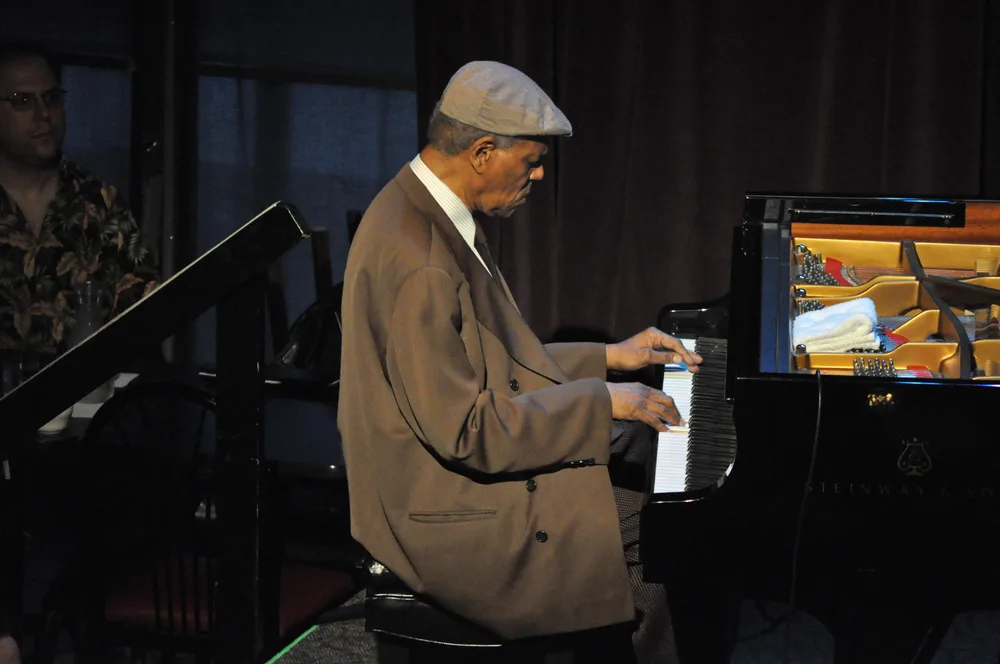
McCoy Tyner performing with his quartet at Dimitriou's Jazz Alley, Seattle, Washington, April 12, 2012 CC BY-SA 3.0 — Wikimedia Commons — https://commons.wikimedia.org/wiki/File:McCoy_Tyner_01.jpg

Alfred McCoy Tyner was born December 11, 1938, in Philadelphia, the eldest of three children of Jarvis and Beatrice Tyner. His mother ran a beauty salon and encouraged his piano study; he began formal training at 13 at the West Philadelphia Music School and continued at the Granoff School of Music, studying theory and harmony. A neighbor in his own North Philadelphia block was bebop pianist Bud Powell, whose playing left a direct mark on the teenager, alongside the percussive attack of Thelonious Monk. At 17 Tyner converted to Ahmadiyya Islam and took the name Suleiman Saud, continuing to perform professionally as McCoy Tyner. As a teenager he led a group called the Houserockers and began working around Philadelphia with Lee Morgan and Jimmy Heath.
Tyner met John Coltrane in the summer of 1955; Coltrane, twelve years older, became what Tyner later called "like a big brother," and the two had an understanding that Tyner would join any group Coltrane eventually led. In 1960 Tyner spent roughly six months with the Jazztet, the co-led group of Benny Golson and Art Farmer, appearing on Meet the Jazztet, before Coltrane called him to join his newly formed quartet, replacing pianist Steve Kuhn. With bassist Jimmy Garrison and drummer Elvin Jones rounding out the group by late 1961 and early 1962, Tyner became the pianist of what is now known simply as the classic Coltrane Quartet, the most influential small group in jazz's modal era. The quartet toured almost continuously between 1961 and 1965 and recorded a run of albums now considered foundational: My Favorite Things (1961, Atlantic), Coltrane "Live" at the Village Vanguard (1962, Impulse!), Ballads (1963), John Coltrane and Johnny Hartman (1963), Live at Birdland (1964), Crescent (1964), A Love Supreme (1964), and The John Coltrane Quartet Plays (1965). Of A Love Supreme Tyner later said the band "had reached a very high level by that time" and that Coltrane "wanted to dig deep and bring us up to another level." Through the same years he was already recording as a leader for Bob Thiele's Impulse! label: Inception (1962), with Art Davis and Elvin Jones; Reaching Fourth (1962-63), with Henry Grimes and Roy Haynes; Nights of Ballads & Blues (1963); Today and Tomorrow (1964), which folded in a horn section including Thad Jones and John Gilmore; Live at Newport (1963), on a various-artists bill that put him alongside trumpeter Clark Terry; and McCoy Tyner Plays Ellington (1965).
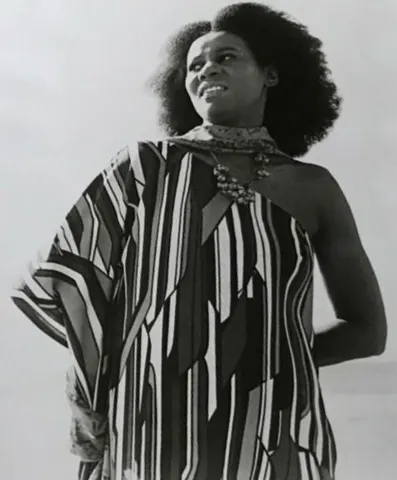
Coltrane's music moved toward increasingly free, atonal textures in 1965, adding a second drummer and dense group improvisation that Tyner felt was crowding out the quartet's interplay. "I didn't see myself making any contribution to that music," he said years later. "All I could hear was a lot of noise. I didn't have any feeling for the music, and when I don't have feelings, I don't play." He left before the end of 1965 and was replaced by Alice Coltrane, Coltrane's wife. The following two years were lean ones financially; Tyner has said he briefly considered driving a taxi to support his family. The turn came at Blue Note, where he re-established himself as a bandleader on his own terms: The Real McCoy (1967), with Joe Henderson, Ron Carter, and Elvin Jones, is now regarded as one of the defining post-bop piano albums of its decade; Tender Moments (1967) and Time for Tyner (1968) followed, and Expansions (1968, released 1969) brought in Wayne Shorter, Gary Bartz, and Woody Shaw. Extensions followed in 1970.
Signing with Orrin Keepnews's Milestone label in 1972 opened Tyner's most commercially successful period. Sahara (1972), on which he doubled on koto, flute, and percussion alongside Sonny Fortune, sold beyond typical jazz numbers, was named DownBeat's Album of the Year, and brought his first two Grammy nominations. Nineteen albums for Milestone followed across the decade, among them Echoes of a Friend (1972, a solo-piano tribute to Coltrane), Song for My Lady and Song of the New World (both 1973), Enlightenment (1973, recorded live at the Montreux Jazz Festival with Azar Lawrence), Sama Layuca (1974, with Bobby Hutcherson and Buster Williams), Atlantis (1975), Trident (1975, on which he played harpsichord and celesta), Fly with the Wind (1976, a large orchestral date arranged with strings and Hubert Laws on flute), and Supertrios (1977), a studio summit pairing him separately with the rhythm sections of Ron Carter/Tony Williams and Eddie Gomez/Jack DeJohnette. He turned briefly to major labels in the early 1980s, recording La Leyenda de la Hora (1981) and Looking Out (1982, featuring a guest appearance by rock guitarist Carlos Santana) for Columbia.
Tyner spent the 1980s and 1990s leading working trios, most often with bassist Avery Sharpe, and recorded Blues for Coltrane: A Tribute to John Coltrane (1987, Impulse!) with Pharoah Sanders, David Murray, Cecil McBee, and Roy Haynes, which won the Grammy for Best Jazz Instrumental Performance in 1988. Further Grammys followed for Blues for Coltrane itself, The Turning Point (1992) and Journey (1993), both with his own big band, and Infinity (1995). A run of Telarc recordings from 1998 to 2003 explored Latin jazz, trio, and solo formats, and Illuminations (2004), with Christian McBride, Lewis Nash, Gary Bartz, and trumpeter Terence Blanchard, won a fifth Grammy. His final recordings, for his own McCoy Tyner Music/Half Note imprint, appeared between 2004 and 2007, after which he continued touring and performing without releasing further studio albums. He was named an NEA Jazz Master in 2002 and received an honorary doctorate from Berklee College of Music. McCoy Tyner passed away at his home in Bergenfield, New Jersey, on March 6, 2020, at age 81.
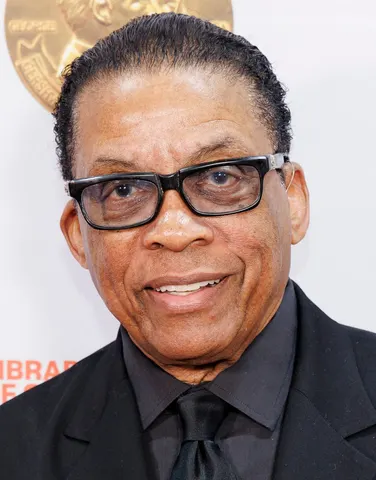
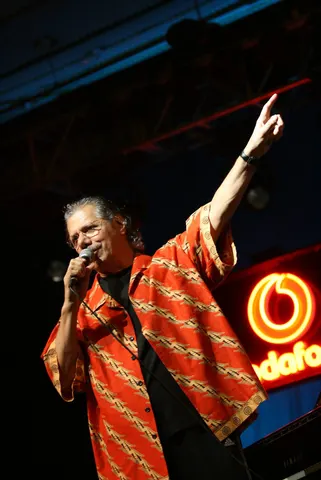
Tyner built a piano vocabulary that reshaped how jazz pianists voice harmony: stacked fourths and quartal chords in place of standard tertian harmony, a low, percussive left hand that could function almost like a second bass, and a right hand capable of both hard-driving pentatonic runs and long, singing melodic lines. Jazz historian Kevin Whitehead described his sound as "heavy, but buoyant, billowing like blue smoke," noting that "his piano could toll like church bells." That vocabulary, forged inside the modal freedom of the Coltrane Quartet, became one of the most widely copied piano languages in jazz; pianists including Herbie Hancock, Chick Corea, John Hicks, and Kenny Barron all absorbed elements of it, and it continued to shape younger players such as Vijay Iyer decades later. Tyner drew his own harmonic curiosity from Claude Debussy and Igor Stravinsky as much as from jazz, and later in his career folded in instrumentation and rhythms from Japan, Africa, and Latin America, doubling on koto, harpsichord, and celesta on his 1970s Milestone albums; he was notably resistant to electronic keyboards, saying "emotionally I couldn't function on them." He remained a Steinway artist for fifty years, recognized by the company with a gold medallion, and DownBeat and the broader jazz press consistently ranked him among the small handful of pianists, alongside Bill Evans and Thelonious Monk, who defined the instrument's postwar vocabulary.
- A Love Supreme (1964, Impulse!) - As a sideman: John Coltrane's four-part suite, with Tyner, Jimmy Garrison, and Elvin Jones, is jazz's most widely cited devotional statement and the summit of the classic quartet's work together.
- The Real McCoy (1967, Blue Note) - Tyner's first leader date after leaving Coltrane's band, with Joe Henderson, Ron Carter, and Elvin Jones; routinely cited as the definitive modal post-bop piano album of its era. Spotify - The Real McCoy Listen
- Sahara (1972, Milestone) - His commercial breakthrough and first Milestone leader date, with Sonny Fortune, Calvin Hill, and Alphonse Mouzon; DownBeat's Album of the Year and Tyner's first Grammy-nominated record. Spotify - Sahara Listen
- Enlightenment (1973, Milestone) - A double-LP live document from the 1973 Montreux Jazz Festival with Azar Lawrence, widely regarded as among the strongest of his 1970s quartet recordings. Spotify - Enlightenment Listen
- Fly with the Wind (1976, Milestone) - A large-ensemble date with strings, harp, and woodwinds arranged around Ron Carter, Billy Cobham, and Hubert Laws, showing Tyner's range beyond the small-group format.
- Blues for Coltrane: A Tribute to John Coltrane (1987, Impulse!) - A quartet reunion in spirit with Pharoah Sanders, David Murray, Cecil McBee, and Roy Haynes revisiting Coltrane's book; won the 1988 Grammy for Best Jazz Instrumental Performance.
- Illuminations (2004, Telarc) - A late-career quintet date with Christian McBride, Lewis Nash, Gary Bartz, and Terence Blanchard that won Tyner his fifth Grammy.
- My Favorite Things (1961, Atlantic) - As a sideman: the album that introduced the classic Coltrane Quartet lineup to a wide audience and established the modal vamp as a jazz mainstay.
McCoy Tyner: Full Discography
Identity confirmed via the live Discogs API: artist ID 10620 ("McCoy Tyner," realname Alfred McCoy Tyner, born/died dates matching Wikipedia and AllMusic exactly). Tyner led or co-led well over sixty albums across a 45-year recording career (1962-2007) and appeared on dozens more as a sideman, most importantly the classic John Coltrane Quartet's entire studio and live output from 1960 to 1965. Following this site's standing practice for hugely prolific bandleaders, the table below curates his most significant and historically important leader recordings plus his essential Coltrane-era sideman work rather than itemizing the full catalog. Several early-1960s Impulse! leader dates are billed on Discogs to "McCoy Tyner Trio," a separate artist entry (id 291286) rather than a track-level credit distinction; that billing is noted where it applies.
As Leader / Co-Leader
| Album Title | Recording Date(s) | Release Date | Label | Catalog Number | Format(s) | Personnel | Role | Reissue History | Spotify | Buy | Notes |
|---|---|---|---|---|---|---|---|---|---|---|---|
| Inception | Recorded 1962 | 1962 | Impulse! | A-18 | Vinyl, LP, Album, Mono | McCoy Tyner (piano), Art Davis (bass), Elvin Jones (drums) | Leader | Reissued with Reaching Fourth on CD, 2011 (Fantasy) | — | — | Billed to "McCoy Tyner Trio" on the original Impulse! sleeve; his recorded debut as a leader |
| Reaching Fourth | Recorded November 14, 1962 | 1963 | Impulse! | A-33 | Vinyl, LP, Album, Mono | McCoy Tyner (piano), Henry Grimes (bass), Roy Haynes (drums) | Leader | Reissued with Inception on CD, 2011 (Fantasy) | — | — | Billed to "McCoy Tyner Trio With Roy Haynes And Henry Grimes" |
| Nights of Ballads & Blues | Recorded 1963 | 1963 | Impulse! | A-39 | Vinyl, LP, Album, Mono | McCoy Tyner (piano), Steve Davis (bass), Lex Humphries (drums) | Leader | Reissued on CD | — | — | |
| Today and Tomorrow | Recorded 1963-1964 | 1964 | Impulse! | AS-63 | Vinyl, LP, Album, Stereo | McCoy Tyner (piano), Jimmy Garrison / Butch Warren (bass), Elvin Jones / Albert Heath (drums), Frank Strozier (alto sax), John Gilmore (tenor sax), Thad Jones (trumpet) | Leader | Reissued on CD | — | — | Split date: a trio side and a horn-section side |
| Live at Newport | Recorded 1963, Newport Jazz Festival | 1964 | Impulse! | A-48 / AS-48 | Vinyl, LP, Album, Stereo | McCoy Tyner (piano), Bob Cranshaw (bass), Mickey Roker (drums), Charlie Mariano (alto sax), Clark Terry (trumpet) | Leader | None found | — | — | Various-artists festival date; not a working-group session |
| McCoy Tyner Plays Ellington | Recorded 1965 | 1965 | Impulse! | A-79 | Vinyl, LP, Mono | McCoy Tyner (piano), Jimmy Garrison (bass), Elvin Jones (drums), Johnny Pacheco / Willie Rodriguez (Latin percussion) | Leader | Reissued on CD | — | — | All-Ellington repertoire, recorded shortly before Tyner left Coltrane's group |
| The Real McCoy | Recorded April 21, 1967 | 1967 | Blue Note | BLP 4264 | Vinyl, LP, Album, Mono | McCoy Tyner (piano), Joe Henderson (tenor sax), Ron Carter (bass), Elvin Jones (drums) | Leader | Reissued on CD (Rudy Van Gelder Edition) and vinyl multiple times | Spotify - The Real McCoy | — | Tyner's Blue Note debut and first leader date after leaving Coltrane's band; widely cited as a defining post-bop piano album |
| Expansions | Recorded 1968, released 1969 | 1969 | Blue Note | BST 84338 | Vinyl, LP, Album, Stereo | McCoy Tyner (piano), Wayne Shorter (tenor sax, clarinet), Gary Bartz (alto sax, flute), Woody Shaw (trumpet), Ron Carter (cello), Herbie Lewis (bass), Freddie Waits (drums) | Leader | Reissued on CD | — | — | |
| Sahara | Recorded January 1972 | 1972 | Milestone | MSP 9039 | Vinyl, LP, Album | McCoy Tyner (piano, koto, flute, percussion), Sonny Fortune (alto/soprano sax, flute), Calvin Hill (bass), Alphonse Mouzon (drums) | Leader | Reissued on CD | Spotify - Sahara | — | Tyner's first Milestone leader date; DownBeat Album of the Year, his commercial breakthrough, first Grammy nominations |
| Song for My Lady | Recorded 1973 | 1973 | Milestone | MSP 9044 | Vinyl, LP, Album | McCoy Tyner (piano), Sonny Fortune (soprano/alto sax, flute), Charles Tolliver (flugelhorn), Calvin Hill (bass), Alphonse Mouzon (drums), James Mtume (congas, percussion), Michael White (violin) | Leader | Reissued on CD | — | — | |
| Song of the New World | Recorded 1973 | 1973 | Milestone | MSP 9049 | Vinyl, LP, Album | McCoy Tyner (piano, arranger) with a large ensemble including Sonny Fortune, Hubert Laws, Jon Faddis, Garnett Brown, and strings, conducted by William S. Fischer | Leader | Reissued on CD | — | — | Orchestral date with brass, woodwind, and string sections |
| Enlightenment | Recorded July 7, 1973, Montreux Jazz Festival | 1973 | Milestone | M-55001 | Vinyl, 2xLP, Album | McCoy Tyner (piano, percussion), Azar Lawrence (saxophone), Juini Booth (bass), Alphonse Mouzon (drums) | Leader | Reissued on CD | Spotify - Enlightenment | — | Live double-LP, widely regarded as among his strongest 1970s quartet recordings |
| Sama Layuca | Recorded 1974 | 1974 | Milestone | M-9056 | Vinyl, LP, Album | McCoy Tyner (piano), Gary Bartz (alto sax), John Stubblefield (flute, oboe), Azar Lawrence (tenor/soprano sax), Bobby Hutcherson (vibraphone, marimba), Buster Williams (bass), Billy Hart (drums), James Mtume / Guilherme Franco (percussion) | Leader | Reissued on CD | — | — | |
| Atlantis | Recorded 1974, released 1975 | 1975 | Milestone | M-55002 | Vinyl, 2xLP, Album | McCoy Tyner (piano), Azar Lawrence (tenor/soprano sax), Juini Booth (bass), Wilby Fletcher (drums), Guilherme Franco (percussion) | Leader | Reissued on CD | — | — | Live double-LP; billed on the back cover as the McCoy Tyner Quintet |
| Fly with the Wind | Recorded 1976 | 1976 | Milestone | M-9067 | Vinyl, LP, Album | McCoy Tyner (piano, arranger), Ron Carter (bass), Billy Cobham (drums), Hubert Laws (flute, alto flute), plus a string and woodwind section conducted by William S. Fischer | Leader | Reissued on CD | — | — | Large-ensemble orchestral date |
| Supertrios | Recorded 1977 | 1977 | Milestone | M-55003 | Vinyl, 2xLP, Album | McCoy Tyner (piano) with two separate trios: Ron Carter (bass) and Tony Williams (drums) on one side, Eddie Gomez (bass) and Jack DeJohnette (drums) on the other | Leader | Reissued on CD | — | — | Studio date deliberately split between two different working trios |
| La Leyenda de la Hora (The Legend of the Hour) | Recorded 1981 | 1981 | Columbia | FC 37375 | Vinyl, LP, Album | McCoy Tyner (piano), Paquito D'Rivera (alto/soprano sax), Chico Freeman (tenor sax), Hubert Laws (flute), Bobby Hutcherson (vibraphone, marimba), Marcus Belgrave (trumpet, flugelhorn), Avery Sharpe (bass), Ignacio Berroa (drums), Daniel Ponce (percussion) | Leader | None found | — | — | A Latin-jazz large ensemble date |
| Looking Out | Recorded 1982 | 1982 | Columbia | FC 38053 | Vinyl, LP, Album | McCoy Tyner (piano, arranger), Gary Bartz (alto sax), Stanley Clarke (acoustic/electric bass), Buddy Williams (drums), Jerry Gonzalez (percussion), Carlos Santana (guitar), Phyllis Hyman (vocals) | Leader | None found | — | — | |
| Blues for Coltrane: A Tribute to John Coltrane | Recorded September 1987 | 1988 | Impulse! | 255 392-1 | Vinyl, LP, Album | McCoy Tyner (piano), Pharoah Sanders (tenor sax, tracks A1-A3), David Murray (tenor sax, tracks B2-B3), Cecil McBee (bass), Roy Haynes (drums) | Leader | Reissued on CD | — | — | Won the 1988 Grammy for Best Jazz Instrumental Performance; tenor duties split by track between Sanders and Murray |
| The Turning Point | Recorded 1991 | 1992 | Birdology/Verve | CD, Album | McCoy Tyner Big Band | Leader | None found | — | — | Won the Grammy for Best Large Jazz Ensemble Recording, 1992 | |
| Journey | Recorded 1993 | 1993 | Birdology/Verve | CD, Album | McCoy Tyner Big Band | Leader | None found | — | — | Won the Grammy for Best Large Jazz Ensemble Recording, 1993 | |
| Infinity | Recorded 1994-1995 | 1995 | Impulse! | CD, Album | McCoy Tyner (piano), Michael Brecker (tenor sax), Avery Sharpe (bass), Aaron Scott (drums) | Leader | None found | — | — | Won the Grammy for Best Instrumental Jazz Album, 1996 | |
| Illuminations | Recorded 2004 | 2004 | Telarc Jazz | CD-83599 | CD, Album | McCoy Tyner (piano), Gary Bartz (saxophone), Terence Blanchard (trumpet), Christian McBride (bass), Lewis Nash (drums) | Leader | None found | — | — | Won the Grammy for Best Instrumental Jazz Album, 2005 |
As Sideman: The John Coltrane Quartet (selected major credits)
Tyner's most consequential body of sideman work, by a wide margin, is his five-year run (1960-1965) as pianist in John Coltrane's working quartet, alongside Jimmy Garrison and Elvin Jones. The albums below are the classic quartet's most celebrated studio and live recordings; Tyner does not appear on Coltrane's later, more free-form 1965-1967 recordings, having left the group before they were made.
| Year | Project (Leader) | Title | Label | Catalog | Role | Notes |
|---|---|---|---|---|---|---|
| 1961 | John Coltrane | My Favorite Things | Atlantic | 1361 | Piano | Recorded October 1960; introduced the classic quartet lineup to a wide audience |
| 1962 | John Coltrane | "Live" at the Village Vanguard | Impulse! | A-10 | Piano | Recorded live November 1961; the same engagement also produced sides later issued crediting Eric Dolphy and Reggie Workman |
| 1963 | John Coltrane | Ballads | Impulse! | A-32 | Piano | Recorded 1961-1962 |
| 1963 | John Coltrane | John Coltrane and Johnny Hartman | Impulse! | A-40 | Piano | Recorded March 7, 1963 |
| 1964 | John Coltrane | Live at Birdland | Impulse! | A-50 | Piano | Combines a live Birdland set with the studio recording "Alabama" |
| 1964 | John Coltrane | Crescent | Impulse! | AS-66 | Piano | Recorded April-June 1964 |
| 1965 | John Coltrane | A Love Supreme | Impulse! | A-77 | Piano | Recorded December 9, 1964; Coltrane's four-part suite and the quartet's most widely cited recording |
| 1965 | John Coltrane | The John Coltrane Quartet Plays | Impulse! | A-85 | Piano | Recorded February 1965, among the last studio dates the classic quartet made together |
Tyner's Discogs sideman log outside the Coltrane quartet also includes appearances on Blue Note releases led by Wayne Shorter (Night Dreamer, 1964; Juju, 1965), Freddie Hubbard (Open Sesame, 1960; Ready for Freddie, 1962; Blue Spirits, 1967), and Grant Green (Matador and Solid, both recorded 1964, released 1979), plus later guest appearances on tribute and reunion projects: not itemized exhaustively here.
- John Coltrane - pianist in Coltrane's classic quartet, 1960-1965, on nearly every major Atlantic and Impulse! release of that period.
- Elvin Jones & Jimmy Garrison - the other two-thirds of the classic Coltrane Quartet rhythm section; Jones and Garrison both also appear on several of Tyner's own Impulse! leader dates from the same years.
- Joe Henderson - co-star of The Real McCoy (1967), Tyner's Blue Note leader debut.
- Ron Carter - bassist on The Real McCoy (1967) and the strings-and-woodwinds date Fly with the Wind (1976).
- Alice Coltrane - succeeded Tyner as John Coltrane's pianist in late 1965.
- Bobby Hutcherson - vibraphonist and marimba player on the Milestone dates Sama Layuca (1974) and La Leyenda de la Hora (1981).
- Pharoah Sanders, David Murray, Cecil McBee & Roy Haynes - co-led the 1987 Coltrane tribute quartet on Blues for Coltrane, Tyner's first Grammy win.
- Christian McBride & Lewis Nash - rhythm section on the Grammy-winning Illuminations (2004).
- Wikipedia: McCoy Tyner
- AllMusic: McCoy Tyner biography
- All About Jazz: McCoy Tyner
- Discogs: McCoy Tyner (artist 10620)
- Wikipedia: The Real McCoy (McCoy Tyner album)
- Wikipedia: Sahara (McCoy Tyner album)
- Wikipedia: Enlightenment (McCoy Tyner album)
- Wikipedia: Blues for Coltrane: A Tribute to John Coltrane
- Wikipedia: Illuminations (McCoy Tyner album)