 JAZZPROFILES lives in the music 1,572 Jazz Artists fully Profiled!
 Lonnie Liston Smith
Last updated September 7, 2026
Listen on Spotify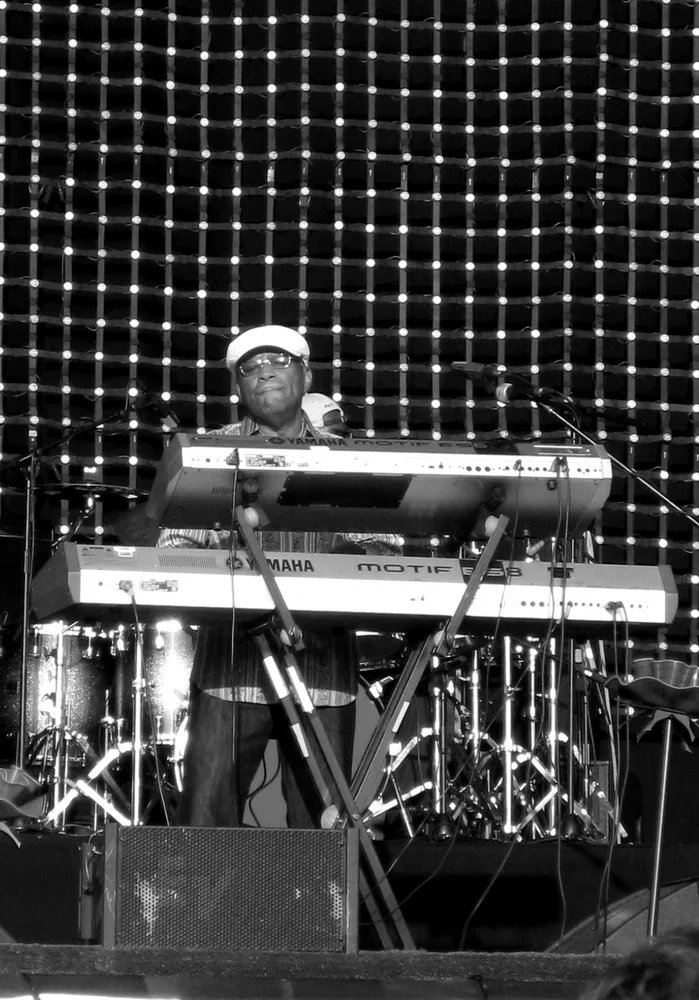
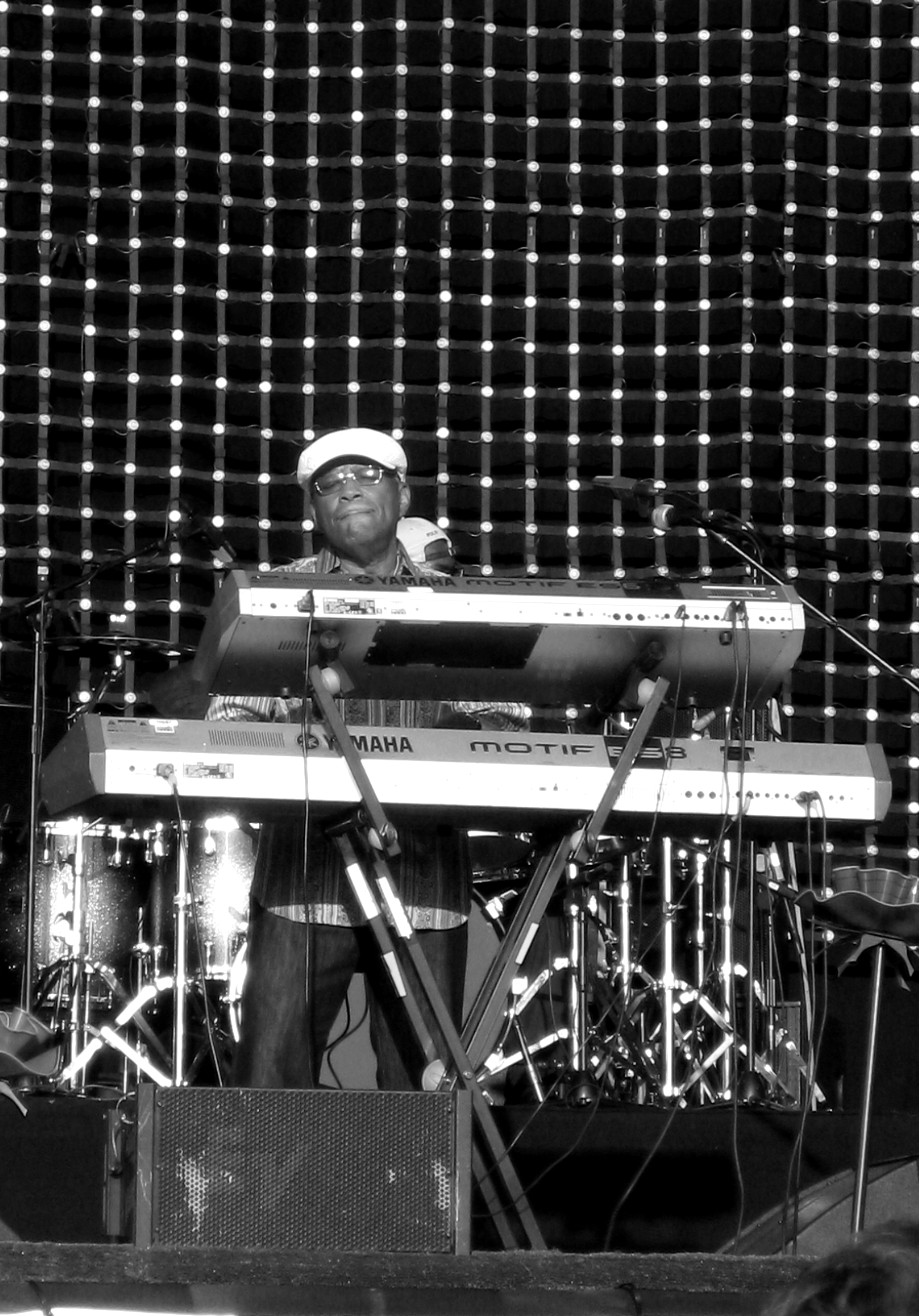
Lonnie Liston Smith performing at Glastonbury Festival, Somerset, England (June 27, 2009), photo via Wikimedia Commons, CC BY-SA 3.0 CC BY-SA 3.0 — Wikimedia Commons — https://upload.wikimedia.org/wikipedia/commons/a/a9/Lonnie_Liston_Smith_Glastonbury_2009-1.jpg (photographer: Cavie78)
Lonnie Liston Smith, Jr. grew up in a musical household in Richmond, Virginia. His father sang with the gospel group The Harmonizing Four, a group good enough to perform at the White House after Franklin D. Roosevelt's death. Smith studied piano, tuba, and trumpet through high school and college, earning a Bachelor of Science in music education from Morgan State College in Baltimore in 1961.
He moved to New York City in 1963 and spent the next decade building one of the deepest sideman résumés in jazz. He played piano in Betty Carter's band, then joined saxophonist Roland Kirk's group in 1965, recording his first credited sideman date on Kirk's Here Comes the Whistleman (Atlantic). That same year he spent a stint with Art Blakey's Jazz Messengers (November 1965 to April 1966). From 1968 to 1973 he held a seat in Pharoah Sanders' ensemble, the group Sanders formed after John Coltrane's 1967 death, and from 1969 to 1973 he also played in saxophonist Gato Barbieri's band, recording the co-billed Bolivia session. In 1972, Miles Davis brought Smith onto electric keyboards and organ for the sessions that became On the Corner, reportedly having Smith learn the organ in just two days to make the date.
In 1973, Smith made the move from sideman to bandleader, forming Lonnie Liston Smith and the Cosmic Echoes with bassist Cecil McBee, saxophonist George Barron, guitarist Joe Beck, drummer David Lee Jr., percussionists James Mtume and Sonny Morgan, and tabla player Badal Roy. Between 1973 and 1977 the group released six albums, first on Flying Dutchman and then on RCA Victor: Astral Traveling (1973), Cosmic Funk (1974), Expansions (1975), Visions of a New World (1975), Reflections of a Golden Dream (1976), and Renaissance (1976), plus the live RCA release Live! (1977). The group's sound, electric piano and synthesizer laid over deep funk grooves, became foundational to jazz-funk and, later, the acid jazz revival of the late 1980s and 1990s. The title track of Expansions has outlasted its era by a wide margin: it appeared in the video games Grand Theft Auto: Vice City and Driver: Parallel Lines, and has drawn more than 11 million streams on Spotify.
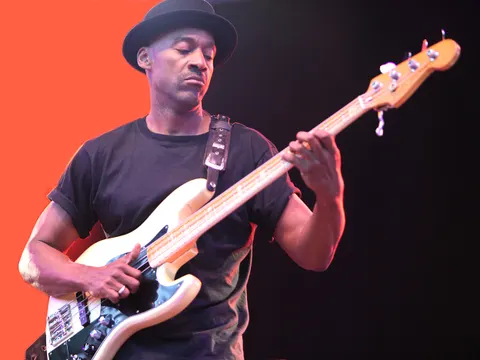
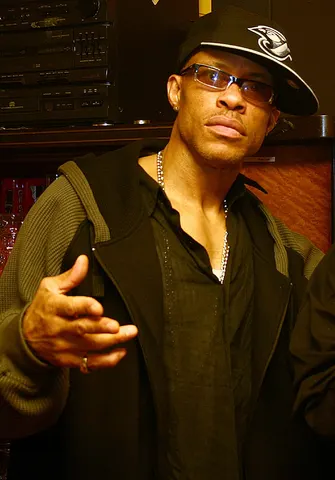
Smith continued recording prolifically under his own name through the late 1970s, 1980s, and into the 1990s, moving from Columbia to Doctor Jazz to Startrak. On 1978's Exotic Mysteries (Columbia), he gave a young bassist named Marcus Miller his first-ever recording credit; the album's single "Space Princess" became a genuine disco and R&B hit. Smith's commercial reach carried into the hip-hop era as well: in 1993 he appeared on Guru's Jazzmatazz, Vol. 1, the album widely credited with putting live jazz musicians directly on rap tracks for the first time. Guru later told Smith that rappers he knew had grown up with uncles who made them listen to Smith and Donald Byrd alongside Miles Davis.
After 1998's Transformation, Smith stepped back from new studio recording for roughly 25 years, though he continued performing, including a 2009 appearance on the Jazz World Stage at Glastonbury Festival. In 2023 he returned with Lonnie Liston Smith JID017, recorded with Ali Shaheed Muhammad and Adrian Younge for the Jazz Is Dead label, his first new recording as a leader in a quarter century. Now in his eighties, he continues writing and touring.
Smith's sound bridges acoustic jazz training and electric, groove-driven fusion. His piano and keyboard style carries the harmonic sophistication of the hard-bop and modal jazz lineage he came up in, particularly his years alongside Pharoah Sanders, but he applies it over dense funk and soul rhythm sections rather than straight-ahead swing. Reviewers and historians consistently credit his 1970s Flying Dutchman and RCA records, especially Expansions, as a direct foundation for the acid jazz movement that emerged more than a decade later. His own explanation of the mission behind the Cosmic Echoes records: "I was trying to expand the consciousness of humanity."
- Astral Traveling (1973, Flying Dutchman) - His debut as a bandleader, moving from acoustic sideman work into the electric jazz-funk sound that would define the Cosmic Echoes years. Listen · Buy
- Expansions (1975, Flying Dutchman) - The Cosmic Echoes' signature record; its title track has drawn more than 11 million Spotify streams and appeared in Grand Theft Auto: Vice City. Spotify - Expansions Listen · Buy
- Exotic Mysteries (1978, Columbia) - The album that gave bassist Marcus Miller his first recording credit and produced the disco/R&B hit "Space Princess." Spotify - Exotic Mysteries Listen · Buy
- Lonnie Liston Smith JID017 (2023, Jazz Is Dead) - His first new leader recording in 25 years, made with Ali Shaheed Muhammad and Adrian Younge. Bandcamp - JID017 Listen · Buy
# Lonnie Liston Smith: Full Discography
Discogs artist ID 15438, real name Lonnie Liston Smith, Jr., born December 28, 1940, Richmond, Virginia. Identity confirmed via the artist's own Discogs profile text, which explicitly disambiguates him from jazz organist Lonnie Smith (Discogs ID 29961) and independently matches biographical facts sourced from Wikipedia (birthdate, Richmond VA, Morgan State College, brother Donald Smith). His group billing, "Lonnie Liston Smith And The Cosmic Echoes," is a separate Discogs entity, artist ID 159998; album years below were individually verified against Discogs master release records for each title, not assumed from a single combined list.
As Leader (Lonnie Liston Smith and the Cosmic Echoes era, 1973-1977)
| Album | Year | Label | Personnel | Notes | Listen | Buy |
|---|---|---|---|---|---|---|
| Astral Traveling | 1973 | Flying Dutchman | Lonnie Liston Smith (electric piano, keyboards); Cecil McBee (bass); George Barron (saxophones); David Lee Jr. (drums); James Mtume, Sonny Morgan (percussion); Badal Roy (tabla) | His debut as a leader | Spotify | Amazon |
| Cosmic Funk | 1974 | Flying Dutchman | Lonnie Liston Smith and the Cosmic Echoes | Spotify | Amazon | |
| Expansions | 1975 | Flying Dutchman | Lonnie Liston Smith and the Cosmic Echoes, incl. Joe Beck (guitar), Geeta Vashi (tamboura) | Recorded 1974, released 1975; the group's signature record, title track later used in Grand Theft Auto: Vice City and Driver: Parallel Lines | Spotify | Amazon |
| Visions of a New World | 1975 | Flying Dutchman | Lonnie Liston Smith and the Cosmic Echoes | Spotify | Amazon | |
| Reflections of a Golden Dream | 1976 | Flying Dutchman | Lonnie Liston Smith and the Cosmic Echoes | Spotify | Amazon | |
| Renaissance | 1976 | RCA Victor | Lonnie Liston Smith and the Cosmic Echoes | Moved from Flying Dutchman to RCA | Spotify | Amazon |
| Live! | 1977 | RCA Victor | Lonnie Liston Smith and the Cosmic Echoes | Final Cosmic Echoes-billed studio-era release before Smith's name-only billing began | Spotify | Amazon |
As Leader (solo billing, 1978-2023)
| Album | Year | Label | Personnel | Notes | Listen | Buy |
|---|---|---|---|---|---|---|
| Loveland | 1978 | Columbia | Lonnie Liston Smith | Spotify | Amazon | |
| Exotic Mysteries | 1978 | Columbia | Lonnie Liston Smith, featuring bassist Marcus Miller | Marcus Miller's first-ever session credit; the single "Space Princess" became a disco/R&B hit | Spotify | Amazon |
| A Song for the Children | 1979 | Columbia | Lonnie Liston Smith | YouTube | Amazon | |
| Love Is the Answer | 1980 | Columbia | Lonnie Liston Smith | Spotify | Amazon | |
| Never Too Late | 1983 | Doctor Jazz | Lonnie Liston Smith | not found | Amazon | |
| Dreams of Tomorrow | 1983 | Doctor Jazz | Lonnie Liston Smith | Spotify | Amazon | |
| Silhouettes | 1984 | Doctor Jazz | Lonnie Liston Smith | Spotify | Amazon | |
| Rejuvenation | 1985 | Doctor Jazz | Lonnie Liston Smith | YouTube | Amazon | |
| Make Someone Happy | 1986 | Doctor Jazz | Lonnie Liston Smith | YouTube | Amazon | |
| Love Goddess | 1990 | Startrak/Arista | Lonnie Liston Smith | YouTube | Amazon | |
| Magic Lady | 1991 | Startrak | Lonnie Liston Smith | YouTube | Amazon | |
| Transformation | 1998 | Loveland | Lonnie Liston Smith | YouTube | Amazon | |
| Lonnie Liston Smith JID017 | 2023 | Jazz Is Dead | Lonnie Liston Smith with Ali Shaheed Muhammad and Adrian Younge | First new recording as leader in 25 years | Bandcamp | Amazon |
Notable Guest / Sideman Highlights (curated subset, not exhaustive)
A curated list of the credits mentioned elsewhere on this profile, from the sideman decade (1965-1973) before Smith stepped out as a leader, plus one later collaboration. Full catalog at discogs.com/artist/15438-Lonnie-Liston-Smith (654 total listed credits across leader, sideman, and compilation appearances; not individually itemized here given the scope).
| Year | Project | Artist | Smith's Role | Notes | Listen | Buy |
|---|---|---|---|---|---|---|
| 1965 | Here Comes the Whistleman | Roland Kirk | Piano | His first recorded sideman credit, on Atlantic | Spotify | Amazon |
| 1965-1966 | (touring/live, no single album cited) | Art Blakey's Jazz Messengers | Piano | November 1965 to April 1966 | not found | not found |
| 1968-1973 | (multiple sessions) | Pharoah Sanders | Piano | Joined Sanders' group after John Coltrane's 1967 death | not found | not found |
| 1973 | Bolivia | Gato Barbieri (co-billed "Gato Barbieri With Lonnie Liston Smith") | Piano | Discogs-listed co-billing during his years in Barbieri's band, 1969-1973 | Spotify | Amazon |
| 1972 | On the Corner | Miles Davis | Organ, electric keyboards | Davis reportedly had Smith learn organ in two days for these sessions | Spotify | Amazon |
| 1993 | Jazzmatazz, Vol. 1 | Guru | Keyboards | Guru's pioneering live jazz-plus-rap album | Spotify | Amazon |
- Lonnie Liston Smith and the Cosmic Echoes (1973-1985, unofficial end) - founding bandleader; core lineup Cecil McBee (bass), George Barron (saxophones), Joe Beck (guitar), David Lee Jr. (drums), James Mtume and Sonny Morgan (percussion), Badal Roy (tabla), Geeta Vashi (tamboura); his brother Donald Smith later joined on vocals.
- Roland Kirk - sideman, from 1965, including his first credited recording, Here Comes the Whistleman (Atlantic).
- Art Blakey's Jazz Messengers - sideman, November 1965 to April 1966.
- Pharoah Sanders - sideman, 1968-1973, in the group Sanders formed after John Coltrane's death.
- Gato Barbieri - sideman, 1969-1973, including the co-billed Bolivia session.
- Miles Davis - electric keyboards and organ, 1972-1973 sessions that became On the Corner.
- Marcus Miller - discovered and gave his first recording credit on 1978's Exotic Mysteries; Miller is already profiled on JazzProfiles.com.
- Guru - keyboards on Jazzmatazz, Vol. 1 (1993); Guru is already profiled on JazzProfiles.com.
- Marvin Gaye - performed together at the 1980 Montreux Jazz Festival.