 JAZZPROFILES lives in the music 1,572 Jazz Artists fully Profiled!
 George Adams
Last updated September 26, 2026
Listen on Spotify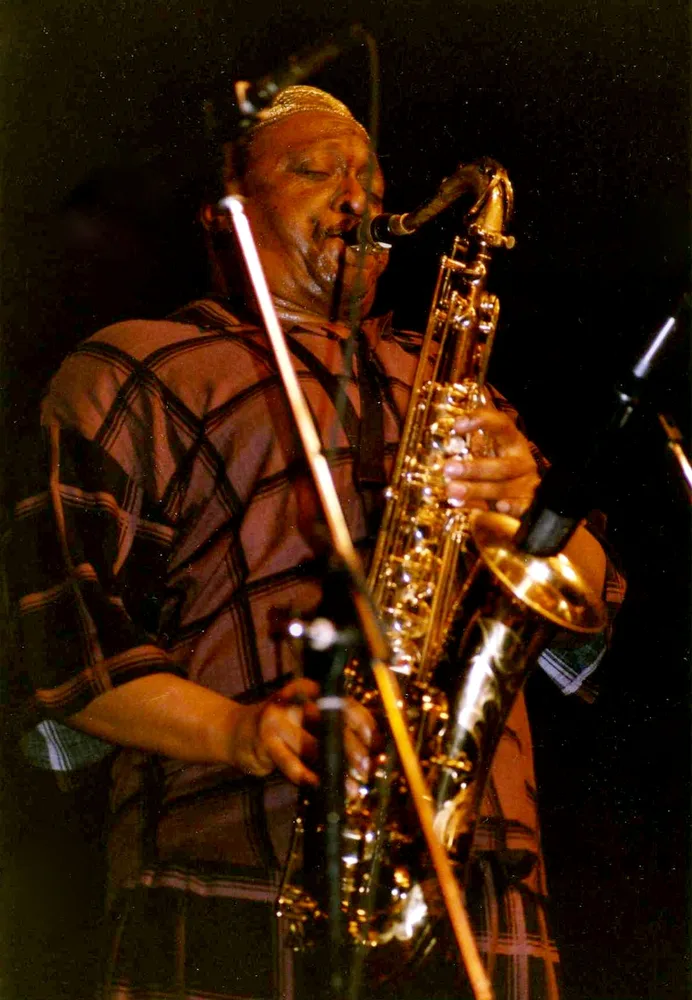
George Adams playing tenor saxophone at the Jazz Festival Münster, West Germany, May 1990. CC BY-SA 3.0 (Creative Commons Attribution-ShareAlike 3.0), photographer credited on Wikimedia Commons as "Jazzenthusiast," own work, uploaded November 4, 2012. — Wikimedia Commons — https://commons.wikimedia.org/wiki/File:George_Adams.jpg (file URL https://upload.wikimedia.org/wikipedia/commons/5/5f/George_Adams.jpg). Saved locally as portrait.jpg.


George Rufus Adams was born April 29, 1940, in Covington, Georgia, took up piano at eleven, and switched to tenor saxophone in high school, where the paying work was in local rhythm-and-blues bands. He studied at Clark College in Atlanta and took flute lessons from Wayman Carver, the reed player from Chick Webb's orchestra who had been the first musician to make the flute a serious jazz solo instrument. In 1961 Adams went on the road backing Sam Cooke. Two years later he moved to Ohio and spent the middle of the decade inside the organ-combo circuit, including a long stretch in Cleveland with Bill Doggett, work that left a permanent mark: for the rest of his career the blues and the church were the floor under everything he played, however far out the music went.
He moved to New York in 1968 and found steady jazz employment quickly, joining drummer Roy Haynes's Hip Ensemble (heard on Hip Ensemble, 1971, and Senyah, 1972, both for Mainstream) and passing through Art Blakey's band. He also kept a foot in funk, recording with the Fatback Band on its early-1970s Perception sessions, which is why his name turns up on rare-groove compilations alongside his jazz credits.
The association that made his name was Charles Mingus's. Adams joined the bassist's group in 1973 and stayed until 1976, arriving with pianist Don Pullen on Mingus Moves, cut at Atlantic Recording Studios on October 29-31, 1973 with Dannie Richmond on drums. He was on the bandstand for Mingus at Carnegie Hall in January 1974, in a horn line that also held Rahsaan Roland Kirk, John Handy and Charles McPherson, and he anchored the December 27, 28 and 30, 1974 sessions that produced Changes One and Changes Two, singing the vocal on "Devil Blues" as well as taking the tenor solos. He returned for Cumbia & Jazz Fusion in 1977. Touring Europe with Mingus in 1975 also gave Adams his first records under his own name, both made in Rome for the Italian Horo label with Pullen and Richmond: Jazz a Confronto 22, recorded March 29, 1975, on which he plays tenor and piano at the same time on "Song of Adam," and Suite for Swingers, recorded July 28, 1976.
Mingus's orbit fed directly into the rest of the decade. Adams joined Gil Evans's orchestra in 1975 and worked with it on and off for more than a decade, from There Comes a Time through Priestess (recorded 1977), the live Little Wing taped in Germany on October 19, 1978, and the Monday Night Orchestra's Live at Sweet Basil sets of 1984. From 1976 he worked intermittently with McCoy Tyner, appearing on The Greeting (1978), Horizon (recorded April 1979) and Things Ain't What They Used to Be (1990). He played the Antibes Jazz Festival on July 20, 1977 with trumpeter Hannibal Marvin Peterson, a partner he kept returning to, and in May 1979 he made the one record of his career for ECM, Sound Suggestions, an international sextet with Kenny Wheeler, Heinz Sauer, Richard Beirach, Dave Holland and Jack DeJohnette. One of his three originals on it was called "Got Somethin' Good for You," a title he would hand to a very different band six years later.
The George Adams-Don Pullen Quartet, formed in 1979 with Cameron Brown on bass and Dannie Richmond on drums, is the group he is remembered for. It took its shape straight out of Mingus's last working band, two of the four having played in it, and it kept the same appetite for gospel, calypso, ballads, free playing and Ellington inside a single set. Its first recordings were made in Milan on November 2 and 3, 1979, live at the Ciak (issued as All That Funk and More Funk on Palcoscenico) and in the studio at Barigozzi for Soul Note (Don't Lose Control). A run of albums for the Dutch Timeless label followed, most of them cut in Holland: Earth Beams (August 1980), Life Line (April 1981), City Gates (March 1983), Decisions (February 1984) and Live at Montmartre, taped in Copenhagen on April 4 and 5, 1985 with John Scofield added on guitar. A single night at the Village Vanguard, August 19, 1983, yielded two Soul Note albums, Live at Village Vanguard and its 1986 second volume. The last two were for Blue Note: Breakthrough, recorded April 30, 1986 at RCA Studio A with liner notes by Amiri Baraka, and Song Everlasting, recorded April 21, 1987. Twelve albums came out of eight years. Through the same period Adams ran a parallel co-led quintet with Dannie Richmond and trombonist Jimmy Knepper, with Hugh Lawson on piano, which made Hand to Hand (1980) and Gentlemen's Agreement (1983) for Soul Note.
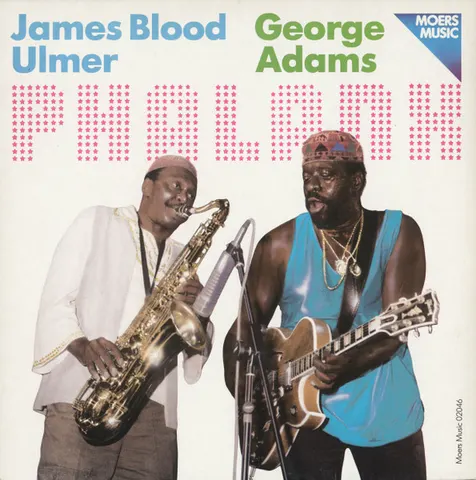
Alongside the quartet ran a much rougher project. Adams had first recorded with guitarist James Blood Ulmer at a 1977 New York session that stayed in the can until 1990, when In+Out issued it as Revealing. By 1985 the two were co-leading Phalanx, a quartet that set Adams's blues-and-church tenor against Ulmer's harmolodic guitar. Its earliest surviving document is a concert at the Friedrichstadtpalast in East Berlin on June 23, 1985, released five years later as Jazzbühne Berlin '85, with Amin Ali on electric bass and Calvin Weston on drums; the studio debut, Got Something Good for You, was cut in Hamburg that September for Moers Music, borrowing the title of Adams's own ECM tune. In late 1986 or early 1987 the rhythm section changed to Sirone on bass and Rashied Ali on drums, and that lineup made both of the group's records for the Japanese label DIW, Original Phalanx (February 1987) and In Touch (February 1988).
Dannie Richmond's death in March 1988 effectively ended the quartet; Lewis Nash filled the chair briefly before the group stopped. Adams put together a new band with Hugh Lawson, Cameron Brown and the young drummer Gregory Hutchinson, and signed to Blue Note and its Japanese sister imprint Somethin' Else for three very different leader records: Nightingale, recorded August 19 and 20, 1988 with Sirone and Victor Lewis, a ballad program running from "Bridge Over Troubled Water" to Thomas A. Dorsey's "Precious Lord, Take My Hand"; America (1989), an entire album of American vernacular song, "Take Me Out to the Ball Game" and "The Star Spangled Banner" included, with Adams singing on several tracks; and Old Feeling, recorded March 11 and 12, 1991, which opens with Mingus's "Better Git Hit in Yo' Soul." He also played in the Mingus Dynasty repertory band and was among the musicians assembled for the 1989 recording of Mingus's Epitaph. His last documented session was in Tokyo on December 16, 1991, a version of "Georgia on My Mind" with the New York Unit, released in 1993 on an album the group titled Tribute to George Adams. After roughly a year of worsening breathing trouble, Adams passed away in New York City on November 14, 1992, at fifty-two.
Adams had one of the largest tenor sounds of his generation and almost no interest in keeping it clean: a phrase would start as a plain blues line and end in a scream, a growl or a smear of overtones, and he could turn from that into an unhurried ballad without any visible seam. What held the extremes together was where he came from, the Georgia church and the Cleveland organ bars, so that even his freest playing kept the shape of a hymn or a shout underneath it. He sang too, in a hoarse, unschooled voice used sparingly and to real effect, on Charles Mingus's "Devil Blues" and across his own late records. Critics have tended to place him a step ahead of his contemporaries rather than beside them: the Penguin Guide to Jazz, reviewing the 1983 Village Vanguard set, heard him anticipating what David Murray would do with the instrument later in the decade. His standing rests less on any single date than on the range he covered without ever sounding like a tourist in any of it, from Mingus's book to Gil Evans's orchestral washes to the free-funk racket of Phalanx.
- Changes One (recorded Dec. 1974; released 1975, Charles Mingus, Atlantic) - The best-known record of Adams's Mingus tenure, with his tenor on "Sue's Changes" and his vocal on "Devil Blues." No Spotify album link could be verified for this build.
- Don't Lose Control (recorded Nov. 1979; released 1980, Soul Note) - The George Adams-Don Pullen Quartet's Soul Note debut and the record that first got the band noticed. Spotify - Don't Lose Control Listen
- Live at Village Vanguard (recorded Aug. 19, 1983; released 1985, Soul Note) - One night at the Vanguard, four long performances, the quartet at full stretch; a second volume came from the same set. Spotify - Live At The Village Vanguard Listen
- Breakthrough (recorded Apr. 30, 1986; released 1986, Blue Note) - The quartet's Blue Note debut, with liner notes by Amiri Baraka; AllMusic rates it 4.5 stars and Robert Christgau graded it an A in the Village Voice. Spotify - Breakthrough Listen
- Sound Suggestions (recorded May 1979; released 1979, ECM) - His only ECM date, a sextet with Kenny Wheeler, Dave Holland and Jack DeJohnette, and the first appearance of his tune "Got Somethin' Good for You." Spotify - Sound Suggestions Listen
- Melodic Excursions (recorded June 1982; released 1982, Timeless) - Tenor and piano alone, the most exposed record Adams and Don Pullen made together. Spotify - Melodic Excursions Listen
- Live at Montmartre (recorded Apr. 1985; released 1986, Timeless) - The quartet in Copenhagen with John Scofield sitting in on guitar for the whole set. Spotify - Live at Montmartre Listen
- Original Phalanx (recorded Feb. 1987; released 1987, DIW) - As co-leader of Phalanx with James Blood Ulmer, Sirone and Rashied Ali; Adams wrote three of its pieces. Not confirmed on Spotify.
George Adams: Full Discography
Identity confirmed via the live Discogs API: artist ID 336123, real name "George Rufus Adams," profile text "Jazz saxophonist, flutist, clarinetist / Born April 29, 1940 in Covington, Georgia, died November 14, 1992 in New York City," linked to the English Wikipedia article on George Adams (musician). That personal entry carries 196 credited releases (25 in a "Main"/leader role, 126 sideman "Appearance" credits, 24 track-level credits, 20 unofficial pressings, 1 production credit).
Most of the leader catalog is not filed there. Discogs splits the co-led bands into separate group entities, and those had to be pulled individually: George Adams - Don Pullen Quartet (857219, 34 releases, 14 of them "Main"), George Adams Quintet (889193), George Adams Quartet (2163299), Don Pullen - George Adams Quartet (11046260, a duplicate billing for Song Everlasting), George Adams - James Blood Ulmer Quartet (5233621) and Phalanx (4) (915919).
The leader/co-leader table below is intended to be complete for commercially issued albums. The sideman table is a representative selection from the 126 "Appearance" credits, not an exhaustive list. Recording dates and personnel are taken from Discogs release credits and cross-checked against Jazzdisco.org's session listings; where the two disagree it is noted. The Buy column is always a dash, since no affiliate program is set up.
As Leader / Co-Leader
| Album Title | Recording Date(s) | Release Date | Label | Catalog Number | Format(s) | Personnel | Role | Reissue History | Spotify | Buy | Notes |
|---|---|---|---|---|---|---|---|---|---|---|---|
| Jazz a Confronto 22 | March 29, 1975, Mama Dog Studios, Rome | 1975 | Horo Records | HLL 101-22 | Vinyl, LP, Album | George Adams (tenor sax, flute, piano, vocals), Don Pullen (piano), David Williams (bass), Dannie Richmond (drums) | Leader | Material later gathered on The First Recordings (A Recordings, 2012) | Not confirmed on Spotify | — | His debut as a leader, made in Rome during a European tour with Charles Mingus. Discogs notes he plays tenor and piano simultaneously on "Song of Adam" |
| Suite for Swingers | July 28, 1976, Rome | 1976 | Horo Records | HZ 03 | Vinyl, LP, Album | George Adams (tenor sax, vocals), Don Pullen (piano), David Friesen (bass), Dannie Richmond (drums), Afonso Vieira (percussion) | Leader | None found | Not confirmed on Spotify | — | Three Adams originals, the title piece filling side A |
| Sound Suggestions | May 1979, Tonstudio Bauer, Ludwigsburg, West Germany | 1979 | ECM Records | ECM 1141 / 2301 141 | Vinyl, LP, Album | George Adams (tenor sax, vocals), Kenny Wheeler (trumpet, flugelhorn), Heinz Sauer (tenor sax), Richard Beirach (piano), Dave Holland (bass), Jack DeJohnette (drums); produced by Manfred Eicher | Leader | CD reissue | Spotify - Sound Suggestions | — | His only ECM session. Includes "Got Someethin' Good For You" (Discogs spelling), the Adams tune whose title Phalanx used for its 1986 debut album |
| Paradise Space Shuttle | December 21, 1979, Sound Ideas Studio, NYC | 1979 | Timeless Muse | TI 322 (Timeless SJP 127 in Europe) | Vinyl, LP, Album | George Adams (tenor sax), Ron Burton (piano), Don Pate (bass), Al Foster (drums), Azzedin Weston (percussion) | Leader (George Adams Quintet) | CD reissue | Spotify - Paradise Space Shuttle | — | Includes "Metamorphosis for Mingus" and a reading of "Send in the Clowns" |
| All That Funk | Live, November 2, 1979, Ciak, Milan | 1980 | Palcoscenico Records | PAL 15002 | Vinyl, LP, Album | George Adams (tenor sax), Don Pullen (piano), Cameron Brown (bass), Dannie Richmond (drums) | Co-leader (George Adams - Don Pullen Quartet) | None found | Not confirmed on Spotify | — | First of two LPs drawn from the quartet's earliest concert recording |
| More Funk | Live, November 2, 1979, Ciak, Milan | 1981 | Palcoscenico Records | PAL 15003 | Vinyl, LP, Album | Same as All That Funk, Adams adding flute | Co-leader | None found | Not confirmed on Spotify | — | Companion volume from the same night |
| Don't Lose Control | November 2-3, 1979, Barigozzi Studios, Milan | 1980 (℗ 1979) | Soul Note | SN 1004 | Vinyl, LP, Album | George Adams (tenor sax, flute, vocals), Don Pullen (piano), Cameron Brown (bass), Dannie Richmond (drums); liner notes Lee Jeske | Co-leader | Included in The Complete Remastered Recordings on Black Saint & Soul Note (2012) | Spotify - Don't Lose Control | — | Five tunes, three by Adams and two by Pullen. AllMusic 3 of 5; Penguin Guide 2 of 4. Discogs and Jazzdisco both place this at Barigozzi Studios; the Wikipedia article calls it a live date at the Teatro Ciak, which appears to conflate it with All That Funk |
| Hand to Hand | February 13-14, 1980, Barigozzi Studios, Milan | 1980 | Soul Note | SN 1007 | Vinyl, LP, Album | George Adams (tenor sax, flute), Jimmy Knepper (trombone), Hugh Lawson (piano), Mike Richmond (bass), Dannie Richmond (drums) | Co-leader (with Dannie Richmond) | None found | Spotify - Hand To Hand | — | The first of two records by the parallel Adams-Richmond quintet |
| Earth Beams | August 3-5, 1980, Fendal Sound Studio, Loenen aan de Vecht, Holland | 1980 | Timeless | SJP 147 | Vinyl, LP | George Adams (tenor sax, flute), Don Pullen (piano), Cameron Brown (bass), Dannie Richmond (drums); Adams and Pullen co-produced | Co-leader | CD reissue | Spotify - Earth Beams | — | Six tunes split between Adams, Pullen and Richmond |
| Life Line | April 5-6, 1981, Fendal Sound Studio, Holland | 1981 | Timeless | SJP 154 | Vinyl, LP, Album | George Adams (tenor sax, flute, vocals), Don Pullen (piano), Cameron Brown (bass), Dannie Richmond (drums) | Co-leader | CD reissue | Spotify - Life Line | — | The original back cover had the track sequence and timings wrong; some copies carry a pasted correction |
| Melodic Excursions | June 6 and 9, 1982, Soundtek Studios, NYC | 1982 | Timeless | SJP 166 | Vinyl, LP, Album | George Adams (tenor sax), Don Pullen (piano) | Co-leader (duo) | CD reissue | Spotify - Melodic Excursions | — | Seven tracks, Spotify tracklist an exact match to Discogs. Includes the gospel standard "God Has Smiled on Me" |
| Gentlemen's Agreement | January 11-12, 1983, Vanguard Studios, NYC | 1983 | Soul Note | SN 1057 | Vinyl, LP, Album | George Adams (tenor sax, flute), Jimmy Knepper (trombone), Hugh Lawson (piano), Mike Richmond (bass), Dannie Richmond (drums) | Co-leader (with Dannie Richmond) | Included in the 2012 Black Saint/Soul Note box | Spotify - Gentlemen's Agreement | — | Three of the six tunes are Hugh Lawson's |
| City Gates | March 27-28, 1983, Studio 44, Monster, Holland | 1984 (℗ 1983) | Timeless | SJP 181 | Vinyl, LP, Album, Stereo | George Adams (tenor sax, flute), Don Pullen (piano), Cameron Brown (bass), Dannie Richmond (drums) | Co-leader | CD reissue | Spotify - City Gates | — | Includes Adams's "Mingus Metamorphosis" and an Adams/Pullen arrangement of "Nobody Knows the Trouble I've Seen" |
| Live at Village Vanguard | Live, August 19, 1983, Village Vanguard, NYC | 1985 | Soul Note | SN 1094 | Vinyl, LP, Album | George Adams (tenor sax), Don Pullen (piano), Cameron Brown (bass), Dannie Richmond (drums); recorded by Kazunori Sugiyama | Co-leader | Reissued on CD by CAM Jazz; in the 2012 Black Saint/Soul Note box | Spotify - Live At The Village Vanguard | — | Four long performances. AllMusic (Dan Warburton) calls it a document of one of the great working units of modern jazz; Penguin Guide 3 of 5 |
| Live at the Village Vanguard Vol. 2 | Live, August 19, 1983, Village Vanguard, NYC | 1986 | Soul Note | SN 1144 | Vinyl, LP, Album | Same quartet, Adams adding flute | Co-leader | CD reissue | Spotify - Live At The Village Vanguard Vol.2 | — | Same night as vol. 1, different four tunes. Spotify labels this release "Vol.5"; its tracklist ("Saturday Night in the Cosmos," "City Gates," "Great Escape," "Big Alice") matches the Discogs vol. 2 tracklist exactly, so the link is correct despite the title |
| Decisions | February 2-3, 1984, Studio 44, Monster, Holland | 1984 | Timeless | SJP 205 | Vinyl, LP, Album | George Adams (tenor sax), Don Pullen (piano), Cameron Brown (bass), Dannie Richmond (drums) | Co-leader | CD reissue | Spotify - Decisions | — | Includes the spiritual "His Eye Is on the Sparrow" |
| More Sightings | Live, September 9, 1984, Bazillus, Zurich | 1984 | Enja Records | ENJA 4084 | Vinyl, LP, Album, Stereo | George Adams (tenor sax, vocals), Hannibal Marvin Peterson (trumpet), Ron Burton (piano), John Scofield (guitar), Walter Schmocker (bass), Allen Nelson (drums) | Co-leader (George Adams, Hannibal & Friends) | None found | Spotify - More Sightings | — | Digitally recorded at a concert produced by Swiss broadcaster SRG |
| When Sun Lights Up the Future | Live, September 16, 1984, German Jazzfestival, Frankfurt | 1984 | Circle Records | RK 6984/37 | Vinyl, LP, Album | George Adams (tenor sax, flute), Billy Cobham (drums), Johannes Faber (trumpet, flugelhorn), Joerg Reiter (piano), Thomas Stabenow (bass) | Co-billed feature (with Billy Cobham, backed by the Johannes Faber Quintet) | None found | Not confirmed on Spotify | — | A festival one-off, not a working band |
| Live at Montmartre | Live, April 4-5, 1985, Jazzhus Montmartre, Copenhagen | 1986 | Timeless | SJP 219 | Vinyl, LP, Album | George Adams (tenor sax), Don Pullen (piano), Cameron Brown (bass), Dannie Richmond (drums), John Scofield (guitar) | Co-leader | CD reissue | Spotify - Live at Montmartre | — | Scofield guests across the whole set. Ends with "Song Everlasting," the tune that later titled the quartet's last album |
| Jazzbühne Berlin '85 | Live, June 23, 1985, Friedrichstadtpalast, East Berlin | 1990 | Repertoire Records | RR 4912-CC | CD, Album | George Adams (tenor sax, vocals), James Blood Ulmer (guitar, vocals), Amin Ali (bass), Calvin Weston (drums) | Co-leader (George Adams - James Blood Ulmer Quartet) | None found | Not confirmed on Spotify | — | Recorded by Rundfunk der DDR. This is the first Phalanx lineup under a different billing, and the earliest documented recording by the band; see the notes file |
| Breakthrough | April 30, 1986, RCA Studio A, NYC | 1986 | Blue Note | BT-85122 | Vinyl, LP, Album | George Adams (tenor sax), Don Pullen (piano), Cameron Brown (bass), Dannie Richmond (drums); produced by Michael Cuscuna, liner notes by Amiri Baraka | Co-leader | CD adds "The Necessary Blues (Or Thank You Very Much, Mr Monk)" | Spotify - Breakthrough | — | AllMusic 4.5 of 5 (Richard S. Ginell); Robert Christgau graded it A in the Village Voice, October 28, 1986 |
| Song Everlasting | April 21, 1987, RCA Studio C, NYC | 1987 | Blue Note | BLJ-46907 | Vinyl, LP, Album | George Adams (tenor sax, flute), Don Pullen (piano), Cameron Brown (bass), Dannie Richmond (drums); produced by Michael Cuscuna | Co-leader (billed on some pressings as Don Pullen - George Adams Quartet) | CD adds "Another Reason to Celebrate" | Spotify - Song Everlasting | — | The quartet's last studio album. A digital recording |
| Jazzbühne Berlin '88 | Live, June 3, 1988, Friedrichstadtpalast, Berlin | 1991 | Repertoire Records | REP 4917-WZ | CD, Album | George Adams - Don Pullen Quartet; individual credits not listed on the Discogs release | Co-leader | None found | Not confirmed on Spotify | — | A late radio tape. Discogs carries no personnel credits, so the drum chair (Dannie Richmond died in March 1988) could not be confirmed |
| Nightingale | August 19-20, 1988, A&R Recording, NYC | 1989 | Blue Note (US) / Somethin' Else (Japan) | B1-91984 / RJ28-5504 | Vinyl, LP, Album; CD | George Adams (tenor sax, soprano sax, flute), Hugh Lawson (piano), Sirone (bass), Victor Lewis (drums); produced by Kazunori Sugiyama and Hitoshi Namekata, engineered by Jim Anderson | Leader (George Adams Quartet) | CD reissue | Not confirmed on Spotify | — | A ballad and standards program: "Bridge Over Troubled Water," "What a Wonderful World," "Moon River," Thomas A. Dorsey's "Precious Lord, Take My Hand," and Adams's own arrangement of Dvořák's "Going Home." Sirone bridges this date and Phalanx |
| America | May 24-25, June 29, July 9-10 and 18, 1989, NYC | 1990 | Somethin' Else / Blue Note | TOCJ-5517 | CD, Album | George Adams (tenor sax, flute, vocals), Hugh Lawson (piano), Cecil McBee (bass), Mark Johnson (drums) | Leader (George Adams Quartet) | None found | Not confirmed on Spotify | — | An album of American vernacular song: "America the Beautiful," "Tennessee Waltz," "Take Me Out to the Ball Game," "You Are My Sunshine," "Georgia on My Mind," "The Star Spangled Banner," plus two Adams originals with his own lyrics |
| Old Feeling | March 11-12, 1991, Clinton Recording Studio B, NYC | 1991 | Blue Note / Somethin' Else | CDP 7 96689 2 (Japan TOCJ-5537) | CD, Album | George Adams (tenor sax, vocals), Hannibal Marvin Peterson (trumpet), Ray Gallon (piano), Jean-Paul Bourelly (guitar), Santi DeBriano (bass), Lewis Nash (drums) | Leader (George Adams Sextet) | None found | Not confirmed on Spotify | — | His last studio album as leader. Opens with Charles Mingus's "Better Git Hit in Yo' Soul" and closes the arc that started in 1973 |
| Frankfurt Workshop '78: Tenor Saxes | Live, September 24, 1978, 16th German Jazz Festival, Frankfurt | 1985 | Circle Records | RK 24978/31 | Vinyl, LP, Album | George Adams, Archie Shepp and Heinz Sauer (tenor sax; Shepp also soprano), Rainer Brüninghaus (piano), Palle Danielsson (bass), Alex Riel (drums); recorded by Hessischer Rundfunk | Co-billed | Further music from the same concert issued separately | Not confirmed on Spotify | — | A three-tenor workshop set, produced by Horst Lippmann and Fritz Rau |
| Cool Affairs | April 1-2, 1991, NYC | Reissue CD, year not given on the Discogs release | PAO Records | 513 277-2 | CD, Album, Reissue | George Adams (tenor sax), Paul Zauner (trombone), Graham Haynes (cornet), Ron Burton (piano), Cameron Brown (bass), Ronnie Burrage (drums) | Co-leader (George Adams & Blue Brass Connection) | This entry is itself a reissue; the original issue year could not be confirmed | Not confirmed on Spotify | — | An Austrian-American group led with trombonist Paul Zauner, reuniting Adams with Cameron Brown and Ron Burton |
| Ballads | Compilation of earlier Timeless sessions | 1991 | Timeless Records | ALCR-122 | CD, Compilation | Compiled from the Timeless catalog; no session credits on the Discogs release | Compilation | — | Not confirmed on Spotify | — | Japanese compilation |
| Come Sunday: George Adams Memorial | Compilation of earlier sessions | 1993 | Somethin' Else | Promo CD | CD, Compilation, Promo | Compiled; no session credits listed | Posthumous compilation | — | Not confirmed on Spotify | — | Japanese promotional memorial disc issued the year after his death |
| The Complete Remastered Recordings on Black Saint & Soul Note | 1979-1983 sessions | 2012 | Black Saint / Soul Note | 5xCD box | 5xCD, Album, Reissue, Remastered, Box Set | Gathers Don't Lose Control, Hand to Hand, Gentlemen's Agreement and the two Village Vanguard volumes | Box set | — | Not confirmed on Spotify | — | The most complete single reissue of his Italian-label work |
As Sideman (selected major credits)
| Year | Project (Leader) | Title | Label | Catalog | Role | Notes |
|---|---|---|---|---|---|---|
| 1971 | Roy Haynes | Hip Ensemble | Mainstream | Tenor saxophone | His first significant New York band | |
| 1972 | Roy Haynes | Senyah | Mainstream | Tenor saxophone | ||
| 1972-1974 | The Fatback Band | Let's Do It Again; People Music; Keep On Steppin'; Feel My Soul | Perception | Tenor saxophone | Funk sessions running in parallel with his jazz work; later mined by rare-groove compilers | |
| 1974 | Cecil McBee | Mutima | Strata-East | Tenor saxophone | McBee's debut as a leader | |
| 1974 | Charles Mingus | Mingus Moves | Atlantic | SD 1653 | Tenor saxophone, flute | Recorded October 29-31, 1973; Adams's first record with Mingus, arriving with Don Pullen |
| 1974 | Charles Mingus | Mingus at Carnegie Hall | Atlantic | Tenor saxophone | Recorded January 1974, in a horn line with Rahsaan Roland Kirk, John Handy, Charles McPherson, Jon Faddis and Hamiet Bluiett. Expanded to the complete concert in 2021 | |
| 1975 | Charles Mingus | Changes One | Atlantic | Tenor saxophone, vocals | Recorded December 27, 28 and 30, 1974; Adams sings "Devil Blues" | |
| 1975 | Charles Mingus | Changes Two | Atlantic | Tenor saxophone | Same December 1974 sessions | |
| 1976 | Gil Evans | There Comes a Time | RCA | Tenor saxophone | Recorded 1975; the start of a decade of on-and-off work with Evans | |
| 1977 | Hannibal Marvin Peterson | In Antibes | Enja | enja 3011 | Tenor saxophone | Recorded live at the Antibes Jazz Festival, July 20, 1977, with Diedre Murray, Steve Neil and Makaya Ntshoko |
| 1977 (issued 1990) | James Blood Ulmer | Revealing | In+Out | Tenor saxophone | A 1977 New York session with Cecil McBee and Doug Hammond, shelved for thirteen years. The earliest documented Adams/Ulmer meeting | |
| 1978 | Charles Mingus | Cumbia & Jazz Fusion | Atlantic | Tenor saxophone | Recorded 1977 for the film Todo Modo, in a large ensemble with Jack Walrath, Jimmy Knepper, Ricky Ford and Dannie Richmond | |
| 1978 | McCoy Tyner | The Greeting | Milestone | Tenor saxophone | ||
| 1978 | Heiner Stadler (with Thad Jones) | A Tribute to Monk and Bird | Tomato | TOM-2-9002 | Tenor saxophone, flute | Recorded January 17-19 and 25, 1978, with Thad Jones, George Lewis, Stanley Cowell, Reggie Workman and Lenny White; produced by Michael Cuscuna |
| 1978 | The Gil Evans Orchestra | Little Wing (Live in Germany) | Circle Records | RK 101978/13 | Tenor saxophone, flute, percussion | Recorded live October 19, 1978, with Lew Soloff, Terumasa Hino and Bob Stewart |
| 1979 | McCoy Tyner | Horizon | Milestone | Tenor saxophone | Recorded April 1979, with Joe Ford, John Blake, Charles Fambrough and Al Foster | |
| 1979 | Reggie Workman | Conversation | Tenor saxophone | |||
| 1983 | Gil Evans | Priestess | Antilles | Tenor saxophone | Recorded 1977, with David Sanborn, Arthur Blythe and Lew Soloff | |
| 1984 | Craig Harris | Black Bone | Soul Note | Tenor saxophone | ||
| 1984-1986 | Gil Evans & The Monday Night Orchestra | Live at Sweet Basil, parts 1 and 2, and Vol. 2 | Electric Bird / Gramavision | Tenor saxophone | Recorded 1984 at Sweet Basil, New York | |
| 1986-1988 | Phalanx | Got Something Good for You; Original Phalanx; In Touch | Moers Music; DIW | momu 02046; DIW-8013; DIW-8026 | Tenor saxophone, soprano saxophone, flute, vocals, composition | Co-led with James Blood Ulmer. Adams wrote "A Night Out," "House on 13th Street," "Playground," "A Smile," "Keeping Still" and "Spanish Endeavors." The band has its own JazzProfiles.com profile |
| 1987 | Kip Hanrahan | Days and Nights of Blue Luck Inverted | American Clavé | Tenor saxophone | ||
| 1988 | The Gil Evans Orchestra | Plays the Music of Jimi Hendrix (expanded CD) | RCA / Bluebird | Tenor saxophone | Adams appears on the 1988 CD edition, which adds tracks to the 1974 original; the original sessions predate his time with Evans | |
| 1989 | Charles Mingus | Epitaph | Columbia | Tenor saxophone | The posthumous premiere recording of Mingus's largest work | |
| 1989 | Mingus Dynasty | Live at the Village Vanguard | Tenor saxophone | The Mingus repertory band | ||
| 1989 | Orange Then Blue (featuring George Adams) | Live: Where Were You? | GM Recordings | GM3012CD | Tenor saxophone | Boston big band led by George Schuller, Gunther Schuller executive producer; Adams featured on tracks taped 1987-1988 |
| 1990 | McCoy Tyner | Things Ain't What They Used to Be | Blue Note | Tenor saxophone | ||
| 1991 | Mingus Dynasty | The Next Generation | Columbia | Tenor saxophone | ||
| 1991 | New York Unit | Blue Bossa | Paddle Wheel | Tenor saxophone | Japanese group led by drummer Tatsuya Nakamura with pianist John Hicks | |
| 1993 | New York Unit | Tribute to George Adams | Paddle Wheel | Tenor saxophone | Adams plays "Georgia on My Mind," recorded at Music Inn, Tokyo, December 16, 1991. The rest of the album, cut in 1992 with Javon Jackson and Dan Faulk, is a memorial |
Beyond these, Discogs's sideman log for artist 336123 also lists Don Pullen's own leader dates (Jazz a Confronto 21, 1975; Tomorrow's Promises, 1977), Dannie Richmond's Jazz a Confronto 25 (1976), Gil Evans's Live at the Royal Festival Hall London 1978, Synthetic Evans, the Tokyo Concert and the Umbria Jazz sets, Johnny Copeland's Copeland Special (1981) and Texas Party (1995), Hannibal's In Berlin (1977) and The Angels of Atlanta (1981), Ruby Braff's The Mighty Braff, Herb Geller's Fungi Mama, David Sanborn's Heart to Heart (1978), Ravi Shankar's Jazzmine (1980), Kip Hanrahan's All Roads Are Made of the Flesh (1995) and a long tail of compilations and unofficial pressings. These are not itemized here.
- Don Pullen - pianist, bandmate in Charles Mingus's group from 1973, and co-leader of the George Adams-Don Pullen Quartet from 1979 to 1987, twelve albums in all, plus the duo record Melodic Excursions (1982).
- Dannie Richmond - drummer on every Adams leader date from 1975 to 1984 apart from the ECM and Timeless Muse sessions, and co-leader of the quintet that made Hand to Hand (1980) and Gentlemen's Agreement (1983). His death in March 1988 ended the quartet.
- Cameron Brown - bassist in the quartet for its entire run, 1979 to 1987, and again in Adams's final working group with Hugh Lawson and Gregory Hutchinson.
- Charles Mingus - bandleader 1973 to 1976 (Mingus Moves, Mingus at Carnegie Hall, Changes One, Changes Two) and again on Cumbia & Jazz Fusion; Adams later played in Mingus Dynasty and on the 1989 Epitaph recording.
- Gil Evans - orchestra leader from 1975, on There Comes a Time, Priestess, the 1978 German live album Little Wing, and the Monday Night Orchestra's Live at Sweet Basil volumes.
- McCoy Tyner - intermittent employer from 1976, on The Greeting (1978), Horizon (1979) and Things Ain't What They Used to Be (1990).
- Roy Haynes - drummer and Adams's first significant New York employer, in the Hip Ensemble from about 1969 to 1973.
- James Blood Ulmer - guitarist, on a 1977 session issued in 1990 as Revealing, and co-leader of Phalanx from 1985 to 1988.
- Rashied Ali and Sirone - Phalanx's rhythm section from late 1986 or early 1987; Sirone also played bass on Adams's Nightingale (1988).
- Hugh Lawson - pianist on Hand to Hand, Gentlemen's Agreement, Nightingale and America, and a member of Adams's last quartet.
- Jimmy Knepper - trombonist and fellow Mingus alumnus in the Adams-Richmond quintet on both Soul Note records.
- Hannibal Marvin Peterson - trumpeter, from the 1977 Antibes concert through More Sightings (1984) and Old Feeling (1991).
- John Scofield - guitarist on Live at Montmartre (1985) and on the Zurich date that became More Sightings (1984).
- Kenny Wheeler, Dave Holland and Jack DeJohnette - the front line and rhythm section of the Sound Suggestions sextet, May 1979.
- Lewis Nash - drummer who took Dannie Richmond's chair in the quartet's last months and played on Old Feeling (1991).
- Al Foster - drummer on Paradise Space Shuttle (1979), Adams's one Timeless Muse quintet date.
- Giancarlo Barigozzi (recording engineer) - credited as recording engineer on Hand To Hand (Soul Note SN 1007, 1980), co-billed with Dannie Richmond, per Discogs.
More Post-Bop Artists
See all 658 Post-Bop artists →More American Jazz Artists
See all 567 American artists →- Spotify artist page (this page carries his jazz catalog, but a country singer of the same name is merged into it; see the notes file)
- Discogs: George Adams
- Blue Note Records artist page
- Wikipedia: George Adams (musician)
- Discogs: George Adams (artist 336123)
- Discogs: George Adams - Don Pullen Quartet (artist 857219)
- Blue Note Records: George Adams
- Jazzdisco.org: George Adams discography
- Jazzdisco.org: George Adams - Don Pullen Quartet discography
- Wikipedia: Don't Lose Control
- Wikipedia: Live at the Village Vanguard (George Adams & Don Pullen album)
- Wikipedia: Live at the Village Vanguard Vol. 2
- Wikipedia: Breakthrough (George Adams and Don Pullen album)
- Wikipedia: Song Everlasting
- Wikipedia: Sound Suggestions
- Wikipedia: Nightingale (George Adams album)
- Wikipedia: America (George Adams album)
- Wikipedia: Old Feeling
- Wikipedia: Mingus Moves
- Wikipedia: Mingus at Carnegie Hall
- Wikipedia: Changes Two
- Wikipedia: Cumbia & Jazz Fusion
- Wikipedia: Revealing (album)
- Wikipedia: Tribute to George Adams
- Wikipedia: Horizon (McCoy Tyner album)
- JazzTimes: Remembering the George Adams-Don Pullen Quartet
- Wikimedia Commons: File:George Adams.jpg