 JAZZPROFILES lives in the music 1,765 Jazz Artists fully Profiled!
Mabumi Yamaguchi
Last updated October 21, 2026
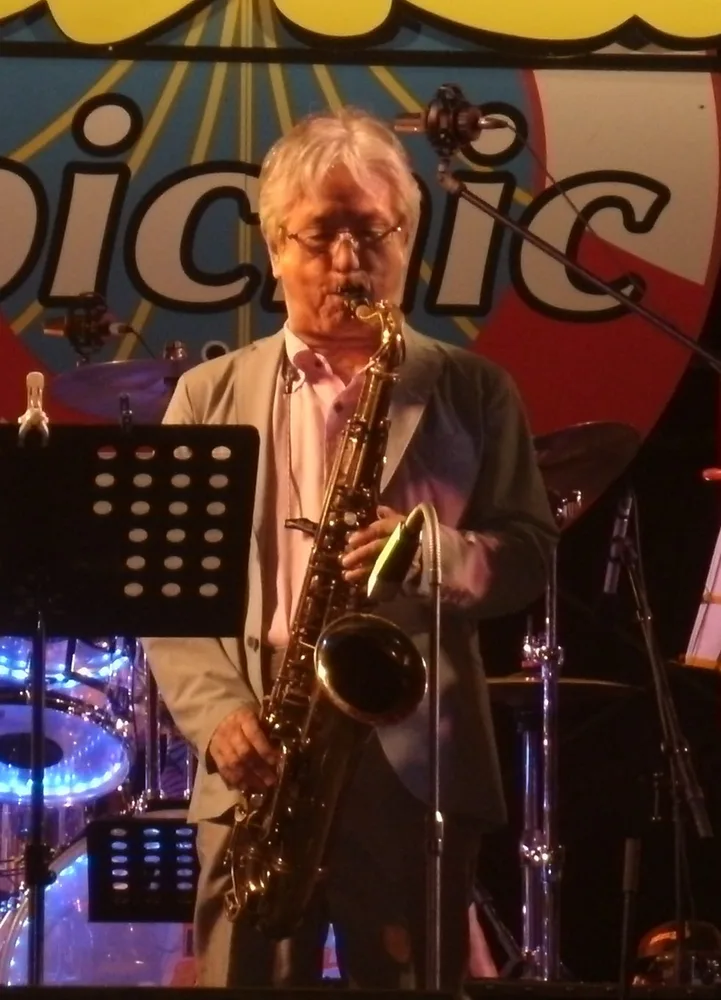
Mabumi Yamaguchi (center, tenor saxophone) with bassist Yasutaka Yorozu and trumpeter Takuya Kuroda at Inagawa Jazz, 3 August 2019. Cropped to the saxophonist. CC BY-SA 4.0 — https://commons.wikimedia.org/wiki/File:Inagawa_Jazz_(4).jpg

Mabumi Yamaguchi (山口真文) was born on 1 September 1946 in Karatsu, in Saga Prefecture, and started on trombone in his junior high school brass band. At Keio University he took up the saxophone, the instrument he had long admired, and played for four years in the KMP New Sound Orchestra, the university's jazz big-band club. After graduating he spent about six months at the Yamaha Music Foundation before deciding to make music his work.
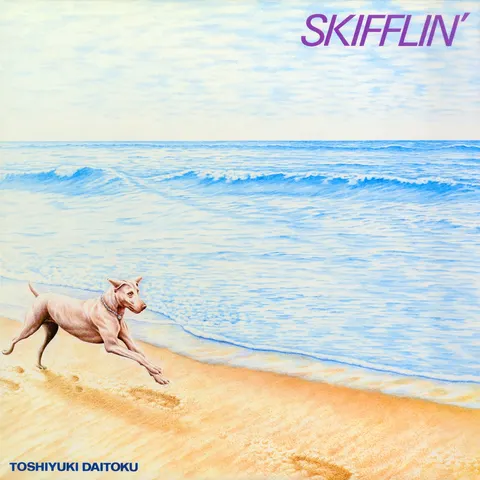
He began playing in Tokyo in 1969, at Ochanomizu Naru, which had just been opened by Katsuo Narita, and at the Shibuya club Oscar. In 1970, by his own account, he made his serious debut at Pit Inn and Taro in the quintet of the guitarist Ryo Kawasaki, still on alto. The following year the drummer George Otsuka recruited him and he switched to tenor. In the Otsuka quintet, with the trumpeter Shunzo Ohno, the pianist Toshiyuki Daitoku and the bassist Mitsuaki Furuno, he toured Japan widely.
His earliest recorded credit is from that year: on 25 September 1971 he played alto saxophone in the Brass 12 ensemble on Yosuke Yamashita's trio date Introducing Takeo Moriyama, a showcase for the drummer Takeo Moriyama. With Otsuka he then made two Three Blind Mice records on tenor and soprano: Go On, cut at Aoi Studio on 28 and 29 November 1972, and the double album In Concert!, recorded live at Kosei Nenkin Hall in Tokyo on 11 October 1973. He is also the tenor soloist on the second side of Now's the Time, recorded on 26 March 1974 at Toshi Center Hall, a shared date for Isao Suzuki, Sunao Wada, the Tsuyoshi Yamamoto trio and the Otsuka quintet.
In 1974 he left Otsuka and formed his own quartet, which worked mainly in live houses with the pianist Ichiro Doi, the bassists Kosuke Sakai and Ikuo Sakurai and the drummer Hideo Sekine. After the Rain (Union, 1976) was his first album as a leader, a quartet and quintet record with Kazumi Watanabe on guitar, Fumio Karashima on piano and electric piano, Nobuyoshi Ino on bass and Otsuka on drums. Earlier in 1976, on 7 February at the Nemuro Shimin Kaikan, he was one of two tenor saxophonists, with Yasuaki Shimizu, on the drummer Motohiko Hino's live quartet record Ryuhyo (Sailing Ice) for Three Blind Mice. His second album, Leeward (Union, 1978), was recorded in January 1978 with a new quartet of Doi, Sakurai and Sekine, and earned him the Shinjuku Jazz Award that year.
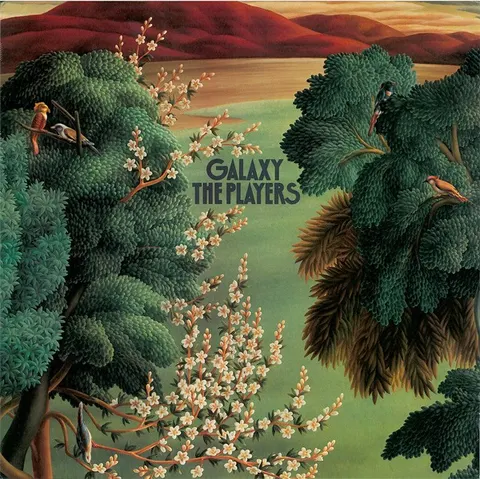
From 1976 he was also in the new group of the pianist Hiromasa Suzuki, first the Colgen Band and then The Players. He is the tenor saxophonist on Suzuki's Skip Step Colgen (Toshiba, 1977), with the bassist Akira Okazawa and the guitarist Tsunehide Matsuki, and on the CBS/Sony records Galaxy (1979), Wonderful Guys (1980, with Terumasa Hino on trumpet) and Madagascar Lady (1981). In the same busy years he played on the vocalist Kimiko Kasai's Love Celebration and Tokyo Special (both 1977), the singer Mieko Hirota's In My Feeling (1977), Ryuichi Sakamoto's Summer Nerves (1979) and the Chocolate album of 1982.
In November 1978 he joined an international band assembled around Otsuka. The Czech bassist Miroslav Vitous, the guitarist John Scofield and the young pianist Kenny Kirkland were in Japan, and over three days, 9 to 11 November, at Onkio Haus in Tokyo, they recorded Guardian Angels for Trio Records, with Yamaguchi on soprano saxophone. In the same weeks he recorded the Karashima album Hot Islands with Vitous and Otsuka. His own site describes touring Japan with that band in 1978 as a culture shock.
In 1981 the connection took him to New York. On 27 and 28 March at Sound Ideas Studios he recorded Mabumi (Trio Records) with Vitous, Kirkland and Tony Williams on drums, with Otsuka producing. The record lists him on tenor and sopranino saxophone. Soon afterward, by his own account, he left The Players and rejoined Otsuka's group Maracaibo, playing and composing with it until 1986. Its debut album, Maracaibo (Trio, 1980), credits him on tenor saxophone, with Vitous, Matsuki and the percussionist Nana Vasconcelos.
Squad followed in 1987: he, the pianist Toshiyuki Daitoku, the bassist Yoshio Suzuki and Hino recorded it at Sound Inn in Tokyo on 4, 5 and 6 February and released it on 21 July. Four of the eight pieces on the original LP are his. After that he worked as a sideman and bandleader in many settings: on Shigeharu Mukai's live album Mukai on the Wing (recorded January 1991), alongside the drummer Hiroshi Murakami; on the Shigeharu Mukai J Quintet featuring Junko Onishi record, cut in November 1993 with Junko Onishi, the bassist Rodney Whitaker and the drummer Gregory Hutchinson; and on the Lupin III albums of Yuji Ohno from 2004 and 2005. At the Moers festival in Germany on 14 May 2005 he played soprano saxophone in Masahiko Satoh's large ensemble, recorded as Live at Moers (Tribute to Masahiko Togashi), and his own site lists a 2009 appearance with Satoh's group at the North Sea Jazz Festival.
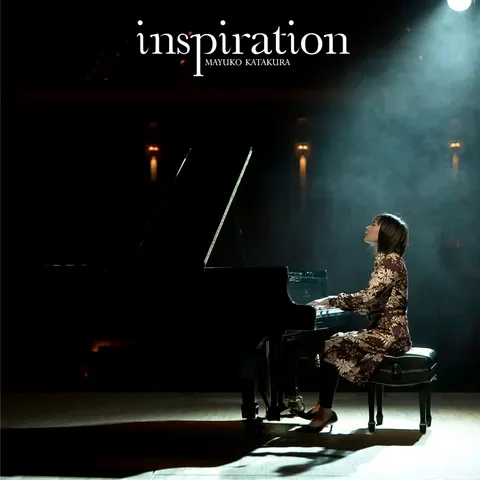
His own records in these decades are fewer and more deliberate. Regalo (1996) was self-issued as MAB-001, with Hiroshi Irie on keyboards, Nobuyuki Mizukami on bass and Taro Koyama on drums. Invitation (Skip, 1998) is a set of standards with Naoki Nishi, Mizukami and Tamaya Honda. Evening (2011) is a quartet with the pianist Mayuko Katakura, and Let Your Mind Alone (Spice of Life, 2017) is an all-original program with guitar. Since 2022 he has made three records with the Days of Delight label: the saxophone-bass-drums Trinity (recorded 11 December 2021), the soprano-saxophone quartet Viento (2023), and, on 27 March 2025, Next Standards, a duo album with Katakura that his own site presents as his first duo record. He is also on The One (2016), an album the Shigeo Maruyama Suikyo-za group made with the vocalist Jon Hendricks.
He turned 80 in September 2026 and is still working. His own site lists club dates in Tokyo, Nagoya, Chigasaki and Yokohama through the end of October 2026, and he takes students, from beginners to professionals, in a lesson program under his own name.
Yamaguchi is a tenor player with a modal and post-bop vocabulary, formed in the Tokyo club scene of the late 1960s. Collector listings describe Leeward as an outstanding modal jazz outing, with a long slow opener, "Dawn," built on a flanged Fender Rhodes, a piano duet in "Dewdrop," and a jazz-funk samba, "Distant Thunder," that gives each player a solo chorus. Discogs files that record under Modal, Fusion and Spiritual Jazz. He often switches to soprano, and on Viento plays nothing else.
The 1970s put him in two worlds at once. With Otsuka, Hino and Karashima he was part of the acoustic and spiritual-jazz current documented by Three Blind Mice and Trio, and with Hiromasa Suzuki's Players he was part of the studio fusion boom, writing for and soloing over electric rhythm sections.
His later repertoire looks back. Trinity (2022) is a pianoless trio on eight standards, from "Stella by Starlight" and "'Round Midnight" to "Solar." Next Standards (2025) takes on a second canon, the post-bop repertoire of the 1960s, among it "Nefertiti," "Footprints," "Dolphin Dance" and "Cantaloupe Island." Viento returns to his own writing: "Thalia" from the 1981 New York record, "True Face" and "Empty Mirror" from Regalo, and "Evening" and "Let Your Mind Alone" from his later records.
- After the Rain (1976, Union GU-5001) - His first record as a leader, with Kazumi Watanabe, Fumio Karashima, Nobuyoshi Ino and George Otsuka: four tracks of ten minutes or so, from "Breeze" to "Horizon." YouTube - After the Rain Listen · Buy
- Leeward (1978, Union GU-5007) - The quartet record with Ichiro Doi, Ikuo Sakurai and Hideo Sekine, all four pieces written by Yamaguchi. YouTube - Dawn Listen · Buy
- Guardian Angels (1979, Trio Records PAP-9154, Miroslav Vitous, George Ohtsuka, John Scofield, Kenny Kirkland and Mabumi Yamaguchi) - The Tokyo supergroup date, recorded over three days at Onkio Haus. YouTube - full album Listen · Buy
- Maracaibo (1980, Trio Records PAP-9214, Maracaibo) - George Ohtsuka's group, with Vitous, Tsunehide Matsuki and Nana Vasconcelos. YouTube - full album Listen · Buy
- Mabumi (1981, Trio Records PAP-25004) - The New York quartet with Vitous, Kirkland and Tony Williams. Apple Music - Mabumi · YouTube - Thalia Listen · Buy
- Squad (1987, Baybridge 30CP-131) - With Toshiyuki Daitoku, Yoshio Suzuki and Motohiko Hino. Buy
- Let Your Mind Alone (2017, Spice of Life SOLJP-0015) - All originals, with Yoshitaka Shoji on guitar. Apple Music - Let Your Mind Alone Listen · Buy
- Trinity (2022, Days of Delight DOD-025) - Saxophone, bass and drums on eight standards. Apple Music - Trinity · YouTube - Stella by Starlight Listen · Buy
- Next Standards (2025, Days of Delight DOD-052, with Mayuko Katakura) - The duo album. Apple Music - Next Standards · YouTube - trailer Listen · Buy
Mabumi Yamaguchi (山口真文) - Full Discography
Japanese tenor and soprano saxophonist. Born 1 September 1946, Karatsu, Saga Prefecture. Discogs artist 974749.
Name variations on record: M. Yamaguchi, M.Yamaguchi, M,Yamaguchi, 山口真文. Some retailers and one Hino-record listing spell the given name Masafumi; the Discogs entity, the artist's own site and the sleeve credits use Mabumi.
Group affiliations: Mabumi Yamaguchi Quartet, Mabumi Yamaguchi Quintet, Colgen Band, The Players, Maracaibo, Squad, Shigeharu Mukai J Quintet, Shigeo Maruyama Suikyo-za.
Leader (own-name releases)
| Album | Year | Label | Personnel | Notes | Listen | Buy |
|---|---|---|---|---|---|---|
| After the Rain | 1976 | Union Records, GU-5001 | Mabumi Yamaguchi (tenor and soprano saxophones), Kazumi Watanabe (guitar), Fumio Karashima (piano, electric piano), Nobuyoshi Ino (bass), George Ohtsuka (drums) | Billed to the Mabumi Yamaguchi Quartet / Quintet. Four tracks: "Breeze," "Bird," "Beagle," "Horizon." His first record as a leader. Reissued on LP as Teichiku Entertainment TEA-32. | YouTube | Amazon |
| Leeward | 1978 | Union Records, GU-5007 | Mabumi Yamaguchi (tenor and sopranino saxophones), Ichiro Doi (piano, electric piano), Ikuo Sakurai (bass), Hideo Sekine (drums) | Billed to the Mabumi Yamaguchi Quartet. Recorded January 1978. Four tracks, all composed by Yamaguchi: "Dawn," "Dewdrop," "Distant Thunder," "Leeward." Reissued on LP in 2020 by Le Tres Jazz Club (LTJC010). | YouTube - Dawn | Amazon |
| Mabumi | 1981 | Trio Records, PAP-25004 | Mabumi Yamaguchi (tenor and sopranino saxophones), Kenny Kirkland (piano, electric piano, synthesizer), Miroslav Vitous (bass, electric bass), Anthony Williams (drums) | Recorded 27 and 28 March 1981 at Sound Ideas Studios, New York. George Ohtsuka producer. Six tracks: "Thalia," "Merry-Go-Round," "Illusion," "Clearways," "Voices of the Night," "Wizard." Available digitally. | Apple Music · YouTube - Thalia | Amazon |
| Regalo | 1996 | Mabumi Yamaguchi (self-issued), MAB-001 | Mabumi Yamaguchi (soprano and tenor saxophones), Hiroshi Irie (keyboards), Nobuyuki Mizukami (bass), Taro Koyama (drums) | Seven tracks, from "Empty Mirror" and "True Face" to a ten-minute "Nefertiti" and the closing "Light in August." | not found | Amazon |
| Invitation | 1998 | Skip Records, SKIP-2002 | Mabumi Yamaguchi (tenor and soprano saxophones), Naoki Nishi (piano), Nobuyuki Mizukami (bass), Tamaya Honda (drums) | A standards program of nine tracks, from "Invitation" and "Triste" to "Yesterdays" and "I'll Be Seeing You." | not found | Amazon |
| Evening | 2011 | Mabumi Yamaguchi / Spice of Life, MAB-002 | Mabumi Yamaguchi (tenor saxophone), Mayuko Katakura (piano), Kunpei Nakabayashi (bass), Nobuyuki Komatsu (drums) | Released 22 June 2011. Nine tracks, including "Door," "Bamboo Shoot," "Heavy Rain," "Green Wind," "Mirada" and "Primavera." | Apple Music | Amazon |
| Let Your Mind Alone | 2017 | Spice of Life, SOLJP-0015 | Mabumi Yamaguchi (tenor and soprano saxophones), Yoshitaka Shoji (guitar), Misato Okumura (piano), Ryohei Komaki (bass), Nobuyuki Komatsu (drums) | Released 13 December 2017. Eight tracks, all composed and arranged by Yamaguchi, including "Sequel to a Dream," "Incantation" and "The Plot II." An LP edition followed through disk union. | Apple Music | Amazon |
| Trinity | 2022 | Days of Delight, DOD-025 | Mabumi Yamaguchi (tenor and soprano saxophones), Ryohei Komaki (bass), Tamaya Honda (drums) | Released 22 June 2022; recorded 11 December 2021. Eight standards, from "Stella by Starlight" and "'Round Midnight" to "Solar" and "Yearnin'." A trio without piano. | Apple Music · YouTube - Stella by Starlight | Amazon |
| Viento | 2023 | Days of Delight, DOD-040 | Mabumi Yamaguchi (soprano saxophone), Mayuko Katakura (piano), Ryohei Komaki (bass), Tamaya Honda (drums) | Released 15 December 2023. Eight tracks that revisit his own pieces: "Thalia," "True Face," "Empty Mirror," "Evening," "Let Your Mind Alone," "Sequel to a Dream," plus "Viento" and "Toi Yakusoku." | Apple Music · YouTube - trailer | Amazon |
Co-leader and group releases
| Album | Year | Label | Co-billed with | Notes | Listen | Buy |
|---|---|---|---|---|---|---|
| Guardian Angels | 1979 | Trio Records, PAP-9154 | Miroslav Vitous, George Ohtsuka, John Scofield, Kenny Kirkland | Yamaguchi on soprano saxophone. Recorded 9 to 11 November 1978 at Onkio Haus, Tokyo, mixed 12 November. Six tracks, from "His Meaning / Rising / Resolution" to "Shinkansen." Vitous is also credited as music director. | YouTube - full album | Amazon |
| Skip Step Colgen | 1977 | Toshiba, LF-91028 | Hiromasa Suzuki (Colgen New Band) | Yamaguchi on tenor saxophone, with Akira Okazawa (electric bass), Tsunehide Matsuki (electric guitar), Yasushi Ichihara (drums) and Takeru Muraoka (saxophone). Billed to Hiromasa Suzuki. | not found | Amazon |
| Galaxy | 1979 | Openskye, 25AP 1011 | The Players featuring Hiromasa "Colgen" Suzuki | Yamaguchi on tenor and soprano saxophones with Matsuki, Okazawa and Yuichi Togashiki. Recorded April 1979 at CBS/Sony Studio, Tokyo. | YouTube - full album | Amazon |
| Maracaibo | 1980 | Trio Records, PAP-9214 | Maracaibo (George Ohtsuka) | Yamaguchi on tenor saxophone, with Ohtsuka (drums), Miroslav Vitous (electric bass, synthesizer), Tsunehide Matsuki (electric guitar), Nana Vasconcelos (percussion, voice), Hiroshi Irie and Toshiyuki Sekine (synthesizers). Four tracks including a 16-minute "Maracaibo Cornpone." | YouTube - full album | Amazon |
| Wonderful Guys | 1980 | Openskye / CBS/Sony, 25AP 1757 | The Players | Yamaguchi on soprano and tenor saxophones, with Hiromasa Suzuki (piano), Tsunehide Matsuki, Akira Okazawa, Yuichi Togashiki, Tatsuji Yokoyama (percussion), Terumasa Hino (trumpet) and Janice Pendarvis (vocals). Recorded November and December 1979 at CBS Studio, Tokyo. | not found | Amazon |
| Madagascar Lady | 1981 | Openskye / CBS/Sony, 28AH 1293 | The Players | Yamaguchi on soprano and tenor saxophones. Seven tracks from "Madagascar Lady" to "Leopard." | not found | Amazon |
| Squad | 1987 | Baybridge Records, 30CP-131 (LP: KUX-198-B) | Squad (Toshiyuki Daitoku, Yoshio Suzuki, Motohiko Hino) | Billed to the quartet Squad; the artist's own site lists it among his albums. Yamaguchi on tenor and soprano saxophones. Recorded and mixed digitally at Sound Inn, Tokyo, on 4, 5 and 6 February 1987; CD released 21 July 1987. The original eight pieces include four by Yamaguchi ("The Plot," "Liberty Island," "Amethyst," "The Ivory Bracelet"), three by Suzuki and one by Daitoku; the CD adds "When Love Meets Love" and "The Plot II (Stick Version)." | not found | Amazon |
| Next Standards | 2025 | Days of Delight, DOD-052 | Mayuko Katakura (piano) | A duo album, billed to Mabumi Yamaguchi and Mayuko Katakura; tenor and soprano saxophones. Recorded 10 September and 10 December 2024 at the Taro Okamoto Memorial Museum; released 27 March 2025. Ten tracks: "Nefertiti," "Footprints," "Circle," "Dolphin Dance," "Chan's Song," "Prince of Darkness," "Miyako," "Riot," "Pee Wee," "Cantaloupe Island." | Apple Music · YouTube - trailer | Amazon |
Guest and sideman appearances
| Album | Year | Leader | Label | Role and notes | Listen | Buy |
|---|---|---|---|---|---|---|
| Introducing Takeo Moriyama | 1971 | Yosuke Yamashita Trio with Brass 12 | Express, ETJ-9001 | Alto saxophone. Recorded 25 September 1971 at Toshiba Studio; released 1 December 1971. His earliest recorded credit. | not found | Amazon |
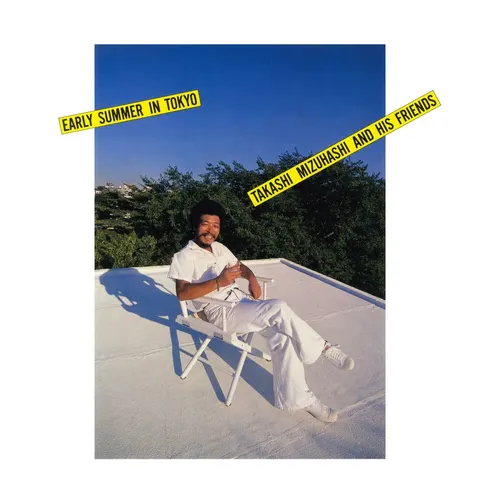
| Go On | 1972 | The George Otsuka 5 (George Otsuka Quintet) | Three Blind Mice, TBM-13 | Tenor and soprano saxophones, with Shunzo Ohno, Toshiyuki Daitoku, Takashi Mizuhashi and Otsuka. Recorded 28 and 29 November 1972 at Aoi Studio. | not found | Amazon |
| In Concert! | 1973 | George Otsuka Quintet | Three Blind Mice, TBM-1002 and 1003 | Tenor and soprano saxophones. Double album recorded live at Kosei Nenkin Hall, Tokyo, 11 October 1973, with Shunzo Ohno, Daitoku and Mitsuaki Furuno. | not found | Amazon |
| Now's the Time | 1974 | Isao Suzuki and Sunao Wada with the Tsuyoshi Yamamoto Trio and the George Otsuka Quintet +2 | Three Blind Mice, TBM-29 | Tenor saxophone on side B. Recorded 26 March 1974 at Toshi Center Hall, Tokyo, alongside Takao Uematsu and Yoshio Otomo. | not found | Amazon |
| "Ryuhyo" (Sailing Ice) | 1976 | Motohiko Hino Quartet + 1 | Three Blind Mice, TBM-61 | Tenor saxophone, with Yasuaki Shimizu (tenor, alto), Kazumi Watanabe (guitar), Nobuyoshi Ino (bass) and Hino. Recorded 7 February 1976 at the Nemuro Shimin Kaikan. | YouTube - title track | Amazon |
| In My Feeling | 1977 | Mieko Hirota | Columbia, SP-7009 | Saxophone, with arrangements by Hiromasa Suzuki and Kiyoshi Sugimoto. Recorded November and December 1976. | not found | Amazon |
| Love Celebration | 1977 | Kimiko Kasai | CBS/Sony, 06SP 186 | Tenor and soprano saxophones, with Takeru Muraoka, Tsunehide Matsuki and Akira Okazawa. | not found | Amazon |
| Tokyo Special | 1977 | Kimiko Kasai | CBS/Sony, 25AP 730 | Tenor and soprano saxophones. Released 21 September 1977. | not found | Amazon |
| Shining Wave | 1979 | Anli Sugano | Far East, ETJ-85005 | Sopranino saxophone. | not found | Amazon |
| Triton (Triton of the Sea soundtrack) | 1979 | Hiromasa Suzuki | Kaeru Production Company, LRs-642 | Tenor and soprano saxophones on the anime score. | not found | Amazon |
| Hot Islands | 1979 | Fumio Karashima | Trio Records, PAP-9142 | Tenor and soprano saxophones, with Miroslav Vitous and George Ohtsuka. Recorded 8, 11 and 14 November 1978 in Tokyo. | not found | Amazon |
| Summer Nerves | 1979 | Ryuichi Sakamoto and the Kakutougi Session | CBS/Sony, 25AH 507 | Saxophone on the first track of side A. Released 21 June 1979. | not found | Amazon |
| Chocolate | 1982 | Chocolate | CBS/Sony, 28AH 1448 | Sopranino saxophone, with Yasuaki Shimizu on tenor. | not found | Amazon |
| Mukai on the Wing - Live Recording | 1991 | Shigeharu Mukai | Pro Arte Musicae, PAMJ-1001 | Tenor saxophone, with Shigeo Fukuda, Mitsuaki Furuno and Hiroshi Murakami. Recorded 24 and 25 January 1991 at Buddy, Ekoda, Tokyo; released 21 April 1991. | not found | Amazon |
| Mauve | 1991 | Aoi Katoh | Warner Bros. Records, AK-1001 | Tenor saxophone on tracks 1, 4 and 6 to 8. Recorded 16 and 18 May 1991. | not found | Amazon |
| Deep in Autumn | 1992 | Sakurako Ogyu | Vaaan Media, VMCH-1037 | Saxophone. Recorded 26 November 1990 and 25 November 1991; released 25 June 1992. | not found | Amazon |
| Shigeharu Mukai J Quintet featuring Junko Onishi | 1994 | Shigeharu Mukai J Quintet | Somethin' Else, TOCJ-5557 | Tenor saxophone, with Junko Onishi, Rodney Whitaker and Gregory Hutchinson. Recorded 25 and 26 November 1993 at Woodstock Karuizawa Studio; released 23 February 1994. | not found | Amazon |
| Lupin the Third: Return the Treasure for Ultimate Pleasure | 2004 | Yuji Ohno | Vap, VPCG-84802 | Saxophone on tracks 1 and 3 to 18 of the television-special soundtrack. | not found | Amazon |
| Lupin the Third "Jazz": Cool for Joy | 2005 | Yuji Ohno Trio and Friends | Vap, VPCG-84821 | Tenor saxophone on tracks 1, 3 and 6 to 9. | not found | Amazon |
| Live at Moers (Tribute to Masahiko Togashi) | 2005 | Masahiko Satoh and Saifa | BAJ Records, BJCD 0026 | Soprano saxophone. Recorded live at the International New Jazz Festival Moers, Germany, 14 May 2005. | not found | Amazon |
| Love's the Greatest Mystery | 2005 | Yoshiko Saita | What'sNew Records, WNCS-5101 | Tenor saxophone. Released 14 December 2005. | not found | Amazon |
| Moving Scenes | 2006 | Hideaki Hori | BQ Records, BQR-2031 | Tenor saxophone. | not found | Amazon |
| Alone and Together | 2010 | Naoki Kitajima | T-TOC Records, XQDN1023 | Soprano saxophone. | not found | Amazon |
| The One | 2016 | Shigeo Maruyama Suikyo-za meets Jon Hendricks | F.S.L., FSCJ-0009 | Tenor saxophone. | not found | Amazon |
| The Golden Mask | 2020 | Miki Hirose | Days of Delight, DOD-008 | Tenor and soprano saxophones. | not found | Amazon |
| Somewhere | 2020 | Shigeo Maruyama Suikyo-za | F.S.L., FSCJ-0015 | Tenor and soprano saxophones. | not found | Amazon |
| El Valor | 2024 | Miki Hirose | Days of Delight, DOD-043 | Tenor saxophone. | not found | Amazon |
Compilations and other appearances
Chronological list of compilation and track-only appearances and further credits: NHK Transcription Programme (No. 137) - Modern Jazz in Japan (NHK, 1975), Christmas Jazz (Fun House, 1991), Groovy Indeed! Trio Records 1971-1981 (art union, 2010), Shibuya Jazz Classics - Nobukazu Takemura Collection - Three Blind Mice Issue (Solid Records, 2005), Childhood Memories (Sadesper Record, Starchild, 2010), J Jazz: Deep Modern Jazz from Japan 1969-1983, Volume 2 (2019), Scenery of Japanese Jazz 2 (2021), Alone at Taro's Atelier (Days of Delight, 2023), Spirit of "Days of Delight" Vol. 3 (2023) and Vol. 4 (2024), and Jazz Tune 23 Vol. 1 (Tam). Discogs also credits him on further Yuji Ohno Lupin the Third albums from 1999 to 2007, among them Isn't It Lupintic? (1999), Isn't It More Lupintic? (2000), Lupin the Third "Jazz": Bossa and Fusion (2002), Another "Jazz" (2002), The 10th: New Flight (2006) and two 2007 soundtrack and compilation releases.
Sources
- Discogs: Mabumi Yamaguchi, artist 974749
- Discogs: After the Rain
- Discogs: Leeward
- Discogs: Mabumi
- Discogs: Guardian Angels
- Discogs: Squad
- Mabumi Yamaguchi official site: discography
- Mabumi Yamaguchi official site: Invitation
- Mabumi Yamaguchi official site: Let Your Mind Alone
- Mabumi Yamaguchi official site: Squad
- Apple Music: Mabumi Yamaguchi
- George Otsuka - recruited him in 1971; Yamaguchi is the saxophonist on the Otsuka quintet's Go On (1972) and In Concert! (1973), the drummer is on After the Rain (1976) and on Guardian Angels (1979) and the Maracaibo album (1980), and he produced Mabumi (1981).
- Shunzo Ohno - trumpet and flugelhorn beside Yamaguchi on Go On and In Concert!.
- Motohiko Hino - leader of Ryuhyo (1976), and drummer on Yamaguchi's Squad (1987).
- Yasuaki Shimizu - the second tenor saxophonist on Ryuhyo (1976); the two are also credited on the 1982 Chocolate album.
- Kazumi Watanabe, Fumio Karashima and Nobuyoshi Ino - guitar, piano and bass on After the Rain (1976); Watanabe and Ino are also on Ryuhyo, and Karashima led Hot Islands (1979), with Yamaguchi, Vitous and Otsuka.
- Hiromasa Suzuki, Akira Okazawa and Tsunehide Matsuki - the Colgen Band and The Players, on Skip Step Colgen (1977) and the Players albums of 1979 to 1981; Matsuki is also on the 1980 Maracaibo album.
- Terumasa Hino - trumpet on The Players' Wonderful Guys (1980).
- Kimiko Kasai - Love Celebration and Tokyo Special (both 1977).
- Ryuichi Sakamoto - saxophone on the opening track of Summer Nerves (1979), credited to Sakamoto and the Kakutougi Session.
- John Scofield - guitar on Guardian Angels (1979).
- Tony Williams - drums on Mabumi (1981).
- Yoshio Suzuki - bass on Squad (1987).
- Shigeharu Mukai and Hiroshi Murakami - trombone and drums on Mukai on the Wing (1991).
- Junko Onishi and Gregory Hutchinson - piano and drums on the Shigeharu Mukai J Quintet featuring Junko Onishi record (1994).
- Yosuke Yamashita and Takeo Moriyama - the trio on Introducing Takeo Moriyama (1971), his earliest recorded credit.
- Isao Suzuki and Tsuyoshi Yamamoto - co-billed leaders of Now's the Time (1974).
- Yuji Ohno - the Lupin III albums Return the Treasure for Ultimate Pleasure (2004) and Cool for Joy (2005).
- Masahiko Satoh - soprano saxophone in his ensemble on Live at Moers (2005).
- Jon Hendricks - tenor saxophone on The One (2016), billed to Shigeo Maruyama Suikyo-za with Hendricks.
- Anli Sugano - sopranino saxophone on Shining Wave (1979).
- Ryo Kawasaki - by Yamaguchi's own account, the guitarist whose quintet gave him his Pit Inn debut in 1970.
- Miroslav Vitous and Kenny Kirkland - the bassist and pianist of Guardian Angels and Mabumi; Vitous is also on the 1980 Maracaibo record and Hot Islands.
- Miki Hirose - trumpeter and leader of the quintet on The Golden Mask (Days of Delight, 2020), on which Yamaguchi plays tenor and soprano saxophones, and El Valor (2024), with Yamaguchi on tenor.
- Mayuko Katakura - pianist on his quartet album Evening (2011) and on Viento (2023), his duo partner on Next Standards (2025), and the pianist on Miki Hirose's The Golden Mask (2020), on which he plays.
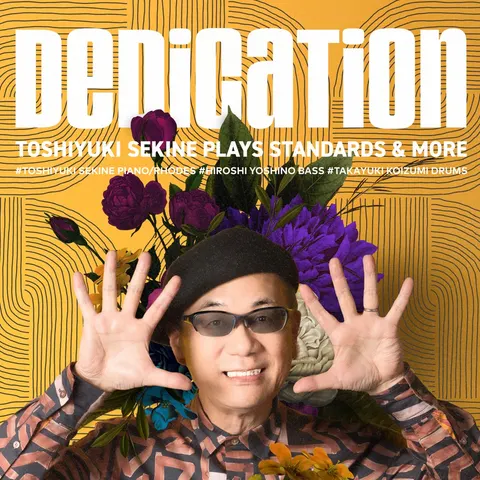
- Toshiyuki Daitoku - pianist alongside Yamaguchi in the George Otsuka quintet on Go On (1972) and In Concert! (1973), on Now's the Time (1974) and on the 1987 quartet album Squad.
- Takashi Mizuhashi - bassist in the George Otsuka quintet on Go On (Three Blind Mice TBM-13, recorded 28 and 29 November 1972), on which Yamaguchi plays tenor and soprano saxophones.
- Toshiyuki Sekine - credited on synthesizer on Maracaibo (Trio Records, 1980), the George Otsuka group record on which Yamaguchi plays tenor saxophone.
- Yuji Imamura - percussion beside Yamaguchi on Flying Clouds (Motohiko Hino Quartet + 2, recorded May 27, 1976 and released in 2022).
More Jazz Fusion Artists
See all 351 Jazz Fusion artists →More Japanese Jazz Artists
See all 262 Japanese artists →- Mabumi Yamaguchi official site
- Apple Music artist page
- YouTube: Mabumi Yamaguchi - Topic
- Days of Delight on YouTube
- Discogs: Mabumi Yamaguchi
- Mabumi Yamaguchi on JazzProfiles.com
- r/JapaneseJazz
- Mabumi Yamaguchi official site: profile
- Mabumi Yamaguchi official site: discography
- Wikipedia (German): Mabumi Yamaguchi
- Wikidata: Q37922705
- Discogs: Mabumi Yamaguchi, artist 974749
- Discogs: After the Rain, Union GU-5001
- Discogs: Leeward, Union GU-5007
- Discogs: Mabumi, Trio Records PAP-25004
- Discogs: Guardian Angels, Trio Records PAP-9154
- Discogs: Squad, Baybridge 30CP-131
- Light in the Attic: After the Rain reissue
- Soundohm: Leeward reissue
- Wikimedia Commons: File:Inagawa Jazz (4).jpg