 JAZZPROFILES lives in the music 1,572 Jazz Artists fully Profiled!
 Marcus Miller
Last updated September 11, 2026
Listen on Spotify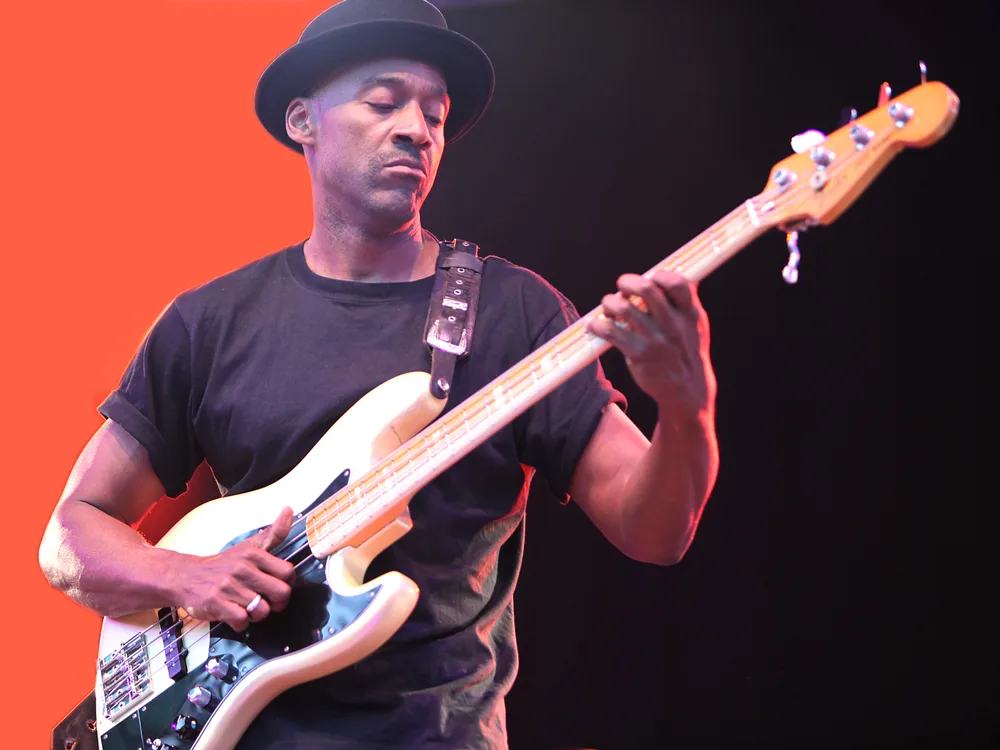
Marcus Miller performing at Stockholm Jazz Fest, 2009 CC BY 2.0 — Wikimedia Commons — photographer Bengt Nyman — https://commons.wikimedia.org/wiki/File:Marcus_Miller_at_Stockholm_Jazz_Fest_2009.jpg

William Henry Marcus Miller Jr. was born June 14, 1959, in Brooklyn, New York, the son of a church organist and choir director; through his father's side he is a cousin of pianist Wynton Kelly. Classically trained on clarinet before he picked up bass, he was working New York's jazz clubs as a session player before he was old enough to drive there, moving through dates with Bernard Wright, Tom Browne, the Brecker Brothers, and Bob James while still a teenager.
That session work led to a run of R&B and pop credits across the late 1970s and 1980s: Aretha Franklin's "Jump to It" (1982, co-written with Luther Vandross), David Bowie's "Underground" from the Labyrinth soundtrack (1986), and, most durably, a run of Luther Vandross singles Miller co-wrote and co-produced, including "Any Love" and "Don't Want to Be a Fool." "Power of Love/Love Power," from Vandross's 1991 album Power of Love, won Miller his first Grammy, Best R&B Song, at the 34th Annual Grammy Awards in February 1992.
In 1980, Miller joined Miles Davis's band, and by the middle of the decade he had become Davis's primary songwriter, arranger, and co-producer. On Tutu (1986), Miller wrote and arranged every track except "Tomaas" (co-written with Davis), "Backyard Ritual" (contributed by George Duke), and a cover of Scritti Politti's "Perfect Way," co-produced the album with Tommy LiPuma, and played most of the instruments himself, including bass, synthesizers, drum machines, bass clarinet, and soprano saxophone. The Davis/Miller partnership continued on the Music from Siesta soundtrack (1987, billed jointly to Miles Davis and Marcus Miller) and Amandla (1989), Davis's final studio album with Miller, dedicated to the memory of arranger Gil Evans.
Miller's solo catalog runs parallel to that studio partnership. He debuted with Suddenly (1983) and Marcus Miller (1984) on Warner Bros., then moved to Dreyfus Jazz for The Sun Don't Lie (1993, dedicated to Davis's memory), Tales (1995), and the live album Live & More (1998). His 2001 album M² stacked guest performances from Herbie Hancock, Hubert Laws, Wayne Shorter, Branford Marsalis, and Chaka Khan, and won the Grammy for Best Contemporary Jazz Album at the 44th Annual Grammy Awards in February 2002. Renaissance (2012) and Afrodeezia (2015) both topped Billboard's Contemporary Jazz Albums chart, with Afrodeezia, inspired by his role as a UNESCO Artist for Peace supporting the Slave Route Project, also picking up a Grammy nomination.
In 1997, Miller assembled a one-off band called Legends for an eleven-date tour of Europe's major jazz festivals, with Eric Clapton, David Sanborn, Steve Gadd, and Joe Sample of The Crusaders. The group never recorded a studio album; its only document is a July 4, 1997 performance at the Montreux Jazz Festival, later released as Legends: Live at Montreux 1997. In 2008, Miller co-founded another supergroup, S.M.V., with fellow bassists Stanley Clarke and Victor Wooten, releasing the album Thunder that year.
Alongside his recording career, Miller has scored more than twenty-five films, from House Party (1990) through Marshall (2017) and Candy Cane Lane (2023). He hosts Miller Time with Marcus Miller on Sirius XM and, as of December 2021, holds a Lifetime Achievement Award from Bass Player magazine. He remains an active touring artist as of 2026.
Miller's catalog runs the crossover jazz arc in both directions at once. As a sideman and songwriter, he moved fluidly between straight jazz session work (the Brecker Brothers, Bob James) and hit R&B/pop production (Vandross, Franklin), often on the same year's calendar. As a bandleader, his solo albums sit consistently in jazz-funk and contemporary jazz, built on his own slap-and-pop bass technique and dense horn-and-rhythm arrangements, while his work behind Miles Davis on Tutu and Amandla shows the same sensibility applied to an elder statesman's late-career reinvention rather than his own name on the cover. Where many crossover artists are described as moving from jazz toward a more commercial sound, Miller spent his most productive years working both directions simultaneously: writing radio hits for other artists' careers while building his own catalog inside jazz's own award categories.
- Tutu (1986, Warner Bros., credited to Miles Davis) - The clearest evidence of Miller's authorship: written and arranged almost entirely by Miller, who also played most of the instrumentation. Spotify - Tutu Listen · Buy
- M² (2001, Dreyfus Jazz) - Miller's Grammy-winning, guest-stacked solo statement, featuring Herbie Hancock, Hubert Laws, and Wayne Shorter. Spotify - M² Listen · Buy
- Renaissance (2012, Concord Jazz) - Billboard Contemporary Jazz Albums No. 1, representative of his 2010s solo sound. Spotify - Renaissance Listen · Buy
- Power of Love (1991, Epic, Luther Vandross) - Home to "Power of Love/Love Power," Miller's first Grammy win, for Best R&B Song. Spotify - Power of Love Listen · Buy
Marcus Miller: Full Discography
Discogs artist ID 79989, real name William Henry Marcus Miller Jr.
As Leader
| Album | Year | Label | Personnel | Notes | Listen | Buy |
|---|---|---|---|---|---|---|
| Suddenly | 1983 | Warner Bros. (1-23806) | Marcus Miller (bass, keyboards, guitar, lead/backing vocals, composer, producer); Luther Vandross (backing vocals, "Lovin' You," "Just for You," "Be My Love"); co-produced by Michael Colina and Ray Bardani | Debut solo album, recorded Aug-Dec 1982, issued on Patrick Rains' PRA Records through Warner Bros. | Spotify | Amazon |
| Marcus Miller | 1984 | Warner Bros. (1-25074) | Marcus Miller (all instruments, lead/backing vocals, composer, producer); backing vocalists Diva Gray, Fonzi Thornton, Robin Clark, Tawatha, Yvonne Lewis, Renee Diggs | Second solo album | Spotify | Amazon |
| The Sun Don't Lie | 1993 | Dreyfus Jazz (FDM 36560-2) | Marcus Miller (bass, producer) | Dedicated to the memory of Miles Davis (d. 1991); reached No. 10, Billboard Jazz Albums; Grammy-nominated, Best Contemporary Jazz Performance | Spotify | Amazon |
| Tales | 1995 | Dreyfus Jazz (FDM 36571-2) | Marcus Miller (bass, producer) | No. 7, Billboard Top Contemporary Jazz Albums; Grammy-nominated in three categories: Best Contemporary Jazz Performance, Best Instrumental Composition (title track, with Allen Toussaint), Best Arrangement Instrumental or A Cappella ("Come Together") | Spotify | Amazon |
| Live & More | 1998 | Dreyfus Jazz (FDM 36585-2) | Marcus Miller (bass, bass clarinet, keyboards, guitar, producer); Kenny Garrett (alto/soprano sax); Lalah Hathaway (backing vocals); Charles "Poogie" Bell (drums); Hiram Bullock (lead guitar); Michael "Patches" Stewart (flugelhorn); Bernard Wright and David Delhomme (keyboards) | Live album, recorded 1996, released March 10 1998; No. 6, Billboard Top Contemporary Jazz Albums | Spotify | Amazon |
| M² | 2001 | Dreyfus Jazz (FDM 36623-2) | Marcus Miller (bass, producer); guests including Herbie Hancock, Hubert Laws, Wayne Shorter, Branford Marsalis, Chaka Khan, Kenny Garrett, James Carter, Maceo Parker, Fred Wesley, Paul Jackson Jr., Vinnie Colaiuta, Hiram Bullock, Lenny White | Grammy winner, Best Contemporary Jazz Album, 44th Annual Grammy Awards (Feb 27, 2002); No. 16 on Billboard's year-end Contemporary Jazz Albums for 2001 | Spotify | Amazon |
| Silver Rain | 2005 | 3 Deuces / Koch Records (KOC-CD-5779) | Marcus Miller (bass, keyboards, producer, arranger); Eric Clapton (guest guitar, "Silver Rain") | Spotify | Amazon | |
| Free | 2007 | Dreyfus Jazz (FDM 46050 369102) | Marcus Miller (bass, producer); Corinne Bailey Rae (lead vocals, "Free"); Keb' Mo' (vocals, co-writer, "Milky Way") | Covers include Deniece Williams's "Free," Stevie Wonder's "Higher Ground," Tower of Power's "What Is Hip" | Spotify | Amazon |
| Renaissance | 2012 | Concord Jazz / 3 Deuces (CJA-33794-02) | Marcus Miller (bass, bass clarinet, arranger, producer); Dr. John (vocals); Kris Bowers and Bobby Sparks (keyboards); Paul Jackson Jr. and Adam Rogers (guitar); Louis Cato (drums); Alex Han (alto sax) | No. 1, Billboard Contemporary Jazz Albums | Spotify | Amazon |
| Afrodeezia | 2015 | Blue Note (B002277802) | Marcus Miller (bass, producer) | Inspired by his UNESCO Artist for Peace role and the Slave Route Project; No. 1, Billboard Contemporary Jazz Albums; Grammy-nominated, Best Contemporary Instrumental Album (2016 ceremony) | Spotify | Amazon |
| Laid Black | 2018 | Blue Note / Universal Music France (0602567645900) | Marcus Miller (bass, arranger, producer) | Grammy-nominated, Best Contemporary Instrumental Album (2019 ceremony) | Spotify | Amazon |
Co-Leader / Band Projects
| Project | Year | Label | Personnel | Notes | Listen | Buy |
|---|---|---|---|---|---|---|
| Music From Siesta (billed Miles Davis / Marcus Miller) | 1987 | Warner Bros. | Miles Davis (trumpet); Marcus Miller (composer, all other instruments, producer) | Soundtrack to the film Siesta (dir. Mary Lambert); Grammy-nominated, Best Jazz Instrumental Performance Soloist (31st Annual Grammy Awards, Feb 1989) | Spotify | Amazon |
| Thunder (S.M.V.) | 2008 | Heads Up International (HUCD3163) | Stanley Clarke, Marcus Miller, Victor Wooten (bass, co-production) | Three-bassist supergroup studio album | Spotify | Amazon |
| Legends: Live at Montreux 1997 | 2005 (recorded July 4, 1997) | Eagle Vision / Montreux Sounds | Eric Clapton (guitar); Marcus Miller (bass); David Sanborn (sax); Steve Gadd (drums); Joe Sample of The Crusaders (keyboards) | Miller assembled the Legends lineup for an eleven-date 1997 European jazz-festival tour; never released a studio album, only this Montreux recording, issued as DVD/Blu-ray, not currently on Spotify | YouTube | Amazon |
Notable Production & Songwriting Credits (billed solely to Miles Davis)
| Year | Album | Artist | Label | Miller's Role | Notes | Listen | Buy |
|---|---|---|---|---|---|---|---|
| 1986 | Tutu | Miles Davis | Warner Bros. | Wrote/arranged all tracks except "Tomaas" (co-written with Davis), "Backyard Ritual" (George Duke), and "Perfect Way" (Scritti Politti cover); co-produced with Tommy LiPuma; played bass, synthesizers, drum machines, bass clarinet, soprano sax | Davis won the 1986 Grammy for Best Jazz Instrumental Performance, Soloist | Spotify | Amazon |
| 1989 | Amandla | Miles Davis | Warner Bros. | Producer | Final Davis/Miller studio collaboration; dedicated to arranger Gil Evans, who died in March 1988 | Spotify | Amazon |
Sideman / Guest Appearances (curated highlights)
A curated list of the session and songwriting credits mentioned elsewhere on this profile. Full catalog at discogs.com/artist/79989-Marcus-Miller.
| Year | Leader/Project | Title | Label | Miller's Role | Notes | Listen | Buy |
|---|---|---|---|---|---|---|---|
| 1981 | Luther Vandross | Never Too Much | Epic | Bass | Vandross's platinum debut solo album | Spotify | Amazon |
| 1982 | Aretha Franklin | Jump to It | Arista | Bass; co-writer of the title track with Luther Vandross | Title single hit No. 1 R&B, No. 24 Hot 100 | Spotify | Amazon |
| 1987 | David Sanborn | A Change of Heart | Warner Bros. | Composer ("Chicago Song"); co-producer | No. 3, Billboard Top Contemporary Jazz Albums | Spotify | Amazon |
| 1991 | Luther Vandross | Power of Love | Epic | Co-writer/co-producer, "Power of Love/Love Power" | Grammy winner, Best R&B Song, 34th Annual Grammy Awards (Feb 25, 1992), with Vandross and Teddy Vann | Spotify | Amazon |
- Miles Davis - Primary songwriter, arranger, and co-producer on Tutu (1986), Music from Siesta (1987), and Amandla (1989); bassist in Davis's 1980s touring band.
- Luther Vandross - Co-wrote and co-produced four singles, including "Any Love" and "Don't Want to Be a Fool"; "Power of Love/Love Power" won Miller a 1992 Grammy.
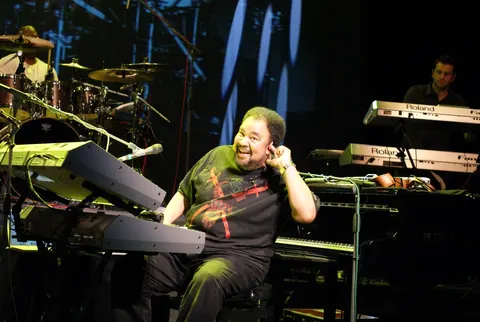
- George Duke - Contributed "Backyard Ritual," one of only three Tutu (1986) tracks not written by Miller.
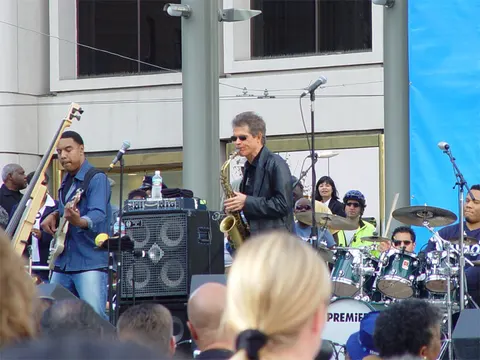
- David Sanborn - Miller composed and co-produced "Chicago Song" on Sanborn's A Change of Heart (1987); both were part of the 1997 Legends lineup.
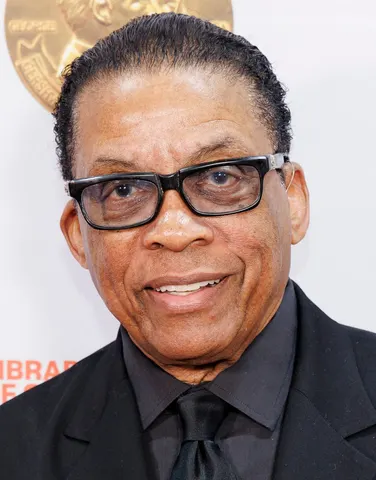
- Herbie Hancock and Hubert Laws - Guest performers on Miller's Grammy-winning M² (2001).
- Joe Sample of The Crusaders - Keyboardist in the 1997 Legends lineup Miller assembled for a European jazz-festival tour.
- Stanley Clarke and Victor Wooten - Co-founders with Miller of the bass supergroup S.M.V., Thunder (2008).