 JAZZPROFILES lives in the music 2,059 Jazz Artists fully Profiled!
Helen Forrest
Last updated October 29, 2026
Listen on Spotify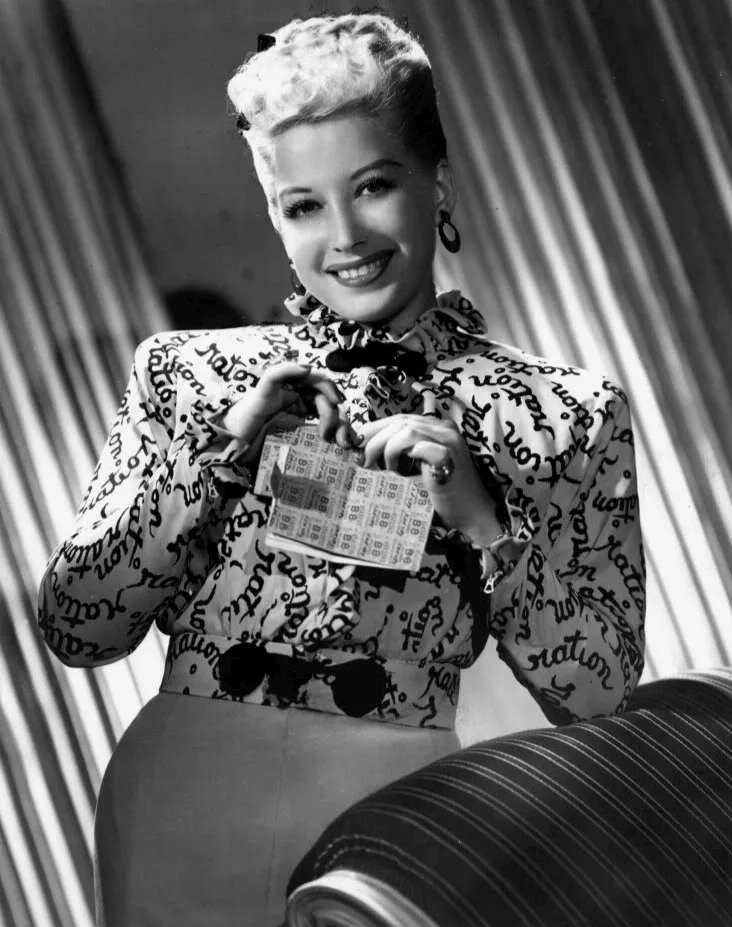
Helen Forrest in a CBS radio promotional photograph, November 1945 Public domain (United States press photograph published before 1978 without a copyright notice) — Wikimedia Commons — https://commons.wikimedia.org/wiki/File:Helen_Forrest_1945.JPG — CBS press photograph

Helen Forrest was born Helen Fogel in Atlantic City, New Jersey, on April 12, 1917, the daughter of Louis and Rebecca Fogel. Her father died of influenza while she was an infant, and the family later moved to Brooklyn. A piano teacher, Honey Silverman, heard her singing during lessons and steered her toward voice, and she left high school to look for work. She sang with her brother Ed's band in Atlantic City, took a new surname on the advice of people in the business, and in 1934, at seventeen, began singing on New York radio at WNEW. At WCBS she was billed as "Bonnie Blue" and "The Blue Lady of Song." A job at the Madrillon Club in Washington, D.C., kept her working for roughly two years.
Bandleader Artie Shaw saw her at the Madrillon and hired her in 1938, when Billie Holiday was leaving his band. For a short time the two women worked in the same band, and Forrest later said that when she learned Black performers were required to wait offstage until their turn, she insisted on doing the same. She made 38 singles with Shaw's orchestra. "They Say" was cut in New York on December 19, 1938, "Deep Purple" followed on March 12, 1939 and reached No. 17 that year, and "All the Things You Are" was recorded on October 26, 1939. Shaw broke up the band in November 1939.
In December 1939 she joined Benny Goodman, with whom she made 55 studio recordings, including "The Man I Love." Goodman was the most demanding leader she worked for, and she remembered writing for her voice as an afterthought: she mostly sang choruses of arrangements built for the band, while Goodman noodled on clarinet behind her. During that period she also stepped outside his orchestra for two ballads on Lionel Hampton's small-group Victor sessions in Hollywood, "I'd Be Lost Without You" on May 10, 1940 and "I Don't Stand a Ghost of a Chance With You" on July 17, 1940, with Nat King Cole at the piano and Oscar Moore on guitar. Her Goodman recording of "Taking a Chance on Love," cut on November 29, 1940 and reissued in 1943, topped the charts on its return. She left Goodman in August 1941, saying she wanted to avoid a nervous breakdown, and Peggy Lee took the vocal chair.
She then approached Harry James with one condition, that she be allowed to sing more than a single chorus. James had been looking for a more jazz-oriented singer, but the band voted for her. He slowed tempos and built arrangements around his trumpet and her voice, and the three years that followed produced her most famous records: "I Don't Want to Walk Without You" (Columbia 36478), a No. 1 pop hit in 1942; "I Had the Craziest Dream," recorded July 23, 1942 and topping the Billboard charts; and "I've Heard That Song Before," cut on July 31, 1942, the last day of recording before the 1942 to 1944 musicians' strike, and a No. 1 hit in early 1943. She appeared with the James band in the 1942 film Springtime in the Rockies, and Down Beat readers voted her the top female vocalist of both 1942 and 1943. She left James in late 1943, explaining that three years with a band was enough.
As a soloist she signed with Decca, and her first single for the label, "Time Waits for No One" (Decca 18600, 1944), reached No. 2 on the Hit Parade. From 1944 she co-starred with Dick Haymes on his CBS radio program, and the two made 18 duets for Decca between 1944 and 1946, ten of them Top Ten hits. "Long Ago (and Far Away)" (Decca 23317) peaked at No. 2, and "It Had to Be You" / "Together" and "I'll Buy That Dream" followed. She appeared in the films Bathing Beauty and Two Girls and a Sailor in 1944, moved to MGM for singles in 1947 and 1948, and headlined theaters and clubs. In July 1955 she rejoined James in Hollywood to sing four numbers on Harry James in Hi-Fi (Capitol W 654). Voice of the Name Bands (Capitol T-704, 1956) revisited her band-era repertoire with orchestras led by Billy May and Dave Cavanaugh, and in May 1957 she recorded Black Magic in Los Angeles with clarinetist Buddy DeFranco, pianist Jimmy Rowles, vibraphonist Victor Feldman and guitarist Howard Roberts.
Rock and roll cut into the market for singers of her kind, and by the end of the 1950s her recording career had slowed. In the early 1960s she sang with the Tommy Dorsey Orchestra under Sam Donahue, and she was working at Lake Tahoe with Frank Sinatra Jr. in 1963 when he was kidnapped. The nostalgia circuit kept her busy through the 1970s and 1980s: a 1977 television reunion with James and Haymes on The Merv Griffin Show led to the touring revue The Fabulous 40s in 1978, followed by The Big Broadcast of 1944 in 1979. She suffered a stroke in 1980 and recovered to keep performing. Her autobiography, I Had the Craziest Dream, appeared in 1982. In January 1983 she recorded Now and Forever for Stash in New York with a jazz rhythm section of Hank Jones, George Duvivier and Grady Tate, plus Frank Wess on tenor saxophone and flute, with arrangements by Hale Rood. Rheumatoid arthritis affecting her vocal cords ended her singing in the early 1990s, and a hearing loss that began with scarlet fever in childhood had worsened with age. She passed away from congestive heart failure on July 11, 1999, at the Motion Picture & Television Country House and Hospital in Woodland Hills, Los Angeles, at 82. She was inducted into the now-defunct Big Band and Jazz Hall of Fame in 2001.
Forrest was a traditional pop and swing singer, and her career belongs mostly to the dance-band business rather than to the jazz club. AllMusic's assessment, as quoted on Wikipedia, is that some listeners would not call her a jazz vocalist, but that she projected a lyric exceptionally well and was an excellent interpreter. Her sound was warm and direct, with clear phrasing and an emotional openness that suited ballads, and the bandleader and critic George T. Simon called her a wonderfully warm and natural singer. She sang in tempos that let the words land, which is what Harry James designed his arrangements around.
The jazz side of her career is real but is better described as proximity and repertoire than as improvisation. She sang for three of the biggest bandleaders in the swing idiom, voiced the Gershwin, Kern and Porter songbook that jazz players still treat as raw material, and recorded in small-group settings with instrumentalists who were first-rank jazz players: Lionel Hampton's Victor session with Nat King Cole in 1940, Buddy DeFranco's quintet in 1957, and the Hank Jones rhythm section in 1983. Down Beat readers named her the best female band vocalist two years running, in 1942 and 1943. Her recordings are commonly sorted under the traditional pop of the 1940s, and the tags on this page, Big Band, Swing and Vocal Jazz, describe the settings she worked in rather than a claim that she was a bebop-era improviser.
- Artie Shaw and His Orchestra, "They Say," "Deep Purple," "All the Things You Are" (1938 to 1939, Bluebird) - Her first national recordings, made with Shaw's band between December 1938 and October 1939, with "Deep Purple" charting at No. 17. Spotify - All the Things You Are · Spotify - Deep Purple Listen
- Benny Goodman and His Orchestra, "Taking a Chance on Love" (recorded 1940, Columbia 35869) - The Vernon Duke song from Cabin in the Sky, cut on November 29, 1940 and a No. 1 hit when Columbia reissued it in 1943.
- Lionel Hampton, "I'd Be Lost Without You" and "I Don't Stand a Ghost of a Chance With You" (1940, Victor 26751 and 26696) - Two ballads with Hampton on vibraphone and Nat King Cole on piano, her clearest early meeting with the small-group jazz scene.
- Harry James and His Orchestra, "I Don't Want to Walk Without You," "I Had the Craziest Dream," "I've Heard That Song Before" (1942, Columbia) - The three records that made her the most popular female band singer in the country. Spotify - I Don't Want to Walk Without You · Spotify - I Had the Craziest Dream · Spotify - I've Heard That Song Before Listen
- Dick Haymes and Helen Forrest, "Long Ago (and Far Away)" (1944, Decca 23317) - The best known of their duets, a No. 2 hit from the film Cover Girl.
- Harry James in Hi-Fi (1955, Capitol W 654) - A hi-fi remake of the James band sound in which she sings "I've Heard That Song Before," "I'm Beginning to See the Light," "I Cried for You" and "It's Been a Long, Long Time."
- Black Magic (1957, Shamrock LP 1801) - With Buddy DeFranco, Jimmy Rowles, Victor Feldman and Howard Roberts, her most jazz-oriented album, recorded in Los Angeles in May 1957.
- Now and Forever (1983, Stash ST-225) - A late-career set recorded in January 1983 with Hank Jones, George Duvivier, Grady Tate and Frank Wess.
Helen Forrest: Full Discography
Discogs artist: Helen Forrest (299941) · Born Helen Fogel · Born April 12, 1917, Atlantic City, New Jersey, United States
Helen Forrest made most of her records as the vocalist of someone else's orchestra, and those 78 rpm singles are billed under Artie Shaw, Benny Goodman and Harry James. She recorded more than 500 songs in her career, and a bandleader-billed single can be hard to find under her own name, so this file lists her own albums first, then a curated set of the band-era singles that defined her, then her sideperson credits and the main compilations. It is a selection, not an exhaustive list.
Leader and Co-Leader Albums
| Album | Year | Label (Catalog) | Personnel & Notes | Charts | Listen | Buy |
|---|---|---|---|---|---|---|
| Voice of the Name Bands | 1956 | Capitol (T-704) | Twelve songs from her band years, including "The Man I Love," "I Don't Want to Walk Without You" and "I Had the Craziest Dream," with accompaniment by the orchestras of Billy May and Dave Cavanaugh. A four-song Capitol EP (EAP 3-704) carried part of the program | — | — | — |
| Black Magic (with Buddy DeFranco) | 1957 | Shamrock (LP 1801) | Recorded in Los Angeles in May 1957 and issued in two different jacket designs. Buddy DeFranco (clarinet), Jimmy Rowles (piano), Victor Feldman (vibraphone), Howard Roberts (guitar), Bob Bertel (bass), Frank DeVito (drums). Sixteen tracks including "September Song," "Satin Doll," "Them There Eyes," "Stella by Starlight" and the title song. The exact date of release is not documented | — | — | — |
| Now and Forever | 1983 | Stash (ST-225) | Recorded January 1983 in New York. Hank Jones (piano), George Duvivier (bass), Grady Tate (drums), Frank Wess (tenor saxophone, flute), Jim Mitchell (guitar), Bob Zottola (trumpet, flugelhorn), Clint Sharman (trombone). Arranged and conducted by Hale Rood, produced by Bernard Brightman, liner notes by Chris Albertson. Nine songs including "But Not For Me," "Happiness Is a Thing Called Joe" and "More Than You Know." Reissued on CD as 1983 Studio Sessions (Viper's Nest VN-1006, 1996) | — | — | — |
| Dick Haymes Sings With Helen Forrest, Volume One (with Dick Haymes) | 1946 | Decca (A-683) | Four-disc 78 rpm album set of their radio-era duets | — | — | — |
Selected Band-Era Singles
| Year | Single | Billing | Label (Catalog) | Notes | Listen | Buy |
|---|---|---|---|---|---|---|
| 1938 | "They Say" / "A Room With a View" | Artie Shaw and His Orchestra | Bluebird (B-10075) | "They Say" recorded December 19, 1938 in New York. Forrest sings the refrain on both sides | Spotify - A Room With a View | — |
| 1939 | "Deep Purple" / "Pastel Blue" | Artie Shaw and His Orchestra | Bluebird (B-10178) | Recorded March 12, 1939 in New York; released March 29, 1939. Forrest sings the refrain on "Deep Purple," which reached No. 17 | Spotify - Deep Purple | — |
| 1939 | "All in Fun" / "All the Things You Are" | Artie Shaw and His Orchestra | Bluebird (B-10492) | Recorded October 26, 1939 in New York; released November 17, 1939. Forrest sings the refrain on "All the Things You Are," from the musical Very Warm for May | Spotify - All the Things You Are | — |
| 1940 | "Cabin in the Sky" / "Taking a Chance on Love" | Benny Goodman and His Orchestra | Columbia (35869) | Recorded November 29, 1940 and first issued December 27, 1940; reissued in 1943, when "Taking a Chance on Love" topped the charts | — | — |
| 1940 | "House of Morgan" / "I'd Be Lost Without You" | Lionel Hampton and His Orchestra | Victor (26751) | Forrest sings "I'd Be Lost Without You." Both sides recorded in Hollywood on May 10, 1940 | — | — |
| 1940 | "Dough-Ra-Me" / "I Don't Stand a Ghost of a Chance With You" | Lionel Hampton and His Orchestra | Victor (26696) | Forrest sings "I Don't Stand a Ghost of a Chance With You." The Nat King Cole Trio sings "Dough-Ra-Me" | — | — |
| 1942 | "I Don't Want to Walk Without You" | Harry James and His Orchestra | Columbia (36478) | A No. 1 pop hit, with Forrest as vocalist | Spotify - I Don't Want to Walk Without You | — |
| 1942 | "I Had the Craziest Dream" | Harry James and His Orchestra | Columbia (36659) | Recorded July 23, 1942; introduced in the film Springtime in the Rockies and topped the Billboard charts | Spotify - I Had the Craziest Dream | — |
| 1942 | "I've Heard That Song Before" | Harry James and His Orchestra | Columbia (36668) | Recorded July 31, 1942, the last session before the 1942 to 1944 recording ban; No. 1 in early 1943 | Spotify - I've Heard That Song Before | — |
| 1944 | "Time Waits for No One" / "In a Moment of Madness" | Helen Forrest | Decca (18600) | Her first Decca single as a soloist; reached No. 2 on the Hit Parade | — | — |
| 1944 | "Long Ago (and Far Away)" / "Look for the Silver Lining" | Helen Forrest and Dick Haymes | Decca (23317) | From the film Cover Girl; first charted April 27, 1944 and peaked at No. 2 | — | — |
| 1944 | "It Had to Be You" / "Together" | Dick Haymes and Helen Forrest | Decca (23349) | Recorded in Los Angeles on June 28, 1944 | — | — |
| 1945 | "Some Sunday Morning" / "I'll Buy That Dream" | Dick Haymes and Helen Forrest | Decca (23434) | Recorded in Los Angeles on May 1, 1945 | — | — |
| 1954 | "Lover Come Back to Me" / "Changing Partners" | Helen Forrest | Bell (1017) | Single from her years away from the major labels | — | — |
As Sideman (selected major credits)
| Year | Project (Leader) | Title | Label | Catalog | Role | Notes |
|---|---|---|---|---|---|---|
| 1940 | Lionel Hampton | "I'd Be Lost Without You" | Victor | 26751 | Vocalist | Hollywood, May 10, 1940. Lionel Hampton (vibraphone), Nat King Cole (piano), Oscar Moore (guitar), Wesley Prince (bass), Al Spieldock (drums) |
| 1940 | Lionel Hampton | "I Don't Stand a Ghost of a Chance With You" | Victor | 26696 | Vocalist | Hollywood, July 17, 1940, with the same small group. Both Hampton sides are collected in The Complete Lionel Hampton Victor Sessions 1937-1941 (Mosaic, 2007) |
| 1955 | Harry James and His Orchestra | Harry James in Hi-Fi | Capitol | W 654 | Vocalist on four tracks | Recorded in Hollywood, July 18, 20 and 21, 1955. Forrest sings "I've Heard That Song Before," "I'm Beginning to See the Light," "I Cried for You" and "It's Been a Long, Long Time." Orchestra includes Juan Tizol and Willie Smith. Forrest also wrote the liner notes |
Compilations
| Year | Title | Label (Catalog) | Notes | Listen | Buy |
|---|---|---|---|---|---|
| 1992 | Best of Big Bands (Benny Goodman with Helen Forrest) | Columbia / Legacy (CK 48902) | Goodman-era recordings with Forrest vocals | — | — |
| 1997 | The Voice of the Big Bands | Jasmine (JASMCD 2545) | One CD, 24 tracks | — | — |
| 1999 | The Complete Helen Forrest With Harry James | Collectors' Choice (CCM-081-2) | Nineteen tracks | — | — |
| 2000 | The Complete World Transcriptions | Soundies (SCD 4114) | Two-CD set, 54 tracks, 1949 to 1950 radio transcriptions | Spotify | — |
| 2001 | The Complete Helen Forrest With Benny Goodman | Collectors' Choice (CCM-245-2) | Three-CD set, 55 tracks | — | — |
| 2001 | Stardust: The Best of Artie Shaw and Helen Forrest | Reader's Digest Music (S207B) | Two-CD set of Shaw-era highlights | — | — |
| 2003 | I Had the Craziest Dream (The Golden Years of Helen Forrest) | Jasmine (JASBOX 10-4) | Four-CD set, 97 tracks | — | — |
| 2005 | Together Again (Dick Haymes and Helen Forrest) | Dynamic (DYN 3515) | Three-CD set, 70 tracks | — | — |
- Artie Shaw - bandleader and clarinetist whose orchestra she joined in 1938; she made 38 singles with him before he broke up the band in November 1939.
- Benny Goodman - she was his vocalist from December 1939 to August 1941 and made 55 studio recordings with his orchestra.
- Harry James - trumpeter and bandleader, her employer from 1941 to late 1943 and again in the studio in July 1955 for Harry James in Hi-Fi.
- Dick Haymes - radio co-star on CBS from 1944 and duet partner on 18 Decca sides between 1944 and 1946.
- Lionel Hampton - leader of the 1940 Victor sessions on which she sang two ballads.
- Nat King Cole and Oscar Moore - piano and guitar on those Hampton sessions, alongside bassist Wesley Prince and drummer Al Spieldock.
- Buddy DeFranco - clarinetist and co-billed partner on Black Magic (1957), with Jimmy Rowles (piano), Victor Feldman (vibraphone), Howard Roberts (guitar), Bob Bertel (bass) and Frank DeVito (drums).
- Billy May and Dave Cavanaugh - the orchestra leaders on Voice of the Name Bands (1956).
- Hank Jones, George Duvivier, Grady Tate, Frank Wess and arranger Hale Rood - the core of Now and Forever (1983), produced by Bernard Brightman with liner notes by Chris Albertson.
- Juan Tizol and Willie Smith - valve trombonist and alto saxophonist in the James orchestra for Harry James in Hi-Fi.
- Billie Holiday - the singer whose departure from Shaw's band opened the job Forrest took in 1938.
More Big Band Artists
See all 244 Big Band artists →More American Jazz Artists
See all 646 American artists →- Wikipedia: Helen Forrest
- Wikipedia: I Had the Craziest Dream
- Wikipedia: I've Heard That Song Before
- Wikipedia: I Don't Want to Walk Without You
- Wikipedia: Long Ago (and Far Away)
- Wikipedia: Deep Purple (song)
- Wikipedia: All the Things You Are
- Wikipedia: Benny Goodman
- Wikipedia: The Dick Haymes Show
- Discogs: Helen Forrest
- Discogs: The Complete Lionel Hampton Victor Sessions 1937-1941 (Mosaic MD5-238)
- Discogs: Harry James In Hi-Fi
- Discogs: Black Magic (Buddy DeFranco and Helen Forrest)
- Discogs: Now And Forever
- MusicBrainz: Helen Forrest
- Wikidata: Helen Forrest
- Wikimedia Commons: Helen Forrest 1945