 JAZZPROFILES lives in the music 1,572 Jazz Artists fully Profiled!
 Weather Report
Last updated September 12, 2026
Listen on Spotify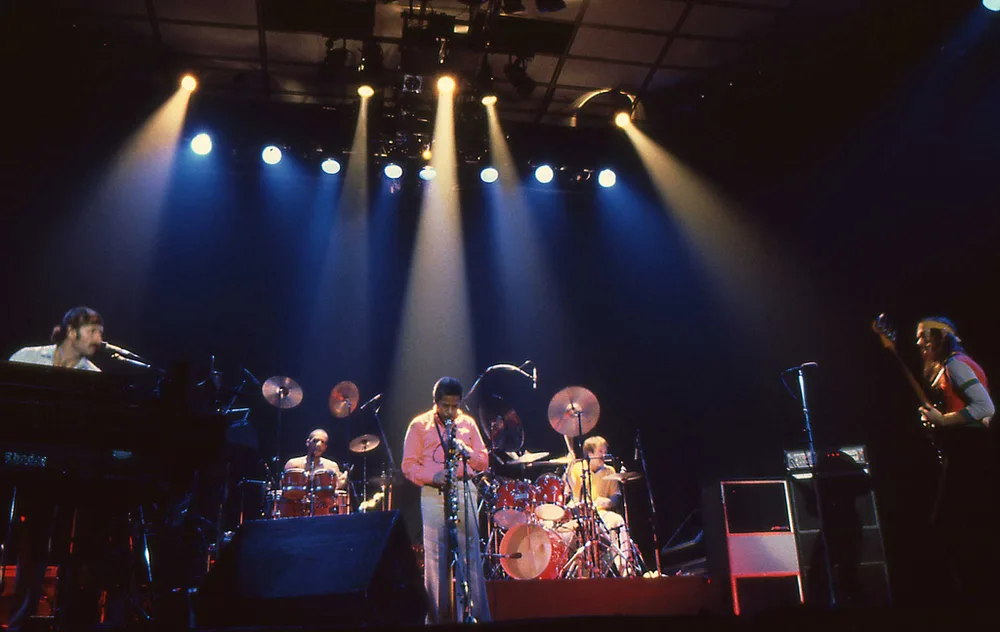
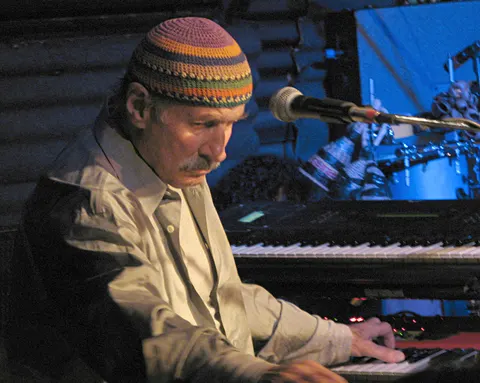
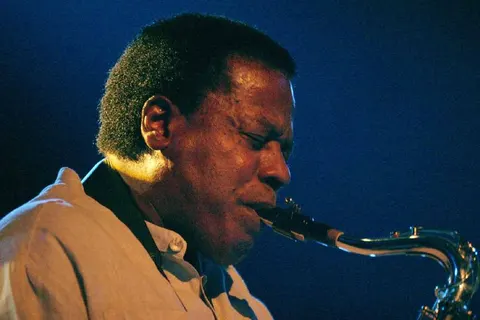
Weather Report performing live in 1980. Joe Zawinul at the Fender Rhodes on the far left, Wayne Shorter centre on saxophone, Peter Erskine on drums, Bobby Thomas Jr. on percussion behind, and Jaco Pastorius on bass at the right. Photographed by Chris Hakkens; a companion frame from the same set is captioned Amsterdam, 1980. CC BY 2.0 (Creative Commons Attribution 2.0 Generic), confirmed on the Commons file page wikitext, which carries {{cc-by-2.0}} plus a FlickreviewR/reviewed-pass stamp verifying the licence against the photographer's Flickr stream on 31 May 2010. — Wikimedia Commons, File:Weather Report2 1980.jpg. File page: https://commons.wikimedia.org/wiki/File:Weather_Report2_1980.jpg . Original file: https://upload.wikimedia.org/wikipedia/commons/f/fe/Weather_Report2_1980.jpg . Original Flickr source given on the file page: https://www.flickr.com/photos/chris_hakkens/4635910299/in/set-72157624128078190/ . Saved locally as portrait.jpg.


Weather Report came out of the same New York sessions that produced Miles Davis's electric period. Joe Zawinul and Wayne Shorter had met in 1959 in Maynard Ferguson's big band, and by 1969 both were contributing to Miles Davis's In a Silent Way (Zawinul wrote the title track) and Bitches Brew. Zawinul was simultaneously finishing a nine-year run in Cannonball Adderley's quintet, where his 1966 tune "Mercy, Mercy, Mercy" had become a crossover hit. In 1970 he and Shorter formed a band of their own, with Czech bassist Miroslav Vitouš, drummer Alphonse Mouzon, and Airto Moreira on percussion. Who actually founded it is still disputed: Zawinul said he and Shorter recruited Vitouš, while Vitouš maintained that he and Shorter started the group and Zawinul came in afterward. The self-titled debut was cut at Columbia in February and March 1971 and won Down Beat's Readers Poll album of the year along with a Swing Journal Grand Prix in Japan.
The first three years were the group's most abstract. Eric Gravatt took over the drum chair in late 1971 and Dom Um Romão joined on percussion (an NDR radio broadcast from Berlin on September 3, 1971, later issued as Live in Berlin 1971, catches Mouzon and Romão together before the handover). On January 13, 1972, the band played Shibuya Kōkaidō in Tokyo; the full concert came out in Japan as the double LP Live in Tokyo, and edited versions of the same performances filled side two of I Sing the Body Electric, whose studio side was recorded in New York in November 1971 and January 1972 with Hubert Laws on flute and Ralph Towner on twelve-string guitar. Sweetnighter (recorded February 3 to 7, 1973) pushed hard toward funk vamps, and the argument that followed split the band: Zawinul wanted the groove, Vitouš wanted the open collective approach, Shorter sided with Zawinul, and Vitouš left. His last contribution, acoustic bass on "American Tango," survives on Mysterious Traveller (1974), an album that otherwise belongs to his replacement, Alphonso Johnson, and to a rotating cast of drummers including Ishmael Wilburn and Skip Hadden.
Johnson's three years brought the rhythm section into focus. Leon "Ndugu" Chancler drummed on Tale Spinnin' (recorded February to early April 1975), Chester Thompson took over for the touring band that year, and Alex Acuña arrived on percussion. Black Market (recorded December 1975 to January 1976) documents the transition literally: Johnson plays electric bass on five tracks, Jaco Pastorius plays fretless on two including his own "Barbary Coast," Thompson and Narada Michael Walden split the drums, and Acuña and Don Alias divide the percussion. Pastorius stayed, Acuña moved to the drum kit, and Manolo Badrena took over percussion. That quartet-plus-one made Heavy Weather in Devonshire Sound, North Hollywood, over December 1976 and January 1977. It reached No. 30 on the Billboard 200, topped the jazz chart, was certified platinum by the RIAA in 1991, and was inducted into the Grammy Hall of Fame in 2011. Its opening track, Zawinul's "Birdland," entered the standard repertoire.
Pastorius brought Peter Erskine in on drums for 1978. Mr. Gone, recorded February to June 1978 and released that September on Maurice White's ARC imprint at Columbia, topped the Billboard jazz chart with guest drum spots from Tony Williams and Steve Gadd, then drew a one-star Down Beat review that provoked a furious rebuttal interview from Zawinul, an unprecedented reversal after five straight five-star notices. The double album 8:30, drawn mostly from the 1978 tour, won the Grammy for Best Jazz Fusion Performance at the 22nd ceremony in 1980. Percussionist Robert Thomas Jr. joined for Night Passage, taped July 12 and 13, 1980 at The Complex in Los Angeles in front of an invited audience of about 250 (one track, "Madagascar," came from Festival Hall, Osaka, on June 29). By the 1982 self-titled album, recorded July and August 1981, Zawinul was writing nearly everything, Shorter contributed one piece, Pastorius was absorbed in his own Word of Mouth, and the group came apart.
Zawinul rebuilt it with two musicians in their early twenties: drummer Omar Hakim, then 23, and bassist Victor Bailey, with José Rossy on percussion. That lineup made Procession (recorded July and August 1982, released February 19, 1983) and Domino Theory (recorded 1983 in Osaka, Pasadena and Los Angeles), the latter the first Weather Report album built partly on drum machines and an Emulator sampler. Mino Cinélu replaced Rossy for Sportin' Life (recorded August and September 1984, released June 25, 1985), which the band expected to be its last. A remaining Columbia obligation produced one more: This Is This!, taped in December 1985 and released August 26, 1986, with Erskine back on most of the drums, Hakim on one track, Carlos Santana guesting on guitar, and no Shorter compositions at all, the only Weather Report album of which that is true. Shorter had announced in February 1986 that he was leaving for solo work. Zawinul carried the personnel forward as Weather Update, a 1986 to 1987 band with Bailey, Erskine, Cinélu and a guitar chair filled first by John Scofield and then Steve Khan, before founding the Zawinul Syndicate in 1988. Pastorius was killed in Fort Lauderdale in September 1987, Zawinul died in Vienna in September 2007, Bailey and Mouzon both in 2016, and Shorter in March 2023.
Weather Report's working method was the thing other fusion bands copied and mostly failed to reproduce: no fixed soloist, no fixed accompanist, everyone free to step forward or drop out, which Zawinul summarized as getting away from "eight bars shit and then you go to the bridge." Wayne Shorter played less than almost any saxophonist of his stature would have, leaving space that Joe Zawinul filled with a steadily expanding electronic palette: Fender Rhodes through Mu-Tron phasing, two ARP 2600s, the Oberheim polyphonic, the Prophet 5, and the TONTO system on Tale Spinnin'. Zawinul worked directly with ARP and Oberheim on new voicings, and the band's records document synthesizer development in real time across fifteen years. Jaco Pastorius changed what an electric bass could be inside that setting, carrying melody and countermelody on fretless rather than holding a bottom, and his four studio albums with the group (1976 to 1982) are the ones most often cited. The band won Down Beat's readers poll for album of the year repeatedly through the 1970s, took one Grammy from six nominations, and left a compositional legacy in "Birdland," which crossed into pop and vocal repertoire and remains the most widely played piece any fusion group produced. Peter Erskine and Omar Hakim both used the drum chair as a career springboard, and the roster read backward is a map of 1970s jazz-funk rhythm playing.
- Heavy Weather (1977, Columbia) - The commercial and critical peak: "Birdland," "A Remark You Made," "Teen Town," recorded by the Zawinul/Shorter/Pastorius/Acuña/Badrena lineup. Platinum in the US, Grammy Hall of Fame 2011. Spotify - Heavy Weather Listen
- Black Market (1976, Columbia) - The pivot record, with Alphonso Johnson and Jaco Pastorius both on it and the funk-and-world-music direction fully arrived. Spotify - Black Market Listen
- Weather Report (1971, Columbia) - The debut, still closer to Miles Davis's electric abstraction than to funk. Down Beat readers poll album of the year. Not to be confused with the group's second self-titled album, released in 1982. Spotify - Weather Report (1971)
- 8:30 (1979, ARC/Columbia) - Grammy winner for Best Jazz Fusion Performance, three live sides plus a studio fourth side, the quartet of Zawinul, Shorter, Pastorius and Erskine at full stretch. Spotify - 8:30 Listen
- Mysterious Traveller (1974, Columbia) - Down Beat readers poll album of the year for 1974, and the record where Alphonso Johnson's bass reset the band's rhythmic centre. Spotify - Mysterious Traveller Listen
- Live in Tokyo (1972, CBS/Sony) - The January 13, 1972 Shibuya concert in full, a Japan-only double LP for decades and the best surviving document of the Gravatt-era band. Spotify - Live in Tokyo Listen
- Night Passage (1980, ARC/Columbia) - Cut almost live in a Los Angeles studio with an audience present, and the group's last recording before Pastorius and Erskine left. Spotify - Night Passage Listen
- Procession (1983, Columbia) - The Hakim/Bailey/Rossy rebuild, with The Manhattan Transfer on "Where the Moon Goes," the band's first fully sung track. Spotify - Procession Listen
Weather Report: Full Discography
Identity confirmed via the live Discogs API: artist ID 10082, whose Discogs profile reads "American jazz fusion band with a career spanning between 1970 and 1986" and whose member list matches the documented roster. Wikidata's item for the band (Q1120697) carries Discogs-artist property P1953 = 10082, an independent confirmation of the same ID.
Discogs credits this artist on 496 releases in total: 86 in a "Main" (band-billed) role, 19 sideman/"Appearance" credits, 314 track-level "TrackAppearance" credits on compilations and samplers, and 77 unofficial pressings (86 + 19 + 314 + 77 = 496).
Scope of the tables below. The first table aims to be complete for every studio and live album Weather Report released while it was an active band, 1971 to 1986: sixteen releases in all, fourteen of them studio or part-studio albums and two of them full live documents (Live in Tokyo, 1972; 8:30, 1979, which is three live sides plus a studio fourth). The second table lists the posthumous and archival releases issued after the band ended, which are kept deliberately separate rather than mixed into the active-life catalog. Compilations, best-ofs and box-set repackagings are summarized in a closing note rather than itemized, because Discogs holds well over a hundred of them and none contain material not already on the albums below. Reissue pressings of a single album are folded into the Reissue History column, not given rows of their own; the sixteen active-life albums account for 1,078 distinct pressings on Discogs between them.
As Leader / Co-Leader (band-billed releases, 1971 to 1986)
| Album Title | Recording Date(s) | Release Date | Label | Catalog Number | Format(s) | Personnel | Role | Reissue History | Spotify | Buy | Notes |
|---|---|---|---|---|---|---|---|---|---|---|---|
| Weather Report (1971 debut) | February 16-18 and 22, and March 17, 1971, Columbia Studios, New York City | 1971 (Wikipedia gives May 12, 1971; the Discogs main-release US LP is dated June 1971) | Columbia | C 30661 | Vinyl, LP, Album, Stereo | Joe Zawinul (electric and acoustic piano), Wayne Shorter (soprano saxophone), Miroslav Vitouš (electric and acoustic bass), Alphonse Mouzon (drums, voice), Airto Moreira (percussion); Barbara Burton and Don Alias (percussion, uncredited on the sleeve) | Band, self-produced | 95 versions on Discogs; remastered by Vic Anesini, Sony Music Studios NYC, November 1991; in The Columbia Albums 1971-1975 box (Legacy, 2012) | Spotify - Weather Report | — | Down Beat Readers Poll album of the year; Swing Journal Grand Prix in Japan. Liner notes by Clive Davis and Don DeMicheal. Distinct from the band's second self-titled album (1982), below: same title, different record, do not merge. |
| I Sing the Body Electric | Studio side: November 1971 and January 1972, Columbia Studios, New York City. Live side: January 13, 1972, Shibuya Kōkaidō, Tokyo | 1972 | Columbia | KC 31352 | Vinyl, LP, Album, Stereo | Zawinul (electric and acoustic keyboards), Shorter (reeds), Vitouš (bass), Eric Gravatt (drums), Dom Um Romão (percussion, A2); guests Hubert Laws (flute, A1), Ralph Towner (twelve-string guitar, A2), Andrew White (English horn, A1), Wilmer Wise (D and piccolo trumpet, A1), Yolande Bavan, Chapman Roberts and Joshie Armstrong (voices, A1) | Band | 69 versions; in The Columbia Albums 1971-1975 box (2012) | Spotify - I Sing the Body Electric | — | Grammy nominee, Best Jazz Performance by a Group. Side two is edited from the same Tokyo concert issued complete as Live in Tokyo; the two are one performance in two forms, not two events |
| Weather Report Live in Tokyo | January 13, 1972, Shibuya Kōkaidō, Tokyo | 1972 (Wikipedia: May 1, 1972) | CBS/Sony | SOPJ 12~13-XR | 2 x Vinyl, LP, Album, Stereo | Zawinul (acoustic and electric piano), Shorter (soprano and tenor saxophone), Vitouš (acoustic and electric bass), Gravatt (drums), Romão (percussion) | Band | 20 versions, far fewer than any other album here; Japan-only for decades, first US issue via Wounded Bird | Spotify - Live in Tokyo | — | The full concert. Discogs's release note calls the venue "Shibuya Philharmonic Hall" while the I Sing the Body Electric sleeve says "Shibuya Kokaido Hall"; these are the same building (Shibuya Kōkaidō) |
| Sweetnighter | February 3-7, 1973 | 1973 | Columbia | KC 32210 | Vinyl, LP, Album, Stereo | Zawinul (keyboards), Shorter (soprano saxophone), Vitouš (bass), Andrew White (bass, English horn), Gravatt and Herschel Dwellingham (drums), Romão and Muruga Booker (percussion) | Band | 62 versions; in The Columbia Albums 1971-1975 box (2012) | Spotify - Sweetnighter | — | The turn toward extended funk vamps, and the direct cause of the Zawinul/Vitouš split |
| Mysterious Traveller | November 1973 to March 1974, Devonshire Sound, North Hollywood, California | 1974 (Wikipedia: June 1974; the Discogs main-release Santa Maria pressing carries March 24, 1974) | Columbia | KC 32494 | Vinyl, LP, Album | Zawinul (keyboards, synthesizer, melodica, kalimba, vocals), Shorter (saxophone, tack piano, conch), Alphonso Johnson (bass on most tracks), Vitouš (acoustic bass, "American Tango" only), Ishmael Wilburn and Skip Hadden (drums), Romão (percussion, drums), Ray Barretto (percussion, one track), Don Ashworth (ocarina, woodwinds), Steve Little (timpani), Isacoff (tabla) | Band | 93 versions; SQ quadraphonic pressing exists; in The Columbia Albums 1971-1975 box (2012) | Spotify - Mysterious Traveller | — | Down Beat Readers Poll album of the year for 1974, five-star review. Billboard 200 No. 46, Jazz Albums No. 2. Vitouš's last appearance with the band |
| Tale Spinnin' | February to April 4, 1975 (Wikipedia names Wally Heider Studio 3, Hollywood; Discogs names no studio) | 1975 (Wikipedia: May 1975) | Columbia | PC 33417 | Vinyl, LP, Album | Zawinul (acoustic piano, Rhodes, ARP 2600, TONTO, mzuthra), Shorter (soprano saxophone), Alphonso Johnson (bass), Leon "Ndugu" Chancler (drums), Alyrio Lima (percussion) | Band | 60 versions; in The Columbia Albums 1971-1975 box (2012) | Spotify - Tale Spinnin' | — | Zawinul recruited Chancler after hearing him with Carlos Santana. TONTO is "The Original New Timbral Orchestra," the large modular system built by Malcolm Cecil and Robert Margouleff |
| Black Market | December 1975 to January 1976, Devonshire Sound, North Hollywood | 1976 (Wikipedia: March 11, 1976) | Columbia | PC 34099 | Vinyl, LP, Album, Stereo | Zawinul (2 x ARP 2600, Oberheim polyphonic, Yamaha grand, Rhodes), Shorter (Selmer soprano and tenor, Lyricon), Alphonso Johnson (electric bass, five tracks), Jaco Pastorius (fretless bass, two tracks), Chester Thompson (drums, five tracks), Narada Michael Walden (drums, two tracks), Alex Acuña (congas, percussion), Don Alias (percussion, two tracks) | Band | 90 versions; in The Columbia Albums 1976-1982 box (Legacy, 2014) | Spotify - Black Market | — | Pastorius's first Weather Report studio album; his own "Barbary Coast" is one of his two tracks. The Discogs main release lists only Pastorius, Thompson and Acuña, so the split credits above come from the Wikipedia per-track list |
| Heavy Weather | December 1976 to January 1977 (one track July 8, 1976), Devonshire Sound, North Hollywood | March 1977 | Columbia | PC 34418 (jacket also 34418) | Vinyl, LP, Album | Zawinul (acoustic piano, Rhodes, melodica, tabla, vocals), Shorter (soprano and tenor saxophone), Pastorius (bass, mandocello, steel drums, ARP 2600, Oberheim, drums on "Teen Town", vocals), Alex Acuña (drums, congas, tom-toms, handclaps), Manolo Badrena (congas, timbales, percussion, vocals) | Band; Zawinul producer and orchestrator, Pastorius co-producer, Shorter assistant producer | 177 versions, by far the most-reissued album in the catalog; Expanded Edition (11 tracks) on Spotify; in The Columbia Albums 1976-1982 box (2014) | Spotify - Heavy Weather | — | Billboard 200 No. 30, No. 1 Jazz Albums; RIAA platinum September 5, 1991; inducted into the Grammy Hall of Fame, February 2011. Contains "Birdland." Engineer Ron Malo; Brian Risner credited as "chief meteorologist" |
| Mr. Gone | February to June 1978, Devonshire Sound, North Hollywood | September 1978 | ARC / Columbia | JC 35358 | Vinyl, LP, Album | Zawinul (keyboards including Prophet 5 programmed with Alan Howarth, vocals), Shorter (saxophones, vocals), Pastorius (bass, drums on two tracks, timpani, vocals), Peter Erskine (drums, hi-hat, vocals); guest drummers Tony Williams (two tracks) and Steve Gadd (two tracks); guest vocals Manolo Badrena, Jon Lucien, Deniece Williams, Maurice White | Band; Zawinul producer, Pastorius co-producer | 69 versions; in The Columbia Albums 1976-1982 box (2014) | Spotify - Mr. Gone | — | No. 1 on Billboard Jazz Albums, No. 47 UK. Down Beat's one-star review provoked a rebuttal interview from Zawinul. First album on Maurice White's ARC imprint. Discogs holds no instrument-level credits for this album on any of the 30 pressings checked; the personnel above are from Wikipedia |
| 8:30 | Live material from the late-1978 tour, including November 28, 1978; a fourth studio side recorded afterward | August 1979 | ARC / Columbia | PC2 36030 | 2 x Vinyl, LP, Album, Stereo | Zawinul (keyboards, synthesizers, percussion), Shorter (tenor and soprano saxophone), Pastorius (fretless bass, percussion, drums on some tracks), Erskine (drums); Erich Zawinul (percussion on "Brown Street"), West Los Angeles Christian Academy Children's Choir ("The Orphan") | Band; Zawinul producer, Pastorius co-producer, Shorter assistant producer | 68 versions; the US single-CD reissue drops "Scarlet Woman" for length, international CD issues are 2-CD; in The Columbia Albums 1976-1982 box (2014) | Spotify - 8:30 | — | Grammy winner, Best Jazz Fusion Performance, presented at the 22nd Grammy Awards in 1980. Sources disagree on the principal live venue: Wikipedia names the Terrace Theater, Long Beach, while several secondary accounts say the Santa Monica Civic Auditorium. Per Erskine, the whole album was meant to be live until an engineer erased material, forcing the studio side. Discogs holds no instrument-level credits on any pressing checked |
| Night Passage | July 12-13, 1980, The Complex, Los Angeles, before an invited audience of about 250; "Madagascar" recorded June 29, 1980, Festival Hall, Osaka | 1980 | ARC / Columbia | JC 36793 | Vinyl, LP, Album | Zawinul (keyboards), Shorter (saxophone), Pastorius (bass), Erskine (drums), Robert Thomas Jr. (hand drums) | Band; Zawinul producer, Pastorius co-producer | 61 versions; in The Columbia Albums 1976-1982 box (2014) | Spotify - Night Passage | — | Grammy nominee, Best Jazz Fusion Performance. Robert Thomas Jr.'s first album with the band. Mastered by Brian Gardner at Allen Zentz, Los Angeles |
| Weather Report (1982 self-titled) | July to August 1981, The Power Station (NYC), The Music Room (Pasadena), Soundcastle (Los Angeles) | 1982 (Wikipedia: January 1982) | ARC / Columbia | FC 37616 | Vinyl, LP, Album, Stereo | Zawinul (keyboards, mixing), Shorter (tenor and soprano saxophone), Pastorius (bass, percussion, vocals, mixing), Erskine (drums, computer drums), Robert Thomas Jr. (hand drums, tambourine) | Band; Zawinul producer, Pastorius and Shorter assistant producers | 53 versions; in The Columbia Albums 1976-1982 box (2014) | Spotify - Weather Report (1982) | — | Grammy nominee, Best Jazz Fusion Performance. A different album from the 1971 debut of the same name, above. Both are genuine Weather Report albums with identical titles and must not be collapsed into one entry. The sleeve note flags that horn, woodwind, string and brass sounds are played on electric keyboards. Last album with Pastorius and Erskine in the rhythm section |
| Procession | July to August 1982; Power Station (NYC), Universal (Chicago), The Music Room (Pasadena), Fantasy (Berkeley), Sound Castle (Los Angeles) | February 19, 1983 | Columbia | FC 38427 | Vinyl, LP, Album | Zawinul (keyboards, synthesizer), Shorter (tenor and soprano saxophone), Victor Bailey (bass), Omar Hakim (drums, guitar, vocals), José Rossy (percussion, concertina); The Manhattan Transfer (vocals on "Where the Moon Goes") | Band; Zawinul producer, Shorter co-producer, Brian Risner assistant producer | 42 versions | Spotify - Procession | — | Grammy nominee, Best Jazz Fusion Performance. First Weather Report track sung throughout. Debut of the Hakim/Bailey/Rossy rhythm section |
| Domino Theory | 1983; Kosei Nenkin Hall (Osaka, live material), The Music Room (Pasadena), Sound Castle and Lion Share (Los Angeles) | 1984 (Discogs main release: February 1984; Wikipedia and Spotify: April 1984) | Columbia | FC 39147 | Vinyl, LP, Album | Zawinul (keyboards), Shorter (saxophone), Bailey (bass), Hakim (drums), Rossy (percussion); Carl Anderson (vocals, one track) | Band; Zawinul producer, Hakim and Shorter co-producers | 41 versions | Spotify - Domino Theory | — | First Weather Report album to use drum machines and an Emulator sampler. Second album by the Hakim/Bailey/Rossy lineup. A separate 1984 Japanese Laserdisc, Japan Domino Theory: Weather Report Live in Tokyo (CBS/Sony 78LM 30), documents a September 27, 1984 Tokyo concert with Mino Cinélu already replacing Rossy |
| Sportin' Life | August to September 1984, Crystal Recording (Hollywood), additional recording at The Music Room (Pasadena) | June 25, 1985 (the Discogs main release is dated July 1985) | Columbia | FC 39908 | Vinyl, LP, Album | Zawinul (synthesizer), Shorter (saxophone), Bailey (bass), Hakim (drums), Mino Cinélu (percussion); vocals from Bobby McFerrin, Carl Anderson, Dee Dee Bellson and Alfie Silas | Band; Zawinul and Shorter producers | 41 versions | Spotify - Sportin' Life | — | Grammy nominee, Best Jazz Fusion Performance. Includes a cover of Marvin Gaye's "What's Going On." Intended as the band's last album until a remaining Columbia obligation surfaced |
| This Is This! | December 1985 | August 26, 1986 (the band's own Wikipedia article says June 1986; the album's article and Spotify both give August 26) | Columbia | FC 40280 on the jacket, C 40280 on the labels | Vinyl, LP, Album | Zawinul (keyboards), Shorter (saxophone), Bailey (bass), Erskine (drums, co-producer), Hakim (drums, one track), Cinélu (percussion, vocals); Carlos Santana (guest guitar, two tracks); guest vocals Siedah Garrett, Marva Barnes, Colleen Coil, Darryl Phinnessee | Band; Zawinul producer, Erskine co-producer | 37 versions, the fewest of any active-life album | Spotify - This Is This | — | The final album, made to close out the Columbia contract. The only Weather Report record with no Wayne Shorter composition on it, though he plays throughout. Shorter had announced his departure in February 1986 |
Posthumous and Archival Releases (issued after the band ended)
Everything in this table was released after 1986 and draws on previously unissued concert or broadcast tapes. It is kept separate from the active-life catalog above on purpose.
| Title | Recording Date(s) | Release Date | Label | Catalog Number | Format(s) | Personnel | Notes |
|---|---|---|---|---|---|---|---|
| Live & Unreleased | November 27, 1975 (New Victoria Theatre, London); September 10, 1977 (The Rainbow, London); November 30, 1977 (Grand Rapids, MI); November 28, 1978 (Phoenix, AZ); July 12, 1980 (The Complex, Santa Monica); June 3, 1983 (Hammersmith Odeon, London) | 2002 | Columbia / Legacy | 508058 2 | 2 x CD, HDCD, Remastered | Zawinul and Shorter throughout; bass by Alphonso Johnson, Pastorius or Bailey depending on the track; drums by Chester Thompson, Erskine or Hakim; percussion by Acuña, Badrena, Robert Thomas Jr. or Rossy | The single most useful archival release for tracing the lineup chronology, because Discogs carries full per-track personnel and dates. Eight years of concerts on two discs |
| Live at Montreux 1976 | Montreux Jazz Festival, 1976 | April 17, 2007 | Eagle Eye Media / Montreux Sounds | EE 39146-9 | DVD-Video, NTSC | Zawinul, Shorter, Pastorius, Alex Acuña (drums), Manolo Badrena (congas, percussion) | 84 minutes. Video only |
| Forecast: Tomorrow | 1969 to 1983, drawn from albums plus unreleased material and a 1978 Offenbach concert on the DVD | September 19, 2006 | Legacy / Columbia | 82876 85575 2 | 3 x CD + DVD, Box Set | Career-spanning; the credits list runs from Vitouš/Mouzon/Moreira through to Bailey/Hakim/Rossy, and includes pre-band tracks from Miles Davis's In a Silent Way, Shorter's Super Nova and Cannonball Adderley's Domination | A retrospective box rather than a live album, included here because the DVD and several CD tracks are previously unissued |
| Live in Germany 1971 | 1971, German television | 2010 | Gonzo Media Group | HST001DVD | DVD, NTSC | Zawinul, Shorter, Vitouš, Alphonse Mouzon (drums, vocals), Dom Um Romão (percussion) | Video only. Confirms Mouzon and Romão in the band together in 1971 |
| Live in Berlin 1975 | November 6, 1975, Philharmonie, Berlin | February 25, 2011 | Art of Groove | MIG 80021 LP | Vinyl, LP, Limited Edition (2,000 copies) | Zawinul, Shorter, Alphonso Johnson (electric bass), Chester Thompson (drums), Alex Acuña (percussion) | From a ZDF "Jazz im ZDF" broadcast. Pins the Johnson/Thompson/Acuña lineup to a firm date |
| Live in Cologne 1983 | May 13, 1983, Sartory-Saal, Cologne | October 21, 2011 | Art of Groove / MIG / WDR Rockpalast | AOG 80052 CD | 2 x CD, Album | Zawinul (keyboards, vocoder), Shorter, Victor Bailey (electric bass), Omar Hakim (drums), José Rossy (percussion) | From a WDR Rockpalast broadcast |
| Live in Offenbach 1978 | September 29, 1978, Offenbach, filmed for German television | June 17, 2011 | Art of Groove | MIG80097 | DVD-Video | Zawinul, Shorter, Pastorius, Erskine (all credited on Discogs as "uncredited" on the release itself) | Video only |
| The Legendary Live Tapes: 1978-1981 | June 1980 (Osaka Festival Hall); June 24, 1980 (Koseinenkin Hall, Tokyo); November 14, 1980 (Hammersmith Odeon, London); June 1981 (Eastman Theater, Rochester, NY); further dates and some unknown locations | 2015 | Columbia / Legacy | 88875141272 | 4 x CD | The Zawinul/Shorter/Pastorius/Erskine quartet, with Robert Thomas Jr. on the 1980-81 material | The large archival box the band's estate assembled from soundboard tapes. Discogs also holds two credit-variant artist entities for it, "Weather Report Quartet" (6304859) and "Weather Report Quintet" (6304863); both are billing variants on this one release, not separate bands |
| Live in London | June 2 and 3, 1983 (Hammersmith Odeon) and June 26, 1984 (Dominion Theatre) | June 12, 2020 | Angel Air | SJPCD622 | CD, Album | Zawinul, Shorter, Bailey, Hakim; Rossy on percussion for the 1983 tracks, Cinélu for the 1984 tracks | The percussion split is itself the dating evidence for the Rossy-to-Cinélu handover |
| Live in Berlin 1971 | September 3, 1971, Haus des Rundfunks, Großer Sendesaal, Berlin (NDR Jazzworkshop no. 73) | October 27, 2023 | GAD Records / NDR Kultur | GAD CD 271 | 2 x CD, Album, Remastered | Zawinul (electric and acoustic piano), Shorter, Vitouš, Mouzon (drums), Romão (percussion); guests John Surman (soprano and baritone saxophone, bass clarinet) and Alan Skidmore (tenor and soprano saxophone, flute) on three tracks | The earliest surviving full concert. Most of it was unissued before 2023. Discogs holds a separate artist entity "Guests of Weather Report" (13014234) covering Surman, Skidmore and Eje Thelin; that is a credit line on European broadcast material, not a band |
Compilations and Repackagings
Not itemized. Discogs holds well over a hundred Weather Report compilations, best-ofs and box repackagings, and every one checked draws its contents from the albums above. The significant ones are: Best of Weather Report Vol. 1 (CBS, 1990), This Is Jazz (Columbia/Legacy CK 64627, 1996), This Is Jazz #40: Weather Report, The Jaco Years (Columbia CK 65451, 1998, whose Discogs notes map every track back to its parent album), The Best of Weather Report (Columbia/Legacy, 2002), The Essential Weather Report (2013), The Columbia Albums 1971-1975 (Legacy, 7 x CD box, 2012), The Columbia Albums 1976-1982 (Legacy, 6 x CD box with bonus tracks, 2014) and The Columbia Studio and Live Recordings (Columbia, 19 discs, 2017). Several national-market series titles are also filed under the band, among them Die 70er Jahre (CBS, Germany), Rockin' In Rhythm (DeAgostini, 1993, shared with Herbie Hancock and Stanley Clarke) and Gli Alfieri Del Jazz-Rock Elettrico (DeAgostini, 2004).
Four further Discogs entries titled simply "Weather Report" (masters 2870692, 2094874, 1306993 and 601533, dated 1981, 1985, 1991 and 1996) are all compilations, not albums, and none of them is either self-titled studio record. They are named here so a later editor does not mistake one of them for a third self-titled album.
Same-Name Acts on Discogs (checked and excluded)
- The Weather Report (Discogs artist 6432362) has exactly one release, a 7" single "Happy Heat" on Dorado Records. A different act entirely.
- Acoustic Weather Report (7532884) is a Japanese trio of Makoto Kuriya, Koichi Osamu and Hiroyuki Noritake. Unrelated.
- The Western Weather Report (13105371) and Weather Reporter (2953924) are unrelated artists whose names merely contain the phrase.
- Weather Update (3905864) is Joe Zawinul's own 1986-87 successor band, with Victor Bailey, Peter Erskine, Robert Thomas Jr. and guitarist Steve Khan (John Scofield held the chair first). A separate entity, correctly separated on Discogs, and not counted in this discography.
No solo albums by individual members were found misfiled under artist 10082.
- Joe Zawinul - co-founder, keyboards and synthesizers, 1970 to 1986. Producer or co-producer of every album; sole or principal composer from Black Market onward.
- Wayne Shorter - co-founder, soprano and tenor saxophone, 1970 to 1986. The only other member present on all sixteen releases. Announced his departure in February 1986.
- Miroslav Vitouš - bass, 1970 to 1973. Present on the first four albums; his final track is "American Tango" on Mysterious Traveller. Claimed co-founder status in accounts that conflict with Zawinul's.
- Alphonso Johnson - electric bass, 1973 to 1976. Mysterious Traveller, Tale Spinnin', and five of the seven tracks on Black Market.
- Jaco Pastorius - electric fretless bass, 1976 to 1982, plus co-producer credits from Heavy Weather on. Recruited Peter Erskine. Died September 21, 1987.
- Victor Bailey - electric bass, 1982 to 1986. Procession, Domino Theory, Sportin' Life, This Is This!
- Alphonse Mouzon - drums, 1970 to 1971. The debut album and the 1971 European broadcasts.
- Eric Gravatt - drums, late 1971 to 1973. I Sing the Body Electric, Live in Tokyo, Sweetnighter.
- Chester Thompson - drums, 1975 to 1976. Five tracks on Black Market, and the 1975 touring band heard on Live in Berlin 1975.
- Alex Acuña - percussion from 1975, then drums on Heavy Weather, through 1978.
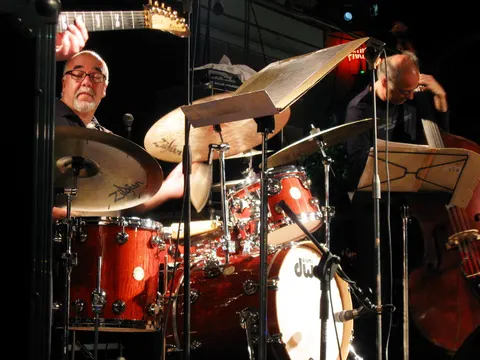
- Peter Erskine - drums, 1978 to 1982 and again for This Is This! in 1985 to 1986. Continued with Zawinul in Weather Update.
- Omar Hakim - drums, 1982 to 1986, joining at 23. Co-producer on Domino Theory.
- Airto Moreira - percussion on the 1971 debut.
- Dom Um Romão - percussion, 1971 to 1974. Died in 2005.
- Manolo Badrena - percussion, 1976 to 1978, and co-composer of "Rumba Mama" on Heavy Weather.
- Robert Thomas Jr. - hand percussion, 1980 to 1982, and later in Weather Update.
- José Rossy - percussion and concertina, 1982 to 1984.
- Mino Cinélu - percussion and vocals, 1984 to 1986.
- Tony Williams and Steve Gadd - guest drummers on Mr. Gone (1978), two tracks each.
- Carlos Santana - guest guitar on two tracks of This Is This! (1986).
- Maurice White - head of ARC, the Columbia imprint the band moved to in 1978, and a guest vocalist on Mr. Gone.
- Ralph Towner and Hubert Laws - twelve-string guitar and flute respectively on I Sing the Body Electric (1972).
- Clive Davis - then president of Columbia, wrote liner notes for the 1971 debut.
More Jazz Fusion Artists
See all 262 Jazz Fusion artists →More American Jazz Artists
See all 567 American artists →- Wikipedia: Weather Report
- Wikipedia: Weather Report (1971 album)
- Wikipedia: Live in Tokyo (Weather Report album)
- Wikipedia: Mysterious Traveller
- Wikipedia: Tale Spinnin'
- Wikipedia: Black Market (Weather Report album)
- Wikipedia: Heavy Weather (album)
- Wikipedia: Mr. Gone (album)
- Wikipedia: 8:30
- Wikipedia: Night Passage (album)
- Wikipedia: Weather Report (1982 album)
- Wikipedia: Procession (album)
- Wikipedia: Domino Theory (album)
- Wikipedia: Sportin' Life (Weather Report album)
- Wikipedia: This Is This!
- Wikipedia: List of awards and nominations received by Weather Report
- Discogs: Weather Report (artist 10082) - all album-level release data, personnel credits, catalog numbers and recording-date notes below were read from the authenticated Discogs API rather than from a prose summary
- The Weather Report Annotated Discography (Curt Bianchi)
- Wikidata: Weather Report (Q1120697)
- Spotify Web API, artist
162DCkd8aDKwvjBb74Gu8b,/artists/{id}/albumsendpoint (its catalogue search was unavailable; see notes)