 JAZZPROFILES lives in the music 2,303 Jazz Artists fully Profiled!
Mongo Santamaría
Last updated November 4, 2026
Listen on Spotify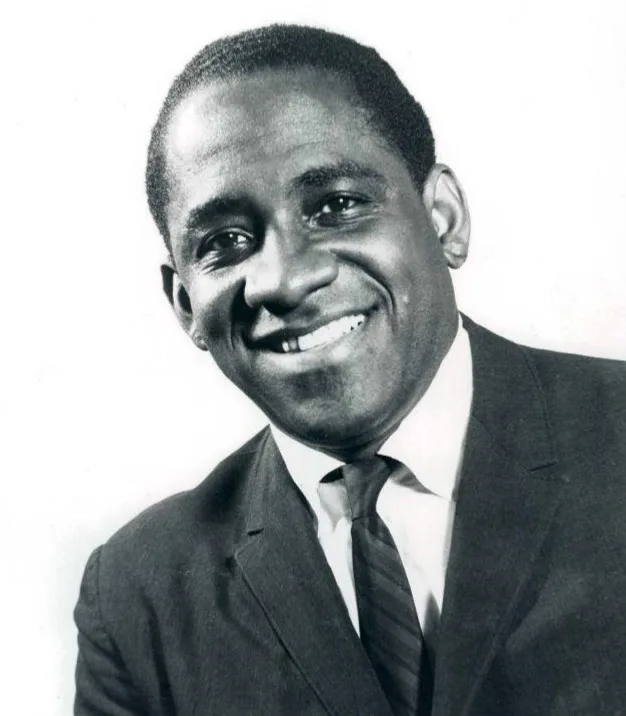
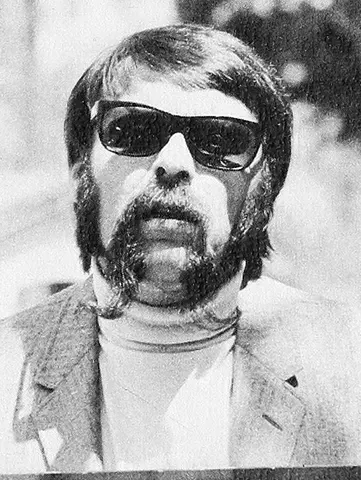
Mongo Santamaría in a 1969 publicity photograph (Associated Booking Corporation; photographer Ronnie Brathwaite) Public domain (U.S. publicity photograph published before 1978 without a copyright notice, per the Wikimedia Commons file page, template PD-Pre1978) — Wikimedia Commons - https://commons.wikimedia.org/wiki/File:Mongo_Santamaria_1969.JPG

Ramón "Mongo" Santamaría Rodríguez was born in Havana on April 7, 1917, and grew up in the Jesús María district, where rumba and the drumming of Afro-Cuban religious ceremonies were part of street life. He learned the congas as an amateur rumba player and the bongos from Clemente "Chicho" Piquero, a drummer in Beny Moré's band who later recommended him for a Mexican tour. He took up violin first, according to the Guardian and AllMusic, before switching to drums and leaving school in his teens. He played bongos with the Septeto Beloña from 1937, worked in the house band of the Tropicana nightclub in the 1940s, and toured with groups such as the Lecuona Cuban Boys and Sonora Matancera.
He moved to New York in 1950 and made his American debut in the orchestra of Pérez Prado, then spent about six years as the conga player in Tito Puente's band. His first records as a leader date from those years: Afro-Cuban Drums, a 10-inch LP of folkloric rumba recorded in New York on November 3, 1952 for SMC Pro-Arte, and a Changó record for Tico built on Santería chants. They are among the first recorded folkloric rumbas, and his later albums for jazz labels kept that music in print. In 1957 he went to San Francisco to join the vibraphonist Cal Tjader's Latin jazz group, with Al McKibbon on bass, Vince Guaraldi on piano and Willie Bobo and Armando Peraza among the percussionists. He stayed until 1960 and is on Tjader's Fantasy albums of 1958 and 1959, including Cal Tjader's Latin Concert and A Night at the Black Hawk.
Fantasy also gave him his own start. Yambu (1958) presented his Ritmos Afro-Cubanos, a charanga band, and its follow-up Mongo (1959) carried "Afro Blue," his own composition and the first jazz standard built on an African 3:2 cross-rhythm. Oscar Brown Jr. wrote lyrics for it in 1959, Abbey Lincoln recorded the vocal version that year on Abbey Is Blue, and John Coltrane recorded it in 1963 with Elvin Jones, who turned the rhythm over into a swung 3/4. In 1960 Santamaría went to Havana with Bobo to make Our Man in Havana and Mongo in Havana, then returned to New York and formed the charanga La Sabrosa, which gave Fantasy ¡Sabroso! (1960) and ¡Arriba! La Pachanga (1961) as the pachanga dance craze peaked. At Riverside he led the Afro-Latin Group on Go, Mongo! (1962), with the saxophonist Pat Patrick and the young pianist Chick Corea, whose first recorded credit was on the album.
The record that made him a household name came out of a quiet night in a Bronx club in late 1962. Corea had given notice, and Herbie Hancock sat in for a weekend. Prompted by Donald Byrd, Hancock played "Watermelon Man," a blues from his debut album Takin' Off. Santamaría joined in on congas, the band caught the groove and the dance floor filled. He recorded it on December 17, 1962 with the producer Orrin Keepnews, and it was issued on Battle Records, the label the Riverside owners had taken over that year. It reached No. 10 on the Billboard Hot 100 in April 1963 and entered the Grammy Hall of Fame in 1998. The single is often treated as the beginning of boogaloo, the Afro-Cuban and rhythm and blues mixture that dominated New York's Latin dance floors for the next few years. The album Watermelon Man! (1963) also held the first recording of "Yeh-Yeh," written by the pianist Rodgers Grant and Patrick and later a No. 1 hit in Britain for Georgie Fame. Two more albums followed in 1963: Mongo at the Village Gate on Battle and Mongo Introduces La Lupe on Riverside, which presented the singer La Lupe.
From 1965 to 1970 Santamaría recorded for Columbia, beginning with El Pussy Cat and continuing through La Bamba, El Bravo!, Hey! Let's Party, Mongomania, Soul Bag and Workin' on a Groovy Thing. The records paired the trumpeter Marty Sheller's brassy charts with covers of the day's hits, among them "Cold Sweat," "Sitting on the Dock of the Bay," "In the Midnight Hour" and "I Got You (I Feel Good)." His bands of the decade were a training ground: Hubert Laws played tenor saxophone with him in the mid-1960s, the saxophonists Pat Patrick and Sonny Fortune also worked for him, and Nat Adderley and Jimmy Cobb were billed as featured guests on Mongo Explodes (1966). Albums for Atlantic followed from 1970, among them Mongo '70, Mongo at Montreux and Mongo's Way.
In the 1970s he moved to Vaya, the Fania label, and returned to Afro-Cuban material: Fuego (1973), Afro-Indio (1975), Sofrito (1976) and Dawn (Amanecer) (1977). He became a member of the Fania All-Stars, often trading conga solos with Ray Barretto, who had taken his chair in Puente's band in 1957. He was nominated for the Grammy for Best Latin Recording for Afro-Indio and Sofrito, and won it at the 20th Grammy Awards in February 1978 for Dawn. He was nominated again for A la Carte and for the Pablo Live album Summertime, recorded at Montreux in 1980 with Dizzy Gillespie and Toots Thielemans.
His last decade of recording was split between Latin jazz labels. Concord Picante released several albums between 1987 and 1990, including Soy Yo and Live at Jazz Alley, Chesky issued Mambo Mongo in 1993, and in 1995 he returned to Fantasy through its Milestone imprint for Mongo Returns!. He was inducted into the International Latin Music Hall of Fame in 2000 and the Billboard Latin Music Hall of Fame in 2001. Health problems ended his touring in the late 1990s, and he kept the Upper West Side apartment he had moved into in 1964. Santamaría passed away in Miami on February 1, 2003, after a stroke, at the age of 85.
Santamaría played with a hypnotic calm. AllMusic's Richard S. Ginell described concerts in which he seated himself quietly behind the congas and soloed over an endless band vamp, drawing on the spell of Cuban religious ritual, and the Guardian's obituary credited him with widening the technical and imaginative scope of conga and percussion playing. He did not analyze his own style, saying that when he played he did not know how he did it. His roots were in the rumba of the Havana streets and the chants of Santería, which he put on record in the 1950s more directly than almost any other Cuban in New York. As a bandleader he worked with the charanga lineup of flute and violin, then with jazz brass and saxophones, and at times with electric instruments, always keeping a clave-based rhythm section under a jazz soloist's front line.
The jazz and pop side of his career was real and sizable. "Afro Blue" became a repertory piece for John Coltrane and many singers, and the Latin-soul records on Columbia and Atlantic, built on R&B and rock covers, helped create the boogaloo and Latin-soul sound that preceded salsa. In his last decades he insisted that what the press called salsa was the Afro-Cuban music he had been playing for fifty years. Much of his output is dance music rather than improvised jazz: the pachanga, boogaloo, soul and salsa records sit beside the Fantasy and Pablo jazz dates, and his jazz credentials rest on "Afro Blue," his years with Cal Tjader and Tito Puente, and a long line of jazz sidemen.
- Mongo (1959, Fantasy) - His second Fantasy album, containing "Afro Blue," the Latin jazz standard that John Coltrane, Dee Dee Bridgewater and many others later recorded.
- Go, Mongo! (1962, Riverside) - The Afro-Latin Group with Pat Patrick and Chick Corea, built on charanga and jazz horns; its tracks include "Carmela" and "Tumba Le Le." Spotify - Skins (reissue carrying the album's tracks)
- Watermelon Man! (1963, Battle) - The album behind the No. 10 pop hit, with the original "Yeh-Yeh."
- Mongo Introduces La Lupe (1963, Riverside) - The record that introduced La Lupe, with a band of Marty Sheller, Pat Patrick, Victor Venegas and Rodgers Grant. Spotify - Mongo Introduces La Lupe Listen
- Soul Bag (1968, Columbia) - A representative Columbia record of Latin soul, with covers of R&B hits of the day.
- Sofrito (1976, Vaya) - A Grammy-nominated Afro-Cuban and jazz record from the Fania years. Spotify - Sofrito Listen
- Dawn (Amanecer) (1977, Vaya) - The Grammy winner for Best Latin Recording at the 20th Grammy Awards.
- Mongo Returns! (1995, Milestone) - His return to Fantasy's family of labels, a Latin big-band record produced by Todd Barkan and arranged by Marty Sheller. Spotify - Mongo Returns! Listen
Mongo Santamaría: Full Discography
Discogs artist: Mongo Santamaria (79342) · Real name Ramón Santamaría Rodríguez · Born April 7, 1917, Havana, Cuba · Died February 1, 2003, Miami, Florida
Discogs also files part of his output under The Mongo Santamaria Orchestra (512999), Mongo Santamaria Y Sus Ritmos Afro-Cubanos (2144352) and Mongo Santamaria And His Afro-Latin Group (2649884). The tables below combine all four and cover his studio and live albums as leader, with selected compilations, singles and sideman work. Catalog numbers are those of the original U.S. issue unless noted.
Leader: Studio Albums
| Album | Year | Label | Personnel & Notes | Listen | Buy |
|---|---|---|---|---|---|
| Afro-Cuban Drums (Voodoo Rituals) | 1952 | SMC Pro-Arte (SMC-535) | A 10-inch LP of folkloric rumba, recorded in New York on November 3, 1952, one of the first folkloric rumba records made in the United States | — | — |
| Changó (Afro-Cuban Drums) | 1957 | Tico (LP 1037) | Santería chants and drumming, billed with the vocalist Silvestre Méndez; an earlier 10-inch edition appeared on Tico in 1953 | — | — |
| Yambu | 1958 | Fantasy (3267) | His debut for Fantasy, billed to his Ritmos Afro-Cubanos: Francisco Aguabella, Carlos Vidal, Modesto Duran and Pablo Mozo (percussion), Willie Bobo (timbales), Al McKibbon (bass), with Israel del Pino and Mercedes Hernández among the performers | — | — |
| Mongo | 1959 | Fantasy (3291) | Opens with "Afro Blue," his own composition and the first jazz standard built on a 3:2 cross-rhythm | — | — |
| Our Man in Havana | 1960 | Fantasy (3302) | Recorded in Havana on the 1960 trip with Willie Bobo | — | — |
| Mongo in Havana (Bembé!) | 1962 | Fantasy (3311) | Havana sessions from the 1960 trip, featuring the singers Carlos Embale and Merceditas Valdés | — | — |
| ¡Sabroso! Charanga y Pachanga | 1960 | Fantasy (3314) | The charanga La Sabrosa: Rolando Lozano (flute), José "Chombo" Silva and Pupi Legarreta (violin), René Hernández (piano), Victor Venegas (bass), Willie Bobo (timbales), vocals by Bayardo Velarde, Pete Escovedo and Rudy Calzado | — | — |
| ¡Arriba! La Pachanga | 1961 | Fantasy (3324) | Pachanga dance record by the same charanga; João Donato is credited on piano | — | — |
| Más Sabroso | 1961 | Fantasy (3328) | Released December 1961, with João Donato (piano, trombone) and liner notes by Robert Farris Thompson | — | — |
| Go, Mongo! | 1962 | Riverside (RLP 423) | The Afro-Latin Group, produced by Orrin Keepnews: Chick Corea (piano), Pat Patrick (saxophone, flute), Al Abreu (tenor saxophone, flute), Paul Serrano (trumpet), Victor Venegas (bass), Julio Collazo (timbales), vocals by Carmen Costa, Elliot Romero and Marcelino Guerra. Corea's first recorded credit | — | — |
| Watermelon Man! | 1963 | Battle (BM 6120) | Produced by Orrin Keepnews and Larry Maxwell. Pat Patrick and Bobby Capers (saxophones), Marty Sheller (trumpet), Rodgers Grant (piano), Victor Venegas (bass), Ray Lucas (drums), Mauricio Smith (flute), Kako, Osvaldo Martínez and Joseph Gorgas (Latin percussion). Contains "Watermelon Man," written by Herbie Hancock, whose single reached No. 10 on the Billboard Hot 100 in April 1963, and the first recording of "Yeh-Yeh" | — | — |
| Mongo Introduces La Lupe | 1963 | Riverside (RM 3523) | Produced by Orrin Keepnews. La Lupe (vocals), Marty Sheller and Alfredo "Chocolate" Armenteros (trumpet), Pat Patrick and Bobby Capers (flute, saxophone), Rodgers Grant and René Hernández (piano), Victor Venegas (bass), Kako, Osvaldo Martínez and Frank Valerino (percussion) | Spotify | — |
| El Pussy Cat | 1965 | Columbia (CL 2298) | His first Columbia album, produced by Robert Mersey: Marty Sheller (trumpet), Hubert Laws (tenor saxophone, flute), Bobby Capers (saxophones, flute), Victor Venegas (bass), Carmelo García (drums, timbales) | — | — |
| La Bamba | 1965 | Columbia (CL 2375) | Same band as El Pussy Cat, with Rodgers Grant on piano | — | — |
| El Bravo! | 1965 | Columbia (CL 2411) | Produced by Robert Mersey; Marty Sheller, Hubert Laws, Bobby Capers, Rodgers Grant, Victor Venegas and Carmelo García | — | — |
| Hey! Let's Party | 1966 | Columbia (CL 2473) | Produced by Robert Mersey | — | — |
| Mongo Explodes | 1966 | Riverside (RS 93530) | Billed as featuring Nat Adderley (cornet) and Jimmy Cobb (drums, with Ray Lucas); Hubert Laws (tenor saxophone, flute), Marty Sheller (trumpet), Rodgers Grant (piano), Bobby Capers (saxophones) | — | — |
| Mongomania | 1967 | Columbia (CS 9412) | Produced by David Rubinson; Hubert Laws (flute, tenor saxophone), Bobby Capers, Rodgers Grant, Victor Venegas, Carmelo García, with Marty Sheller arranging | — | — |
| Soul Bag | 1968 | Columbia (CS 9653) | Marty Sheller arranging; Sonny Fortune (alto and baritone saxophone), Hubert Laws, Mauricio Smith, Luis Gasca (trumpet), Rodgers Grant (piano, organ), Bernard Purdie (drums), Steve Berrios (timbales), Victor Venegas (bass); produced by David Rubinson | — | — |
| Stone Soul | 1969 | Columbia (CS 9780) | Produced by David Rubinson; Sonny Fortune, Hadley Caliman and Hubert Laws (saxophones), Luis Gasca (trumpet), Rodgers Grant (piano), William Allen (bass), Bernard Purdie (drums) | — | — |
| Workin' on a Groovy Thing | 1969 | Columbia (CS 9937) | Marty Sheller conducting and arranging; Joe Farrell, Sonny Fortune, Artie Kaplan and Charles Owens (saxophones), Luis Gasca and Ray Maldonado (trumpet), Rodgers Grant (piano), Bernard Purdie (drums); produced by Billy Jackson | — | — |
| Feelin' Alright | 1970 | Atlantic (SD 8252) | Arranged by Marty Sheller, produced by Jerry Wexler and Tom Dowd, with liner notes by Ralph J. Gleason | — | — |
| Mongo '70 | 1970 | Atlantic (SD 1567) | Produced by Joel Dorn, with Eric Gale (guitar on two tracks), Neal Creque (piano), Jon Hart (electric bass), Jimmy Johnson (drums), Julio Collazo, Osvaldo Martínez and Pelayo Díaz (percussion), and Marty Sheller conducting | — | — |
| Mongo's Way | 1971 | Atlantic (SD 1581) | Produced by Joel Dorn; Armando Peraza featured on congas and bongos, with Israel "Cachao" López and Chuck Rainey (bass), Bernard Purdie and Don Alias (drums), Eric Gale (guitar), Neal Creque (piano) and Marty Sheller conducting | — | — |
| Up from the Roots | 1972 | Atlantic (SD 1621) | His last Atlantic album, with Bill Saxon (alto and baritone saxophone), Edy Martínez (piano), Eddie Rivera (bass), Steve Berrios (drums), Julio Collazo and Pablo Rosario (percussion), Marcelino Guerra (chorus); Santamaría arranged the first five tracks and Marty Sheller four others | — | — |
| Fuego | 1973 | Vaya (VS 18) | His first album for Fania's Vaya label, produced by Jerry Masucci and Santamaría, with Bill Saxton (alto and baritone saxophone, flute), Justo Almario (tenor saxophone, flute), Luis "Perico" Ortiz (trumpet), Joe Madrid (piano), William Allen (bass), Tony Sánchez (drums, timbales); Johnny Pacheco, Jack Hooke and Marty Sheller directed the sessions | — | — |
| Afro-Indio | 1975 | Vaya (VS-38) | Produced by Marty Sheller and, on three tracks, Jerry Masucci; with Bernard Purdie (drums), Paul Griffin and Armen Donelian (keyboards), Justo Almario and Al Williams (saxophones), Tom Malone (trombone). Grammy nominee for Best Latin Recording | — | — |
| Ubane | 1976 | Vaya (VS-44) | With the lead vocalist Justo Betancourt, Andy Gonzalez (bass), Manny Oquendo (bongos), Adalberto Santiago (chorus), Joe Madrid (piano), Al Williams (saxophones) | — | — |
| Sofrito | 1976 | Vaya (VS-53) | Arrangements by Marty Sheller, William Allen and Armen Donelian; with Steve Berrios (drums, timbales, bata), Julio Collazo and Angel "Cachete" Maldonado (bata), Bernard Purdie (drums on one track), Armen Donelian (keyboards). Grammy nominee for Best Latin Recording | Spotify | — |
| Dawn (Amanecer) | 1977 | Vaya (JMVS-61) | Produced by Marty Sheller; Roger Rosenberg and Al Williams (saxophones, flute), Mike Di Martino (trumpet), Bill O'Connell (keyboards), Steve Berrios (timbales, percussion), Julio Collazo and Greg Jarmon (percussion). Grammy winner, Best Latin Recording, 20th Grammy Awards, February 1978 | — | — |
| A la Carte | 1978 | Vaya (JMVS-74) | Executive producer Jerry Masucci; Wilfredo Vélez (saxophones), Omar Hakim and Steve Berrios (drums), William Allen and Lee Smith (bass), Bill O'Connell (keyboards). Grammy nominee for Best Latin Recording at the 21st Grammy Awards | — | — |
| Red Hot | 1979 | Tappan Zee / Columbia (JC 35696) | Produced and arranged by Jay Chattaway, with Bob James as executive producer | — | — |
| Images | 1980 | Vaya (JMVS 92) | Produced by Marty Sheller; Allen Hoist and Doug Harris (reeds), Tommy Villariny (trumpet), Milton Hamilton (piano), Lee Smith (bass), Steve Berrios (drums) | — | — |
| Mongo Magic | 1983 | Roulette (SR 79001) | Produced and mostly arranged by Marty Sheller; Hilton Ruiz and Bob Quaranta (piano), Sam Furnace (reeds), Tony Hinson (tenor saxophone, flute), Lew Soloff and Chris Rogers (trumpet), Bobby Sanabria (timbales, drums, percussion) | — | — |
| Free Spirit (Espiritu Libre) | 1984 | Tropical Budda (TBLP-002) | Billed to Mongo Santamaria and His Latin-Jazz Orchestra | — | — |
| Soy Yo | 1987 | Concord Picante (CJP-327) | Produced by Allen Farnham with Marty Sheller conducting; Sam Furnace and Tony Hinson (reeds), Eddie Allen (trumpet), Bob Quaranta (piano, synthesizer), John Andrews (drums, timbales) | — | — |
| Soca Me Nice | 1988 | Concord Jazz Picante (CJP-362) | Soul calypso, produced by Allen Farnham with Marty Sheller conducting; Bobby Porcelli and Mitch Frohman (reeds), Ray Vega (trumpet), Bob Quaranta (piano), Johnny Almendra (timbales) | — | — |
| Olé Ola | 1989 | Concord Jazz Picante (CJP-387) | — | — | |
| Mambo Mongo | 1993 | Chesky (JD100) | Marty Sheller directing; Hubert Laws (flute on two tracks), Dave Valentin (flute on two tracks), Jimmy Cozier (alto saxophone), Guillermo Edgehill (bass), Eddie Rodríguez (percussion, vocals); executive producer Norman Chesky | — | — |
| Brazilian Sunset | 1995 | Candid (CCD79703) | Produced by Mark Morganelli and Alan Bates; Eddie Allen (trumpet, musical director), Craig Rivers (tenor saxophone, flute), Jimmy Cozier (reeds), Ricky González (piano), Guillermo Edgehill (bass), Johnny Almendra (drums, timbales) | — | — |
| Mongo Returns! | 1995 | Milestone (MCD-9245-2) | His return to the Fantasy family of labels, produced by Todd Barkan and arranged by Marty Sheller; Hilton Ruiz (piano) and Eddie Allen (trumpet) | Spotify | — |
| Afro American Latin | 2000 | Columbia / Legacy (CK 62220) | Recorded in 1969 and first issued in 2000, the last album he made for Columbia | — | — |
Leader: Live Albums
| Album | Year | Label | Personnel & Notes | Listen | Buy |
|---|---|---|---|---|---|
| ¡Viva Mongo! | 1962 | Fantasy (3335) | Recorded live at the Black Hawk in San Francisco: Pat Patrick (baritone saxophone), Rolando Lozano (flute), José "Chombo" Silva (tenor saxophone, violin), Pupi Legarreta (violin), René Hernández (piano), Victor Venegas (bass), Willie Bobo (timbales), João Donato (trombone), Rudy Calzado (vocals) | — | — |
| Mighty Mongo | 1964 | Fantasy (F-8351) | The second Black Hawk set (stereo issue F-8351), with liner notes by Chuck Ellsworth | — | — |
| Mongo at the Village Gate | 1963 | Battle (BM 6129) | Hosted by Symphony Sid, with Pat Patrick and Bobby Capers (flute, saxophone), Marty Sheller (trumpet), Rodgers Grant (piano), Victor Venegas (bass) | — | — |
| Mongo Santamaria Explodes at the Village Gate | 1967 | Columbia (CS 9570) | Produced by David Rubinson and Warren Vincent; Hubert Laws (saxophone, flute, piccolo), Bobby Porcelli (saxophone, flute), Rodgers Grant (piano), Victor Venegas (bass), Carmelo García (drums, timbales), Ray Maldonado (trumpet) | — | — |
| Mongo at Montreux | 1971 | Atlantic (SD 1593) | Produced by Joel Dorn; Armando Peraza (congas, bongos), Edy Martínez (piano), Carter Jefferson (tenor saxophone, flute), Roger Glenn (flute, vibraphone), Steve Berrios (drums, timbales), Eddie Rivera (electric bass), Ray Maldonado (trumpet) | — | — |
| Summertime (Digital at Montreux 1980) | 1981 | Pablo Live (D2308229) | With Dizzy Gillespie (trumpet) and Toots Thielemans (harmonica), plus Doug Harris (tenor saxophone, flute), Allen Hoist (reeds), Tommy Villariny (trumpet), Milton Hamilton (piano), Lee Smith (bass), Steve Berrios (drums, timbales). Grammy nominee for Best Latin Recording at the 24th Grammy Awards | — | — |
| Live at Jazz Alley | 1990 | Concord Picante (CCD-4427) | — | — | |
| Montreux Heat! | 2003 | Pablo (PACD-5317-2) | Live recording issued in 2003 | — | — |
Compilations (selected)
| Album | Year | Label | Personnel & Notes | Listen | Buy |
|---|---|---|---|---|---|
| Afro Roots | 1972 | Prestige (PR 24018) | Two-LP set collecting Yambu and Mongo, with the track "Mazacote" | — | — |
| Skins | 1976 | Milestone (47038) | Two-LP set pairing Mongo Explodes, with Nat Adderley and Jimmy Cobb, and Go, Mongo!, with Chick Corea and Hubert Laws; nineteen tracks in all | Spotify | — |
| Skin on Skin: The Mongo Santamaría Anthology 1958-1995 | 1999 | Rhino (R2-75689) | Two-disc anthology of recordings from 1958 to 1995 | — | — |
Singles (selected)
| Year | Title | Label | Notes |
|---|---|---|---|
| 1963 | "Watermelon Man" | Battle | Reached No. 10 on the Billboard Hot 100 in April 1963; recorded December 17, 1962; entered the Grammy Hall of Fame in 1998 |
| 1963 | "Yeh-Yeh!" | Battle (BF-45917) | The tune by Rodgers Grant and Pat Patrick |
| 1963 | "Fatback" | Battle (BF-45924) | |
| 1965 | "Streak O' Lean" | Columbia (4-43310) | |
| 1969 | "Feeling Alright" | Atlantic (45-2689) | Released November 1969 |
| 1976 | "Sofrito" | Vaya (V-5114) |
Sideman and Guest Appearances (selected)
The credits below were checked against the release credits. Santamaría also appears on further Tjader, Puente and Fania All-Stars dates.
| Year | Project (Leader) | Title | Label | Catalog | Role | Notes |
|---|---|---|---|---|---|---|
| 1954 | Dizzy Gillespie | Afro | Norgran | MG N-1003 | Congas (tracks A1 to A4) | Afro-Cuban jazz suite co-led with Chico O'Farrill |
| 1956 | Tito Puente | Puente in Percussion | Tico | LP 1011 | Percussion | |
| 1958 | Tito Puente | Top Percussion | RCA Victor | LSP-1617 | Latin drums | With Francisco Aguabella, Julio Collazo and Willie Correa |
| 1958 | Cal Tjader | Mas Ritmo Caliente | Fantasy | 3262 | Congas | Recorded in 1957, with Vince Guaraldi on piano |
| 1958 | Paul Horn | Plenty of Horn | Dot | DLP 9002 | Congas | |
| 1959 | Cal Tjader | Cal Tjader's Latin Concert | Fantasy | 3275 | Congas | With Willie Bobo, Al McKibbon and Vince Guaraldi |
| 1959 | Cal Tjader Sextet | A Night at the Blackhawk | Fantasy | 3283 | Congas | Live at the Blackhawk in San Francisco, winter 1958 to 1959 |
| 1959 | Cal Tjader Sextet | Cal Tjader's Concert by the Sea | Fantasy | 8038 | Percussion | Recorded at the Sunset Auditorium in Carmel, California; A2 is the first recorded performance of his "Afro Blue," with Paul Horn and Lonnie Hewitt |
| 1962 | Cal Tjader | Latino con Cal Tjader | Fantasy | 3339 | Congas | Billed to Tjader with Santamaría |
| 1972 | Hubert Laws | Wild Flower | Atlantic | SD 1624 | Congas (track B3) | |
| 1974 | Fania All-Stars | Latin-Soul-Rock | Fania | SLP 00470 | Congas | |
| 1975 | Fania All-Stars | Live at Yankee Stadium, Vol. 2 | Fania | SLP 00477 | Percussion | |
| 1976 | Fania All-Stars | Salsa (film soundtrack) | Fania | SLP-00481 | Percussion, conga solo | |
| 1977 | Fania All-Stars | Rhythm Machine | Columbia | PC 34711 | Congas, soloist on track B3 | |
| 1978 | Bob James | Touchdown | Tappan Zee / Columbia | JC 35594 | Percussion (track B2) | |
| 1989 | Hilton Ruiz | Strut | Novus | 3053-2-N | Congas | |
| 1992 | Tito Puente's Golden Latin Jazz All Stars | Live at the Village Gate | TropiJazz / Sony | CDZ 80879 | Congas | |
| 1996 | Poncho Sanchez | Conga Blue | Concord Picante | CCD-4726 | Congas, special guest (tracks 2, 4, 7 and 9) |
- Tito Puente - Santamaría was his conga player for about six years from the early 1950s, appearing on Puente's mid-1950s albums Cuban Carnival, Puente Goes Jazz and Puente in Percussion, and they were reunited on Live at the Village Gate (1992), a Golden Latin Jazz All Stars date.
- Pérez Prado - bandleader in whose orchestra Santamaría made his American debut in 1950.
- Cal Tjader - vibraphonist and leader of the Latin jazz group Santamaría joined in San Francisco in 1957. He stayed until 1960, and the first recorded performance of "Afro Blue" came with Tjader's sextet in Carmel, California, on April 20, 1959.
- Willie Bobo and Armando Peraza - percussionists in the Tjader group; Bobo traveled with Santamaría to Havana in 1960 for Our Man in Havana and Mongo in Havana.
- Vince Guaraldi - the pianist in Tjader's group at the time, on Mas Ritmo Caliente (1958) alongside Santamaría.
- Herbie Hancock - composer of "Watermelon Man," which Santamaría turned into a pop hit in 1963.
- Chick Corea - pianist in the Afro-Latin Group, with a first recorded credit on Go, Mongo! (1962).
- Hubert Laws - tenor saxophonist in the band in the mid-1960s, before his flute career took over.
- Pat Patrick and Rodgers Grant - the saxophonist and pianist who wrote "Yeh-Yeh" for the band.
- Marty Sheller - trumpeter and arranger of the Columbia years and of Mongo Returns! (1995).
- La Lupe - singer introduced on Mongo Introduces La Lupe (1963).
- Orrin Keepnews - the Riverside producer who rushed the band into the studio to cut "Watermelon Man."
- Nat Adderley and Jimmy Cobb - the featured guests on Mongo Explodes (1966).
- Dizzy Gillespie - Santamaría was among the Latin percussionists on Gillespie's Afro (1954), and they met again for Summertime (1980 Montreux set, with Toots Thielemans).
- Ray Barretto - took his chair in Puente's band in 1957 and later shared the conga spotlight with him in the Fania All-Stars.
- Fania All-Stars - the Fania Records showcase band he joined, with credits on Live at the Red Garter, Vol. 2 (1968) and Live at Yankee Stadium (1975-76).
- Bob James - executive producer of Santamaría's Red Hot (1979) and a percussionist on James's own Touchdown (1978).
- Eric Gale - guitarist on Mongo '70 (1970) and Mongo's Way (1971).
- Bill Saxton - plays alto and baritone saxophone and flute on Fuego (1973).
- Justo Betancourt - the vocalist on Ubane; Poncho Sanchez welcomed him as special guest on Conga Blue (1996).
More Latin Jazz Artists
See all 212 Latin Jazz artists →More Cuban Jazz Artists
See all 16 Cuban artists →- Wikipedia: Mongo Santamaría
- Wikipedia: Afro Blue
- Wikipedia: Watermelon Man (composition)
- Wikipedia: Yeh, Yeh
- Wikipedia: Mongo Introduces La Lupe
- Wikipedia: Mongo Returns!
- Wikipedia: Battle Records
- Wikipedia: Grammy Award for Best Latin Recording
- AllMusic: Mongo Santamaría biography by Richard S. Ginell
- The Guardian: Mongo Santamaria obituary by John Fordham, February 11, 2003
- Encyclopedia.com: Santamaria, Mongo (Contemporary Musicians)
- Discogs: Mongo Santamaria
- Wikimedia Commons: Mongo Santamaria 1969.JPG