 JAZZPROFILES lives in the music 2,303 Jazz Artists fully Profiled!
Georgie Fame
Last updated November 7, 2026
Listen on Spotify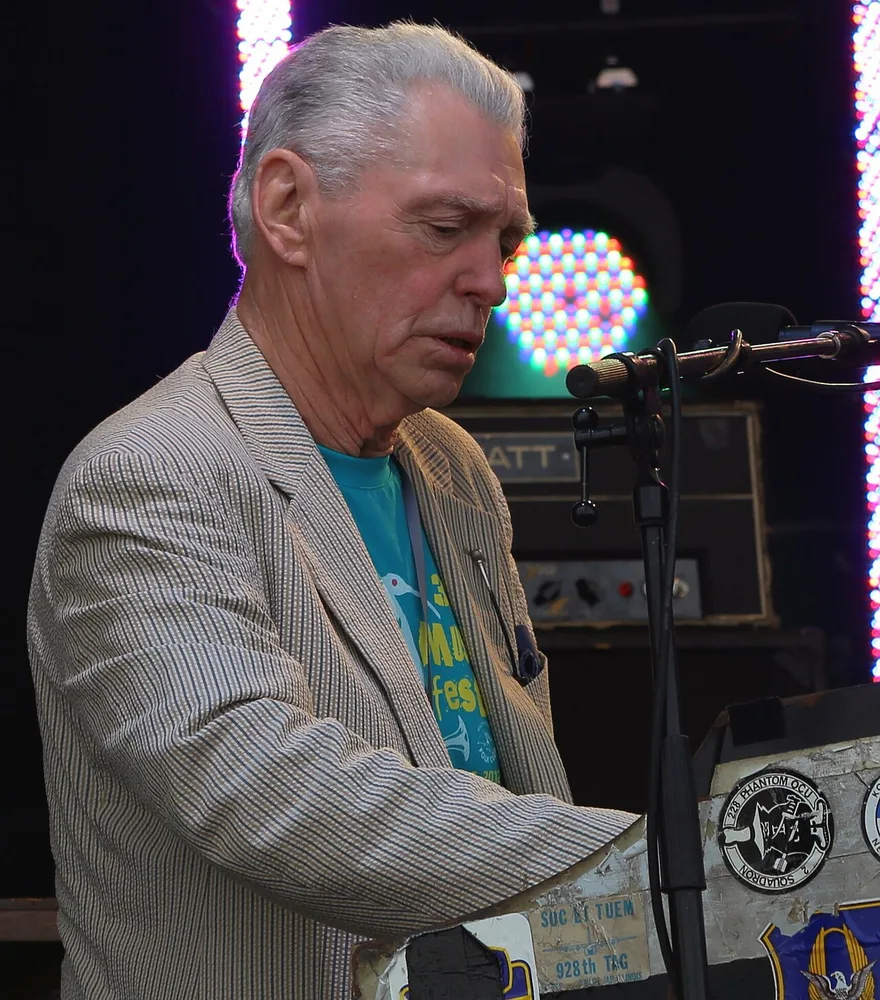
Georgie Fame at Concert at the Kings, 2013 CC BY-SA 2.0 — Wikimedia Commons: https://commons.wikimedia.org/wiki/File:Georgie_Fame_(cropped).jpg (cropped from https://commons.wikimedia.org/wiki/File:Georgie_Fame.jpg), photograph by Mark Kent, originally on Flickr at https://www.flickr.com/photos/flamesworddragon/8879707307/


Georgie Fame was born Clive Powell on June 26, 1943, at 1 Cotton Street in Leigh, Lancashire. He took piano lessons from the age of seven, left Leigh Central County Secondary School at fifteen for a short spell in a cotton mill, and spent his evenings playing piano with a local band called the Dominoes. A singing contest at a Butlins holiday camp in Pwllheli, North Wales, led to a job with the band of the early British rock and roll singer Rory Blackwell. At sixteen he moved to London, where Lionel Bart recommended him to the manager Larry Parnes, the man who had renamed Marty Wilde and Billy Fury. Parnes gave him the stage name too, over his objection.
For the next year or so he toured Britain as a pianist on bills with Wilde, Joe Brown, Dickie Pride, Gene Vincent and Eddie Cochran, and in 1961 he joined the group backing Billy Fury, who were called the Blue Flames. Fury's management let the band go at the turn of 1961 to 1962, reportedly because it sounded too jazzy for a pop package, and the musicians kept the name. Fame, the group's pianist, became its frontman, and Georgie Fame and the Blue Flames went on to a three-year residency at the Flamingo Club in London's West End, where American servicemen from nearby bases lent him records and played him the new sounds from the United States. By his own account, records by Booker T. and the M.G.'s ("Green Onions" among them) and by Jimmy Smith, brought in by a serviceman, sent him out to buy a Hammond organ the following day. The band's repertoire mixed rhythm and blues, songs by Mose Allison and Willie Mabon, and Jamaican ska and bluebeat, the last brought in by the Jamaican-born trumpeter Eddie Thornton. The guitarist John McLaughlin was a member from June 1962 to April 1963, before he left for the Graham Bond Organisation.
The band's first album, Rhythm and Blues at the Flamingo, was recorded live at the club in September 1963, produced by Ian Samwell and engineered by Glyn Johns, and released by Columbia in early 1964. It did not chart, and neither did the first singles. The breakthrough came with Fame at Last (October 1964, No. 15 on the UK albums chart) and with "Yeh, Yeh," a Latin soul tune first recorded by Mongo Santamaría on Watermelon Man! (1963). Jon Hendricks wrote the lyrics, which Lambert, Hendricks & Bavan recorded live at Newport in 1963. Fame's version entered the UK singles chart in December 1964 and reached No. 1 in January 1965, ending the Beatles' five-week run at the top with "I Feel Fine"; it also reached No. 21 in the United States and No. 1 in Canada. Fame has said that the arrangement was written by the saxophonist Tubby Hayes. "Get Away," which he wrote himself, began as a jingle for a petrol company's advertising campaign; released June 17, 1966, it spent a week at No. 1 in July. "Sunny" (No. 13) and "Sitting in the Park" (No. 12) followed, along with the album Sweet Things (May 1966, No. 6), on which the drummer was Mitch Mitchell.
On October 1, 1966, Fame disbanded the Blue Flames, and within a week Mitchell had been chosen for the Jimi Hendrix Experience. Fame's next record was the one that made his jazz case: Sound Venture (Columbia, October 1966, No. 9 on the UK albums chart), made with a big band conducted and arranged by Harry South and produced by Denny Cordell and Tony Palmer. The band was a cross-section of the London jazz scene, with Tubby Hayes, Ronnie Scott, Tony Coe, Dick Morrissey, Ray Warleigh and others in the saxophone section, Kenny Wheeler and Jimmy Deuchar among the trumpets, Stan Tracey on keyboards, and Phil Seamen and Bill Eyden on drums. Five of its twelve tracks credit Hendricks as a lyricist, alongside tunes by Neal Hefti, Willie Nelson, King Curtis and James Brown, and Fame's own "I Am Missing You" and "Dawn Yawn." A joint tour with Count Basie followed, with Fame singing with the Count Basie Orchestra. The Two Faces of Fame (July 1967), which paired a live half with the Harry South band and a studio half, reached No. 22. His third UK No. 1, "The Ballad of Bonnie and Clyde," was released at the end of 1967 and reached No. 7 in the United States.
The years that followed were mostly pop and cabaret. Fame made the string-backed Georgie Does His Thing with Strings (1969) and had a UK Top 20 hit in 1971 with the singer and organist Alan Price, "Rosetta," which reached No. 11. He wrote advertising jingles, scored the films Entertaining Mr Sloane (1970) and The Alf Garnett Saga (1972), and played a pop singer in the 1968 comedy The Mini-Affair. In 1974 he re-formed the Blue Flames and began singing with European orchestras and big bands. He made In Hoagland 1981 with the singer Annie Ross for Bald Eagle, and from 1977 to 1988 he toured Australia each winter with a local band billed as the Aussie Blue Flames.
His jazz work came back into focus from 1989, when Van Morrison asked him to play Hammond organ on his records. Fame played on Morrison's albums through 1997, served as his musical director for a time, and shared the billing on How Long Has This Been Going On (Verve, December 1995), recorded on May 3, 1995 at Ronnie Scott's Jazz Club in London without an audience. It is a session of jazz standards and vocalese, with arrangements by Pee Wee Ellis, Fame, Morrison and Leo Green, and Annie Ross as a guest. A year later came Tell Me Something: The Songs of Mose Allison (Verve, October 1996), made in a single day by Morrison, Fame, Mose Allison and the pianist Ben Sidran, with Guy Barker, Pee Wee Ellis and Leo Green on horns. Through the same decade he recorded for Sidran's Go Jazz label, beginning with Cool Cat Blues (1991) and continuing through the live Ronnie Scott's albums Name Droppin' (1997) and Walking Wounded (1998) to Poet in New York (2000), recorded with Bob Malach on tenor saxophone, David Hazeltine on piano, Peter Washington on bass and Louis Hayes on drums. The Académie du Jazz in France named it the best vocal jazz album of the year, and AllMusic's biography credits it with establishing him as a serious student of the vocalese tradition. Fame was also a member of Bill Wyman's Rhythm Kings, the blues and R&B band led by the former Rolling Stones bassist.
His later records are mostly on his own label. They include Georgie Fame & the Birthday Big Band (2004), Tone-Wheels 'A' Turnin' (2009) and Swan Songs (2015), the last two with the Last Blue Flames, and the studio album Lost in a Lover's Dream (2012, UK No. 28); Swan Songs reached No. 13 in the UK. His sons Tristan Powell (guitar) and James Powell (drums) have played in his groups. In 2018 Odin Records issued On a Misty Night, collecting vocals by Karin Krog and Fame on the music of Tadd Dameron, arranged by Per Husby and recorded in New York in November 1995 with the Per Husby Orchestra. As of November 2026 he is 83, and he has played a number of residencies at Ronnie Scott's.
Fame is a pop star with a real jazz apparatus behind the pop. Commercially he is remembered for three UK No. 1 singles between 1965 and 1968, and AllMusic's biography describes his records of the late 1960s and 1970s as leaning toward cabaret and middle-of-the-road pop. The jazz case rests on other evidence: the Hammond organ, which he took up in the early 1960s, after hearing records by Booker T. and Jimmy Smith, when very few British musicians played one; a book of songs taken from Mose Allison, whose "Parchman Farm" is on the Flamingo album and whom he has said he could hardly stop sounding like for several years in the 1960s; the vocalese of Jon Hendricks, Dave Lambert and Annie Ross, whose repertoire he has recorded and whom he credits with helping him understand jazz; and a run of big-band and quartet records from Sound Venture to Poet in New York that British and French jazz audiences took seriously. His phrasing sits close to Mose Allison's and to the jump-blues tradition of Louis Jordan, whom AllMusic names among his influences, alongside Booker T. & the M.G.'s. He was also one of the first white musicians influenced by Jamaican ska, which he heard in cafes in Ladbroke Grove and played at the Flamingo, and the Flamingo album includes Nat Adderley's "Work Song."
- Rhythm and Blues at the Flamingo (1964, Columbia) - The live debut with the Blue Flames, recorded at the London club in September 1963, with Georgie on Hammond organ and a book that runs from "Night Train" to "Parchman Farm." Spotify - Rhythm and Blues at the Flamingo Listen
- Fame at Last (1964, Columbia) - The album that carried the Blue Flames into the UK Top 20, at No. 15. Spotify - Fame at Last Listen
- Sweet Things (1966, Columbia) - The last Blue Flames album, with Mitch Mitchell on drums, "Sitting in the Park" and Willie Nelson's "Funny How Time Slips Away"; it reached No. 6. Spotify - Sweet Things Listen
- Sound Venture (1966, Columbia) - Fame with the Harry South Big Band and a who's who of London jazz, from Kenny Wheeler to Tubby Hayes, singing Jon Hendricks lyrics and James Brown. Spotify - Sound Venture Listen
- Cool Cat Blues (1991, Go Jazz) - His first record for Ben Sidran's label and the start of the jazz-focused work of his later career; it includes a duet on "Moondance" with Van Morrison. Spotify - Cool Cat Blues Listen
- How Long Has This Been Going On (1995, Verve) - Billed to Van Morrison with Georgie Fame and Friends, a jazz session recorded at Ronnie Scott's in one afternoon. Spotify - How Long Has This Been Going On Listen
- Tell Me Something: The Songs of Mose Allison (1996, Verve) - Fame, Van Morrison and Ben Sidran sing the songs of Allison, who joins them, in a single day of live takes. Spotify - Tell Me Something Listen
- Poet in New York (2000, Go Jazz) - A quartet date with Bob Malach, David Hazeltine, Peter Washington and Louis Hayes, named best vocal jazz album of the year by the Académie du Jazz in France.
Georgie Fame: Full Discography
Discogs artist: Georgie Fame (58693) · Real name Clive Powell (also listed on Discogs as Clive Powell (2) and Georgie Fame & The Blue Flames) · Born June 26, 1943, Leigh, Lancashire
Georgie Fame has a large catalogue in his own name, with the Blue Flames and in collaboration, counting compilations. The tables below are a curated selection of the leader records, the big-band and jazz-club dates, the major collaborations and the UK hit singles; the full list is on Discogs. Albums are listed by the year of first release in the UK or the country named. Chart positions are UK unless stated and come from the Official Charts Company and Wikipedia.
Leader and Co-Leader: Studio Albums
| Album | Year | Label | Personnel & Notes | Charts | Listen | Buy |
|---|---|---|---|---|---|---|
| Fame at Last! | 1964 | Columbia | With the Blue Flames. Released October 1964 in the UK and Canada. | No. 15 | Spotify | — |
| Yeh Yeh | 1965 | Imperial | With the Blue Flames. US-only release, April 1965. | No. 137 US | — | — |
| Get Away | 1966 | Imperial | With the Blue Flames. US and Canada-only release, March 1966. | — | — | |
| Sweet Things | 1966 | Columbia (SX 6043) | With the Blue Flames: Colin Green (guitar), Glenn Hughes (baritone saxophone), Peter Coe (alto saxophone), Eddie Thornton (trumpet), Cliff Barton (bass), Mitch Mitchell (drums), Speedy Acquaye (percussion). Released May 1966. Includes "Sitting in the Park" and "The In Crowd." | No. 6 | Spotify | — |
| Sound Venture | 1966 | Columbia (SX 6076) | With the Harry South Big Band. Produced by Denny Cordell and Tony Palmer; arranged and conducted by Harry South. Saxophones: Tubby Hayes, Ronnie Scott, Tony Coe, Dick Morrissey, Ray Warleigh, Alan Branscombe, Harry Klein, Jackie Sharp, Ray Wilcox. Trumpets: Kenny Wheeler, Jimmy Deuchar, Bert Courtley, Tony Fisher, Ian Hamer. Trombones: Keith Christie, Ken Goldie. Also Stan Tracey (keyboards), Colin Green (guitar), Phil Bates (bass), Phil Seamen and Bill Eyden (drums). Released October 1966. Songs by Neal Hefti, Jon Hendricks, Willie Nelson, King Curtis and James Brown, plus two Fame originals. | No. 9 | Spotify | — |
| The Two Faces of Fame | 1967 | CBS (SBPG 63018) | Live first half with the Harry South Big Band; studio second half with the Georgie Fame Band. Released July 1967. | No. 22 | — | — |
| The Third Face of Fame | 1968 | CBS (S 63293) | Released May 1968. Issued in the US by Epic in April 1968 as The Ballad of Bonnie and Clyde. | No. 185 US | — | — |
| Georgie Does His Thing with Strings | 1969 | CBS (S 63650) | With the Keith Mansfield Orchestra. Released December 1969. | Spotify | — | |
| Seventh Son | 1970 | CBS | Released January 1970. | — | — | |
| Going Home | 1971 | CBS (S 64350) | UK-only release, May 1971. | — | — | |
| Fame & Price / Price & Fame / Together | 1971 | CBS (S 64392) | With Alan Price. Includes "Rosetta." | — | — | |
| All Me Own Work | 1972 | Reprise (REP 44183) | — | — | ||
| Georgie Fame | 1974 | Island (ILPS 9293) | Released October 1974, after the Blue Flames were re-formed. | — | — | |
| Right Now! | 1979 | Pye | Released March 1979. | — | — | |
| That's What Friends Are For | 1979 | Pye | — | — | ||
| Closing the Gap | 1980 | Piccadilly | — | — | ||
| In Hoagland 1981 | 1981 | Bald Eagle | With Annie Ross. Released June 1981; reached No. 15 in Sweden. | — | — | |
| In Goodmansland | 1983 | Sonet | With the singer Sylvia Vrethammar. | — | — | |
| No Worries | 1988 | Four Leaf Clover / CBS | Recorded in Sydney with an Australian band, the Aussie Blue Flames. Sweden and Australia-only release. | — | — | |
| A Portrait of Chet | 1989 | Four Leaf Clover | Sweden-only release. | — | — | |
| Cool Cat Blues | 1991 | Go Jazz (vBr 2043 2) | Released May 1991. Includes a duet on "Moondance" with Van Morrison. | Spotify | — | |
| The Blues and Me | 1992 | Go Jazz | Released June 1992. | — | — | |
| City Life | 1992 | BBC Radio 2 | With Madeline Bell and the BBC Big Band. | — | — | |
| Three Line Whip | 1994 | Three Line Whip | Released May 1994. Features his sons Tristan (guitar) and James (drums). | — | — | |
| How Long Has This Been Going On | 1995 | Verve | Credited to Van Morrison with Georgie Fame & Friends. Recorded live without an audience at Ronnie Scott's Jazz Club, London, on May 3, 1995; Pee Wee Ellis, Fame, Morrison and Leo Green arranging; Annie Ross guest. Released December 1995. No. 1 on the Billboard Top Jazz Albums chart. | Spotify | — | |
| Tell Me Something: The Songs of Mose Allison | 1996 | Verve | With Van Morrison, Mose Allison and Ben Sidran, recorded in a single day. Alec Dankworth (bass), Ralph Salmins (drums), Guy Barker (trumpet), Pee Wee Ellis and Leo Green (tenor saxophone), Robin Aspland (Wurlitzer piano). Released October 8, 1996. | Spotify | — | |
| Poet in New York | 2000 | Go Jazz (GO 6044 2) | With Bob Malach (tenor saxophone), David Hazeltine (piano), Peter Washington (bass) and Louis Hayes (drums). Released August 2000. Named best vocal jazz album of the year by the Académie du Jazz in France. | — | — | |
| Relationships | 2001 | Three Line Whip | Released September 2001. | — | — | |
| Charlestons | 2003 | Three Line Whip | Released October 20, 2003. | — | — | |
| Tone-Wheels 'A' Turnin' | 2009 | Three Line Whip | With the Last Blue Flames. Released June 15, 2009. | — | — | |
| Lost in a Lover's Dream | 2012 | Three Line Whip | Released October 8, 2012. | No. 28 | Spotify | — |
| Swan Songs | 2015 | Three Line Whip | With the Last Blue Flames. Released November 6, 2015. | No. 13 | Spotify | — |
Leader and Co-Leader: Live Albums
| Album | Year | Label | Personnel & Notes | Charts | Listen | Buy |
|---|---|---|---|---|---|---|
| Rhythm and Blues at the Flamingo | 1964 | Columbia (33SX 1599) | With the Blue Flames: Georgie Fame (vocals, Hammond organ), Johnny Marshall (baritone saxophone), Mick Eve (tenor saxophone), Big Jim Sullivan (guitar), Rod Slade (bass), Red Reece (drums), Tommy Thomas (congas). Recorded live at the Flamingo Club, London, in September 1963; produced by Ian Samwell, engineered by Glyn Johns. Released January 1964. Includes Mose Allison's "Parchman Farm" and Nat Adderley's "Work Song." | Spotify | — | |
| Live at Montreux Jazzfestival | 1983 | Dragon | With the Hudik Big Band and Bengt-Arne Wallin. Sweden-only release. | — | — | |
| Live in Japan | 1992 | Go Jazz | With Ben Sidran, Bob Malach and Ricky Peterson. Germany-only release. | — | — | |
| Endangered Species | 1993 | Music Mecca | With the Danish Radio Big Band. Denmark-only release, April 1993. | — | — | |
| Name Droppin': Live at Ronnie Scott's | 1997 | Go Jazz | Recorded at Ronnie Scott's Jazz Club, London. | — | — | |
| Walking Wounded: Live at Ronnie Scott's | 1998 | Go Jazz | Recorded at Ronnie Scott's Jazz Club, London. Released October 1998. | — | — | |
| Georgie Fame & the Birthday Big Band | 2004 | Three Line Whip | Released September 27, 2004. | Spotify | — | |
| Singer: The Musical (Steve Gray and Georgie Fame) | 2014 | Proper | Featuring Madeline Bell. Released April 6, 2014. | — | — | |
| Rhythm and Blues at the Ricky Tick | 2014 | Rhythm & Blues | Limited vinyl-only release, April 14, 2014. | — | — |
Collaborative Albums
| Album | Year | Label | Personnel & Notes | Listen | Buy |
|---|---|---|---|---|---|
| On a Misty Night: The Songs of Tadd Dameron (Karin Krog and Georgie Fame) | 2018 | Odin (ODINCD9566) | Vocals by Krog and Fame on Dameron's music, arranged by Per Husby and recorded in New York in November 1995 with the Per Husby Orchestra, which included the trombonist Jim Pugh and the trumpeter Earl Gardner. First issued in part on Husby's If You Could See Me Now (1996). | Spotify | — |
Compilations (selected)
| Album | Year | Label | Notes | Charts |
|---|---|---|---|---|
| Hall of Fame | 1967 | Columbia (SX 6120) | Released March 1967. | No. 12 |
| The Best of Georgie Fame 1967-1971 | 1996 | Columbia | Released August 1996. | |
| Funny How Time Slips Away: The Pye Anthology | 2001 | Sanctuary / Castle Music | Released August 27, 2001. | |
| Somebody Stole My Thunder: Jazz-Soul Grooves 1967-1971 | 2007 | Sony BMG | Released July 2007. | |
| The Whole World's Shaking: Complete Recordings 1963-1966 | 2015 | Polydor | Five-CD box set, released October 9, 2015. | |
| Survival: A Career Anthology 1963-2015 | 2016 | UMC | Six-CD box set, released November 25, 2016. |
UK Singles (selected)
| Single | Year | Label | Notes | UK peak |
|---|---|---|---|---|
| "Yeh, Yeh" (with the Blue Flames) | 1964 | Columbia (DB 7428) | Entered the chart in December 1964; two weeks at No. 1 in January 1965. Lyrics by Jon Hendricks to a tune from Mongo Santamaría's Watermelon Man! (1963). No. 21 in the US, No. 1 in Canada. | 1 |
| "In the Meantime" (with the Blue Flames) | 1965 | Columbia | 22 | |
| "Like We Used to Be" (with the Blue Flames) | 1965 | Columbia | 33 | |
| "Something" (with the Blue Flames) | 1965 | Columbia | 23 | |
| "Get Away" (with the Blue Flames) | 1966 | Columbia | Written by Fame. Released June 17, 1966; one week at No. 1. No. 70 in the US. | 1 |
| "Sunny" | 1966 | Columbia | 13 | |
| "Sitting in the Park" | 1966 | Columbia | 12 | |
| "Because I Love You" | 1967 | CBS | 15 | |
| "Try My World" | 1967 | CBS | 37 | |
| "The Ballad of Bonnie and Clyde" | 1967 | CBS | One week at No. 1. No. 7 in the US, No. 1 in Canada. | 1 |
| "Peaceful" | 1969 | CBS | 16 | |
| "Seventh Son" | 1969 | CBS | 25 | |
| "Rosetta" (with Alan Price) | 1971 | CBS | Credited to Fame and Price. | 11 |
| "Samba (Toda Menina Baiana)" | 1986 | Four Leaf Clover | Gilberto Gil song, with English lyrics by Fame. | 81 |
Guest and Sideman Appearances (selected)
| Years | Project (Leader) | Title | Label | Role | Notes |
|---|---|---|---|---|---|
| 1989 to 1997 | Van Morrison | Studio albums from Avalon Sunset (1989) through The Healing Game (1997) | Various | Hammond organ, vocals | Fame played on all of Morrison's albums in this span and for a time was his musical director. The two co-billed How Long Has This Been Going On (1995) and Tell Me Something (1996), listed above. |
| 1997 onward | Bill Wyman's Rhythm Kings | Several studio and live albums | Various | Organ, vocals | Fame was a member of the band. Track-level credits are on Discogs. |
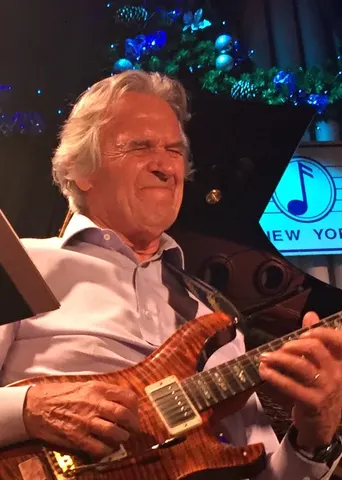
- John McLaughlin - guitarist in the Blue Flames from June 1962 to April 1963, before he joined the Graham Bond Organisation.
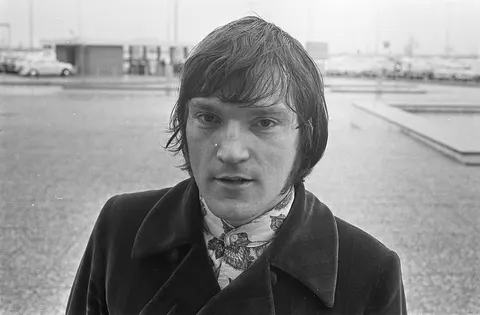
- Mitch Mitchell - Blue Flames drummer from December 1965 to October 1966, including the Sweet Things sessions, and then the drummer of the Jimi Hendrix Experience.
- Colin Green - Blue Flames guitarist in 1961 and 1962 and again from October 1964 to 1966, and the guitarist on Sound Venture.
- Harry South and the Harry South Big Band - arranger, conductor and band for Sound Venture (1966) and for the live half of The Two Faces of Fame (1967). The Sound Venture band included Tubby Hayes, Ronnie Scott, Tony Coe, Dick Morrissey, Ray Warleigh, Kenny Wheeler, Jimmy Deuchar, Stan Tracey and Phil Seamen.
- Jon Hendricks - lyricist of "Yeh, Yeh" and of five of the twelve tracks on Sound Venture.
- Count Basie Orchestra - Fame sang with the band on a tour that followed Sound Venture.
- Mose Allison - Fame's most important song source; the two recorded together on Tell Me Something: The Songs of Mose Allison (1996).
- Van Morrison - Fame played Hammond organ on his albums from 1989 to 1997 and shared the billing on How Long Has This Been Going On (1995) and Tell Me Something (1996).
- Ben Sidran - American pianist and singer, founder of Go Jazz, the label of Fame's Cool Cat Blues through Poet in New York, and a performer on Tell Me Something.
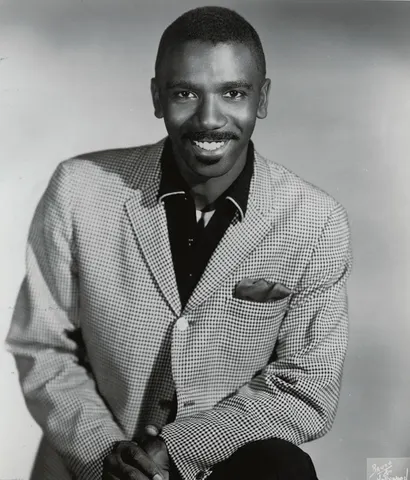
- Bob Malach, David Hazeltine, Peter Washington and Louis Hayes - the quartet on Poet in New York (2000).
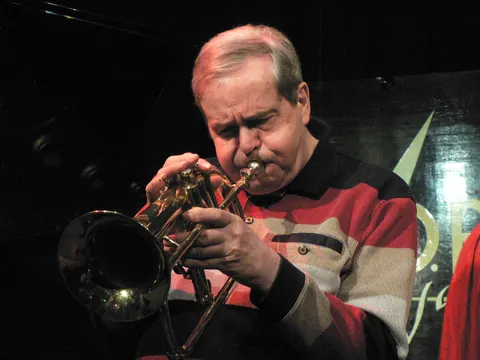
- Karin Krog and Per Husby - the vocalist and the arranger of the Tadd Dameron project issued in 2018 as On a Misty Night, recorded in New York in November 1995 with, among others, the trombonist Jim Pugh and the trumpeter Earl Gardner.
- Annie Ross, Pee Wee Ellis and Alan Price - recurring partners: Ross on In Hoagland 1981 and as a guest on the Ronnie Scott's album with Morrison, Ellis as an arranger on the Morrison records, and Price as co-leader of Fame & Price, Price & Fame, Together (1971).
- Bill Wyman's Rhythm Kings - the blues and R&B band in which Fame played organ and sang.
More Crossover Jazz Artists
See all 264 Crossover Jazz artists →More British Jazz Artists
See all 32 British artists →- Wikipedia: Georgie Fame
- Wikipedia: Georgie Fame discography
- Wikipedia: Georgie Fame and the Blue Flames
- Wikipedia: Sound Venture
- Wikipedia: Rhythm and Blues at the Flamingo
- Wikipedia: Yeh, Yeh
- Wikipedia: Get Away (Georgie Fame song)
- Wikipedia: How Long Has This Been Going On (Van Morrison album)
- Wikipedia: Tell Me Something: The Songs of Mose Allison
- AllMusic: Georgie Fame biography by Steve Huey
- Discogs: Georgie Fame
- Official Charts Company: Georgie Fame
- UPI: Georgie Fame relishes jazz independence (October 28, 2003)
- The Irish Times: Fame is the spur (August 8, 1998)
- Brian Auger on JazzProfiles.com
- Jim Pugh on JazzProfiles.com