 JAZZPROFILES lives in the music 1,572 Jazz Artists fully Profiled!
 Bill Saxton
Last updated September 26, 2026
Listen on Spotify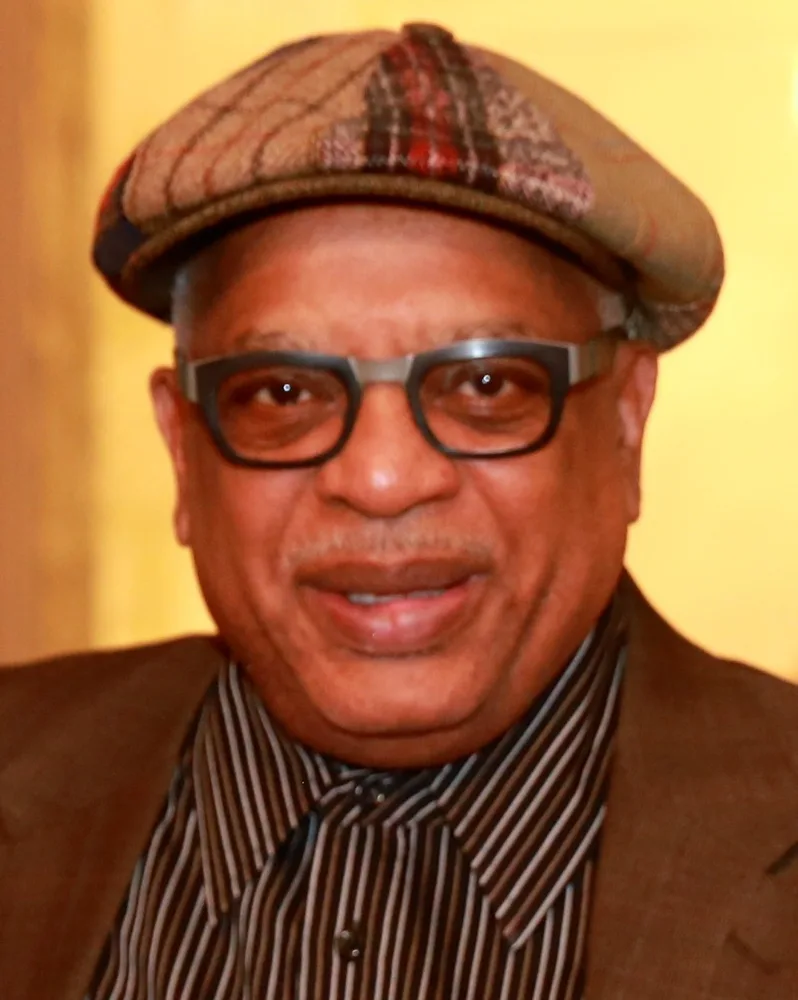
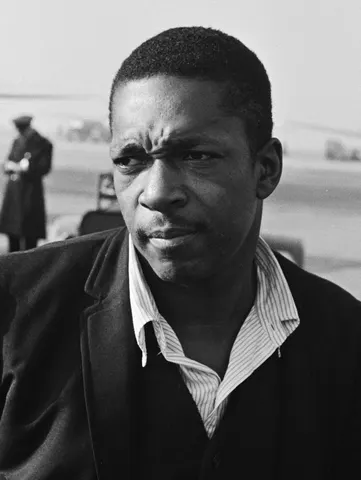
Bill Saxton photographed on March 1, 2017, during his northwest Russia tour, an engagement organized under United States State Department cultural programming. The image was released by the US Consulate General in St Petersburg. Public Domain (Wikimedia Commons template PD-USGov-DOS: a work of a United States Department of State employee made as part of that person's official duties, in the public domain under 17 U.S.C. sections 101 and 105). Flickr-reviewed by a trusted Wikimedia Commons user. — Wikimedia Commons, File:Bill Saxton 2017.jpg - https://commons.wikimedia.org/wiki/File:Bill_Saxton_2017.jpg (original upload sourced from the US Consulate General St Petersburg Flickr stream, https://www.flickr.com/photos/otkroyameriku/33148196722/)

William Edward Saxton was born on June 28, 1946, at Harlem Hospital and grew up in the neighborhood he has never left. He picked up the clarinet at Frederick Douglass Junior High School. By his own account the horn that mattered came later and under strange circumstances: he has said he acquired his first saxophone during the Harlem riots of 1964, and he began working as a professional saxophonist the following year.
The next stretch of his life is unusual for a jazz biography, and he tells it himself rather than hiding it. Saxton was sentenced to five years at Auburn Correctional Facility in upstate New York and served roughly two. He found a band inside, learned from the musicians in it how to practice, worked through his scales, and made the discovery that anything he could sing he could also play. He completed his secondary schooling there. On release he formed a group called the Jazz Prophets with his friend the trumpeter Sinclair Acey, and the two of them went to Boston to audition for the New England Conservatory, which cost nothing to attend. Saxton studied clarinet, composition, and arrangement there and graduated in 1973. He was already recording before he finished: his earliest confirmed credit is Mongo Santamaria's Fuego (Vaya VS 18, 1973), where he plays alto and baritone saxophone and flute.
The 1970s put him in the New York rehearsal-band and loft economy. He recorded with Billy Gault on When Destiny Calls (SteepleChase SCS-1027) at an October 29, 1974 session, and with Roy Haynes in Rome on November 13, 1975 for Horo's Jazz a Confronto series. The relationship that shaped the decade was with Frank Foster. Saxton held a tenor chair in Foster's Loud Minority through the Denon sessions at Sound Ideas Studios in New York in November 1977 and November 1978 that produced Manhattan Fever, Bursting Out!, and Shiny Stockings, and he was in the band again for the Helsinki date of July 1978 issued as Frank Foster's Living Color, For All Intents and Purposes (Leo LEO 007), where he is credited on baritone. Acey was in the trumpet section for all of it. A shelved Loud Minority session from October 9 and 10, 1977 with Elvin Jones on drums finally appeared thirty years later as Well Water (Piadrum, 2007). In the same period Saxton joined Clark Terry's Big Bad Band, recorded live in Warsaw on April 9, 1978 and in Hilversum on September 6, 1979, and played on Bobby Watson's leader debut, Estimated Time of Arrival (Roulette SR 5009), cut at the Record Plant across mid and late 1977.
His name reached critics through Dannie Richmond. Eleven months after Charles Mingus's death, Richmond took a quartet into Barigozzi Studios in Milan on November 23 and 24, 1979 and cut Ode to Mingus (Soul Note SN 1005) with Saxton on tenor, Danny Mixon on piano, and Mike Richmond on bass. Soul Note's own notes for the album describe the three sidemen as Mingus Dynasty players who were touring Europe with Richmond at the time. The record contains no Mingus tunes, only Richmond originals and a ballad he sings, and it is the release most often cited as the point where Saxton first attracted attention.
Leader dates followed slowly, and always on small European labels. The drummer Alvin Queen hired him for Ashanti (Nilva NQ 3402), recorded at Minot Sound Studio in White Plains, New York on August 18, 1981 with Dusko Goykovich, James Spaulding, John Hicks, and Ray Drummond; Saxton wrote the opening track, "One for Booker." Three years later Queen produced Saxton's own debut at the same studio, Beneath the Surface (Nilva NQ 3408), cut on April 12 and 16, 1984 with Hicks, Drummond, and Queen. Hicks sits out three of the six tracks, so half the album is a piano-less trio. The program is a portrait of the company Saxton had been keeping: his own title tune, Foster's "Simone," Wilbur Ware's "Riff Raff," and Roland Kirk's "Ladies Blues." Divox gathered the two sessions onto a single co-billed CD in 1987, also called Ashanti.
From 1985 he was the tenor voice in the Errol Parker Tentet, appearing on the concert album Live at the Wollman Auditorium (Sahara 1014, recorded April 12, 1985) alongside Steve Coleman, Wallace Roney, Robin Eubanks, and Graham Haynes, and on Parker's later Sahara CDs recorded in 1991 and at Systems Two in Brooklyn in September 1994. He also worked in Charli Persip's Superband, credited as a guest soloist on In Case You Missed It (Soul Note SN 1079, recorded September 12 and 13, 1984). His own quartet became a touring unit in Germany, and both of its albums were made there: Live at the Henkelmann Jazz Club (Trion PSCD 9101), taped at the Jazzclub Henkelmann in Iserlohn in June 1991 with a German rhythm section, and Atymony (Jazzline JL 11136-2), cut at Hansahaus Studios in Bonn in 1994 with pianist Carlos McKinney, the young Israeli bassist Omer Avital, and drummer Noel Parris. Atymony remains his most recent leader album.
He kept working the organ-and-guitar side of the music through the 1990s, on Jimmy Ponder's Mean Streets, No Bridges (Muse, 1987), on Big John Patton's Blue Planet Man (Paddle Wheel KICJ 168, recorded April 12 and 13, 1993 with John Zorn also in the front line), and on Radam Schwartz's ORGAN-ized (Muse MCD 5497, recorded January 30, 1992). Dick Griffin used him on three records between 1979 and 1994. Bobby Watson brought him back for the big-band Tailor Made (Columbia, 1993). Since 2006 he has held a reed chair in the Charles Tolliver Big Band, on With Love (Blue Note, recorded June 2 and 3, 2006 at Bennett Studios) and Emperor March: Live at the Blue Note (Half Note 4539, recorded July 10 and 11, 2008), doubling tenor, soprano, clarinet, and flute. His own biographies add a long list of associations that never reached record: the Duke Ellington Orchestra and the Count Basie Orchestra, Randy Weston's African Rhythms, Jackie McLean, Pharoah Sanders, Bennie Maupin, Tito Puente, Carmen McRae, Nancy Wilson, and Barry Harris. He has toured for the State Department in West Africa, Europe, Japan, the Caribbean, and Russia, and has been honored at the White House during Black Music Month.
The thing he is now best known for is a building. Saxton stayed uptown when the rest of the scene went downtown during New York's fiscal collapse, saying that Harlem had always been there and would only get better. He founded a nonprofit, the Harlem Jazz Scene, and a Jazz Literacy Program for Youth built around teaching that African Americans originated the music. In 2006, after years of a standing Friday night at a Harlem pub called Nick's, he opened Bill's Place in the ground floor of a brownstone he had bought at 148 West 133rd Street, working with Sinclair Acey and with his wife, the author Theda Palmer Saxton. The address is the last surviving original speakeasy on the block that Prohibition-era Harlem called Swing Street and Jungle Alley, where Billie Holiday sang and Willie "The Lion" Smith led the house band. The room seats about thirty. Saxton plays two sets there with the Bill Saxton Harlem All-Stars every Friday and Saturday, sells out on word of mouth with no paid advertising, and has used the bandstand to bring up younger players including Camille Thurman, Camille Gainer Jones, and Lakecia Benjamin. He has written more than eighty compositions. In April 2024 the Jazz Journalists Association named him a Jazz Hero, and he was still running the room and playing it in 2026, past fifty years into the working life he started in 1965.
Saxton is a hard bop tenor player in the strictest sense of the term, with a broad, hot, blues-weighted sound and a phrase shape that comes out of the bebop line rather than around it; the reference points most often attached to him are John Coltrane and Wayne Shorter, filtered through the section discipline he learned in the Foster, Terry, and Persip big bands. He has been open about refusing the fusion turn that most of his contemporaries took in the late 1970s, and about seeing fidelity to the tradition as an obligation rather than a taste, which is the same argument that keeps his club programming straight-ahead. That conservatism is not narrowness: the same player who cut a modal-leaning trio record for a Swiss label in 1984 also plays baritone on a Finnish avant-garde date, sits in an organ trio behind Jimmy Ponder, doubles clarinet and flute in Charles Tolliver's big band, and turns up on a Roy Ayers vibraphone record in 2011. As a composer he has more than eighty pieces to his name, of which "Beneath the Surface," "One for Booker," "One for Jaws," "Rain Song," and "Priorities" are the ones that circulated. Critically he has always been described as under-recognized: the Soul Note reissue notes for Ode to Mingus say plainly that he "remained fairly obscure" despite the quality of the playing, and the Jazz Journalists Association's 2024 Jazz Hero citation honored him as much for keeping a Harlem room open and mentoring the players who come through it as for the horn.
- Beneath the Surface (1984, Nilva) - his leader debut, recorded in White Plains on April 12 and 16, 1984 with John Hicks, Ray Drummond, and Alvin Queen, and the clearest single document of his tenor sound. (No confirmed Spotify album page found; the Nilva catalog is essentially absent from streaming.)
- Dannie Richmond Quartet, Ode to Mingus (1980, Soul Note) - as a sideman: the Milan session of November 23 and 24, 1979 that first brought him critical notice, made eleven months after Charles Mingus's death. Spotify - Ode to Mingus
- Bill Saxton Quartet, Atymony (1994, Jazzline) - his last leader album, cut in Bonn with Carlos McKinney, Omer Avital, and Noel Parris, and the record that puts him at the start of Avital's New York-to-Europe working life. (No confirmed Spotify album page found.)
- Alvin Queen, Ashanti (1981, Nilva) - as a sideman, and the band that became his own: Dusko Goykovich, James Spaulding, John Hicks, and Ray Drummond, with Saxton contributing the opening tune, "One for Booker." (No confirmed Spotify album page found.)
- Frank Foster and the Loud Minority, Manhattan Fever (1978, Denon) - as a sideman: a direct-to-digital big band session from November 1977 and the best-recorded example of the Foster band Saxton spent the decade in. Spotify - Manhattan Fever
- Charles Tolliver Big Band, Emperor March: Live at the Blue Note (2009, Half Note) - as a sideman: Saxton on tenor, soprano, clarinet, and flute in the band Tolliver rebuilt from his 1970s Music Inc. Orchestra, recorded live in New York on July 10 and 11, 2008. Spotify - Emperor March Listen
- Billy Gault, When Destiny Calls (1975, SteepleChase) - as a sideman: an October 1974 date with Michael Carvin and Joe Lee Wilson, and Saxton's first significant recorded solo space. Spotify - When Destiny Calls Listen
- Bill Saxton Quartet, Live at the Henkelmann Jazz Club (1991, Trion) - the only live album under his own name, taped in Iserlohn in June 1991, running from Dizzy Gillespie's "Be-Bop" through Fats Waller's "Jitterbug Waltz" to "Parker's Mood." (No confirmed Spotify album page found.)
Bill Saxton: Full Discography
Identity confirmed via the live Discogs API, artist ID 871991 ("Bill Saxton," realname William Edward Saxton, born June 28, 1946, New York City). Discogs lists 53 releases under that ID: two leader dates, one co-billed CD, and the rest sideman appearances, compilations, and one unofficial issue. Saxton is primarily a sideman and a working bandleader whose live output far outruns his recorded leader catalog, so the leader table below is short and complete, while the sideman table gives a curated set of his most significant credits rather than an inventory. Label and catalog data were taken from Discogs main-release pages and cross-checked against the Jazz Discography Project's Bill Saxton discography, which files his three quartet sessions with full personnel.
One credit indexed under artist 871991 is excluded as a Discogs conflation: a "Bill Saxton" credited with vocals in the New York City Opera Chorus on The Ballad of Baby Doe (MGM S 3-GC-1, 1959). The saxophonist was twelve in 1959 and does not sing on record. Details are in bill-saxton_notes.md.
The Buy column is — throughout: no affiliate program is set up for this site yet.
As Leader / Co-Leader
| Album Title | Recording Date(s) | Release Date | Label | Catalog Number | Format(s) | Personnel | Role | Reissue History | Spotify | Buy | Notes |
|---|---|---|---|---|---|---|---|---|---|---|---|
| Beneath the Surface | Recorded April 12 and 16, 1984, Minot Sound Studio, White Plains, NY | 1984 | Nilva Records | NQ 3408 | Vinyl, LP | Bill Saxton (tenor and soprano saxophone), John Hicks (piano, on "Beneath the Surface," "Third World Express," and "Teminha Pra Bebe"), Ray Drummond (bass), Alvin Queen (drums); produced by Alvin Queen, engineered and mixed by Ron Carran, liner notes by Russ Musto | Leader | Four of the six tracks were folded into the Divox CD Ashanti (CDX 48703, 1987); jazzdisco also records issues via ANF Corporation | No confirmed Spotify album page found | — | Swiss label, pressing made in Switzerland. Program mixes Saxton's title tune with Frank Foster's "Simone," Wilbur Ware's "Riff Raff," Kasa Allah's "Third World Express," Claudio Roditi's "Teminha Pra Bebe," and Roland Kirk's "Ladies Blues." Hicks sits out three tracks, leaving a piano-less trio |
| Ashanti (co-billed with Alvin Queen) | Compiled from two sessions: August 18, 1981, Minot Sound Studio, White Plains, NY, and April 12 and 16, 1984, same studio | 1987 | Divox | CDX 48703 | CD, Compilation, Reissue | 1981 session: Dusko Goykovich (trumpet, flugelhorn), James Spaulding (alto saxophone, flute), Bill Saxton (tenor saxophone), John Hicks (piano), Ray Drummond (bass), Alvin Queen (drums, percussion). 1984 session: Saxton, Hicks, Drummond, Queen | Co-billed (issued as Alvin Queen and Bill Saxton) | Draws on the Alvin Queen LP Ashanti (Nilva NQ 3402, 1981) plus four tracks from Saxton's own Beneath the Surface | No confirmed Spotify album page found | — | The only release on which Saxton's name appears in the billing alongside another leader. The 1981 LP was recorded at Minot Sound and mixed at Powerplay Studio in Horgen, Switzerland; the album is dedicated to the Ashanti people of Ghana. Saxton composed "One for Booker," the LP's opening track |
| Bill Saxton Quartet, Live at the Henkelmann Jazz Club | Recorded June 1991, Jazzclub Henkelmann, Iserlohn, Germany (month and venue city per the Jazz Discography Project; Discogs gives only the year) | 1991 | Trion | PSCD 9101 | CD | Bill Saxton (tenor and soprano saxophone), Christof Sanger (piano), Christian von Kaphengst (bass), Heinrich Köbberling (drums) | Leader | None found | No confirmed Spotify album page found | — | German pressing with a German rhythm section. Set list is standards and two Saxton originals: Dizzy Gillespie's "Be-Bop," Saxton's "Rain Song," Fats Waller's "Jitterbug Waltz," Nat King Cole's "You're Looking at Me," Saxton's "One for Jaws," Charlie Parker's "Parker's Mood," and Cy Coleman's "Witchcraft" |
| Bill Saxton Quartet, Atymony | Recorded 1994, Hansahaus Studios, Bonn, Germany (per the Jazz Discography Project; no exact session date printed anywhere) | 1994 | Jazzline | JL 11136-2 (as printed on the disc; the Jazz Discography Project prints JL 1136-2) | CD | Bill Saxton (saxophone), Carlos McKinney (grand piano), Omer Avital (bass), Noel Parris (drums) | Leader | One track reissued on the Taiwanese various-artists compilation Lipstick and Jazzline (Rock Records and Tapes, 1997) | No confirmed Spotify album page found | — | Discogs master 1721343. Wikipedia dates this to 1993; Discogs and the Jazz Discography Project both say 1994, and 1994 is used here. Discogs records the pressing as "Made in USA" although the label is German and the session was cut in Bonn. Ten tracks: eight Saxton-associated originals plus Duke Ellington's "In a Sentimental Mood" and a remake of "Beneath the Surface." This is the record that carries the Omer Avital connection |
As Sideman (selected major credits)
| Year | Project (Leader) | Title | Label | Catalog | Role | Notes |
|---|---|---|---|---|---|---|
| 1973 | Mongo Santamaria | Fuego | Vaya Records | VS 18 | Alto and baritone saxophone, flute | Saxton's earliest confirmed jazz recording credit, cut while he was still finishing at the New England Conservatory. With Justo Almario, Luis "Perico" Ortiz, and Joe Madrid; produced by Jerry Masucci and Santamaria. Tracks resurface on Mongo (Best of Vaya Recordings 1973-1980), 2004, and The NuYorican Funk Experience, 2003 |
| 1975 | Billy Gault | When Destiny Calls (The Music of Billy Gault) | SteepleChase | SCS-1027 | Tenor saxophone | Recorded October 29, 1974. Gault (piano) with Billy Skinner (trumpet), James Benjamin (bass), Michael Carvin (drums), and vocals from Joe Lee Wilson and Ellen DeLeston. All compositions by Gault. Reissued 1976; one track later appears on Spiritual Jazz Vol. 11: SteepleChase, 2020. Spotify - When Destiny Calls |
| 1976 | Roy Haynes | Jazz a Confronto 29 | Horo Records | HLL 101-29 | Tenor saxophone | Recorded November 13, 1975 in Rome. Haynes (drums) with John Mosley (trumpet), Marcus Fiorillo (guitar), Don Pate (bass). Part of Horo's Italian Jazz a Confronto series |
| 1978 | Frank Foster and the Loud Minority | Manhattan Fever | Denon | YX-7521-ND | Tenor and soprano saxophone | Recorded at Sound Ideas Studios, New York, November 29 and 30, 1977, as a Denon PCM digital session for Nippon Columbia. Fifteen-piece band with Charlie Persip (drums), Earl May (bass), Mickey Tucker (piano), Sinclair Acey and Virgil Jones (trumpets), Kiane Zawadi and Janice Robinson (trombones). Spotify - Manhattan Fever |
| 1978 | Frank Foster and the Loud Minority | Bursting Out! | Denon | YX-7407-ND | Tenor saxophone | Recorded at Sound Ideas Studios, New York, November 30, 1977, from the same Denon block as Manhattan Fever; issued as a 45 RPM audiophile LP with obi and insert |
| 1978 | Clark Terry Big Band | Clark Terry Big Band | Poljazz | Z-SX-0682 | Saxophone | Recorded live in Warsaw, April 9, 1978. Terry (trumpet, leader) with Hilton Ruiz (piano), Victor Sproles (bass), Czeslaw Bartkowski (drums), Chuck Connors and Buster Cooper in the trombones. Polish pressing |
| 1978 | Bobby Watson | Estimated Time of Arrival | Roulette | SR 5009 | Tenor saxophone | Recorded at the Record Plant, New York (Studio B), June 29 to July 1 and October 26 and 27, 1977. Watson's debut as a leader, with Terumasa Hino, Walter Davis Jr., Dennis Irwin, Curtis Lundy, Billy Hart, and Billy Higgins. Dick Griffin and Sinclair Acey also in the brass |
| 1979 | Frank Foster's Living Color, Twelve Shades of Black | For All Intents and Purposes | Leo Records | LEO 007 | Baritone saxophone | Recorded at Finnvox Studios, Helsinki, July 1978; produced by Edward Vesala. One of the very few records on which Saxton is credited on baritone rather than tenor. Includes a Donald Byrd composition |
| 1979 | Frank Foster and the Loud Minority | Shiny Stockings | Denon | YX-7545-ND | Tenor saxophone | Recorded at Sound Ideas Studio, New York, November 22 and 28, 1978. Title track is Foster's own Count Basie Orchestra standard. Spotify - Shiny Stockings |
| 1979 | Dick Griffin | Now Is the Time | Trident | TRS-504 | Tenor saxophone, soprano saxophone, backing vocals | Griffin (trombone, all compositions and arrangements) with Clifford Jordan (tenor), Donald Smith (flute, piano, lead vocals), Hubert Eaves III (piano), Calvin Hill (bass), Billy Hart and Freddie Waits (drums), Lawrence Killian (percussion) |
| 1980 | Dannie Richmond Quartet | Ode to Mingus | Soul Note | SN 1005 | Tenor saxophone | Recorded November 23 and 24, 1979 at Barigozzi Studios, Milan, eleven months after Charles Mingus's death. Richmond (drums) with Danny Mixon (piano) and Mike Richmond (bass). The record that first drew critical attention to Saxton. Soul Note's own reissue notes describe the three sidemen as Mingus Dynasty members touring Europe with Richmond. Spotify - Ode to Mingus |
| 1980 | Ted Curson | I Heard Mingus | Trio Records | PAP-9217 | Tenor saxophone (tracks A2 and B2) | Recorded January 5, 1980 at Sound Ideas Studios, New York; mixed January 14, 1980. Curson (trumpet, flugelhorn, piccolo trumpet) with Ryo Kawasaki, Jim McNeely, Mike Richmond, Adam Nussbaum. Japanese issue of a Seabreeze session |
| 1981 | Alvin Queen | Ashanti | Nilva Records | NQ 3402 | Tenor saxophone | Recorded August 18, 1981 at Minot Sound Studio, White Plains, NY; mixed at Powerplay Studio, Horgen, Switzerland. With Dusko Goykovich, James Spaulding, John Hicks, and Ray Drummond. Saxton wrote the opening track, "One for Booker." This band became the nucleus of his own Beneath the Surface three years later |
| 1981 | Charlie Persip and Gerry LaFurn | Charlie Persip and Gerry LaFurn's 17-Piece Superband | Stash Records | ST 209 | Tenor saxophone | Liner notes by Max Roach. Front line includes Jack Walrath, Frank Gordon, Dick Griffin, Gary Smulyan, and Bob Stewart |
| 1985 | Charli Persip and Superband | In Case You Missed It | Soul Note | SN 1079 | Tenor saxophone, guest soloist | Recorded September 12 and 13, 1984. Saxton is one of two credited guest soloists, alongside Jack Walrath. Band includes Bobby Watson, Fred Ho, Anthony Cox, and Eddie Allen. Spotify - In Case You Missed It |
| 1985 | The Errol Parker Tentet | Live at the Wollman Auditorium | Sahara Records | 1014 | Tenor saxophone | Recorded live in concert at the Wollman Auditorium, April 12, 1985. Saxton appears at far left on the cover photograph, beside Rory Stuart, Robin Eubanks, Patience Higgins, Errol Parker, Wallace Roney, Steve Coleman, Dave Eubanks, Doug Harris, and Graham Haynes. Liner notes by Francis Davis |
| 1985 | Marlene, with Frank Foster's big band | Softly, As in a Morning Sunrise | CBS/Sony | 28AH 1962 | Tenor saxophone, clarinet, flute | Recorded at Media Sound, New York, September 1983; mixed at CBS/Sony Roppongi Studio, October 1983. Foster conducts and arranges alongside Jimmy Heath and Mickey Tucker; the band includes Joe Newman, Cecil Bridgewater, Robin Eubanks, and Grover Mitchell. A Japanese vocal date |
| 1987 | Jimmy Ponder | Mean Streets, No Bridges | Muse Records | MR 5324 | Tenor saxophone, flute | Ponder (guitar, vocals) with John Patton (organ), Geary Moore (rhythm guitar), Greg Bandy (drums). Reissued in part on Steel City Soul (32 Jazz, 1998) |
| 1993 | John Patton | Blue Planet Man | Paddle Wheel | KICJ 168 | Tenor and soprano saxophone | Recorded at Skyline Studios, New York, April 12 and 13, 1993, released in Japan August 21, 1993. Patton (Hammond B-3) with John Zorn on alto, Ed Cherry on guitar, Eddie Gladden on drums, and Pete Chavez sharing the tenor chair |
| 1993 | Bobby Watson | Tailor Made | Columbia | 473766 2 | Saxophone (tracks 1 to 3, 6, 10 to 12) | Watson's big-band date, conducted by Don Sickler, with Jon Faddis, Steve Turre, Robin Eubanks, Danilo Perez, Victor Lewis, and Ray Mantilla |
| 1994 | Dick Griffin | A Dream for Rahsaan and More | Konnex Records | KCD 5062 | Tenor saxophone (tracks 7 to 10) | CD reissue collecting sessions recorded in New York in January 1985 and earlier. With Gary Bartz, Clifford Jordan, Stanley Cowell, Cecil McBee, Idris Muhammad, and Billy Hart |
| 1994 | Dick Griffin | The Eighth Wonder and More | Konnex Records | KCD 5059 | Tenor saxophone (tracks 7 to 10) | Companion Konnex reissue, with Sam Rivers, Clifford Jordan, Cecil McBee, Warren Smith, and Ron Burton |
| 1994 | Jeff Redd | Down Low | EMI Records USA / ERG | E2 27985 (disc); 7243 8 27985 2 4 (spine) | Saxophone (track 10) | An R&B album, and one of the few credits outside jazz that Discogs itemizes at track level for Saxton |
| 1995 | Radam Schwartz | ORGAN-ized | Muse Records | MCD 5497 | Tenor saxophone | Recorded at Fox Studio, Rutherford, NJ, January 30, 1992; released 1995. Schwartz (organ) with Frank Lacy, Leslie Ford, Geary Moore, and Cecil Brooks III, who also produced |
| Not confirmed | The Errol Parker Tentet | A Night in Tunisia | Sahara Records | 1015 | Tenor saxophone | Recorded April 9, 1991 at Crossroads Studios, 127 West 26th Street, New York. With Donald Harrison, Philip Harper, Patience Higgins, Doug Harris, Tyrone Jefferson, and Reggie Washington. Discogs prints no release year |
| Not confirmed | The Errol Parker Tentet | Remembering Billy Strayhorn | Sahara Records | 1016 | Tenor saxophone | Recorded September 7 and 28, 1994 at Systems Two, Brooklyn. With David Lee Jones, Jimmy Cozier, Patience Higgins, Doug Harris, Tyrone Jefferson, and Reggie Washington; liner notes by Francis Davis. Discogs prints no release year |
| 2002 | Frank Foster's Loud Minority Big Band | We Do It Diff'rent | Mapleshade Records | 09532 | Tenor saxophone | A late Loud Minority reunion, with Jon Faddis, Jeremy Pelt, Cecil Bridgewater, Sylvia Cuenca, Earl May, and Danny Mixon, and vocals from Dennis Rowland |
| 2006 | Charles Tolliver Big Band | With Love | Blue Note / Mosaic | 0946 3 69315 2 4 (spine and disc); 0946 3 75544 2 5 (back cover) | Tenor saxophone, clarinet | Recorded June 2 and 3, 2006 at Bennett Studios, Englewood, NJ. Tolliver's first Blue Note leader date in nearly twenty years, produced with Michael Cuscuna. Sixteen-piece band with Billy Harper sharing the tenor chair, Stanley Cowell and Robert Glasper splitting piano, Cecil McBee on bass, Victor Lewis on drums, and a program including a Thelonious Monk composition |
| 2007 | Frank Foster and the Loud Minority | Well Water | Piadrum Records | 0701 | Tenor and soprano saxophone, flute | Recorded at Plaza Sound Studios, New York, October 9 and 10, 1977, and shelved for thirty years. Elvin Jones plays drums on this one, in place of Charlie Persip |
| 2009 | Charles Tolliver Big Band | Emperor March: Live at the Blue Note | Half Note | 4539 | Tenor and soprano saxophone, clarinet, flute | Recorded live in New York, July 10 and 11, 2008. With Billy Harper and Marcus Strickland in the reeds, Reggie Workman on bass, Gene Jackson on drums, Stanley Cowell and Anthony Wonsey on piano, and Michael Dease in the trombones. Spotify - Emperor March |
| 2010 | Joe Daley, Earth Tones Ensemble | The Seven Deadly Sins | Jaro Medien | 4303-2 | Tenor saxophone | Recorded November 2 and 3, 2009 at MSR Studios, New York. Daley's large-ensemble suite, with Howard Johnson, Scott Robinson, Marty Ehrlich, Lew Soloff, Craig Harris, Bob Stewart, and Onaje Allan Gumbs |
| 2011 | Roy Ayers | King of the Vibes | Vivid Sound | VSCD9716 | Tenor saxophone | Recorded and mixed in New York in 2011, released in Japan November 16, 2011. Ayers (vibraphone, vocals) with Ray Gaskins, Dennis Davis, and Donald Nicks |
| 2022 | Clark Terry's Big Bad Band | Live in Holland 1979 | Storyville | 1018529 | Tenor saxophone | Recorded September 6, 1979 at Hilversum Studio, Netherlands, issued July 15, 2022. Liner notes by Quincy Jones. A second Terry big-band document from the same period as the Warsaw LP; a Warsaw set also circulates as the unofficial Live in Warsaw 1978 (Gambit, 2009) |
Not tabulated
Saxton's Discogs log also carries the 1983 Elite Orchestra disco LP Gimme Love (Gaydem Production), Fonzi Thornton's Pumpin' (1984), Jeff Redd's A Quiet Storm (Uptown/MCA, 1990, indexed but with no itemized Saxton credit on the release page), the Belgian easy-listening date From New York to Brussels by Doctor Gabs (AJE AM 6065-1, 1997, Saxton on tracks 3, 4, 6, 9, and 11), two Creative Arts Records issues by Kaeef Ali and the Creative Arts Ensemble (1998 and 2019, neither carrying itemized credits), and a run of compilations that reissue tracks from the albums above, among them Jazz Funk Revival (1995), B-3in' (1997), Spiritual Jazz Vol. 11: SteepleChase (2020), and Hyperituals Vol. 1: Soul Note (2022). Those are not itemized here.
Saxton's biographies also credit him with playing in the Duke Ellington Orchestra, the Count Basie Orchestra, and Randy Weston's African Rhythms, and with work alongside Jackie McLean, Pharoah Sanders, Bennie Maupin, Tito Puente, Carmen McRae, Nancy Wilson, and Barry Harris. No recordings documenting any of those associations were found on Discogs or the Jazz Discography Project, so they are treated as live and touring work rather than discography entries.
- Frank Foster - the defining association of Saxton's twenties and thirties. He held a tenor chair in the Loud Minority across the Denon sessions of November 1977 and November 1978 (Manhattan Fever, Bursting Out!, Shiny Stockings), the Helsinki date of July 1978 issued as Frank Foster's Living Color, the shelved 1977 session released as Well Water in 2007, and the reunion big band on We Do It Diff'rent (Mapleshade, 2002). He also recorded Foster's "Simone" on his own debut.
- Sinclair Acey - trumpeter, and the throughline of Saxton's whole life: co-founder of the Jazz Prophets after Saxton's release from Auburn, his companion on the trip to audition for the New England Conservatory, his section-mate on every Loud Minority record and on Bobby Watson's debut, and his partner in opening Bill's Place.
- Alvin Queen - drummer and producer. Queen hired Saxton for Ashanti (Nilva, recorded August 18, 1981), then produced Saxton's own Beneath the Surface at the same studio in April 1984 with the same rhythm section, making him the person most directly responsible for Saxton having a leader catalog at all.
- Dannie Richmond - Charles Mingus's drummer of decades, who took Saxton to Milan in November 1979 for Ode to Mingus, the album that put his name in front of critics.
- Charles Tolliver - trumpeter and arranger. Saxton has held a reed chair in Tolliver's revived big band since it recorded With Love for Blue Note in June 2006, and again on Emperor March, taped live at the Blue Note in July 2008.
- Clark Terry - Saxton played in the Big Bad Band on its European tours of the late 1970s, documented on the Warsaw concert of April 9, 1978 and the Hilversum session of September 6, 1979.
- Errol Parker - the Algerian-born drummer and composer whose Tentet Saxton anchored on tenor from the Wollman Auditorium concert of April 1985 through the Brooklyn sessions of September 1994.
- Charli Persip - drummer on the entire Loud Minority run and leader of the Superbands Saxton played in, including In Case You Missed It (Soul Note, recorded September 1984), where he is one of two credited guest soloists.
- John Hicks and Ray Drummond - the piano and bass pair on both Ashanti and Beneath the Surface, and the rhythm section that shaped Saxton's only studio leader date of the 1980s.
- Bobby Watson - Saxton played on Watson's leader debut Estimated Time of Arrival (Roulette, 1978) and returned fifteen years later for the big-band Tailor Made (Columbia, 1993); the two also co-led groups in Harlem.
- Dick Griffin - trombonist, composer, and arranger who used Saxton on Now Is the Time (Trident, 1979) and on the two Konnex reissues of his mid-1980s sessions.
- John Patton and Jimmy Ponder - the organ-and-guitar wing of Saxton's work: Ponder's Mean Streets, No Bridges (Muse, 1987) with Patton on Hammond B-3, then Patton's own Blue Planet Man (Paddle Wheel, recorded April 1993).
- Omer Avital - the Israeli bassist played in the Bill Saxton Quartet on Atymony (Jazzline JL 11136-2), recorded at Hansahaus Studios in Bonn in 1994 with Carlos McKinney on piano and Noel Parris on drums, early in Avital's New York years.
- Carlos McKinney - pianist in the Atymony quartet, and a recurring figure at this junction of the scene: he also plays on Antonio Hart's For Cannonball and Woody, the other early-1990s leader date with Avital in the bass chair.
- Theda Palmer Saxton - author, his wife, and co-founder of Bill's Place, the Harlem room the two of them have run since 2006.
- Camille Thurman, Camille Gainer Jones, and Lakecia Benjamin - three players the Jazz Journalists Association singled out as musicians Saxton brought up through his band at Bill's Place.
- Giancarlo Barigozzi (recording engineer) - credited as recording engineer on the Dannie Richmond Quartet's Ode To Mingus (Soul Note SN 1005, 1980; recorded November 23 and 24, 1979), per Discogs.
More Hard Bop Artists
See all 304 Hard Bop artists →More American Jazz Artists
See all 567 American artists →- Wikipedia: Bill Saxton
- Wikipedia: Ode to Mingus
- Discogs: Bill Saxton (artist 871991)
- Jazz Discography Project: Bill Saxton discography
- Jazz Journalists Association: 2024 Jazz Hero Bill Saxton (April 15, 2024)
- The Village Voice: "Bill Saxton Keeps the Spirit of Jazz Alive"
- Harlem-is.org (Community Works NYC), Legacy Keepers Music: Bill Saxton
- JazzInfo.org: Bill Saxton biography
- Bill's Place Harlem (official site)
- Big Apple Jazz: "Bill's Place Harlem: Jazz History Inside a Harlem Brownstone" (February 11, 2026)
- Soul Note / Bandcamp: reissue notes for Dannie Richmond, Ode to Mingus
- Wikimedia Commons: File:Bill Saxton 2017.jpg (PD-USGov-DOS)