 JAZZPROFILES lives in the music 2,303 Jazz Artists fully Profiled!
João Donato
Last updated November 3, 2026
Listen on Spotify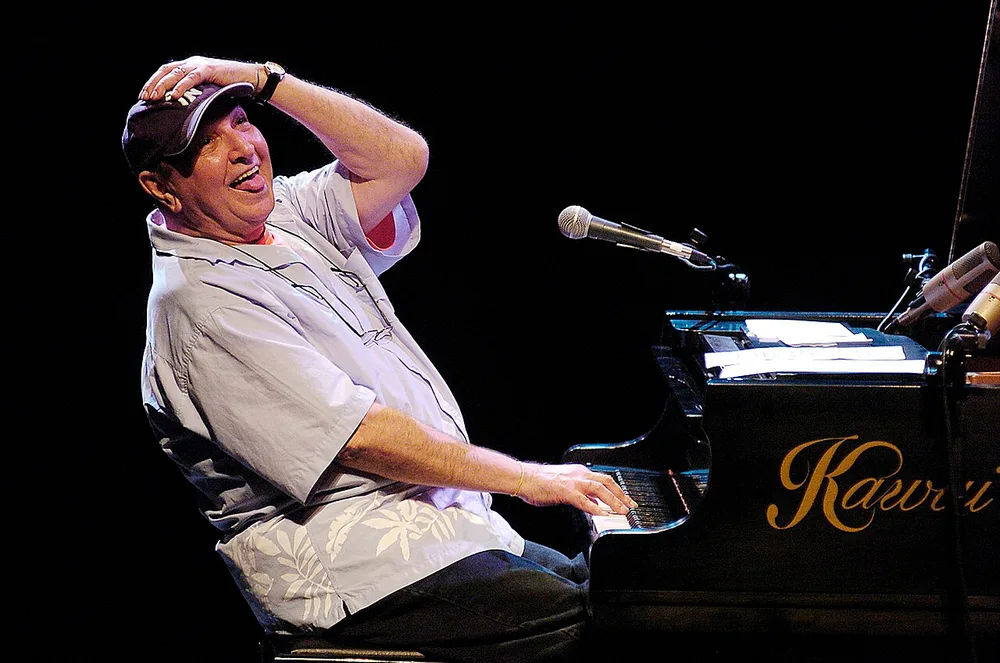
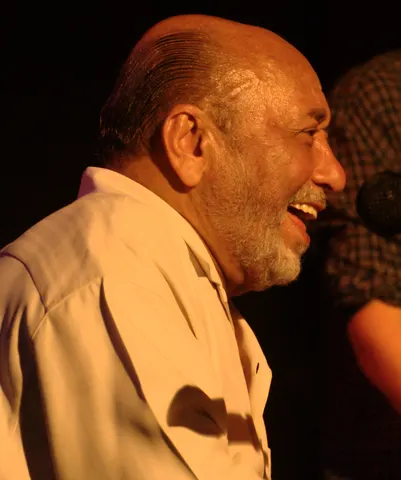
João Donato performing at the Auditório Ibirapuera, São Paulo, Brazil, April 14, 2007, photographed by Gerardo Lazzari CC BY 2.0 — Wikimedia Commons — https://commons.wikimedia.org/wiki/File:Jo%C3%A3o_Donato_(2492627789).jpg (originally posted on Flickr: https://www.flickr.com/photos/gerardolazzari/2492627789/)

João Donato de Oliveira Neto was born on August 17, 1934, in Rio Branco, the capital of the Brazilian state of Acre, into a musical household: his father, a police captain who was also the first aviator in Acre, played mandolin, his mother sang, his older sister Eneyda studied piano, and his younger brother Lysias Ênio would become his principal lyricist. As a small child he taught himself on a miniature accordion, and at eight he wrote a waltz, "Nini." Cuban music reached Acre by radio, an influence that stayed in his compositions and in his piano and trombone playing. In 1945 his father was transferred to Rio de Janeiro and the family moved with him; Donato took formal piano lessons there and learned trombone at school. He turned professional on accordion in 1949, at fifteen, and took part in the jam sessions of the Sinatra-Farney Fan Club in the Tijuca district, a gathering place for the young musicians who would later make bossa nova. His first recording was a 78 with the group of the flutist Altamiro Carrilho, on which he is not credited, and he soon moved on to the group of the violinist Fafá Lemos.
In April 1953 he issued his first records under his own name, instrumental trio versions of American and Brazilian songs billed to Donato e Seu Conjunto. That year he also formed Os Namorados, whose single "Eu Quero Um Samba" is credited with introducing the bossa nova beat. In 1955 he played accordion on the debut album of the guitarist Luiz Bonfá, with Antonio Carlos Jobim on piano, and with his friend João Gilberto he wrote "Minha Saudade." Gilberto later said, in an interview in the 1970s, that Donato had inspired the creation of bossa nova. Donato's first LP, Chá Dançante (Odeon, 1956), had its repertoire chosen by Jobim. By 1959 the clubs of Rio and São Paulo had stopped booking him, because dancers could not follow his modernist piano and other musicians found his charts hard to learn. Nanai, a former member of Os Namorados, offered him work in the United States, and he stayed for about thirteen years.
In the United States, Latin bandleaders sought out his harmonies and rhythmic sense. He recorded with Mongo Santamaría, among others on the Fantasy albums ¡Arriba! La Pachanga and At the Black Hawk, and played trombone for Tito Puente and for Eddie Palmieri's La Perfecta in 1962. He appeared on Astrud Gilberto's 1965 albums for Verve and on Bud Shank's Brazilian-themed records for Pacific Jazz and World Pacific. His own The New Sound of Brazil (RCA Victor, 1965), arranged and conducted by Claus Ogerman, opened with "Amazonas," and Pacific Jazz issued his Brazilian album Muito à Vontade in the United States in 1965 under the title Sambou Sambou. In 1968 he played organ on The Prophet and Solar Heat by vibraphonist Cal Tjader and took part in Sérgio Mendes's Favorite Things. His own A Bad Donato (Blue Thumb, 1970), produced by the percussionist Emil Richards, brought together American and Brazilian players, among them Bud Shank, Ernie Watts, the Candoli brothers, and Dom Um Romão, and became a template for later Brazilian jazz-funk. The 1973 Muse album Donato/Deodato, made with the arranger and keyboardist Eumir Deodato and a cast that included percussionists Ray Barretto and Airto Moreira and trumpeter Randy Brecker, paired him with Deodato again.
Donato returned to Brazil in 1972. At the end of that year the singer Agostinho dos Santos urged him to write words for his instrumental themes and sing them himself, and Quem É Quem (Odeon, 1973) made him a songwriter and vocalist for a Brazilian pop audience. In 1974 he was musical director of the singer Gal Costa's Cantar show, which introduced him to a younger generation of Brazilian artists, and in 1975 he recorded Lugar Comum with lyrics by Gilberto Gil, including the title song and "Bananeira." For the next decade he worked mainly as a sideman, arranger, and producer, appearing on Michael Franks's Sleeping Gypsy (1977), Milton Nascimento's Clube da Esquina 2 (1978), and João Bosco's Linha de Passe (1979). A live album, Leilíadas, appeared in 1986, and Coisas Tão Simples in 1996 marked his return to regular recording as a leader.
From 2000 he recorded steadily for small Brazilian labels, among them the collaboration Tudo Bonito with the singer and guitarist Joyce Moreno and the trio album Sambolero, which won the Latin Grammy for Best Latin Jazz Album in 2010; the same year he received the Latin Grammy Lifetime Achievement Award. In 2006 the state of Acre named a new arts campus in Rio Branco after him. Late in life he made the electric-keyboard records Donato Elétrico (2016) and Sintetizamor (2017, with his son Donatinho), and in 2021 Síntese do Lance with Jards Macalé and a release with Ali Shaheed Muhammad and Adrian Younge for the Jazz Is Dead series. He lived in the Urca district of Rio de Janeiro and passed away in Rio on July 17, 2023, at 88.
Donato's playing joined the harmony and swing of American jazz to Brazilian rhythm and to the Afro-Cuban music he heard as a boy and later played in California and New York. His harmonies and rhythmic ideas were advanced for the early bossa nova scene, which is why the dance clubs of the late 1950s turned him away and why Latin and jazz musicians in the United States hired him. AllMusic's biography treats him as a major shaping force in both bossa nova and Brazilian jazz, and Portuguese-language sources stress that he never stayed inside that single label: he moved between instrumental piano trios, Latin jazz, jazz-funk, sung Brazilian popular song, and, in his last years, synthesizers and electronics. As a composer he left songs that others made famous, among them "Amazonas," "Lugar Comum," "Simples Carinho," and "Bananeira," many of them instrumental themes that gained lyrics later and changed names in the process. He belonged to the generation, with João Gilberto, Antonio Carlos Jobim, Eumir Deodato, and Sérgio Mendes, that carried Brazilian music abroad, and A Bad Donato was a template for the jazz-funk that followed.
- Muito à Vontade (1962, Polydor) - His first album at the piano, with nine of its twelve tracks his own compositions, in a trio with drummer Milton Banana, bassist Tião Neto, and percussionist Amaury Rodrigues; issued in the United States in 1965 as Sambou Sambou on Pacific Jazz.
- A Bossa Muito Moderna de Donato e Seu Trio (1963, Polydor) - The same trio, with instrumental themes that later became "Lugar Comum" and "Bananeira" once Gilberto Gil added words.
- The New Sound of Brazil (1965, RCA Victor) - His first album as a leader made in the United States, with arrangements by Claus Ogerman, "Amazonas," and Brazilian standards such as "Manhã de Carnaval."
- A Bad Donato (1970, Blue Thumb) - Los Angeles sessions that mixed funk, soul, Afro-Cuban percussion, and bossa nova, with arrangements by Eumir Deodato and Emil Richards as producer; AllMusic counts it among the earliest jazz-funk records from Brazil.
- Donato/Deodato (1973, Muse) - A keyboard meeting with Eumir Deodato, who arranged and conducted, with Latin percussion from Ray Barretto and Airto Moreira.
- Quem É Quem (1973, Odeon) - The record on which he began to sing his own songs, with new lyrics from several collaborators, among them his brother Lysias Ênio.
- Lugar Comum (1975, Philips) - Songs written with Gilberto Gil, including the title track and "Bananeira."
- Sambolero (2010, Dubas Música) - A trio album credited to the João Donato Trio, with bassist Luiz Alves and drummer Robertinho Silva, that won the 2010 Latin Grammy for Best Latin Jazz Album.
João Donato: Full Discography
Discogs artist ID 456223 ("João Donato," real name João Donato de Oliveira Neto, born August 17, 1934, in Rio Branco, died July 17, 2023, in Rio de Janeiro) was read in full through the live Discogs data: it lists roughly 1,580 entries, most of them appearances on other artists' albums, compilations and track-level credits. His leader work is split across several Discogs entities, which were checked and folded in: Donato e Seu Conjunto (artist ID 2756211, the 1950s trio records), João Donato & Seu Trio (artist ID 713333, which holds the 1962 and 1963 Polydor albums and the Elephant Records and Latin Grammy trio recordings) and Os Namorados (artist ID 319922). Because AllMusic counts more than three dozen albums under his own name and Discogs lists many more compilations and reissues, the first table is a curated selection of 39 titles, chosen for their importance or their documentation, and the second table is a representative set of sideman credits. Catalog numbers are those of the first or best-documented pressing; where Discogs does not list personnel or a recording date, the cell says so rather than guessing. Personnel for the 1962 and 1963 trio albums comes from Portuguese Wikipedia.
As Leader / Co-Leader
| Album Title | Recording Date(s) | Release Date | Label | Catalog Number | Format(s) | Personnel | Role | Reissue History | Spotify | Buy | Notes |
|---|---|---|---|---|---|---|---|---|---|---|---|
| Chá Dançante | Not specified in Discogs data | 1956 | Odeon | MODB 3.037 | Vinyl, 10", LP, Album | Donato e Seu Conjunto; repertoire chosen by Antonio Carlos Jobim; full personnel not itemized | Leader | Compiled on CD in 2008 as Chá Dançante (Donato e seu Conjunto) on EMI Music Brasil | — | — | His first LP. Eight tracks on the original 10-inch. |
| Muito à Vontade | Not specified in Discogs data | 1962 | Polydor | LPNG-4085 | Vinyl, LP, Album, Mono | João Donato (piano), Milton Banana (drums), Tião Neto (bass), Amaury Rodrigues (percussion) | Leader (billed as Donato e Seu Trio) | Issued in the United States in 1965 as Sambou Sambou on Pacific Jazz (PJ-90 mono, ST-90 stereo); CD reissue on Dubas Música in 2002 (325912004372) | — | — | Personnel as given by Portuguese Wikipedia; the Discogs entry lists none. Nine of the twelve tracks are Donato originals. |
| A Bossa Muito Moderna de Donato e Seu Trio | Not specified in Discogs data | 1963 | Polydor | LPNG 4107 | Vinyl, LP, Album, Mono | João Donato (piano), Milton Banana (drums), Tião Neto (bass), Amaury Rodrigues (percussion) | Leader (billed as Donato e Seu Trio) | Reissued on CD by Dubas Música | — | — | Includes the instrumental themes "Índio Perdido" and "Villa Grazia," later "Lugar Comum" and "Bananeira." Trio line-up matches the Discogs profile of the group for 1963. |
| Bud Shank & His Brazilian Friends | Not specified in Discogs data | 1965 | Pacific Jazz | ST-89 | Vinyl, LP, Stereo | Bud Shank (alto saxophone), João Donato (piano), Rosinha de Valença (guitar), Sebastião Neto (bass), Chico Batera (drums) | Featured pianist (billed to Bud Shank) | Not itemized | — | — | Discogs files the album under Donato's artist page as a main release. |
| The New Sound of Brazil | Not specified in Discogs data | 1965 | RCA Victor | LSP-3473 | Vinyl, LP, Album, Stereo | João Donato (piano), Claus Ogerman (arranger, conductor) | Leader | Reissued on CD by RCA in Brazil in 2001 (74321284512) | — | — | Billed in Brazil as Piano of João Donato: The New Sound of Brazil. Opens with "Amazonas." |
| A Bad Donato | Not specified in Discogs data | 1970 | Blue Thumb | BTS-8821 | Vinyl, LP, Album, Stereo | João Donato (piano, organ, arranger), Eumir Deodato (arranger), Emil Richards (percussion, producer), Bud Shank (flute), Conte Candoli, Pete Candoli, James Zito (trumpets), Jimmy Cleveland, Kenny Shroyer (trombones), Bill Hood, Don Menza, Ernie Watts, Jack Nimitz (reeds), Chuck Domanico (bass), Oscar Castro-Neves (acoustic guitar), Warren Klein (electric guitar), Dom Um Romão, Mark Stevens, Paulinho Magalhães (drums), Joe Porcaro (percussion) | Leader | CD reissue in Brazil on Universal in 2004 (60249823856) | — | — | Credits as listed for the original LP; bass is credited there to Chuck Domanico. Opens with "The Frog." Bass is credited on this pressing to Chuck Domanico. |
| Quem É Quem | Not specified in Discogs data | 1973 | Odeon | SMOFB 3785 | Vinyl, LP, Album | João Donato (electric piano, vocals), Hélio Delmiro (guitar), Lula Nascimento (drums), Naná Vasconcelos (percussion) | Leader | CD reissue on EMI in 2002 (829124 2); paired with Coisas Tão Simples on a 2010 two-CD set | — | — | The first of his albums built around sung songs. Marcos Valle is credited as assistant producer. |
| Donato/Deodato | March 26 and April 10, 1973 (per Discogs release notes) | 1973 | Muse | MR 5017 | Vinyl, LP, Album | João Donato (keyboards), Eumir Deodato (keyboards, arranger, conductor), Ray Barretto (congas), Airto Moreira (percussion), Randy Brecker (trumpet), Michael Gibson (trombone), Romeo Penque (flute), Mauricio Einhorn (harmonica), Bob Rose (guitar), Allan Schwartzberg (drums) | Co-leader | Reissued on CD in Japan in 1999 (SME Records, SRCS 9560) | — | — | AllMusic dates the session to 1969, with release held until 1973; the Discogs notes give the 1973 dates shown. |
| Lugar Comum | Not specified in Discogs data | 1975 | Philips | 6349 138 | Vinyl, LP, Album | João Donato (lead vocals, piano, electric piano, arranger), Gilberto Gil (harmony vocals), Rosinha de Valença (acoustic guitar), Wilson das Neves (drums), Copinha (flute), with horns, rhythm section and the vocal group As Gatas | Leader | CD reissue on Dubas Música in 2004 (325912006559) | — | — | Eight songs written with Gilberto Gil, including the title track and "Bananeira," per Portuguese Wikipedia. |
| Leilíadas | Not specified in Discogs data | 1986 | Elektra Musician | 6106017 | Vinyl, LP, Album | João Donato (piano, vocals), Jamil Joanes, Luizão Paiva (bass), Teo Lima (drums), Sidinho Moreira (percussion), Mauro Senise, Zé Carlos (saxophones, flutes), Serginho do Trombone (trombone) | Leader | Not itemized | — | — | Live recording of one of his concerts. |
| Coisas Tão Simples | July 1995, Estúdio Impressão Digital, Rio de Janeiro | 1996 | Odeon | 836008 2 | CD, Album | João Donato (piano, trombone, vocals, arranger), Adriano Giffoni (bass), Wilson das Neves (drums), Marcos Suzano (percussion), Teco Cardoso (soprano saxophone), Yuka Kido (flute), Vittor Santos (trombone), Chico Oliveira (trumpet, flugelhorn) | Leader | Paired with Quem É Quem on a 2010 two-CD EMI set | — | — | Discogs and English Wikipedia place the album in 1995 in some listings; the first CD issue is dated 1996. |
| Café com Pão | Not specified in Discogs data | 1997 | Lumiar Discos | LD08/97 | CD, Album | João Donato (piano), Eloir de Moraes (drums) | Co-leader (billed with Eloir de Moraes) | Not itemized | — | — | Collaboration with the drummer Eloir de Moraes; personnel from the album billing. |
| Só Danço Samba | Not specified in Discogs data | 1999 | Lumiar Discos | LD40-01/99 | CD, Album | João Donato (piano, arranger) with a septet; full personnel not itemized | Leader | Not itemized | — | — | A tribute to Antonio Carlos Jobim, per AllMusic. |
| Tudo Bonito | Not specified in Discogs data | 2000 | Rip Curl Recordings (Japan) | RCIP-0025 | CD, Album | Joyce (vocals, guitar, producer), João Donato (piano, electric piano, vocals), Paulo Moura (clarinet), Teco Cardoso (flutes, baritone saxophone), Tutty Moreno (drums, percussion), Rodolfo Stroeter (bass), Marcos Suzano (percussion), Gilson Peranzzetta (accordion), André Mehmari (arranger, conductor) | Co-leader (billed Joyce featuring João Donato) | Issued in Europe on Columbia (COL 500953 2) | — | — | Four of the songs are co-written by Joyce and Donato. |
| Amazonas | Not specified in Discogs data | 2000 | Elephant Records | ER-203 | CD, Album, HDCD | João Donato Trio; personnel not itemized | Leader (João Donato Trio) | Not itemized | — | — | Filed on Discogs under the entity João Donato & Seu Trio. |
| Brazilian Time | Not specified in Discogs data | 2001 | Elephant Records | ER-205 | CD, Album | João Donato Trio; personnel not itemized | Leader (João Donato Trio) | Not itemized | — | — | Filed on Discogs under the entity João Donato & Seu Trio. |
| Remando na Raia | Not specified in Discogs data | 2001 | Lumiar Discos | LD56-01/01 | CD, Album | João Donato; personnel not itemized | Leader | Not itemized | — | — | Described by AllMusic as his overview of Brazilian jazz-bossa fusion. |
| Ê Lalá Lay-Ê | September 2000 and April 2001, Estúdio AR, Rio de Janeiro | 2001 | Deckdisc | 220129-2 | CD, Album, Enhanced | João Donato (piano, electric piano, clavinet, synthesizer, organ, vocals, arranger), Ricardo Pontes (alto saxophone, flute), Ricardo Silveira (electric guitar), Jamil Joanes (electric bass), Jurim Moreira (drums), Sidinho Moreira (percussion), Vittor Santos (trombone), Nelson Oliveira (trumpet, flugelhorn) | Leader | Not itemized | — | — | Lyrics by his brother Lysias Ênio. Produced by Rafael Ramos. |
| Managarroba | Not specified in Discogs data | 2002 | Deckdisc | 33001-2 | CD, Album | João Donato; personnel not itemized | Leader | Not itemized | — | — | Songs mainly written with Lysias Ênio, per AllMusic. |
| Wanda Sá com João Donato | Not specified in Discogs data | 2003 | Deckdisc | 22024-2 | CD, Album | Wanda Sá (vocals, guitar), João Donato (piano, arranger), Robertinho Silva (drums, percussion), Jamil Joanes (bass), J. T. Meirelles (reeds) | Co-leader (billed with Wanda Sá) | Not itemized | — | — | Fourteen Donato compositions; line-up as given by AllMusic. |
| Emílio Santiago Encontra João Donato | Not specified in Discogs data | 2003 | Lumiar Discos | LD63-02/03 | CD, Album | Emílio Santiago (vocals), João Donato (piano); personnel otherwise not itemized | Co-leader (billed with Emílio Santiago) | Not itemized | — | — | Large ensemble that includes Robertinho Silva and Jamil Joanes, per AllMusic. |
| A Blue Donato | Not specified in Discogs data | 2005 | Whatmusic.com | WMCD-0066 | CD, Album | João Donato; personnel not itemized | Leader | Not itemized | — | — | A previously unreleased live jazz set from 1973, per AllMusic. |
| João Donato Reencontra Maria Tita | Not specified in Discogs data | 2006 | Lumiar Discos | LD700105 | CD, Album | João Donato, Maria Tita (vocals) | Co-leader (billed with Maria Tita) | Not itemized | — | — | Portuguese Wikipedia dates this album 2004; Discogs dates the CD 2006. |
| Dois Panos para Manga | Not specified in Discogs data | 2006 | Biscoito Fino | BF-643 | CD, Album | João Donato (piano), Paulo Moura (reeds); full personnel not itemized | Co-leader (billed with Paulo Moura) | Not itemized | — | — | Instrumental collaboration. |
| O Piano de João Donato | Not specified in Discogs data | 2007 | Deckdisc | 22077-2 | CD, Album | João Donato (piano) | Leader | Not itemized | — | — | Instrumental piano album produced by Rafael Ramos. |
| Uma Tarde com Bud Shank e João Donato | May 8 and 9, 2004, Estúdio Verde, Rio de Janeiro | 2007 | Biscoito Fino | BF-684 | CD, Album | Bud Shank (alto saxophone), João Donato (piano, producer), Luiz Alves, Bruno Araújo (bass), Robertinho Silva, Rodrigo Scofield (drums) | Co-leader (billed with Bud Shank) | Re-released in 2017 by Mills Records | — | — | Also issued on DVD. |
| Os Bossa Nova | Not specified in Discogs data | 2008 | Biscoito Fino | BF 886 | CD, Album | Carlos Lyra, Roberto Menescal, Marcos Valle, João Donato | Co-leader (four-artist billing) | Not itemized | — | — | A reunion of four composers of the early bossa nova generation. |
| Sambolero | Not specified in Discogs data | 2010 | Dubas Música (Universal Music) | 60252720778 | CD, Album, Stereo | João Donato (piano), Luiz Alves (bass), Robertinho Silva (drums), Sidinho Moreira (percussion), Ricardo Pontes (flute), Zeca Pagodinho (voice), with strings | Leader (João Donato Trio) | Reissued on vinyl in an edited version by Mills Records | — | — | Winner of the Latin Grammy for Best Latin Jazz Album in 2010. Portuguese Wikipedia says it first appeared on his own label, Acre Musical. |
| Água | Not specified in Discogs data | 2010 | Biscoito Fino | BF 992 | CD, Album | Paula Morelenbaum (vocals, producer), João Donato (piano) | Co-leader (billed with Paula Morelenbaum) | Not itemized | — | — | Joint album with the singer Paula Morelenbaum. |
| Live Jazz in Rio Vol. 1: O Couro Tá Comendo! and Vol. 2: O Bicho Tá Pegando! | Not specified in Discogs data | 2014 | Discobertas | DB-383 and DB-384 | CD, Album (two volumes) | João Donato; personnel not itemized | Leader | Not itemized | — | — | Two live volumes issued together in 2014. |
| Donato Elétrico | Not specified in Discogs data | 2016 | Selo SESC | CDSS 0073/16 | CD, Album | João Donato; Guilherme Kastrup (percussion) | Leader | Not itemized | — | — | Nominated for the Latin Grammy for Best Instrumental Album, per Wikipedia. |
| Sintetizamor | Not specified in Discogs data | 2017 | Polysom | 33311-1 | Vinyl, LP, Album | João Donato, Donatinho | Co-leader (billed with Donatinho) | Not itemized | — | — | Made with his son Donatinho. |
| Bluchanga | Not specified in Discogs data | 2018 | Acre Musical | ACM002 | CD, Album | João Donato; personnel not itemized | Leader | First issued digitally by Mills Records in 2017 | — | — | Title taken from a theme on A Bossa Muito Moderna. |
| Raridades (Anos 70) | Not specified in Discogs data | 2018 | Discobertas | DBLP-026 | Vinyl, LP, Album | João Donato; personnel not itemized | Leader | Not itemized | — | — | Vinyl issue on Discobertas; contents not itemized. |
| Gozando a Existência | Not specified in Discogs data | 2018 | Discobertas | DBLP-032 | Vinyl, LP, Album | João Donato; personnel not itemized | Leader | Not itemized | — | — | Vinyl issue on Discobertas; contents not itemized. |
| Síntese do Lance | Not specified in Discogs data | 2021 | Rocinante | R011 (vinyl edition) | Digital; vinyl LP | João Donato, Jards Macalé | Co-leader (billed with Jards Macalé) | Vinyl edition December 2021; CD edition by Think! Records in Japan in 2022 (THCD603) | Spotify - Síntese do lance | — | Digital release October 22, 2021. |
| Jazz Is Dead 7 (JID007) | Not specified in Discogs data | 2021 | Jazz Is Dead | JID007 | CD, Digital | João Donato, Adrian Younge, Ali Shaheed Muhammad | Co-leader (billed with Adrian Younge and Ali Shaheed Muhammad) | Not itemized | — | — | Released June 4, 2021. |
| Serotonina | Not specified in Discogs data | 2022 | Sete Mares / Agogô Cultural | None listed | CD, Album | João Donato; personnel not itemized | Leader | Not itemized | — | — | Release date August 11, 2022. |
| Sintetiza2 | Not specified in Discogs data | 2024 | Sound Dept. | None listed | Digital (FLAC) | João Donato, Donatinho | Co-leader (billed with Donatinho) | Not itemized | — | — | Posthumous release, October 24, 2024. |
As Sideman (selected major credits)
A representative set of the credits that can be read from the release itself, rather than a full list; he has thousands of credits, mostly on Brazilian popular records.
| Year | Project (Leader) | Title | Label | Catalog | Role | Notes |
|---|---|---|---|---|---|---|
| 1961 | Mongo Santamaría | ¡Arriba! La Pachanga | Fantasy | 3324 | Piano | Early US session work with a Latin bandleader. Piano credit on Discogs; also noted by AllMusic. |
| 1962 | Tito Puente | Vaya Puente | Tico | LP 1085 | Trombone (per English Wikipedia and AllMusic) | On the Discogs entry for this pressing Donato is credited as composer of one track. |
| 1962 | Eddie Palmieri | Eddie Palmieri and His Conjunto "La Perfecta" | Alegre | LPA 817 | Trombone | Debut album of La Perfecta. |
| 1965 | Astrud Gilberto | The Astrud Gilberto Album | Verve | V-8608 | Piano | Donato also arranged part of her second Verve album, The Shadow of Your Smile (1965). |
| 1966 | Bud Shank | Brazil! Brazil! Brazil! | World Pacific | WS-21855 | Piano; composer of one track | AllMusic dates the album 1965; Discogs gives 1966. |
| 1968 | Cal Tjader | The Prophet | Verve | V6-8769 | Organ; composer of three tracks | Organ credit on Discogs; Donato wrote three tracks. |
| 1968 | Cal Tjader | Solar Heat | Skye | SK-1 | Organ; composer of one track | Second 1968 album with Tjader. |
| 1968 | Sérgio Mendes | Sergio Mendes' Favorite Things | Atlantic | SD 8177 | Percussion | Other Brazilians on the album include Moacir Santos and Dom Um Romão, per AllMusic. |
| 1974 | Gal Costa | Cantar | Philips | 6349.117 | Arranger and piano on selected tracks; musical director of the tour | Live album recorded from the Cantar show. |
| 1977 | Michael Franks | Sleeping Gypsy | Warner Bros. | BS 3004 | Piano soloist on two tracks | Joe Sample shared the piano chair, per AllMusic. |
| 1978 | Milton Nascimento | Clube da Esquina 2 | EMI | 31C 164 422831/2 | Piano on one track | Double album. |
| 1979 | Miúcha and Antonio Carlos Jobim | Miúcha & Tom Jobim | RCA Victor | 103.0314 | Orchestrations; piano and arrangement on one track | Backing vocals by Bebel Gilberto; orchestrations by Donato and Oscar Castro-Neves. |
- João Gilberto - friend and co-writer of "Minha Saudade."
- Antonio Carlos Jobim - chose the repertoire for Donato's first LP in 1956 and played piano on the Luiz Bonfá album on which Donato played accordion.
- Luiz Bonfá - guitarist on whose 1955 debut album Donato played accordion.
- Mongo Santamaría - bandleader with whom he recorded on early-1960s Fantasy albums, playing piano and, on some, trombone.
- Tito Puente and Eddie Palmieri - Latin bandleaders in whose bands he played trombone in 1962.
- Astrud Gilberto - singer on whose 1965 Verve albums he played and arranged.
- Bud Shank - alto saxophonist and flutist; they recorded Bud Shank & His Brazilian Friends (1965) and, much later, Uma Tarde com Bud Shank e João Donato (2007).
- Cal Tjader - vibraphonist on whose 1968 albums The Prophet and Solar Heat he played organ; Tjader later recorded Donato's "Amazonas."
- Sérgio Mendes - bandleader on whose 1968 Favorite Things he appears, credited on percussion.
- Eumir Deodato - arranger and keyboardist, co-leader of Donato/Deodato and arranger on A Bad Donato.
- Ray Barretto, Airto Moreira, Randy Brecker - percussionists and trumpeter on Donato/Deodato (1973).
- Michael Franks - singer-songwriter on whose 1977 Sleeping Gypsy he is credited as a piano soloist, alongside Joe Sample.
- Gilberto Gil, Caetano Veloso, Gal Costa - Bahian singer-songwriters of his 1970s circle: Gil wrote the lyrics for Lugar Comum, Veloso is credited as co-writer of "A Rã," and Donato directed Costa's Cantar show in 1974.
- Milton Nascimento - singer-songwriter on whose 1978 Clube da Esquina 2 he played piano.
- Lisa Ono - Japanese-Brazilian singer and guitarist whose 1995 album Minha Saudade was built around his songs, with Donato credited on keyboards and vocals.
- Bebel Gilberto - sang backing vocals on Miúcha & Tom Jobim (1979), an album with orchestrations by Donato and Oscar Castro-Neves.
- Joyce Moreno, Paulo Moura, Raul de Souza, Emílio Santiago, Wanda Sá, Paula Morelenbaum - Brazilian partners on albums from 2000 onward.
- Donatinho - his son, a keyboardist and sampler player, co-leader of Sintetizamor (2017).
More Samba-Jazz Artists
See all 65 Samba-Jazz artists →More Brazilian Jazz Artists
See all 35 Brazilian artists →- Wikipedia: João Donato
- Wikipedia (Portuguese): João Donato
- Wikipedia (German): João Donato
- AllMusic: João Donato biography by Thom Jurek
- Wikipedia: 11th Annual Latin Grammy Awards
- Discogs: João Donato (artist 456223)
- MusicBrainz: João Donato
- JazzProfiles.com: Astrud Gilberto
- JazzProfiles.com: Bebel Gilberto
- JazzProfiles.com: Lisa Ono
- Discogs: release credits for the albums listed in the discography