 JAZZPROFILES lives in the music 1,572 Jazz Artists fully Profiled!
 Mulatu Astatke
Last updated August 30, 2026
Listen on Spotify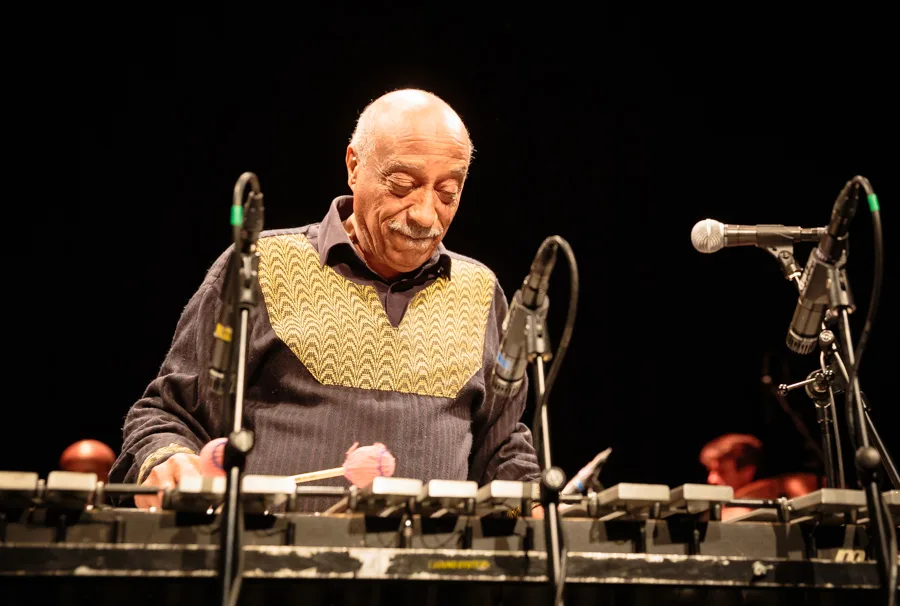
Mulatu Astatke performing on vibraphone at Cosmopolite (Soria Moria), Oslo, Norway, November 9, 2017, during the venue's 25th-anniversary jubilee week. CC BY-SA 4.0 — Wikimedia Commons - https://commons.wikimedia.org/wiki/File:Mulatu_Astatke_Cosmopolite_2017_(221840).jpg (photo by Tore Sætre)
Mulatu Astatke was born December 19, 1943, in Jimma, in what was then the Ethiopian Empire. In 1959, at age sixteen, he was sent to Britain for his education, initially toward an engineering career, and enrolled at Lindisfarne College near Wrexham, Wales. Music took over: he studied piano, clarinet, and harmony at Trinity College of Music in London, and by the early 1960s was working the Soho club circuit alongside African and Caribbean musicians, including a stint with bandleader Edmundo Ros's orchestra and singer Frank Holder. In 1963 he enrolled at Berklee College of Music in Boston, the school's first African student, concentrating on vibraphone and percussion.
His recording career started in New York rather than Ethiopia. In 1966 he cut Afro-Latin Soul, Volumes 1 & 2 for the small Worthy Records label, a quartet date built around Latin percussion (congas, timbales) under his vibraphone, alongside pianist/trumpeter Rudy Houston and bassist Robert Cuadrado. He returned to Addis Ababa at the end of the decade and began developing the hybrid he named "Ethio-jazz": Ethiopian pentatonic modes carried by jazz harmony and Latin-derived rhythm sections, with vibraphone, congas, and bongos, none of them previously part of Ethiopian popular music, at the center of the sound. Through the early 1970s he became the connective figure of Addis Ababa's "Swinging Addis" scene, arranging and playing on records for the era's leading vocalists, including Mahmoud Ahmed, Alemayehu Eshete, Tilahun Gessesse, and Getatchew Mekurya, most of it released on Amha Eshete's Amha Records, Ethiopia's first independent label. He returned to New York in 1972 to record the solo album Mulatu of Ethiopia, and in 1973 performed alongside Duke Ellington during a U.S. State Department-sponsored tour of Ethiopia, in a concert attended by Emperor Haile Selassie. His 1974 Amha Records LP Yekatit Ethio-Jazz is often cited as the first Ethiopian album conceived as a single unified work rather than a collection of singles.
Ethiopia's 1974 revolution and the Derg military dictatorship that followed curtailed the country's nightlife and recording industry for years, and Astatke's international profile went dormant even as he kept working at home, including vibraphone on Hailu Mergia and the Walias Band's 1977 album Tche Belew. His rediscovery abroad began in 1998, when the Paris-based label Buda Musique launched its Éthiopiques reissue series and devoted its fourth volume entirely to him: Éthiopiques 4: Ethio Jazz & Musique Instrumentale, 1969-1974. That reissue, and the ones that followed, introduced Ethio-jazz to a new generation of listeners and sample-hunting producers. In 2005, seven of his compositions scored Jim Jarmusch's film Broken Flowers, starring Bill Murray, exposing his music to a far larger audience than any prior release had reached. The following years brought a run of new collaborations: a 2004 tour and 2006 live album with the Boston big band Either/Orchestra (Éthiopiques 20: Live in Addis, recorded at the Ethiopian Music Festival in Addis Ababa), a 2008 Radcliffe Institute fellowship and artist residency at Harvard and MIT, and the 2009 studio pairing Inspiration Information, Vol. 3 with the London funk-jazz group the Heliocentrics.
Astatke kept recording and touring into his eighth decade. Sketches of Ethiopia (2013, Jazz Village) was his first internationally distributed studio album, built around traditional Ethiopian instruments, the washint flute, krar lyre, and masinko fiddle, set against a jazz rhythm section, and reached number 24 on the UK's Jazz & Blues chart. He collaborated repeatedly with the Melbourne group Black Jesus Experience on Cradle of Humanity (2016) and To Know Without Knowing (2019), received an honorary doctorate from Berklee in 2012, and was made a Chevalier of France's Ordre des Arts et des Lettres in September 2019. In 2023 the Tel Aviv Afrobeat collective Hoodna Afrobeat Orchestra, co-founded by drummer Matan Assayag, invited him to Israel to record together; the resulting album, Tension, produced by Neal Sugarman of the Dap-Kings and Daptone Records, was released November 8, 2024, on the UK label Batov Records, one credit among the dozens of international collaborations of his later career rather than a departure from it. In 2025 he released Mulatu Plays Mulatu (Strut), his first major studio album in over a decade, recorded between London and Addis Ababa with producer Dexter Story, and announced a farewell tour that closed with two sold-out concerts at London's Royal Festival Hall that November, a month before his 82nd birthday. He remains active into 2026, with further festival dates scheduled.
Astatke's core achievement was inventing a genre rather than mastering an existing one: Ethio-jazz layers the five-note qenet scales of Ethiopian traditional music over jazz chord voicings and Latin-jazz rhythm patterns, an idea he arrived at through his parallel training in Ethiopian music, the Afro-Cuban and Latin jazz he encountered in New York and Boston, and Western jazz harmony. He was the first musician to bring vibraphone, congas, and bongos into Ethiopian popular music, and functioned as much as an arranger and bandleader, shaping other vocalists' recordings for Amha Records, as he did a performer on his own dates. Critics and reissue labels have since treated him as the central figure of the "Swinging Addis" era his own studio and arranging work helped define, and his instrumentals have proven unusually durable outside jazz circles: they have been sampled by Nas and Damian "Jr. Gong" Marley, Kanye West, Cut Chemist, Quantic, Madlib, and Oddisee, and used prominently in Jim Jarmusch's Broken Flowers (2005) and, decades later, in the closing credits of Nickel Boys (2024).
- Afro-Latin Soul, Volumes 1 & 2 (1966, Worthy Records) - his recorded debut, cut in New York with a small Latin-jazz combo under the billing Mulatu Astatke & His Ethiopian Quintet, years before he returned to Ethiopia to develop Ethio-jazz proper.
- Mulatu of Ethiopia (1972, Worthy Records) - a second New York session, all original compositions, bridging his Latin-jazz apprenticeship and the fuller Ethio-jazz sound of the Amha years. Listen
- Yekatit Ethio-Jazz (1974, Amha Records) - his defining Addis Ababa-era statement, often called the first Ethiopian album conceived as a unified work.
- Éthiopiques 4: Ethio Jazz & Musique Instrumentale, 1969-1974 (1998, Buda Musique) - the reissue that introduced his 1970s work to an international audience and relaunched his career. Listen
- Inspiration Information, Vol. 3 (2009, Strut) - a studio collaboration with the London group the Heliocentrics, pairing his vibraphone and compositions with their crate-dug funk production. Listen
- Sketches of Ethiopia (2013, Jazz Village) - his first internationally distributed studio album, built around traditional Ethiopian instruments alongside a jazz band; reached #24 on the UK Jazz & Blues chart. Listen
- Tension (2024, Batov Records) - recorded in Tel Aviv with the Matan Assayag-founded Hoodna Afrobeat Orchestra and produced by Neal Sugarman of the Dap-Kings, one recent credit in a decades-long collaborative career. Spotify - Tension Listen
- Mulatu Plays Mulatu (2025, Strut) - his first major studio album in over ten years, revisiting classic compositions with a UK/Ethiopian band, released as his farewell touring cycle began.
Mulatu Astatke: Full Discography
Identity confirmed via the live Discogs API: artist ID 286112 ("Mulatu Astatke," Amharic ሙላቱ አስታጥቄ, also spelled Astatqé/Astatké/Astatqe across releases). Discogs credits him on 285 releases in total (32 in a "Main"/leader role, 108 sideman "Appearance" credits, 134 track-level "TrackAppearance" credits, and 11 unofficial releases). Two further group entities hold additional leader releases not listed under his personal artist page: "Mulatu Astatke & His Ethiopian Quintet" (Discogs artist 656780, 18 releases, including his actual recorded debut) and "Ethio Stars" (Discogs artist 3415391, 7 releases). Given the size of this catalog, heavily padded with Amha Records-era 7" singles, regional reissues, and compilation duplicates of the same recordings, the table below curates roughly 25 of the most significant and historically important releases rather than itemizing all 285 credits.
As Leader / Co-Leader
| Album Title | Recording Date(s) | Release Date | Label | Catalog Number | Format(s) | Personnel | Role | Reissue History | Spotify | Buy | Notes |
|---|---|---|---|---|---|---|---|---|---|---|---|
| Ethiopian Jazz (EP) | Not specified in Discogs data | 1966 | Addis Ababa Records | EP-AA1013 | Vinyl, 7", EP | Mulatu Astatke (vibraphone, arranger), backing quartet not individually credited | Leader (billed "Mulatu Astatke Quartet") | None found | Not found on Spotify | — | Filed under the "Mulatu Astatke & His Ethiopian Quintet" group entity on Discogs, not his personal artist page |
| Afro-Latin Soul | Recorded 1966, New York City | 1966 | Worthy Records | W-1014 | Vinyl, LP, Album | Mulatu Astatke (vibraphone, piano, drums), Rudy Houston (piano, trumpet), Robert Cuadrado (bass), Tony Pearson (timbales), Felix Torres / John Perez (congas, bongos), Luis Rodriguez (vocals) | Leader | Reissued together with Vol. 2 in 2018 (Strut, Afro-Latin Soul Vols 1 & 2) | Spotify - Afro-Latin Soul | — | His recorded debut; filed under the "Ethiopian Quintet" group entity, not his personal Discogs artist page |
| Afro-Latin Soul Vol. 2 | Recorded 1966, New York City | 1966 | Worthy Records | W-1015 | Vinyl, LP, Album | Mulatu Astatke (vibraphone), Rudy Houston (piano, trumpet), Robert Cuadrado (bass), Tony Pearson (timbales), Peter Iglesias (congas) | Leader | Reissued together with Vol. 1 in 2018 (Strut) | See combined 2018 reissue below | — | Same New York sessions as Vol. 1 |
| Afro-Latin Soul Vols 1 & 2 | Reissue of 1966 recordings | July 20, 2018 | Strut | Strut156CD | CD, Compilation, Reissue | As above, both original sessions | Leader (reissue compilation) | Combined CD reissue of both 1966 Worthy LPs | Not confirmed via Spotify search | — | First time both albums were made widely available together |
| Mulatu In London | Not specified in Discogs data | 1969 | Amha Records | (7", catalog not fully specified) | Vinyl, 7" | Mulatu Astatke and studio musicians, not individually credited on Discogs | Leader | None found | Not found on Spotify | — | One of several Amha Records singles from this period; dozens more exist and are not itemized here |
| Mulatu Of Ethiopia | Recorded 1972, New York City | 1972 | Worthy Records | W-1020 | Vinyl, LP, Album | Mulatu Astatke (vibraphone, composer, arranger) with uncredited session players | Leader | None found | Spotify - Mulatu Of Ethiopia | — | His third and final New York studio album; all original compositions |
| Yekatit Ethio-Jazz (Ethio Jazz) | Not specified in Discogs data | 1974 | Amha Records | AELP 90 | Vinyl, LP, Album | Mulatu Astatke (arranger, piano), Girma Beyene (upright piano), Andrew Wilson (guitar), Moges Habte / Fekade Amde Maskal (saxophone), Yohannes Tekola (trumpet), Temare Haregu (drums) | Leader | Tracks later anthologized on Éthiopiques 4 (1998) | Spotify - Ethio Jazz | — | Often cited as the first Ethiopian album planned as a single unified work rather than a singles collection |
| Amharic Hits And Experimental Tradition From Ethiopia | Not specified in Discogs data | 1992 | Not specified | (unconfirmed) | Cassette, Album | Tukul Band & Ethio Stars, Mulatu Astatke among contributors | Co-leader / compilation | None found | Not found on Spotify | — | Filed under the "Ethio Stars" group entity |
| Plays Ethio-Jazz | Not specified in Discogs data | 1989 | Poljazz | PSJ 252 | Vinyl, LP, Album | Mulatu Astatke (vibraphone, congas, composer) with a Polish backing group: Tomasz Szukalski (saxophone), Henryk Majewski (trumpet), Winicjusz Chróst (guitar, keyboards), Krzysztof Ścierański / Paweł Mąciwoda Jastrzębski (bass) | Leader | None found | Not found on Spotify | — | Recorded in Poland; an unusual, little-documented East Bloc-era session |
| Éthiopiques 4: Ethio Jazz & Musique Instrumentale, 1969-1974 | Original recordings 1969-1974 | 1998 | Buda Musique | 82964-2 | CD, Compilation | Mulatu Astatke (keyboards, organ, Fender Rhodes, composer) with period Amha Records session players including Girma Beyene, Fekade Amde Maskal, Moges Habte, Yohannes Tekola | Leader (reissue anthology) | The reissue that relaunched his international career | Spotify - Éthiopiques, Vol. 4 | — | First Éthiopiques volume devoted entirely to a single artist; opening track "Yèkèrmo Sèw" is built on Horace Silver's "Song for My Father" |
| New York - Addis - London: The Story of Ethio Jazz 1965-1975 | Original recordings 1965-1975 | October 26, 2009 | Strut | STRUT051LP | Vinyl/CD, Compilation | Compiled by Miles Cleret; spans Astatke's Worthy, Amha, and related-era recordings | Leader (career-spanning compilation) | Definitive English-language compilation of his early work | Spotify - New York - Addis - London | — | 20-track anthology drawing on all three of his early recording bases |
| Inspiration Information, Vol. 3 | Recorded September 8-14, 2008, Quatermass Studios, London | April 7, 2009 | Strut | STRUT040CD | CD, Album | Mulatu Astatke with the Heliocentrics: Malcolm Catto (drums, production), Jake Ferguson (bass, production), and the group's other members | Co-leader (with the Heliocentrics) | None found | Spotify - Inspiration Information 3 | — | Studio pairing with the London funk/psych collective; third in Strut's "Inspiration Information" series |
| Mulatu Steps Ahead | Recorded 2007-2009, Wellspring Studios (Acton, MA), Mateku/Andi Studios (Addis Ababa), The Way Studios (London) | March 2010 | Strut | STRUT056LP | Vinyl/CD, Album | Mulatu Astatke (vibraphone, executive producer) with musicians recorded across three cities | Leader | None found | Spotify - Mulatu Steps Ahead | — | Sessions recorded in Massachusetts, Addis Ababa, and London over roughly two years |
| Mochilla Presents Timeless | Live recording, Los Angeles | 2010 | Mochilla | MOLP-007 | Vinyl, LP | Mulatu Astatke (vibraphone, percussion) with Bennie Maupin (reeds), Phil Ranelin (trombone), Miguel Atwood-Ferguson (viola), Azar Lawrence (tenor sax), Todd Simon (trumpet), Brandon Coleman (keys) | Leader (billed under the Mochilla concert series) | Also issued as a 3xDVD box set documenting the concert | Not confirmed via Spotify search | — | Live performance pairing Astatke with a Los Angeles jazz/funk ensemble assembled for the Mochilla concert series |
| Sketches Of Ethiopia | Not specified in Discogs data | 2013 | Jazz Village | JV 570015 | CD, Album | Mulatu Astatke with a jazz rhythm section plus washint, krar, and masinko players | Leader | None found | Spotify - Sketches of Ethiopia (Bonus Track Version) | — | His first internationally distributed studio album; reached #24 on the UK Jazz & Blues chart |
| Cradle Of Humanity | Not specified in Discogs data | May 5, 2016 | BJX | BJX V05 | CD/Digital, Album | Mulatu Astatke (vibraphone, electric piano, congas) with Black Jesus Experience: Ian Dixon and Peter Harper (co-arrangers/producers), Enushu Taye (vocals) | Co-leader (with Black Jesus Experience) | None found | Not found on Spotify | — | Premiered at the 2016 Melbourne International Jazz Festival |
| To Know Without Knowing | Not specified in Discogs data | 2019 | BJX | BJX V06 | CD/Digital, Album | Mulatu Astatke (vibraphone, congas, electric piano) with Black Jesus Experience: Ian Dixon, Peter Harper, Bob Sedergreen (piano) | Co-leader (with Black Jesus Experience) | None found | Not found on Spotify | — | Second full studio collaboration with the Melbourne-based group |
| Tension | Not specified in Discogs data | November 8, 2024 | Batov Records | BTR103 | Vinyl/Digital, Album | Mulatu Astatke (vibraphone, piano, percussion), Hoodna Afrobeat Orchestra: Matan Assayag (drums), Ilan Smilan (guitar, producer), Neal Sugarman (tenor/alto sax, producer), Eitan Drabkin (organ), plus horns and percussion | Co-leader (with Hoodna Afrobeat Orchestra) | None found | Spotify - Tension | — | Recorded in Tel Aviv; produced by Neal Sugarman of the Dap-Kings/Daptone Records |
| Mulatu Plays Mulatu | Recorded in London (RAK Studios) and Addis Ababa (Jazz Village) | September 2025 | Strut | STRUTCD482 | CD/Vinyl, Album | Mulatu Astatke (vibraphone, piano, Wurlitzer organ, timbales, congas, bongos) with Alexander Hawkins (piano), Byron Wallen (trumpet), John Edwards / Neil Charles (double bass), plus traditional Ethiopian instrumentalists | Leader | None found | Not confirmed via Spotify search | — | His first major studio album in over a decade; released as his farewell touring cycle began |
As Sideman / Arranger (selected major credits)
Astatke's Discogs sideman log (108 "Appearance" credits plus 134 track-level credits) is dominated by his work as an in-house arranger and session vibraphonist/keyboardist for other Amha Records artists during the early-1970s "Swinging Addis" era, rather than conventional jazz sideman dates.
| Year | Project (Leader) | Title | Label | Catalog | Role | Notes |
|---|---|---|---|---|---|---|
| 1969 | Teshome Meteku / Mulatu Astatke | Hasabe / Yezemed Yebada (single) | Amha Records | Arranger, vibraphone (shared billing) | One of several Amha singles pairing him with vocalists on the A- or B-side | |
| 1969-1971 | Girma Beyene, Alemayehu Eshete, Tewolde Redda, Menelik Wossenatchew | Various Amha Records 7" singles | Amha Records | Arranger | Representative of dozens of Amha singles he arranged for the label's roster | |
| 1974 | Belaynesh Wubante & Assegedetch Asfaw | Ereye Demamu / Sabiye; Alemiye / Gubiliye (singles) | Philips (Ethiopia) | Arranger | ||
| 1977 | Hailu Mergia & The Walias Band | Tche Belew | Not specified | Vibraphone | Astatke guests on vibes on this well-known Walias Band session | |
| 2004 | Either/Orchestra | Éthiopiques 20: Live in Addis | Buda Musique | Guest soloist (vibraphone) | Recorded January 21, 2004, at the Ethiopian Music Festival, Addis Ababa; not a Discogs-credited "Appearance" but confirmed via press sources (see final-profile.md Sources) | |
| 2010 | Nas & Damian "Jr. Gong" Marley | Distant Relatives | Universal Republic | Sampled composition | His music was sampled rather than performed on; listed here for its scale (a platinum-certified album) |
Not itemized here: the great majority of Astatke's Amha Records-era singles catalog (dozens of 7" releases across 1969-1974, mostly arranging or backing credits for other Amha vocalists) and the numerous Éthiopiques-series and "African funk" compilation appearances (Éthiopiques 8, 10, 17, 24; Africafunk; The Rough Guide to the Music of Ethiopia; and others) that reissue tracks already covered in the leader table above.
- Mahmoud Ahmed, Alemayehu Eshete, Tilahun Gessesse, Getatchew Mekurya - leading Amha Records-era Ethiopian vocalists and instrumentalists Astatke arranged for and recorded with during the early 1970s "Swinging Addis" period.
- Duke Ellington - shared the bill during Ellington's 1973 State Department-sponsored tour of Ethiopia.
- Either/Orchestra - the Boston big band that brought him into its 2004 Addis Ababa concert and subsequent 2006-2008 collaborations, documented on Éthiopiques 20: Live in Addis.
- The Heliocentrics - London funk/psych group, co-billed on the 2009 studio album Inspiration Information, Vol. 3.
- Black Jesus Experience - Melbourne-based Afro-jazz collective, recurring collaborators from 2015 on, on Cradle of Humanity (2016) and To Know Without Knowing (2019).
- Hoodna Afrobeat Orchestra / Matan Assayag - the Tel Aviv Afrobeat collective Assayag co-founded, who brought Astatke to Israel to record Tension (2024), produced by Neal Sugarman.
- Dexter Story - producer of Mulatu Plays Mulatu (2025), recorded between London and Addis Ababa.
.jpg)
More Ethio-Jazz Artists
- Spotify artist page
- Discogs
- r/IsraelJazz (via the Tension collaboration with Matan Assayag and the Hoodna Afrobeat Orchestra)
- Wikipedia: Mulatu Astatke
- Discogs: Mulatu Astatke (artist 286112)
- Discogs: Mulatu Astatke & His Ethiopian Quintet (artist 656780)
- AllAboutJazz: Ethiopiques 20 - Live In Addis review
- The Arts Desk: Éthiopiques - Mulatu Astatke and the Story of Ethiopian Jazz
- thebluemoment.com: Mulatu Astatke says goodbye (November 2025 farewell concert)
- Batov Records: Tension by Mulatu Astatke & Hoodna Orchestra