 JAZZPROFILES lives in the music 1,002 Jazz Artists fully Profiled!
 Sonny Rollins
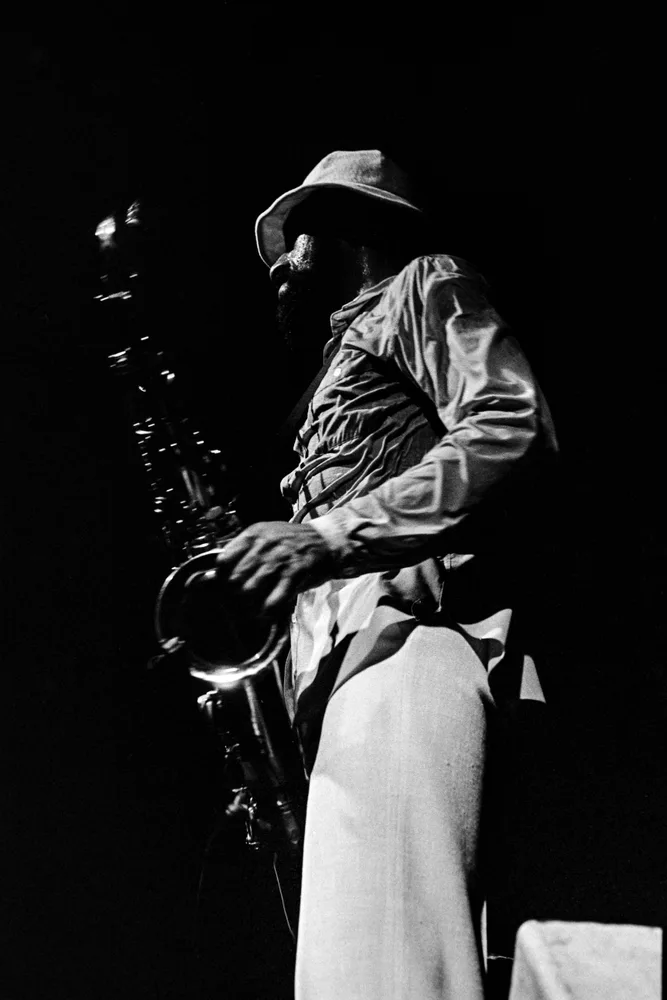
Sonny Rollins performing at the Agora Ballroom, Atlanta, Georgia, 1978. CC BY-SA 4.0 — Wikimedia Commons, File:Sonny Rollins Atlanta GA1.jpg (https://commons.wikimedia.org/wiki/File:Sonny_Rollins_Atlanta_GA1.jpg), photographed by Wikimedia Commons user Acroterion, own work.

Walter Theodore "Sonny" Rollins was born September 7, 1930, in Harlem, the youngest of three children of Walter Rollins, a U.S. Navy steward, and Valborg Solomon, both of whom had emigrated from the Danish West Indies (his father from Saint Croix, his mother from Saint Thomas). Music ran through the household: his father played clarinet, his sister piano, his brother violin. He began piano at nine, switched to alto saxophone at eleven after hearing Louis Jordan, and moved to tenor at fifteen in 1946 under the spell of Coleman Hawkins's records. Growing up blocks from the Savoy Ballroom, he fell in with a circle of young Harlem musicians that included Jackie McLean, Kenny Drew, and Art Taylor, and by his teens he was rehearsing at pianist Thelonious Monk's apartment, absorbing a harmonic and rhythmic sense of humor that stayed with him for the rest of his career.
Rollins made his first recordings in January 1949 as a sideman behind bebop singer Babs Gonzales, and over the next several years worked and recorded with Bud Powell, J.J. Johnson, Miles Davis, and Monk. His three compositions on Davis's 1954 Prestige sessions, "Oleo," "Airegin," and "Doxy," entered the working repertoire of jazz almost immediately and remain standards. Heroin addiction interrupted his rise; in 1955 he committed himself to the Federal Medical Center in Lexington, Kentucky, and got clean. That same year he briefly rejoined Davis's quintet before joining the Clifford Brown/Max Roach Quintet, replacing Harold Land. In June 1956, at Rudy Van Gelder's studio with pianist Tommy Flanagan, bassist Doug Watkins, and Roach on drums, he recorded Saxophone Colossus for Prestige, an album built around his calypso-inflected original "St. Thomas," a tune he had known since childhood from his mother's Caribbean records. The album is now regarded as one of the defining tenor saxophone records of the decade.
The years around 1957 were extraordinarily prolific. Rollins recorded Tenor Madness with John Coltrane sitting in on the title track, cut Way Out West in Los Angeles with bassist Ray Brown and drummer Shelly Manne in the unusual pianoless format he would return to repeatedly, and made his Blue Note debut with Sonny Rollins, Volume 1. He appeared on Monk's Brilliant Corners and, that December, on trumpeter Dizzy Gillespie's Sonny Side Up alongside fellow tenor Sonny Stitt. His pianoless working trio, with bassist Wilbur Ware and drummer Elvin Jones, was documented live at the Village Vanguard on A Night at the "Village Vanguard" (1957, Blue Note), a record that helped establish "strolling," saxophone playing over bass and drums alone, as a legitimate small-group format rather than a novelty. In 1958 he cut Freedom Suite for Riverside, a nineteen-minute trio piece with Max Roach and bassist Oscar Pettiford that stated, unusually directly for the period, a political argument about the treatment of Black Americans.
By the summer of 1959, feeling he had exhausted a particular way of playing, Rollins withdrew from public performance and spent close to two and a half years practicing alone, largely on the pedestrian walkway of the Williamsburg Bridge, so as not to disturb his neighbors on the Lower East Side. He returned in November 1961 with a Jazz Gallery residency and, the following year, a contract with RCA Victor that produced The Bridge (1962), a quartet date with guitarist Jim Hall, bassist Bob Cranshaw, and drummer Ben Riley. Through the rest of the decade he pushed his music toward the era's avant-garde without abandoning its structure: Our Man in Jazz (1963) paired him live at New York's Village Gate with cornetist Don Cherry and drummer Billy Higgins, and Sonny Meets Hawk! (1963) brought him into the studio opposite his boyhood idol, Coleman Hawkins, with pianist Paul Bley. He signed with Impulse! in the mid-1960s, scoring the British film Alfie with an Oliver Nelson-arranged orchestra in 1966 and, that May, recording the harmonically open East Broadway Run Down with trumpeter Freddie Hubbard, bassist Jimmy Garrison, and Elvin Jones. He then withdrew from performing again between 1969 and 1971, spending part of that time studying yoga and Eastern philosophy at an ashram near Mumbai, India.
Rollins resumed touring in 1971 and signed with Milestone Records under producer Orrin Keepnews, beginning a productive final third of his career centered on Next Album (1972), The Cutting Edge (1974), and the calypso-heavy Don't Stop the Carnival (1978). He toured internationally with the all-star Milestone Jazzstars alongside McCoy Tyner, Ron Carter, and Al Foster, played the White House South Lawn for President Jimmy Carter in June 1978, and contributed uncredited saxophone to the Rolling Stones' 1981 album Tattoo You. He kept recording steadily through the 1980s and 1990s (G-Man, 1987; Global Warming, 1998) and won his first competitive Grammy Award in 2002 for This Is What I Do (2000). Having heard the World Trade Center's collapse from his nearby Greenwich Street apartment on September 11, 2001, he performed in Boston days later and later released the concert as Without a Song: The 9/11 Concert (2005); its track "Why Was I Born?" won a Grammy for Best Jazz Instrumental Solo in 2006. From 2008 to 2016 he released four volumes of archival concert recordings, Road Shows, on his own Doxy Records and, later, Okeh.
Rollins gave his final public performance at London's Barbican Centre in November 2012 and announced his retirement from playing in 2014 after a diagnosis of pulmonary fibrosis made it impossible to continue. He remained active as a writer, donating his personal archive of diaries, correspondence, and practice tapes to the Schomburg Center for Research in Black Culture in 2017 and publishing an edited volume of his own notebooks, kept since 1959, in 2024. Sonny Rollins passed away May 25, 2026, in Woodstock, New York, at age ninety-five.
Rollins built his style on thematic improvisation, taking a melodic fragment and developing it through extended variation rather than running the harmonic changes in the manner most of his bebop contemporaries favored, a method critic Gunther Schuller analyzed at length in a 1958 essay on Blue 7. His tone was broad, "biting and clear," and his sense of humor showed up constantly in his playing, in interpolated quotations from nursery rhymes, show tunes, and other musicians' solos. He was also a formal risk-taker: he pioneered the pianoless saxophone trio as a working format, embraced Caribbean calypso rhythms years before "world music" was a marketing category, and worked unaccompanied cadenzas into his live performances more extensively than almost any other saxophonist of his generation. Coleman Hawkins was his first and most enduring influence; he later returned the favor by influencing a wide range of tenor players who came after him, and he is commonly named alongside John Coltrane as one of the two most important tenor saxophonists to emerge from the 1950s.
- Saxophone Colossus (1956, Prestige) - His best-known record, featuring "St. Thomas," recorded with Tommy Flanagan, Doug Watkins, and Max Roach. Spotify - Saxophone Colossus Listen
- Way Out West (1957, Contemporary) - A pianoless trio session with Ray Brown and Shelly Manne, recorded in Los Angeles, that became a model for the format. Spotify - Way Out West Listen
- A Night at the "Village Vanguard" (1957, Blue Note) - A live document of his working pianoless trio that helped define the "strolling" format.
- Freedom Suite (1958, Riverside) - A nineteen-minute trio piece with Max Roach and Oscar Pettiford carrying an explicit civil-rights argument, unusual for its time.
- The Bridge (1962, RCA Victor) - His first release after the Williamsburg Bridge sabbatical, a quartet date with Jim Hall. Spotify - The Bridge Listen
- East Broadway Run Down (1966, Impulse!) - A harmonically open date with Freddie Hubbard, Jimmy Garrison, and Elvin Jones.
- This Is What I Do (2000, Milestone) - A late-career quintet album that won his first competitive Grammy Award, Best Jazz Instrumental Album, in 2002. Spotify - This Is What I Do Listen
- Brilliant Corners (1957, Riverside) - As a sideman: Thelonious Monk's landmark album, with Rollins on tenor alongside Ernie Henry and Clark Terry.
Sonny Rollins: Full Discography
Identity confirmed via the live Discogs API: artist ID 145264, "Sonny Rollins," credited on 3,961 releases across leader, sideman, and reissue/compilation entries spanning 1949 to the 2020s. Rollins recorded more than sixty albums as a leader over a seven-decade career, so this table does not attempt exhaustive coverage. It itemizes his most significant, most historically important, and most frequently cited leader and co-led recordings, plus a representative set of landmark sideman appearances, each checked against the individual release record rather than the coarse artist-releases listing.
As Leader / Co-Leader
| Album Title | Recording Date(s) | Release Date | Label | Catalog Number | Format(s) | Personnel | Role | Reissue History | Spotify | Buy | Notes |
|---|---|---|---|---|---|---|---|---|---|---|---|
| Sonny Rollins, Volume 1 | 1956-1957 | 1957 | Blue Note | BLP 1542 | Vinyl, LP, Mono | Sonny Rollins (tenor sax), Donald Byrd (trumpet), Wynton Kelly (piano, some tracks), Gene Ramey (bass), Max Roach (drums) | Leader | Reissued on CD and as part of Eight Classic Albums (2011) | — | — | Compiled from two 1956-1957 sessions with slightly different personnel; catalog number per standard Blue Note references and not independently re-confirmed against a Discogs release record in this pass |
| Tenor Madness | Recorded May 24, 1956, Van Gelder Studio, Hackensack NJ | 1956 | Prestige | PRLP 7047 | Vinyl, LP, Mono | Sonny Rollins Quartet: Sonny Rollins (tenor sax), John Coltrane (tenor sax, title track only), Red Garland (piano), Paul Chambers (bass), Philly Joe Jones (drums) | Leader | Reissued on Original Jazz Classics | — | — | The only studio recording pairing Rollins and Coltrane |
| Saxophone Colossus | Recorded June 22, 1956, Van Gelder Studio, Hackensack NJ | 1957 | Prestige | PRLP 7079 | Vinyl, LP, Mono | Sonny Rollins (tenor sax), Tommy Flanagan (piano), Doug Watkins (bass), Max Roach (drums) | Leader | Reissued repeatedly as an Original Jazz Classic; National Recording Registry, 2016 | Spotify - Saxophone Colossus | — | Includes "St. Thomas"; widely cited as one of the most important tenor saxophone albums of the 1950s |
| Way Out West | Recorded March 7, 1957, Contemporary's studio, Los Angeles | 1957 | Contemporary Records | C 3530 | Vinyl, LP, Mono | Sonny Rollins (tenor sax), Ray Brown (bass), Shelly Manne (drums) | Leader | Reissued as Original Jazz Classics and a 2017 deluxe edition | Spotify - Way Out West (OJC Remaster) | — | Pianoless trio recorded during a West Coast tour |
| A Night at the "Village Vanguard" | Recorded live November 3, 1957, Village Vanguard, NYC | 1957 | Blue Note | BLP 1581 | Vinyl, LP, Mono | Sonny Rollins (tenor sax), Wilbur Ware / Donald Bailey (bass), Elvin Jones / Pete La Roca (drums) | Leader | Expanded CD reissues add further sets from the same night | — | — | Live document of Rollins's working pianoless trio |
| The Sound of Sonny | Recorded June 11 and 19, 1957, NYC | 1957 | Riverside Records | RLP 12-241 | Vinyl, LP, Mono | Sonny Rollins (tenor sax), Sonny Clark (piano), Percy Heath / Paul Chambers (bass), Roy Haynes (drums) | Leader | Reissued on Original Jazz Classics | — | — | Includes solo and unaccompanied tracks |
| Freedom Suite | Recorded February 11 and March 7, 1958, NYC | 1958 | Riverside Records | RLP 12-258 | Vinyl, LP, Mono | Sonny Rollins (tenor sax), Oscar Pettiford (bass), Max Roach (drums) | Leader | Reissued 1961 (with additional tracks, as Shadow Waltz) and on Original Jazz Classics | — | — | Nineteen-minute title suite carrying an explicit statement on civil rights |
| Newk's Time | Recorded September 22, 1957, Van Gelder Studio, Hackensack NJ | 1959 | Blue Note | BLP 4001 | Vinyl, LP, Mono | Sonny Rollins (tenor sax), Wynton Kelly (piano), Doug Watkins (bass), Philly Joe Jones (drums) | Leader | Reissued on CD | — | — | |
| The Bridge | Recorded January and February 1962, NYC | 1962 | RCA Victor | LPM 2527 | Vinyl, LP, Mono | Sonny Rollins (tenor sax), Jim Hall (guitar), Bob Cranshaw (bass), Ben Riley (drums) | Leader | Inducted into the Grammy Hall of Fame, 2015 | Spotify - The Bridge | — | First release after Rollins's Williamsburg Bridge sabbatical (1959-1961) |
| Our Man in Jazz | Recorded live July 27, 1962, Village Gate, NYC | 1963 | RCA Victor | LSP-2612 | Vinyl, LP, Stereo | Sonny Rollins (tenor sax), Don Cherry (cornet), Bob Cranshaw (bass), Billy Higgins (drums) | Leader | None found | — | — | Live avant-garde exploration; one track runs over twenty-five minutes |
| Sonny Meets Hawk! | Recorded July 15 and 18, 1963, NYC | 1963 | RCA Victor | LSP-2712 | Vinyl, LP, Stereo | Sonny Rollins and Coleman Hawkins (tenor sax), Paul Bley (piano), Bob Cranshaw / Henry Grimes (bass), Roy McCurdy (drums) | Co-leader (billed to both) | None found | — | — | Rollins's boyhood idol as co-billed equal |
| Original Music from the Score "Alfie" | Recorded May 26, 1966, NYC | 1966 | Impulse! | A-9111 | Vinyl, LP, Stereo | Sonny Rollins with an orchestra conducted and arranged by Oliver Nelson | Leader (soundtrack) | Reissued on CD | — | — | Score for the Lewis Gilbert film Alfie |
| East Broadway Run Down | Recorded May 9, 1966, Van Gelder Studio, Englewood Cliffs NJ | 1967 | Impulse! | AS-9121 | Vinyl, LP, Stereo | Sonny Rollins (tenor sax), Freddie Hubbard (trumpet), Jimmy Garrison (bass), Elvin Jones (drums) | Leader | Reissued on CD | — | — | His last studio album for six years afterward |
| Next Album | Recorded 1972, NYC | 1972 | Milestone | MSP 9042 | Vinyl, LP, Stereo | Sonny Rollins (tenor sax), George Cables (piano), David Lee (bass), Jack DeJohnette or Arthur Jenkins (drums or percussion, varies by track; full track-level credits not independently re-confirmed) | Leader | Reissued on CD | — | — | First studio album after his second (1969-1971) sabbatical |
| Don't Stop the Carnival | Recorded live July 8, 1978, Orpheum Theatre, San Francisco | 1978 | Milestone | M-55005 | Vinyl, 2xLP, Stereo | Sonny Rollins (tenor sax), Mark Soskin (piano), Aurell Ray (guitar), Jerome Harris (bass), Tony Williams (drums), Bill Summers (percussion) | Leader | Reissued on CD | — | — | Double live album showcasing his calypso material |
| This Is What I Do | Recorded May 2000, NYC | 2000 | Milestone | MCD-9310-2 | CD | Sonny Rollins (tenor sax), Clifton Anderson (trombone), Stephen Scott (piano), Bob Cranshaw (bass), Perry Wilson (drums), Kimati Dinizulu (percussion) | Leader | None found | Spotify - This Is What I Do | — | Won the 2002 Grammy Award for Best Jazz Instrumental Album |
| Without a Song: The 9/11 Concert | Recorded live September 15, 2001, Berklee Performance Center, Boston | 2005 | Milestone | — | CD | Sonny Rollins (tenor sax), Clifton Anderson (trombone), Stephen Scott (piano), Bob Cranshaw (bass), Perry Wilson (drums), Kimati Dinizulu (percussion) | Leader | None found | — | — | Recorded four days after Rollins evacuated his lower Manhattan apartment during the September 11 attacks; "Why Was I Born?" won the 2006 Grammy for Best Jazz Instrumental Solo |
| Sonny, Please | Recorded 2005 | 2006 | Doxy Records | — | CD | Sonny Rollins (tenor sax), Bobby Broom (guitar), Clifton Anderson (trombone), Bob Cranshaw (bass), Perry Wilson (drums), Kimati Dinizulu (percussion) | Leader | None found | — | — | First release on his own label, produced by his nephew Clifton Anderson |
| Road Shows, Vol. 1-4 | Recorded live at various dates and venues, 1980-2012 | 2008-2016 | Doxy Records / Okeh | — | CD | Sonny Rollins with rotating personnel; Vol. 3 (2014) includes guest saxophonist Ornette Coleman | Leader | None found | — | — | A four-volume archival series drawn from Rollins's own concert tapes |
As Sideman (selected major credits)
| Year | Project (Leader) | Title | Label | Catalog | Role | Notes |
|---|---|---|---|---|---|---|
| 1954 | Miles Davis | Bags' Groove | Prestige | 7109 | Tenor Saxophone | Sessions that produced "Oleo," "Airegin," and "Doxy," all composed by Rollins |
| 1956 | Clifford Brown / Max Roach Quintet | At Basin Street | EmArcy | MG 36070 | Tenor Saxophone | Rollins's studio work with the quintet he joined in 1955, replacing Harold Land |
| 1957 | Thelonious Monk | Brilliant Corners | Riverside Records | RLP 12-226 | Tenor Saxophone | Alongside Ernie Henry and Clark Terry |
| 1959 | Dizzy Gillespie / Sonny Stitt | Sonny Side Up | Verve Records | MG V-8262 | Tenor Saxophone | Twin-tenor summit with Sonny Stitt, recorded under Gillespie's leadership |
| 1959 | Modern Jazz Quartet | The Modern Jazz Quartet at Music Inn, Vol. 2 | Atlantic | — | Guest Artist, Tenor Saxophone | Guest appearance with the MJQ |
Rollins's Discogs sideman log, spanning 1949 to the 1960s before his own leader catalog came to dominate his output, also includes further early-1950s dates with Bud Powell, J.J. Johnson, Miles Davis (Dig and Collectors' Items), and Thelonious Monk, among many others, not itemized exhaustively here.
- Miles Davis - early employer and the sessions that produced "Oleo," "Airegin," and "Doxy," recorded 1954.
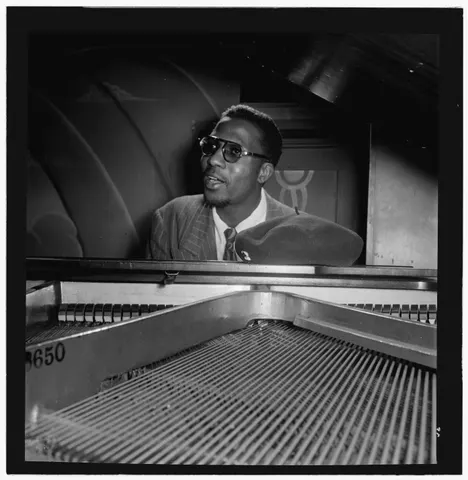
- Thelonious Monk - teenage mentor in Harlem, recurring bandleader in the early 1950s, and the composer of Brilliant Corners (1957), on which Rollins appears as a sideman.
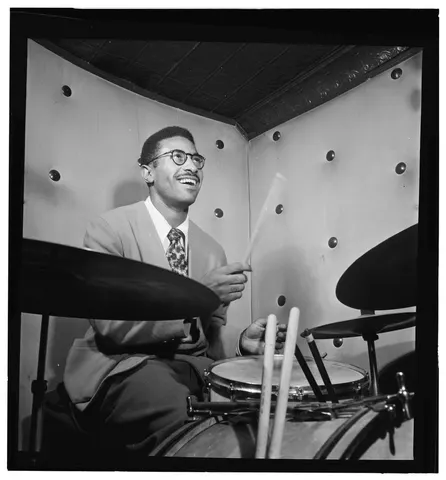
- Max Roach - drummer on Saxophone Colossus and Freedom Suite, and the leader of the Clifford Brown/Max Roach Quintet, which Rollins joined in 1955.
- Clifford Brown - co-leader of the quintet Rollins joined in 1955, replacing Harold Land, until Brown's death in 1956.
- Jim Hall - guitarist on The Bridge (1962) and its touring quartet, Rollins's first group after his Williamsburg Bridge sabbatical.
- Coleman Hawkins - childhood idol and the reason Rollins switched to tenor saxophone; the two recorded together as equals on Sonny Meets Hawk! (1963).
- John Coltrane - sat in on the title track of Tenor Madness (1956) and is frequently paired with Rollins in critical accounts of the era's two defining tenor players.