 JAZZPROFILES lives in the music 2,303 Jazz Artists fully Profiled!
Lennie Tristano
Last updated November 7, 2026
Listen on Spotify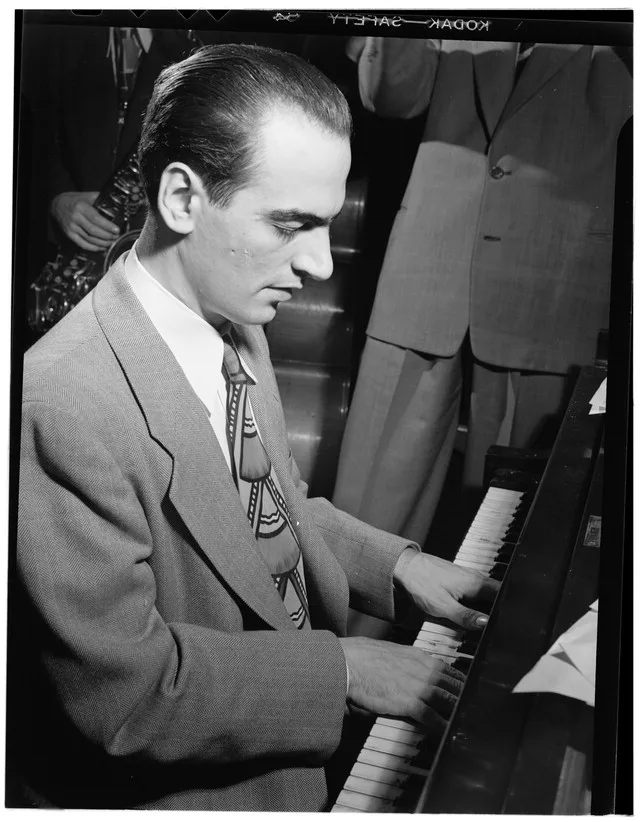
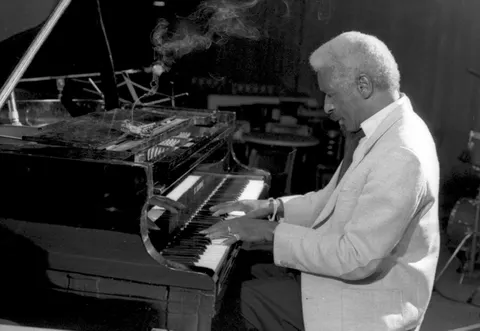
Lennie Tristano at the piano, circa August 1947, photographed by William P. Gottlieb Public Domain (William P. Gottlieb collection, released by the photographer; Library of Congress: no known copyright restrictions) — Wikimedia Commons: https://commons.wikimedia.org/wiki/File:Lennie_Tristano_1947_(Gottlieb).jpg

Leonard Joseph Tristano was born in Chicago on March 19, 1919, the second of four brothers; his father, Michael, had come from Italy as a child. He began on the family's player piano at two or three and took classical lessons from the age of eight, which he later said held him back more than they helped. His eyesight was poor from birth, and by nine or ten he was totally blind from glaucoma. From about 1928 he spent a decade at the Illinois School for the Blind in Jacksonville, where he played saxophones, trumpet, guitar and drums as well as piano, and he had his first gigs at eleven, on clarinet. He studied performance at the American Conservatory of Music in Chicago from 1938 to 1941 and stayed two more years of graduate study, leaving before he finished a master's degree.
In the early 1940s he played tenor saxophone and piano in a range of Chicago jobs, including a rumba band, and began giving lessons, among his first pupils the alto saxophonist Lee Konitz. From 1943 he also taught at the Axel Christensen School of Popular Music. He won press notice in Metronome in 1944 and in Down Beat from 1945, and that year he recorded solo piano and made records with musicians from Woody Herman's band. In 1946 he moved to New York, first stopping on Long Island at Freeport, where he played a restaurant job with guitarist Billy Bauer and bassist Arnold Fishkin. That trio recorded in 1946 and 1947, including Keynote sides cut on October 8, 1946, and May 23, 1947; reviewers noted the counterpoint between piano and guitar, and Gunther Schuller later called one of the pieces too far ahead of its time. Tristano met Charlie Parker in 1947 and played with him on WOR radio broadcasts in September and November of that year, in bands that included Dizzy Gillespie and Max Roach. He was named Metronome's musician of the year for 1947.
By 1948 he had added Konitz and a drummer to make a quintet, and the tenor saxophonist Warne Marsh, another pupil, soon joined. In 1949 the group made two sets of recordings that proved decisive. At sessions for Capitol on March 4, March 14 and May 16, the sextet recorded original lines such as "Wow" and "Crosscurrent" on familiar chord changes, and on May 16 the five musicians, without a drummer, recorded "Intuition" and "Digression". Only the order of entrances and their rough timing was agreed beforehand; harmony, key, tempo and melody were left open, and the players were held together by contrapuntal interaction. They are generally cited as the first group free improvisations on record. "Intuition" came out late in 1950 and "Digression" not until 1954. Parker and the composer Aaron Copland admired them, while many musicians of the day found the music too cold. The sextet played the opening night of Birdland and a five-week stay there, but work was scarce.
In 1951 Tristano moved his teaching from his home in Flushing, Queens, to a Manhattan loft at 317 East 32nd Street, part of which he turned into a recording studio, and he started a small label, Jazz Records, which issued a single 45 in 1952, pairing "Ju-Ju" and "Pastime" by a trio with bassist Peter Ind and drummer Roy Haynes, recorded on October 30, 1951, with second piano parts that Tristano overdubbed afterward; Ind described them as the first improvised overdubbed jazz recordings. A quintet with Konitz, Marsh, Ind and drummer Al Levitt was recorded live in Toronto on July 17, 1952. Konitz joined Stan Kenton that summer, which broke up the core of the group. In 1953 Tristano made "Descent into the Maelstrom," a solo piano piece drawn from Edgar Allan Poe's story, improvised by developing motifs with multitracking rather than working over a chord sequence. His sextet played the first Newport Jazz Festival in 1954, probably his only festival, since he thought them too commercial. He made his first Atlantic album, Lennie Tristano, in 1954 and 1955, with control over what was made and issued. Its first four tracks, including "Line Up," "Requiem," a tribute to Parker, and "East Thirty-Second," used overdubbing and altered tape speed, which drew criticism when it appeared in 1956; the rest was recorded live at the Confucius Restaurant in Manhattan on June 11, 1955, with Konitz, bassist Gene Ramey and drummer Art Taylor.
From the mid-1950s Tristano put teaching ahead of performing. He lost his Manhattan studio in 1956 and set up a new one in Hollis, Queens. From 1958 he played engagements at New York's Half Note, where the owners persuaded him to appear in part by replacing the house piano with a Bechstein of his choosing; a live recording from 1958 has Marsh, bassist Henry Grimes and drummer Paul Motian. His second Atlantic album, The New Tristano (recorded 1961, issued in 1962), was all unaccompanied piano with no overdubbing or tape speed. In 1964 he reunited the quintet with Konitz and Marsh for two months at the Half Note and played Toronto's Coq d'Or. He toured Europe as a mostly solo pianist in 1965, a trip that included a Berlin concert of six pianists on October 30 with Earl Hines, Teddy Wilson, John Lewis, Bill Evans and Jaki Byard, and a solo concert at Copenhagen's Tivoli Gardens on October 31. He returned to England in 1968 with Ind and again in 1969; his last public performance in the United States was in 1968. In the 1970s he turned down concert offers and kept teaching, to a total of pupils that may exceed a thousand over three decades, while eye pain and emphysema wore him down. He passed away of a heart attack at his home in Jamaica, New York, on November 18, 1978, at the age of 59. He was elected to the Down Beat Hall of Fame in 1979, and Crosscurrents entered the Grammy Hall of Fame in 2013.
Among saxophonists his early models were Lester Young and Charlie Parker, and among pianists Art Tatum; he also admired Bud Powell's articulation. His own playing favored long, nearly even eighth-note lines with small rhythmic displacements rather than bebop's sharp accents, strict time against which he layered changes of meter, block-chord passages, and in the 1950s a form of side-slipping, temporary bitonality made by laying chromatic harmony over standard changes. Grove's entry singled out his mastery of several levels of double time, and pianist Ethan Iverson has ranked him in the top tier for technique. His left hand often carried a walking bass line while the right hand improvised against it, as on The New Tristano. The cool-jazz label is only a partial description: the group improvisations of 1949 were an early step toward free playing, and the atonal, motif-driven "Descent into the Maelstrom" of 1953 anticipated later work by pianists such as Cecil Taylor and Borah Bergman.
As a teacher he is one of the first to have taught jazz improvisation in a structured way, in short individual lessons of fifteen to twenty minutes in which pupils sang and then played the solos of Young and Parker, worked with a metronome set very slow and gradually sped up, and learned tunes in all keys; he taught the same method to players of any instrument. His best-known pupils were Lee Konitz and Warne Marsh, and the painter Robert Ryman also took lessons; the singer Sheila Jordan, the saxophonist Phil Woods and the saxophonist Dave Liebman each studied with him, according to their own profiles. Elements of his early work, counterpoint, reharmonization and strict time, are heard in Miles Davis's Birth of the Cool and in the playing of Gerry Mulligan and Dave Brubeck; Bill Evans later used overdubbing after Tristano's experiments, and Anthony Braxton has often named him and his students as influences. Mose Allison said Tristano and Powell were the founders of modern piano playing, and the writer Thomas Albright counted him among the influences on Paul Bley, Andrew Hill, Mal Waldron and Taylor. Critics are divided: some heard his playing as cold and his innovations as having little impact, others call him a bridge from bebop to freer forms who has been underrated because he refused to commercialize and was hard to categorize.
- Crosscurrents (1972, Capitol) - The 1949 sextet sides with Lee Konitz and Warne Marsh, including "Wow," "Crosscurrent" and the group improvisations "Intuition" and "Digression"; the second side holds unrelated recordings by clarinetist Buddy DeFranco. Inducted into the Grammy Hall of Fame in 2013.
- Intuition (1996, Capitol Jazz) - The CD collection of the same 1949 Capitol material, coupled with Marsh's Jazz of Two Cities. Spotify - Intuition Listen
- Subconscious-Lee (rec. 1949-50, Prestige) - Konitz's first album as a leader, with Tristano, Marsh and Bauer, drawn from 1949 and 1950 sessions for New Jazz, the label that became Prestige.
- Lennie Tristano (1956, Atlantic) - His Atlantic debut: overdubbed and tape-speed-altered studio pieces, including the Parker tribute "Requiem," plus live quartet tracks with Konitz.
- The New Tristano (1962, Atlantic) - Seven unaccompanied piano performances, with the cover stating that no overdubbing or tape speeding was used. Listen
- Descent into the Maelstrom (1976, East Wind) - Recordings made between 1951 and 1966, including the 1953 title piece, "Ju-Ju," "Pastime" and the 1965 European solos. Spotify - Descent into the Maelstrom Listen
- Continuity (1985, Jazz Records) - Live at the Half Note: a 1958 quartet with Marsh, Henry Grimes and Paul Motian, and a 1964 quintet with Konitz and Marsh.
- Lennie Tristano Personal Recordings 1946-1970 (2021, Mosaic and Dot Time) - A six-disc set of private tapes, trio dates, studio solos and live recordings.
Lennie Tristano: Full Discography
Discogs artist ID 259086 ("Lennie Tristano," real name Leonard Joseph Tristano, born March 19, 1919, in Chicago, died November 18, 1978) lists more than 600 entries, most of them compilations, reissues and appearances on various-artists sets of the same small body of sessions. Discogs also holds separate entries for his named groups (the Lennie Tristano Trio, Sextet, Quintet, Quartet and All Stars) and for the Metronome All Stars; the sessions those entries document are covered below. Because he recorded little under his own name during his lifetime and most of what survives was issued posthumously from live tapes and private studio recordings, the leader table below is a selection of 24 releases covering the 1947 to 1949 trio and sextet sides, the 1950s Atlantic and Jazz Records material, the solo albums and the major posthumous collections, rather than every pressing. Catalog numbers follow the Jazz Discography Project and Discogs, and where the two differ the first or best-documented pressing is given. Recording dates come from the Jazz Discography Project, Wikipedia and Discogs.
As Leader / Co-Leader
| Album Title | Recording Date(s) | Release Date | Label | Catalog Number | Format(s) | Personnel | Role | Reissue History | Spotify | Buy | Notes |
|---|---|---|---|---|---|---|---|---|---|---|---|
| Piano Stylist | October 23, 1947, New York | 1953 | Savoy | XP 8084 | Vinyl, LP, Album | Lennie Tristano (piano), Billy Bauer (guitar), John Levy (bass) | Leader | The same four trio sides were issued on The Jazz Keyboards (Savoy MG 12043, 1955) and on The Modern Jazz Piano Album (Savoy SJL 2247, 1980) | — | — | Contains "Supersonic," "On a Planet," "Air Pocket" and "Celestia." |
| Lennie Tristano Quintet Featuring Lee Konitz | January 11, 1949, New York | 1953 | Prestige | prEP 1308 | Vinyl, EP | Lennie Tristano (piano), Lee Konitz (alto saxophone), Billy Bauer (guitar), Arnold Fishkin (bass), Shelly Manne (drums, on most tracks) | Leader (billed as the Tristano Quintet) | The same session was first issued on New Jazz singles and on Lee Konitz Quintet, Lennie Tristano Quintet (New Jazz NJLP 101, 1950), and in 1955 on Konitz's Subconscious-Lee | — | — | Titles include "Progression," "Retrospection," "Subconscious-Lee" and "Judy." The earliest sides on the New Jazz label, which later became Prestige. |
| Crosscurrents | March 4, March 14 and May 16, 1949, New York (Tristano sides) | 1972 | Capitol | M-11060 | Vinyl, LP, Compilation | Lennie Tristano (piano), Lee Konitz (alto saxophone), Warne Marsh (tenor saxophone), Billy Bauer (guitar), Arnold Fishkin (bass), Harold Granowsky or Denzil Best (drums) | Leader (shared with Buddy DeFranco) | Reissued on CD with Warne Marsh's Jazz of Two Cities as Intuition (Capitol Jazz, 1996) | — | — | Includes "Wow," "Crosscurrent," "Yesterdays," "Marionette," "Sax of a Kind" and the group improvisations "Intuition" and "Digression," made without a drummer. The second side is by clarinetist Buddy DeFranco. Inducted into the Grammy Hall of Fame in 2013. |
| Intuition | March 4, March 14 and May 16, 1949, New York | 1996 | Capitol Jazz | 7243 8 52771 2 2 | CD, Compilation | Same sextet and quintet as Crosscurrents, plus the contents of Marsh's Jazz of Two Cities (recorded 1956) | Co-leader (billed with Warne Marsh) | CD edition of the Crosscurrents sides coupled with Jazz of Two Cities | Spotify - Intuition | — | The most complete single-disc collection of the 1949 Capitol sides. |
| Chicago April 1951 | April 1951, Blue Note Jazz Club, Chicago | 2014 | Uptown | UPCD 27.78/27.79 | CD | Lennie Tristano (piano), Lee Konitz (alto saxophone), Warne Marsh (tenor saxophone), Willie Dennis (trombone), Buddy Jones (bass), Mickey Simonetta (drums) | Leader | First issued in 2014 | — | — | Live sextet recording. |
| Ju-Ju / Pastime | October 30, 1951 | 1952 | Jazz Records | 101 | Vinyl, 7", 45 RPM, Single | Lennie Tristano (piano, overdubbed second piano), Peter Ind (bass), Roy Haynes (drums) | Leader | Reissued on Descent into the Maelstrom (East Wind, 1976) and in 2014 by Jazz Records | — | — | The only record issued by Tristano's own label. Overdubbed second piano parts added after the trio session. |
| Live in Toronto 1952 | July 17, 1952, UJPO Hall, Toronto | 1982 | Jazz Records | JR-5 | Vinyl, LP (CD JR-5CD, 1989) | Lennie Tristano (piano), Lee Konitz (alto saxophone), Warne Marsh (tenor saxophone), Peter Ind (bass), Al Levitt (drums) | Leader | Issued on CD in 1989 | — | — | Concert recording; includes "317 East 32nd" and "Lennie's Pennies." |
| Descent into the Maelstrom | 1951 to 1966 (title piece 1953), New York and Paris | 1976 | East Wind (Japan); Inner City (US, 1978) | EW-8040; IC 6002 | Vinyl, LP, Album | Lennie Tristano (piano); on some tracks Peter Ind or Sonny Dallas (bass) and Roy Haynes or Nick Stabulas (drums) | Leader | Reissued on CD by Jazz Records in 2014 | Spotify - Descent into the Maelstrom | — | Includes the multitracked solo "Descent into the Maelstrom," "Ju-Ju," "Pastime," the 1965 Paris solos "Dream" and "Image," and the 1966 trio pieces "Stretch" and "Con Con." |
| Lennie Tristano | 1954 to 1955, Tristano's studio, New York (tracks 1 to 4); June 11, 1955, Confucius Restaurant, New York (tracks 5 to 9) | 1956 | Atlantic | LP 1224 | Vinyl, LP, Album | Lennie Tristano (piano); Peter Ind (bass) and Jeff Morton (drums) on two of the studio tracks; Lee Konitz (alto saxophone), Gene Ramey (bass), Art Taylor (drums) on the live tracks | Leader | Issued on CD in 1994 coupled with The New Tristano (Rhino), and in the 1997 Mosaic box of Atlantic recordings; a 2-LP Requiem followed in 1980 | — | — | Controversial for its overdubbing and tape-speed alteration on "Line Up," "Requiem," "Turkish Mambo" and "East Thirty-Second." |
| The Lennie Tristano Quartet | June 11, 1955, Confucius Restaurant, New York | 1982 | Atlantic | SD 2-7006 | Vinyl, 2xLP, Album | Lennie Tristano (piano), Lee Konitz (alto saxophone), Gene Ramey (bass), Art Taylor (drums) | Leader | Included in the 1997 Mosaic box | — | — | The rest of the Confucius Restaurant sets; part of this night was used on Lennie Tristano in 1956. |
| New York Improvisations | 1955 to 1956, Tristano's studio, 317 East 32nd Street, New York | 1983 | Elektra | 96-0264-1 | Vinyl, LP, Album | Lennie Tristano (piano), Peter Ind (bass), Tom Weyburn (drums) | Leader | Reissued on CD as Manhattan Studio (Jazz Records JR11CD, 1996) | Spotify - New York Improvisations | — | Trio studio recordings. |
| Requiem | 1954 to 1961 (collected from earlier sessions) | 1980 | Atlantic | SD 2-7003 | Vinyl, 2xLP, Compilation | Same sessions as Lennie Tristano and The New Tristano | Leader | First double-LP pairing of the two Atlantic albums | — | — | Reissue. |
| Continuity | August or October 1958 (tracks 1 to 4); June 1964 (tracks 5 to 7), The Half Note, New York | 1985 | Jazz Records | JR-6 | Vinyl, LP (CD JR6CD, 1994) | 1958: Lennie Tristano (piano), Warne Marsh (tenor saxophone), Henry Grimes (bass), Paul Motian (drums). 1964: Tristano, Marsh, Lee Konitz (alto saxophone), Sonny Dallas (bass), Nick Stabulas (drums) | Leader | Issued on CD in 1994 | — | — | Live at the Half Note. |
| The New Tristano | 1960 to 1962, Tristano's studio, New York | 1962 (Atlantic) | Atlantic | LP 1357 | Vinyl, LP, Album, Mono | Lennie Tristano (piano, solo) | Leader | Issued on CD with Lennie Tristano in 1994 and in the 1997 Mosaic Atlantic box | Spotify - The New Tristano (Original Jazz Sound) | — | Seven unaccompanied tracks; the cover states that no overdubbing or tape speeding was used. Wikipedia gives the recording year as 1961. |
| Note to Note | 1964 to 1965, Tristano's studio, Hollis, New York | 1993 | Jazz Records | JR10CD | CD, Album | Lennie Tristano (piano), Sonny Dallas (bass), Carol Tristano (drums, added in 1993) | Leader | — | — | — | Trio recordings; the drum part was added for the release. |
| Concert in Copenhagen | October 31, 1965, Tivoli Gardens Concert Hall, Copenhagen | 1997 | Jazz Records | JR12CD | CD, Album | Lennie Tristano (piano, solo) | Leader | — | — | — | Solo concert from his 1965 European tour. |
| Lennie Tristano Solo in Europe / Lee Konitz Quartet in Europe | October 1965 (Berlin, Copenhagen, Stockholm) | Late 1970s | Unique Jazz | UJ 21 | Vinyl, LP | Lennie Tristano (piano), with Niels-Henning Orsted Pedersen (bass) and Connie Kay (drums) on some tracks | Leader (shared with the Lee Konitz Quartet) | — | — | — | Split LP; Tristano side only. |
| Betty Scott Sings with Lennie Tristano | 1965; May 13 and 14, 1971; January 1974, Tristano's studio, Hollis, New York | 2001 | Jazz Records | JR13CD | CD, Album | Betty Scott (vocals), Lennie Tristano (piano) | Co-leader (billed with Betty Scott) | — | — | — | Voice and piano duo recordings. |
| Live at Birdland 1949 | 1945 (solo, Chicago); 1949 (quintet, Birdland, New York) | 1979 | Jazz Records | JR-1 | Vinyl, LP (CD JR-1CD, 1990) | Lennie Tristano (piano); Warne Marsh (tenor saxophone), Billy Bauer (guitar), Arnold Fishkin (bass), Jeff Morton (drums) on the quintet tracks | Leader | Issued on CD in 1990 and later folded into The Lost Tapes (The Jazz Factory, 2001) | — | — | Quintet concert tracks plus 1945 solo piano recordings. |
| Wow | Circa 1950, live in New York | 1991 | Jazz Records | JR9CD | CD, Album | Lennie Tristano (piano), Lee Konitz (alto saxophone), Warne Marsh (tenor saxophone), Billy Bauer (guitar), bass and drums not confirmed | Leader | — | — | — | Live sextet recording, including a Bach fugue in D minor. |
| The Complete Atlantic Recordings of Lennie Tristano, Lee Konitz and Warne Marsh | 1954 to 1961 | 1997 | Mosaic | MQ10-174 (LP); MD6-174 (CD) | Vinyl, 10xLP; CD, 6xCD, Box Set | Lennie Tristano (piano), Lee Konitz (alto saxophone), Warne Marsh (tenor saxophone), and rhythm sections | Co-leader (billed with Konitz and Marsh) | — | — | — | Collects the Atlantic albums by all three, including Lennie Tristano and The New Tristano. |
| Out on a Limb | 1945 to 1947 | 1998 | Indigo | IGO CD 2086 | CD, Compilation | Lennie Tristano (piano), with Billy Bauer (guitar) and bassists including Clyde Lombardi and Leonard Gaskin | Leader | — | — | — | Gathers the 1946 and 1947 Keynote trio sides, V-Disc recordings and early solos. |
| The Duo Sessions | Circa 1967 to circa 1976 | 2020 | Dot Time | DT8016 | CD, Album | Lennie Tristano (piano) with Connie Crothers (piano), Roger Mancuso (drums) and Lenny Popkin (tenor saxophone), in duos | Leader | — | Spotify - The Duo Sessions | — | Previously unissued home studio duets. |
| Lennie Tristano Personal Recordings 1946-1970 | 1946 to 1970 | 2021 | Mosaic; Dot Time | MD6-272 | CD, 6xCD, Box Set | Lennie Tristano (piano) with trio, quartet, sextet and solo settings; sidemen include Billy Bauer, Arnold Fishkin, Peter Ind, Lee Konitz, Warne Marsh, Zoot Sims and Sonny Dallas | Leader | — | — | — | Private and live recordings issued from Tristano's own tapes. |
As Sideman (selected major credits)
Tristano appeared as a sideman or featured guest on a few sessions, mostly in 1945 to 1951, and on a handful of all-star dates. The table is a representative set rather than an exhaustive list.
| Year | Project (Leader) | Title | Label | Catalog | Role | Notes |
|---|---|---|---|---|---|---|
| 1945 or 1946 | Earl Swope / Emmett Carls Sextet | The Lost Session | Jazz Guild | JG 1008 | Piano | Sextet date with Chubby Jackson on bass, issued with Tristano solo and trio recordings. |
| 1947 | Bill Harris Sextet | A Knight in the Village | Jazz Showcase | JS 5001 | Piano | Recorded August 22, 1947, at the Bohemia Club, New York, with Flip Phillips, Billy Bauer, Chubby Jackson and Denzil Best. |
| 1947 | Barry Ulanov's All Star Modern Jazz Musicians | Lullaby in Rhythm | Spotlite | LP 107 | Piano | WOR radio broadcasts of September 13 and 20, 1947, with Charlie Parker, Dizzy Gillespie, John LaPorta, Billy Bauer, Ray Brown and Max Roach. |
| 1947 | Barry Ulanov and His All Star Metronome Jazzmen | Anthropology | Spotlite | LP 108 | Piano | WOR broadcast of November 8, 1947, with Fats Navarro, Charlie Parker, Allen Eager, Tommy Potter and Buddy Rich. |
| 1949 | Metronome All-Star Bands | Overtime / Victory Ball | RCA Victor | 20-3361 | Piano | Recorded January 3, 1949, with Miles Davis, Dizzy Gillespie, Charlie Parker and Shelly Manne among the all-stars. |
| 1949 and 1950 | Lee Konitz | Subconscious-Lee | Prestige | PRLP 7004 | Piano | Konitz's first album as a leader, issued in 1955, with Marsh, Bauer and Tristano; the January 11, 1949 quintet session also appears under Tristano's name. |
| 1950 | Metronome All-Stars | Double Date / No Figs | Columbia | 38734 | Piano | Recorded January 10, 1950, with Dizzy Gillespie, Kai Winding, Lee Konitz, Stan Getz, Serge Chaloff and Max Roach. |
| 1951 | Charlie Parker | More Unissued, Vol. 1 (1951-1952) | Royal Jazz | RJD 505 | Piano | Private trio recording with Kenny Clarke at Tristano's apartment in August 1951. |
| 1965 | Piano Summit (Berlin) | Piano Summit | Philology | W 102 | Piano | Recorded in Berlin on October 30, 1965, with Earl Hines, Teddy Wilson, John Lewis, Bill Evans and Jaki Byard. |
- Lee Konitz - pupil from the early 1940s; altoist in the quintet and sextet from 1948 to 1952, on the 1949 Capitol sessions, the 1952 Toronto concert, the 1955 Confucius Restaurant set and the 1964 Half Note quintet.
- Warne Marsh - tenor saxophonist who joined in 1948; on the 1949 Capitol sessions, in Toronto in 1952, in a 1958 Half Note quartet and in the 1964 quintet.
- Billy Bauer - guitarist in the 1946-1947 trio and in the sextet through 1949.
- Arnold Fishkin - bassist in the Freeport trio and the 1949 sextet.
- Peter Ind - bassist on the 1951 "Ju-Ju" and "Pastime" session, the 1952 Toronto quintet and the 1954-1955 Atlantic studio tracks, and Tristano's partner in England in 1968; author of Jazz Visions: Lennie Tristano and His Legacy (2005).
- Roy Haynes - drummer on "Ju-Ju" and "Pastime" (1951).
- Charlie Parker - played with Tristano on radio broadcasts in 1947 and in a trio with drummer Kenny Clarke at Tristano's apartment in August 1951; Tristano's "Requiem" (1955) is a tribute to Parker.
- Dizzy Gillespie, Miles Davis, Shelly Manne - fellow members of the Metronome All-Star band that recorded on January 3, 1949, with Tristano on piano; Gillespie and Max Roach also took part in the 1947 broadcasts.
- Henry Grimes, Paul Motian - bassist and drummer in the 1958 Half Note quartet with Marsh.
- Earl Hines, Teddy Wilson, John Lewis, Bill Evans, Jaki Byard - fellow pianists at the Berlin concert of October 30, 1965.
- Zoot Sims - tenor saxophonist who joined Konitz and Tristano in a quintet at the Half Note around 1962, a performance included in the 2021 Mosaic collection.
- Gene Ramey, Art Taylor - bassist and drummer in the 1955 Confucius Restaurant quartet.
- Sonny Dallas, Nick Stabulas - bassist and drummer in his Half Note trio and quintet of the early and mid-1960s.
- Betty Scott, Connie Crothers, Lenny Popkin, Roger Mancuso - a singer, a pianist, a tenor saxophonist and a drummer heard with him in home-studio recordings from the 1960s and 1970s, issued as Betty Scott Sings with Lennie Tristano (2001) and The Duo Sessions (2020).
More Cool Jazz Artists
See all 92 Cool Jazz artists →More American Jazz Artists
See all 820 American artists →- Wikipedia: Lennie Tristano
- Wikipedia: Crosscurrents (Lennie Tristano album)
- Wikipedia: Lennie Tristano (album)
- Wikipedia: The New Tristano
- Jazz Discography Project: Lennie Tristano
- AllMusic: Lennie Tristano
- Discogs: Lennie Tristano (artist 259086)
- MusicBrainz: Lennie Tristano
- JazzProfiles.com: Sheila Jordan
- JazzProfiles.com: Phil Woods
- JazzProfiles.com: Dave Liebman