 JAZZPROFILES lives in the music 2,059 Jazz Artists fully Profiled!
Dave Brubeck
Last updated October 29, 2026
Listen on Spotify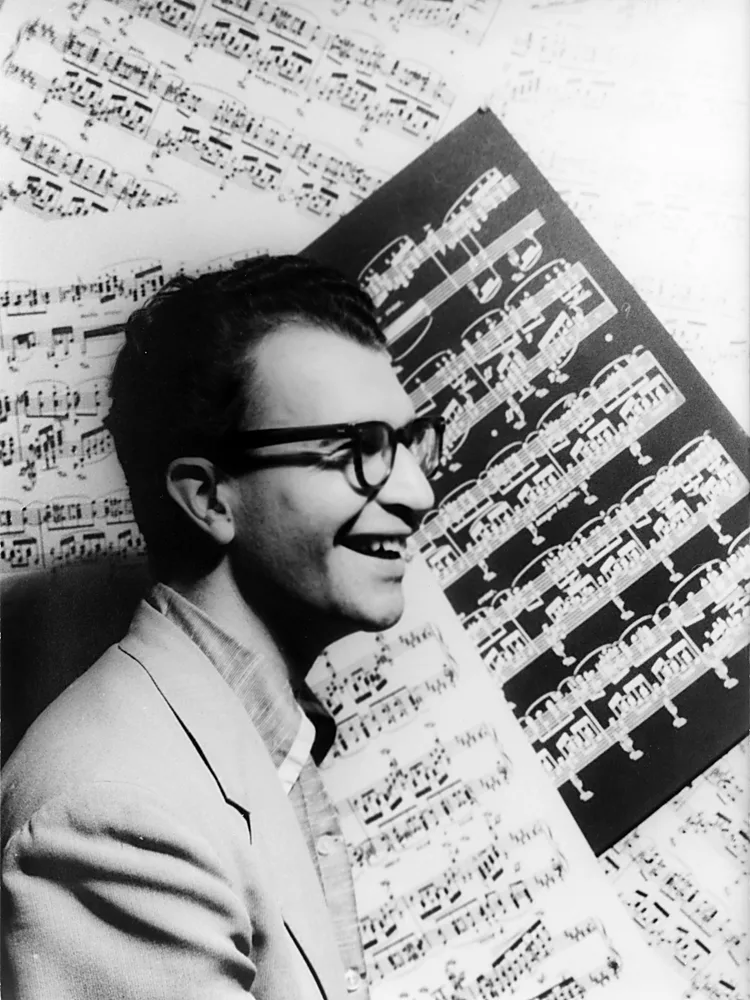
Dave Brubeck, portrait with sheet music as a backdrop, October 8, 1954, photographed by Carl Van Vechten (Library of Congress, Prints and Photographs Division) Public Domain (Library of Congress: no known copyright restrictions; the restrictions on the Carl Van Vechten collection expired in 1986; Wikimedia Commons template PD-Van Vechten) — Wikimedia Commons - https://commons.wikimedia.org/wiki/File:Dave_Brubeck_1954.jpg

David Warren Brubeck was born on December 6, 1920, in Concord, California, and grew up in the rural town of Ione, where his father, Peter Howard Brubeck, ran cattle. His mother, Elizabeth, had studied piano in England with Myra Hess and gave him his first lessons; he could not read music well as a child, which he blamed on poor eyesight, and he got by on his ear. His older brothers Henry and Howard were already headed for music. Brubeck entered the College of the Pacific in Stockton in 1938 to study veterinary science, switched to music at the urging of the head of zoology, and was nearly expelled when a professor found out he could not sight-read, until other faculty vouched for his counterpoint and harmony. He was allowed to graduate in 1942 on the promise that he would never teach. That September he married Iola Whitlock, a fellow student.
Drafted after graduation, he served in Europe with the Third Army under George S. Patton. He volunteered to play piano at a Red Cross show that went over so well he was kept out of combat, and he led the Wolfpack, one of the first racially integrated bands in the American armed forces. In 1944 he met the alto saxophonist Paul Desmond. After nearly four years in uniform he enrolled at Mills College in Oakland and studied with the composer Darius Milhaud, who pushed him toward fugue and orchestration rather than classical piano; he had also taken two lessons from Arnold Schoenberg at UCLA while still on active duty, which ended badly because Schoenberg wanted every note accounted for. From the Milhaud circle came the Dave Brubeck Octet, which recorded between 1946 and 1950 with Desmond, the clarinetist William O. Smith, the tenor saxophonist David Van Kriedt and the drummer and vibraphonist Cal Tjader, and a trio with Tjader and the bassist Ron Crotty. In 1949 the San Francisco label owner Jack Sheedy, unable to pay his bills, handed his masters to the Circle Record Company, whose owners Max and Sol Weiss renamed their business Fantasy Records; the first Brubeck records sold 40,000 to 50,000 copies a quarter.
In 1951 he formed the Dave Brubeck Quartet around Desmond and took up a residency at the Black Hawk in San Francisco. The group toured college campuses and recorded there: Jazz at Oberlin was taped on March 2, 1953, at Finney Chapel at Oberlin College, and Jazz at the College of the Pacific on December 14, 1953. Believing he owned a stake in Fantasy, Brubeck worked as a scout for the label and urged the Weisses to sign Gerry Mulligan, Chet Baker and Red Norvo; when he found the deal gave him only half of his own recordings, he left for Columbia in 1954. Jazz Goes to College, assembled from concerts at the University of Michigan, the University of Cincinnati and Oberlin, was among his first Columbia releases, and in November 1954 he became the second jazz musician on the cover of Time, after Louis Armstrong in February 1949. He found the honor embarrassing and thought Duke Ellington more deserving; when Ellington knocked on his hotel door to show him the cover, Brubeck told him it should have been him. The rhythm section changed often in these years, with Crotty, Bob Bates and Norman Bates on bass and Lloyd Davis and Joe Dodge on drums, until the drummer Joe Morello, formerly with Marian McPartland, joined in 1956. The bassist Eugene Wright came aboard for the quartet's 1958 State Department tour of Poland, Turkey, India, Ceylon, Pakistan, Iran and Iraq and became a permanent member in 1959. Brubeck reportedly canceled concerts and a television appearance when hosts objected to presenting an integrated band, and in January 1960 he called off a 25-date tour of Southern colleges after 22 of the schools refused to let Wright perform.
Time Out was recorded at Columbia's 30th Street Studio in New York on June 25, July 1 and August 18, 1959, with Teo Macero producing. It was built on the odd meters the quartet had heard on its 1958 tour: "Blue Rondo à la Turk" runs in 9/8 with a 2+2+2+3 subdivision, and Desmond's "Take Five" is in 5/4, a piece he wrote to give Morello a showcase in that meter. Columbia president Goddard Lieberson agreed to release the album only after the group recorded Gone with the Wind, a conventional album of Southern songs, as insurance. Issued in December 1959 with cover art by S. Neil Fujita, Time Out drew poor reviews at first but peaked at No. 2 on the Billboard album chart and became the first jazz album to sell a million copies; the Recording Industry Association of America certified it double platinum in 2011, and the Library of Congress added it to the National Recording Registry in 2005. Time Further Out (1961), Countdown: Time in Outer Space (1962), Time Changes (1964) and Time In (1966) continued the meter experiments, while Jazz Impressions of the U.S.A., of Eurasia, of Japan and of New York turned the quartet's travels into new pieces such as "Summer Song" and "Koto Song." With Iola, who wrote lyrics, he created the jazz musical The Real Ambassadors, recorded in September and December 1961 with Armstrong, the vocal group Lambert, Hendricks & Ross and Carmen McRae and performed at the 1962 Monterey Jazz Festival.
The classic quartet broke up in December 1967. Brubeck turned to large forms: the oratorio The Light in the Wilderness, premiered in Cincinnati in February 1968, and The Gates of Justice (1969), a cantata that sets the words of Martin Luther King Jr. beside Old Testament texts. He also led a trio with the bassist Jack Six and the drummer Alan Dawson and added Mulligan on baritone saxophone for Compadres (1968), Live at the Berlin Philharmonie (1970) and The Last Set at Newport (July 3, 1971). When Columbia declined to renew his contract in 1971 he moved to Atlantic. With his sons Darius, Chris and Dan he made Two Generations of Brubeck (1973), and in the fall of 1972 he, Mulligan and Desmond were reunited on the live We're All Together Again for the First Time. Desmond and Brubeck recorded the duo set 1975: The Duets, and the classic quartet regrouped for 25th-anniversary reunion concerts in 1976; Desmond's death from lung cancer on May 30, 1977, followed a tour with Brubeck. Brubeck then led a New Brubeck Quartet with his sons (Live at Montreux, July 17, 1977), began recording for Concord Jazz in 1979, and joined the Catholic Church in 1980 after completing his Mass To Hope. In the 1980s he led quartets with the clarinetist Bill Smith, Chris Brubeck and the drummer Randy Jones; they toured the Soviet Union in 1987, and Brubeck performed in Moscow at the 1988 Reagan-Gorbachev summit with Wright. From the early 1990s his quartet featured the saxophonist and flutist Bobby Militello with Jones and, in turn, the bassists Jack Six, Alec Dankworth and Michael Moore.
Brubeck received the National Medal of Arts and entered the DownBeat Hall of Fame in 1994, the Grammy Lifetime Achievement Award in 1996, a National Endowment for the Arts Jazz Masters award in 2000 and the Kennedy Center Honors in 2009, presented on his 89th birthday. In 2000 he and Iola founded the Brubeck Institute at the University of the Pacific. Brubeck passed away from heart failure on December 5, 2012, in Norwalk, Connecticut, one day before his 92nd birthday, on the way to a cardiology appointment with his son Darius; he is buried at Umpawaug Cemetery in Redding, Connecticut. On the day he died, Chick Corea and Gary Burton, on tour in Toronto, completed a tribute to him, with Corea playing "Strange Meadowlark" from Time Out. Iola Brubeck, his wife of seventy years, followed him on March 12, 2014. Four of their six children became professional musicians: the pianist Darius, the percussionist Dan, the multi-instrumentalist and composer Chris, and the cellist Matthew.
Brubeck set classical training against jazz improvisation. His mother's piano training and his study with Milhaud gave him a taste for counterpoint, fugue and polytonal harmony, and his best-known pieces layer contrasting rhythms, meters and tonalities, from the 9/8 of "Blue Rondo à la Turk" to the 7/4 of "Unsquare Dance." His approach covered a wide range, from refined lyricism to a forceful, bombastic attack. He is usually filed under cool jazz and, through Desmond's alto and the Bay Area base, the West Coast school, and his blend of classical forms with jazz was labeled third stream, though he was using it before the term existed. The Guardian's John Fordham judged his real achievement to be fusing European compositional ideas, demanding rhythmic structures, jazz song forms and improvisation in a way listeners could take in; the critic Robert Christgau called him a jazz hero for the rock and roll generation. Time Out itself drew negative reviews on release. His own tunes "In Your Own Sweet Way" and "The Duke" became standards, per his official biography. The Brubeck Institute's fellowship quintet has trained players such as the drummer Colin Stranahan, the vibraphonist Joel Ross and the saxophonist Chad Lefkowitz-Brown, and the pianist Glenn Zaleski counts Brubeck among the two pianists he learned the repertoire from, according to his profile.
- Jazz at Oberlin (1953, Fantasy) - The quartet live at Finney Chapel on March 2, 1953, with Desmond, Ron Crotty and Lloyd Davis; an early landmark of the campus concert and one of the first records of cool jazz.
- Jazz Goes to College (1954, Columbia) - An early Columbia album, drawn from concerts at Michigan, Cincinnati and Oberlin with Bob Bates and Joe Dodge, released months before his Time cover.
- Time Out (1959, Columbia) - The odd-meter album with "Blue Rondo à la Turk" and Desmond's "Take Five," the first jazz album to sell a million copies. Spotify - Time Out Listen
- Time Further Out (1961, Columbia) - The follow-up, with cover art by Miró and the first attempt at 7/4 in "Unsquare Dance." Spotify - Time Further Out Listen
- Jazz Impressions of Japan (1964, Columbia) - Pieces inspired by the quartet's spring 1964 tour of Japan, recorded June 16 and 17, 1964, including the standard "Koto Song." Spotify - Jazz Impressions of Japan Listen
- The Real Ambassadors (1962, Columbia) - The Brubecks' jazz musical, recorded in 1961 with Louis Armstrong, Lambert, Hendricks & Ross and Carmen McRae, and staged at the 1962 Monterey Jazz Festival. Spotify - The Real Ambassadors Listen
- We're All Together Again for the First Time (1973, Atlantic) - Brubeck with Desmond and Gerry Mulligan live in Paris, Rotterdam and Berlin in October and November 1972. Spotify - We're All Together Again For The First Time Listen
- 1975: The Duets (1975, A&M/Horizon) - Piano and alto saxophone duets with Desmond, recorded two years before Desmond's death in 1977. Spotify - 1975: The Duets Listen
Dave Brubeck: Full Discography
Discogs artist ID 37737 ("Dave Brubeck," born David Warren Brubeck, December 6, 1920, Concord, California, died December 5, 2012, Norwalk, Connecticut) lists more than 3,000 entries across leader releases, collaborations, compilations and appearances. Much of his work is filed under separate Discogs entities, which were checked: The Dave Brubeck Quartet (artist ID 251689, with more than 1,200 entries, including most of the Columbia albums), The Dave Brubeck Trio (908932), The Dave Brubeck Octet (1884149), Dave Brubeck Quintet (1649567) and The Dave Brubeck Trio Featuring Gerry Mulligan (10555120). Because his catalog is among the largest in jazz and includes hundreds of compilations and reissues, the leader table is a curated selection of 34 landmark releases rather than an exhaustive list: the early octet, trio and quartet records, the Columbia campus and travel albums, the Time series, the large-scale works, the Mulligan and Desmond reunions and the later Concord Jazz and Telarc sets. Catalog numbers are those of the original or best-documented US pressing, with mono and stereo numbers where both exist; recording dates come from Discogs release notes, Wikipedia and jazzdisco.org, and where sources differ the Notes column says so.
As Leader / Co-Leader
| Album Title | Recording Date(s) | Release Date | Label | Catalog Number | Format(s) | Personnel | Role | Reissue History | Spotify | Buy | Notes |
|---|---|---|---|---|---|---|---|---|---|---|---|
| Dave Brubeck Octet | 1946 to 1948 and July 1950, San Francisco | 1956 | Fantasy | 3-239 | Vinyl, Album, LP | Dave Brubeck (piano), Paul Desmond (alto saxophone), William O. Smith (clarinet, baritone saxophone), David Van Kriedt (tenor saxophone), Dick Collins (trumpet), Bob Collins (trombone), Jack Weeks (bass), Cal Tjader (vibraphone, drums) | Leader | Reissued as Original Jazz Classics OJC-101 (1984) and OJCCD-101-2 (1991); pressing history on Discogs master 241807 | — | — | Compiles the octet sessions first issued from 1950 on 10-inch records. Personnel varied slightly across sessions; Discogs files the group under a separate entity (artist ID 1884149). |
| The Dave Brubeck Trio | September 1949, March 1950 and June 1950, San Francisco | 1956 | Fantasy | 3-204 | Vinyl, LP, Compilation, Mono | Dave Brubeck (piano), Ron Crotty (bass), Cal Tjader (drums, vibraphone) | Leader | Reissued by Fantasy in 1962 (LP 3331 and LP 8073) as a Brubeck and Tjader trio album; pressing history on Discogs master 417208 | — | — | Brubeck's first trio recordings. Discogs files trio records under a separate entity (artist ID 908932). |
| Brubeck Desmond | August and November 1951, San Francisco, with single tracks from September 1952 and March 1954 | 1956 | Fantasy | 3-229 | Vinyl, LP, Compilation, Mono | Dave Brubeck (piano), Paul Desmond (alto saxophone), Fred Dutton or Wyatt Ruther (bass), Herb Barman or Lloyd Davis (drums); Bob Bates and Joe Dodge on the 1954 track | Co-billed with Paul Desmond | Reissued by Fantasy in the early 1960s and included in the compilation Stardust (Fantasy F-24728, 1983; FCD-24728-2, 1990); pressing history on Discogs master 418171 | — | — | Among the earliest records of the quartet with Desmond. |
| Jazz at Oberlin | March 2, 1953, Finney Chapel, Oberlin College, Ohio | 1953 | Fantasy | 3-11 | Vinyl, LP, 10", Album, Mono | Dave Brubeck (piano), Paul Desmond (alto saxophone), Ron Crotty (bass), Lloyd Davis (drums) | Leader | Reissued on 12-inch LP, then as Original Jazz Classics OJC-046 (1983) and OJCCD-046-2 (1987); pressing history on Discogs master 186457 | — | — | Live concert, first issued on a 10-inch LP. |
| Jazz at the College of the Pacific | December 14, 1953, College of the Pacific, Stockton, California | February 1954 | Fantasy | 3-13 | Vinyl, LP, 10", Album | Dave Brubeck (piano), Paul Desmond (alto saxophone), Ron Crotty (bass), Joe Dodge (drums) | Leader | Reissued as Original Jazz Classics OJC-047 (1983) and OJCCD-047-2 (1987); pressing history on Discogs master 304403 | — | — | Live at Brubeck's alma mater; a second volume was issued much later as Jazz at the College of the Pacific, Volume 2 (2002). |
| Jazz Goes to College | May 1954: University of Michigan (Ann Arbor), University of Cincinnati and Oberlin College | 1954 | Columbia | CL 566 | Vinyl, LP, Album | Dave Brubeck (piano), Paul Desmond (alto saxophone), Bob Bates (bass), Joe Dodge (drums) | Leader | Reissued in stereo as Columbia CS 8631 (1962); pressing history on Discogs master 185252 | — | — | Concert recordings from three campuses; Wikipedia gives the release as June 1954. |
| Brubeck Plays Brubeck | March 12 and April 18-19, 1956, New York | 1956 | Columbia | CL 878 | Vinyl, LP, Album, Mono | Dave Brubeck (piano) | Leader | Pressing history on Discogs master 319318 | — | — | Solo piano album of his own pieces, including "In Your Own Sweet Way" and "The Duke." |
| Jazz Impressions of the U.S.A. | November 16 and 26, 1956, New York, and February 4, 1957, Oakland, California | 1957 | Columbia | CL 984 | Vinyl, LP, Album, Mono | Dave Brubeck (piano), Paul Desmond (alto saxophone), Norman Bates (bass), Joe Morello (drums) | Leader | Pressing history on Discogs master 346529 | — | — | First of the travel-impression albums; includes "Summer Song." Morello's first album with the quartet. |
| Dave Digs Disney | June 29 and 30, 1957, New York, and August 3 and October 24, 1957, Los Angeles | 1957 | Columbia | CL 1059 | Vinyl, LP, Album, Mono | Dave Brubeck (piano), Paul Desmond (alto saxophone), Norman Bates (bass), Joe Morello (drums) | Leader | Pressing history on Discogs master 110093 | — | — | Disney songs including "Alice in Wonderland" and "Some Day My Prince Will Come." Discogs dates its main release 1958. |
| Jazz Impressions of Eurasia | July 25, 1958, New York, and August 23, 1958, Warsaw | 1958 | Columbia | CL 1251 (mono), CS 8058 (stereo) | Vinyl, LP, Album, Mono and Stereo | Dave Brubeck (piano), Paul Desmond (alto saxophone), Joe Benjamin (bass), Joe Morello (drums) | Leader | Pressing history on Discogs master 178227 | — | — | Written after the 1958 State Department tour; includes "Brandenburg Gate." The bass credit follows Discogs and Wikipedia. |
| Gone with the Wind | April 22 and 23, 1959, Los Angeles | 1959 | Columbia | CL 1347 (mono), CS 8156 (stereo) | Vinyl, LP, Album, Mono and Stereo | Dave Brubeck (piano), Paul Desmond (alto saxophone), Eugene Wright (bass), Joe Morello (drums) | Leader | Combined with Time Out on Columbia CG 33666 (1975); pressing history on Discogs master 110106 | Spotify - Gone with the Wind | — | The Southern-songs album Columbia required before it would release Time Out. |
| Time Out | June 25, July 1 and August 18, 1959, Columbia 30th Street Studio, New York | December 14, 1959 | Columbia | CL 1397 (mono), CS 8192 (stereo) | Vinyl, LP, Album, Mono and Stereo | Dave Brubeck (piano), Paul Desmond (alto saxophone), Eugene Wright (bass), Joe Morello (drums) | Leader | Remastered on CD by Legacy (1997); 50th Anniversary Edition (2009); Time OutTakes, with alternate takes, issued in 2020; pressing history on Discogs master 34081 | Spotify - Time Out | — | Includes "Blue Rondo à la Turk," "Take Five" and "Strange Meadowlark." First jazz album to sell a million copies. |
| Bernstein Plays Brubeck Plays Bernstein | January 30, 1960, Carnegie Hall, with the New York Philharmonic; February 14 and 17, 1960, New York | July 1960 | Columbia | CL 1466 (mono) | Vinyl, LP, Album, Mono | Dave Brubeck (piano), Paul Desmond (alto saxophone), Eugene Wright (bass), Joe Morello (drums), with Leonard Bernstein conducting the New York Philharmonic on the live side | Leader | Pressing history on Discogs master 216362 | — | — | Howard Brubeck's "Dialogues for Jazz Combo and Orchestra" with the orchestra, and the quartet's treatments of Bernstein's West Side Story songs. |
| Brubeck & Rushing | January 29, February 16 and August 4, 1960, New York | January 1961 | Columbia | CL 1553 (mono), CS 8353 (stereo) | Vinyl, LP, Album, Mono and Stereo | Dave Brubeck (piano), Paul Desmond (alto saxophone), Eugene Wright (bass), Joe Morello (drums), Jimmy Rushing (vocals) | Leader (with Jimmy Rushing) | Pressing history on Discogs master 312883 | — | — | The blues singer Jimmy Rushing joins the quartet. |
| Tonight Only! | September 9, 1960, and December 14 and 15, 1960, New York | June 1961 | Columbia | CL 1609 (mono), CS 8409 (stereo) | Vinyl, LP, Album, Mono and Stereo | Dave Brubeck (piano), Paul Desmond (alto saxophone), Eugene Wright (bass), Joe Morello (drums), Carmen McRae (vocals, on the guest-star tracks) | Leader | Pressing history on Discogs master 324296 | — | — | Billed with Carmen McRae as guest star. |
| Time Further Out (Miró Reflections) | May 3, 15 and 25, June 2 and June 8, 1961, New York | November 1961 | Columbia | CL 1690 (mono), CS 8490 (stereo) | Vinyl, LP, Album, Mono and Stereo | Dave Brubeck (piano), Paul Desmond (alto saxophone), Eugene Wright (bass), Joe Morello (drums) | Leader | Pressing history on Discogs master 110100 | Spotify - Time Further Out | — | Cover painting by Joan Miró; includes "Unsquare Dance" (7/4) and "It's a Raggy Waltz." |
| The Real Ambassadors | September 12, 13 and 19 and December 19, 1961, New York | 1962 | Columbia Masterworks | OL 5850 (mono), OS 2250 (stereo) | Vinyl, LP, Album, Mono and Stereo | Dave Brubeck (piano), Gene Wright (bass), Joe Morello (drums), Louis Armstrong (trumpet, vocals) with his band, Lambert, Hendricks & Ross (vocals), Carmen McRae (vocals); Paul Desmond does not play | Composer and leader (with Iola Brubeck) | Reissued on CD by Legacy (1994, CK 57663) with bonus tracks; pressing history on Discogs master 296597 | Spotify - The Real Ambassadors | — | Soundtrack of Dave and Iola Brubeck's jazz musical; produced by Teo Macero; performed at the 1962 Monterey Jazz Festival. |
| Countdown: Time in Outer Space | May 1961 to February 1962, New York | 1962 | Columbia | CL 1775 (mono), CS 8575 (stereo) | Vinyl, LP, Album, Mono and Stereo | Dave Brubeck (piano), Paul Desmond (alto saxophone), Eugene Wright (bass), Joe Morello (drums) | Leader | Pressing history on Discogs master 198011 | — | — | Cover painting by Franz Kline; includes "Eleven Four." |
| At Carnegie Hall | February 22, 1963, Carnegie Hall, New York | 1963 | Columbia | C2L 26 (mono), C2S 826 (stereo) | Vinyl, 2xLP, Album, Mono and Stereo | Dave Brubeck (piano), Paul Desmond (alto saxophone), Eugene Wright (bass), Joe Morello (drums) | Leader | Pressing history on Discogs master 110090 | — | — | Live double album. |
| Time Changes | October 15 and November 20 and December 3 and 12, 1963, and January 8, 1964, New York | 1964 | Columbia | CL 2127 (mono), CS 8927 (stereo) | Vinyl, LP, Album, Mono and Stereo | Dave Brubeck (piano), Paul Desmond (alto saxophone), Eugene Wright (bass), Joe Morello (drums), with an orchestra conducted by Rayburn Wright on some tracks | Leader | Pressing history on Discogs master 110098 | — | — | Cover painting by Sam Francis; Wikipedia notes pieces in 3/4, 10/4 and 13/4. |
| Jazz Impressions of Japan | June 16 and 17, 1964, New York (one track from January 30, 1960) | August 10, 1964 | Columbia | CL 2212 (mono), CS 9012 (stereo) | Vinyl, LP, Album, Mono and Stereo | Dave Brubeck (piano), Paul Desmond (alto saxophone), Eugene Wright (bass), Joe Morello (drums) | Leader | Reissued on CD in 2001, 2008 and 2009; pressing history on Discogs master 248401 | Spotify - Jazz Impressions of Japan | — | Inspired by the spring 1964 tour of Japan; includes "Koto Song" and "Toki's Theme." |
| Jazz Impressions of New York | June to August 1964, New York | 1964 | Columbia | CL 2275 (mono), CS 9075 (stereo) | Vinyl, LP, Album, Mono and Stereo | Dave Brubeck (piano), Paul Desmond (alto saxophone), Eugene Wright (bass), Joe Morello (drums) | Leader | Reissued on CD (Columbia CK 46189); pressing history on Discogs master 185336 | — | — | Includes "Theme from Mr. Broadway," written for a CBS television series. |
| Anything Goes! The Dave Brubeck Quartet Plays Cole Porter | December 8, 1965, and January 26 and February 17, 1966, New York | 1967 | Columbia | CL 2602 (mono), CS 9402 (stereo) | Vinyl, LP, Album, Mono and Stereo | Dave Brubeck (piano), Paul Desmond (alto saxophone), Eugene Wright (bass), Joe Morello (drums) | Leader | Pressing history on Discogs master 261841 | — | — | A Cole Porter program; Wikipedia calls it the classic quartet's final studio album for Columbia. |
| The Last Time We Saw Paris | November 13, 1967, Salle Pleyel, Paris | May 1968 | Columbia | CS 9672 | Vinyl, LP, Album, Stereo | Dave Brubeck (piano), Paul Desmond (alto saxophone), Eugene Wright (bass), Joe Morello (drums) | Leader | Pressing history on Discogs master 555804 | — | — | Live recording of the classic quartet near the end of its run. |
| Compadres | May 23 to 25, 1968, National Auditorium, Mexico City | 1968 | Columbia | CS 9704 | Vinyl, LP, Album, Stereo | Dave Brubeck (piano), Gerry Mulligan (baritone saxophone), Jack Six (bass), Alan Dawson (drums) | Leader (billed as the Dave Brubeck Trio featuring Gerry Mulligan) | Pressing history on Discogs master 372672 | — | — | Live album; the first with Mulligan. |
| Summit Sessions | 1960 to 1968, various dates and places | April 1971 | Columbia | C 30522 | Vinyl, LP, Album, Stereo | Brubeck with a range of guests: Louis Armstrong, Carmen McRae, Charles Mingus, Thelonious Monk, Tony Bennett and others | Leader (compilation of Columbia recordings) | Pressing history on Discogs master 279262 | — | — | Collects Columbia recordings from 1960 to 1968, including the Mingus duet "Non-Sectarian Blues" (London, July 3, 1961) and the Monk session "C Jam Blues" (Puebla, Mexico, May 12, 1967). |
| The Gates of Justice | 1969 | August 1970 | Decca | DL 710175 | Vinyl, LP, Album, Stereo | Dave Brubeck (piano), Jack Six (bass), Alan Dawson (drums), Harold Orbach (tenor), McHenry Boatwright (bass-baritone), Westminster Choir, Cincinnati Brass Ensemble, Erich Kunzel (conductor) | Composer and leader | Re-recorded in 2001 on Naxos with the Baltimore Symphony Orchestra and Choral Arts Society; pressing history on Discogs master 685840 | — | — | Cantata that sets the words of Martin Luther King Jr. with Old Testament texts; premiered in Cincinnati in 1969. |
| The Last Set at Newport | July 3, 1971, Newport Jazz Festival, Newport, Rhode Island | 1972 | Atlantic | SD 1607 | Vinyl, LP, Album, Stereo | Dave Brubeck (piano), Gerry Mulligan (baritone saxophone), Jack Six (bass), Alan Dawson (drums) | Leader (billed as the Dave Brubeck Quartet featuring Gerry Mulligan) | Pressing history on Discogs master 110101 | — | — | Live set with "Blues for Newport," "Take Five" and "Open the Gates." |
| We're All Together Again for the First Time | October 26, 28 and November 4, 1972: L'Olympia, Paris; De Doelen, Rotterdam; Philharmonie, Berlin | 1973 | Atlantic | SD 1641 | Vinyl, LP, Album | Dave Brubeck (piano), Paul Desmond (alto saxophone), Gerry Mulligan (baritone saxophone), Jack Six (bass), Alan Dawson (drums) | Co-leader (with Gerry Mulligan and Paul Desmond) | Pressing history on Discogs master 272392 | Spotify - We're All Together Again for the First Time | — | Live recordings from three European concerts; Desmond and Mulligan are both on stage at the Berlin concert. |
| Two Generations of Brubeck | August 6, 7 and 20, 1973, New York | 1973 | Atlantic | SD 1645 | Vinyl, LP, Album, Stereo | Dave Brubeck (piano), Darius Brubeck (electric piano, clavinet, organ), Chris Brubeck (electric bass, bass trombone), Dan Brubeck (drums), Perry Robinson (clarinet), Jerry Bergonzi (soprano and tenor saxophones), Peter Madcat Ruth (harmonica), others | Leader | Pressing history on Discogs master 274774 | — | — | Recorded with three of his sons, Darius, Chris and Dan. |
| 1975: The Duets | June 10, 1975 (aboard the S.S. Rotterdam), and September and October 1975, New York | 1975 | A&M/Horizon | SP-703 | Vinyl, LP, Album, Stereo, Quadraphonic | Dave Brubeck (piano), Paul Desmond (alto saxophone) | Co-leader (with Paul Desmond) | Pressing history on Discogs master 324322 | Spotify - 1975: The Duets | — | Duets recorded two years before Desmond's death in 1977. |
| Back Home | August 1979, Concord Jazz Festival, Concord, California | 1979 | Concord Jazz | CJ-103 | Vinyl, LP, Album, Stereo | Dave Brubeck (piano), Jerry Bergonzi (tenor saxophone), Chris Brubeck (bass, bass trombone), Butch Miles (drums) | Leader | Pressing history on Discogs master 310031 | — | — | His first Concord Jazz album, recorded at the Concord Jazz Festival in his birthplace. |
| Late Night Brubeck: Live from the Blue Note | October 5 to 7, 1993, Blue Note, New York | 1994 | Telarc | CD-83345 | CD, Album | Dave Brubeck (piano), Bobby Militello (alto and tenor saxophones, flute), Jack Six (bass), Randy Jones (drums) | Leader | Pressing history on Discogs master 751870 | — | — | Live recording from the Blue Note club; Discogs dates the CD release 1994. |
| Indian Summer | Not specified in Discogs data | 2007 | Telarc Jazz | CD-83670 | CD | Dave Brubeck (piano) | Leader | Pressing history on Discogs master 1732894 | — | — | Solo piano album. |
As Guest and Collaborator (selected)
Brubeck was almost always a leader, so this short table lists guest and collaborative appearances only.
| Year | Project (Leader) | Title | Label | Catalog | Role | Notes |
|---|---|---|---|---|---|---|
| 2013 | Tony Bennett and Dave Brubeck | The White House Sessions, Live 1962 | Columbia | 88883718042 | Pianist and bandleader (quartet accompanying Bennett) | Recorded August 28, 1962, at the White House; first issued in 2013. Discogs bills it jointly to Bennett and Brubeck. |
| 1993 | Marian McPartland | Piano Jazz with Guest Dave Brubeck | The Jazz Alliance | TJA-12001 | Guest pianist and interviewee | Radio program first recorded on March 23, 1984, issued on CD in 1993. |
| 2008 | Yo-Yo Ma and Friends | Songs of Joy & Peace | Sony Classical | 88697-33336-2 | Pianist | Brubeck is credited on "Joy to the World" and "Concordia" only. |
| 2011 | Various artists | Everybody Wants to Be a Cat: Disney Jazz Volume 1 | Walt Disney Records | D000312602 | Pianist | Brubeck, with Michael Moore on bass and Randy Jones on drums, is credited on "Some Day My Prince Will Come" and "Alice in Wonderland," the latter with Roberta Gambarini. |
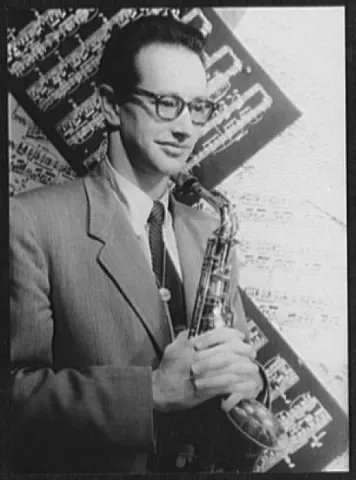
- Paul Desmond - alto saxophonist; he met Brubeck in the Army in 1944, played in the octet, and anchored the quartet from 1951 until it broke up in 1967, with later reunions in 1972, 1975 and 1976. He wrote "Take Five."
- Joe Morello and Eugene Wright - drummer (from 1956) and bassist (from the 1958 tour, permanent from 1959) of the classic quartet.
- Ron Crotty, Bob Bates, Norman Bates, Lloyd Davis, Joe Dodge, Wyatt Ruther - bassists and drummers of the 1950s quartets, before Morello and Wright.
- Cal Tjader - drummer and vibraphonist in the Octet and the 1949 and 1950 trio recordings.
- David Van Kriedt and William O. Smith (Bill Smith) - octet members; Van Kriedt joined the 1957 Re-Union date, and Smith replaced Desmond on several early-1960s albums, including The Riddle and Near-Myth, and played in Brubeck's quartets of the 1980s.
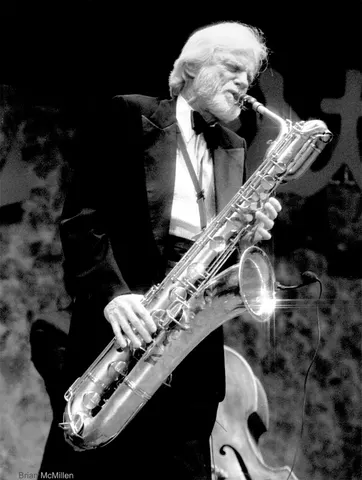
- Gerry Mulligan - baritone saxophonist; his front-line partner from 1968 to the early 1970s, with Jack Six and Alan Dawson, on Compadres, Blues Roots, Live at the Berlin Philharmonie and The Last Set at Newport.
- Jack Six and Alan Dawson - bassist and drummer of the late-1960s and early-1970s trio; Six returned as bassist in the late 1980s and 1990s.
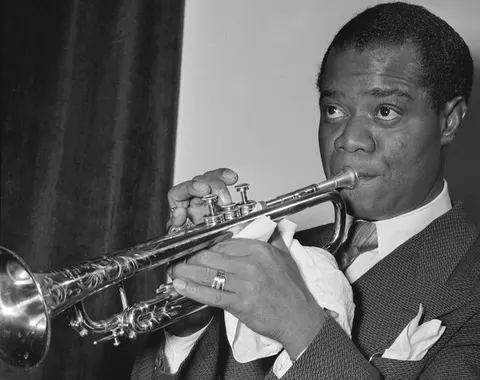
- Louis Armstrong - the central figure of The Real Ambassadors (recorded September and December 1961).
- Lambert, Hendricks & Ross - the vocal trio on The Real Ambassadors; its member Jon Hendricks appears on the album.
- Carmen McRae - sang with the quartet on Tonight Only! (1960) and the live Take Five Live (recorded September 6, 1961, at Basin Street East), and took part in The Real Ambassadors.
- Jimmy Rushing - blues singer featured on Brubeck & Rushing (1960).
- Leonard Bernstein and the New York Philharmonic - Bernstein Plays Brubeck Plays Bernstein (1960), recorded with the quartet at Carnegie Hall on January 30, 1960.
- Tony Bennett - sang with the quartet at the White House on August 28, 1962; the concert was released in 2013.
- Charles Mingus - played bass in a duet with Brubeck on "Non-Sectarian Blues" in London on July 3, 1961, for the film All Night Long.
- Thelonious Monk - played "C Jam Blues" with Brubeck at the Puebla arts festival in Mexico on May 12, 1967, with Monk's bassist Larry Gales and drummer Ben Riley, issued on Summit Sessions.
- J.J. Johnson and Kai Winding - their quintet shared the 1956 Newport album Dave Brubeck and Jay & Kai at Newport.
- Lee Konitz, Anthony Braxton and Roy Haynes - two alto saxophonists and a drummer on the October 3, 1974, session of All the Things We Are, with Jack Six on bass.
- Perry Robinson - clarinetist on Two Generations of Brubeck (1973) and Brother, the Great Spirit Made Us All (1974).
- Darius, Chris and Dan Brubeck, Matthew Brubeck - his sons, in the New Brubeck Quartet and on later albums.
- Jerry Bergonzi, Butch Miles, Randy Jones - saxophonist and drummers of the Concord Jazz quartets from 1979.
- Bobby Militello, Alec Dankworth, Michael Moore - the saxophonist and bassists of the quartets of the 1990s and 2000s.
- Iola Brubeck - his wife, lyricist and co-creator of The Real Ambassadors.
- Teo Macero - the Columbia producer of Time Out and The Real Ambassadors.
More Cool Jazz Artists
See all 75 Cool Jazz artists →More American Jazz Artists
See all 646 American artists →- Wikipedia: Dave Brubeck
- Wikipedia: Dave Brubeck discography
- Wikipedia: Time Out (Dave Brubeck Quartet album)
- Wikipedia: Take Five
- Wikipedia: The Real Ambassadors
- Wikipedia: Dave Brubeck Octet
- Wikipedia: Paul Desmond
- Dave Brubeck official site: Biography
- Dave Brubeck official site: Accolades
- jazzdisco.org: Dave Brubeck catalog
- Discogs: Dave Brubeck (artist 37737)
- MusicBrainz: Dave Brubeck
- JazzProfiles.com: Gerry Mulligan
- JazzProfiles.com: Carmen McRae
- JazzProfiles.com: Perry Robinson
- JazzProfiles.com: Colin Stranahan
- JazzProfiles.com: Joel Ross
- JazzProfiles.com: Chad Lefkowitz-Brown
- JazzProfiles.com: Glenn Zaleski