JAZZPROFILES lives in the music 2,303 Jazz Artists fully Profiled!
Ray Anthony
Last updated November 3, 2026
Listen on Spotify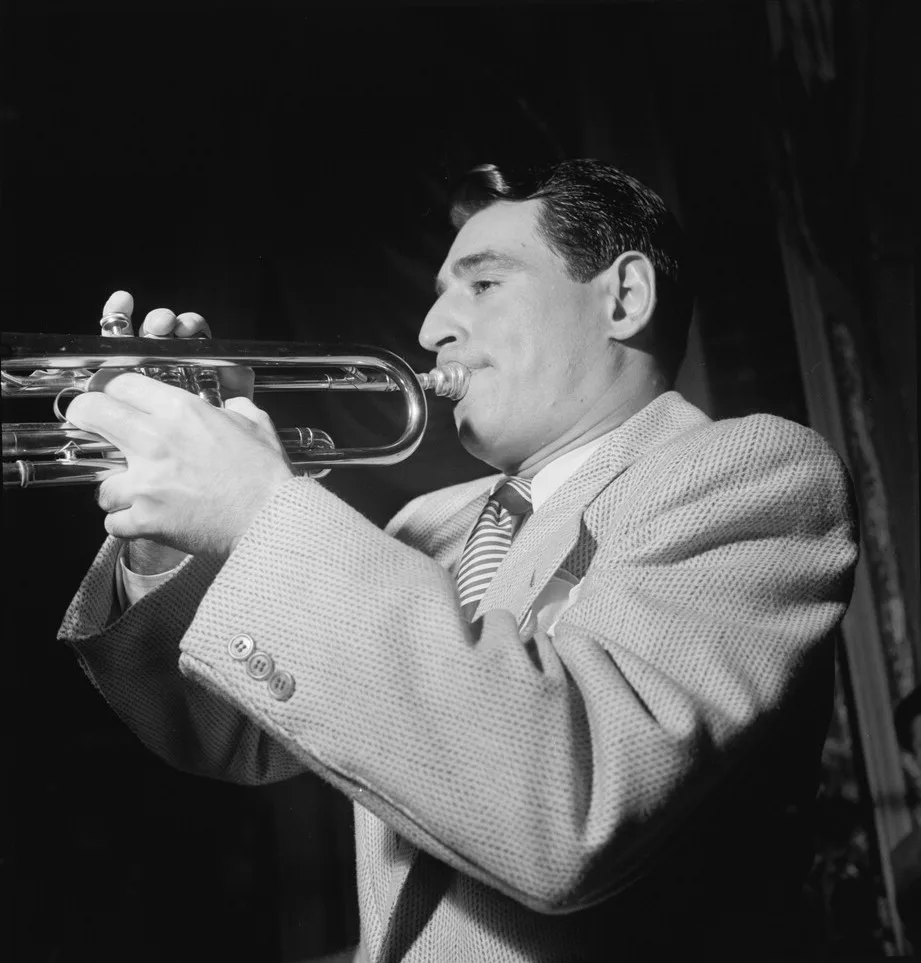
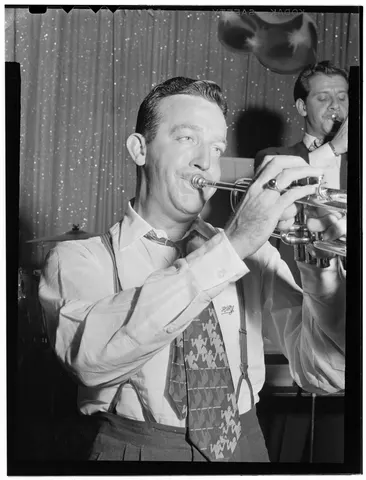
Ray Anthony playing trumpet, New York, about August 1947 (photograph by William P. Gottlieb) Public domain (William P. Gottlieb dedicated his jazz photographs to the public domain; held by the Library of Congress) — Wikimedia Commons: https://commons.wikimedia.org/wiki/File:Ray_Anthony,_New_York,_N.Y.,_ca._Aug._1947_(William_P._Gottlieb_00121).jpg

Ray Anthony was born Raymond Antonini on January 20, 1922, in Bentleyville, Pennsylvania, into an Italian family that soon moved to Cleveland, Ohio. His father gave him a trumpet on his fifth birthday, and he grew up playing in the family's Antonini Family Orchestra. As a teenager he took the trumpeter Harry James as his model, later calling him the greatest of all trumpet players for his complete mastery of the instrument.
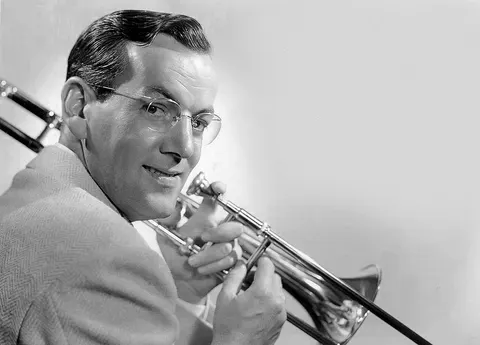
He turned professional in 1940 with Al Donahue's orchestra, where he met the singer Dee Keating, who later became his wife. In the same year, at eighteen, he joined Glenn Miller's orchestra, replacing Phil Rommel in the trumpet section, and he appears uncredited in the band's film Sun Valley Serenade (1941). By his own account Miller fired him twice and took him back once because of his playing, and the band nicknamed him "Peck's Bad Boy." He left for good in 1941, spent a few months with Jimmy Dorsey's band, and then enlisted in the Navy in 1942. His service band played at Midway, at the Royal Hawaiian Hotel in Honolulu and on Okinawa, and he has described the Navy years as the time he grew into a bandleader.
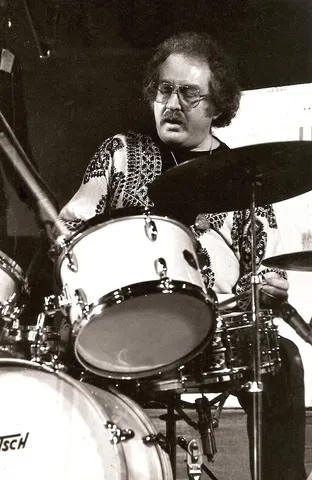
After his discharge in 1946 he formed the Ray Anthony Orchestra in Cleveland with former service musicians and local players. He signed with Capitol Records, and the records that carried the band through the early 1950s were dance music in the Miller tradition: "Houseparty Hop," "Trumpet Boogie," "Mr. Anthony's Boogie" and "Thunderbird," all of them credited to him as a writer or co-writer. The hits came quickly. His recording of "At Last" (Capitol 1912, January 1952) reached No. 2 on the Billboard pop chart, the highest-placed American pop version of the song. "The Bunny Hop," co-written by Anthony and released in 1952, reached No. 13 on Billboard and helped set off a dance craze, followed by "The Hokey Pokey." In 1953 his orchestra recorded the theme from the radio and television series Dragnet (Capitol 2562), composed by Walter Schumann, which reached the top three on Billboard and No. 7 in Britain. The drummer Mel Lewis worked in the band in 1949 and 1950 and again in 1953 and 1954, and the vocalists on the records included Ronnie Deauville and Jo Ann Greer.
Television and film followed the records. In summer 1953 the orchestra was featured on the summer replacement program for Perry Como's CBS show, and from 1953 to 1954 Anthony was musical director of the series TV's Top Tunes. His band appeared in Daddy Long Legs (1955) with Fred Astaire and in The Girl Can't Help It (1956), his own The Ray Anthony Show ran in 1956 and 1957, and his orchestra recorded the score for This Could Be the Night (1957). He took acting roles too, including High School Confidential! (1958), The Five Pennies (1959), in which he played Jimmy Dorsey, and Girls Town and The Beat Generation (both 1959). On August 29, 1955, in Toledo, Ohio, he married the actress Mamie Van Doren; their son Perry Ray was born in 1956, and the couple divorced in 1961. A Down Beat cover dated September 10, 1952 pictured him with Marilyn Monroe, and in later interviews he has spoken of friendships with Frank Sinatra, Benny Goodman and Hugh Hefner.
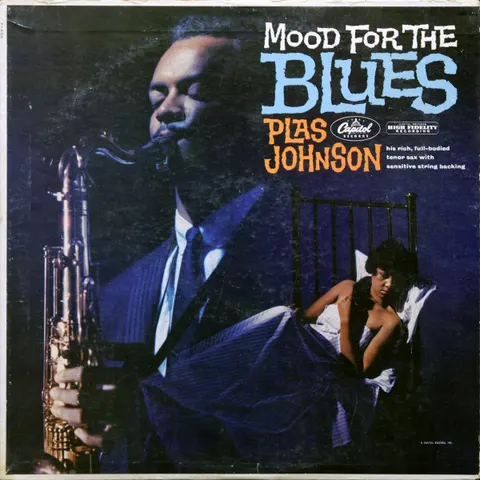
His biggest later hit came from television. In 1959 he recorded the "Peter Gunn" theme for Capitol, arranged by Henry Mancini and featuring the tenor saxophonist Plas Johnson, and it reached No. 8 on the Billboard Hot 100. His 1962 recording of "Worried Mind" reached No. 20 on the Billboard adult contemporary chart, and he followed the fashions of the early 1960s with twist and swim records, some of them credited to Ray Anthony and His Bookends. By the later 1960s his output ran to country material, film and television themes and easy-listening arrangements. In later decades he released dance and nostalgia albums on his own Aero Space label, including the Dream Dancing series, and in the early 1980s he fronted a band billed as his Big Band of the '80s. He played the Presidential Inaugural Ball in 1985 and toured the United States with big bands until he retired in 1998.
He turned 100 on January 20, 2022, and 104 on January 20, 2026. Since 2013, when the bassist Trigger Alpert died, he has been the last living member of the Glenn Miller Orchestra, and he is listed as the oldest living recorded musician. He has a star on the Hollywood Walk of Fame.
Anthony is best understood as a dance-band leader and popular entertainer who worked with jazz players and jazz arrangements, not as a jazz soloist or a bebop-era innovator. His band worked in the dance-band mainstream he had learned in Miller's trumpet section, and the records that sold were dance novelties, ballads, film and television themes and, in the 1960s, twist and country covers. Critics writing from the jazz side have often called the results a diluted, popular version of jazz, while Wikipedia counts him among the more modern big-band leaders of his time. Richard Cook's Jazz Encyclopedia includes him, and Wikipedia's categories file him with American jazz bandleaders and trumpeters.
The jazz content is real but concentrated in particular records. Big Band Dixieland (1955) took a full orchestra through "West End Blues," "Basin Street Blues" and "Tin Roof Blues," and Jam Session at the Tower (1956) was cut in Hollywood in February and March 1956 with studio and big-band veterans including Georgie Auld, Med Flory, Conrad Gozzo and Alvin Stoller. His I Remember Glenn Miller set paid direct tribute to his old employer, and a later CD collected his arrangements by George Williams from 1950 to 1955. For models he looked to Glenn Miller's band and Harry James's trumpet playing, and Stan Kenton and Frank Sinatra were Capitol labelmates whose records sat beside his in the catalog.
- "Dragnet" / "Dancing in the Dark" (1953, Capitol) - The television police theme that put the orchestra in the top three on Billboard and at No. 7 in Britain, with a ballad on the other side. Spotify - Dragnet Listen
- "At Last" (1952, Capitol) - The best-selling American pop version of the song, at No. 2 on Billboard. Spotify - At Last Listen
- "The Bunny Hop" (1952, Capitol) - His co-written dance-craze record, No. 13 on Billboard and the title most often attached to his name. Spotify - The Bunny Hop Listen
- Big Band Dixieland (1955, Capitol) - A full-orchestra take on New Orleans repertoire, from "West End Blues" to "When the Saints Go Marching In."
- Jam Session at the Tower (1956, Capitol) - Six swing-era numbers recorded in Hollywood with a studio all-star band, the nearest he came to a blowing date. Spotify - Jam Session at the Tower Listen
- Dancers in Love (1957, Capitol) - A 1957 album of standards by Cole Porter and Rodgers and Hart, among others, paced for dancing.
- "The Peter Gunn Theme" (1959, Capitol) - The Mancini-arranged single with Plas Johnson on tenor saxophone, No. 8 on the Hot 100. Spotify - The Peter Gunn Theme Listen
- Capitol Collectors Series (1991, Capitol) - A career overview that gathers the hits, including "The Bunny Hop," "Peter Gunn" and "Dragnet." Spotify - Capitol Collectors Series Listen
Ray Anthony: Full Discography
Discogs artist: Ray Anthony (263953) · Real name Raymond Antonini · Born January 20, 1922, Bentleyville, Pennsylvania
Anthony's discography is large, and most of it is 78 rpm and 45 rpm singles for Capitol Records, so the tables below are a curated selection of his albums and best-known singles rather than an exhaustive list. Records credited to Ray Anthony and His Orchestra, Ray Anthony and His Bookends and Ray Anthony's Big Band Dixieland are all his, and Discogs files them under separate entries. The full list is on Discogs.
Leader: Albums
| Album | Year | Label | Personnel & Notes | Charts | Listen | Buy |
|---|---|---|---|---|---|---|
| The Young Man with a Horn | 1953 | Capitol (H-373) | Ten-inch LP of eight tracks | — | — | — |
| Ray Anthony's Houseparty Hop | 1953 | Capitol (H-292) | Ten-inch LP of eight standards including "Houseparty Hop," "Begin the Beguine," "Perdido" and "Sentimental Journey," with Anthony credited as leader and trumpet | — | — | — |
| Campus Rumpus | 1953 | Capitol (H-362) | Ten-inch LP, released April 1953 | — | — | — |
| I Remember Glenn Miller | 1953 | Capitol (H-476) | Tribute to his former employer: "Tuxedo Junction," "Chattanooga Choo Choo," "Serenade in Blue," "In the Mood," "Moonlight Serenade" and others. Issued as a ten-inch LP in 1953 and 1954, reissued as T-476 in 1956, and on CD in 1995 on Aero Space (RACD 1011) | — | Spotify | — |
| Golden Horn | 1955 | Capitol (T-563) | Twelve-track LP | — | — | — |
| Swingin' on Campus! | 1955 | Capitol (T-645) | Released November 1955 | — | — | — |
| Big Band Dixieland | 1955 | Capitol (T-678) | Nine Dixieland and New Orleans standards for full orchestra: "Panama," "West End Blues," "Basin Street Blues," "Dippermouth Blues," "That's a Plenty," "Tin Roof Blues," "When the Saints Go Marching In." Credited on some pressings to Ray Anthony's Big Band Dixieland | — | — | — |
| Plays for Dream Dancing | 1956 | Capitol (T-723) | Dance-music album, an early entry in his Dream Dancing line | — | — | — |
| Jam Session at the Tower | 1956 | Capitol (T-749) | Six numbers: "Flyin' Home," "Night Train," "How High the Moon," "Perdido," "One O'Clock Jump," "Swingin' at the Tower." Recorded in Hollywood on February 29 and March 3, 1956. Georgie Auld, Med Flory, Gene Merlino, Irving Roth and Leo Anthony (saxophones); Conrad Gozzo, Art Depew, Joe Dolny and John Audino (trumpets); Tommy Pederson, Dick Nash, Jimmy Priddy, Ken Trimble and Ray Sims (trombones); Buddy Cole and Paul Smith (piano); Nick Bonney (guitar); Don Simpson (bass); Alvin Stoller (drums). Reissued in 2007 as Swingin' at the Tower with additional tracks on Montpellier | — | Spotify | — |
| Dancers in Love | 1957 | Capitol (T-786) | Twelve standards for dancing, including "Day by Day," "You Do Something to Me," "Easy to Love," "Falling in Love with Love" and "Where or When" | — | — | — |
| Young Ideas | 1957 | Capitol (T-866) | Released September 1957 | — | — | — |
| Ray Anthony Plays Steve Allen | 1958 | Capitol (T-1086) | Twelve tracks of music by the television host and songwriter Steve Allen | — | — | — |
| More Dream Dancing | 1959 | Capitol (ST-1252) | Stereo LP released November 1959 | — | — | — |
| Sound Spectacular | 1959 | Capitol (T-1200) | Twelve tracks | — | — | — |
| Like Wild! | 1960 | Capitol (T-1304) | Includes "Peter Gunn," "Fall Out," "Bunny Hop Rock," "Dark Eyes" and "Walkin' to Mother's." Plas Johnson plays saxophone on the album | — | — | — |
| The New Ray Anthony Show | 1960 | Capitol (ST-1421) | Sixteen tracks | — | — | — |
| That's Show Biz! | 1961 | Capitol (ST-1496) | Ten tracks | — | — | — |
| Swing, Dance, Dream to "The Unsinkable Molly Brown" | 1961 | Capitol (ST-1576) | Eleven tracks | — | — | — |
| Worried Mind (The Soul of Country Western Blues) | 1962 | Capitol (ST-1752) | The album behind the title single, which reached No. 20 on the Billboard adult contemporary chart | — | — | — |
| Charade and Other Top Themes | 1964 | Capitol (ST-2043) | Film and television themes including "Charade," "Days of Wine and Roses," "Theme from Mr. Novak" and "Lilies of the Field" | — | — | — |
| Swim, Swim, C'Mon Let's Swim | 1964 | Capitol (T-2188) | Dance-craze album produced by Bill Miller and David Axelrod: "Let's All Do the Swim," "Twist and Shout," "A Hard Day's Night," "What'd I Say?" | — | — | — |
| Today's Trumpet | 1967 | Capitol (ST-2750) | Produced by Lex de Azevedo; "Winchester Cathedral," "Danke Schoen," "Mexican Trumpets" | — | — | — |
| Recorded Live...In Person! | 1968 | Capitol Custom | Credited to Ray Anthony and His Bookend Revue: "Crazy Rhythm," "Granada," "Summertime," "Sing, Sing, Sing" and a Roaring Twenties medley | — | — | — |
| 1988 & All That Jazz | 1988 | Aero Space (RA-1030) | Big-band album with salutes to Duke Ellington, Harry James and Frank Sinatra. Anthony produces and plays trumpet; Eric Marienthal and Marshall Royal (alto saxophone), Roger Neumann and Bob Efford (tenor saxophone), Leo Anthony (baritone saxophone), Rick Baptist, Hal Espinosa, Jack Laubach and Joe Davis (trumpets), Alan Kaplan, Ira Nepus, Les Benedict, Morris Repass and Robert Payne (trombones), Tom Ranier (piano), Ron Escheté (guitar), Kirk Smith (bass), John Perett (drums) | — | — | — |
| Boogie, Blues & Ballads | 1997 | Aero Space (RACD 1041) | CD release | — | — | — |
| Dream Dancing V: Dancing for Lovers | 2002 | Aero Space (RACD 1049) | Later entry in the Dream Dancing series | — | — | — |
| Dream Dancing VI: The Sinatra Songbook | 2004 | — | Tribute album of Frank Sinatra songs | — | — | — |
Singles and EPs (selected)
| Title | Year | Label | Notes | Charts | Listen | Buy |
|---|---|---|---|---|---|---|
| "Autumn Leaves" / "Mr. Anthony's Boogie" | 1950 | Capitol (1280) | "Autumn Leaves" features vocals by Ronnie Deauville and The Skyliners; "Mr. Anthony's Boogie" is an instrumental | — | — | — |
| "At Last" / "I'll See You In My Dreams" | 1952 | Capitol (1912) | Released January 1952 | No. 2 Billboard, No. 20 Cash Box | Spotify | — |
| "Bunny Hop" / "Blow, Man, Blow" | 1952 | Capitol (F2251) | Co-written by Anthony | No. 13 Billboard, No. 34 Cash Box | Spotify | — |
| "Marilyn" / "Randle's Island" | 1952 | Capitol (F2207) | Capitol single issued in 1952 | — | — | — |
| "The Bunny Hop" / "The Hokey Pokey" | 1953 | Capitol (F2427) | Single pairing his two dance-craze records | — | Spotify | — |
| "Dragnet" / "Dancing in the Dark" | 1953 | Capitol (2562) | Theme from the radio and television series, composed by Walter Schumann | Top three Billboard, No. 7 UK | Spotify | — |
| "Pete Kelly's Blues" / "DC-7" | 1955 | Capitol (F3176) | Single issued in September 1955, with the first side taken from the film Pete Kelly's Blues | — | — | — |
| Music from Peter Gunn (EP) | 1959 | Capitol (EAP 1-1181) | Four-track EP: "Peter Gunn," "Fallout," "Walkin' to Mother's," "Dreamsville." Written by Henry Mancini. The "Peter Gunn" single was arranged by Mancini and features Plas Johnson on tenor saxophone | No. 8 Billboard Hot 100 | Spotify | — |
| "Let Me Entertain You" | 1962 | Capitol (4876) | Single issued in 1962 | — | — | — |
| "Worried Mind" | 1962 | Capitol | Country-flavored single | No. 20 Billboard adult contemporary | — | — |
| "Theme from Toys in the Attic" / "Oh, Steal Away" | 1963 | Capitol (5026) | Film theme single | — | — | — |
Compilations and Reissues (selected)
| Title | Year | Label | Notes | Listen | Buy |
|---|---|---|---|---|---|
| Capitol Collector's Series | 1991 | Capitol (CDP 7 94079 2) | Twenty-one tracks, including "Harbor Lights," "At Last," "Slaughter on Tenth Avenue," "Marilyn," "The Bunny Hop," "The Hokey Pokey," "Dragnet," "Melody of Love," "The Peter Gunn Theme" and "Worried Mind," plus a telephone interview | Spotify | — |
| Plays the Arrangements of George Williams | 2005 | Lone Hill Jazz | Arrangements recorded for the band between 1950 and 1955 | — | — |
| Swingin' at the Tower | 2007 | Montpellier (MONTCD 028) | CD compilation, recorded 1951 to 1956: the six Jam Session at the Tower numbers plus "Houseparty Hop," "Trumpet Boogie," "Big Band Boogie" and others | Spotify | — |
As a Sideman
Anthony is primarily a bandleader, so there is no sideman table. He played first-chair trumpet in the Glenn Miller orchestra in 1940 and 1941 and appears uncredited in Sun Valley Serenade (1941); his individual Miller-era recording credits are not itemized here.
Film and Television
| Year | Title | Role |
|---|---|---|
| 1955 | Daddy Long Legs | Appears with his orchestra |
| 1956 | The Girl Can't Help It | Appears with his orchestra |
| 1957 | This Could Be the Night | Orchestra recorded the score |
| 1958 | High School Confidential! | Acting role |
| 1959 | The Five Pennies | Plays Jimmy Dorsey |
| 1959 | Girls Town and The Beat Generation | Acting roles |
| 1953 to 1954 | TV's Top Tunes | Musical director |
| 1956 to 1957 | The Ray Anthony Show | Host and bandleader |
- Glenn Miller - the first-chair trumpeter in his orchestra in 1940 and 1941, appearing in Sun Valley Serenade; Anthony later recorded the album I Remember Glenn Miller.
- Al Donahue - the bandleader behind his professional debut in 1940, and where he met Dee Keating.
- Jimmy Dorsey - Anthony played in his band for a few months after leaving Miller, and portrayed him in The Five Pennies (1959).
- Mel Lewis - drummer in his band in 1949 and 1950 and again in 1953 and 1954.
- Plas Johnson - featured tenor saxophonist on the 1959 "Peter Gunn" single, and a saxophonist on Anthony's Like Wild! (1960).
- Henry Mancini - arranger of the 1959 "Peter Gunn" single.
- Georgie Auld, Med Flory, Conrad Gozzo, Alvin Stoller, Buddy Cole, Paul Smith and Tommy Pederson - among the Hollywood players on Jam Session at the Tower (1956).
- Ronnie Deauville, Jo Ann Greer and The Skyliners - featured vocalists on records including "The Hokey Pokey" and "Nevertheless."
- Allen "Puddler" Harris and Kellie Greene - pianists in the orchestra; Greene also played vibraphone.
- Julie Wilson - the vocalist on the This Could Be the Night soundtrack (1957).
- George Williams - arranger whose 1950 to 1955 charts for the band were later collected on CD.
- Mamie Van Doren - actress and wife from 1955 to 1961, and a co-star in High School Confidential! and Girls Town.